-
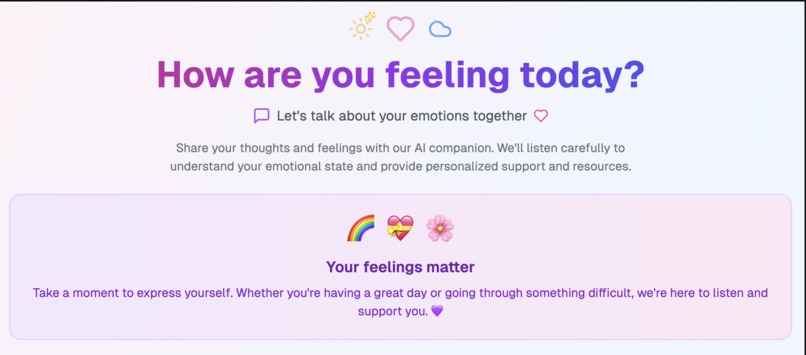
How are you feeling today?

Inspiration
The inspiration behind this project came from our shared interest in combining emotional intelligence with modern AI. Our team wanted to explore how technology could be more empathetic, especially for people struggling with emotional regulation, communication barriers, or mental health challenges. We believe machines should understand not only what we say but also how we feel when we say it. Seeing how platforms like groq, Anthropic, and Vapi are advancing voice AI made us curious about what we could build using their tools.
What it does
The app creates generative responses based on the user’s voice input, providing insight into the complexity of their emotions, suggesting healthy coping habits, and offering additional resources for support.
How we built it
Frontend
- Built using Next.js 15 + TypeScript
- Styled with Tailwind CSS and ShadCN UI
- Implemented MediaRecorder to capture audio
Audio Conversion
- Initially used ffmpeg.wasm to convert audio blobs to 16kHz mono WAV format (which didn’t work as expected), so we switched to existing systems
API Integration
- Google Gemini
- Google Cloud Natural Language API
Test Mode
- Created a feature to generate and convert 1 second of silence for API testing
Challenges we ran into
Debugging complex AI interactions and testing the system repeatedly to ensure accuracy and stability under continuous use.
Accomplishments that we're proud of
Built a fully working app in under a day. Integrated cutting-edge AI APIs. Created a seamless, multilingual mental health assistant offering instant, personalized support.
What we learned
The importance of teamwork and quick problem-solving. How to effectively integrate advanced AI APIs. The challenges of debugging AI systems and ensuring accurate mood detection. And the real impact AI can have on mental health support.
What's next for Ohlone A²PI+
Expand to more languages, improve AI accuracy, add interactive features like acts of consolation, and test with real users to enhance support and usability.
Built With
- next.js
- python
- vercel
