

Inspiration
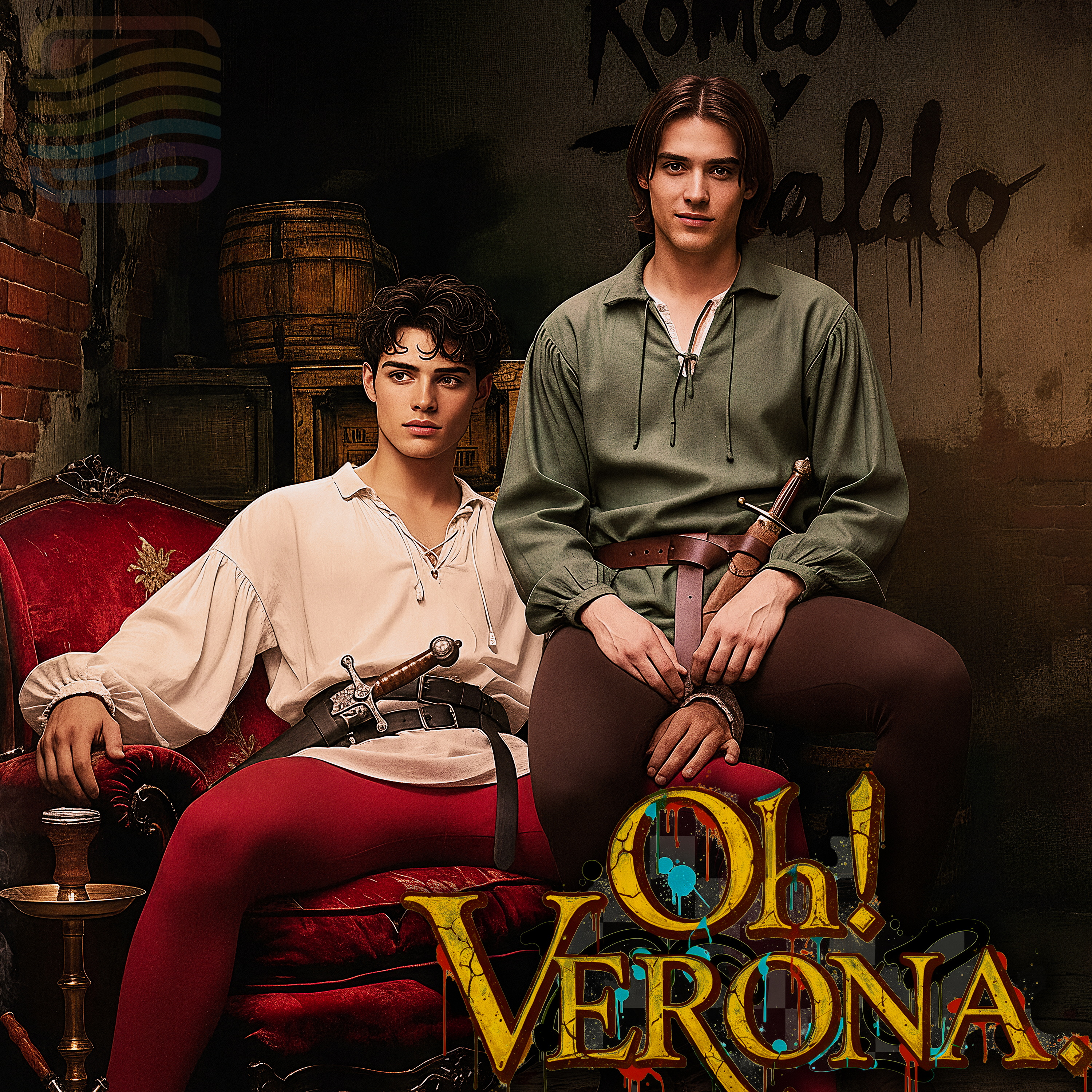
“Oh! Romeo!” was born from our audience itself — from followers on social media who kept asking for a queer twist on Shakespeare’s most iconic love story. The idea of a chaotic, camp, and heartfelt Verona filled with queer characters immediately struck us. It took some time between projects to figure out how to bring it to life, but when we did, it became both a love letter and a laugh at the traditions that often excluded us.
What it does
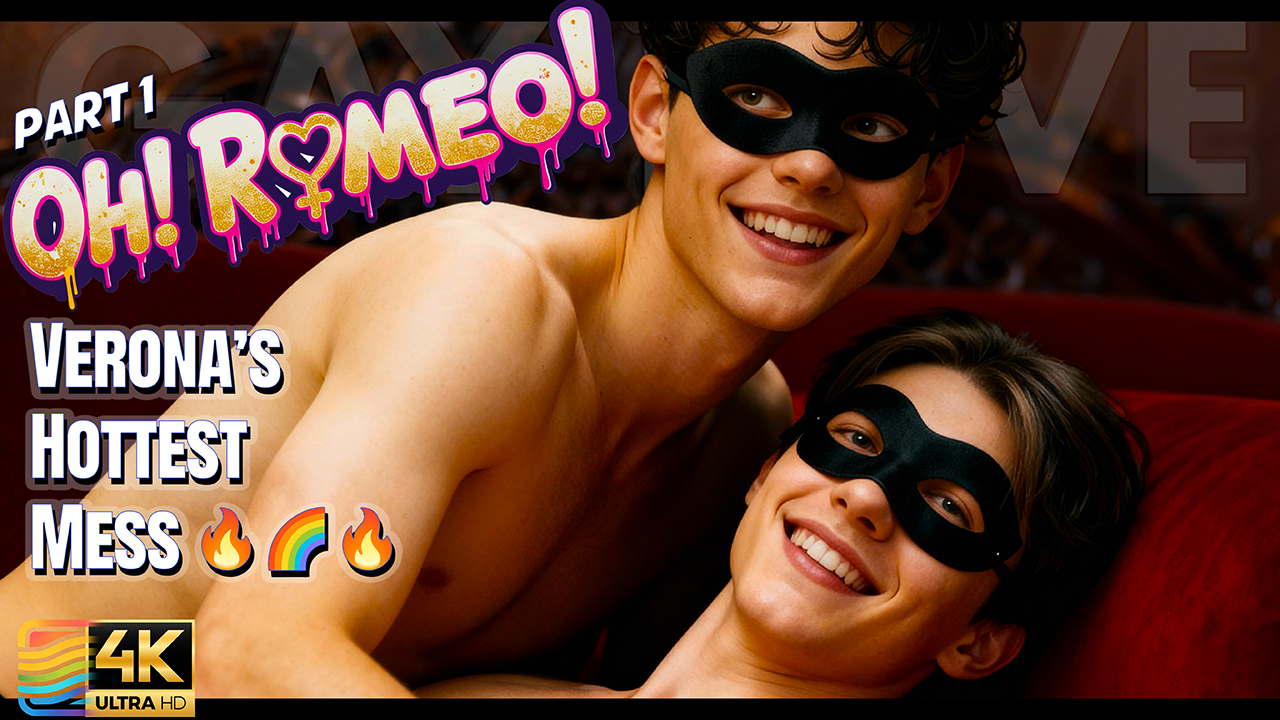
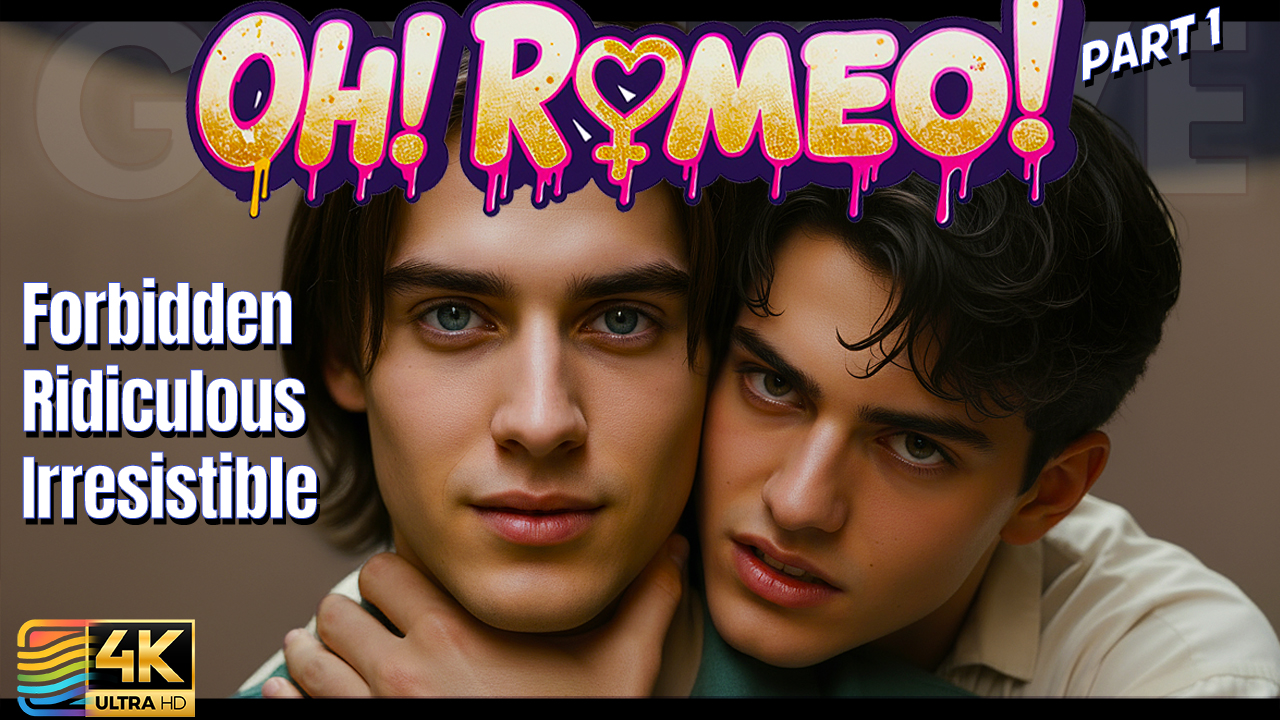
The short reimagines Romeo and Juliet through a queer comedic lens — a world where rivalry, romance, and absurdity meet in a Verona full of lust, laughter, and chaos. It gives visibility to stories that mainstream media rarely embraces, offering a playful yet emotional take on queer desire and self-expression. We wanted to prove that even with limited tools, one can build worlds where love has no boundaries, judgment, or shame — only humanity and humor.
How we built it
We used every creative and technical tool available to us.
Visuals were generated primarily with ComfyUI, Flux Dev, Flux Pro, Qwen, NanoBanana, SeeDream, Freepik, Kling AI, Wan 2.2, and Hailuo AI.
Music was composed through Producer.ai, and all sound design and dialogue were built using 11 Labs and Hume.ai for expressive performances.
Story development, scripting, and creative supervision were done collaboratively with ChatGPT, while final editing, grading, and mastering took place in Adobe Photoshop, Audition, and Premiere Pro.
The result is a fully AI-assisted short film that merges multiple platforms into a seamless cinematic experience.
Challenges we ran into
Consistency across shots is always a challenge — but tools like NanoBanana, SeeDream, and Qwen have made character continuity far more achievable.
Lip-syncing and expressive acting remain complex: achieving believable emotion through generative tools is still a developing art. For now, “video-to-lip-sync” pipelines are the most reliable path.
Creating sequence shots and oners presented another major hurdle: light continuity, first-frame-to-last-frame coherence, and maintaining motion flow between clips required extensive workarounds and post-stabilization.
When combining clips from different video models, color matching and tone consistency became a full-time task — handled shot by shot in grading.
Balancing humor, timing, and movement in physically comedic scenes was also new territory — especially with tools not designed for that level of expression.
Accomplishments that we're proud of
We’re proud to have built a vivid, joyful world where queer love exists without fear or judgment — and to have captured the energy of physical comedy with tools once limited to static poses. “Oh! Romeo!” stands as proof that storytelling, no matter how unconventional the medium, can still connect and make people laugh, feel, and remember.
What we learned
Every frame was a lesson. Editing this short in Premiere Pro tested our workflow, timing, and patience. We learned how to merge cinematic direction, AI-assisted acting, and post-production in a coherent visual rhythm. More importantly, we learned how AI tools can serve emotion rather than replace it — helping queer creators tell stories in ways that were once impossible.
What's next for Oh! Romeo!
Next comes Part 2, expanding the chaos, comedy, and forbidden romance of Verona’s hottest mess.
We’ll take what we learned here — from voice performance to video consistency — and push it further.
But first, we’ll be diving into two Halloween projects: a campy slasher spoof for our main channel, and a special episode for our ongoing queer series “The Ball.”
“Oh! Romeo!” is just the beginning of this mad, loving universe.

Log in or sign up for Devpost to join the conversation.