-
-

OFFSET LOGO
-
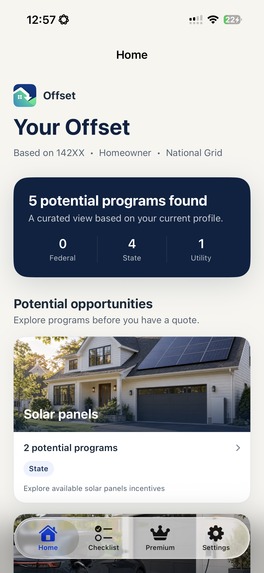
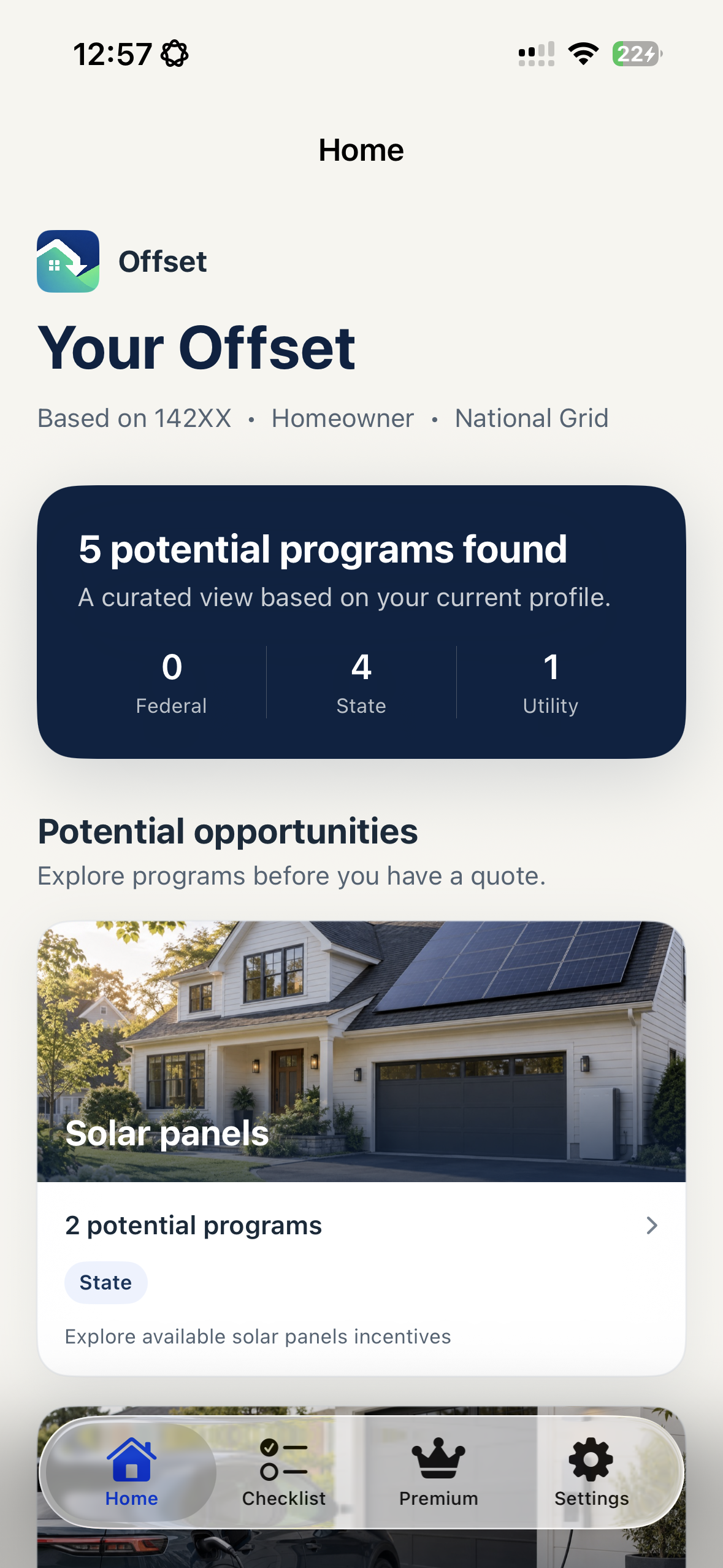
Offset Homepage : Discover incentives for your home
-
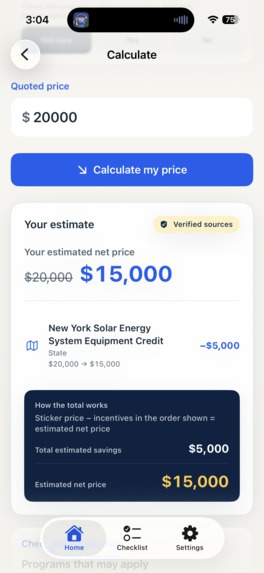
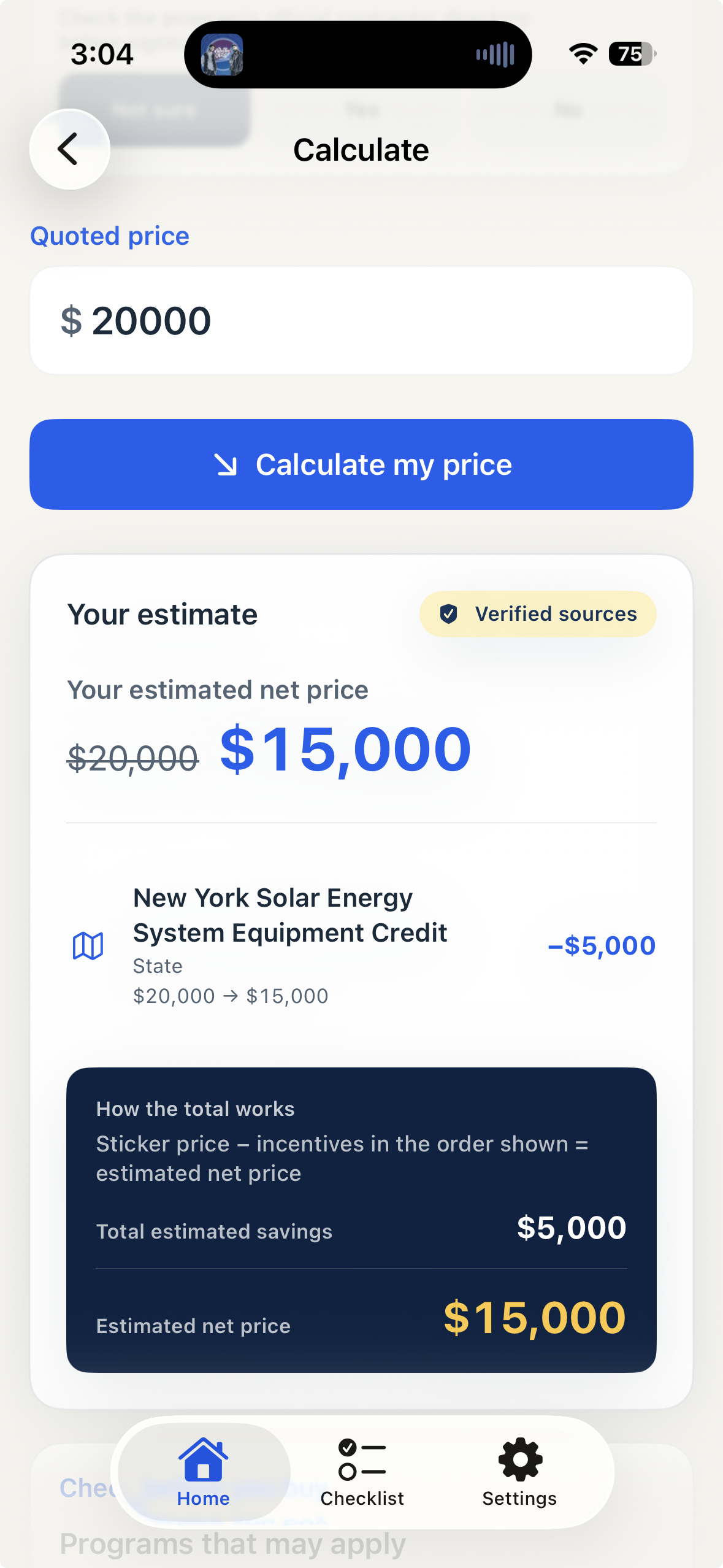
Project Incentive Calculations: See incentives and your real net cost
-
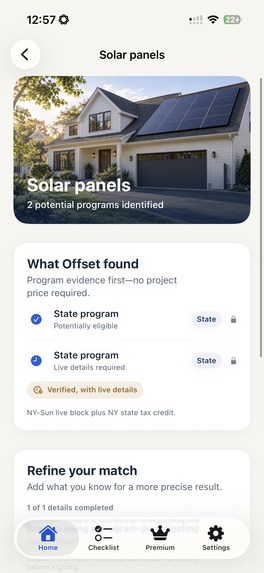
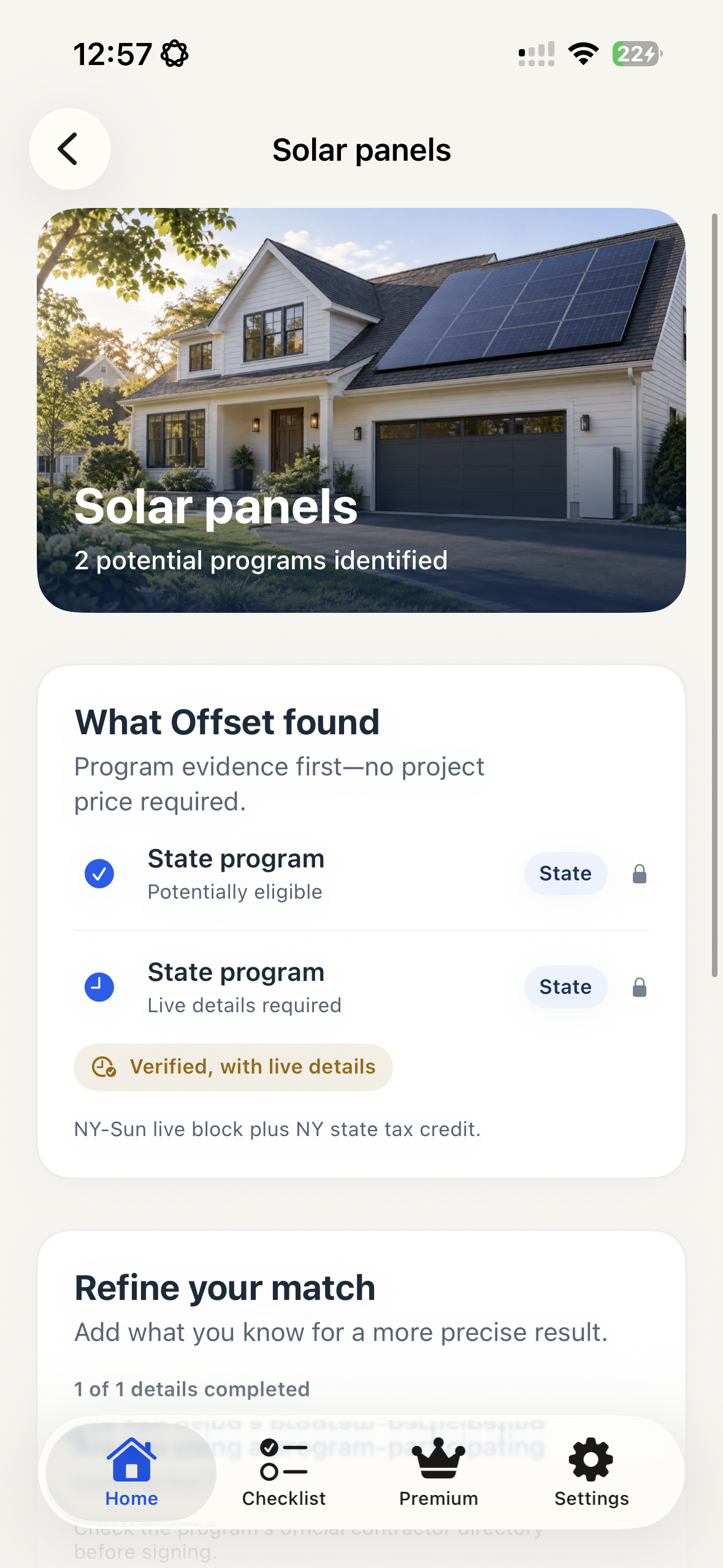
Project Details: Explore savings for each upgrade
-
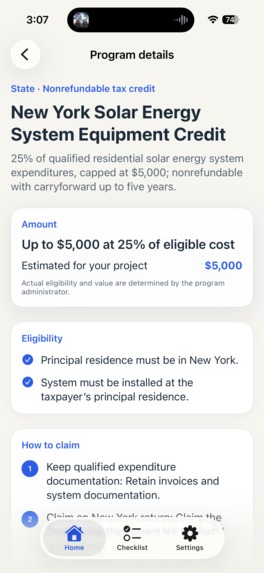
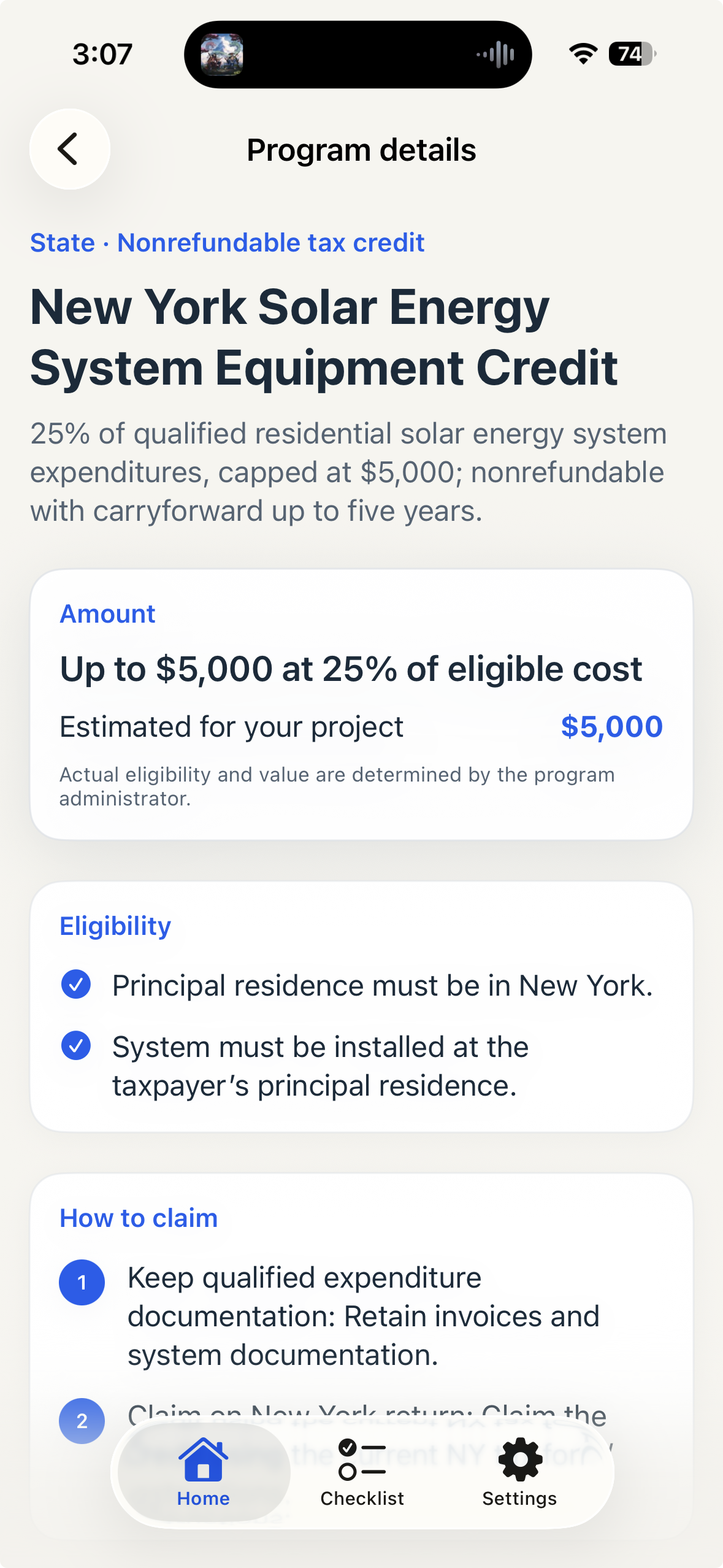
Details page of the Program tied to the Project.: Review eligibility, savings, and sources
-
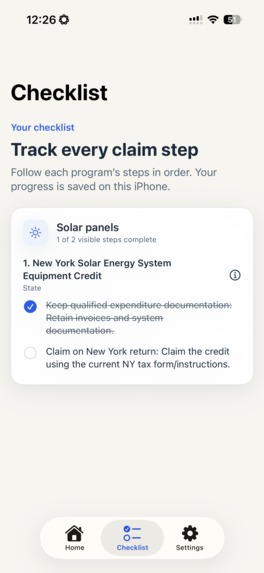
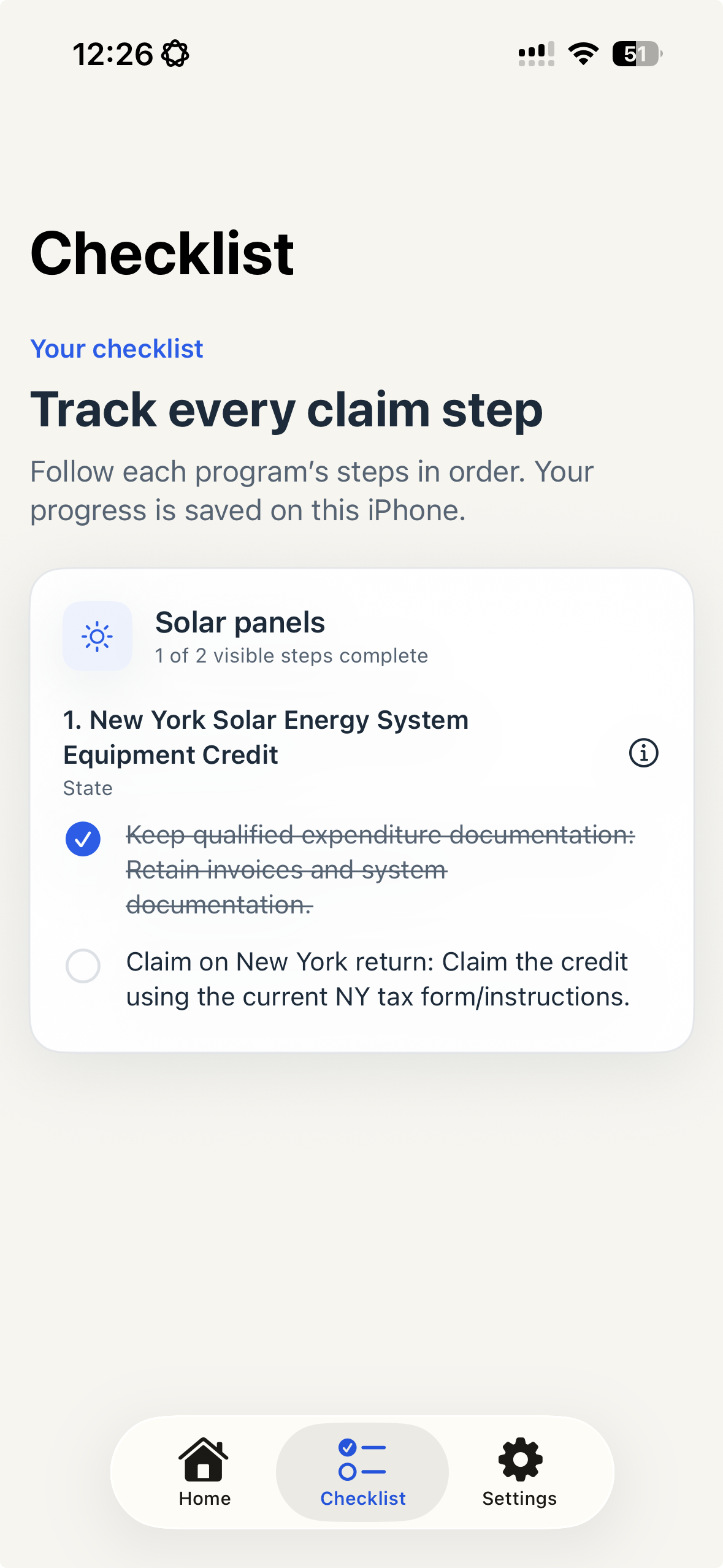
Project completion checklist: Track every step to claim your savings
-
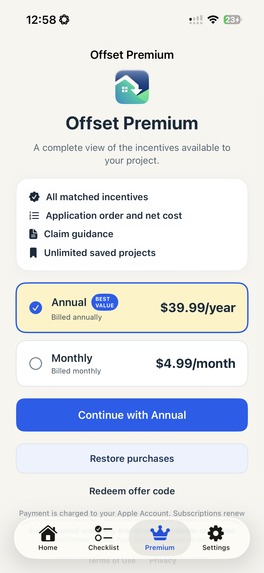
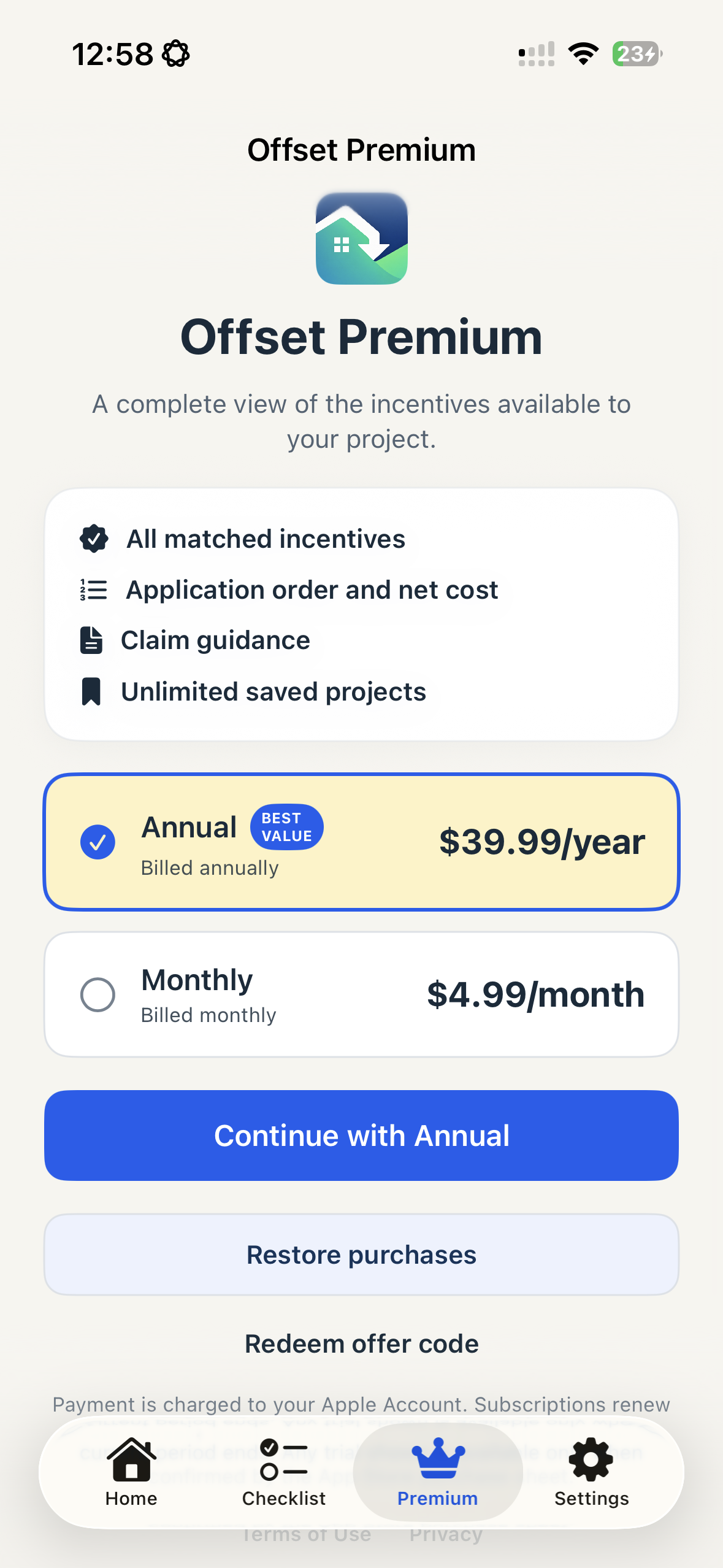
Offset Premium Plan page: Unlock full guidance with Offset Premium
-
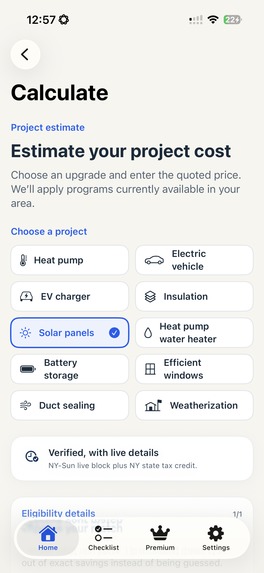
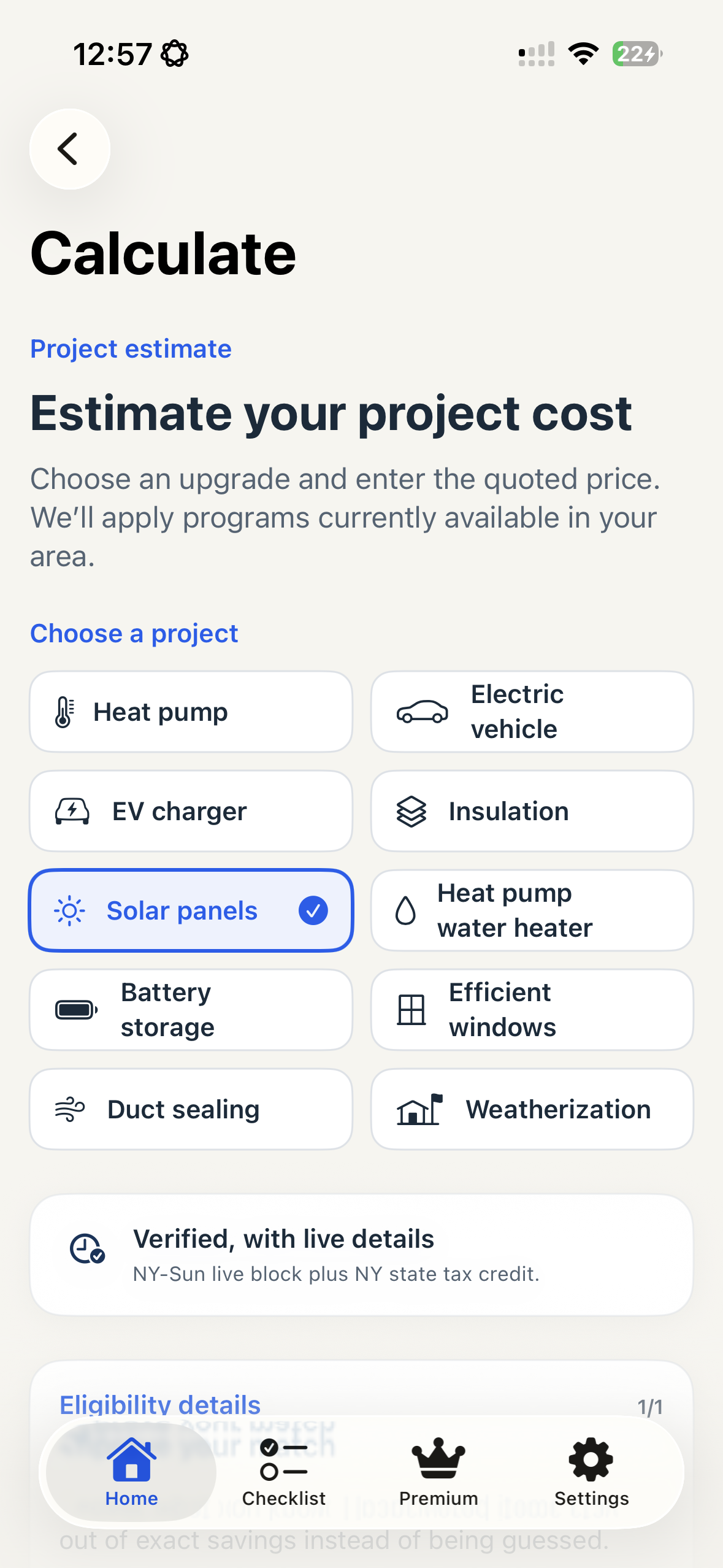
Project Incentive Estimator: Estimate the cost of your project
-
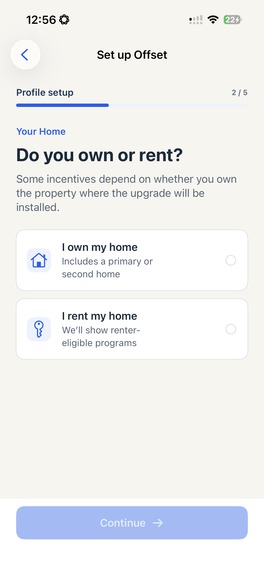
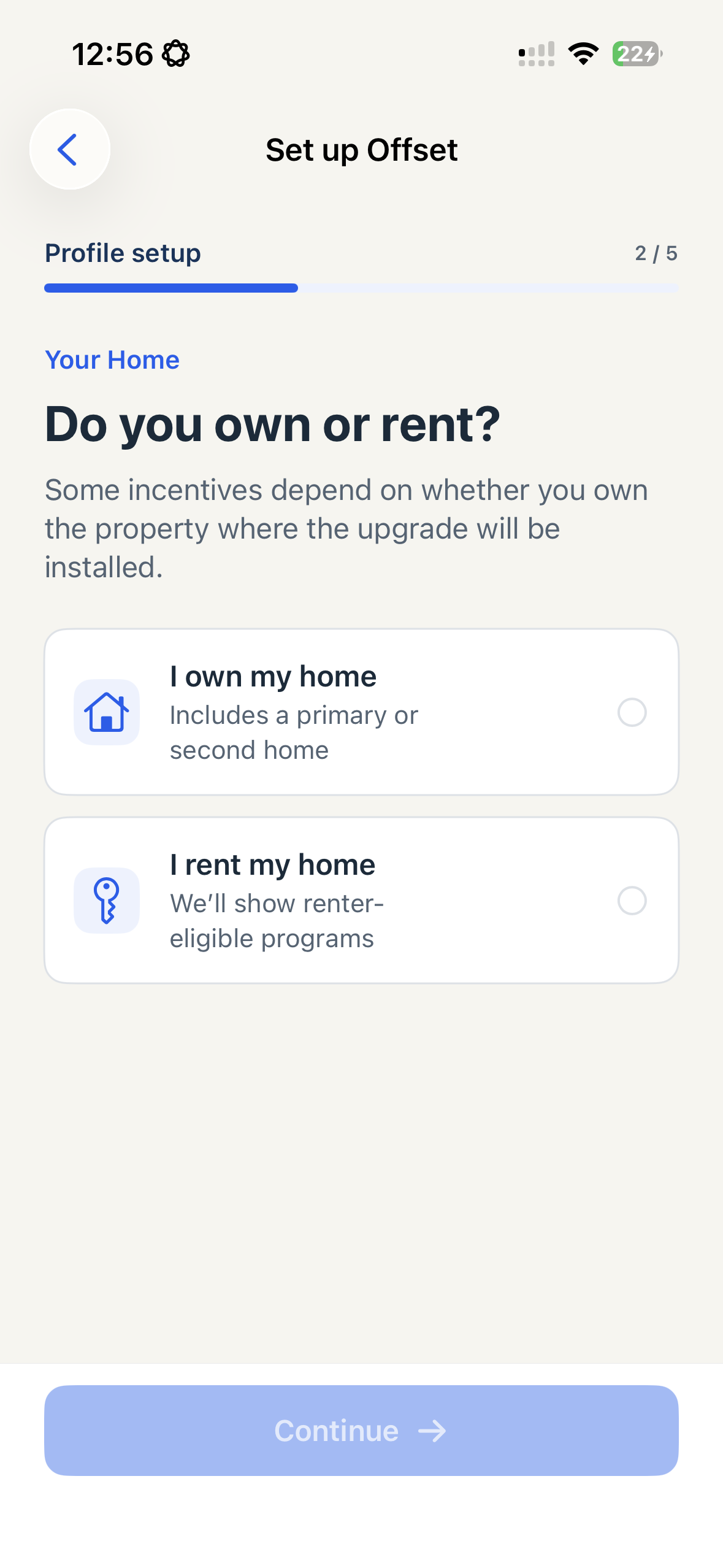
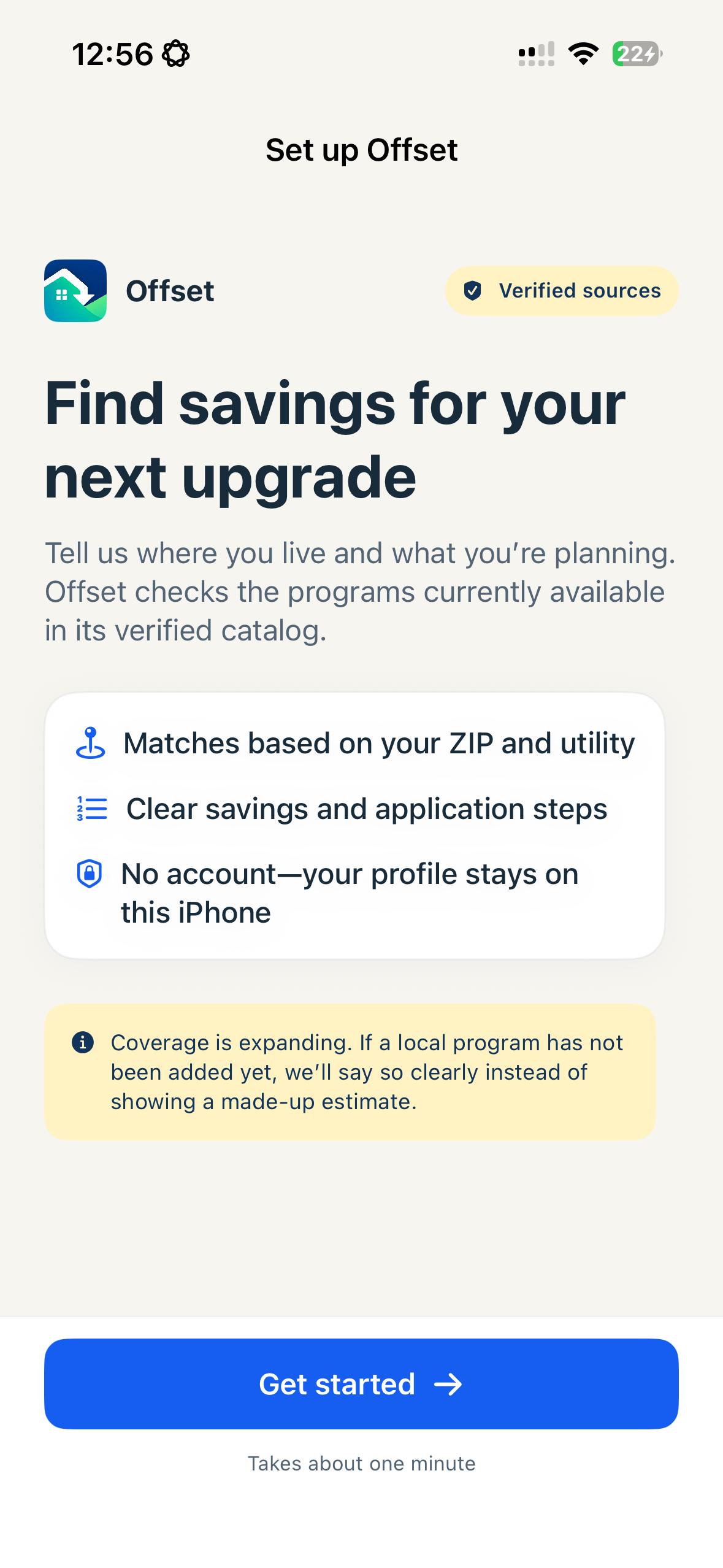
SIGNUP QUESTIONS: Start finding savings with Offset
-
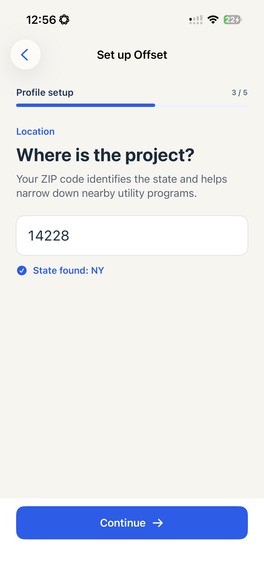
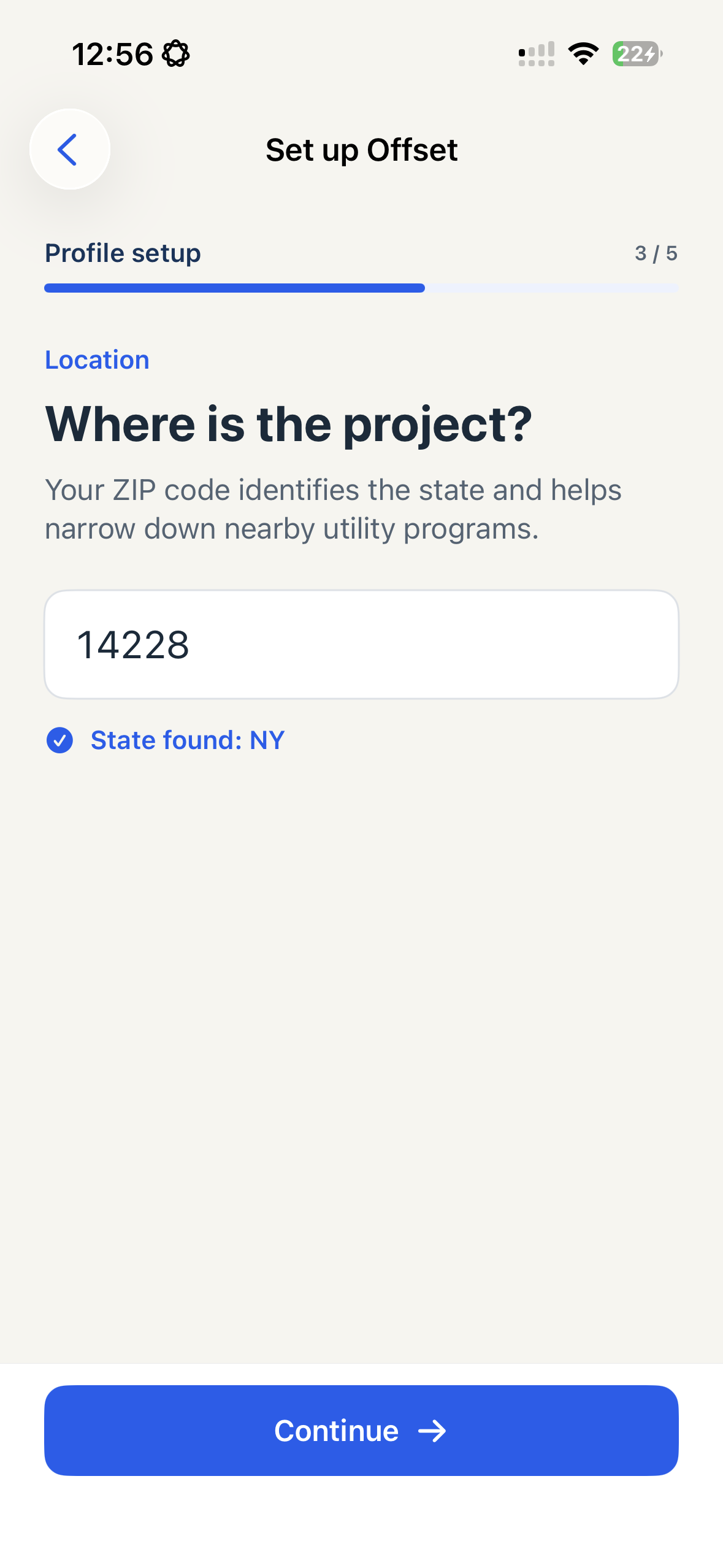
SIGNUP QUESTIONS: Enter your ZIP for local incentives
-
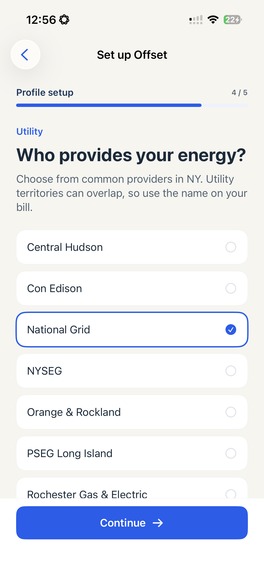
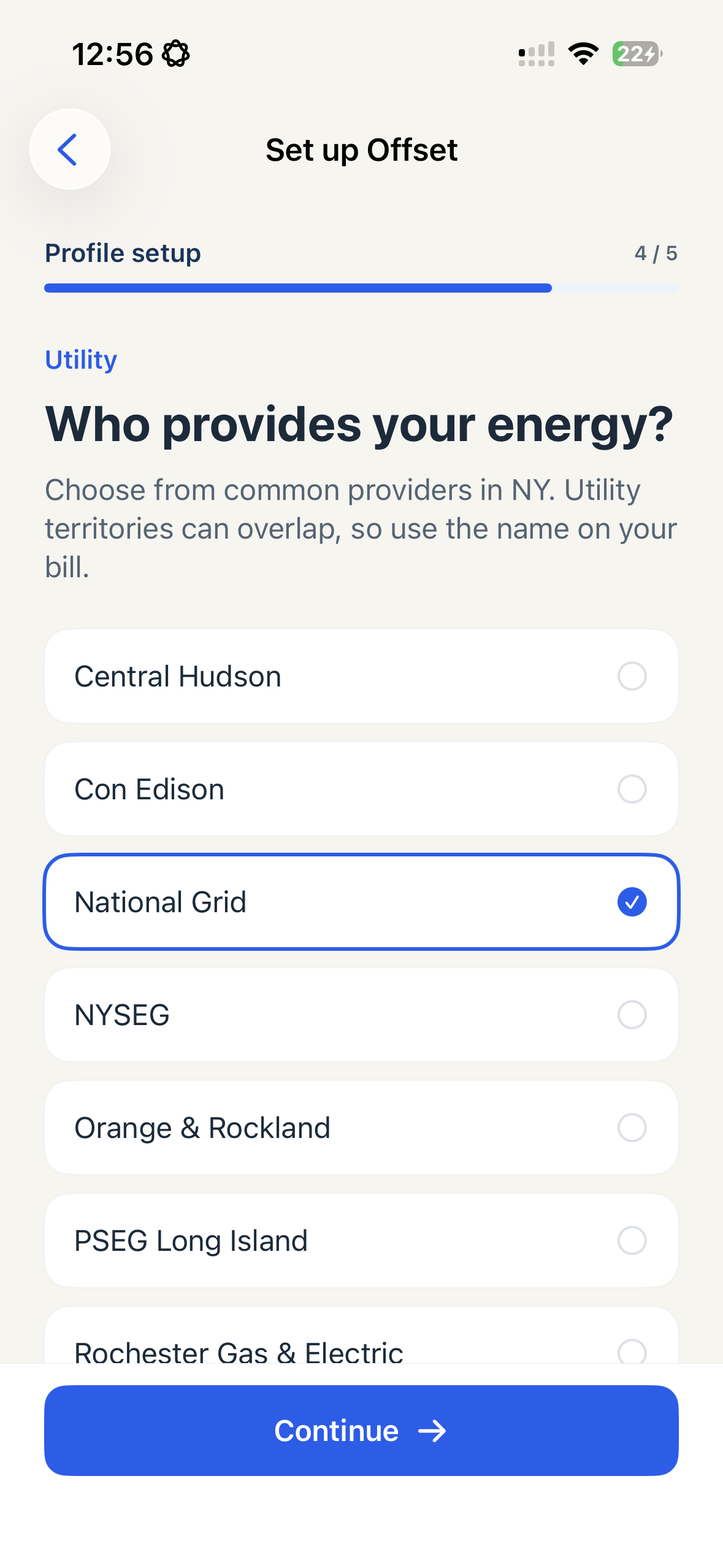
SIGNUP QUESTIONS: Select your energy provider
-
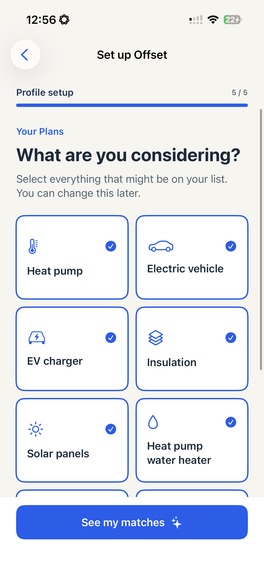
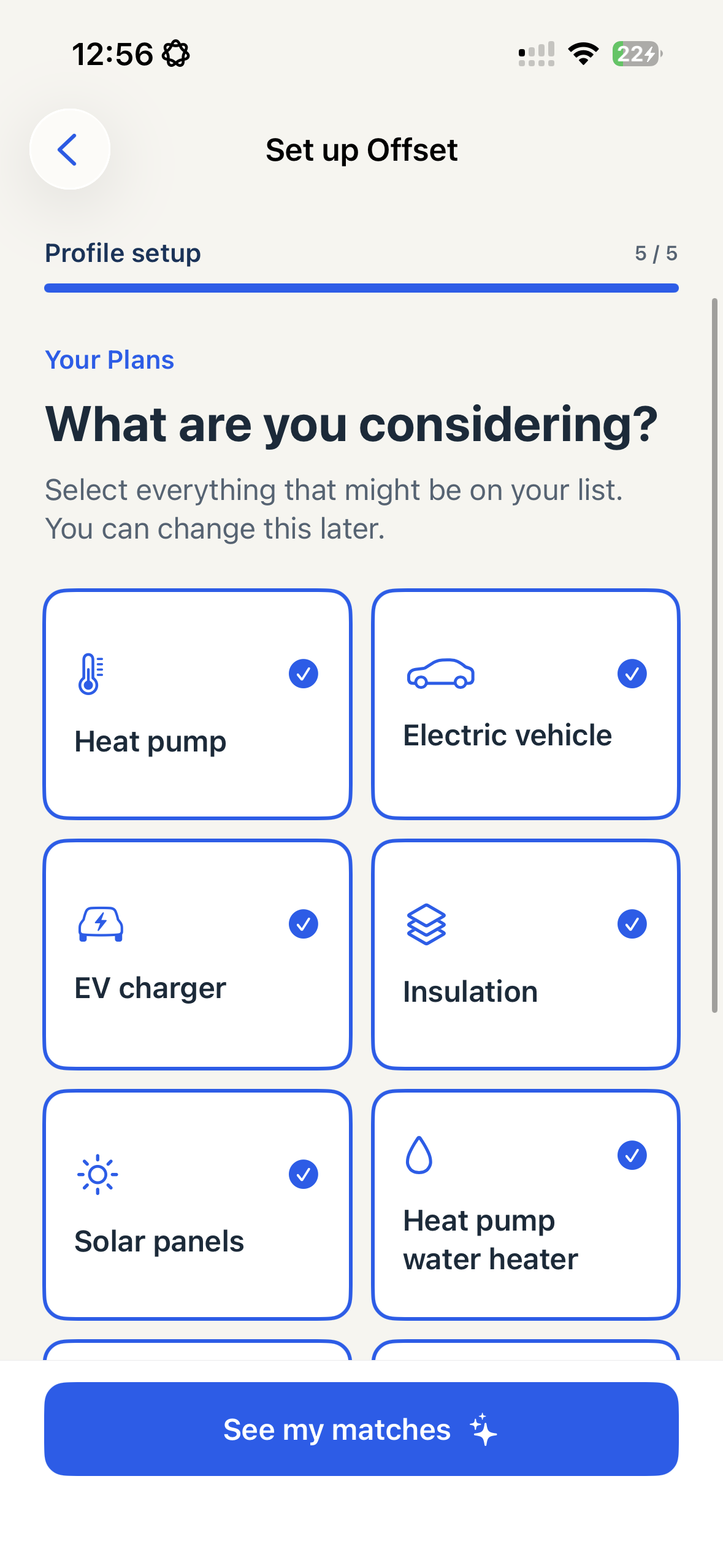
SIGNUP QUESTIONS: Choose the upgrades you care about
-
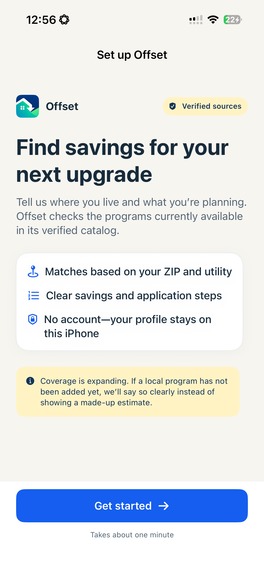
Offset Start Screen: Start finding savings with Offset

Inspiration
The sticker price of a clean-energy upgrade is rarely the real price.
Homeowners and renters may qualify for federal, state, utility, and local incentives when installing solar panels, heat pumps, insulation, EV chargers, and other efficiency upgrades. The problem is that this information is fragmented across government websites, utility documents, eligibility tables, tax guidance, and program instructions.
Even after finding an incentive, users still need to determine whether it applies to their location, whether it can be combined with other programs, when it should be applied, and what the project will actually cost.
I built Offset to turn that fragmented research into one clear estimate and a practical path forward.
What it does
Offset helps users estimate the real cost of a home-energy upgrade after potential incentives.
Users enter information such as their location, utility, household details, project type, and estimated project cost. Offset then:
- Finds relevant incentive programs
- Applies geographic and eligibility rules
- Estimates potential savings
- Applies incentives in a deterministic order
- Calculates the estimated net project cost
- Identifies information that still needs verification
- Links users to official program sources
- Organizes deadlines and claim instructions
- Lets Premium users save projects and track a combined checklist
The free experience shows possible matches, estimated savings, total savings, and estimated net cost. Offset Premium unlocks deeper eligibility information, official sources, deadlines, claim guidance, saved projects, and checklists.
How I built it
Offset is a native iOS application built with Swift and SwiftUI.
Instead of using a language model to generate financial conclusions, Offset uses structured incentive data and a deterministic matching engine. Incentive programs are represented through geographic coverage, eligibility rules, calculation methods, caps, exclusions, stacking relationships, deadlines, and official sources.
The app includes:
- SwiftUI for the native interface
- A deterministic incentive-matching engine
- Ordered incentive stacking and conflict resolution
- Local profile and project persistence
- A verified bundled incentive catalog
- Supabase for catalog updates
- RevenueCat for subscription and entitlement management
- StoreKit for monthly and annual purchases
- OneSignal and native notifications for reminders
- Deep links into projects and incentive programs
RevenueCat manages the complete Offset Premium lifecycle, including offerings, purchases, entitlement updates, purchase restoration, and feature access through the offset_pro entitlement.
Challenges I ran into
The hardest problem was not finding rebates. It was representing complex incentive rules without creating false certainty.
Programs differ in their location requirements, utility territories, income thresholds, formulas, caps, deadlines, and stacking rules. Some incentives reduce the purchase price directly, while others affect a later tax filing. Some programs can be combined, while others require additional verification.
I built validation and fail-closed behavior into the catalog and calculation engine. If information is incomplete, stale, or unsupported, Offset labels that uncertainty or avoids presenting an exact result.
Another challenge was designing the free and Premium experiences fairly. Free users still receive meaningful information about available incentives and estimated savings. Premium focuses on the additional work required to act on those incentives, including eligibility details, official sources, deadlines, claim instructions, project saving, and progress tracking.
Accomplishments I am proud of
I built Offset as an individual student developer and took it from concept to a complete native iOS product.
The project includes a deterministic incentive engine, structured program data, a useful free tier, RevenueCat-powered subscriptions, purchase restoration, saved projects, claim checklists, uncertainty handling, and real-device StoreKit testing.
More importantly, Offset became more than a rebate directory. It became a decision tool designed around transparency and trust.
What I learned
Building Offset showed me that shipping a paid mobile product involves far more than writing application code.
I had to work through StoreKit transaction behavior, RevenueCat offerings and entitlements, subscription metadata, sandbox purchases, receipt restoration, notification permissions, release signing, privacy requirements, and App Store review preparation.
I also learned that trust itself is a product feature. Showing a savings number is not enough. Users need to understand where that number came from, which assumptions were made, what still needs verification, and where the official source can be found.
What's next for Offset
The next step is expanding verified coverage beyond the initial New York catalog while maintaining the same standards for evidence, transparency, and freshness.
Future improvements include:
- More state and utility coverage
- Automated monitoring for incentive changes
- Better comparison between contractor quotes
- Personalized deadline reminders
- Contractor and document organization
- More detailed household eligibility scenarios
- Improved accessibility and localization
- A web companion for researching projects before requesting quotes
The long-term goal is simple: when someone considers making their home cleaner or more efficient, the incentives available to them should be understandable before they spend.
Built With
- deno
- ios
- iphone-sdk
- onesignal
- revenuecat
- storekit
- swift
- swiftui

Log in or sign up for Devpost to join the conversation.