-
-
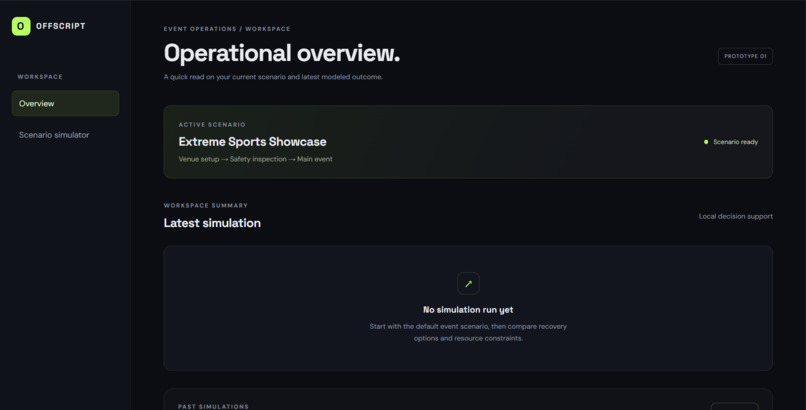
Landing Page
-
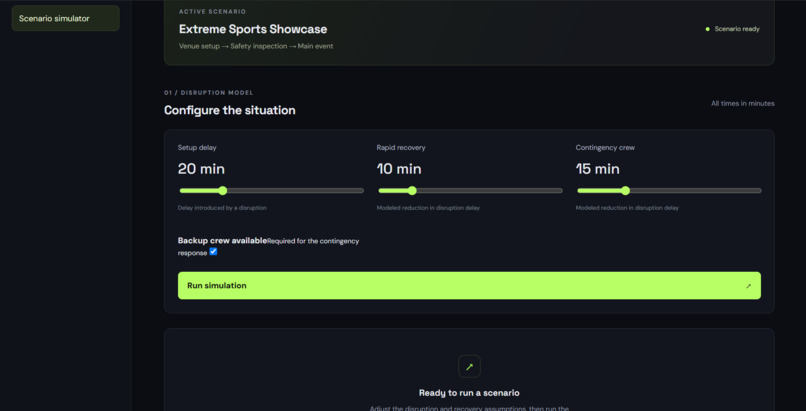
Simulator Page
-
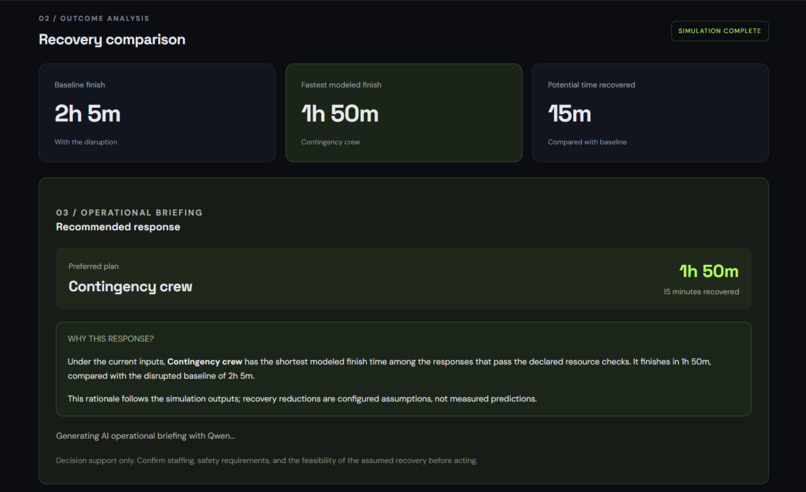
Example Simulation - 1
-
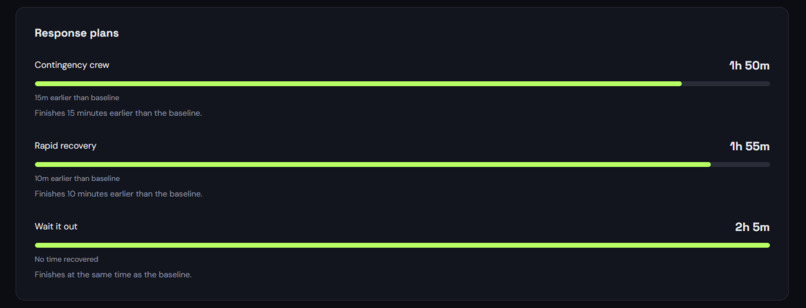
Example Simulation - 1.1
-
Example Simulation - 1.2
Inspiration
Live events depend on tightly coordinated schedules, resources, and activities. A delay in one activity can affect several others, leaving organisers to decide how to recover while working under pressure.
We built OFFSCRIPT around a simple question: what if event teams could simulate a disruption, compare possible recovery strategies, and understand the modelled consequences before deciding what to do next?
What it does
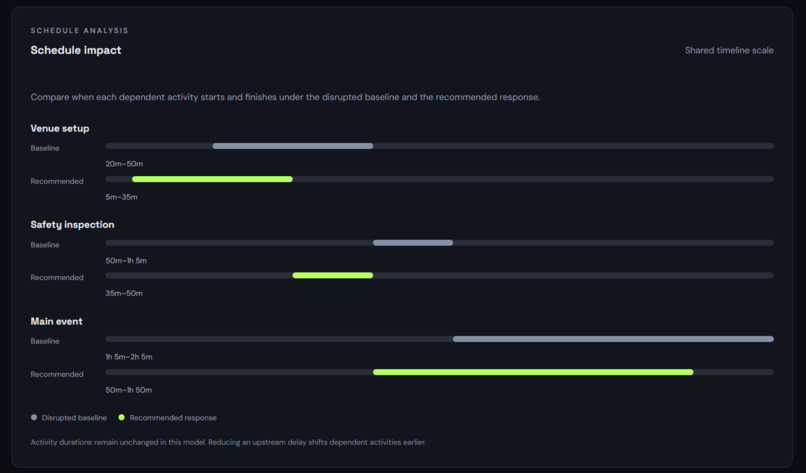
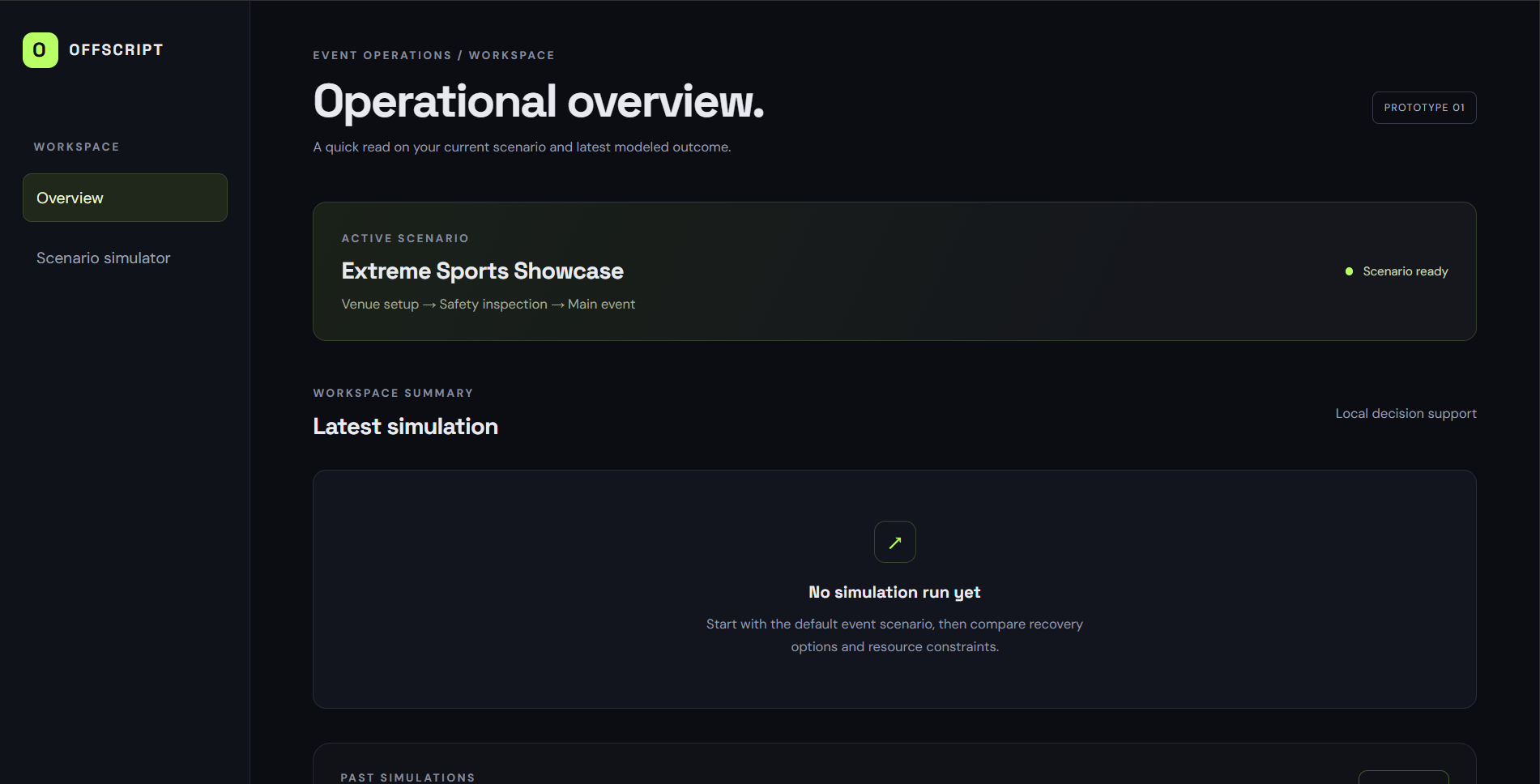
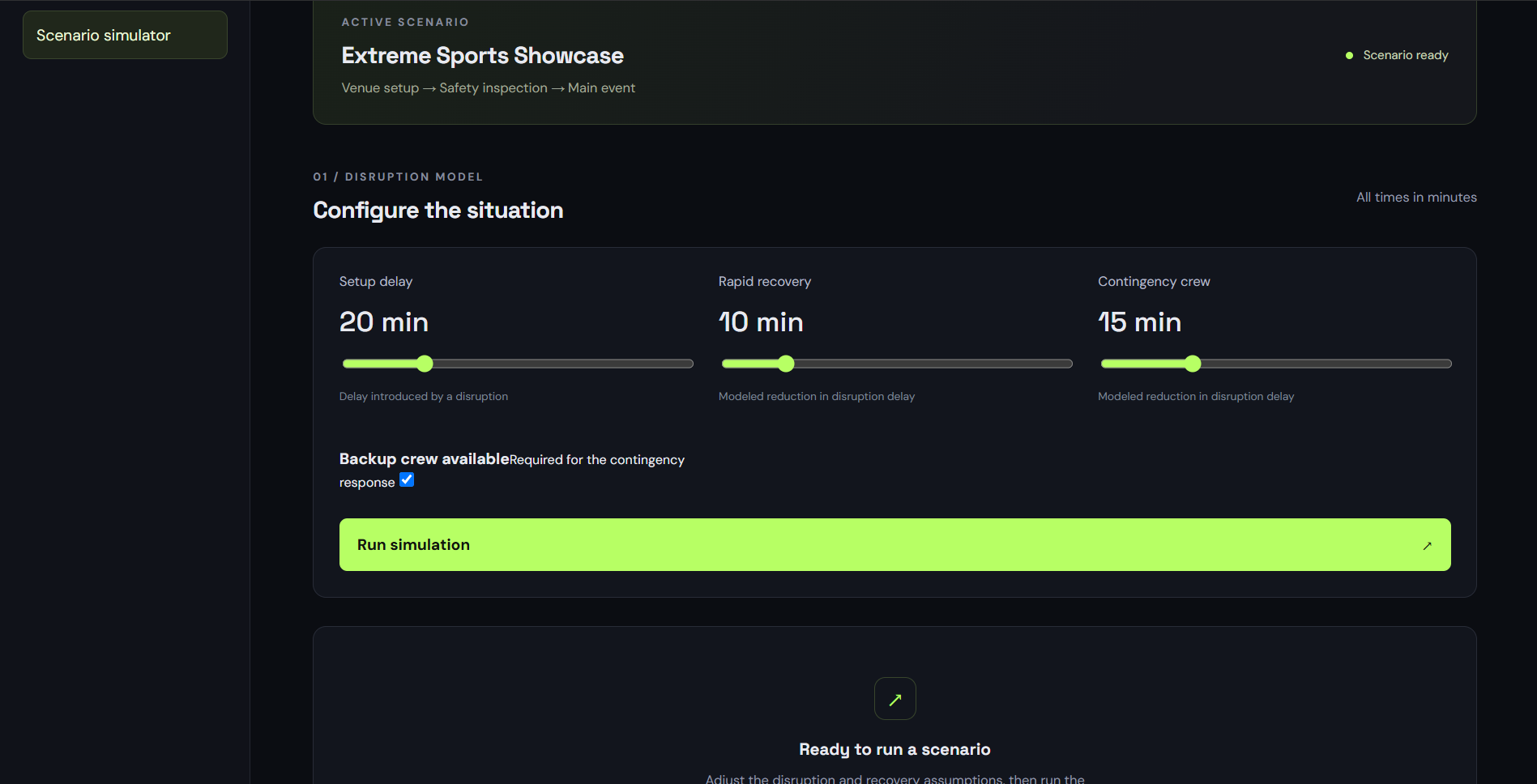
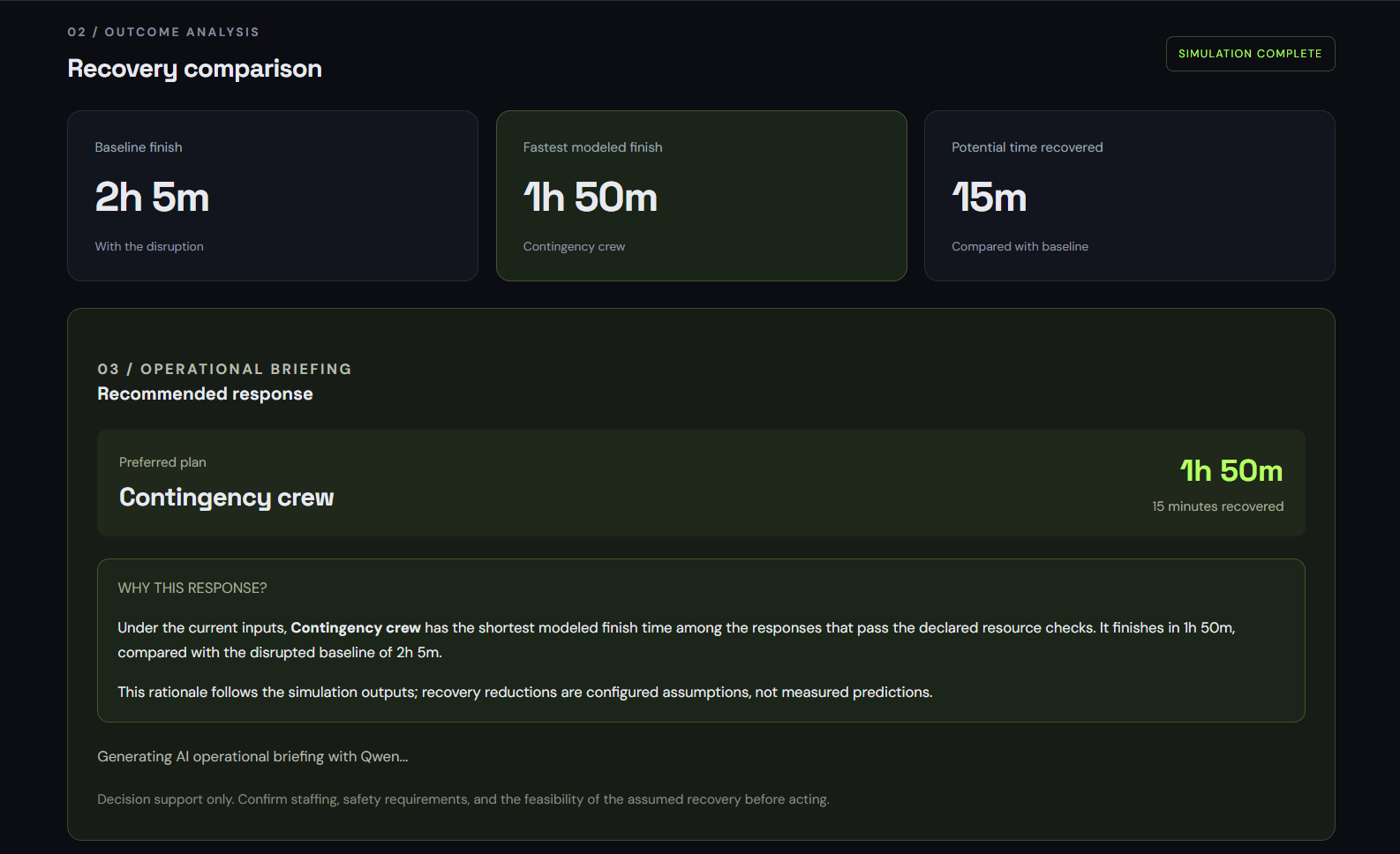
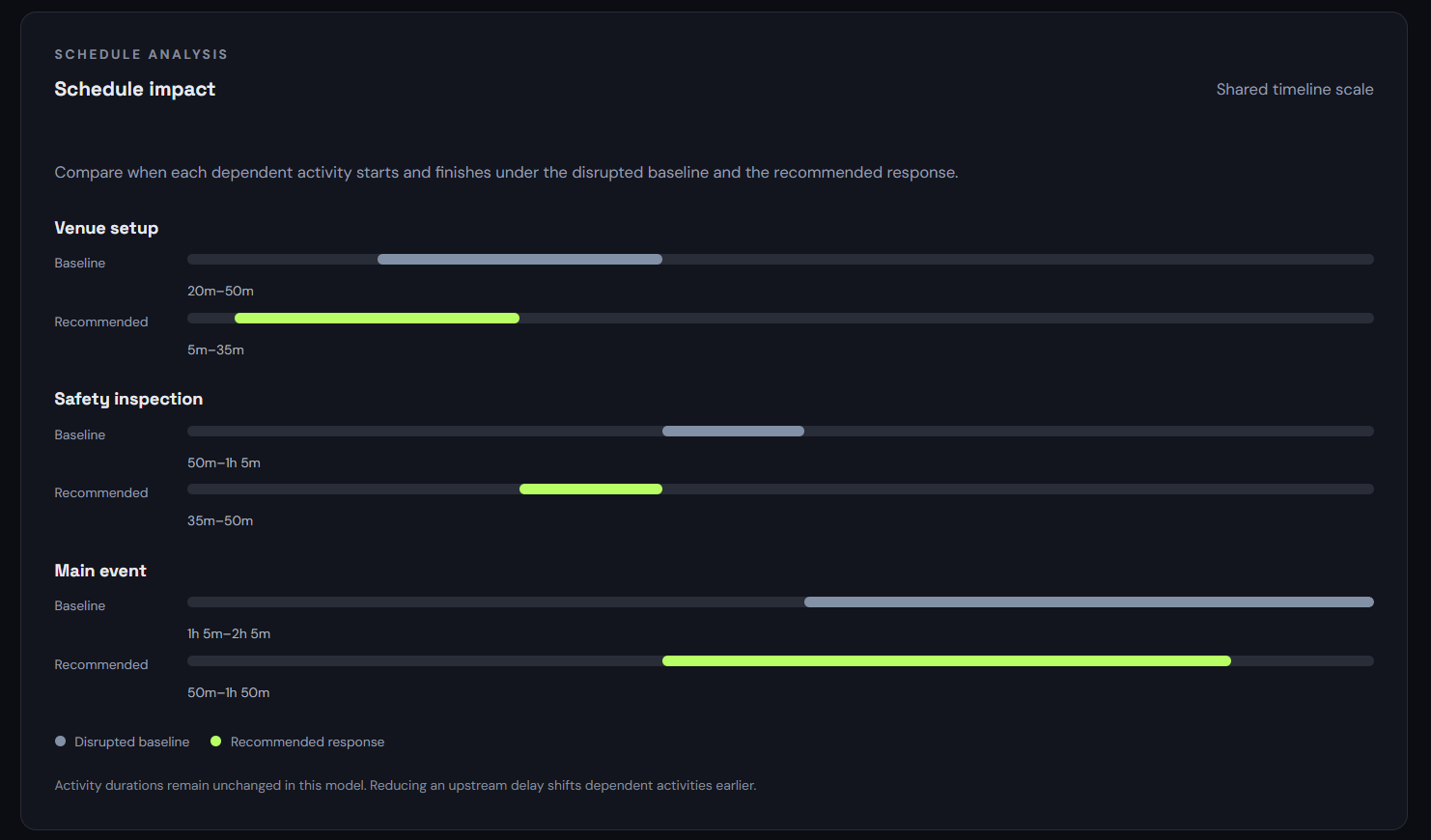
OFFSCRIPT is an operational resilience and event-disruption simulation prototype. It allows users to model disruptions in an event schedule, evaluate the resulting delays, compare recovery strategies, and review AI-assisted explanations of the results.
Its workflow brings together four capabilities:
- Disruption simulation: Model schedule changes and their effects on dependent activities.
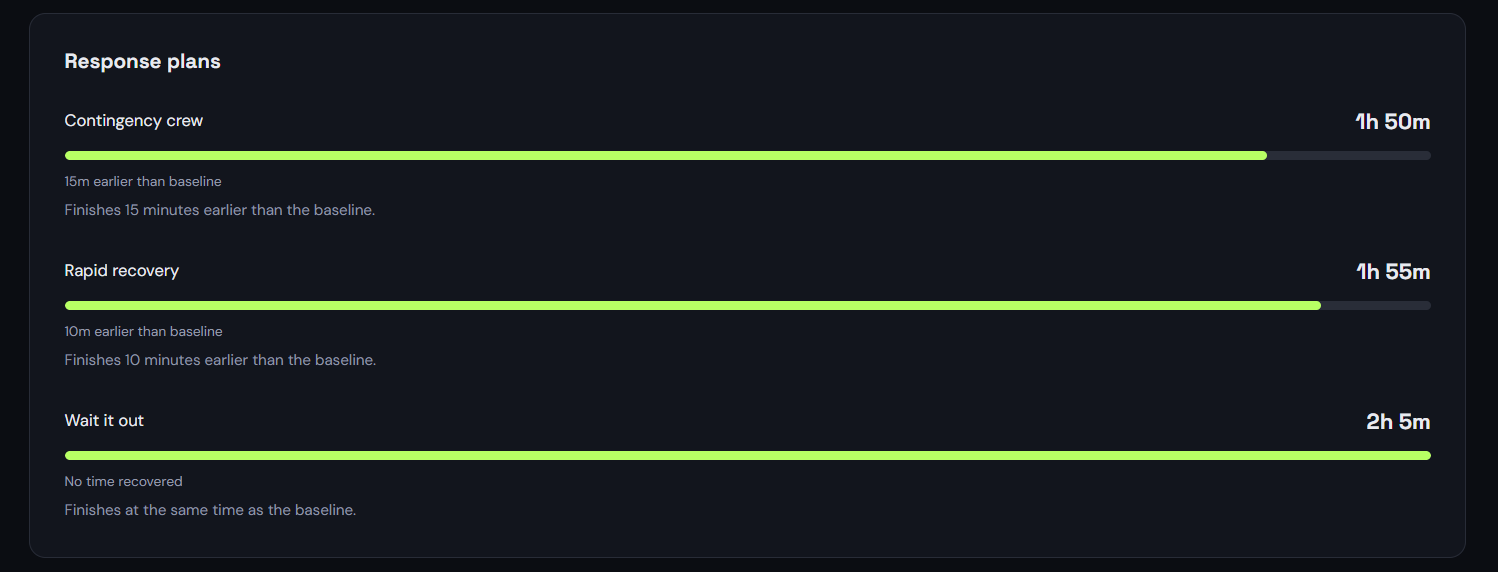
- Recovery comparison: Compare alternative responses against a baseline outcome.
- AI-assisted briefings: Generate explanations of simulated outcomes using a locally running language model, with a deterministic fallback.
- Simulation history: Store previous runs locally so users can revisit results.
How we built it
OFFSCRIPT combines a React and Vite frontend with a Python FastAPI backend. The simulation engine models activity dependencies, schedule impacts, and represented resource constraints. SQLite stores simulation history, while Ollama runs the local Qwen2.5 3B model for AI-assisted briefings.
We designed the application around a clear workflow: configure a scenario, introduce a disruption, run the simulation, compare recovery options, and review the resulting briefing.
Challenges and learnings
One of our main challenges was bringing simulation logic, recovery comparisons, AI-generated explanations, and persistent history into a single workflow. We also needed the application to remain usable when the local language model was unavailable, which motivated a deterministic fallback for briefing generation.
Building OFFSCRIPT helped us explore how dependency-aware simulation, local AI inference, backend APIs, and frontend visualisation can work together in a decision-support application. We also learned the importance of testing core simulation behaviour separately from the user interface and AI layer.
What's next
OFFSCRIPT is a prototype, not a validated operational control system. Its scenarios rely on simplified, user-configured assumptions, and its resource constraints do not represent a complete real-world capacity or safety assessment. The AI briefing is intended to support human review, not replace expert judgment.
Future work includes validating the simulation against realistic event scenarios, improving resource and capacity modelling, and integrating reliable event data sources.
Our goal is to help event teams move from reacting to a disruption to understanding and comparing their options before making a decision.
Built With
- ai
- fastapi
- javascript
- ollama
- python
- qwen2.5
- react
- simulation
- sqlite
- vite

Log in or sign up for Devpost to join the conversation.