-
-

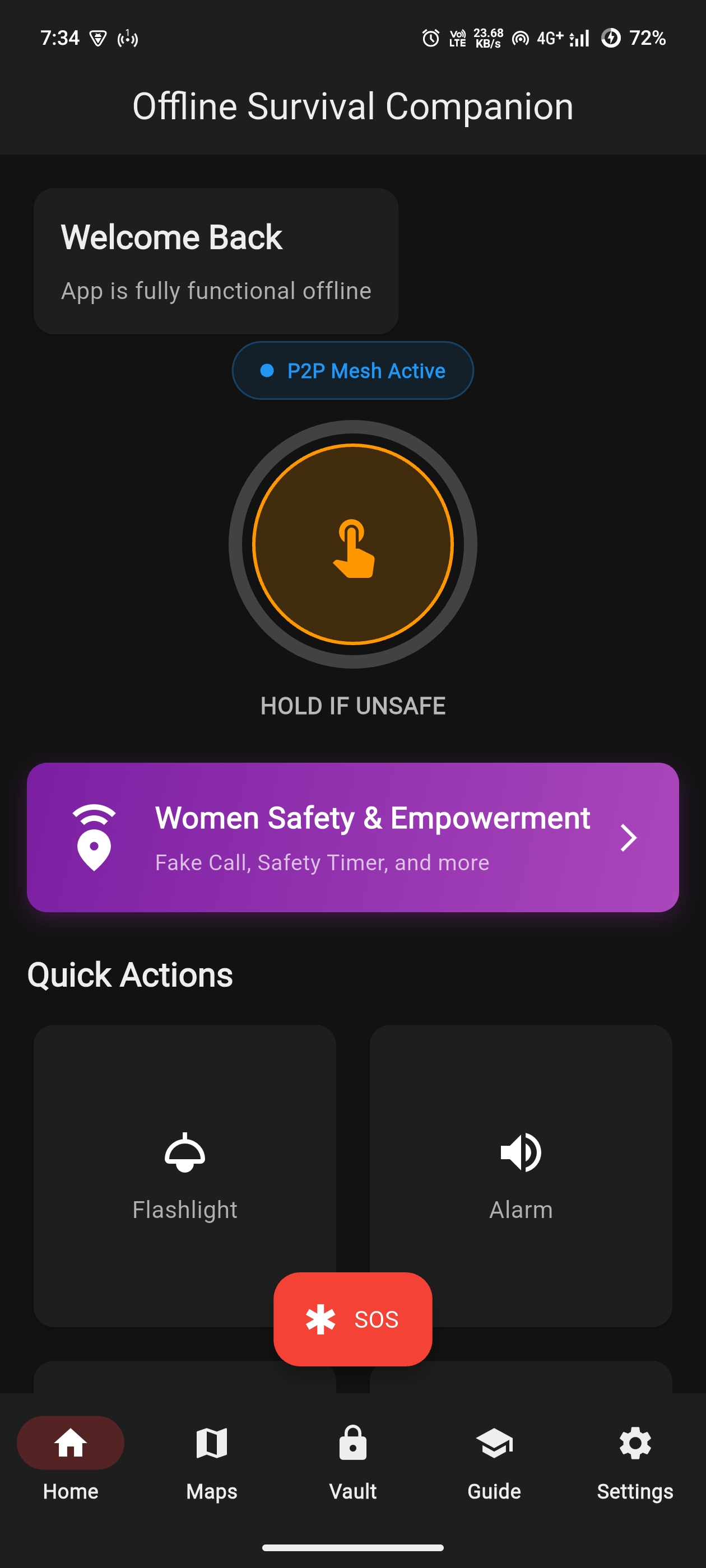
Offline Survival Companion App opening user-interface
-
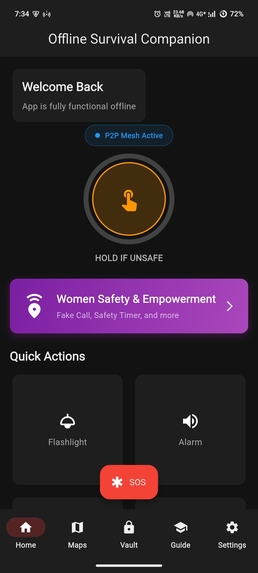
App first look
-
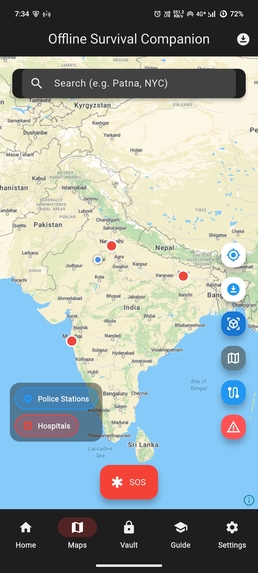
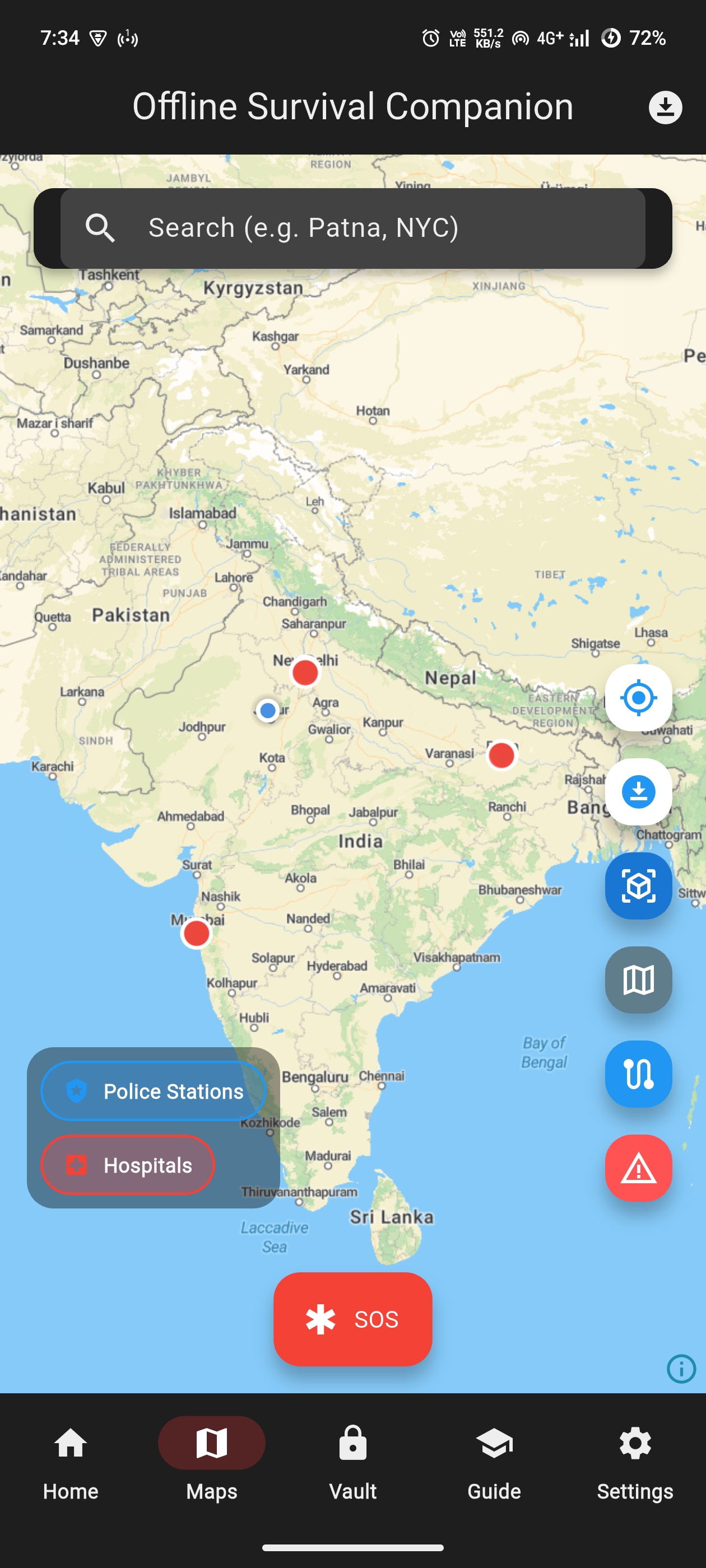
Location routing without internet for hiking without internet and live location sharing via SMS without the internet
-
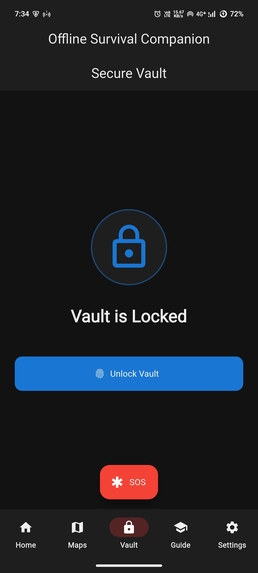
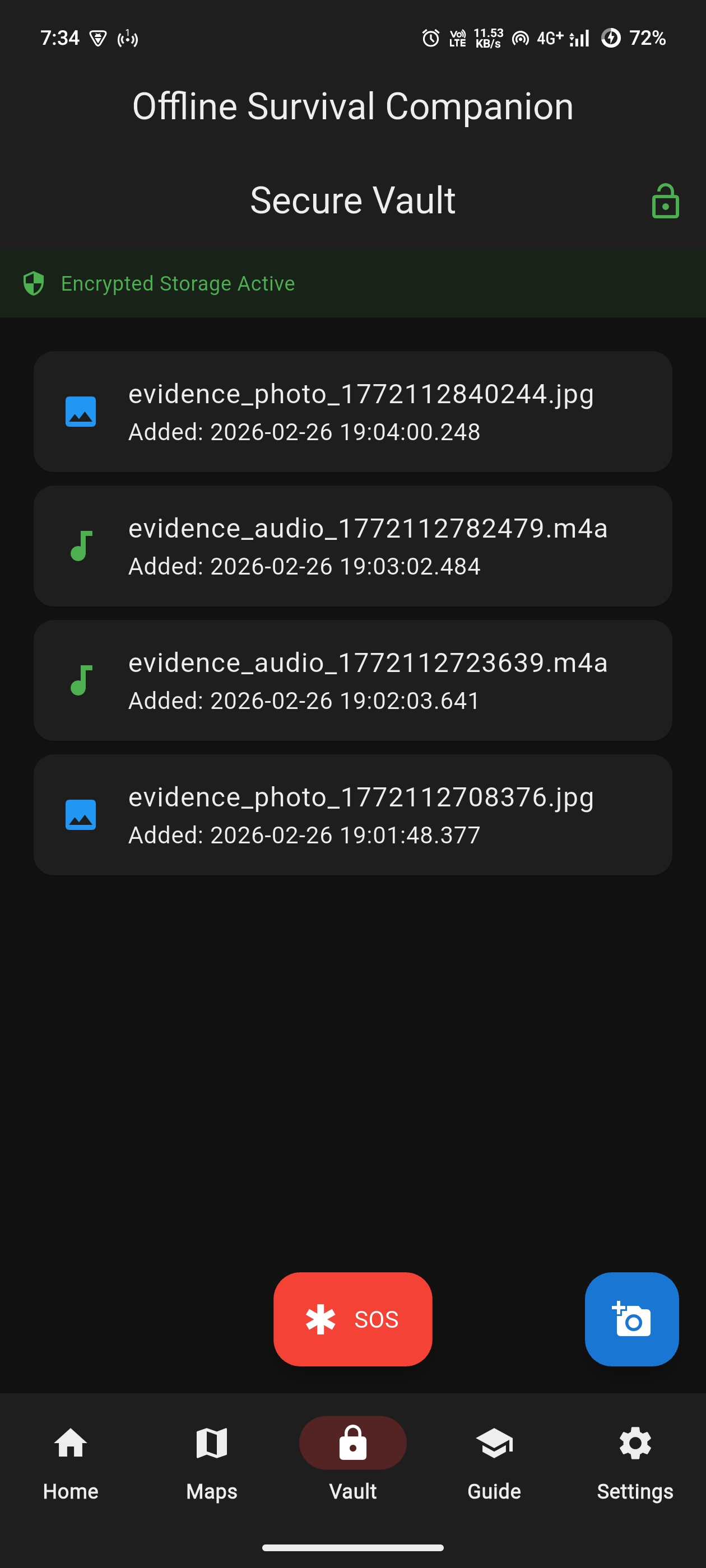
Secure folder which saves the audio, back camera video & front camera photo when the app is on emergency mode
-
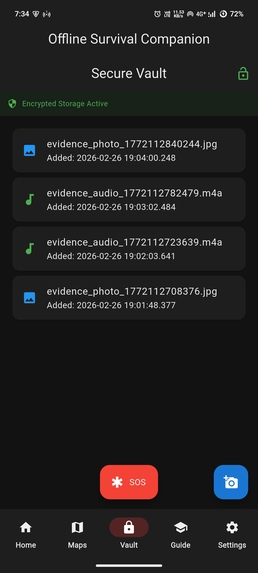
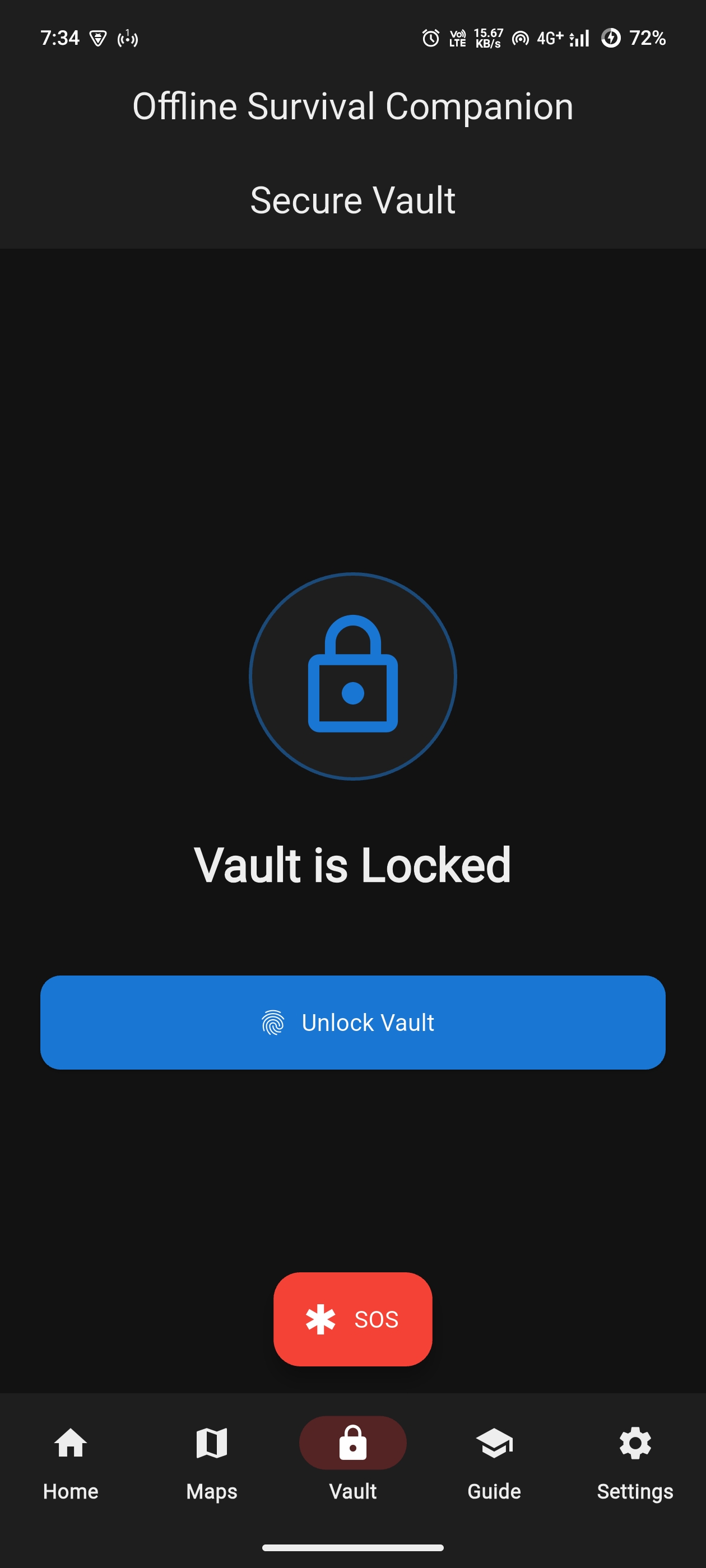
saved audio, photo and video in the secure folder which opens when the password or fingerprint is authenticated
-
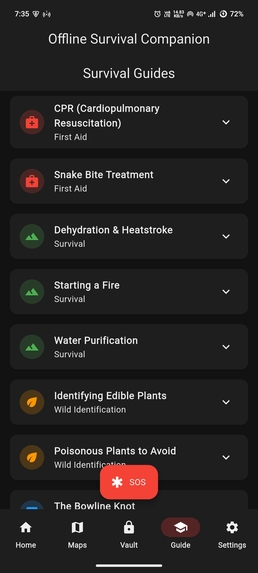
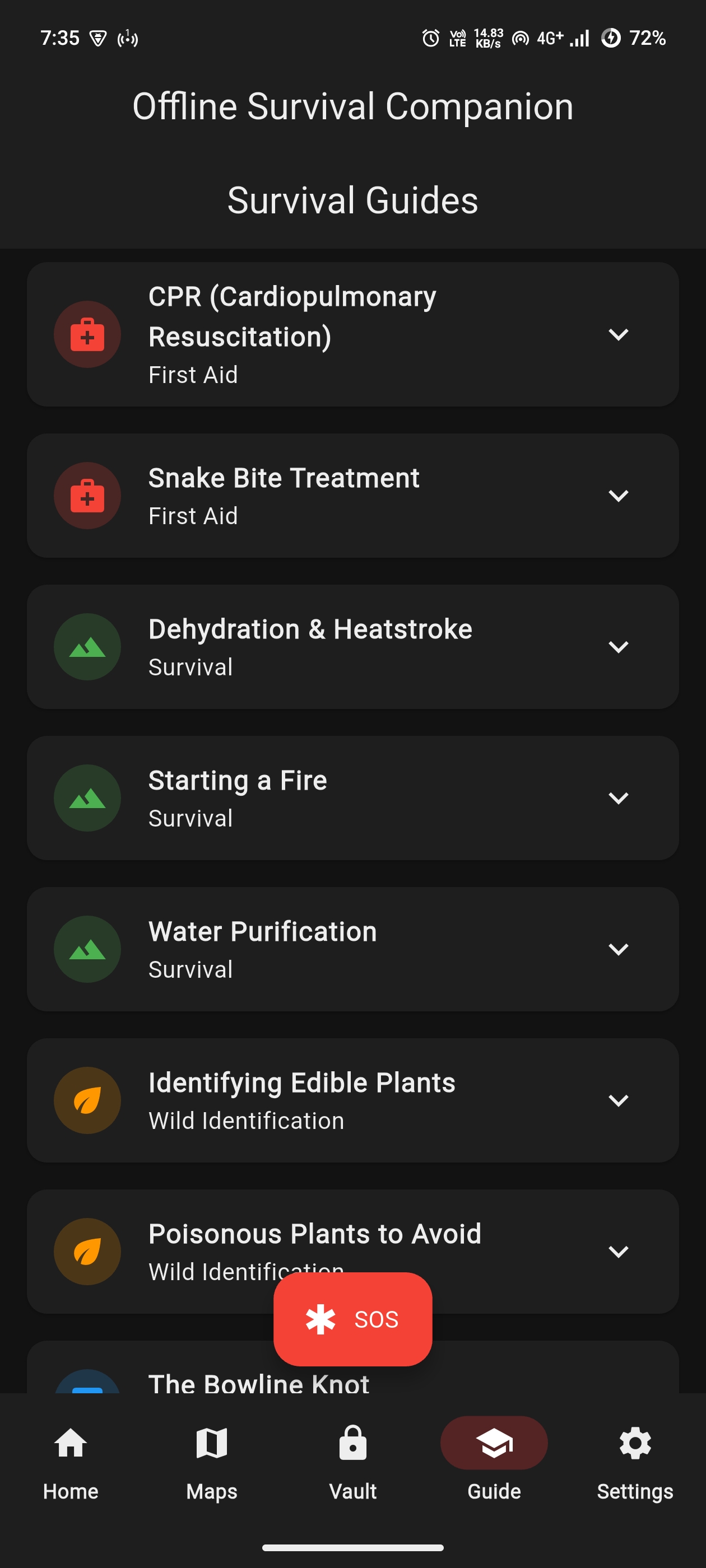
Survival Guidelines which is offline and helps the user when the user is in problem when in no internet and lack of survival knowledge
-
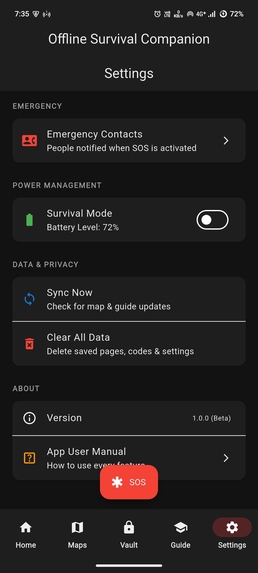
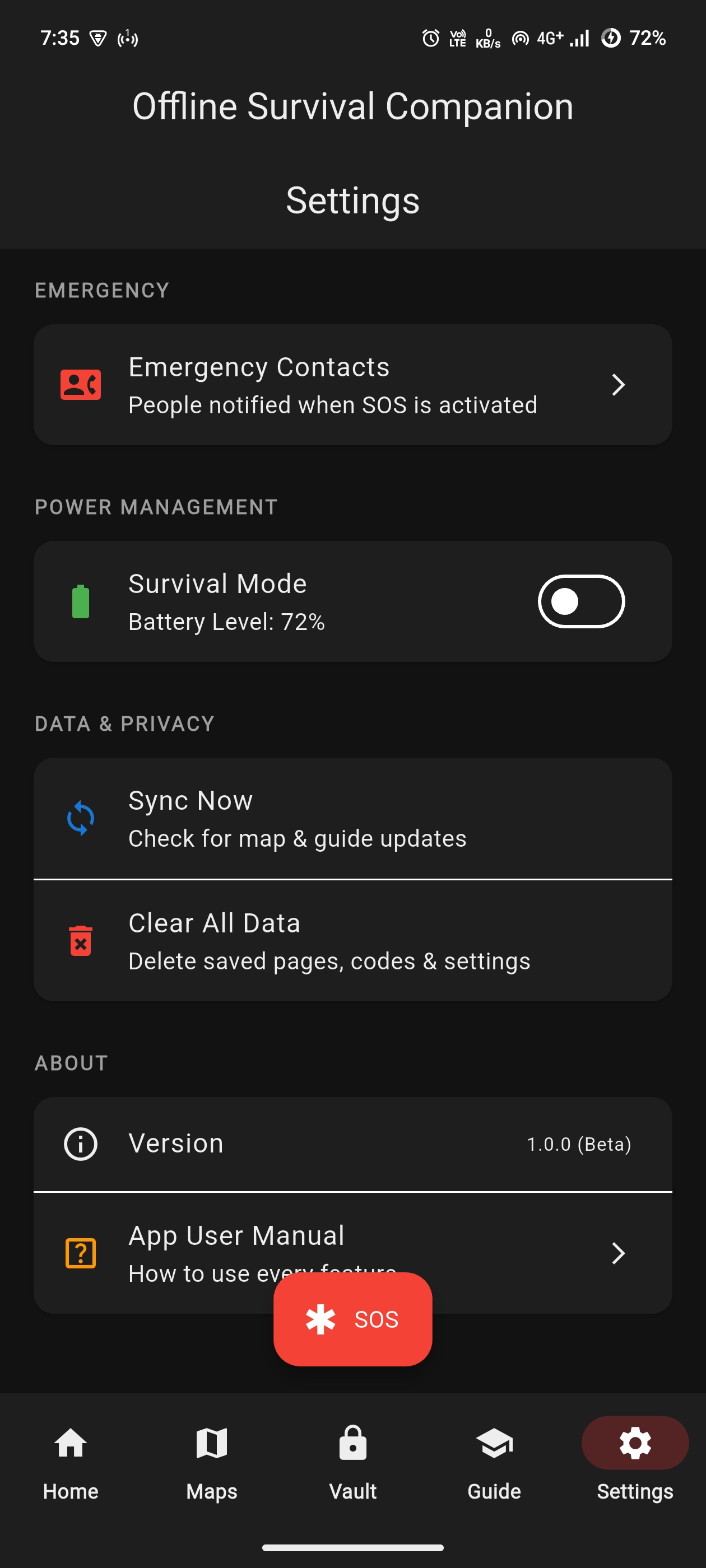
Setting of the app which allows to delete all the data at once with permission and have ultra battery saving mode named a survival mode

Offline Survival Companion Inspiration
This project began with two very real problems we kept seeing around us.
The first was women’s safety. So many cases fail not because the incident didn’t happen, but because there was no solid digital proof. In panic situations, victims don’t always get the chance to record or preserve evidence. And without proof, justice becomes difficult.
The second problem was connectivity. During floods, landslides, or in remote trekking areas, mobile networks disappear. Maps stop loading. Emergency calls don’t go through. People are left completely isolated.
Both situations had something in common:
When signal disappears, safety disappears.
We wanted to build something that doesn’t depend on perfect network conditions. Something that still works when infrastructure fails.
That idea became Offline Survival Companion.
What it does
Offline Survival Companion turns a smartphone into a self-contained safety and survival system that works even without internet.
It addresses two major challenges.
1️⃣ Women’s Safety & Evidence Protection
In many harassment cases, the biggest issue is lack of preserved evidence.
The app provides:
Shake detection emergency trigger
Voice-activated SOS
Dead-man safety timer
Automatic selfie capture
Automatic video and audio recording
GPS location + timestamp storage
AES-256 encrypted secure vault
Biometric protection
Everything is stored locally and securely — even without internet.
The goal is simple:
If something happens, evidence is captured immediately and cannot be easily erased.
2️⃣ Trekking & No-Signal Disaster Situations
In remote trekking zones or during natural disasters, network coverage often fails first. Without signal:
Online maps stop working
Emergency calls don’t connect
Location sharing becomes impossible
Offline Survival Companion solves this by providing:
Fully offline vector maps
Offline turn-by-turn routing
AR compass using device sensors
GPS navigation without mobile data
Low battery survival mode
Peer-to-peer nearby emergency alerts
So even when telecom towers go down, the user is not left helpless.
The idea is:
When infrastructure fails, the device should still guide and protect you.
How we built it
We built the system with an offline-first mindset.
Using Flutter, we created a stable mobile application structured with proper state management. SQLite handles offline routing and structured data, while Hive manages encrypted vault storage.
MapLibre enables offline map rendering with pre-downloaded map tiles. Emergency triggers rely on device sensors such as accelerometer, GPS, magnetometer, microphone, and camera.
Security was critical. We implemented AES-256 encryption with hardware-backed key storage to ensure sensitive data remains protected.
Most processing happens directly on the device. The backend is optional and only activates when internet becomes available.
Challenges we ran into
Making a system truly offline was more difficult than expected.
Most mapping solutions assume constant connectivity. We had to redesign routing logic to function locally.
Balancing strong encryption with instant emergency response required optimization.
Integrating multiple sensors while maintaining battery efficiency was also challenging.
And perhaps most importantly, designing for panic situations forced us to simplify everything. In emergencies, users don’t read instructions — the system must act instantly.
Accomplishments that we're proud of
We built a working offline navigation engine.
We implemented automated emergency triggers.
We created a secure encrypted vault for sensitive data.
And most importantly, we built a system that continues working even when mobile networks collapse.
What we learned
We learned that both women’s safety and trekking/disaster survival share a hidden dependency — network infrastructure.
We learned that preserving evidence quickly can change real outcomes.
We learned that offline-first design forces you to focus only on what truly matters.
And we learned that simplicity is powerful when someone’s safety is involved.
What’s next for Offline Survival Companion
This project is just the beginning.
We plan to improve peer-to-peer emergency communication reliability and optimize emergency workflows further.
In the future, we want to explore satellite-based SOS systems and predictive safety alerts.
Our long-term vision is to create a decentralized safety ecosystem where resilience is built directly into devices — not dependent on constant connectivity.
Offline Survival Companion is not just about technology.
It’s about making sure that when something goes wrong, help doesn’t depend on signal bars.
Built With
- accelerometer
- biometric-authentication-(local-auth)
- camera-api
- database
- express.js
- flutter-(dart)
- flutter-bloc
- gps-/-location-services-api
- hive-(aes-256-encrypted-storage)
- magnetometer
- maplibre-gl
- mbtiles-(offline-map-tiles)
- microphone
- node.js
- sql
- sqlite-(sqflite)

Log in or sign up for Devpost to join the conversation.