-
-

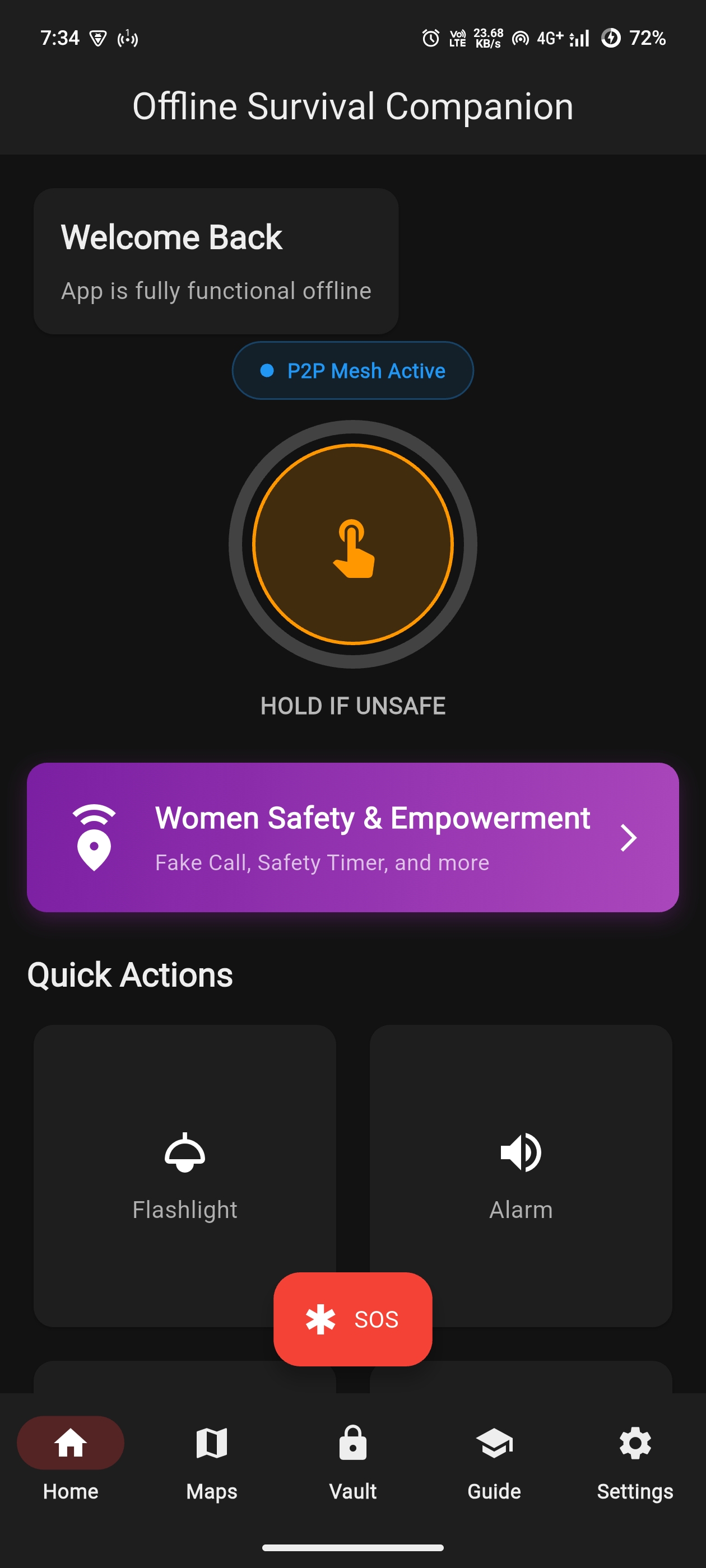
Offline Survival Companion App opening user-interface
-
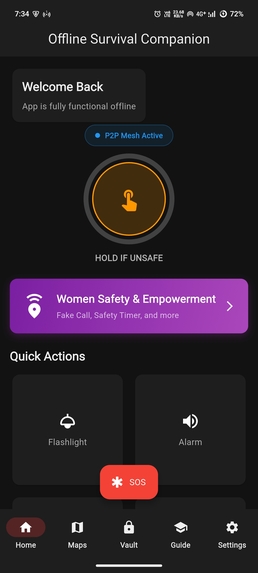
App first look
-
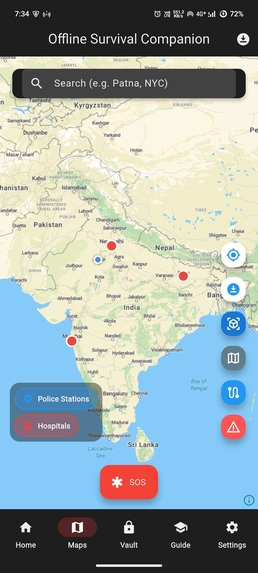
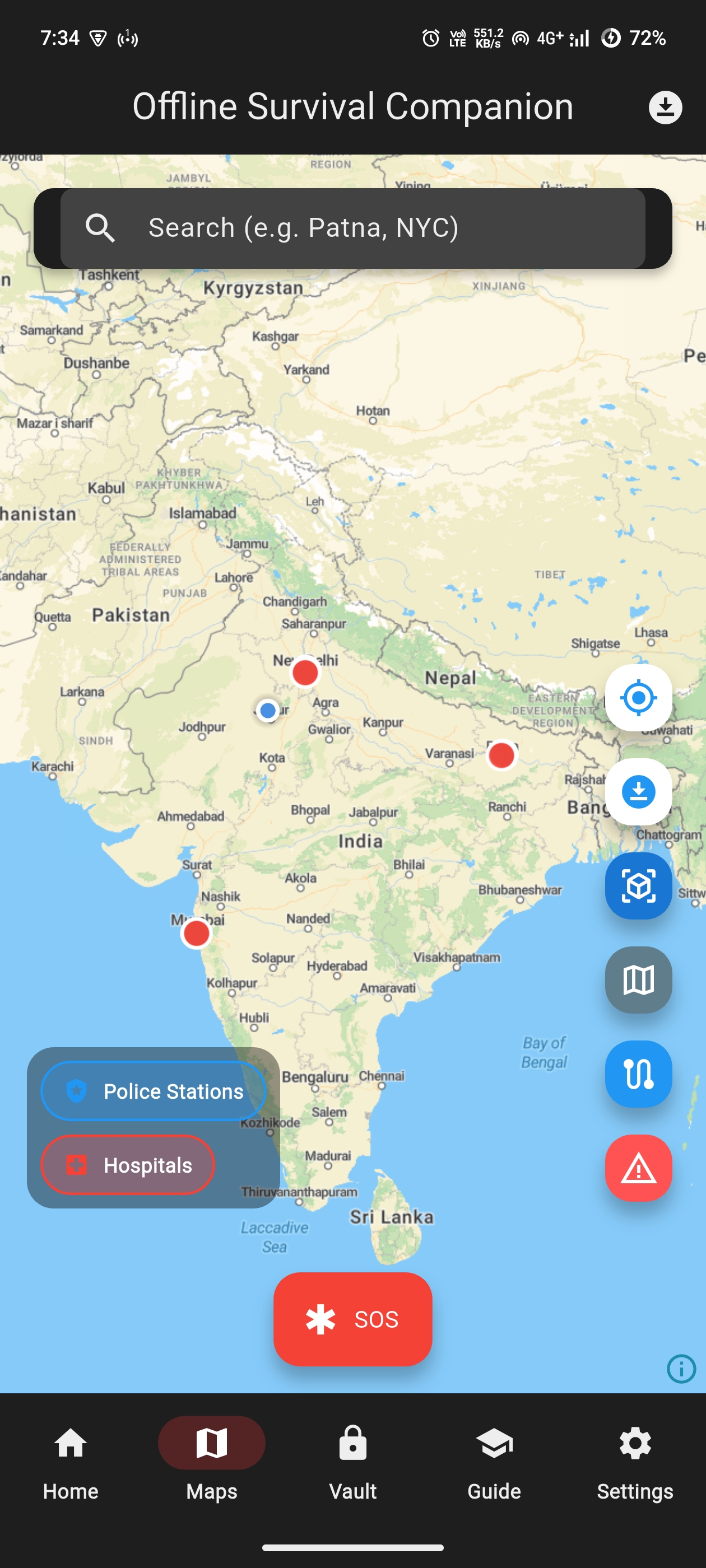
Location routing without internet for hiking without internet and live location sharing via SMS without the internet
-
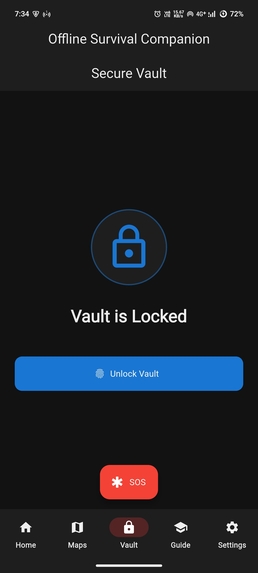
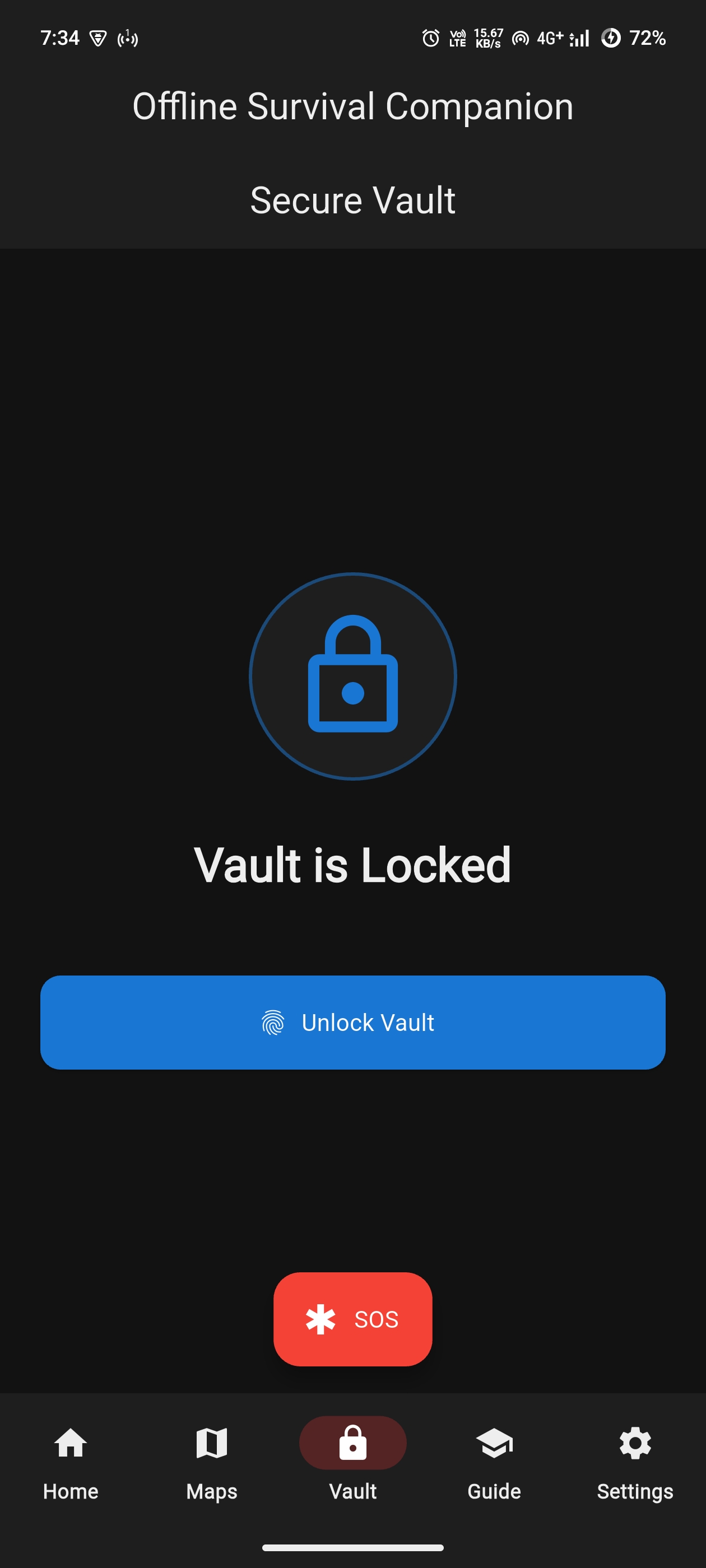
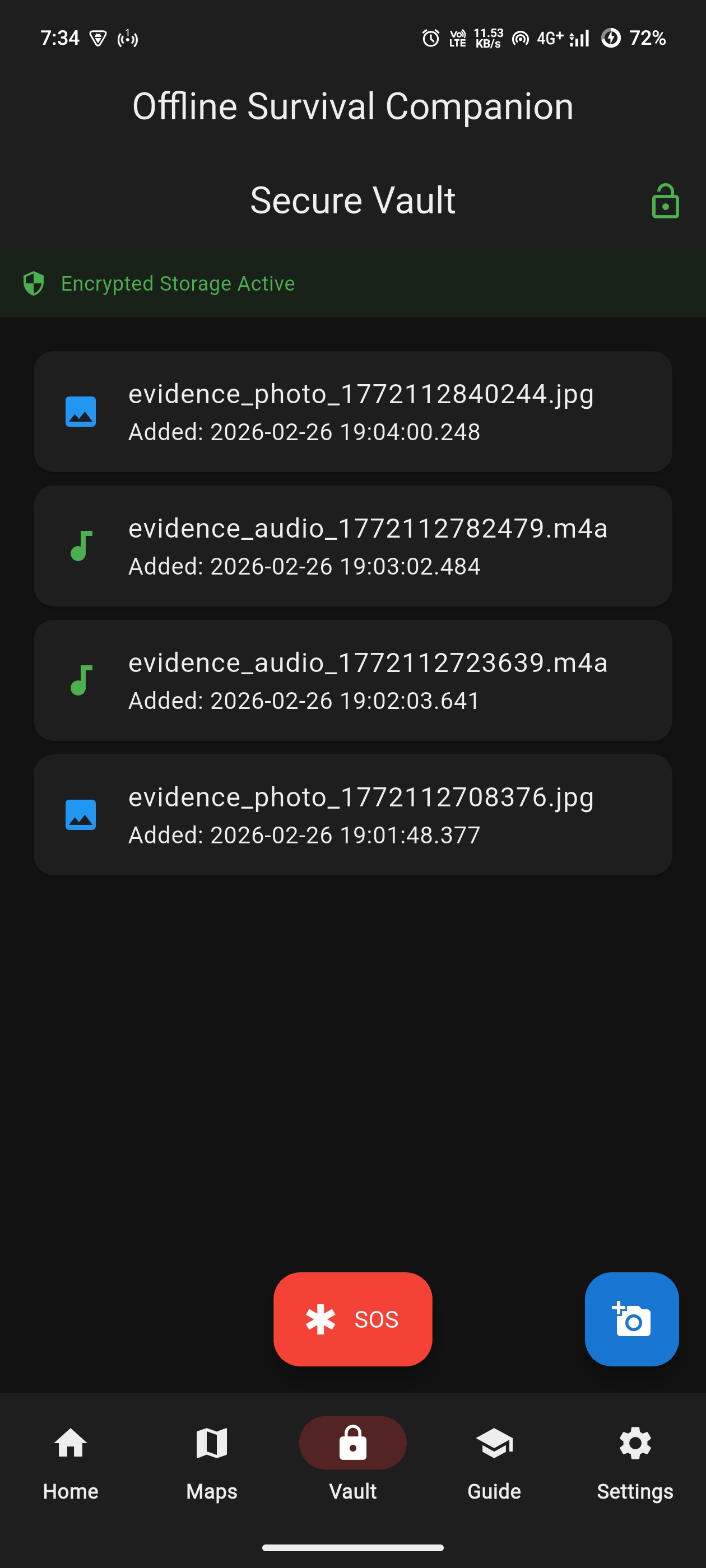
Secure folder which saves the audio, back camera video & front camera photo when the app is on emergency mode
-
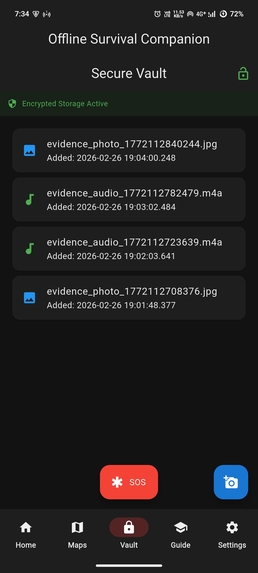
saved audio, photo and video in the secure folder which opens when the password or fingerprint is authenticated
-
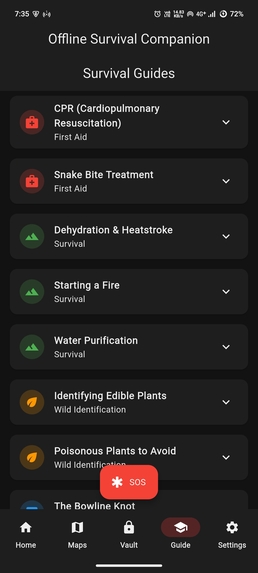
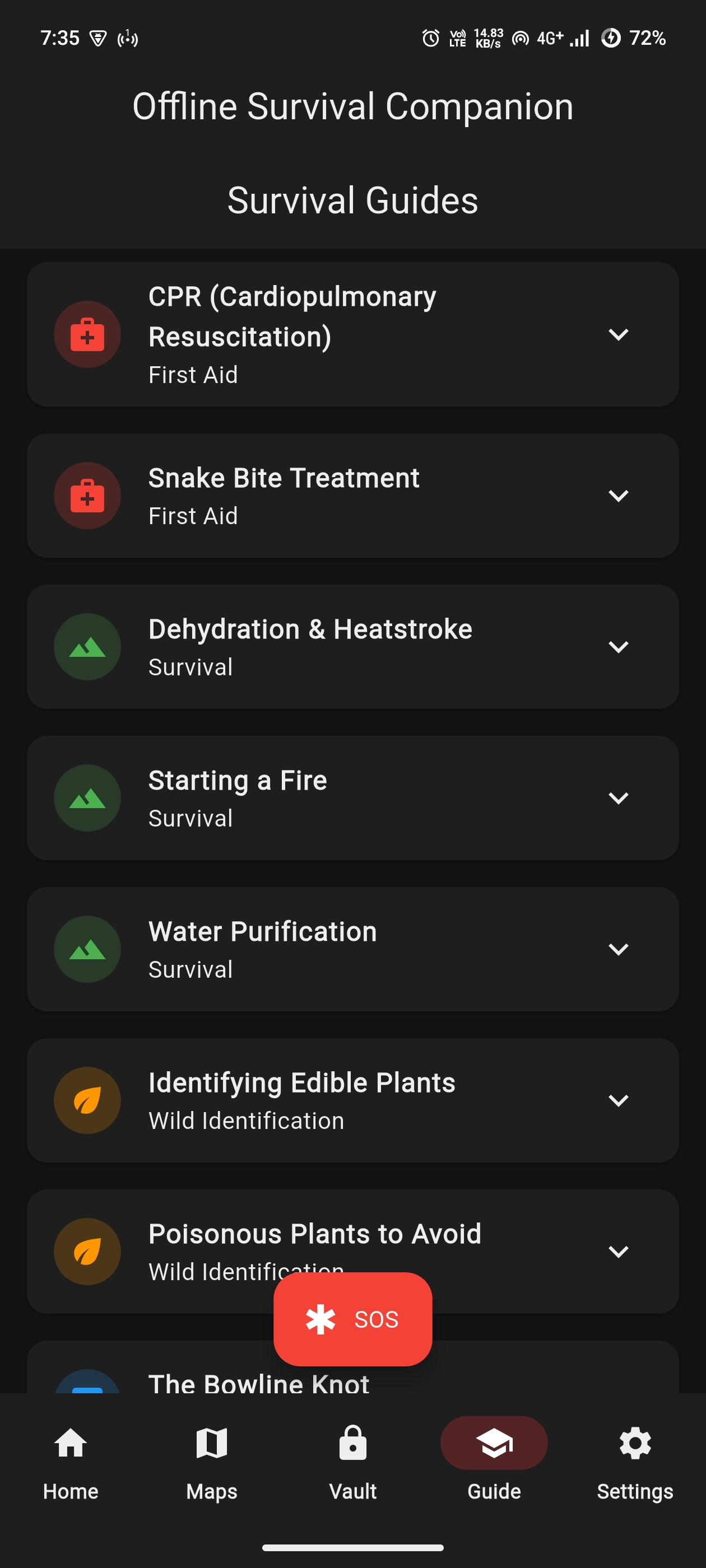
Survival Guidelines which is offline and helps the user when the user is in problem when in no internet and lack of survival knowledge
-
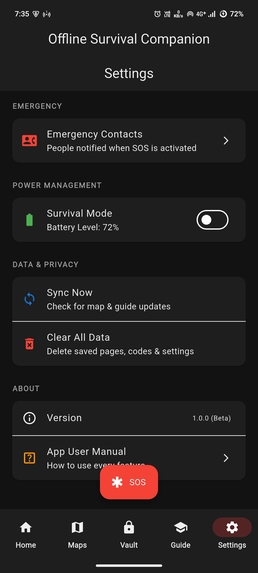
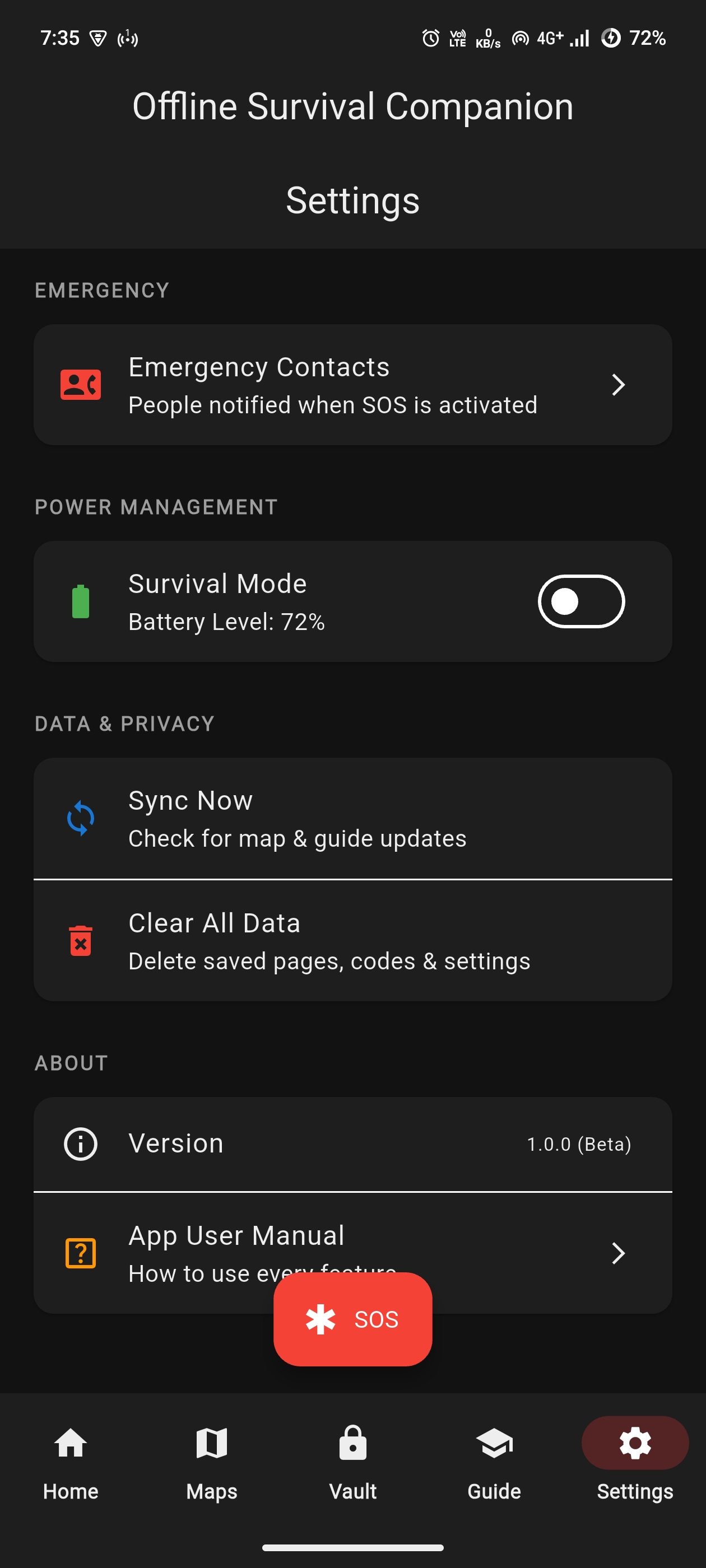
Setting of the app which allows to delete all the data at once with permission and have ultra battery saving mode named a survival mode

Offline Survival Companion Inspiration
It started with a simple question.
Why does safety stop working the moment the internet stops working?
We realized that almost every modern safety solution depends on infrastructure. If there is signal, it works. If there is internet, it responds. If servers are online, help arrives.
But what happens when the signal bars disappear?
In India, thousands of women struggle to prove harassment because there is no digital evidence. Floods and landslides wipe out both roads and telecom towers at the same time. Hikers lose connectivity exactly when they need help the most.
The pattern was obvious:
Safety fails when connectivity fails.
That realization changed everything for us.
We didn’t want to build another app that works only when conditions are perfect. We wanted to build something that works when everything else fails.
That idea became Offline Survival Companion — a safety system built on hardware, not infrastructure.
What it does
Offline Survival Companion turns a smartphone into an autonomous survival tool.
It focuses on two critical areas.
1️⃣ Women’s Safety & Evidence Preservation
One of the biggest reasons cases fail isn’t because the crime didn’t happen — it’s because proof didn’t survive.
So we built a system that acts immediately.
Shake detection trigger
Voice-activated emergency response
Safety timer (Dead-man switch)
Automatic selfie capture
Automatic video & audio recording
GPS + timestamp tagging
AES-256 encrypted secure vault
Nearby peer alert within 50–100 meters
Our core belief:
Evidence must be preserved before it can be erased.
Even without internet, the app stores secure, geo-tagged proof locally. No cloud dependency. No waiting for signal.
2️⃣ No Signal in Disasters & Hiking Zones
When floods hit or hikers enter remote terrain, network bars disappear.
And with them, so does access to maps and emergency services.
So we built:
Fully offline vector maps
Offline turn-by-turn routing
AR compass using device sensors
GPS navigation without internet
Low battery survival mode
Peer-to-peer emergency broadcast
Because when telecom towers fail,
Devices should become the network.
How we built it
We designed the system with one rule:
Offline-first, always.
Tech Stack
Flutter (Dart) for cross-platform performance
flutter_bloc for clean state management
SQLite for offline map routing
Hive for AES-256 encrypted storage
Node.js + Express (for optional sync when internet returns)
PostgreSQL + PostGIS for spatial capabilities
Architecture Philosophy
Instead of:
Cloud → Device → Cloud
We designed:
Compute at the Edge → Store Locally → Sync When Possible
All critical features — routing, triggers, evidence capture — work locally on the device.
Even if the internet is gone.
Challenges we ran into Making Everything Truly Offline
Most mapping systems assume constant connectivity. We had to redesign routing logic to function entirely offline.
Sensor Integration
Combining accelerometer, magnetometer, microphone, GPS, and camera without draining battery was complex.
Security vs Performance
Encryption must be strong — but emergency systems must also be fast. Balancing AES-256 encryption with real-time execution required careful optimization.
Designing for Panic
In emergencies, people don’t read instructions.
We learned something simple but powerful:
Speed > Complexity.
The interface had to act instantly and feel effortless.
Accomplishments we’re proud of
Built a working offline routing engine
Created autonomous emergency triggers
Implemented a secure encrypted vault
Enabled peer-to-peer alert logic
Designed a system that doesn’t collapse without internet
But what we’re most proud of is this:
We built something that works when infrastructure doesn’t.
What we learned Infrastructure is fragile
Floods, disasters, rural gaps — connectivity cannot be assumed.
Evidence changes outcomes
Many legal failures are linked to missing proof. Technology can preserve truth.
Offline-first changes how you think
It forces you to ask:
What must work under stress?
What cannot depend on servers?
What happens if everything else fails?
Simplicity saves time
In emergencies, simplicity isn’t a design choice. It’s survival.
What’s next for Offline Survival Companion
We see this as the beginning.
Short-Term
Improve BLE mesh communication
Optimize peer-to-peer reliability
Refine emergency UI states
Mid-Term
Satellite-based SOS integration
AI-powered risk prediction
Crowd-sourced safety heatmaps
Long-Term Vision
We envision a decentralized safety ecosystem where:
Resilience = Hardware + Local Intelligence
Not cloud dependency.
Offline Survival Companion isn’t just another app.
It’s a shift from infrastructure-dependent safety to autonomous survival intelligence.
And we believe that shift is necessary.
Built With
- api
- biometric
- camera
- express.js
- flutter-(dart)
- gps-&-device-sensors-(accelerometer
- hive-(aes-256-encrypted-storage)
- magnetometer
- maplibre-gl
- microphone)
- node.js
- postgresql-+-postgis
- sqlite

Log in or sign up for Devpost to join the conversation.