Inspiration
Living in Peru, a region with extreme seismic activity, ancient housing structures, high-density high-rises, and vulnerable low-income communities, makes the threat of a catastrophic earthquake a constant reality. Watching recent disaster responses across South America, including the crises in Venezuela, highlighted a tragic recurring pattern: the moment disaster strikes, cellular networks collapse instantly.
When infrastructure fails, families face agonizing hours or days not knowing if their loved ones are safe, while emergency responders are forced to operate blind. Driven by the urgent need to protect my family, my friends, and my community, I realized that artificial intelligence and edge computing could solve this critical bottleneck, providing vital connectivity and situational awareness precisely when every traditional system goes dark.
What it does
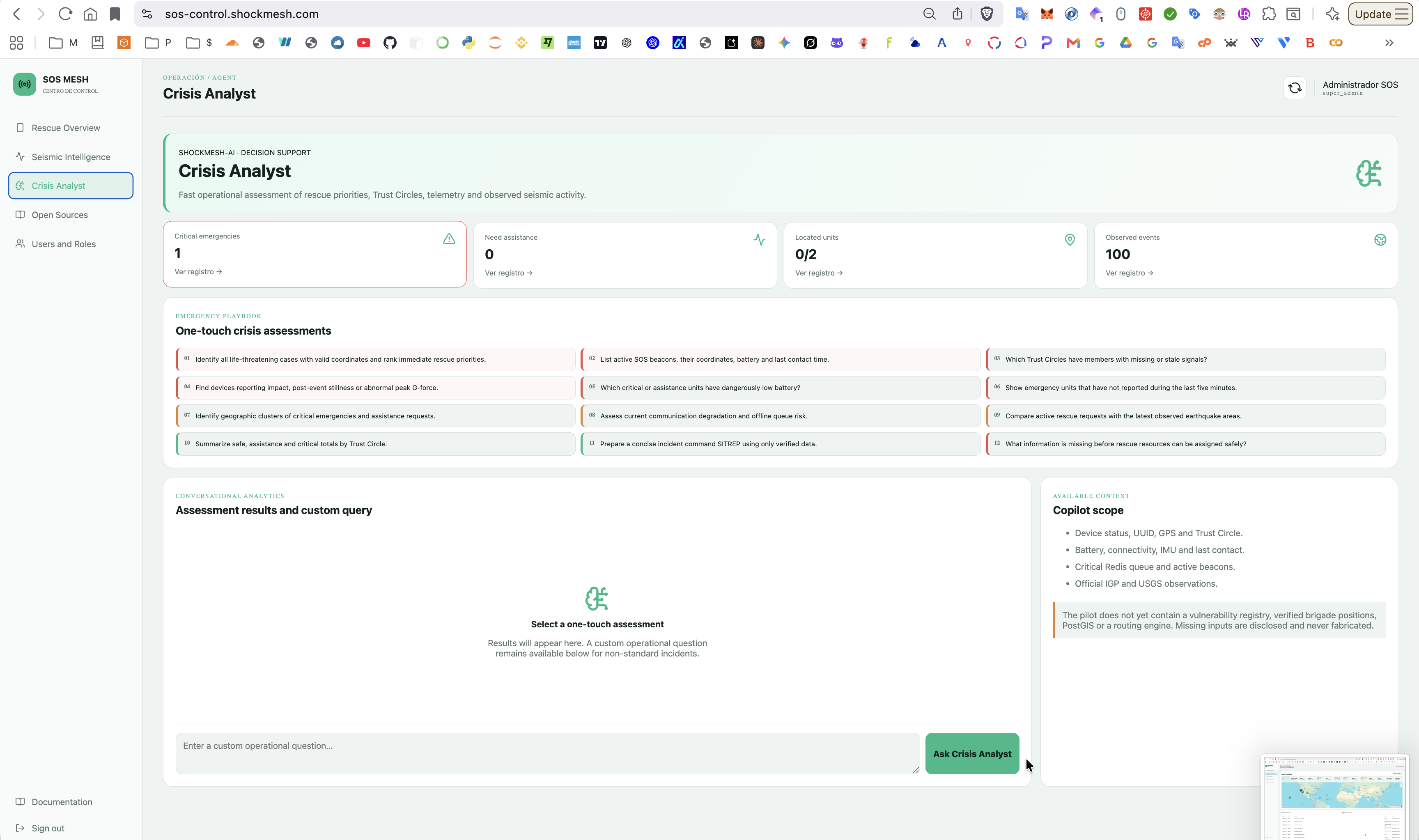
ShockMesh-AI is an offline-first emergency coordination platform that pairs on-device AI with decentralized mesh networking to keep families connected and guide rescue operations when cellular networks fail.
Key capabilities include:
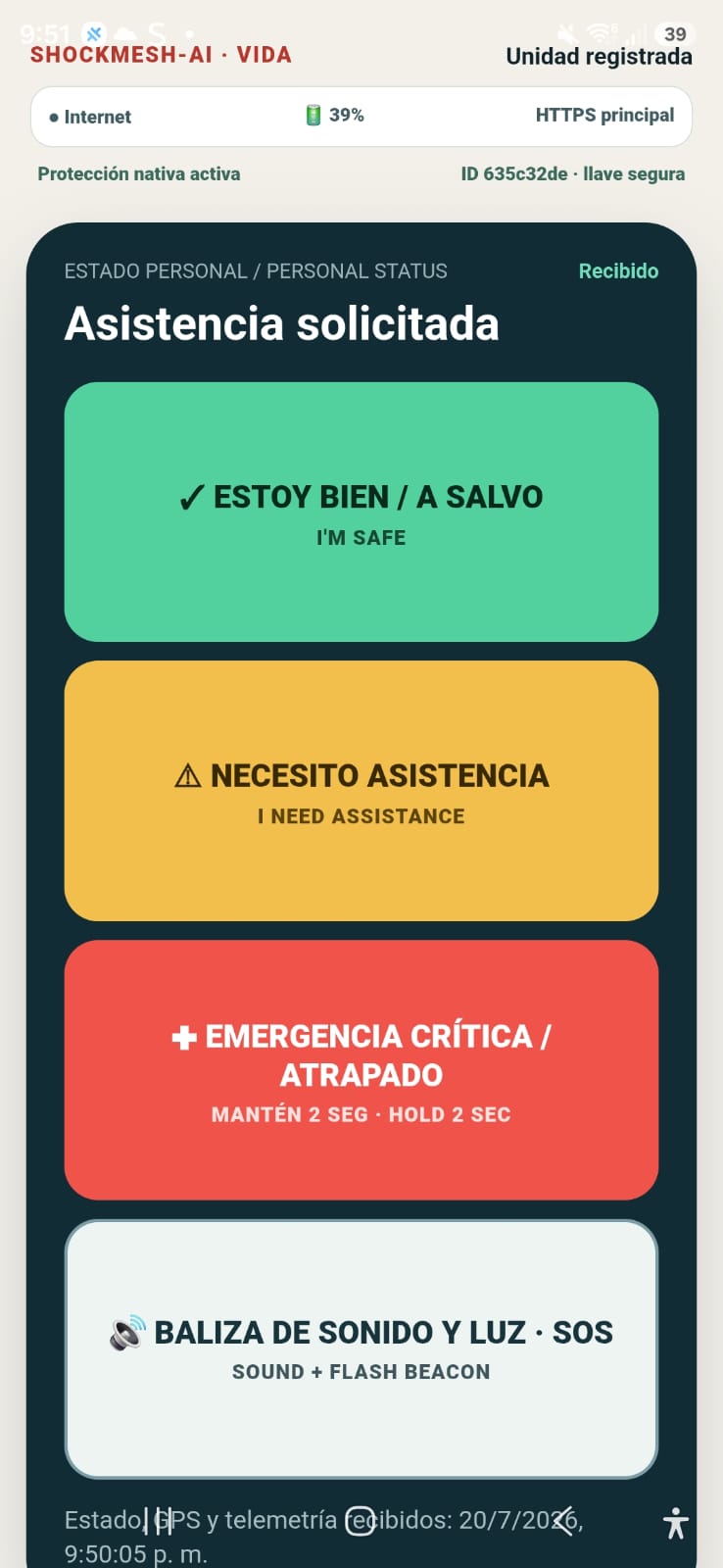
Zero-Load Emergency UI: A high-contrast interface designed for extreme panic with 4 core actions: "I'm Safe", "Need Assistance", "Critical Emergency" (hold-to-confirm), and an acoustic/light "Digital Beacon".
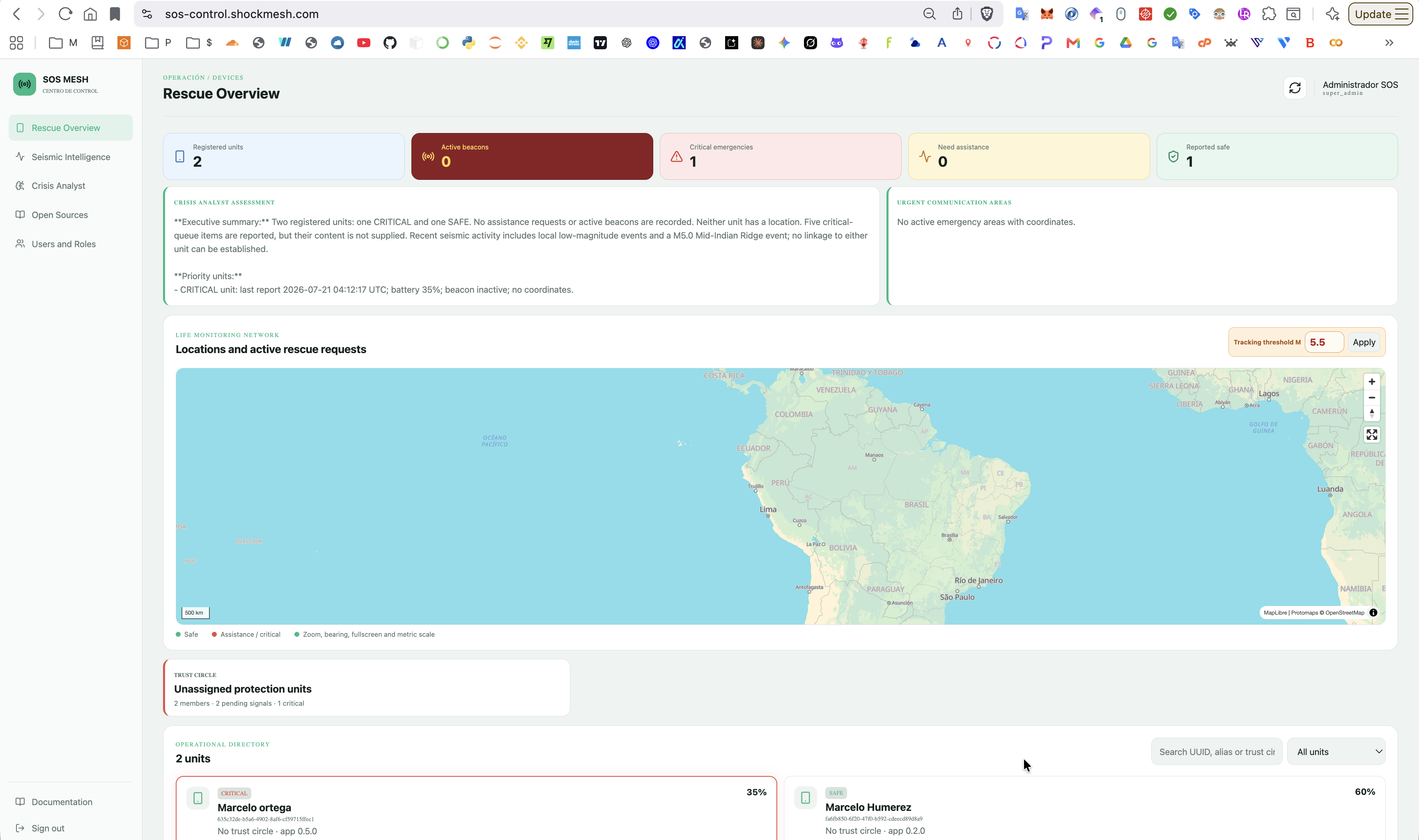
Automated Trust Circles: Automatically organizes users into family or community groups, retransmitting consolidated group status updates to calm panic and reduce network load.
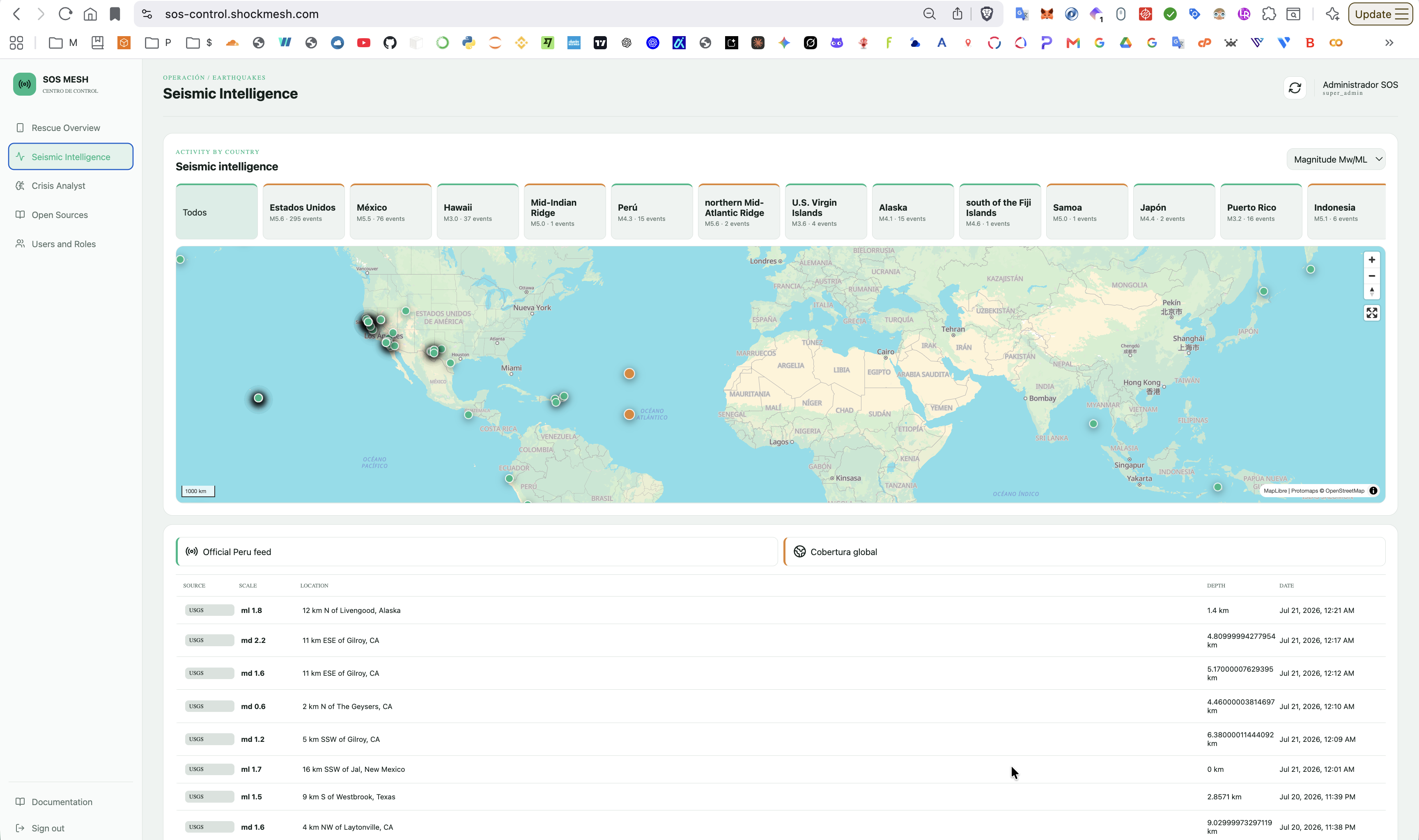
Automated M5.5 Trigger: System-wide shift to critical monitoring upon detecting major seismic activity (M5.5 or higher).
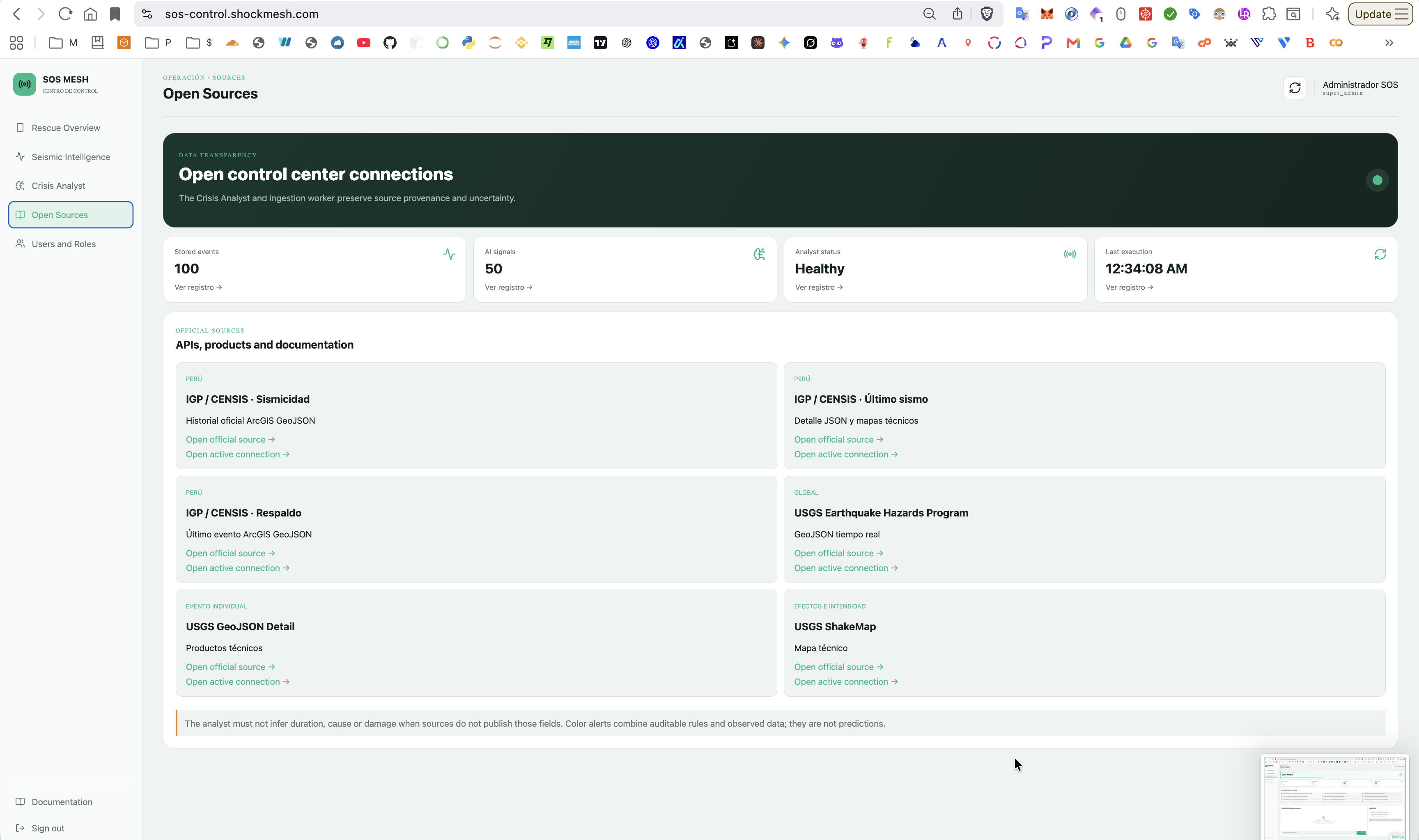
Intelligent Rescue Prioritization: Evaluates incoming telemetry to provide first responders with a prioritized map of structural failures and trapped individuals.
How we built it
The platform relies on a multi-tiered architecture designed to survive complete infrastructure blackouts:
- Multi-Tiered Resilient Transport When primary LTE/5G networks fail, the app seamlessly downgrades across communication layers:
HTTPS / REST API: Primary route when internet connectivity is present.
Compressed Binary SMS: Codified fallback payload under 60 characters for low-signal voice channels.
Peer-to-Peer BLE Mesh: Short-range Bluetooth hop relay (50-meter radius) across neighboring devices when all cellular towers are dark.
- Edge AI & Telemetry Engine The mobile application turns every smartphone into an active seismic node. Using on-device IMU sensors, the client calculates the Peak Ground Acceleration (PGA) in real time:
a_total = sqrt(ax^2 + ay^2 + az^2)
If structural collapse or freefall is detected (near 0g followed by high g-impact and total stillness), on-device AI flags the event as a potential structural failure and prioritizes the alert.
- High-Concurrency Go & Redis Backend The central monitoring engine is built in Go and Redis to ingest massive bursts of telemetry. It handles data aggregation for Trust Circles, consolidating individual reports into single-kilobyte JSON payloads.
Challenges we ran into
Mesh Loop Flooding: Preventing duplicate messages from circulating infinitely in a Bluetooth mesh network without relying on a central server.
Concurrency Spikes: Managing massive connection bursts immediately following a tremor. We solved this by implementing random delay jitter (between 0 and 3 seconds) on the client side and atomic timestamp deduplication in Redis.
Battery Conservation: Continuous GPS and sensor polling rapidly drain battery reserves. We designed the system to throttle sensor sampling dynamically once a user marks themselves as "Safe".
Accomplishments that we're proud of
Sub-Millisecond Deduplication: Filtering out redundant cross-mesh status reports in under 1 millisecond on the server side.
Human-Centered Emergency UX: Building an interface that functions reliably under intense psychological stress, backed by haptic and acoustic feedback.
True Off-Grid Capability: Successfully transmitting location, status, and IMU telemetry across peer devices with zero cellular connectivity.
What we learned
We learned that in crisis situations, less data is more. Stripping down payloads to raw essential telemetry, leveraging edge computation for physics calculations, and prioritizing "Trust Circles" solves both the technical challenge of network congestion and the emotional need for immediate family certainty.
What's next for Offline Disaster & Rescue Coordination Powered by AI
Civil Defense Integration: Bridging the central dashboard directly with local first-responder dispatch systems.
LoRaWAN / Satellite Gateways: Deploying low-cost neighborhood hardware nodes to bridge local BLE meshes directly to satellite relays.
Native OS Wrapper: Compiling native Android background services (Foreground Services) to guarantee continuous BLE scanning and IMU monitoring even when device screens are locked.
Built With
- android
- capacitor
- css3
- docker
- gradle
- html5
- java
- javascript
- postgresql
- shell
- typescript
- vite
- yaml


Log in or sign up for Devpost to join the conversation.