🚀 Offinity AI — Project Story
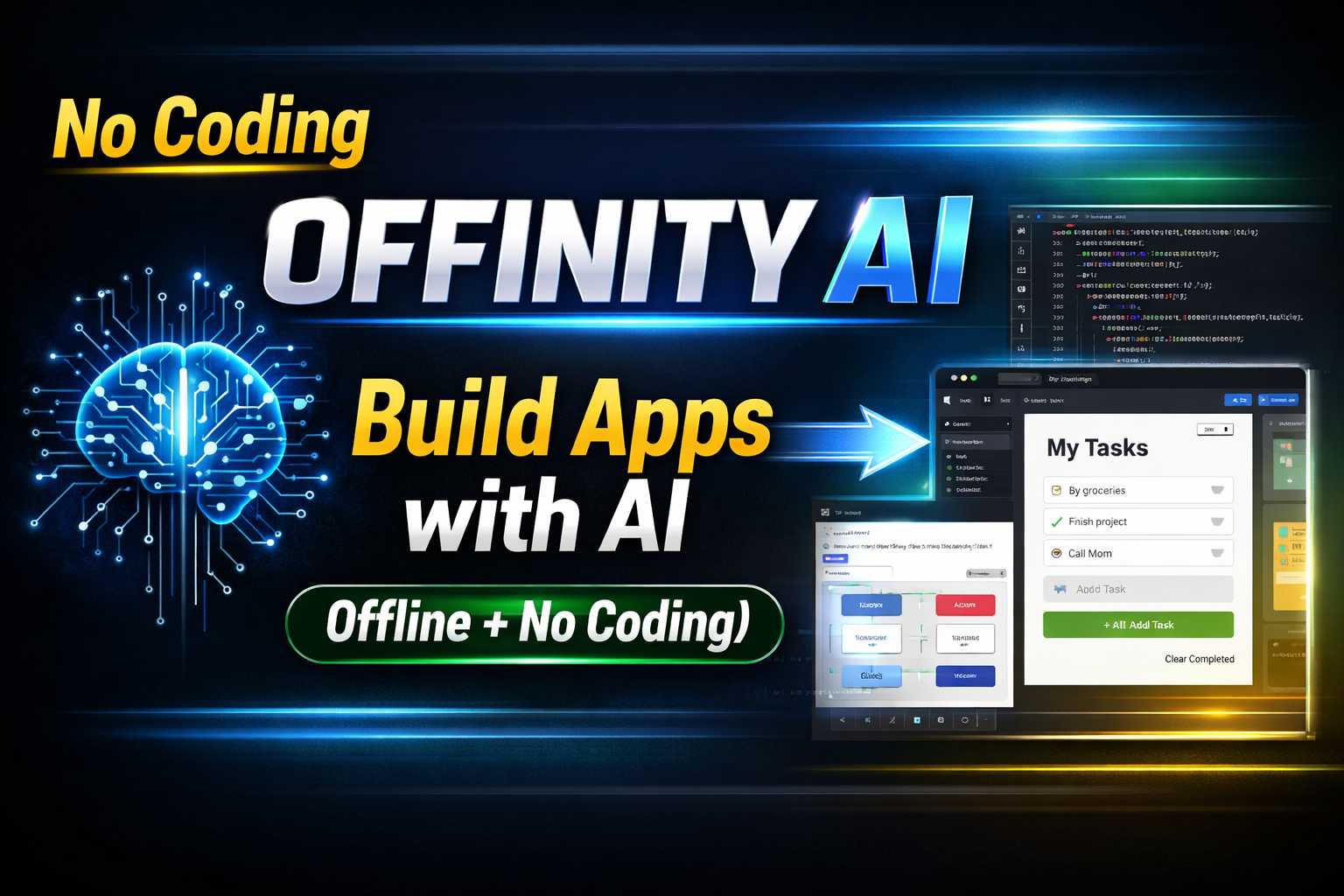
⚠️ Stop coding and stop writing long prompts. Offinity AI builds your app from a simple idea, then lets you customize everything visually — UI, backend, and APIs — fully offline using small local AI models, with no coding knowledge required.
💡 Inspiration
Most AI tools today still require coding.
Even with tools like Cursor, Aider, or Copilot, users must understand code, APIs, and project structure. These tools assist developers — but do not remove the need to code.
This creates two major problems:
- Beginners cannot easily build complete applications
- Developers in secure or offline environments cannot use these tools
This led to a simple idea:
What if anyone could build a complete full-stack application using just a simple idea — even without internet?
That idea became Offinity AI.
🛠️ What We Built
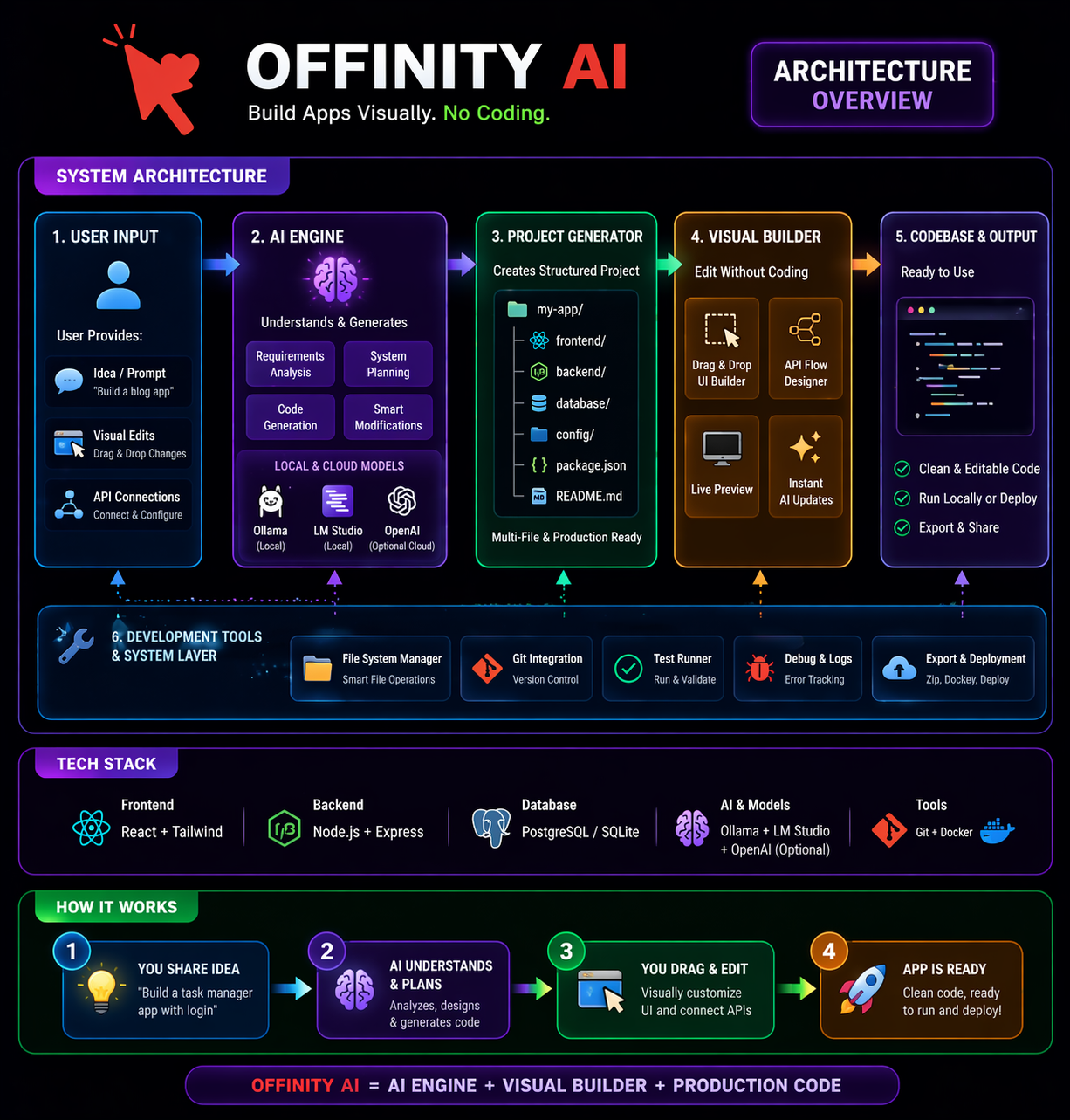
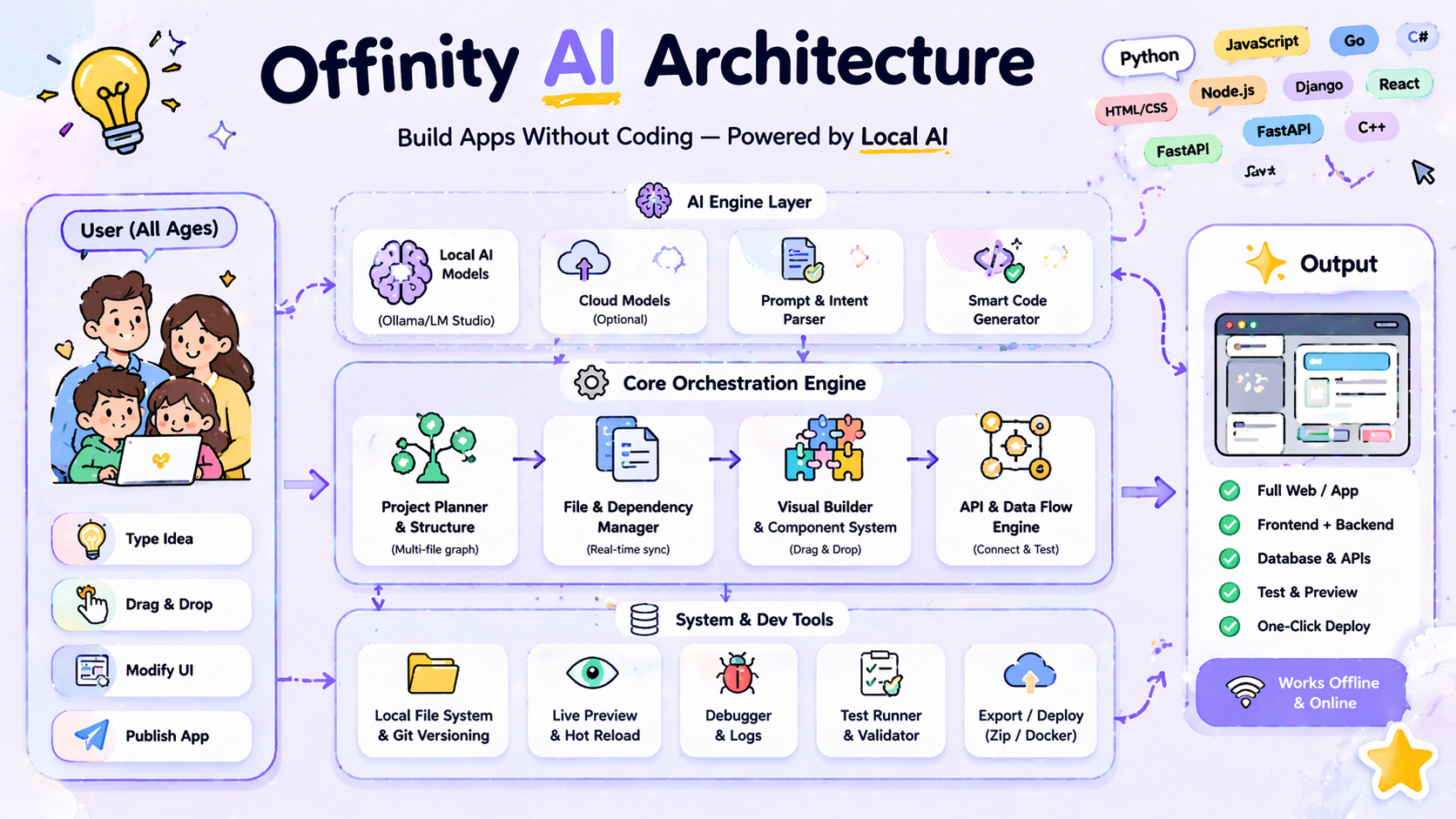
Offinity AI is an offline-first AI development platform that allows users to create complete applications using simple English prompts.
Users can:
- Generate full-stack apps (frontend + backend + database)
- Work fully offline using local AI models
- Visually edit UI elements without coding
- Design API flows using a visual system
- Debug and test applications automatically
Unlike traditional tools that generate small code snippets, Offinity AI builds complete, ready-to-run systems.
From idea → full app → visually customizable — all without writing code.
🚀 What Makes It Different (KEY SECTION)
Most AI coding tools (Cursor, Aider, Lovable, Claude Code):
- Help developers write code
- Require programming knowledge
- Depend on long, detailed prompts
- Work inside existing codebases
Offinity AI is fundamentally different.
⚡ From Prompting → Direct Building
- Just type a simple idea (no long prompt needed)
- Offinity AI builds the full application
👶 No Coding Knowledge Required
- No need to understand code, APIs, or project structure
- Designed for beginners and non-developers
🎨 Visual Control (Unique Advantage)
- Customize everything visually
- Drag, resize, edit UI
- Configure APIs and flows using mouse interactions
🔐 Fully Offline with Small Models
- Works with local AI models (even ~8B)
- No internet required
- No cloud dependency
🔗 Full System Generation
- Builds frontend, backend, and database together
- Automatically connects all components
Other tools still require coding + long prompts. Offinity AI lets you build, customize, and control everything visually — without coding.
⚙️ How We Built It
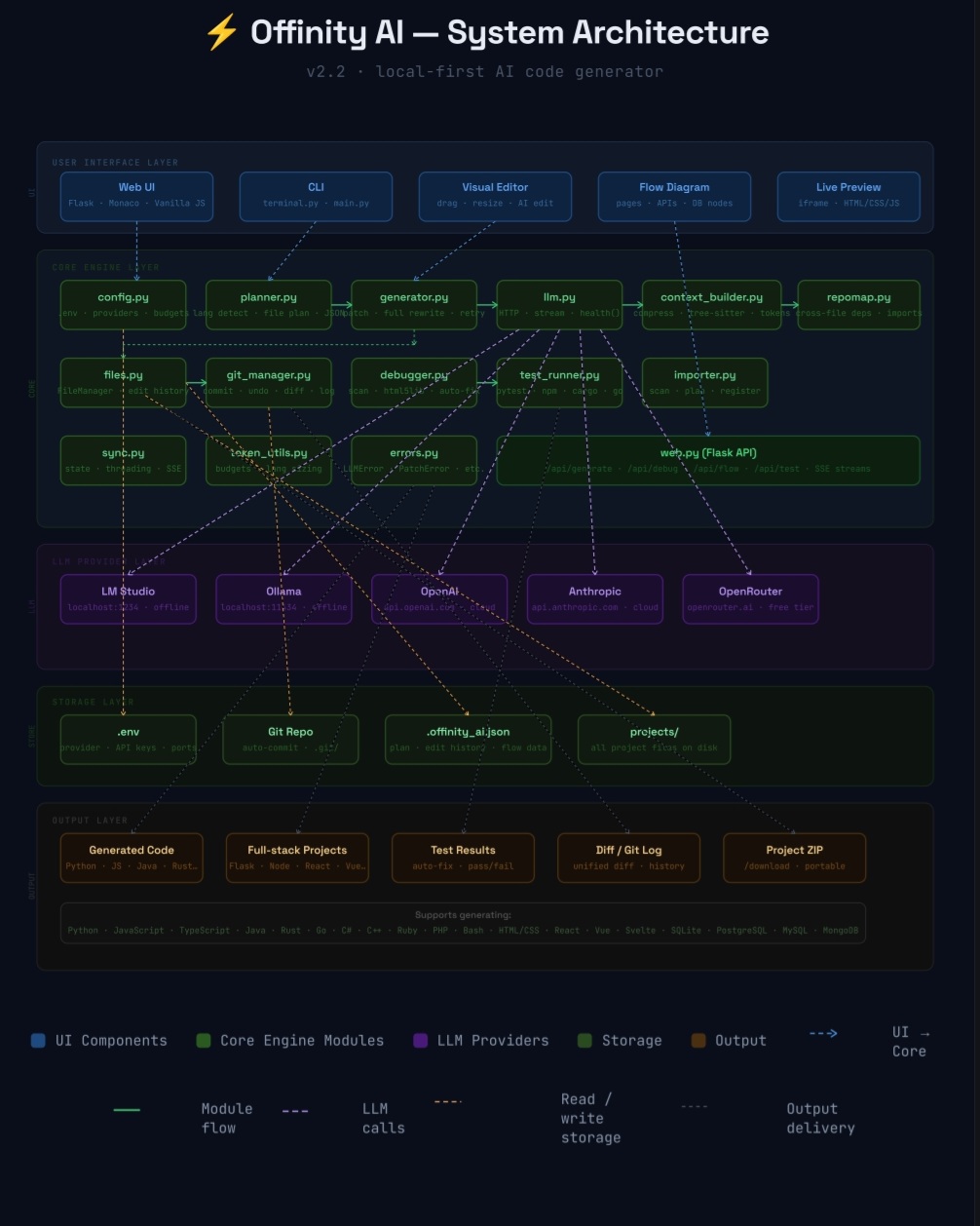
Offinity AI combines multiple systems into one unified platform:
- Local AI integration (LM Studio, Ollama)
- Optional cloud APIs (OpenAI, Anthropic, OpenRouter)
- Multi-file project generation engine
- Patch-based editing system for efficient updates
- Visual UI builder and API flow engine
- Git-based version control system
The system is optimized to work efficiently even with smaller local models (7B–13B), enabling fully offline usage.
🧗 Challenges We Faced
- Managing large multi-file projects without breaking dependencies
- Maintaining accuracy with smaller offline AI models
- Designing a visual editor that maps directly to real code
- Preventing AI from overwriting previous changes
- Ensuring full offline functionality
We solved these using dependency-aware mapping, patch-based updates, and edit memory.
📚 What We Learned
- Building offline + online hybrid AI systems
- Optimizing AI for real-world development workflows
- Designing tools for beginners, not just developers
- Combining visual systems with AI for better usability
🌍 Impact
Offinity AI makes development:
- Accessible — beginners can build real applications
- Secure — works offline in restricted environments
- Efficient — reduces development time using AI
🔮 Future Vision
- One-click deployment
- Collaboration features
- Plugin ecosystem
- Advanced local model optimization
Offinity AI is not just an AI coding tool — it is a complete offline-first development platform designed to redefine how applications are built.
Built With
- api
- editor
- full-stack
- git
- javascript
- lm
- monaco
- ollama
- openai
- python
- studio

Log in or sign up for Devpost to join the conversation.