-
-
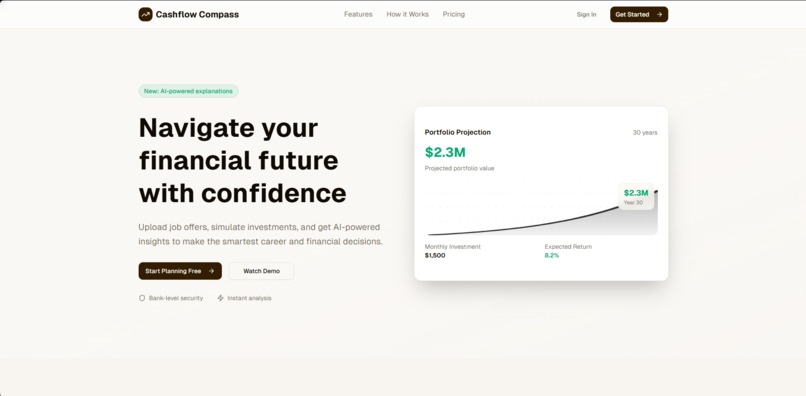
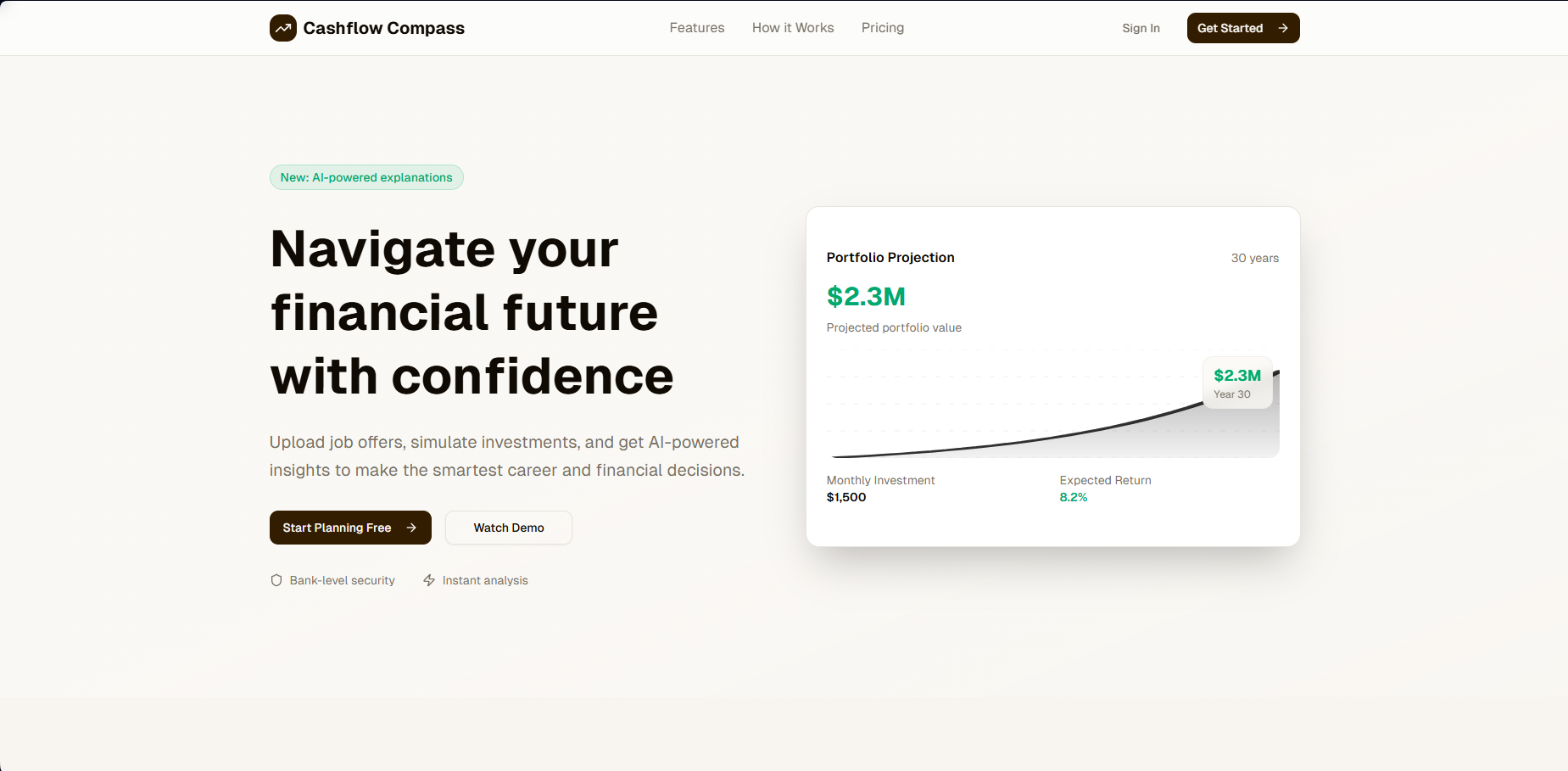
This is the landing page
-
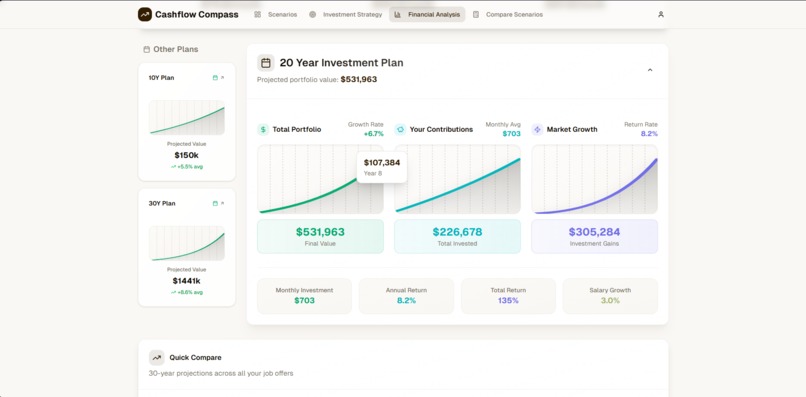
Watch you money grow
-
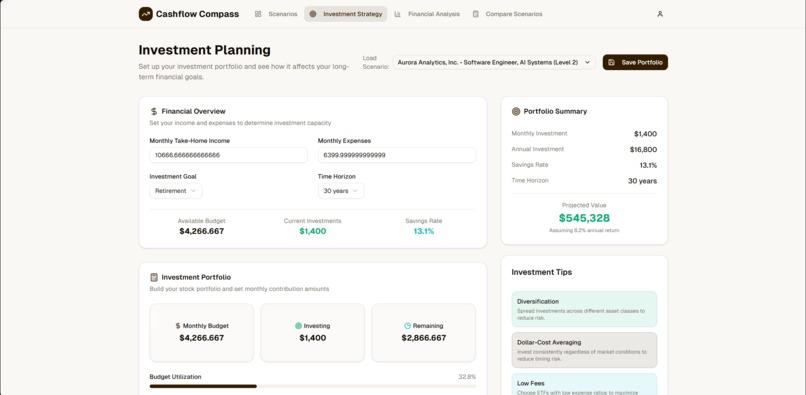
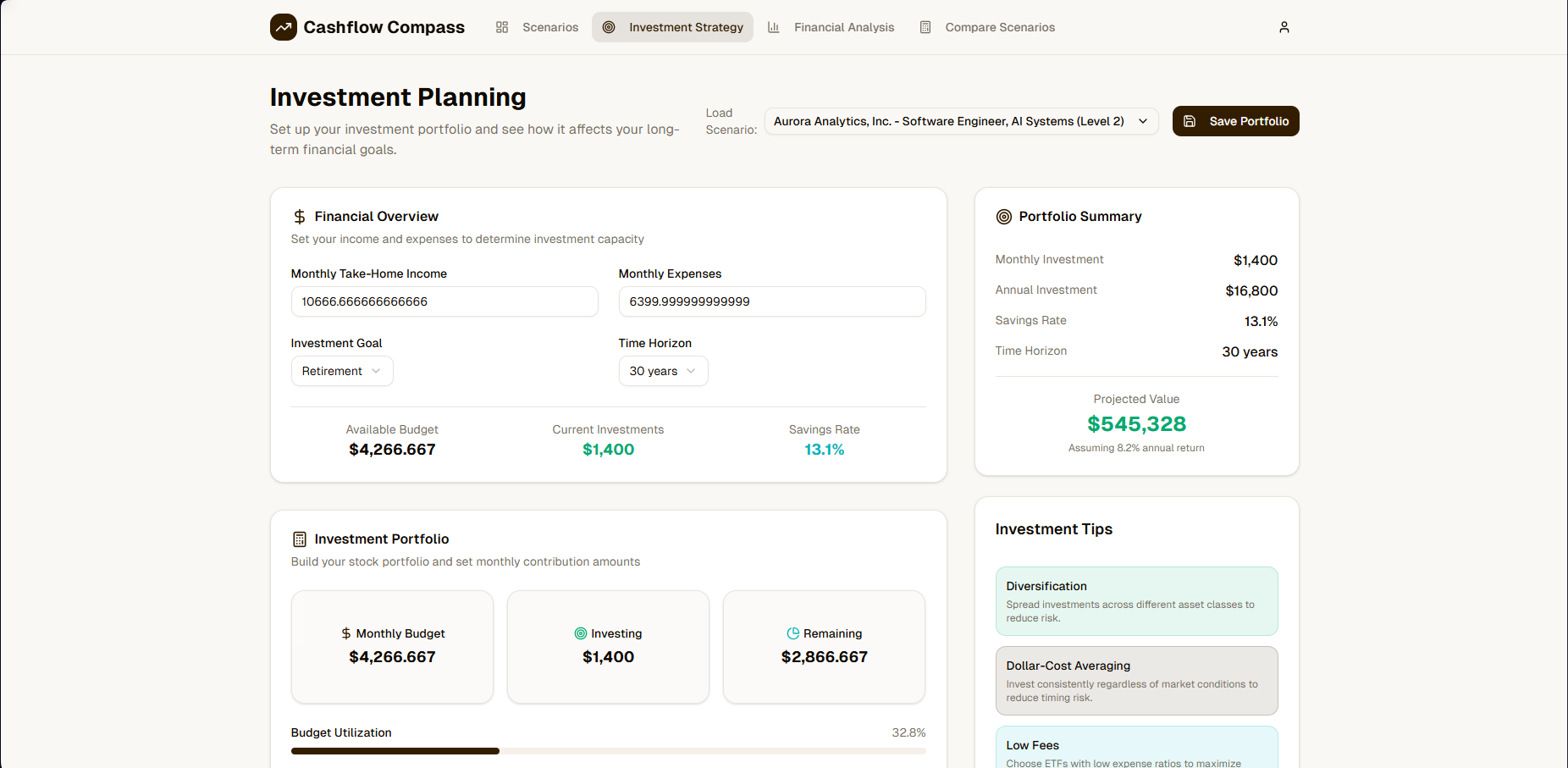
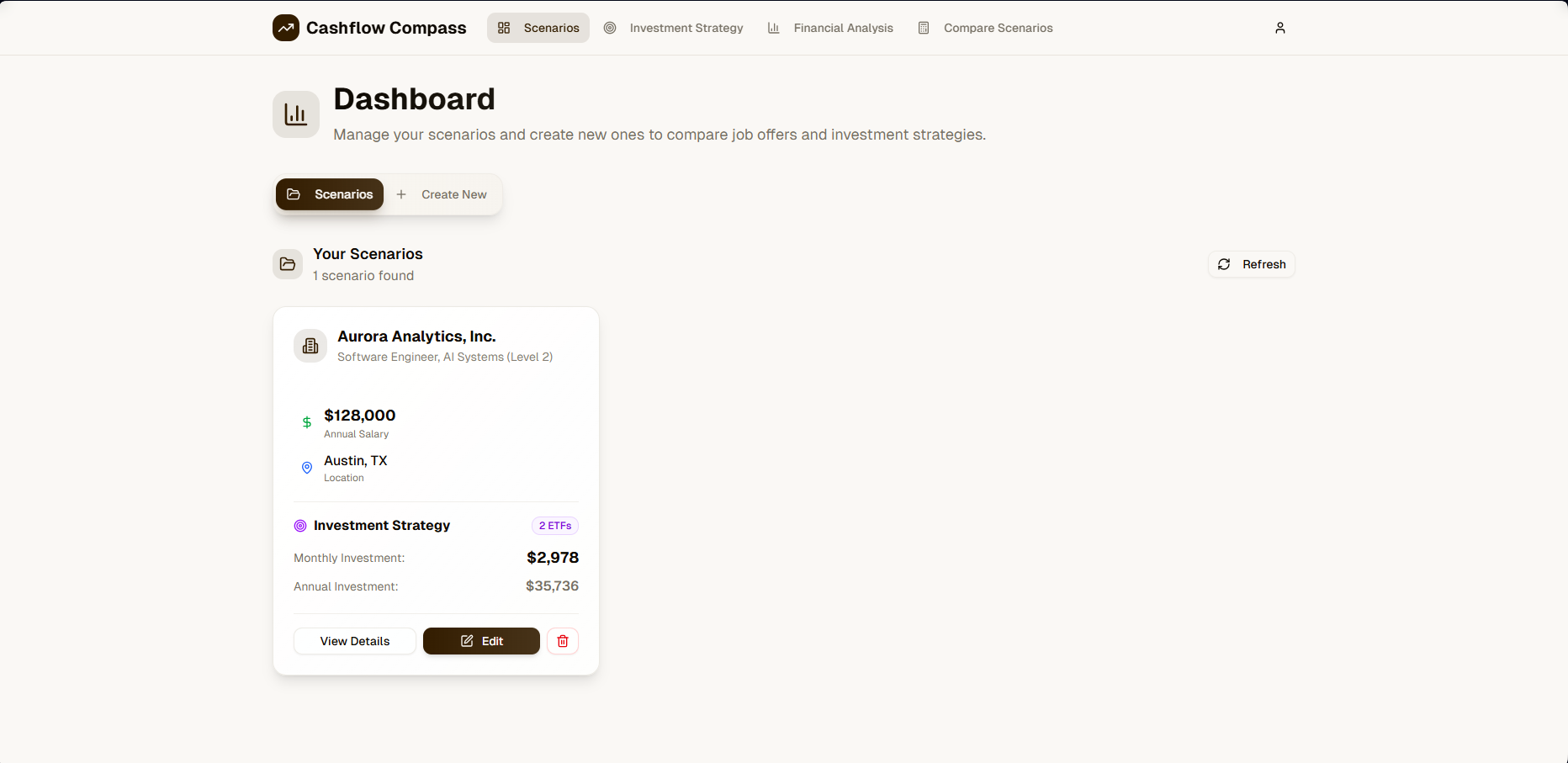
Set up investment plan
-
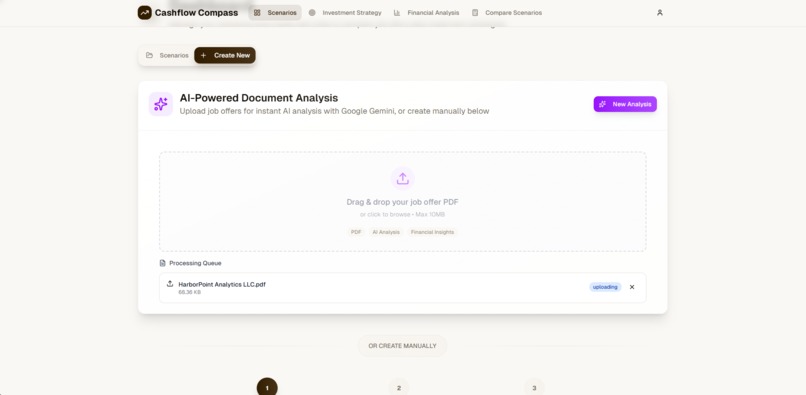
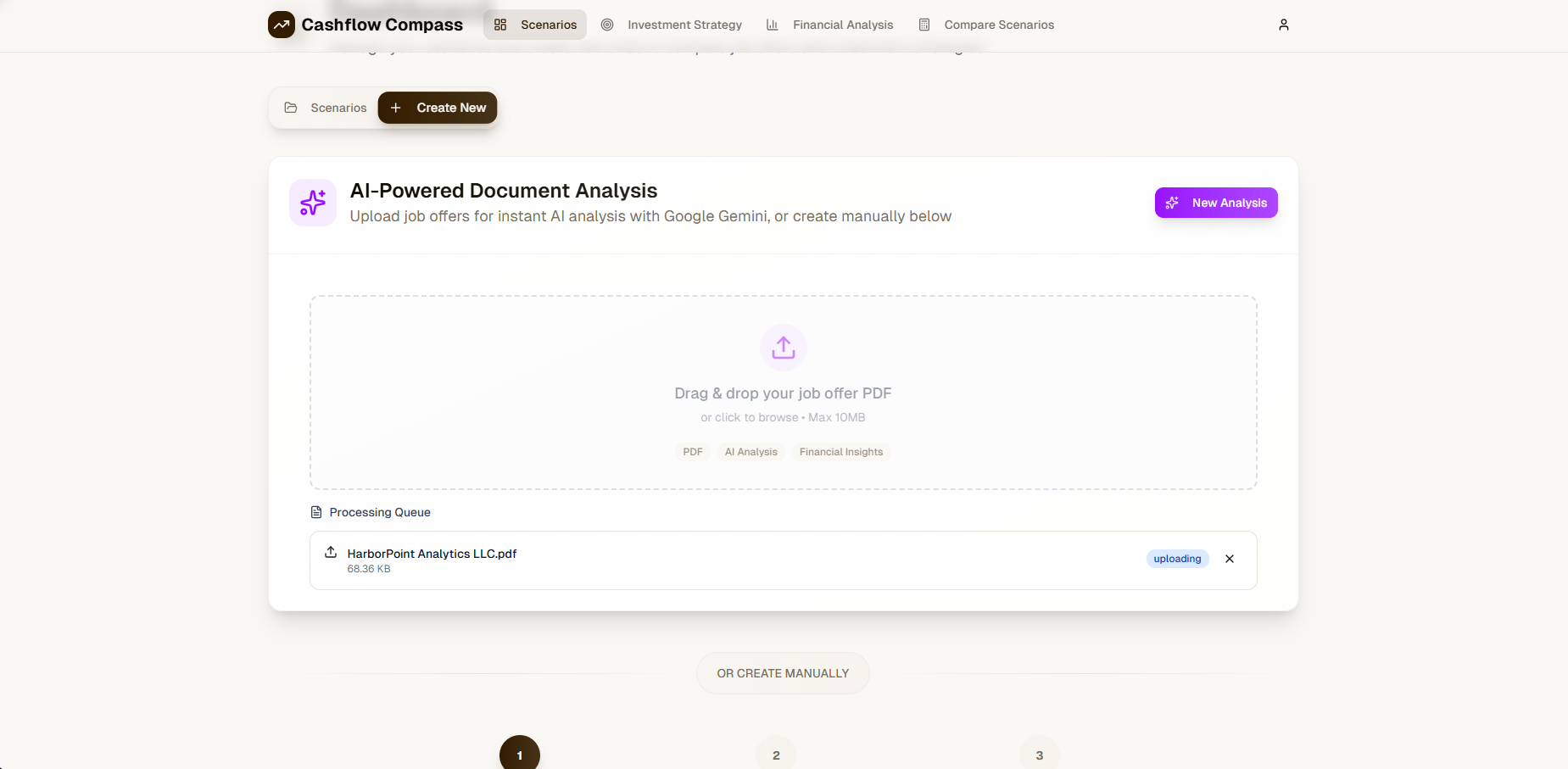
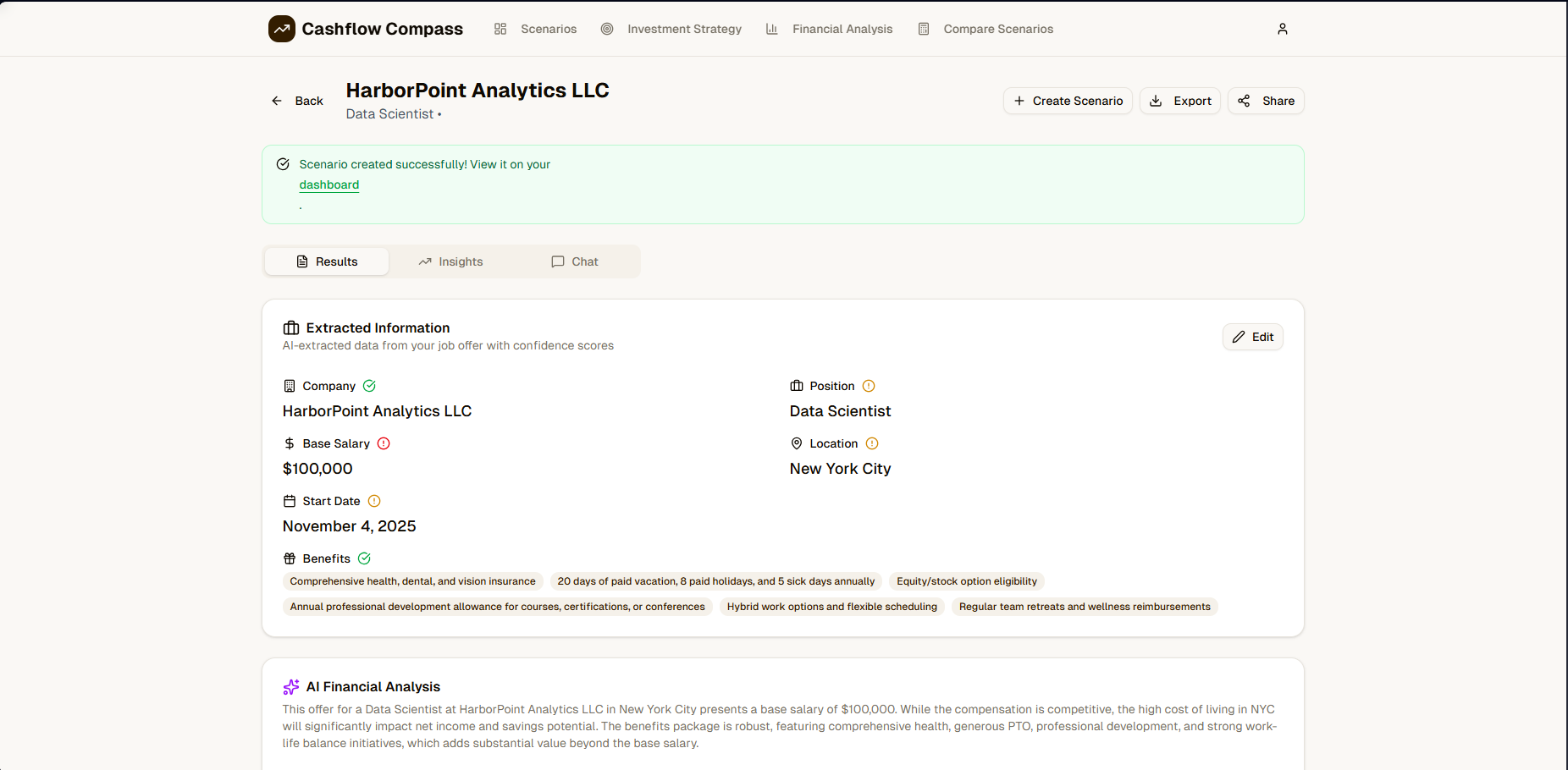
Upload your Letter, and have AI review it.
-
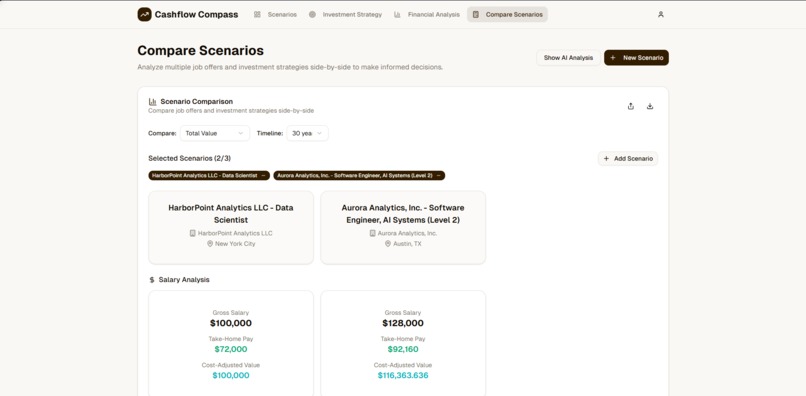
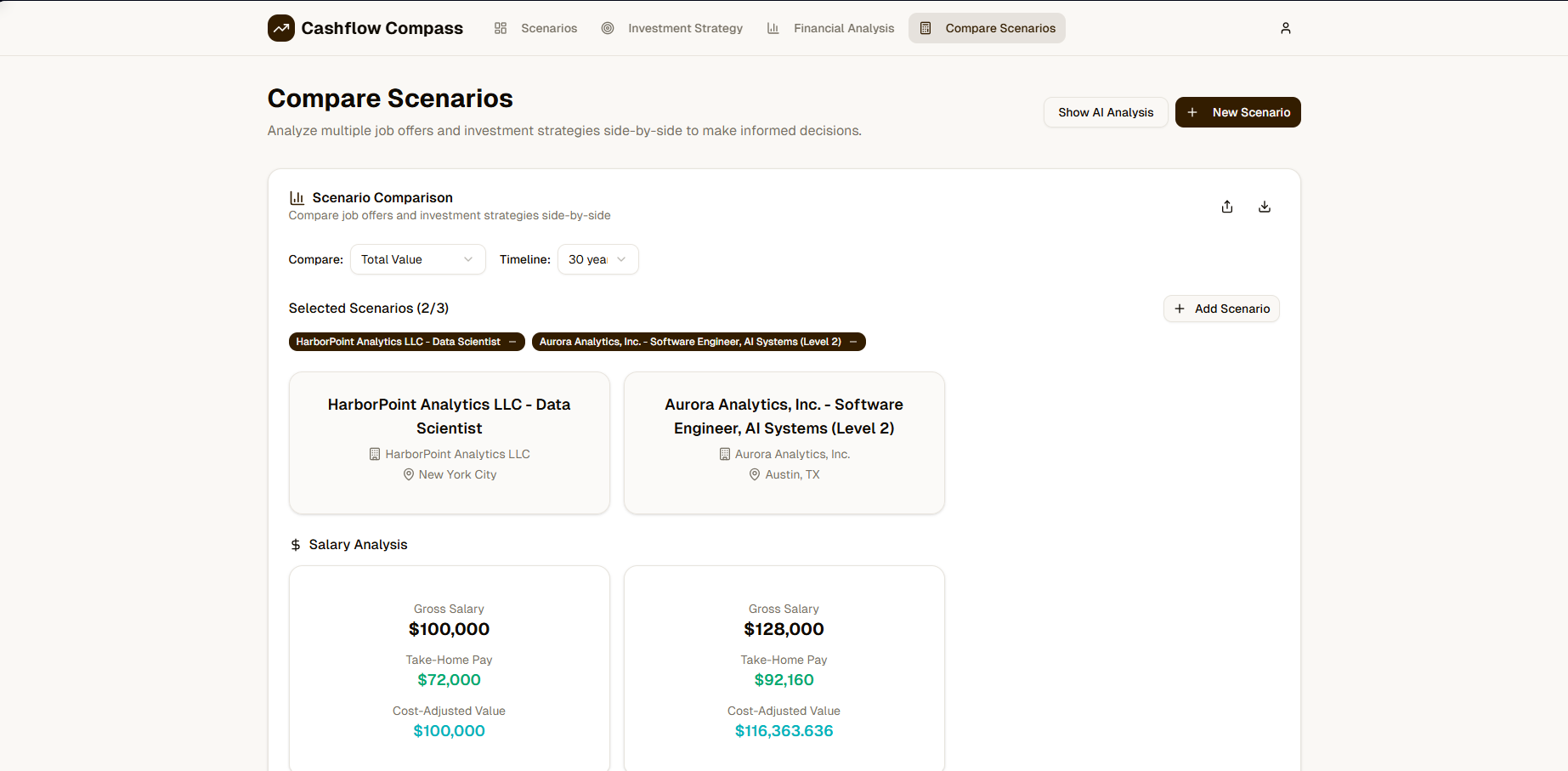
Find your best option.
-
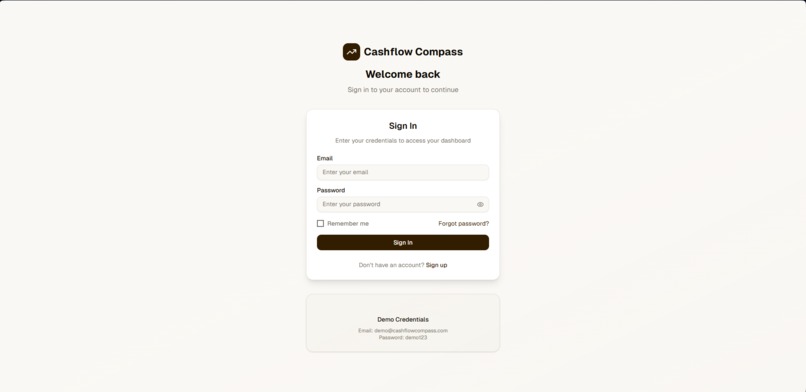
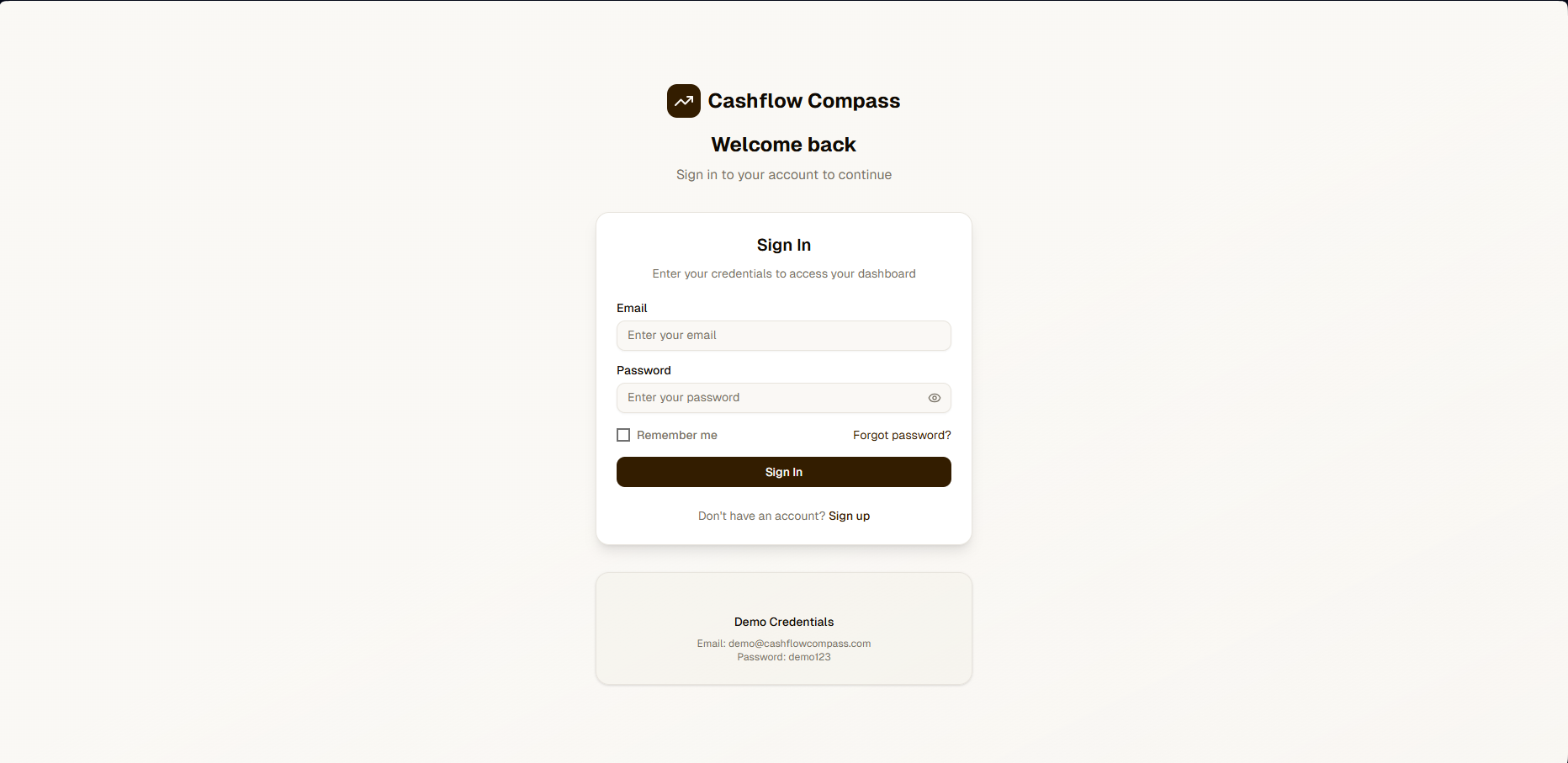
You can sign up or log in, we'll save your data!
-
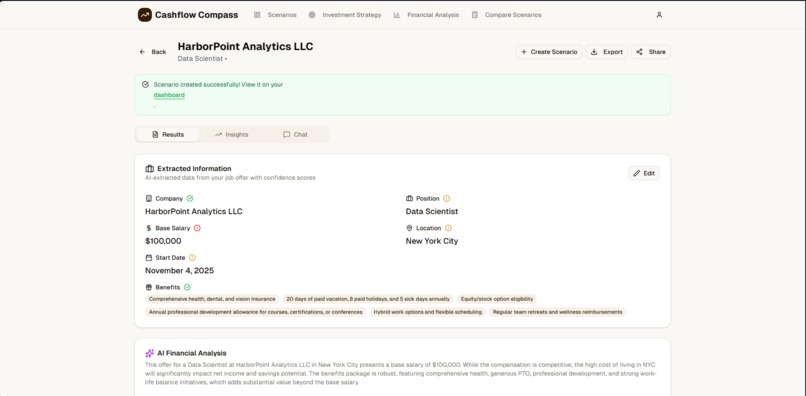
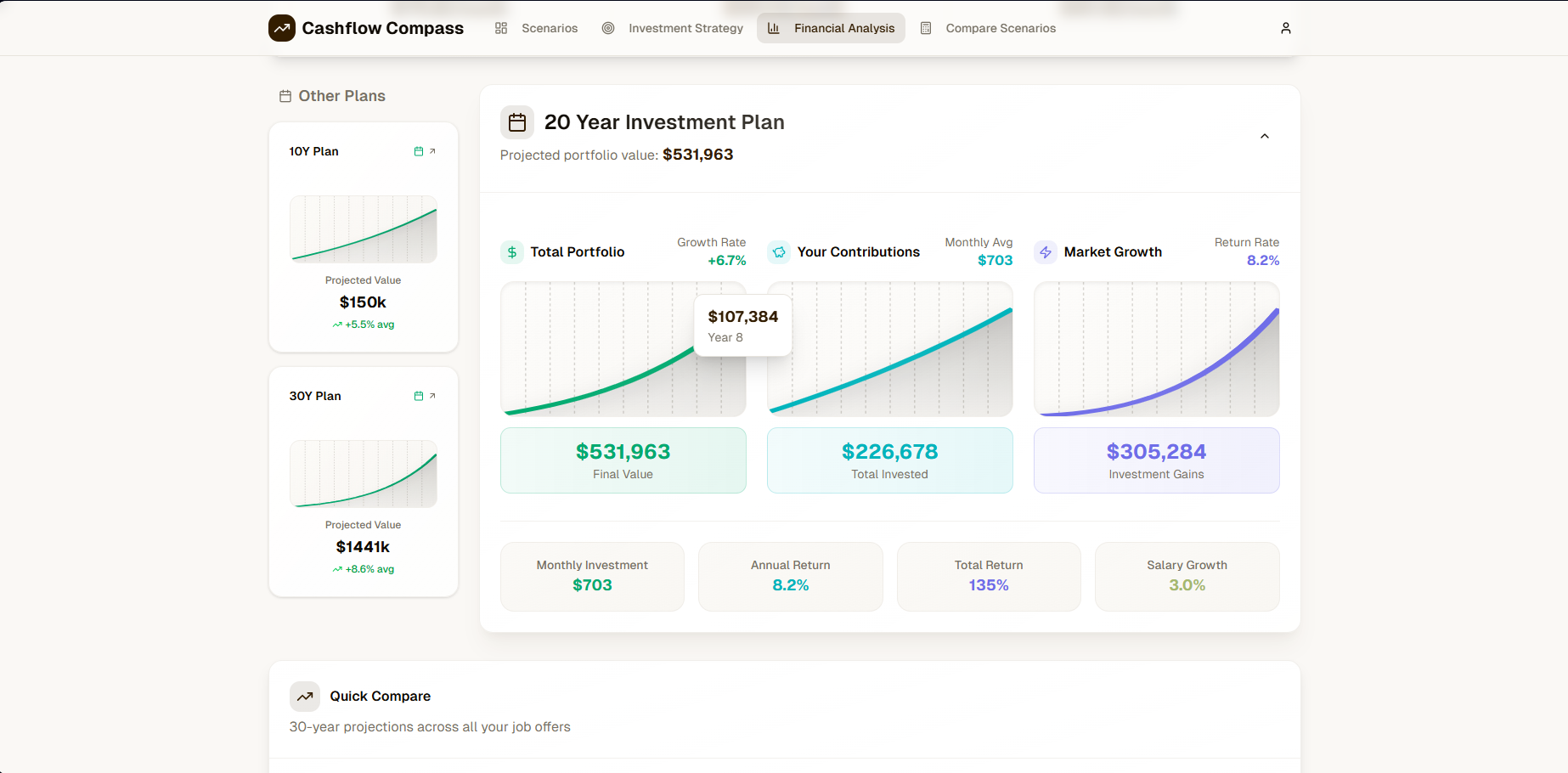
Get analysis and advice on what you should do
-
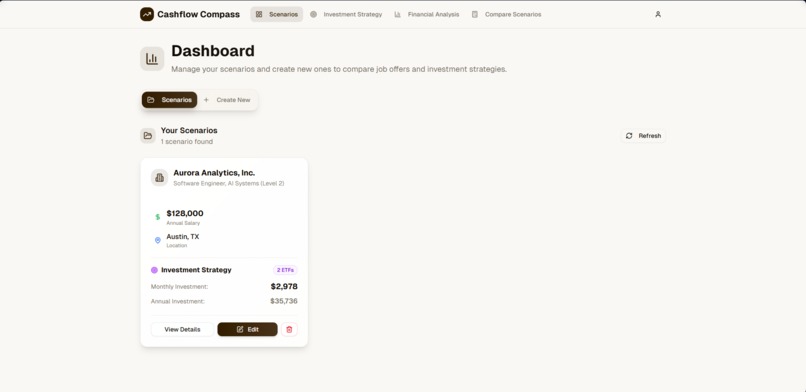
First thing you see is the dashboard
Inspiration
As new grads, we realized how confusing job offers can be. A “$100K salary” doesn’t mean much until you factor in taxes, benefits, and the cost of living in different cities. Add on student loans, savings goals, or the dream of buying a house, and it becomes overwhelming. We wanted to create a tool that makes it easy to see what an offer really means for your financial trajectory—and help grads make smarter choices with just a few clicks.
What it does
Cashflow Compass takes a job offer (PDF or text) and a monthly investment plan and turns them into actionable insights:
- Parses the offer → calculates take-home pay after taxes and benefits.
- Adjusts for cost-of-living (COL) by city to show realistic leftover cashflow.
- Runs ETF portfolio simulations (Monte Carlo, efficient frontier, drawdowns) on recurring investments.
- Auto-generates the right visualizations
- Uses Gemini to translate the results into plain-English summaries so beginners can easily follow.
The outcome:
“If I take this offer in City A vs City B and invest $X/month, what does my cashflow, risk, and long-term trajectory look like?”
(not financial advice)
How we built it
Frontend
- Next.js (React) for speed and serverless deploys on Vercel
- Tailwind + shadcn/ui for accessible, clean design
- Framer Motion for fluid animations
- ECharts/Recharts for interactive visuals
- Zustand for simple state management
Backend (localhost)
- Next.js API routes in TypeScript
- PDF parsing and analysis with Gemini.
- Tax, benefits, and COL calculators (pure TS)
- Portfolio simulator (Monte Carlo, efficient frontier, drawdowns)
- Auto-Viz agent outputs chart specs + rationale JSON
- Gemini server-side calls for summaries and plain-English explanations
Data & Storage
- Supabase (Postgres + Auth + Storage) for users, sessions, and file uploads
- Static datasets bundled for reliability:
- ETF return samples (CSV for SPY, VTI, VXUS, BND, etc.)
AI
- Gemini Flash for:
- Chart explanations
- Beginner mode
- Offer summary in 4 bullets
- Pros/cons per city
- OpenAI for
- Using RAG models with langchain
- Parses the pdf document
Challenges we ran into
We were working with a new framework and we faced a many challenges while doing so. We had trouble with organizing the directories to match Next.js conventions. While integrating the LLM, we had issues setting up the system prompts and RAG model. We switched back and forth between Open AI and Gemini for their ease of use, we landed on using both in our project.
Accomplishments that we're proud of
Everything honestly! But our UI and our AI integration are some of the most impressive features we have ever put out. We went through many renditions of user interfaces to bring out the best experience. It took us a long time to get both to work, but once it did, it was awesome.
What we learned
We learned how to leverage AI-Code assist tools to build full stack applications. We also learned a ton about Next.js, Gemini, Open AI, RAG models, and Monte Carlo through the building process. We knew very little about the project when we started, so everything here is researched and implemented within the hackathon. This was a huge learning opportunity various frameworks and techniques.
What's next for Cashflow Compass
- Live data integrations: pull real-time COL indices, tax tables, and ETF returns.
- Deeper scenario modeling: add loans, rent-to-own, mortgage plans, or career growth paths.
- More offer types: expand to internships, contract work, and international offers.
- Personalization: goal-based planning (pay off loans faster, save for a down payment, early retirement scenarios).
- Collaboration features: allow students or mentors to share/export decision cards and discuss options.
- Mobile-first design: lightweight version optimized for on-the-go financial comparisons.
Built With
- echarts
- framer
- next.js
- supabase
- tailwind
- vercel


Log in or sign up for Devpost to join the conversation.