-
-
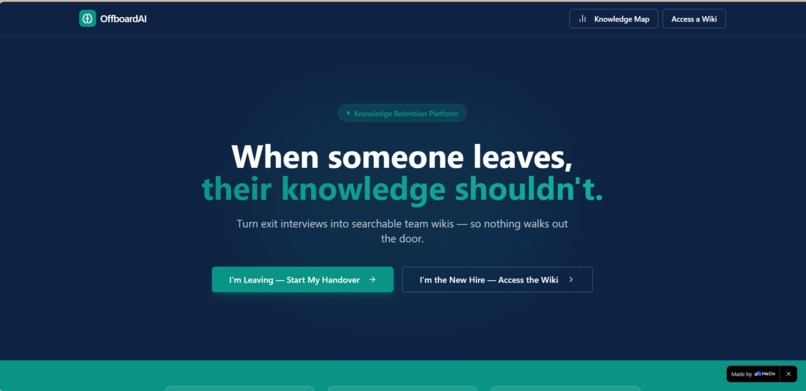
The landing page
-
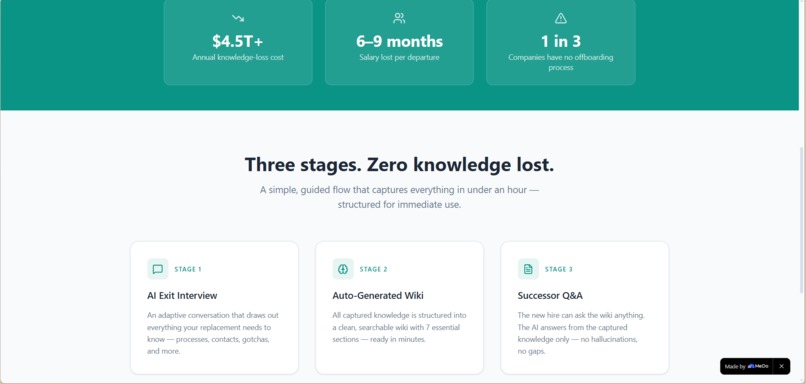
The landing page
-
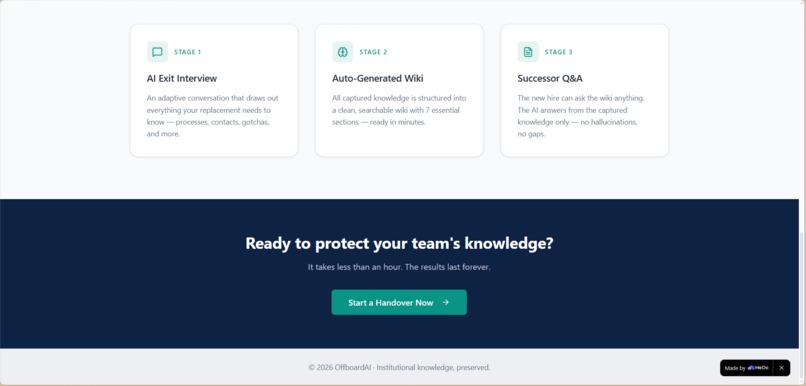
The landing page
-
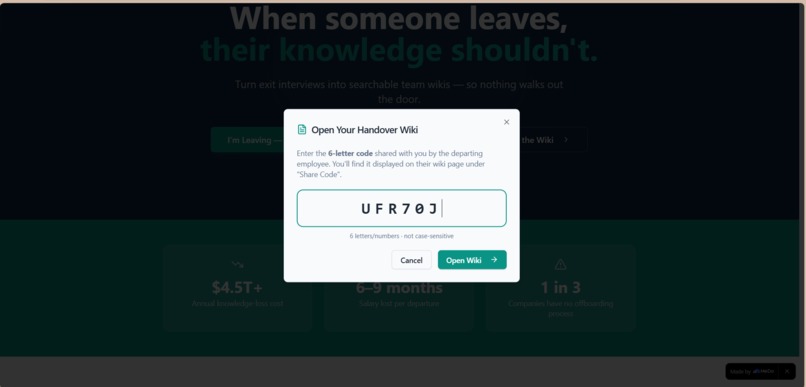
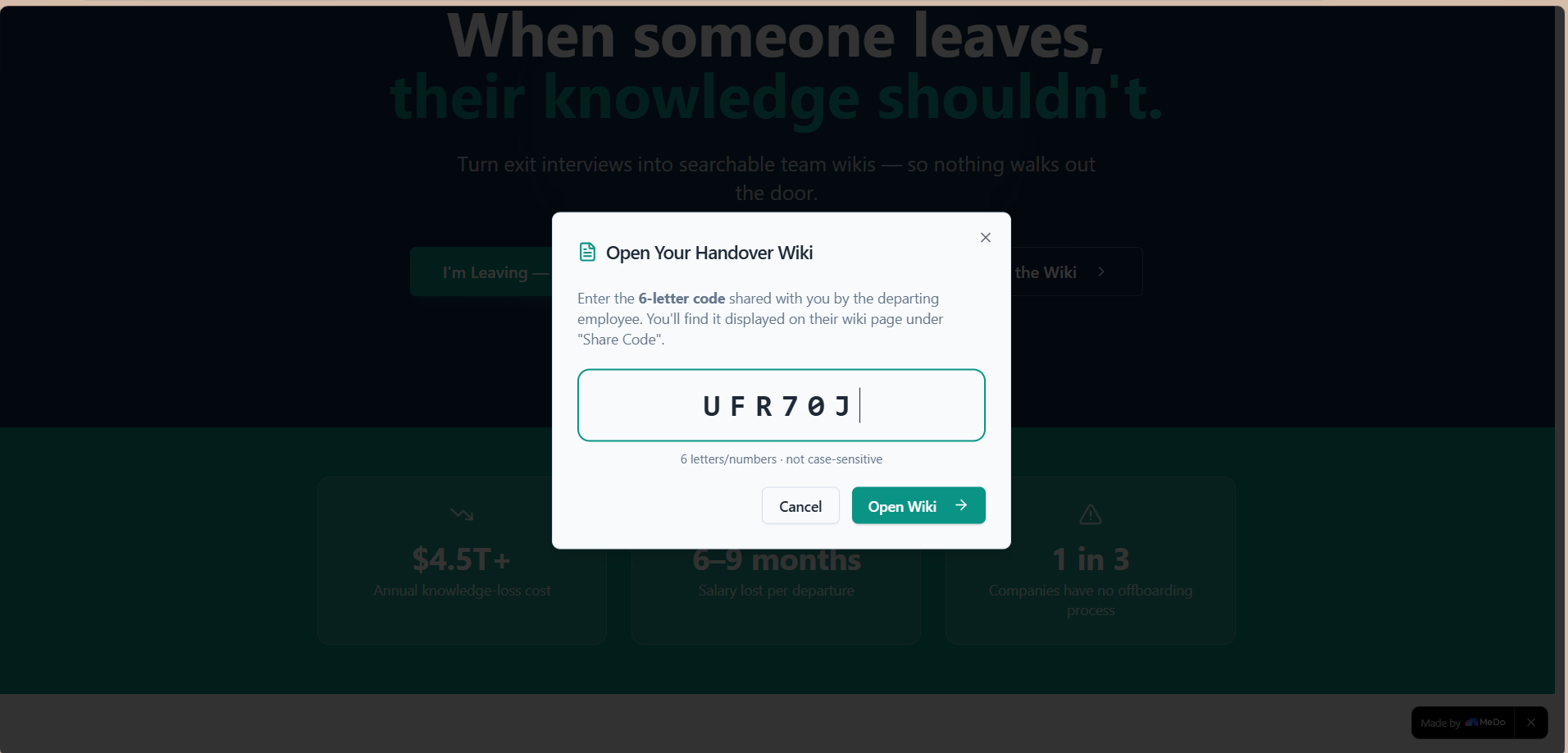
New employee accessing the past employees knowledge.
-
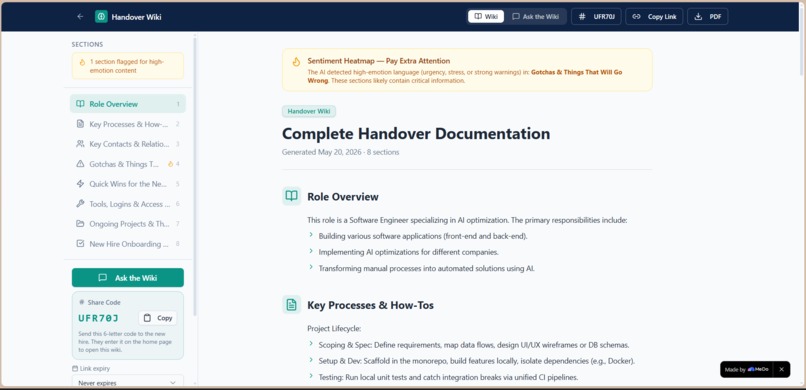
New employee accessing the past employees knowledge.
-
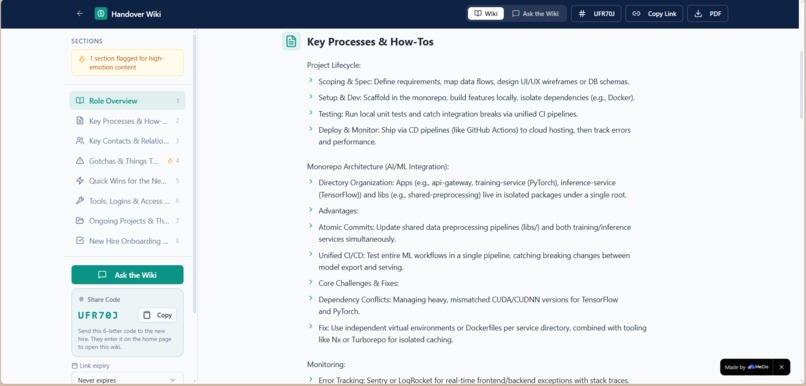
New employee accessing the past employees knowledge.
-
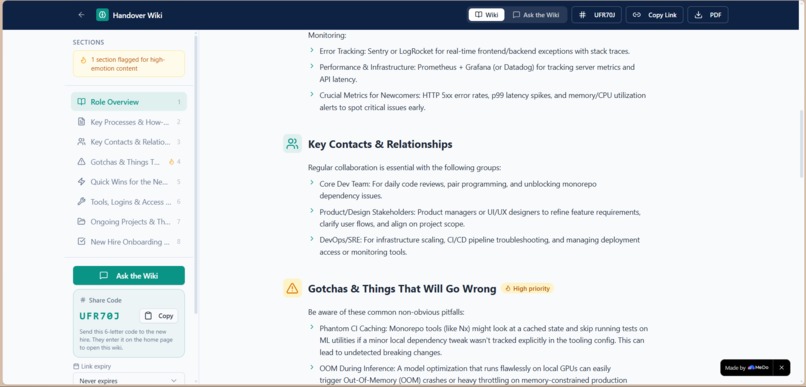
New employee accessing the past employees knowledge.
-
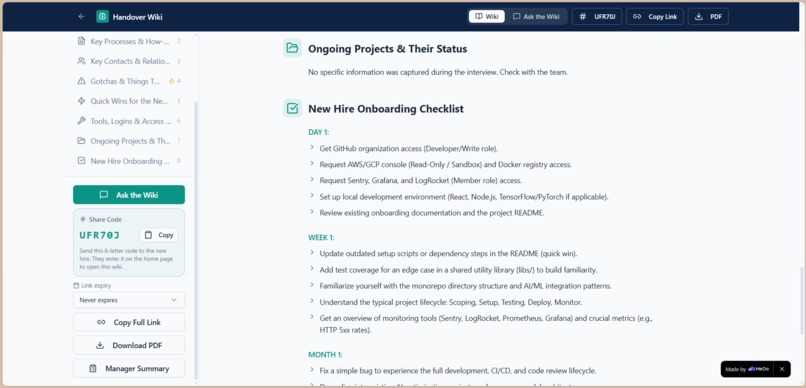
New employee accessing the past employees knowledge.
-
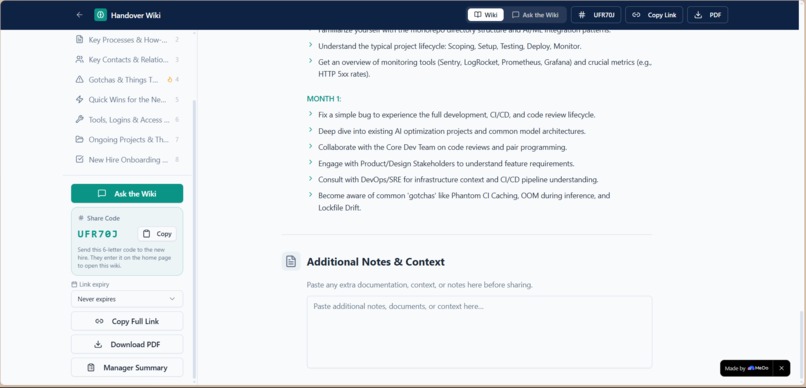
New employee accessing the past employees knowledge.
Inspiration
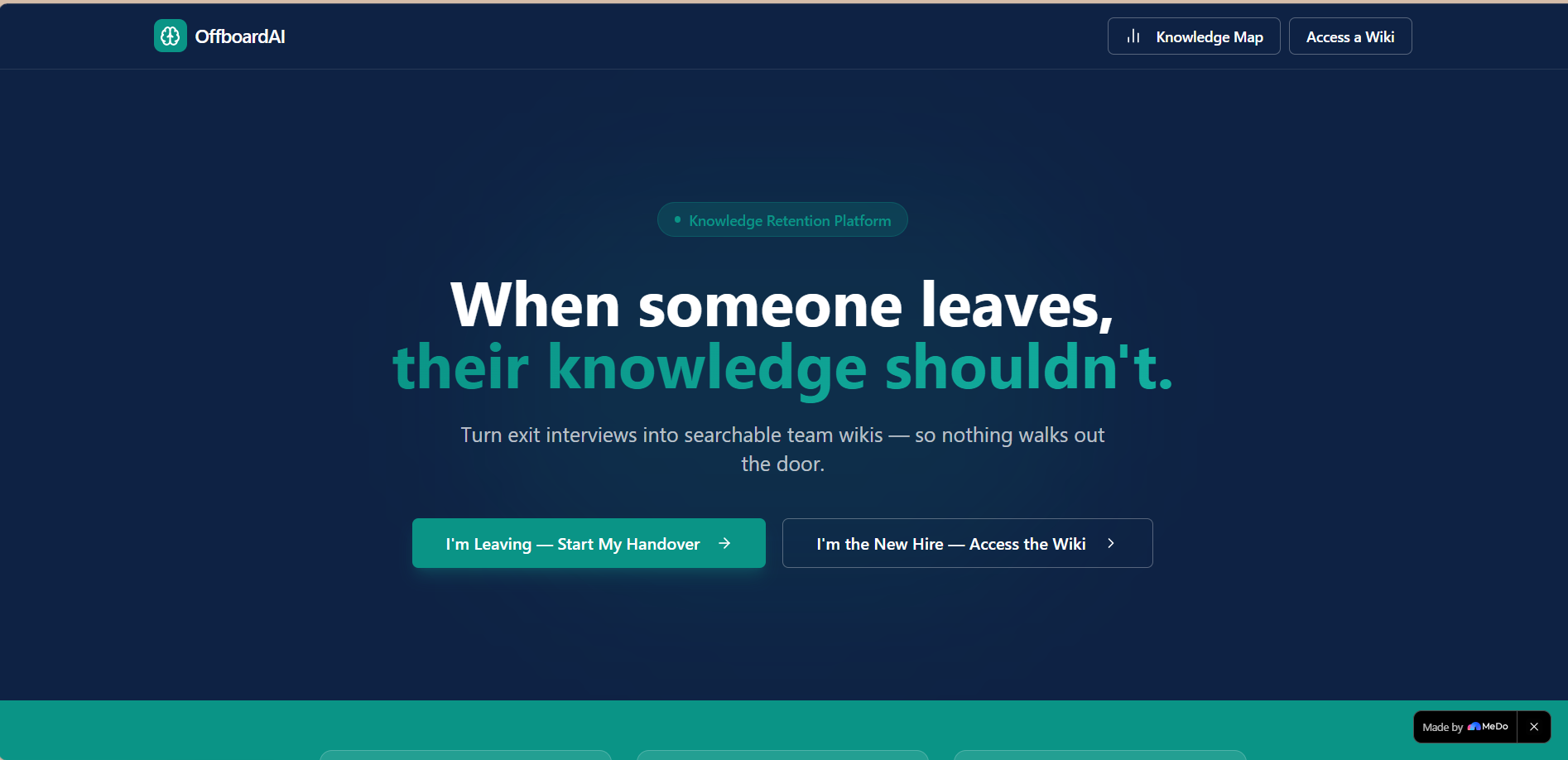
Every company has a Wikipedia. Nobody has a Wikipedia for the people who built it. I've seen it happen at every team I've worked on: a senior engineer resigns, there's a rushed one-hour handover meeting, and three months later someone is still asking "do you know why we built it this way?" The answer left with the person who left. Studies suggest companies lose the equivalent of 6–9 months of a departing employee's salary in lost productivity and knowledge, yet almost every tool in the HR stack is focused on onboarding, not offboarding. OffboardAI was built to fix that silent, expensive problem.
What it does
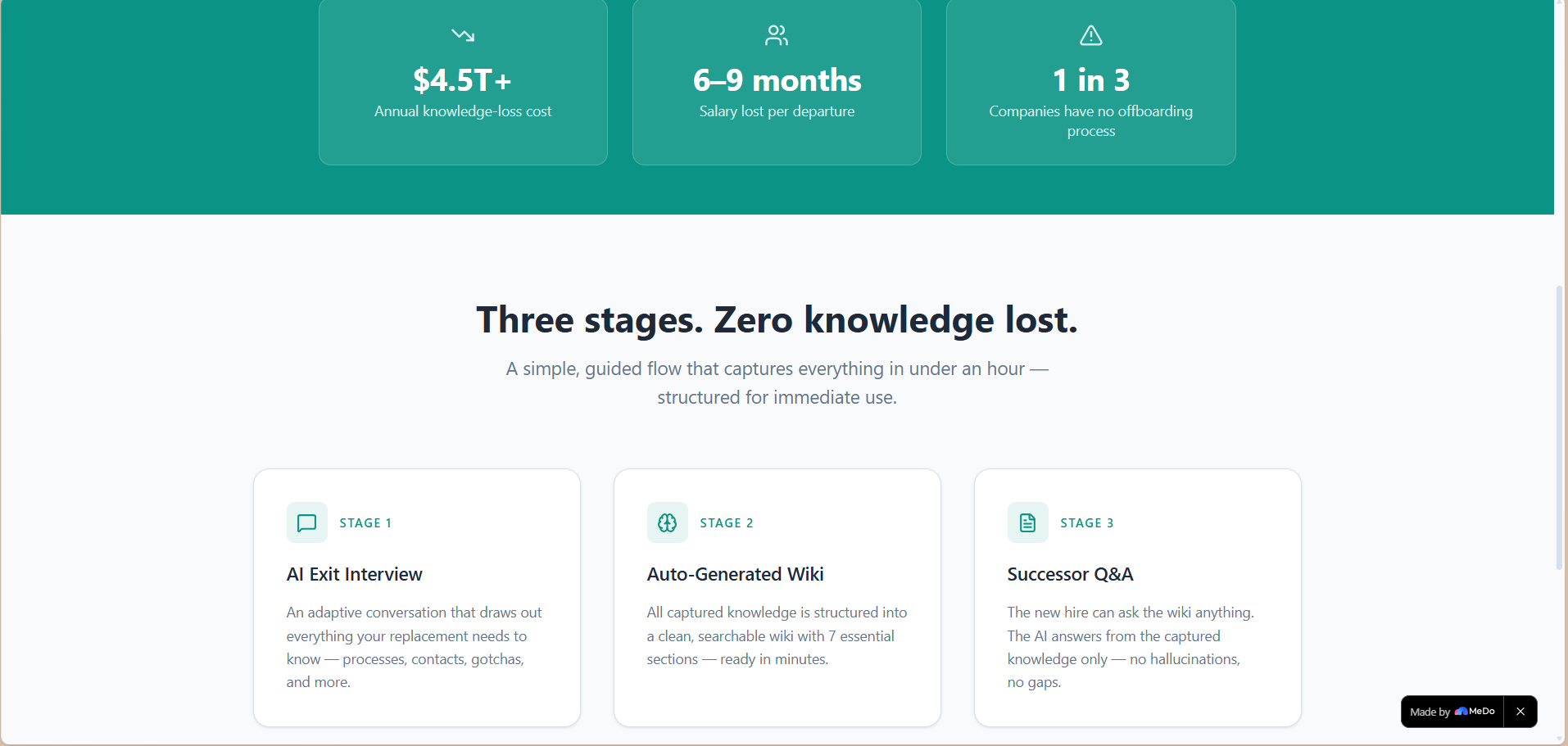
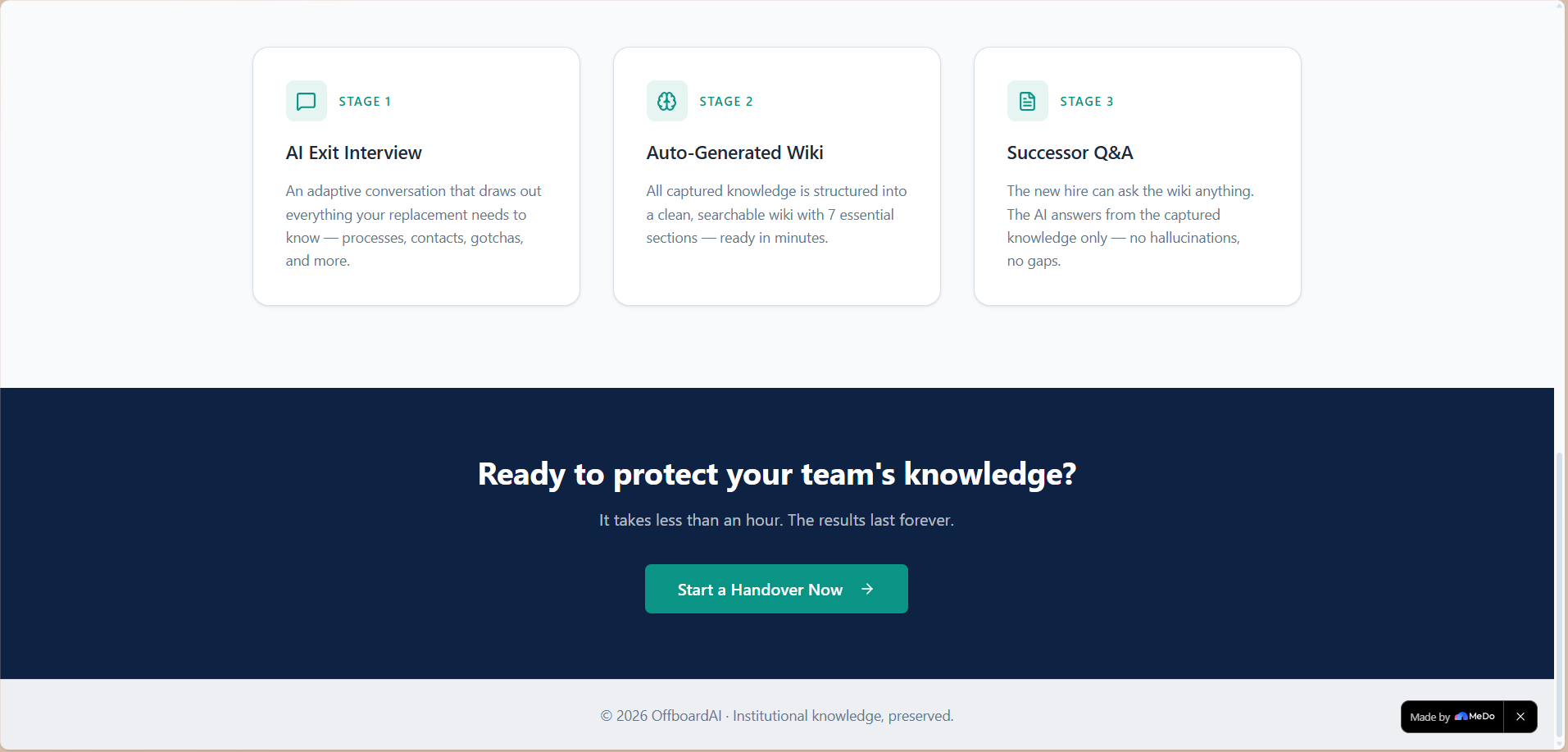
OffboardAI is a three-stage knowledge capture and transfer platform:
- AI exit interview: A multi-turn conversational interface guides the departing employee through a structured, intelligent exit interview. It asks targeted questions: "What are the top 3 things your replacement must know?", "What processes only exist in your head?", "Who are the external contacts that matter?" The AI adapts based on their role and previous answers.
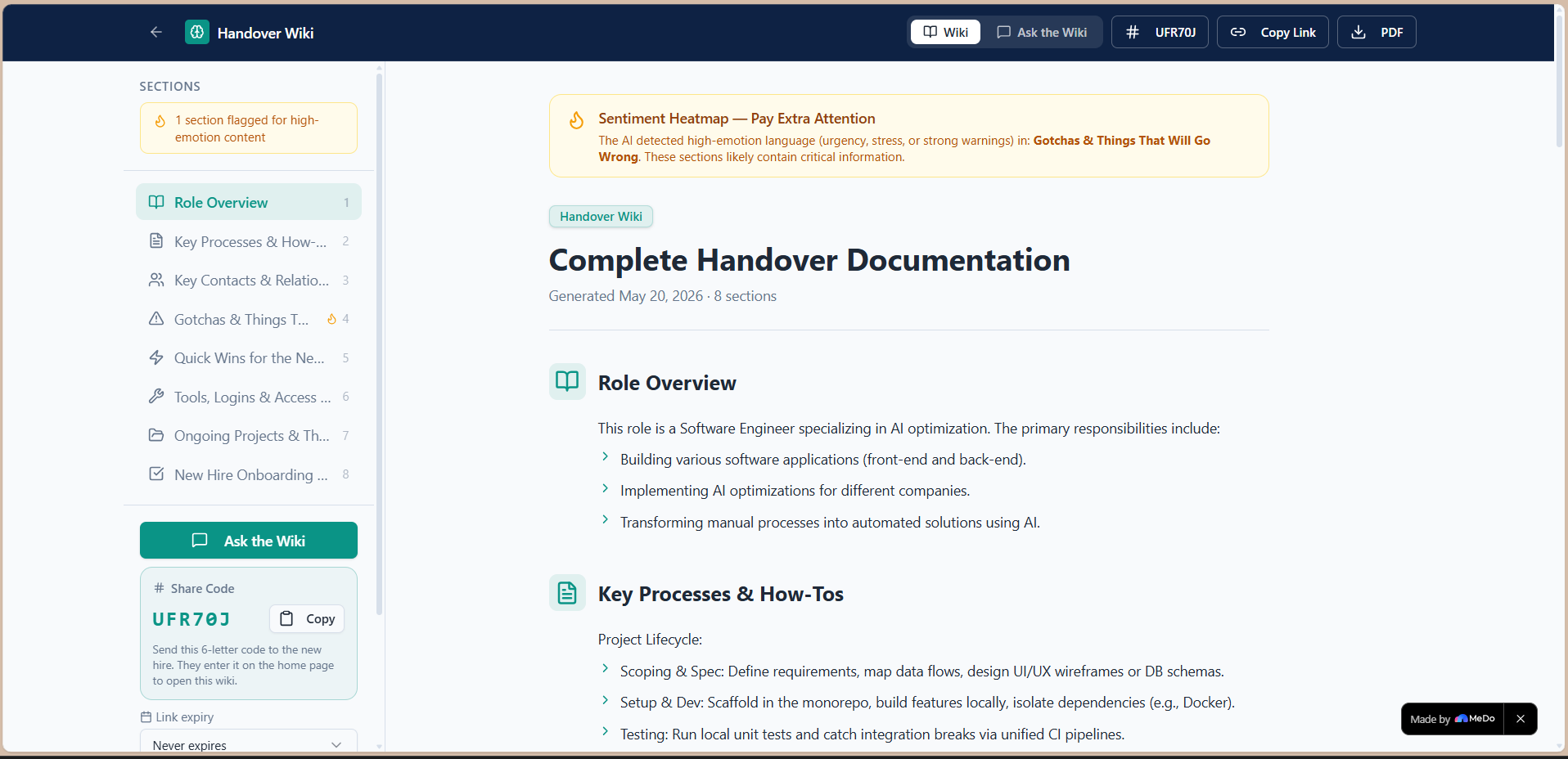
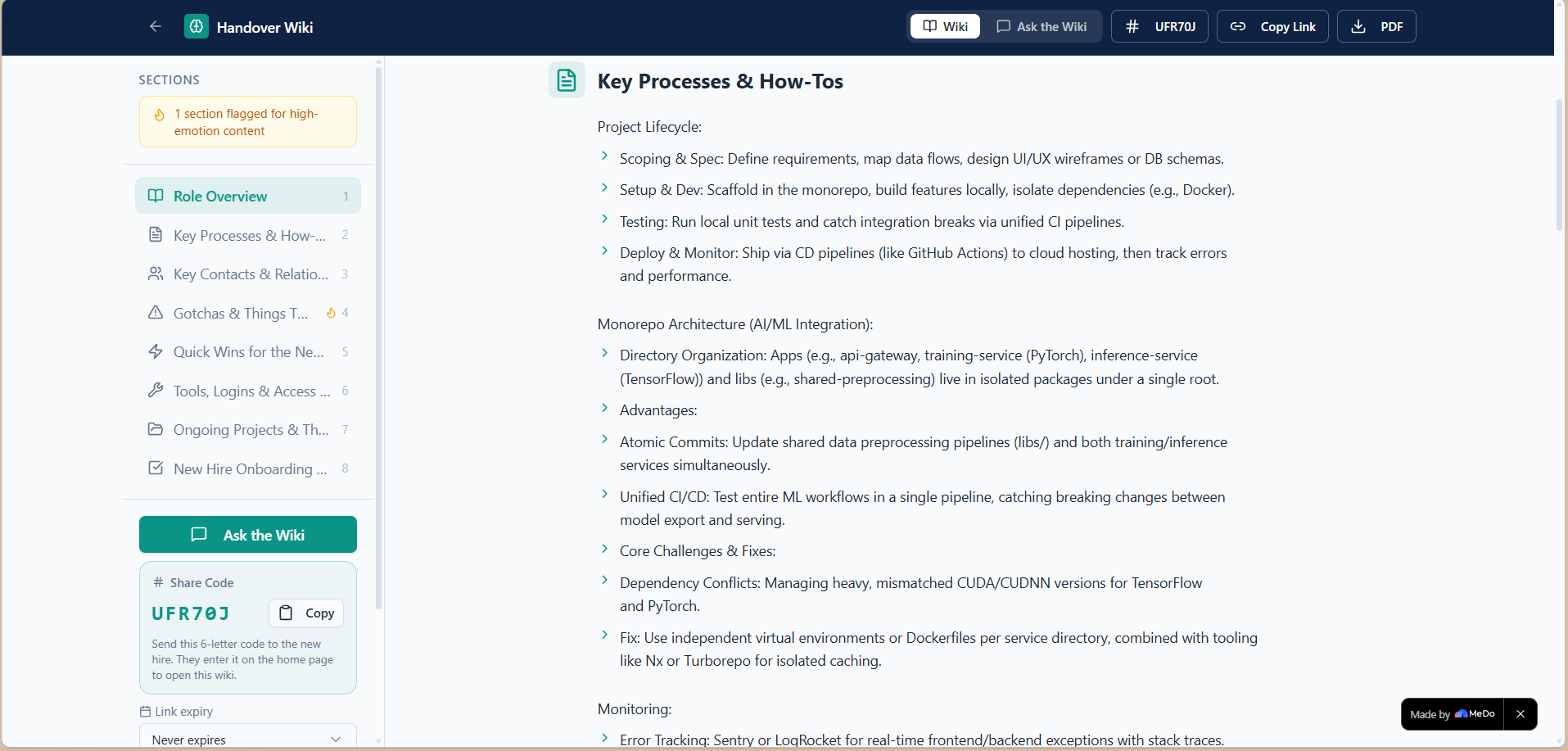
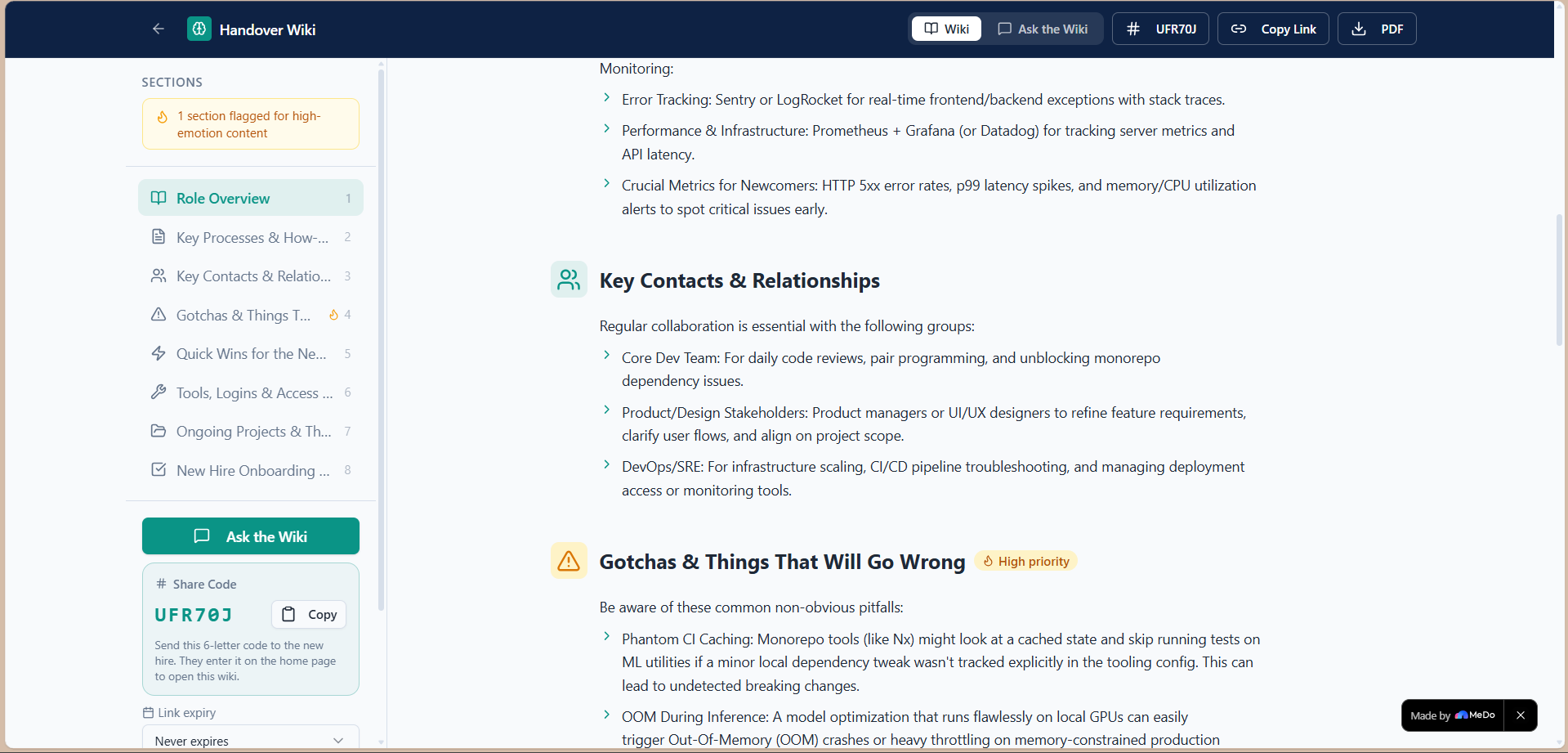
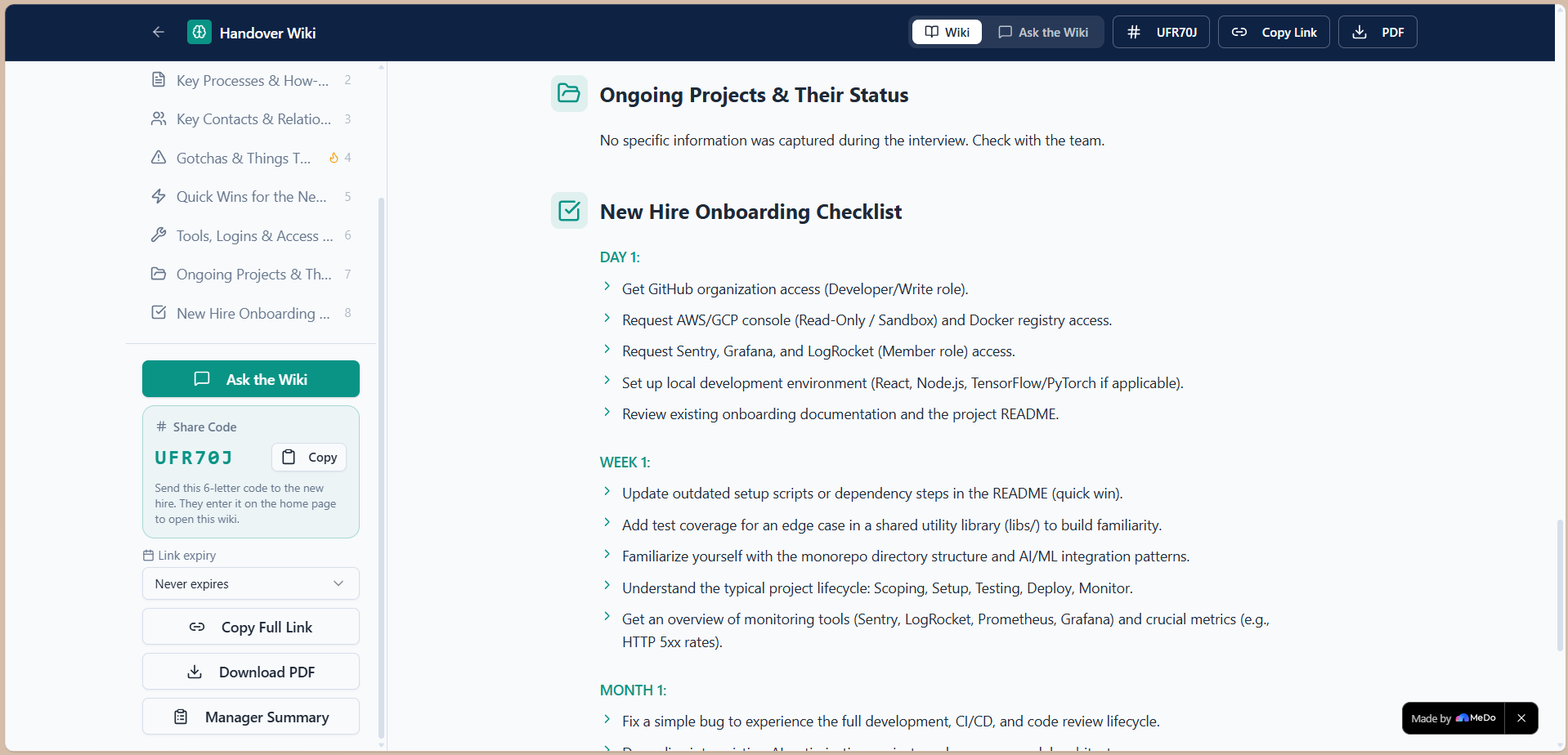
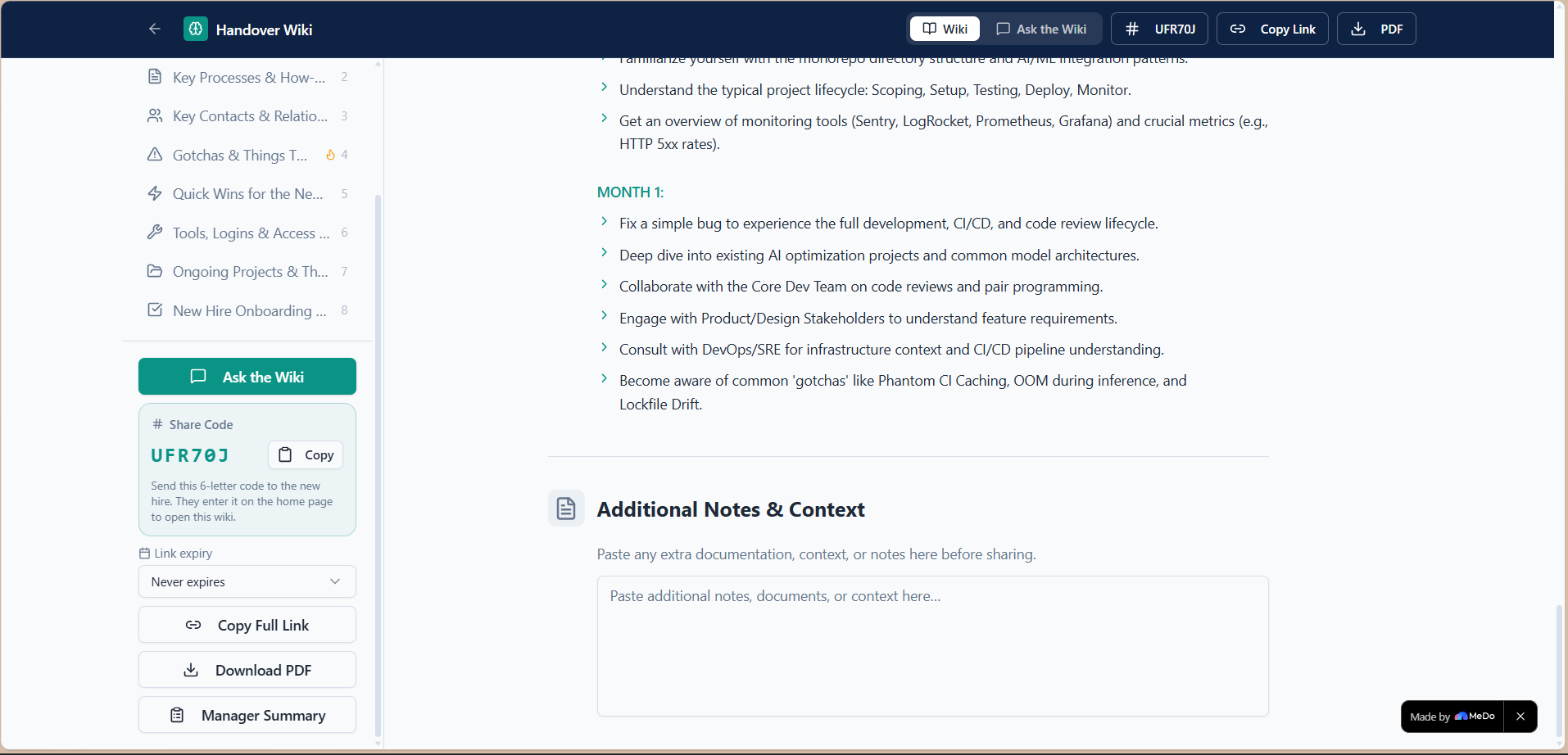
- Auto-generated handover wiki: Their responses, plus any pasted notes or documents, are synthesized into a clean, structured knowledge wiki with sections for Processes, Key Contacts, Gotchas & Edge Cases, and Quick Wins for the successor.
- Successor Q&A chat: The new hire can then have a natural conversation with the knowledge base, asking questions as if talking directly to their predecessor getting instant, grounded answers rather than hunting through stale documentation.
How we built it
The entire application was built using MeDo through iterative natural language conversation. Rather than writing a single line of code manually, I described each feature to MeDo and refined the output through multi-turn dialogue. The build was structured in three phases: first I described the exit interview flow and had MeDo scaffold the conversational UI and question logic; second I described the wiki generation format, specifying the exact section structure and output style; third I described the successor Q&A feature, explaining how the knowledge base should constrain and ground the AI's answers. I used MeDo's plugin integration to connect a document export API so the generated wiki can be downloaded as a formatted PDF or shared via a live URL. MeDo's one-click deployment then gave the entire app a public link ready to demo.
Challenges we ran into
The hardest challenge was prompt architecture for the exit interview. Early versions produced generic, surface-level questions regardless of the employee's role. I had to iterate extensively with MeDo on the system prompt logic, using role context and prior answers to generate genuinely adaptive follow-up questions that felt like a real conversation, not a form. The second challenge was knowledge grounding in the Q&A stage. Without guardrails, the successor chat would occasionally hallucinate information not present in the handover wiki. Solving this required careful MeDo conversation work to build in source-citation behaviour and "I don't know" fallbacks when a question wasn't covered in the captured knowledge.
Accomplishments that we're proud of
The exit interview genuinely feels conversational, not like filling in a form. Test users described it as "weirdly cathartic", which suggests it's getting at real institutional knowledge rather than surface-level bullet points. The wiki output is immediately usable with zero manual editing. The structure MeDo generates is consistently clean, well-organised, and skimmable, something that would take hours to write manually is produced in minutes. Most importantly: the entire full-stack app, frontend, conversation logic, document generation, and deployment, was built without writing a single line of code, proving that MeDo genuinely removes the barrier between idea and shipped product.
What we learned
Prompt engineering is product design. The quality of what MeDo generates is almost entirely determined by how clearly and specifically you describe the problem, the constraints, and the desired output format. Vague inputs produce vague apps; precise, structured descriptions produce precise, structured apps. I also learned that multi-turn iteration is the real superpower. Rather than trying to describe the entire app in one go, breaking the build into small, testable steps, and refining each stage before moving on produced far better results than attempting a single comprehensive prompt.
What's next for Offboard AI
The immediate next step is HRIS integration, connecting OffboardAI to tools like BambooHR, Workday, or Notion so the exit interview is automatically triggered when an offboarding workflow begins, and the generated wiki is pushed directly to the team's knowledge base. Longer term, the same architecture works in reverse: an AI onboarding guide that uses the wiki to proactively brief new hires during their first 30 days, surfacing relevant knowledge as they encounter new situations rather than requiring them to know what to search for. There's also a compelling use case for project handovers and contractor offboarding, any knowledge transfer event where institutional memory is at risk.
Built With
- document-export-api
- medo
- medo-plugins
- pdf-generation


Log in or sign up for Devpost to join the conversation.