-
-
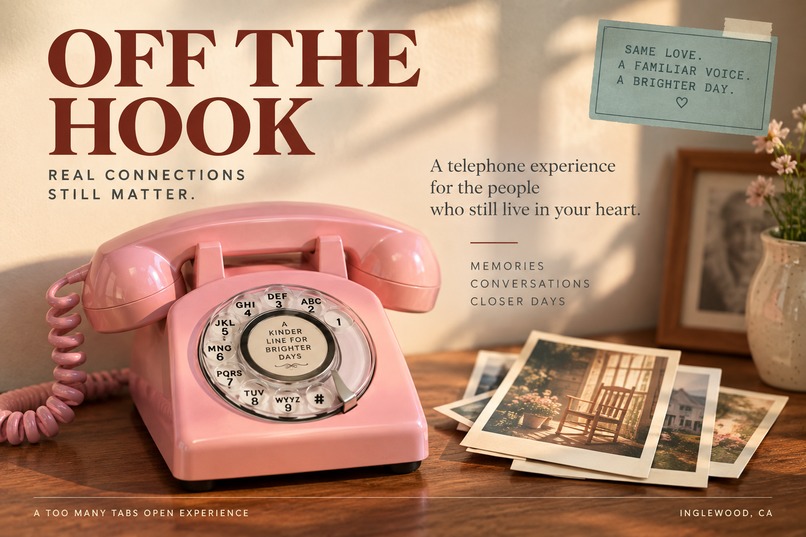
An analog experience
-
-
-
-
-
Inspiration
We were beta testing an unrelated app on September 4 when the idea sparked: what if the interface for saying something important wasn't a screen at all? Writing things down is work. Opening a journaling app is work. Typing into Notes is work. Talking isn't — humans have known how to pick up a phone and just talk since before most of us were born.
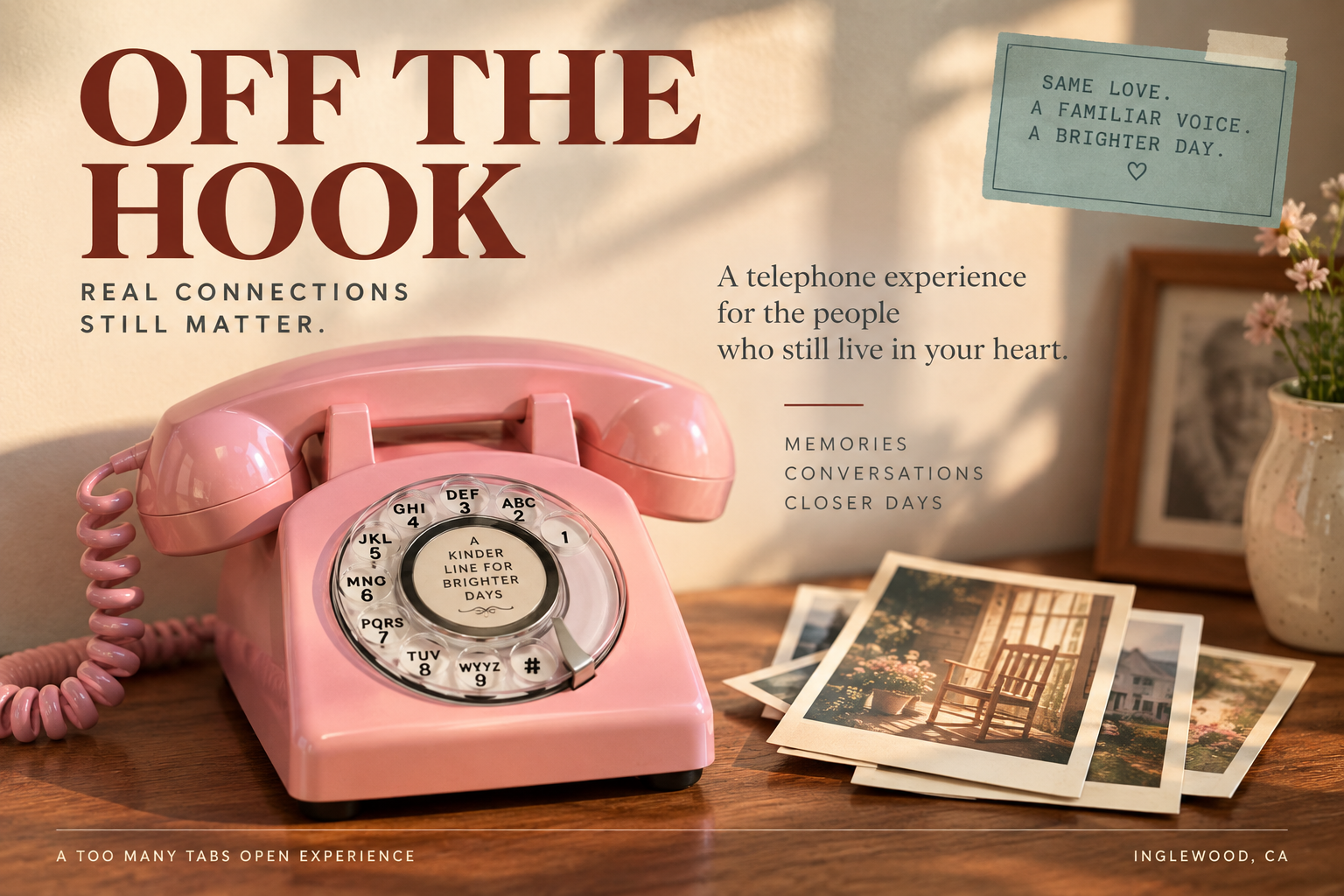
We'd already been prototyping an analog experience called Off the Hook — a physical space in Inglewood built around the idea that removing the screen makes a conversation more human, not less. A working rotary phone booth was part of that plan from the start. While researching a completely different project, we stumbled onto the CALL-E hackathon and realized the solo-visitor piece of that concept — a phone line you call when there's no one else in the booth — was a real, buildable thing, right now, with CALL-E doing the actual calling.
What it does
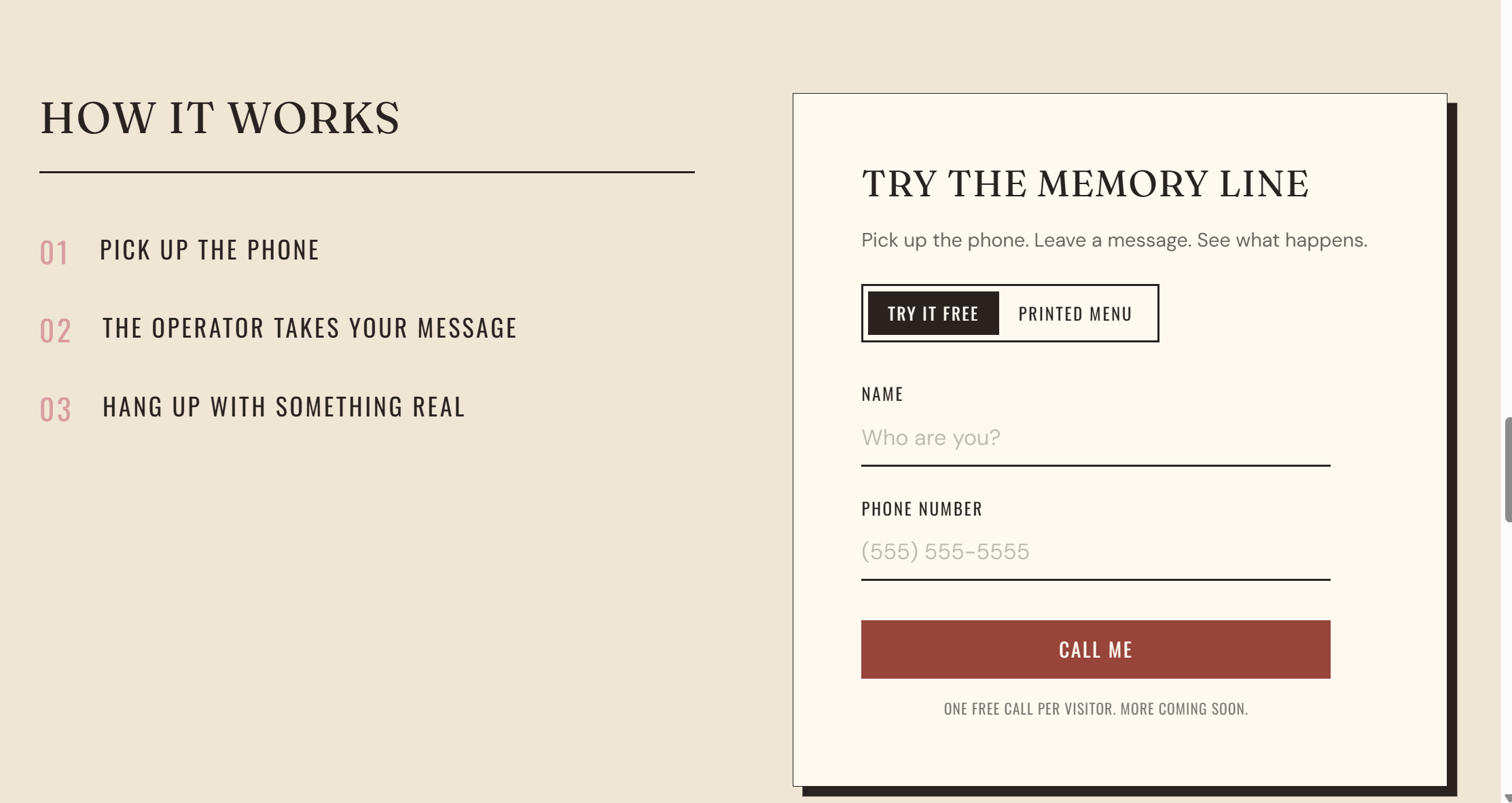
The Memory Line is a telephone line, not an app. You call it (or it calls you), and The Operator — a character who has worked the same switchboard for thirty years, warm, dry, and utterly unshockable — answers. She explains that the person you were trying to reach didn't pick up, so she'll take a message instead.
She asks one question at a time: who the message is for, what you'd tell them, something you've been meaning to say, a memory of them they don't know you kept, and any final words. She waits through silence instead of filling it. Partway through, she offers a rarely-used service: a thirty-second trial connection to yourself at sixteen. It's optional. Most people don't expect it.
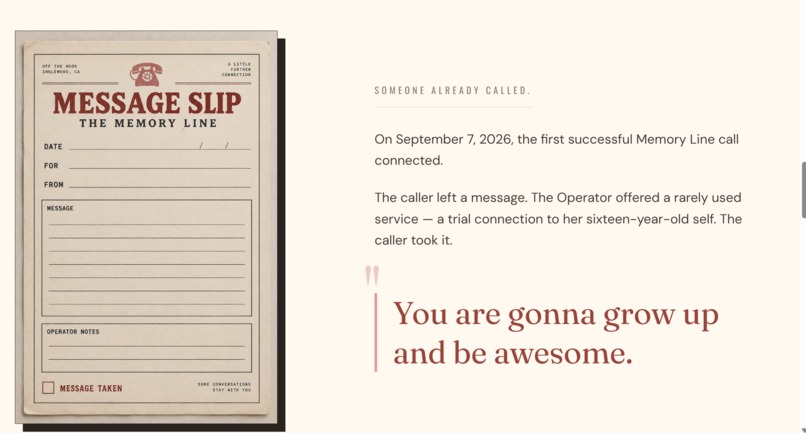
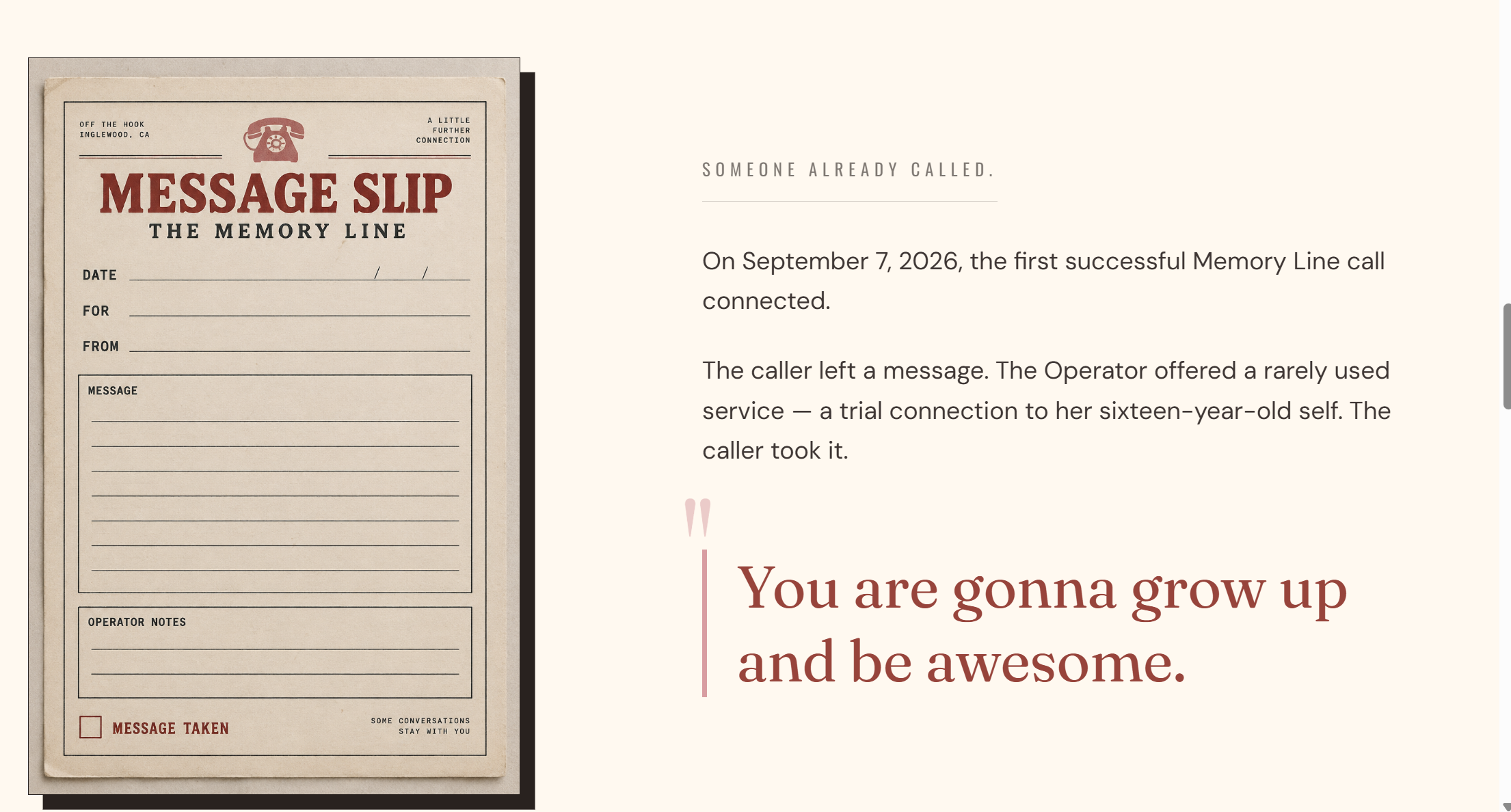
At the end of the call, your words become a physical-feeling artifact: a Message Slip, styled like something an operator would actually hand-write and file.
How we built it
The Operator's voice was built first in ElevenLabs, developed through a full character bible — physical vocal texture, delivery pace, a strict "rules of the board" script that prevents her from sounding like a generic AI assistant (no exclamation points, no therapy language, no explaining what she is if asked).
CALL-E handles the actual outbound telephony: dialing out to a real phone number and carrying the live conversation. On the hardware side, that phone number terminates at a Grandstream HT812 analog telephone adapter registered to a voip.ms SIP line, which rings an actual vintage-style rotary phone sitting in Inglewood, CA. The whole chain — CALL-E → SIP number → ATA → physical rotary phone — was deliberately built to end in a real object ringing in a real room, not a softphone or a browser tab.
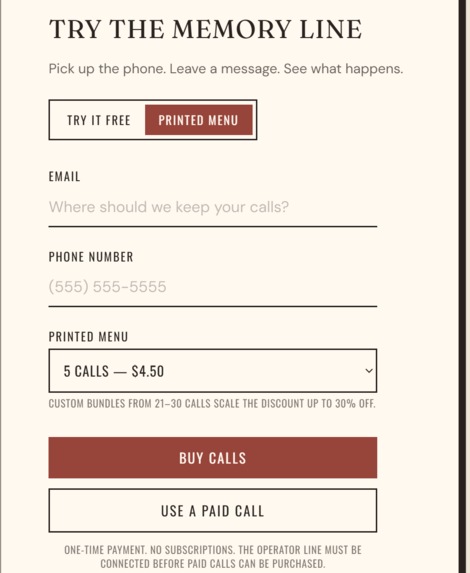
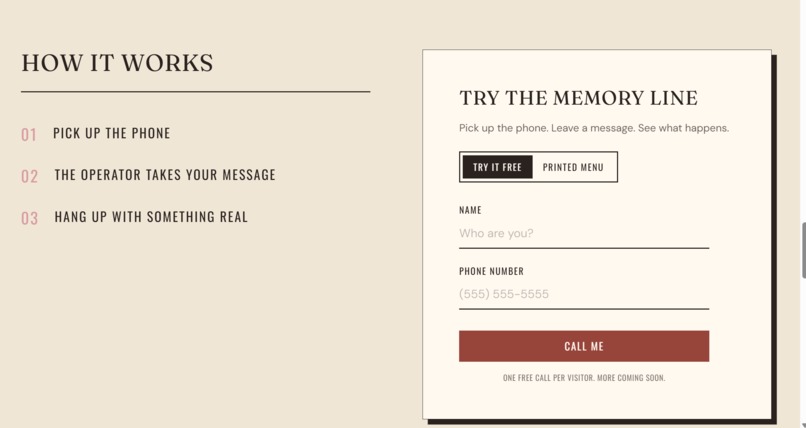
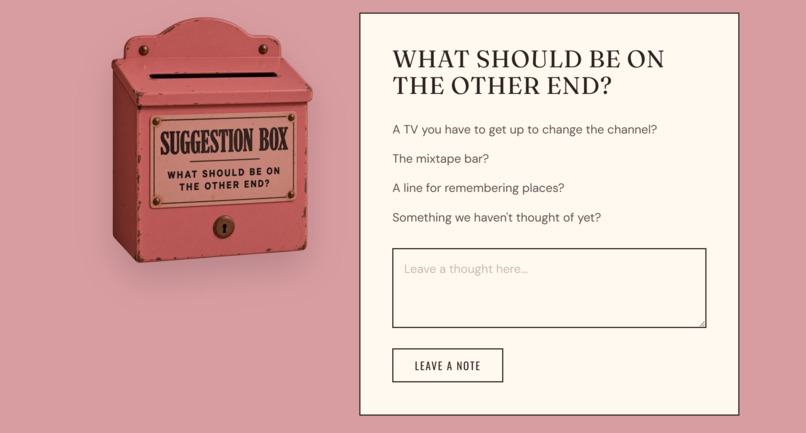
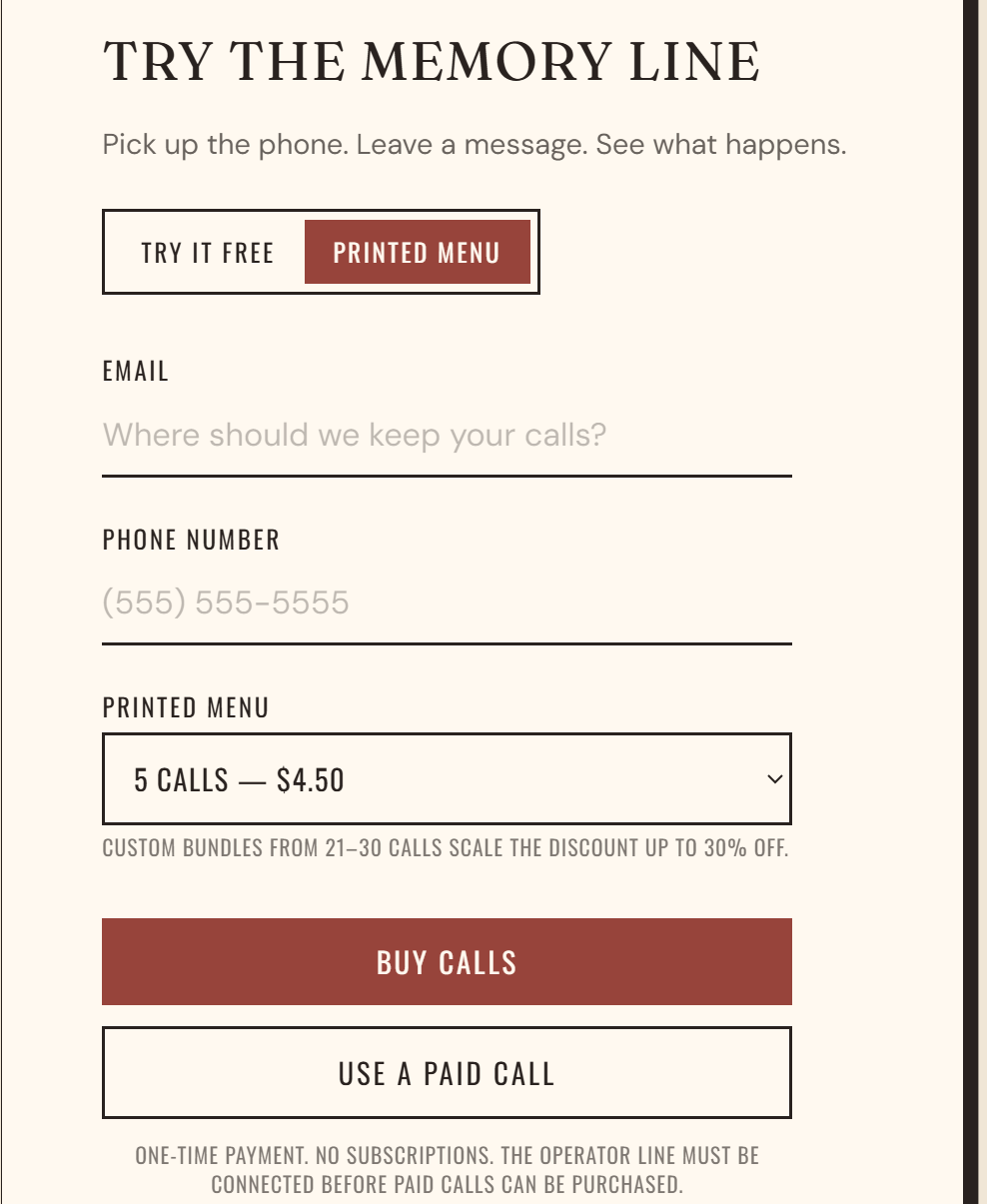
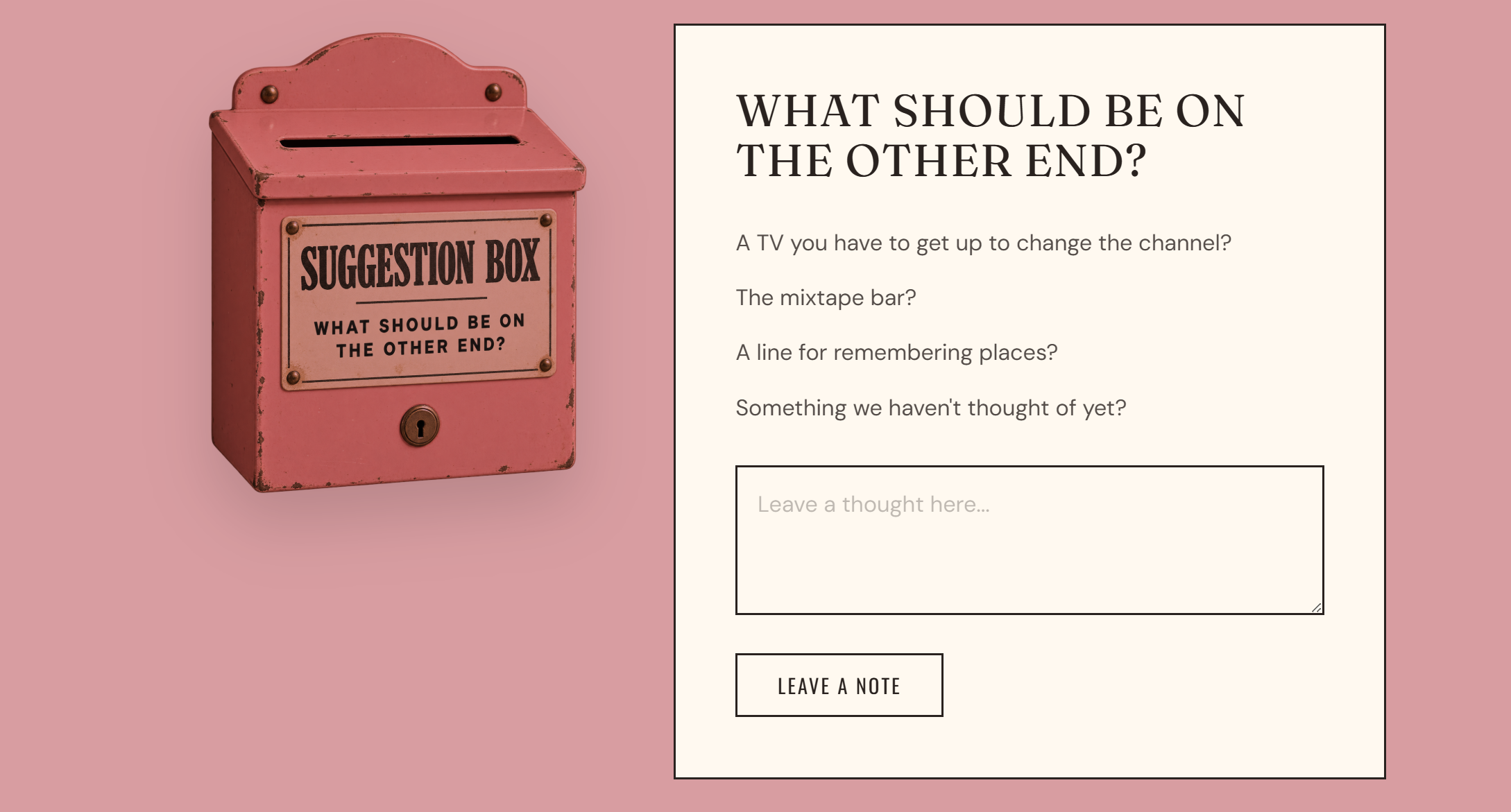
The Off the Hook landing page (built separately, serving as the front door to both the physical booth waitlist and the live Memory Line) uses a warm, printed-ephemera visual language — ticket labels, a message slip, a suggestion box — so the digital experience feels like it belongs to the same physical world as the phone.
Challenges we ran into
The most immediate challenge was CALL-E itself going through account signup instability mid-hackathon (OAuth failures, account creation errors, outbound calls failing with SIP 603s for other participants) — which we worked around by building the telephony chain (SIP number → ATA → physical phone) as a provider-agnostic piece first, so the core hardware loop was proven and ready the moment CALL-E's outbound calling stabilized.
We also had to fight the instinct to make the Operator sound like a wellness app. Early drafts leaned toward generic journaling prompts ("tell me about a meaningful memory") before we rewrote her as someone taking a message, not conducting a therapy session — a small reframe that changed everything about how natural the resulting conversation felt.
Getting a working SIP password out of voip.ms's account portal took several tries longer than it should have. Not a CALL-E problem. Just a very real one.
Accomplishments that we're proud of
The first real call didn't go the way we scripted it in our heads. The caller set out to leave a message for someone else — and, when the Operator offered the sixteen-year-old trial connection, spontaneously used it to tell her younger self "you are gonna grow up and be awesome." That wasn't a demo we staged. It's what happened the first time a real person used the thing.
We're also proud that the entire chain is physically real: an actual phone, in an actual room, ringing because of an actual outbound call CALL-E placed. Nothing in the demo is a mockup.
What we learned
The format of an interaction shapes what people are willing to say. A blank text box invites you to write what you planned to write. A voice on a phone, asking one unhurried question at a time and tolerating silence, seems to invite people to say something they hadn't planned to say at all. We didn't design that outcome — we noticed it happen, and it reframed what we think this project is actually for.
What's next for Off the Hook: The Memory Line
The most consequential extension we're considering isn't another journaling prompt — it's a family-voice fork. A loved one's voice, used with their full consent, calling a family member with Alzheimer's or dementia — not to replace a visit, not to simulate a relationship, but to offer a familiar voice when a familiar face sometimes isn't recognized anymore. We're treating that as a next chapter, not a hackathon feature: it needs real consent design and real care-context thinking before it touches an actual family.
Closer term, the Operator is the first of several planned lines — a switchboard of different voices for different kinds of conversations, arriving as the physical Off the Hook booth opens in Inglewood, CA.
Built With
- call-e
- conversational-ai
- css
- elevenlabs
- grandstream
- html
- javascript
- replit
- sip
- telephony
- text-to-speech
- twilio
- voice-ai
- voip.ms


Log in or sign up for Devpost to join the conversation.