-
-
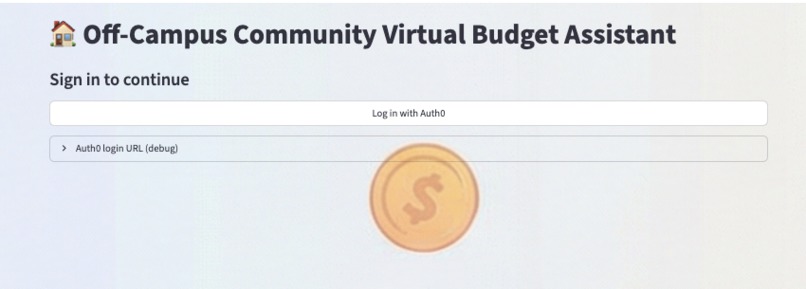
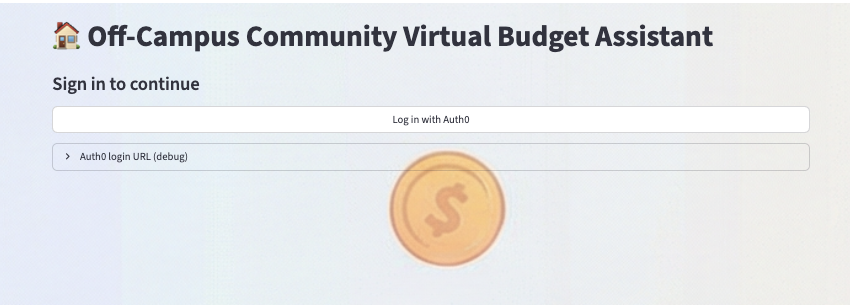
Login Page Of Website
-
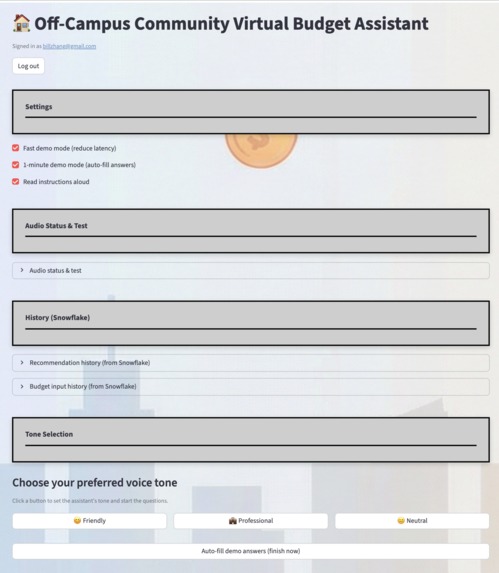
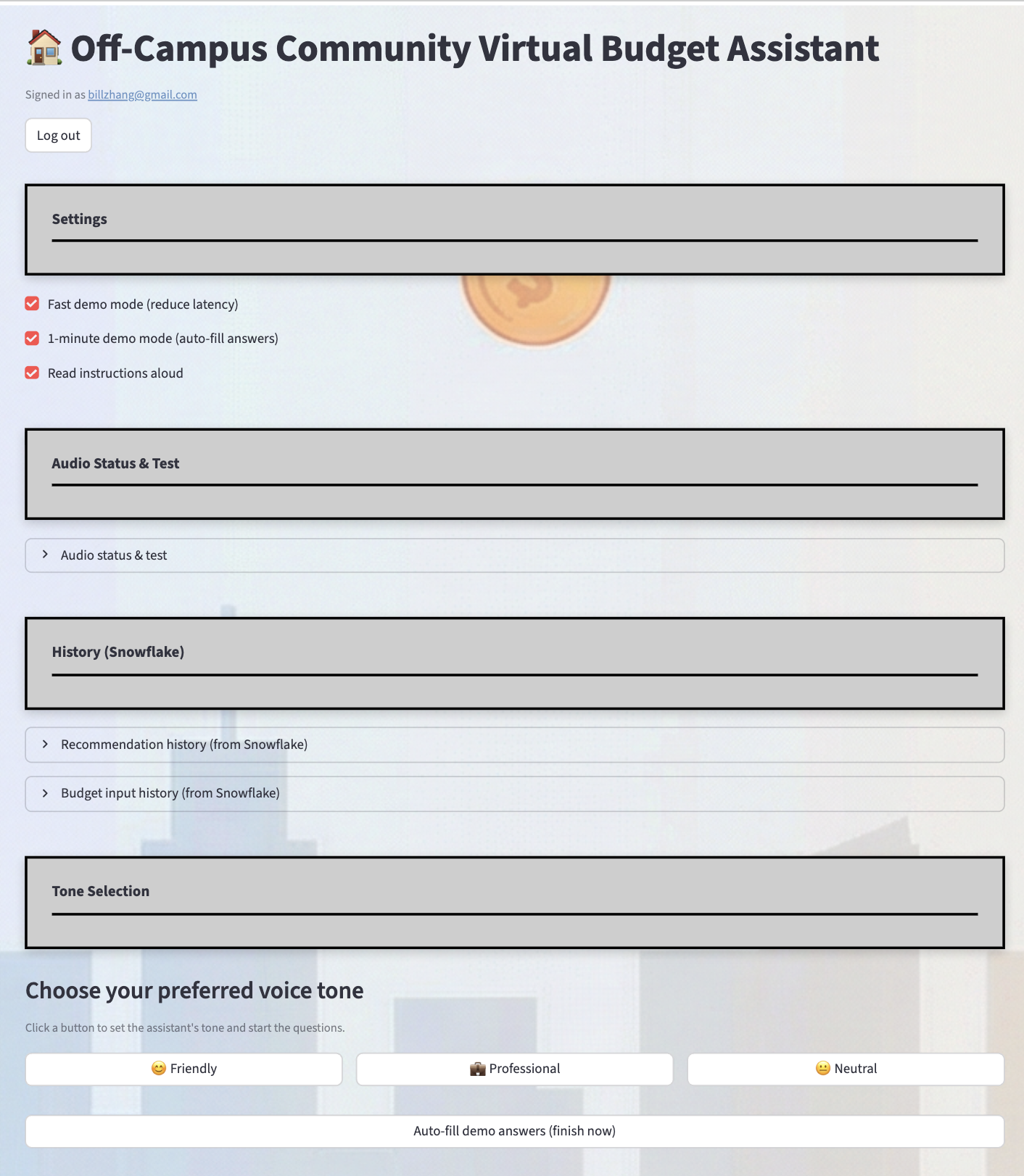
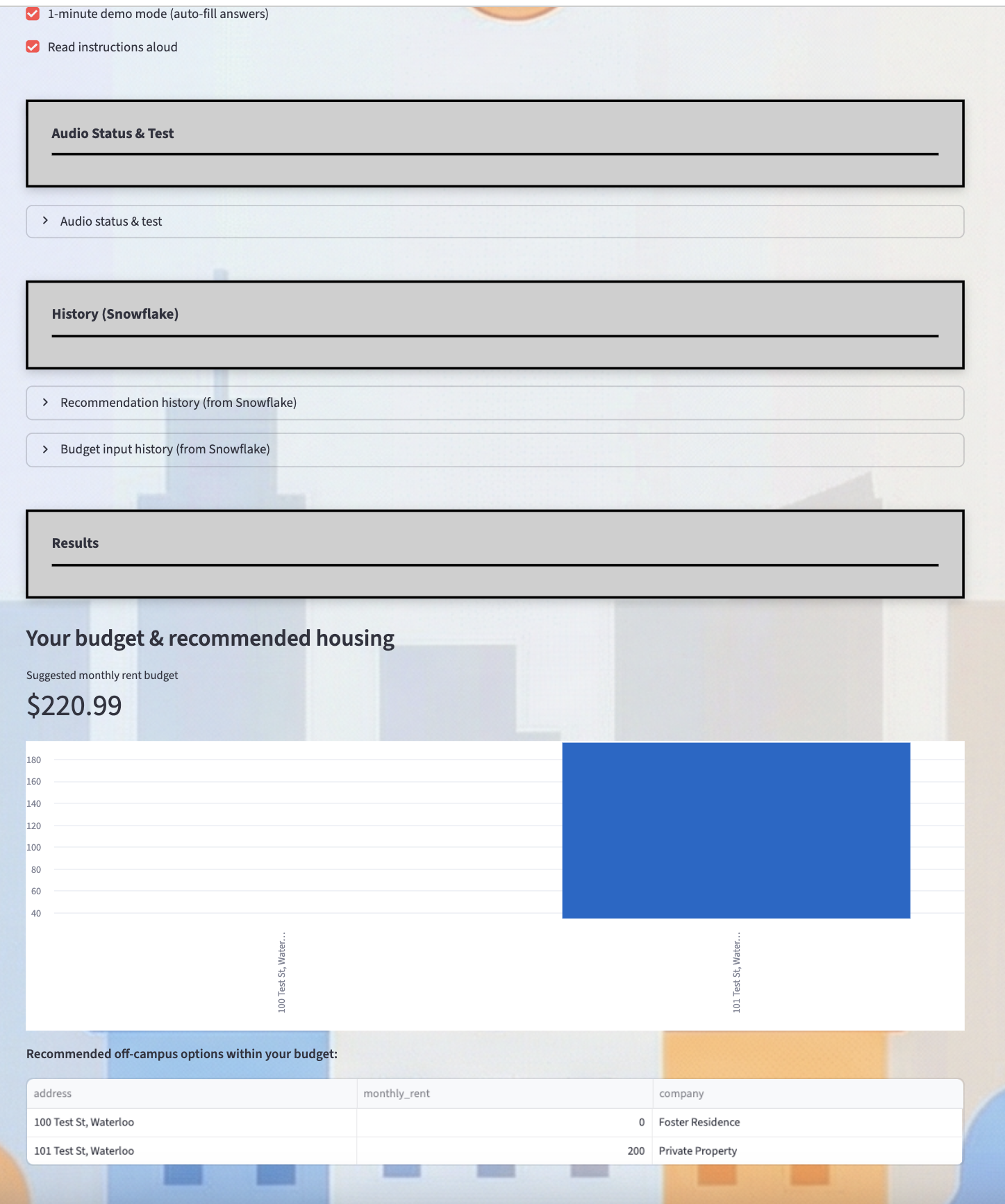
Fine Tune (History of Recommendations and Balances), Voice Adjuster
-
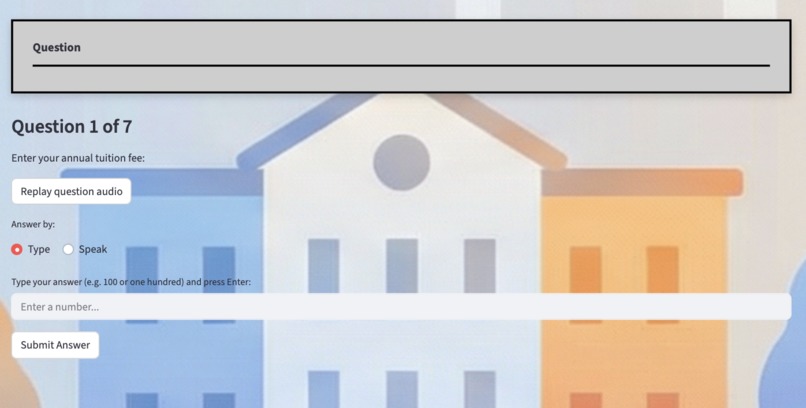
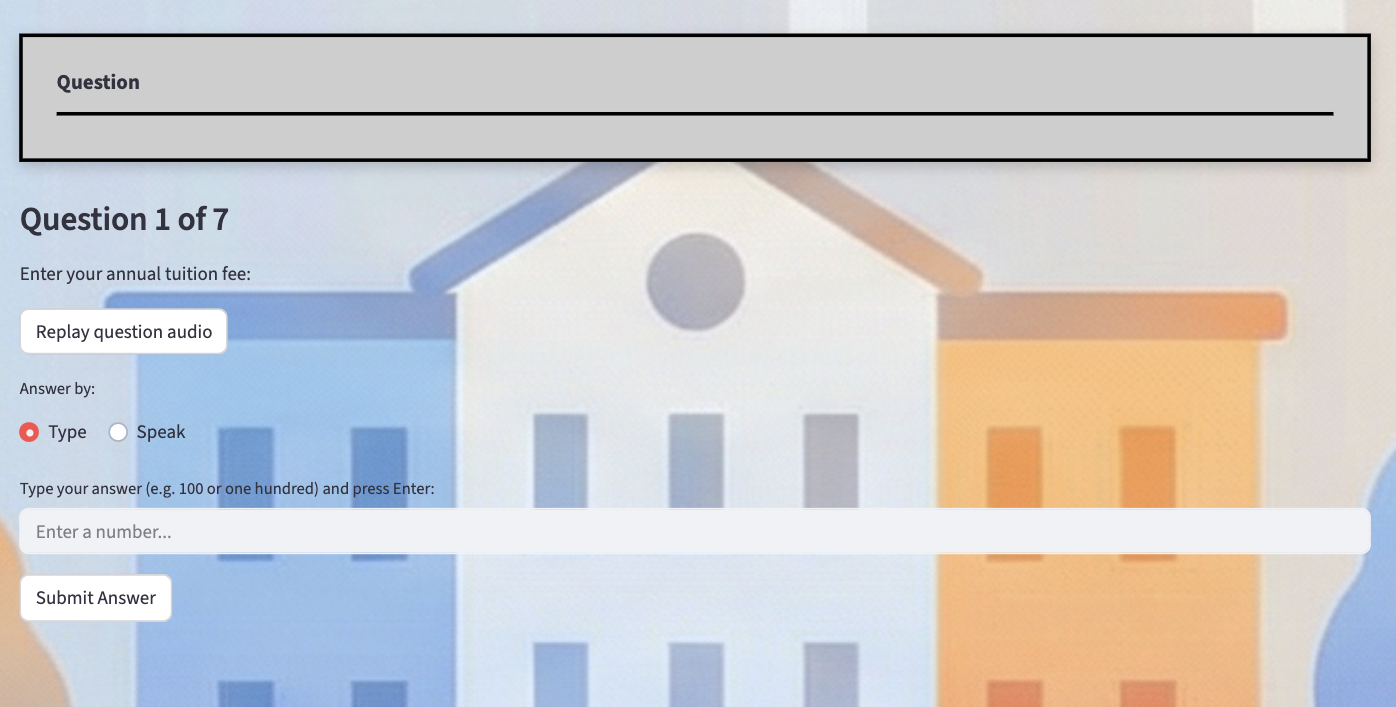
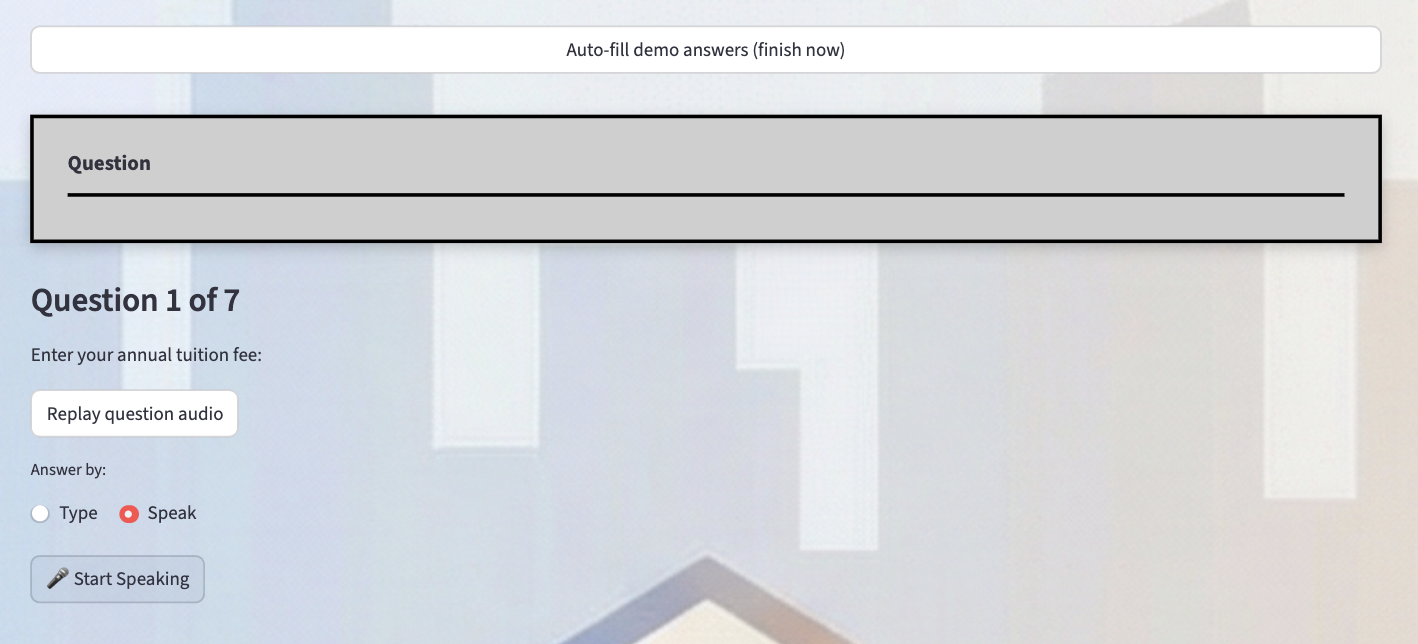
Question and user in typing mode
-
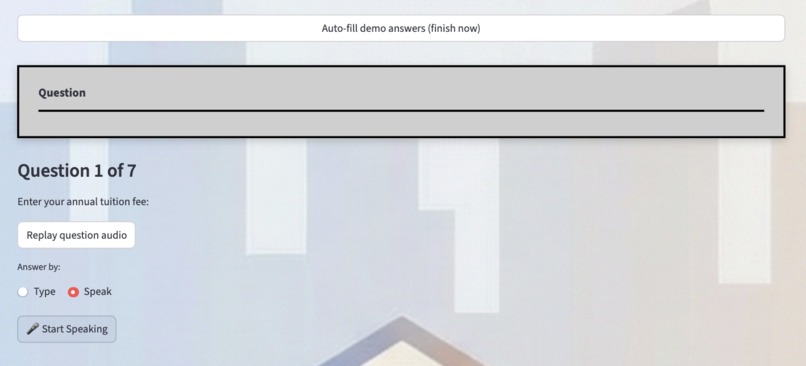
Question and user in speech mode
-
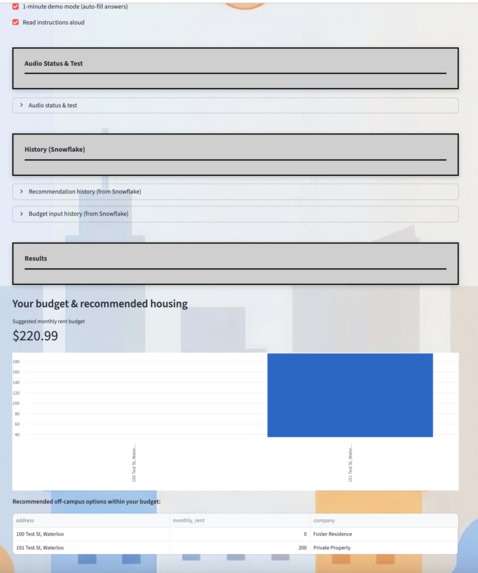
Balance and Recommendation Analysis Report
Inspiration
A few months before the next term started, I noticed many classmates had already secured off-campus housing, and the pressure to find a place quickly became overwhelming. Every option involved trade-offs — one apartment was affordable but far from campus, while another had a great location but rent that exceeded a student budget. At the same time, the broader economic environment made the process even more stressful. Housing prices continued to rise after the pandemic, more students were competing for limited units, and global economic pressures — including tariffs and supply chain disruptions — increased living costs.
I realized I wasn’t alone in struggling to balance affordability, location, and quality of life. My goal became to empower university students searching for off-campus housing by providing personalized guidance based on a realistic budget calculated from their financial situation.
Accessibility is another major inspiration behind this project. I integrated speech-to-text and text-to-speech features so students with different abilities can interact with the platform comfortably. As someone with autism, I understand how overwhelming complex decisions and information overload can be. This experience motivated me to design an AI tool that reduces stress, simplifies choices, and helps students — especially those with disabilities — make confident lifestyle decisions.
What it does
This project analyzes a student’s financial profile — including tuition costs, bank balance, part-time or internship income, scholarships, and government aid — to estimate a realistic housing budget. It then compares that budget with nearby off-campus rental listings around the student’s university. Based on affordability and practical living considerations, the system generates personalized housing recommendations to help students secure suitable accommodation for upcoming terms.
How we built it
I collected 10–25 screenshots of public housing listings from BambooHousing. Monthly rents, addresses, and company information were extracted using Tesseract OCR and computer vision techniques. I then used Pandas to structure the data into CSV files for analysis.
A linear regression machine learning model was developed to estimate appropriate housing budgets based on a student’s financial background. These predicted budgets were compared with listing data to power an AI personalization system that recommends suitable off-campus housing options.
To improve interaction, I implemented voice functionality using ElevenLabs for customizable voice tones (friendly, professional, neutral) and Google Text-to-Speech to present instructions and recommendations verbally. Google Speech-to-Text allows users to provide input through voice instead of typing, improving accessibility for users with dyslexia, blindness, or mobility challenges.
For development, GPT-3.5 assisted with initial code structure, GitHub Copilot supported debugging, Claude models helped with deeper code analysis and logical corrections, and CursorCode improved frontend-backend connectivity. The frontend was built using Streamlit and CLI-based UX, with a mock Flask API simulating backend networking and system architecture. Gemini API was used to make converting a spoken complex number into well-parsed number. For example, word 6 point 6, translating to text would be invalid. Hence, utilizing Gemini API key, 6 point 6 would become interpreted as 6.6. Additionally, OpenRouter was used to better clarify what user meant when they say a complex number. This will prevent any mistakes made in predicting the budgets.
Additionally, Auth0 was used for security authentication via B2B collaboration. This website asks users to sign up their account or login through Auth0 to improve user and data security.
Challenges we ran into
Early data scraping produced inconsistent results due to regex errors. I resolved this by refining extraction logic and using AI-assisted debugging to standardize the dataset. Speech-to-text accuracy and model integration also required experimentation with prompt engineering and clearer contextual instructions.
Another challenge involved weak frontend-backend connections, which prevented the web interface from triggering backend logic. Iterative debugging and code refactoring resolved major blockers and improved system stability.
Budget constraints were also significant. Many AI tools and APIs required subscriptions that limited experimentation and performance. I mitigated this by using student discounts, hackathon credits, and alternative free tools. Additionally, some websites lacked public APIs, so I adapted by collecting and training on my own datasets.
Accomplishment
I’m proud of successfully integrating multiple AI and ML tools into a working, accessible application. This project represents my first major real-world implementation of concepts related to AI fundamentals and personalized recommendation systems. Moreover, I learned that I am determined to strive
What we learned
This project deepened my understanding of NLP, AI personalization systems, and automated data collection. I also learned the importance of balancing ambition with practical implementation and selecting tools that align with the project’s core objectives.
What's next for Off Campus Community Virtual
Implement AuthIO for improved user security
Consider using Snowflake API to improve privacy of data storage.
Integrate official apartment and property management APIs for real-time data
Strengthen the AI pipeline using more advanced code analysis tools
Integrate Gemini API for housing description summarization and sentiment analysis from user reviews to enhance recommendation quality
Transferring from terminal deployed web app into public web for easier access to the website Implement Zero-Based Security
Built With
- backboardio
- claude
- copilot
- cursor
- elevenlab
- flaskapi
- gpt3.5
- llm
- machine-learning
- natural-language-processing
- tesseract

Log in or sign up for Devpost to join the conversation.