-
-

01-a-third-way-into-a-classic
-
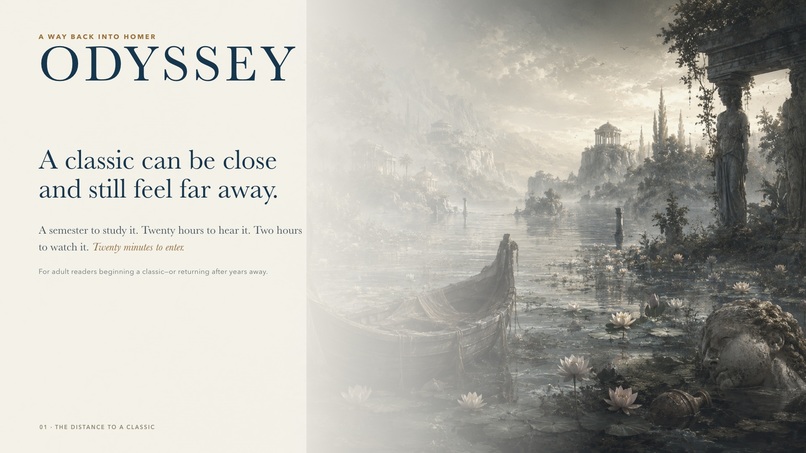
02-a-way-back-into-home
-
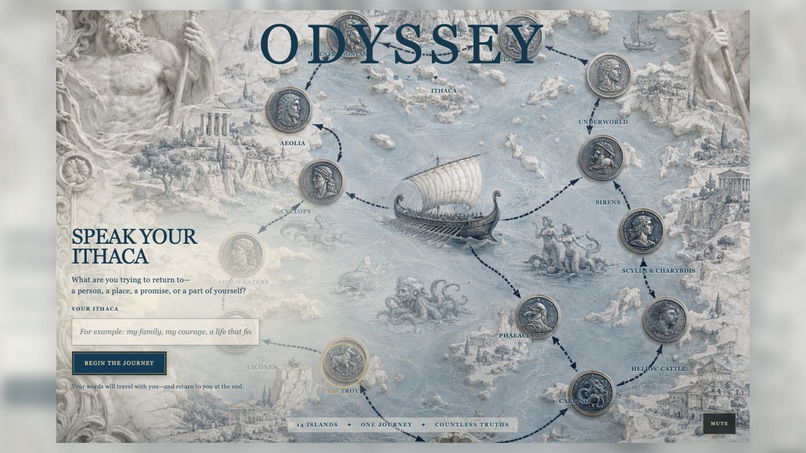
03-speak-your-ithaca
-
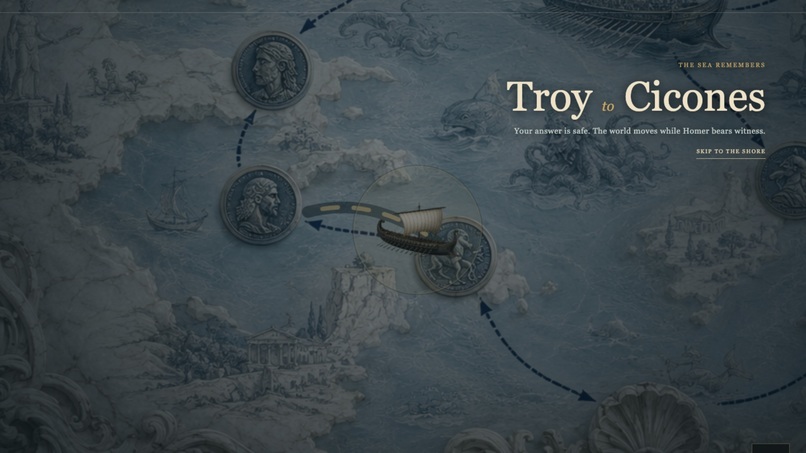
04-sailing
-
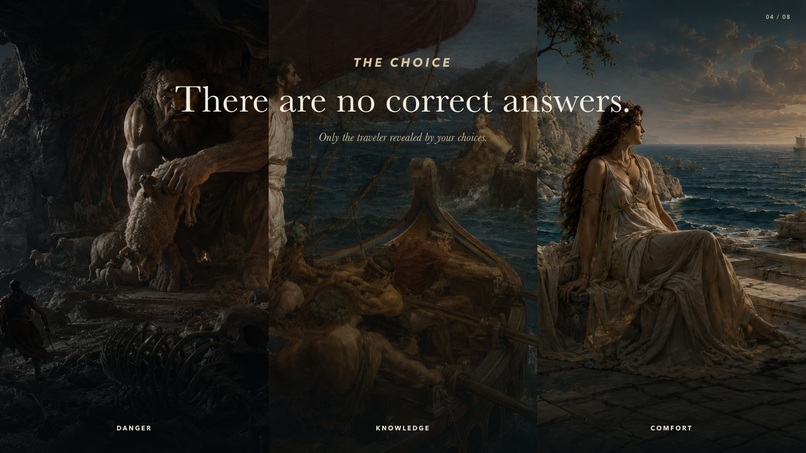
05-the-choice
-
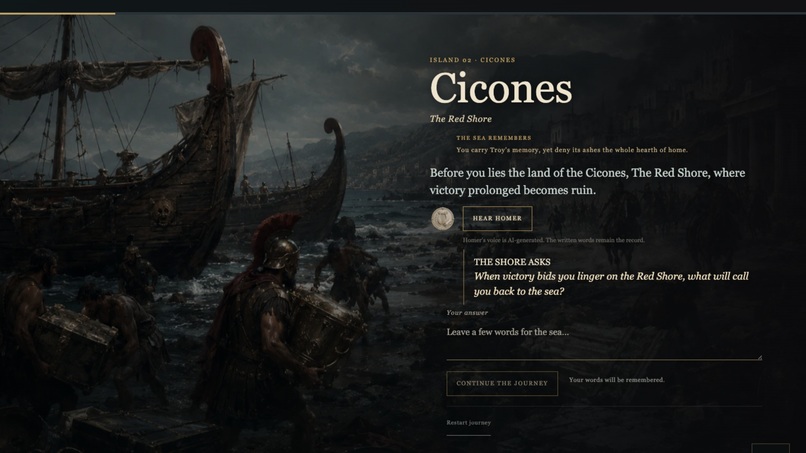
06-homer-and-journey-memory
-
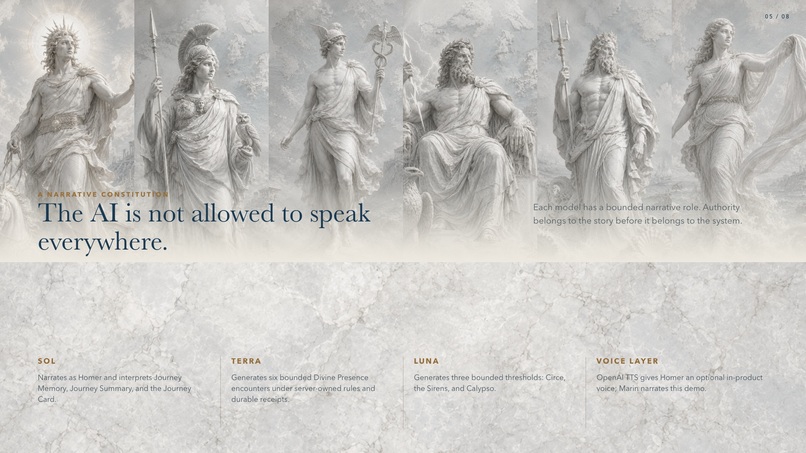
07-terra-bounded-authority
-
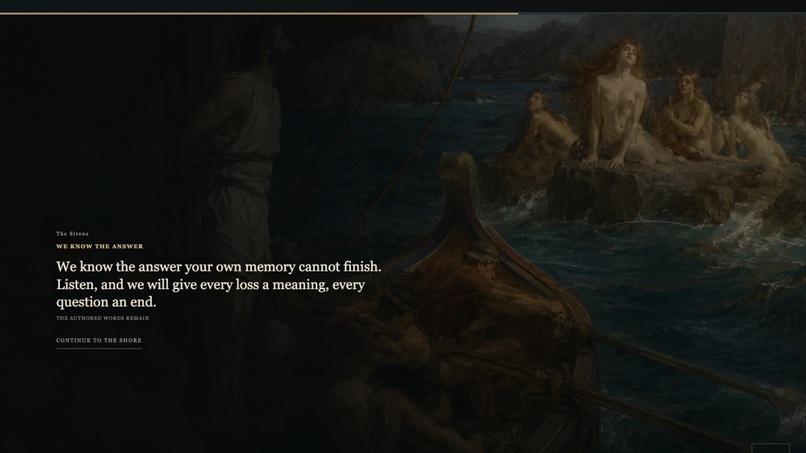
08-luna-literary-threshold
-
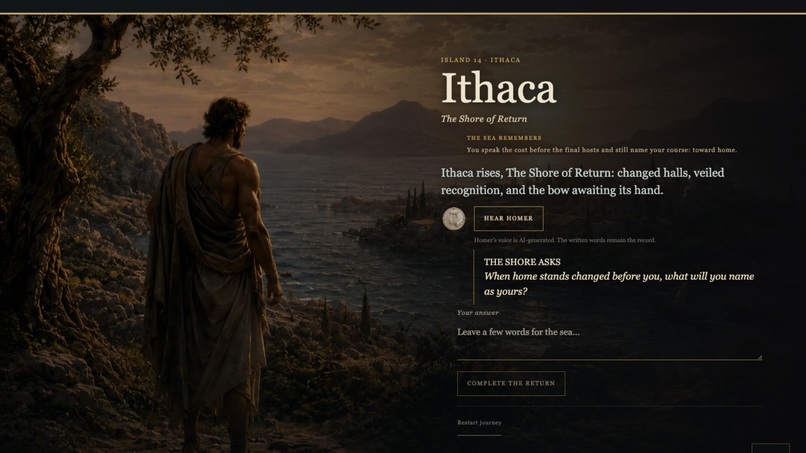
09-ithaca-return
-
10-journey-summary
-
11-journey-card
-
12-penelope-recognition
-
13-responsive-mobile
-
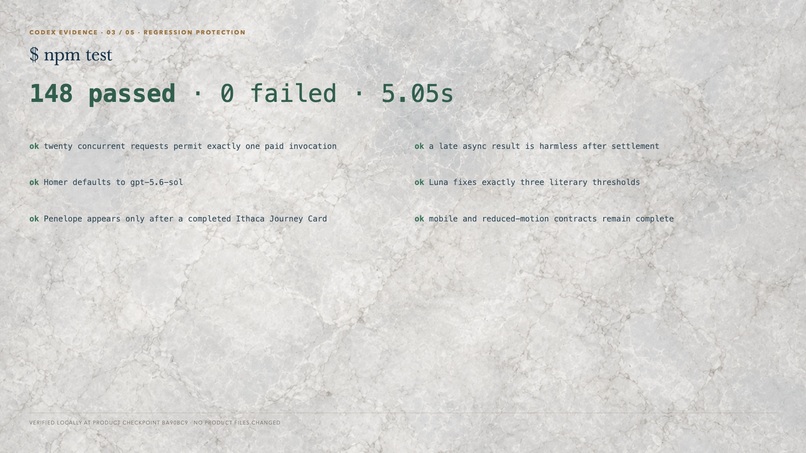
14-codex-regression-evidence
-

15-returnable-access


Inspiration
Odyssey began as a project for a book club.
I wanted to explore a simple question:
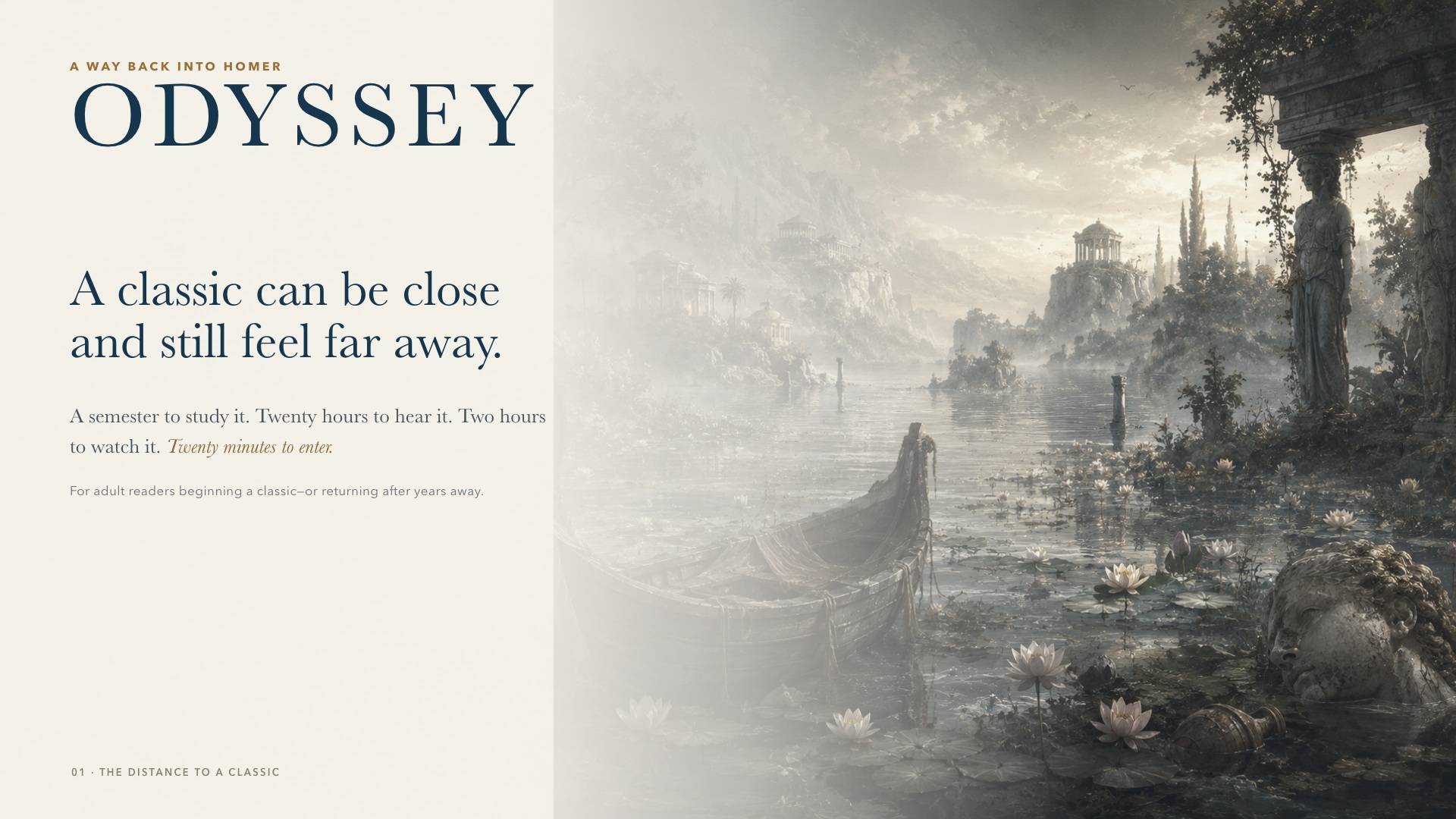
Could a classic work of literature become something we experience, rather than something we only summarize or discuss?
Homer’s Odyssey is often described as a journey across islands, gods, and monsters. But its deeper question is about return:
What are we trying to return to, and who do we become before we arrive?
That became the starting point for Odyssey: The Journey Home.
The project has also grown alongside OpenAI itself. In March, I asked GPT to help me create an interactive web prototype in Figma for a live book-club experience. When GPT-5.6 arrived, I saw an opportunity to bring that early idea much further: to use a frontier model to revisit one of the oldest surviving hero journeys.
Odyssey is therefore not only AI-native, but OpenAI-native—a work shaped through an ongoing collaboration between human literary judgment and OpenAI’s models, tools, voice, code, and image generation.
What it does
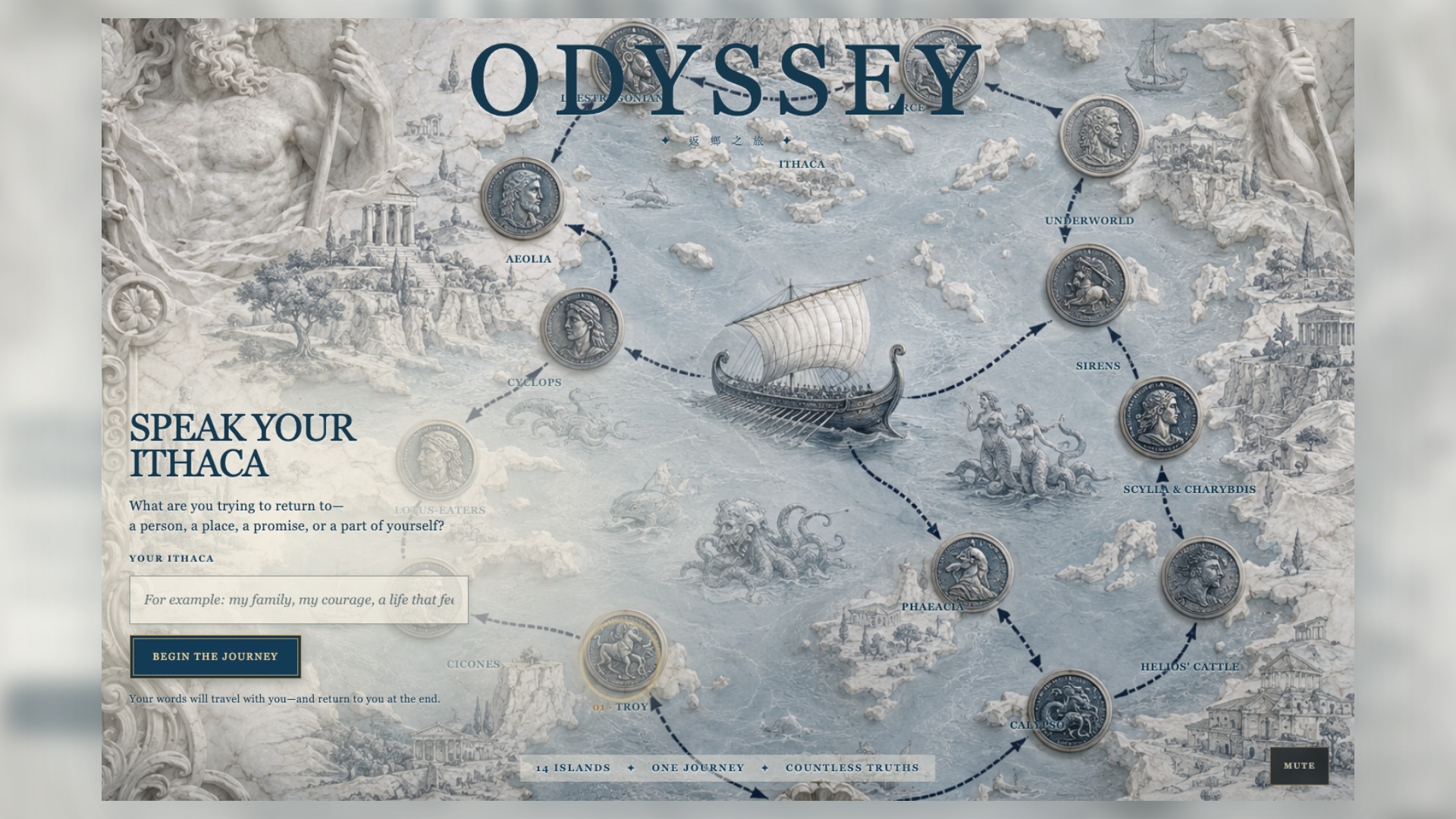
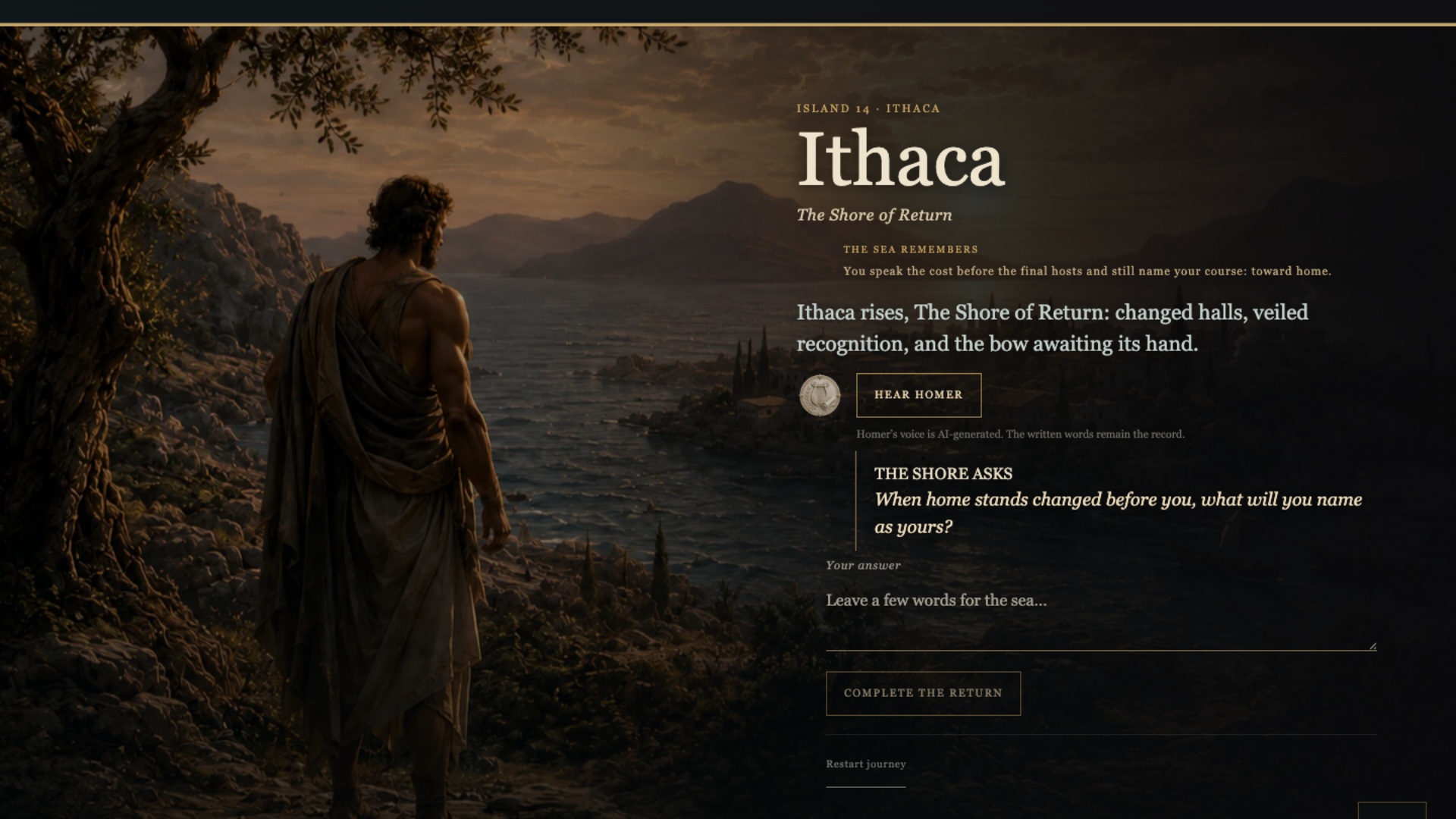
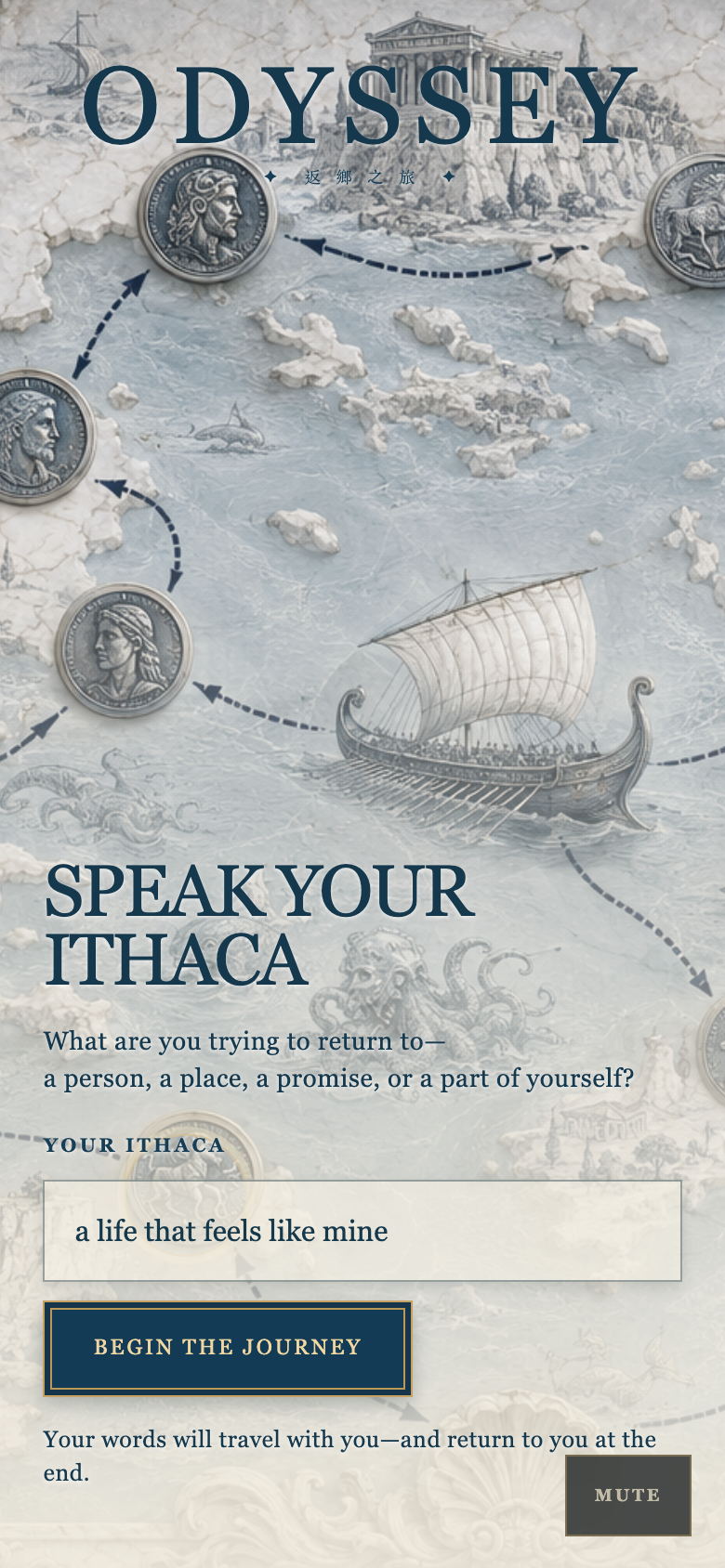
Odyssey: The Journey Home transforms Homer’s epic into an interactive literary journey across fourteen islands.
At the beginning, each player is asked:
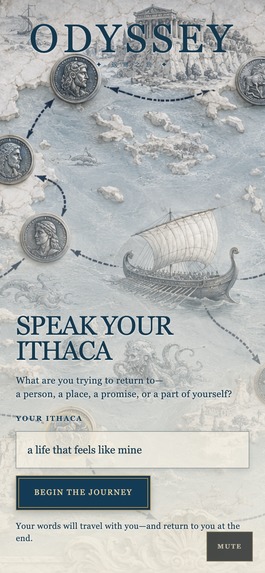
What are you trying to return to?
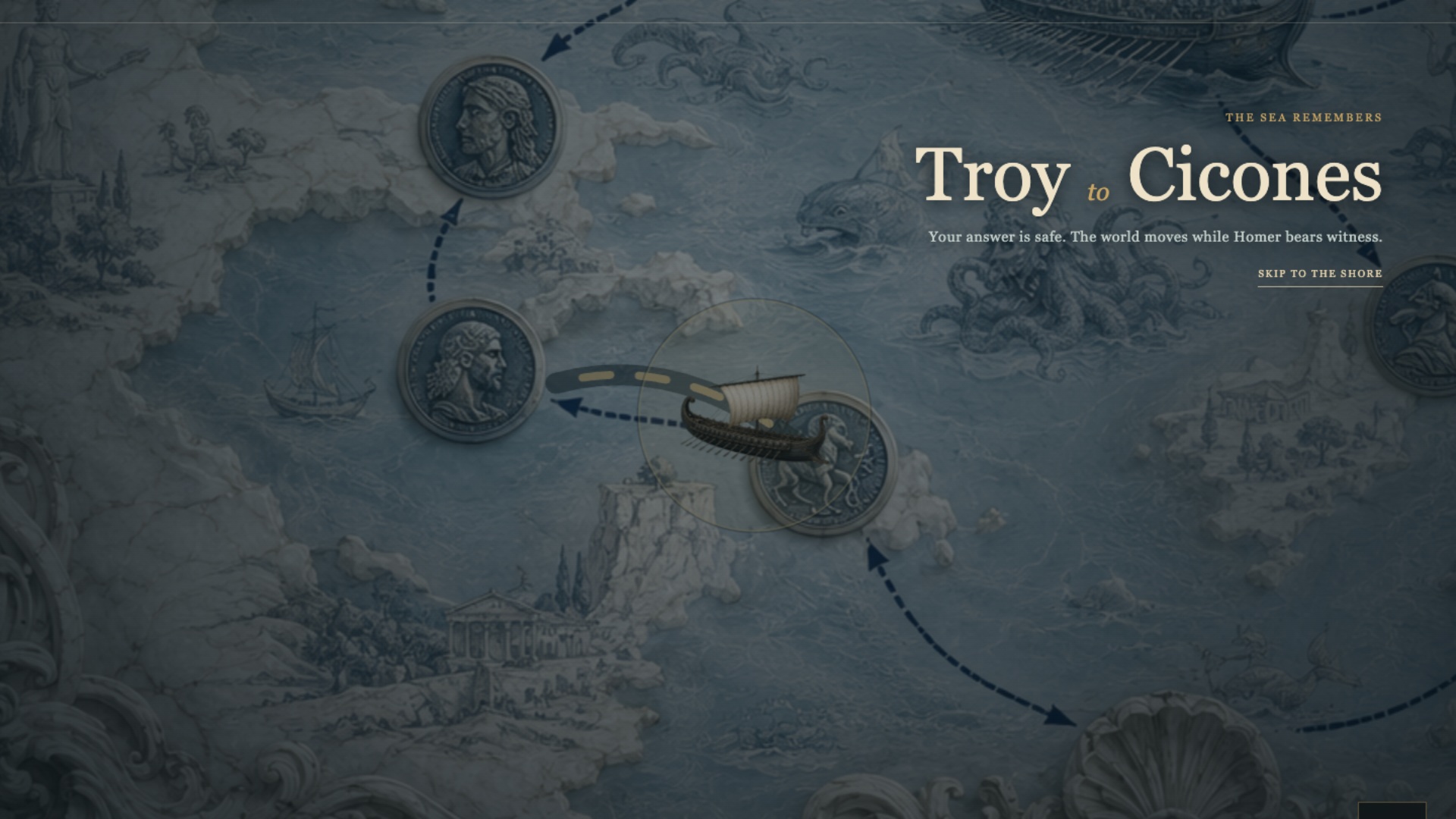
The player then travels across an illustrated map inspired by the structure and emotional arc of the original epic.
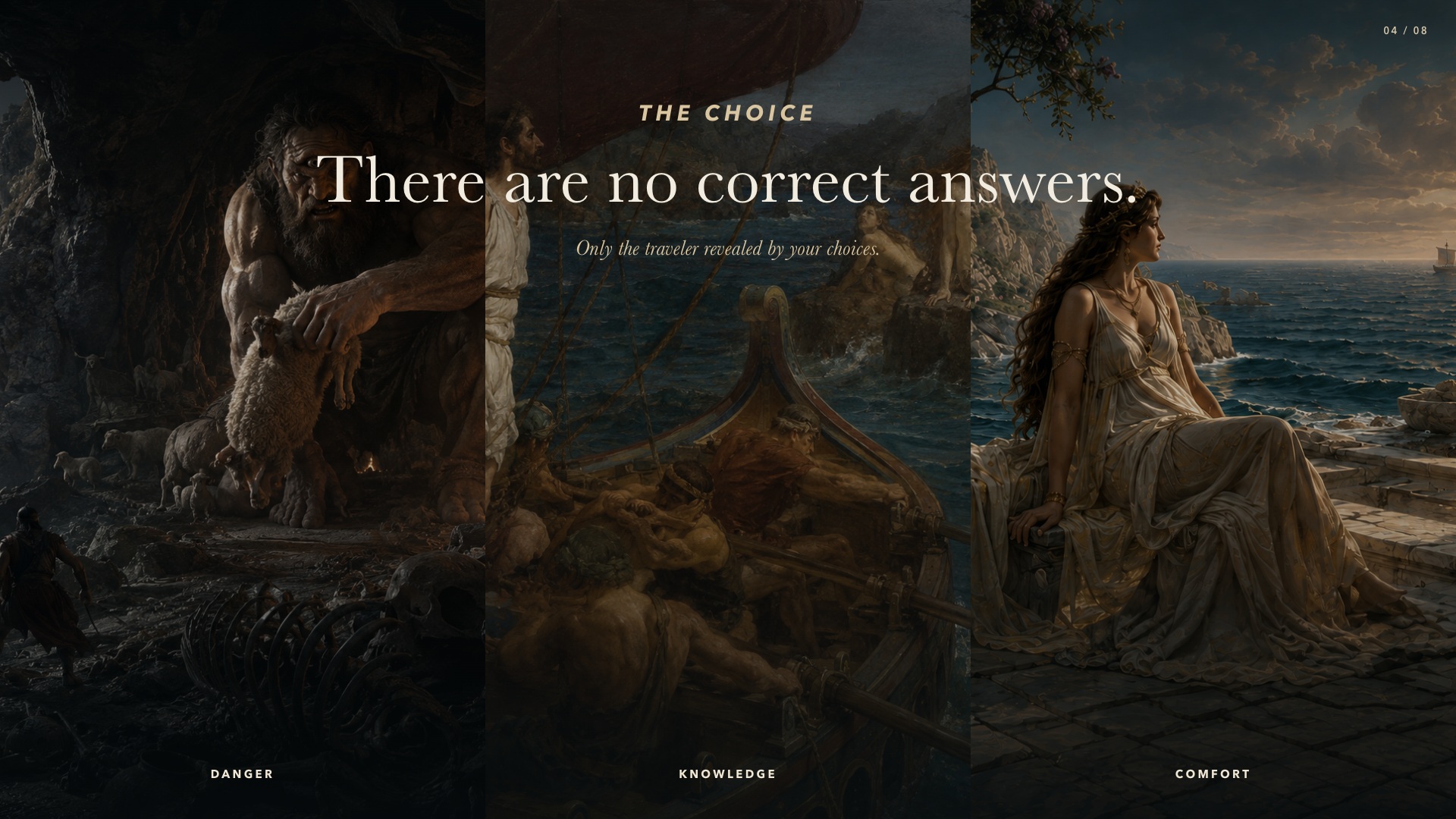
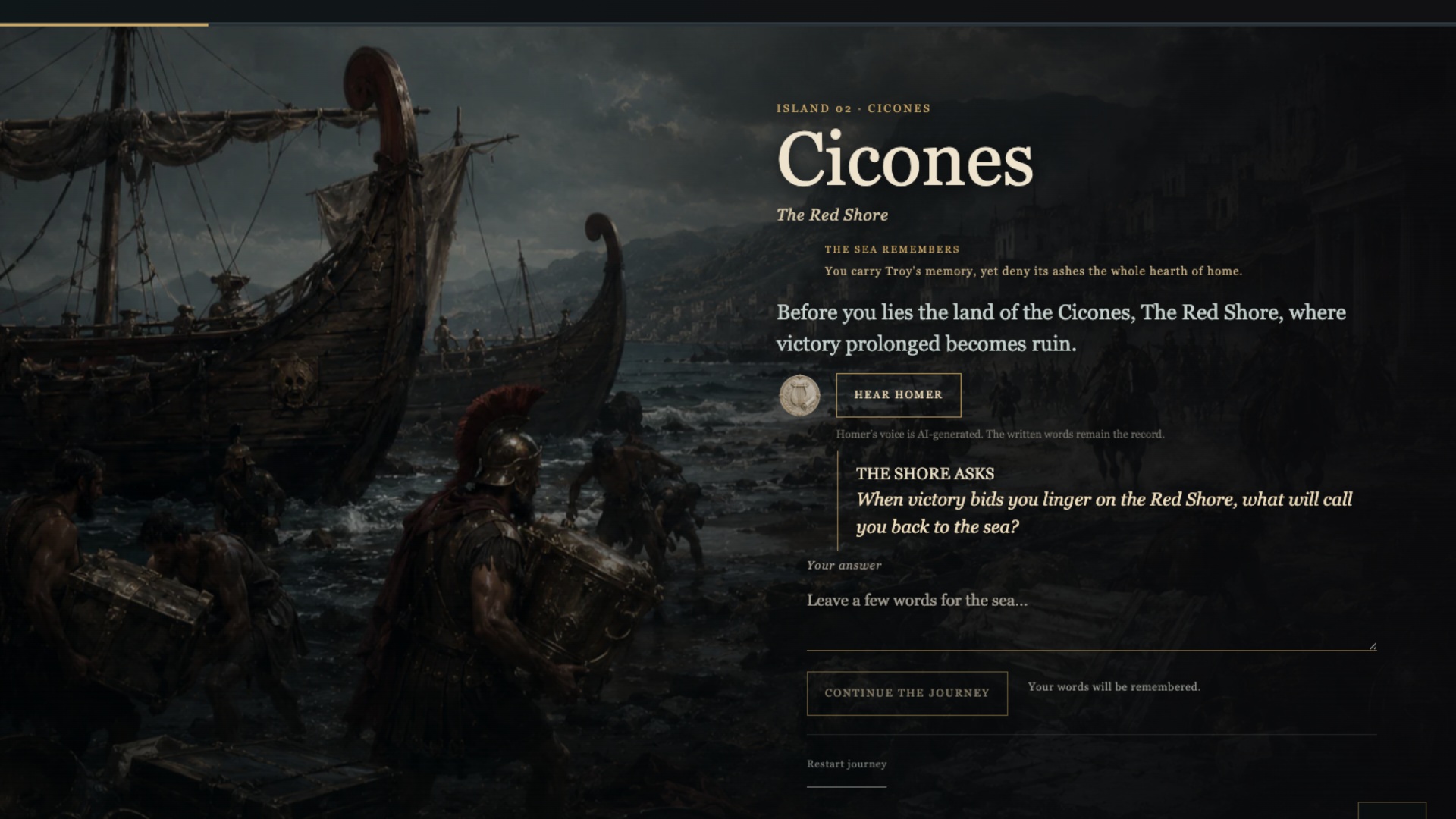
At each shore, they encounter a question, decision, divine sign, or consequence connected to themes such as identity, loyalty, temptation, responsibility, pride, grief, and homecoming.
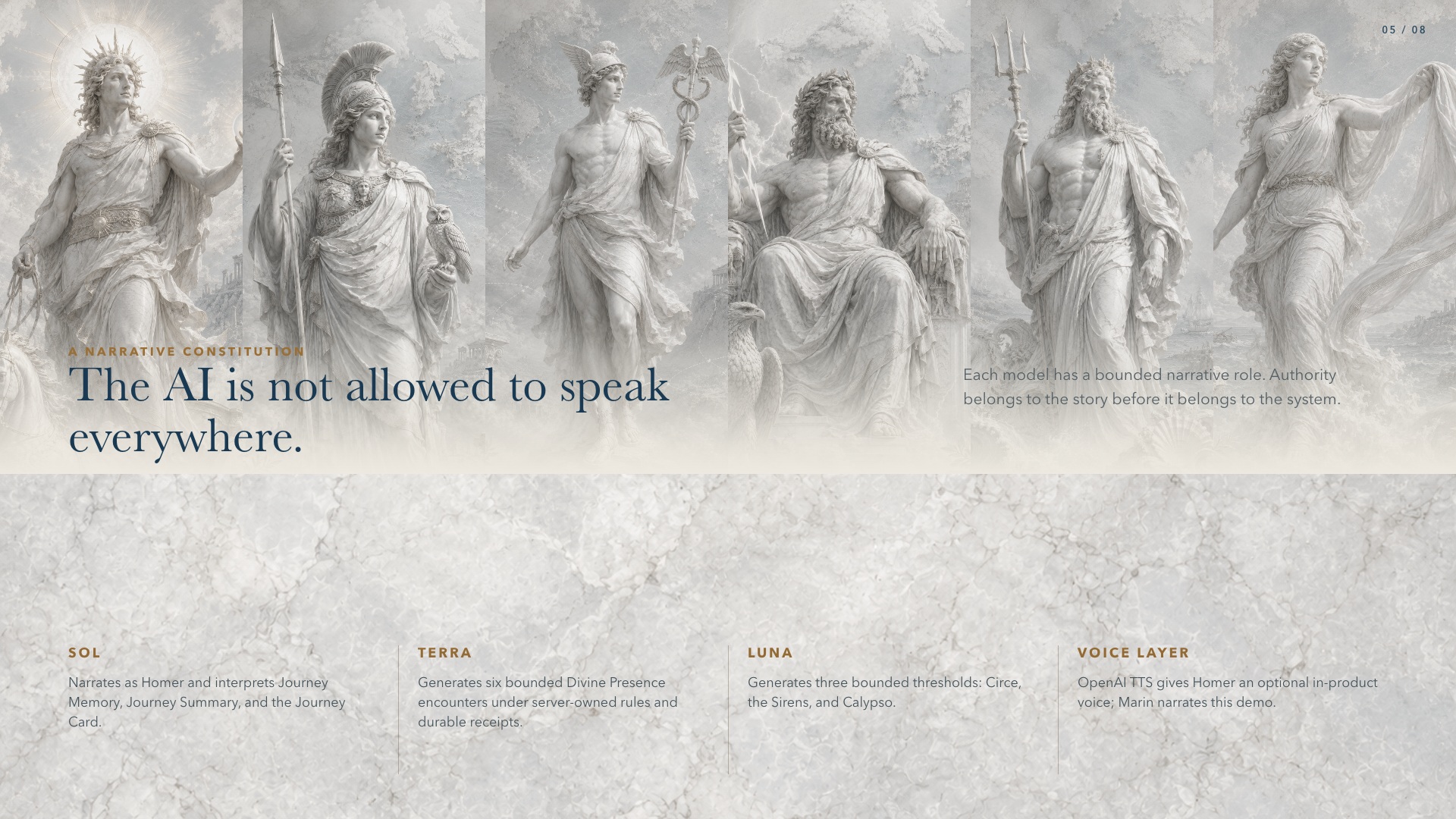
The AI has three bounded narrative roles:
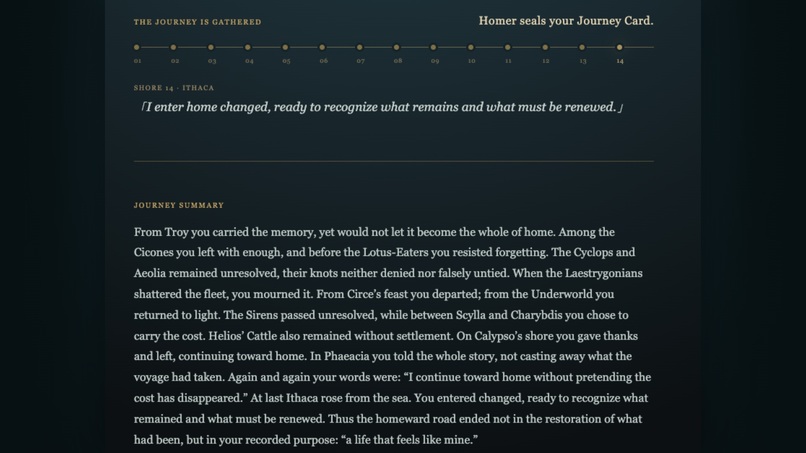
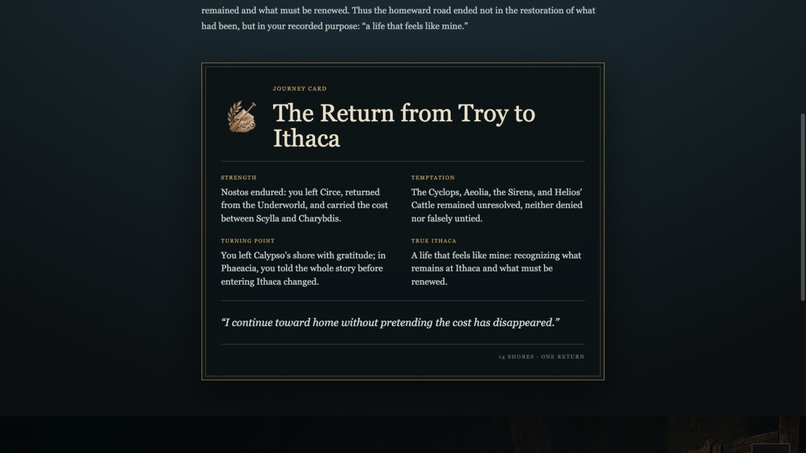
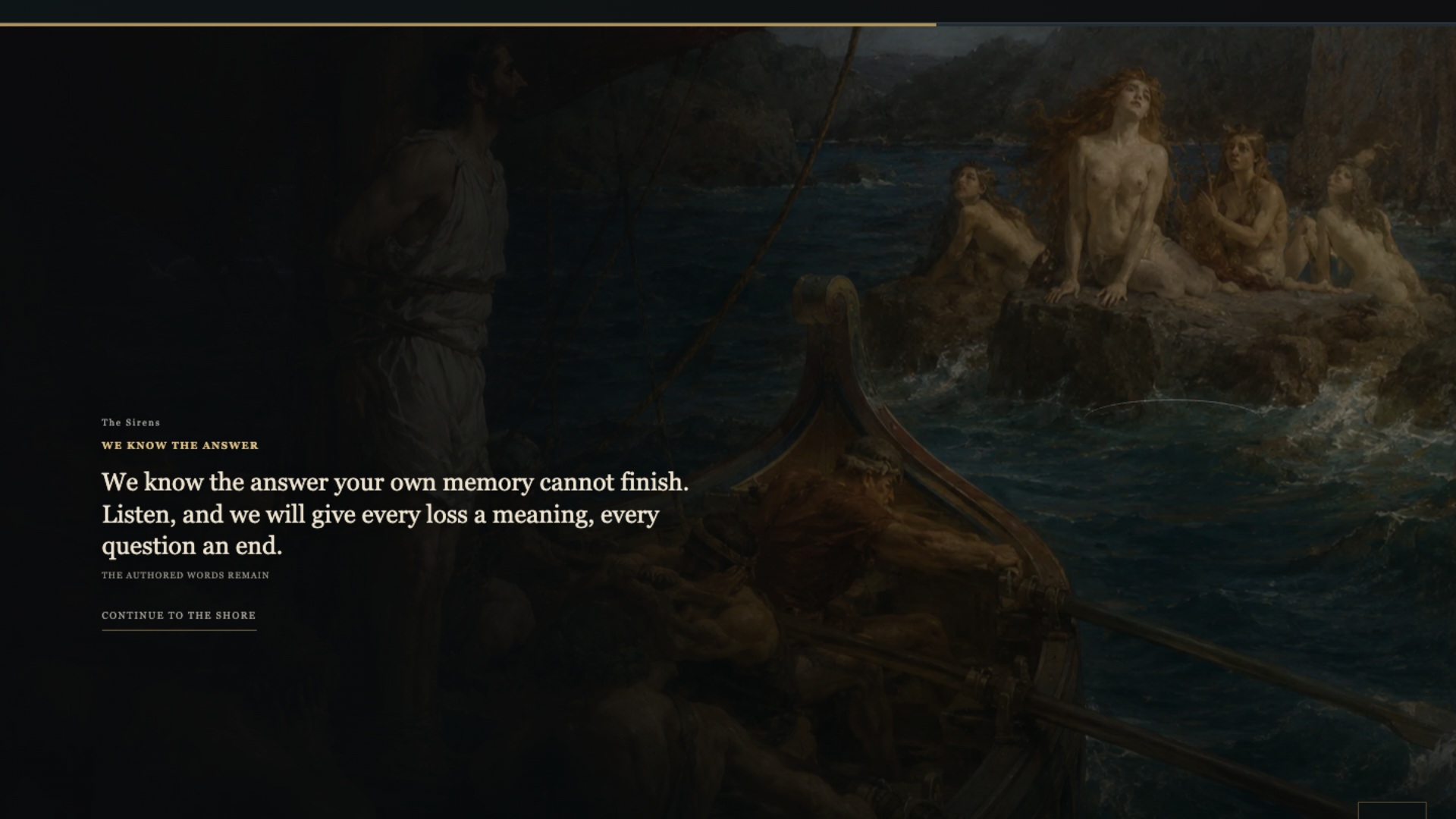
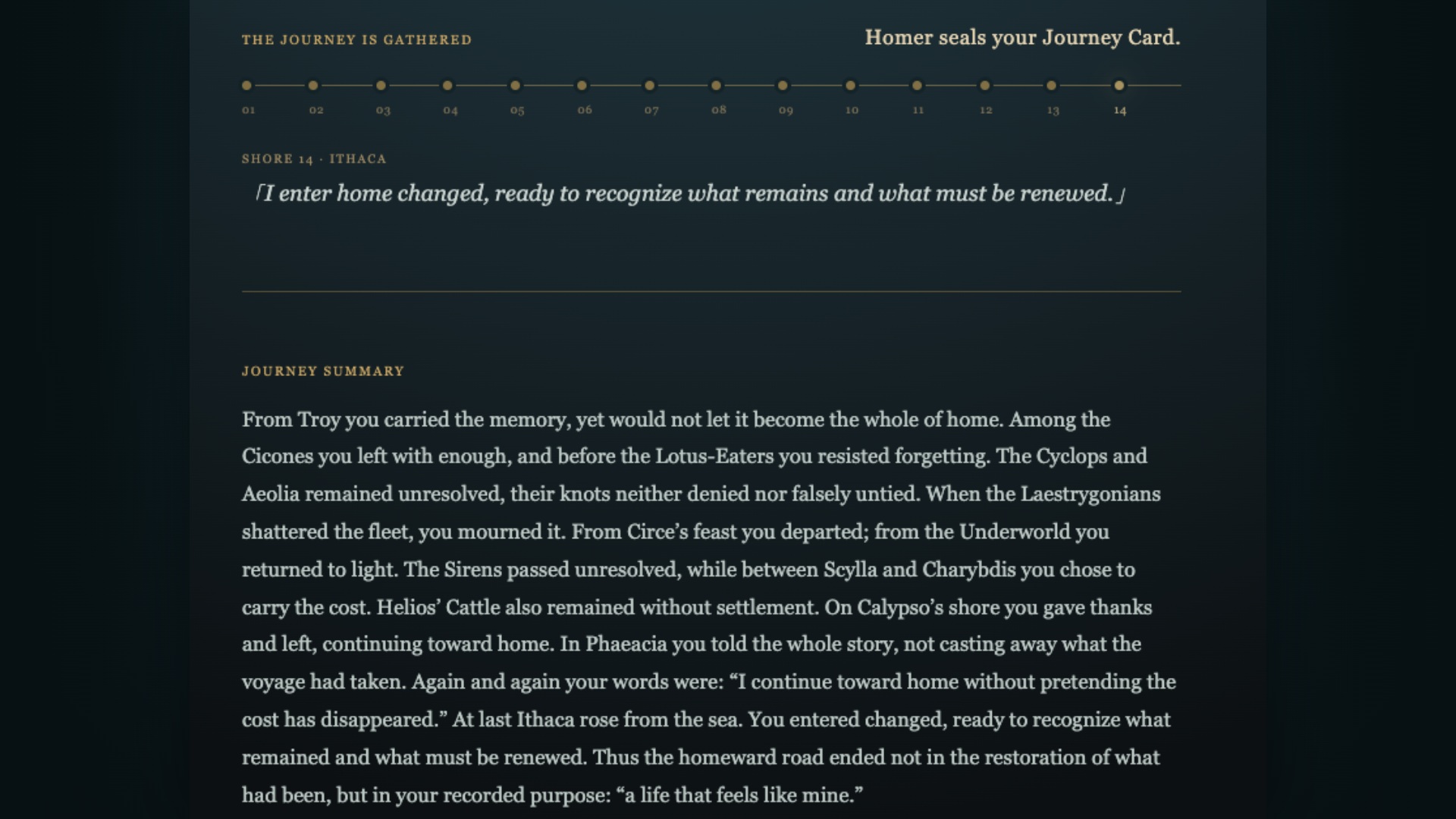
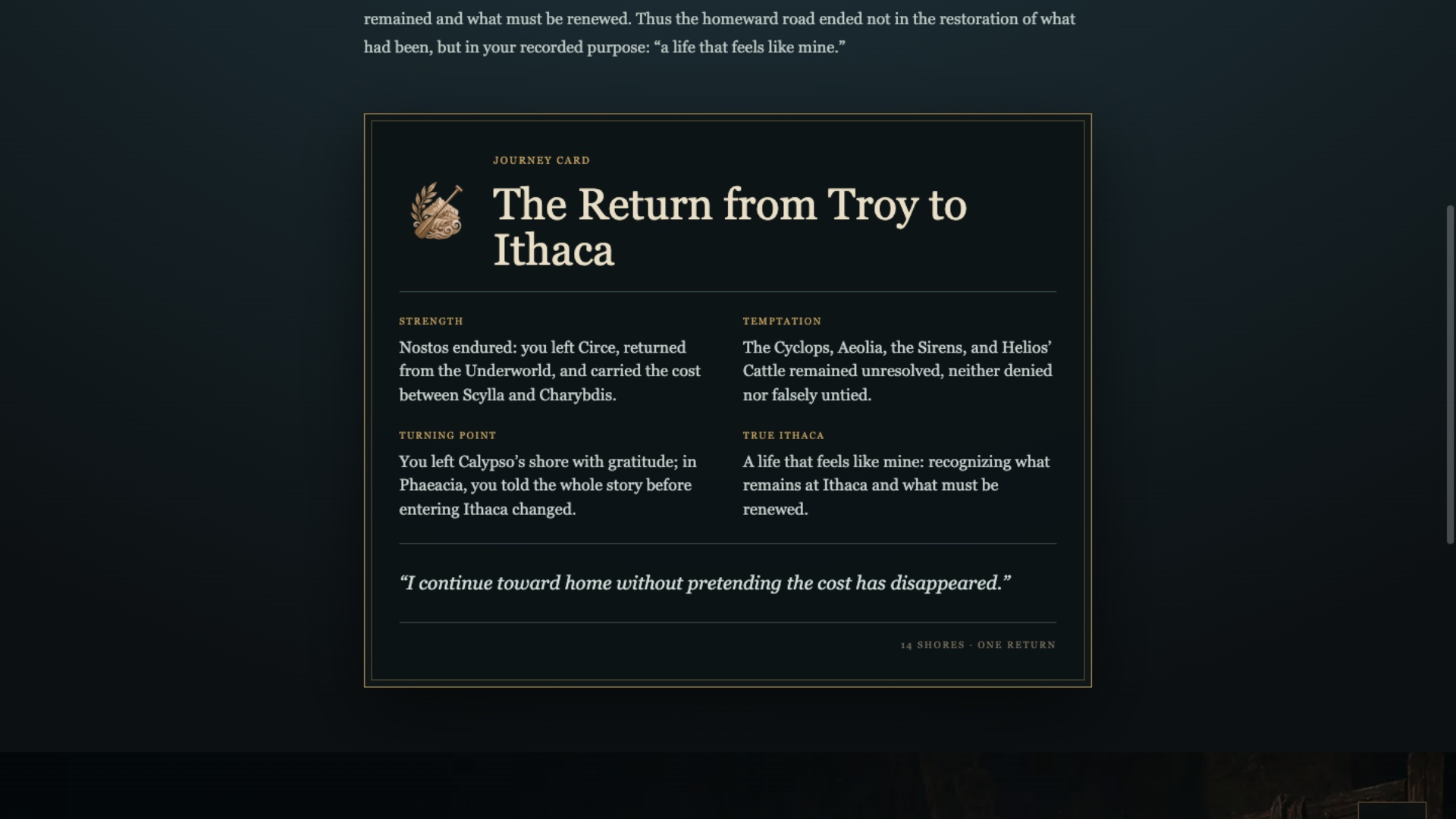
Sol narrates as Homer and interprets Journey Memory, Journey Summary, and the Journey Card. Terra generates six bounded Divine Presence encounters. Luna generates three bounded threshold encounters with Circe, the Sirens, and Calypso.
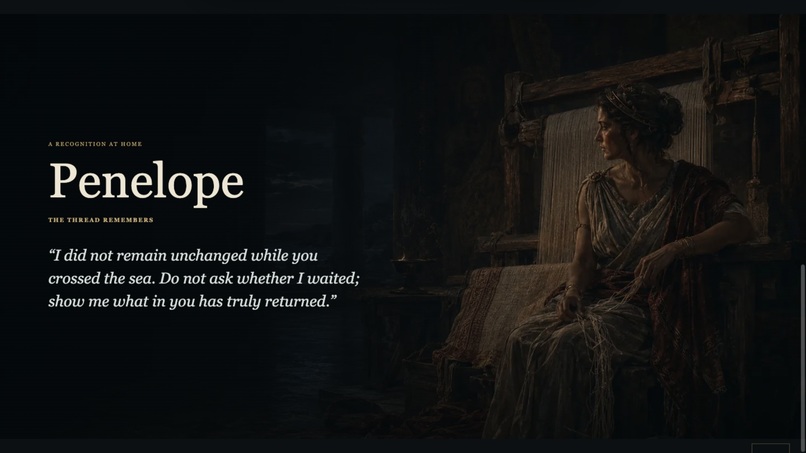
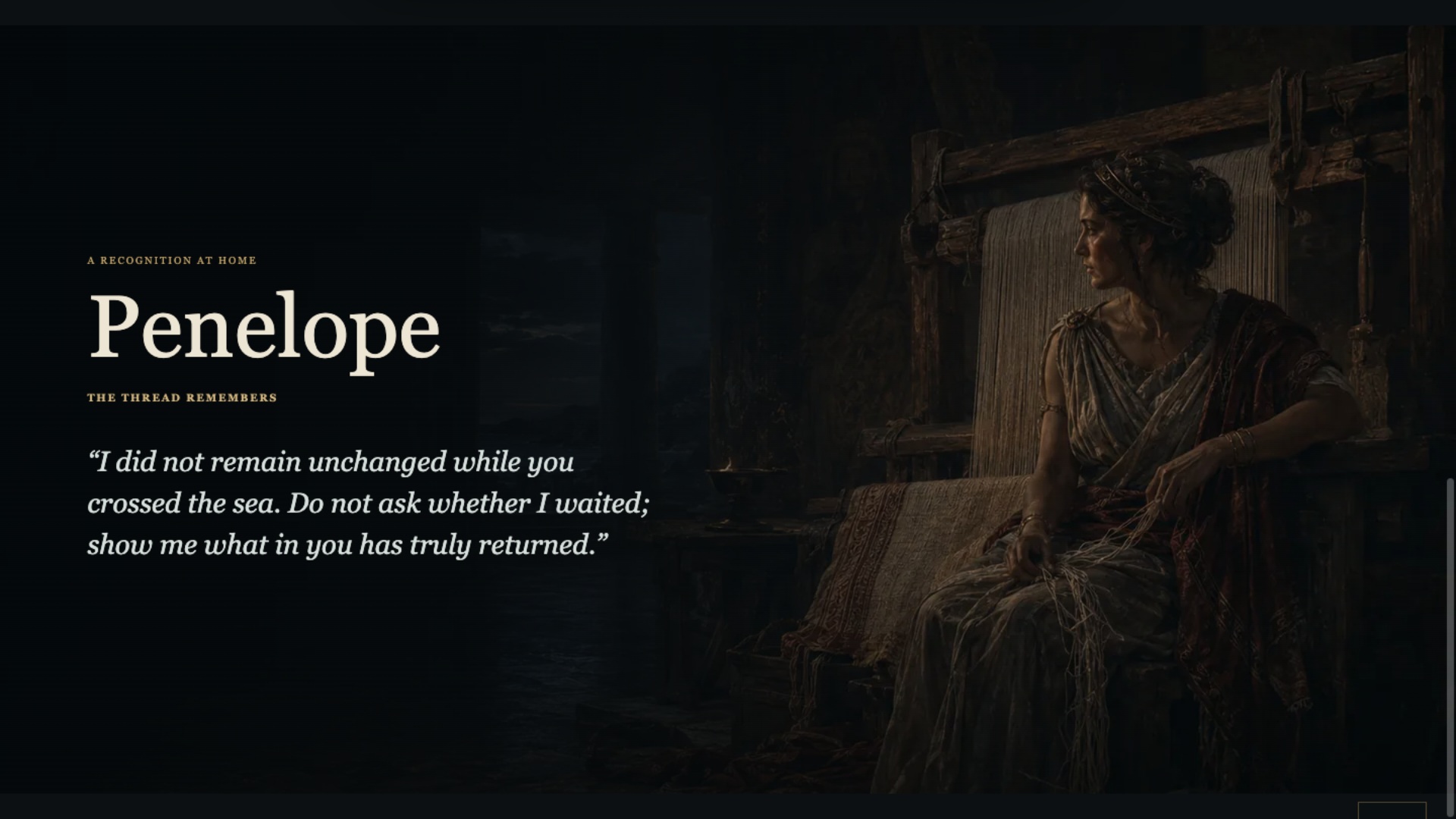
Penelope’s final recognition is different by design. Her words are authored and non-generated, appearing only after the player reaches Ithaca and completes the Journey Card.
The visual language is intentionally museum-like rather than action-game driven. All original images were generated with GPT Image 2.0 and shaped through human curation and art direction. I wanted completing the journey to feel like walking through a gallery shaped by two thousand years of myth, memory, and return—not like chasing the stimulation of a modern adventure game.
The experience also includes animated travel, Homer voice playback, durable encounter outcomes, responsive and reduced-motion support, and an optional fail-open Soundscape that never blocks the journey.
The larger goal is for the player’s choices to return at the end—not simply as a score, but as an interpretation of who they became.
How I built it
I used Codex as a hands-on development partner throughout the project.
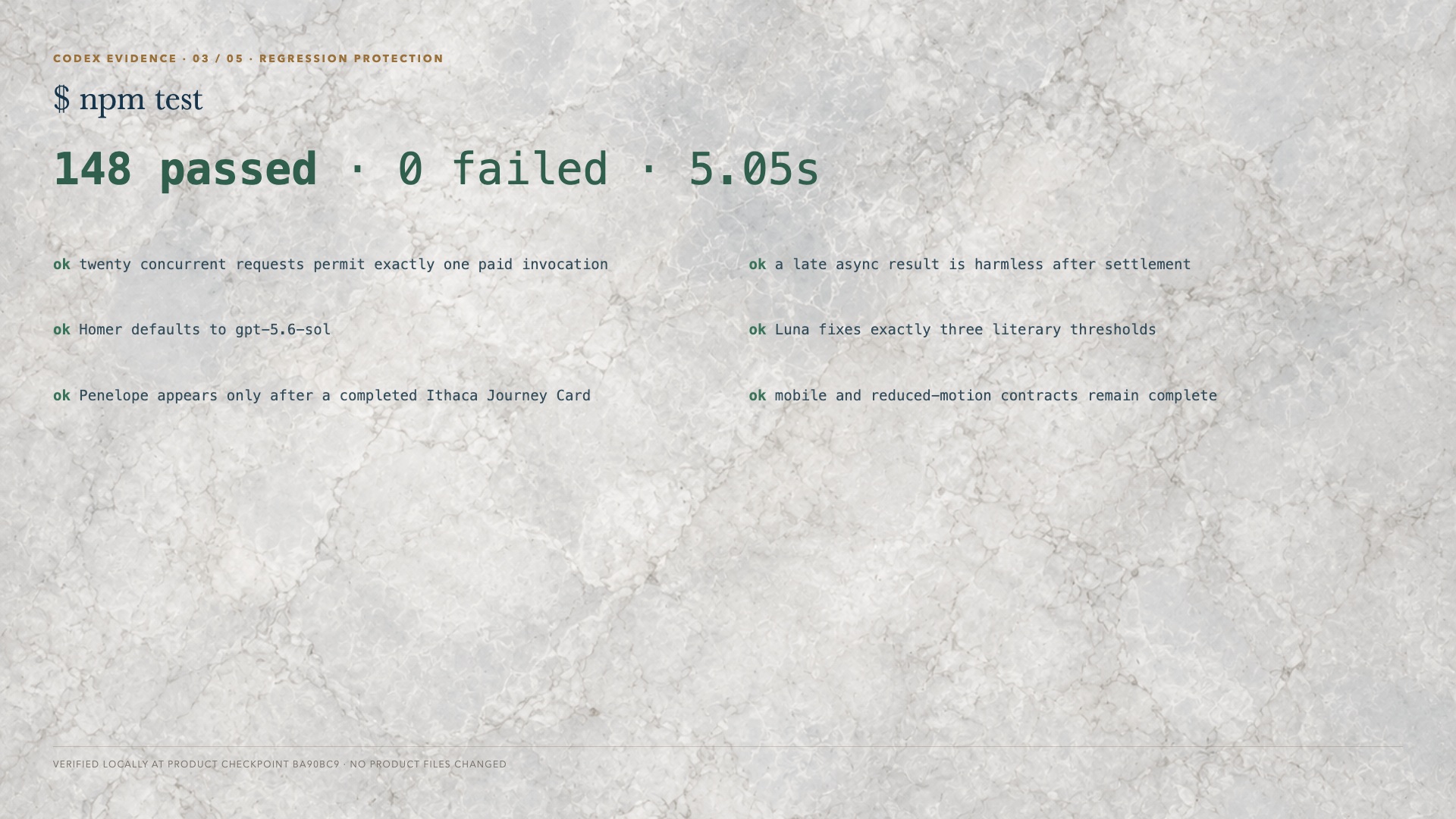
Codex helped translate the literary concept into a working product, inspect and understand the repository, implement features, debug deployment issues, design state contracts, write tests, investigate race conditions, and improve reliability across the application.
The project is built with Next.js, React, TypeScript, and vinext, and is deployed on Cloudflare Workers.
OpenAI’s Responses API powers Sol, Terra, and Luna. OpenAI text-to-speech provides optional voice playback for Homer.
Cloudflare D1 stores only durable generation receipts for recovery and idempotency; it does not store the player’s Journey Memory. For the same journey and encounter, refreshes, retries, or concurrent requests return one durable outcome rather than conflicting results.
The deterministic journey engine remains authoritative over progress, choices, statistics, and endings. Generated narration can interpret the journey, but it cannot rewrite what happened.
Challenges
One of the hardest challenges was balancing literary depth with product clarity.
The project combines mythology, reflection, generated narration, visual art, audio, and progression. Without restraint, it quickly becomes too text-heavy or visually dense.
I learned that pacing, hierarchy, transitions, and silence are not decorative details. They determine whether the player can understand and emotionally follow the journey.
Usability feedback from my teammate Kim also showed that the entry point and primary actions needed to be clearer. I refined the opening explanation, strengthened the main continuation CTA, and made Restart visibly secondary without changing the questions, models, Journey Memory, or endings.
Another challenge was making generated encounters reliable.
A divine oracle cannot appear, change several seconds later, or differ between two browser tabs. The system needed a clear contract:
the encounter enters a waiting state one result wins the result becomes durable only then may the player continue
Implementing this required timeout handling, retry behavior, race-condition testing, durable receipts, and careful separation between temporary and final states.
Large illustrated assets created another challenge, especially on mobile or unstable connections. I added image prioritization, retry behavior, and automated checks to reduce broken visual states.
The final challenge was keeping the AI meaningful rather than generic. Each model is limited to the moments where it has narrative authority. It cannot simply speak everywhere.
What I learned
This project changed how I think about AI and literature.
AI is most valuable here not when it replaces Homer, but when it creates a new relationship between the text and the reader. The model becomes a narrator, witness, and interpreter of the player’s choices.
I also learned that memory must be designed, not assumed.
For a journey to feel personal, decisions and consequences must first exist as structured state. Only then can language interpret them honestly.
Generated content also needs product contracts. A prophecy or judgment cannot merely sound plausible; it must be stable, timed correctly, and grounded in the player’s actual journey.
I also learned that not every meaningful moment should be generated. Penelope’s recognition became stronger when it remained authored, fixed, and separate from Luna.
Most importantly, a literary experience can still be technically rigorous. Narrative design, state management, concurrency, accessibility, audio, asset loading, testing, and deployment all have to work together before the story can feel alive.
Accomplishments
Built and deployed a playable public web experience Created a fourteen-island interactive journey map Added animated ship travel and island-entry transitions Added generated Homer narration in text and voice Built Journey Memory, Journey Summary, and Journey Card Added six Divine Presence encounters and three Luna threshold encounters Added an authored, non-generated Penelope recognition at Ithaca Implemented durable encounter receipts and stable outcomes Added an optional, fail-open Soundscape Improved entry and CTA clarity based on usability feedback Added responsive and reduced-motion behavior Reached 148 passing automated tests Created a museum-like visual world with GPT Image 2.0 and human art direction Developed an early book-club prototype into a functioning OpenAI-native literary experience
What’s next
The next stage focuses on making the voyage more relational, embodied, and personal:
stronger memory of choices and consequences across islands relational gods who can become protectors, adversaries, or persistent presences restrained character animation for Circe, the Sirens, and Calypso optional live spoken conversations with Sol, Terra, and Luna structured interpretation of the player’s changing identity a personalized final epic narrated by Homer broader end-to-end testing across multiple complete journeys
The final ambition is simple:
Codex builds the journey. GPT-5.6 becomes Homer. The player becomes the story.
Built With
- cloudflare-d1
- cloudflare-workers
- codex
- gpt-5.6
- next.js
- openai-responses-api
- openai-text-to-speech
- react
- typescript
- vinext


Log in or sign up for Devpost to join the conversation.