-
-
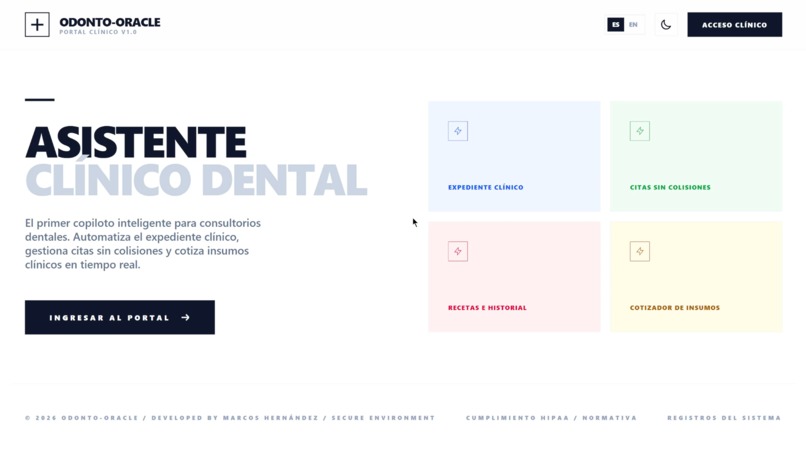
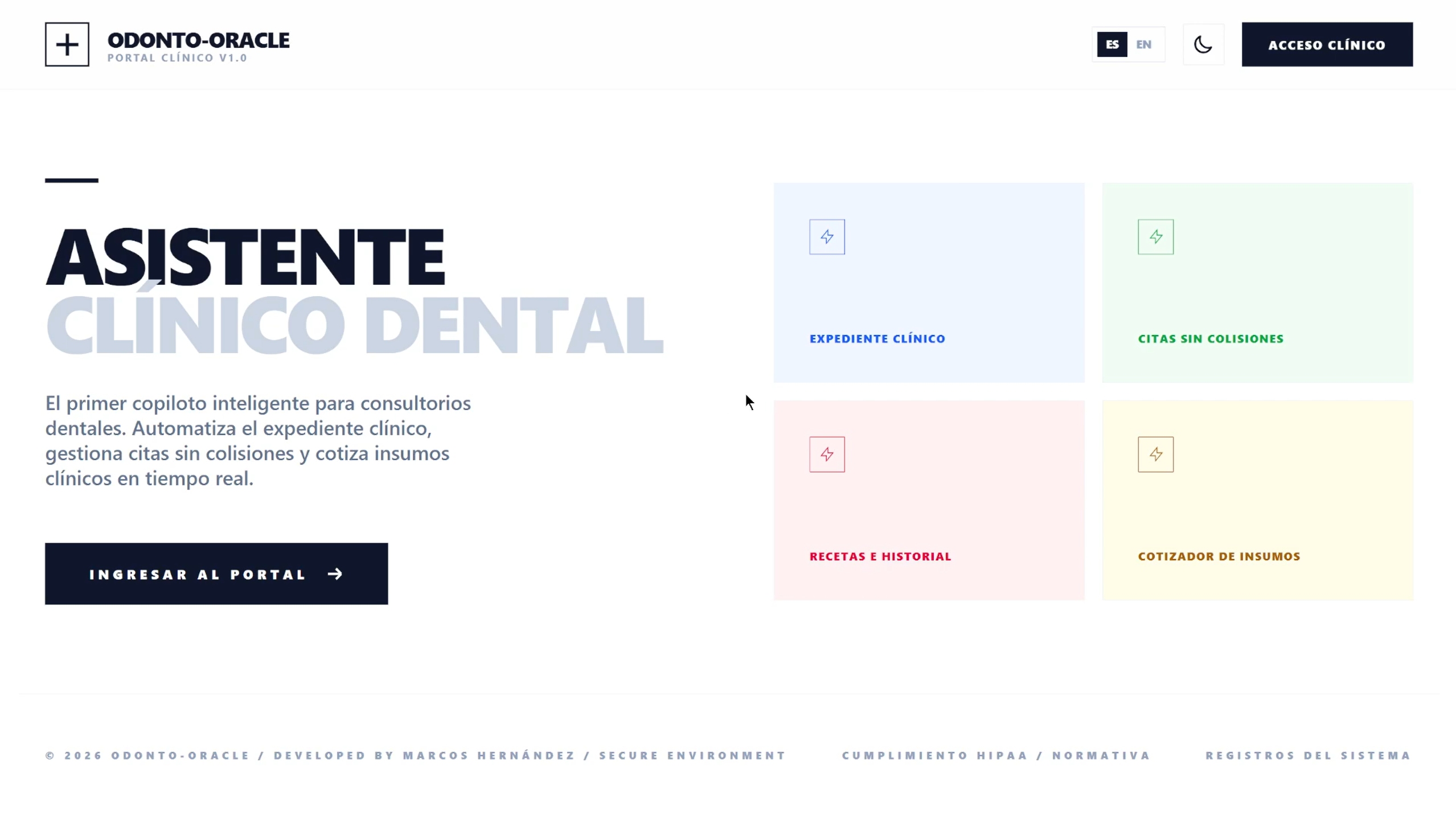
main page
-
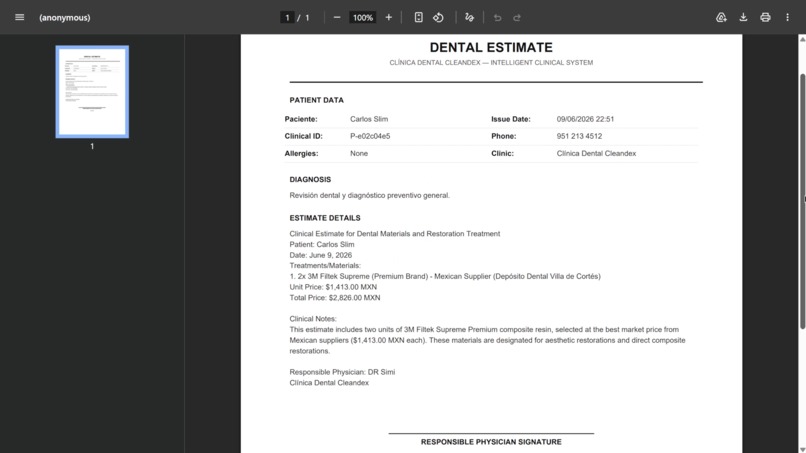
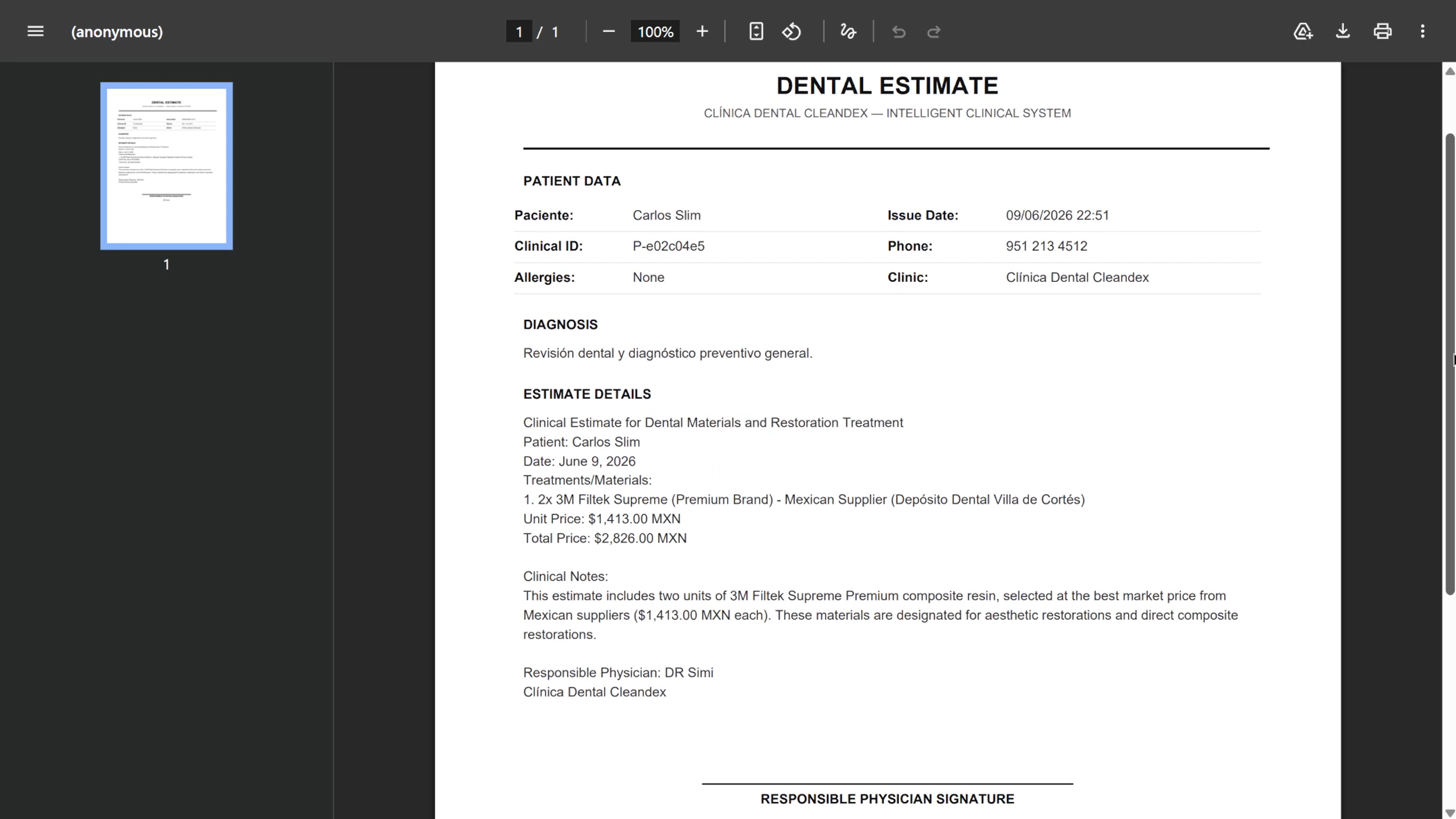
Document generation
-
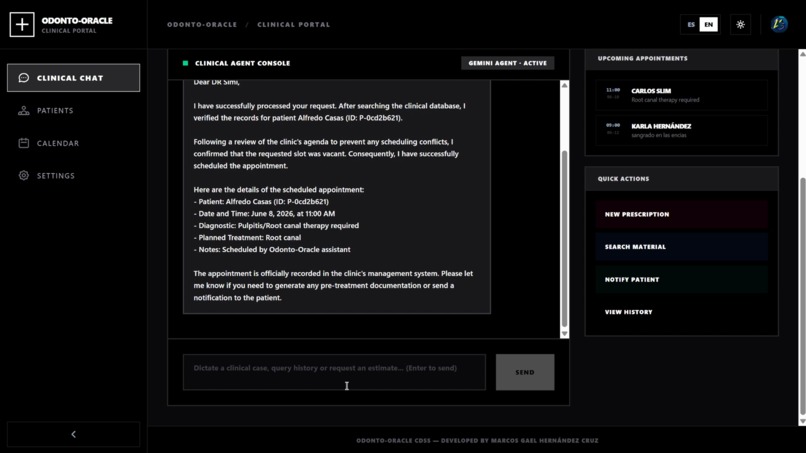
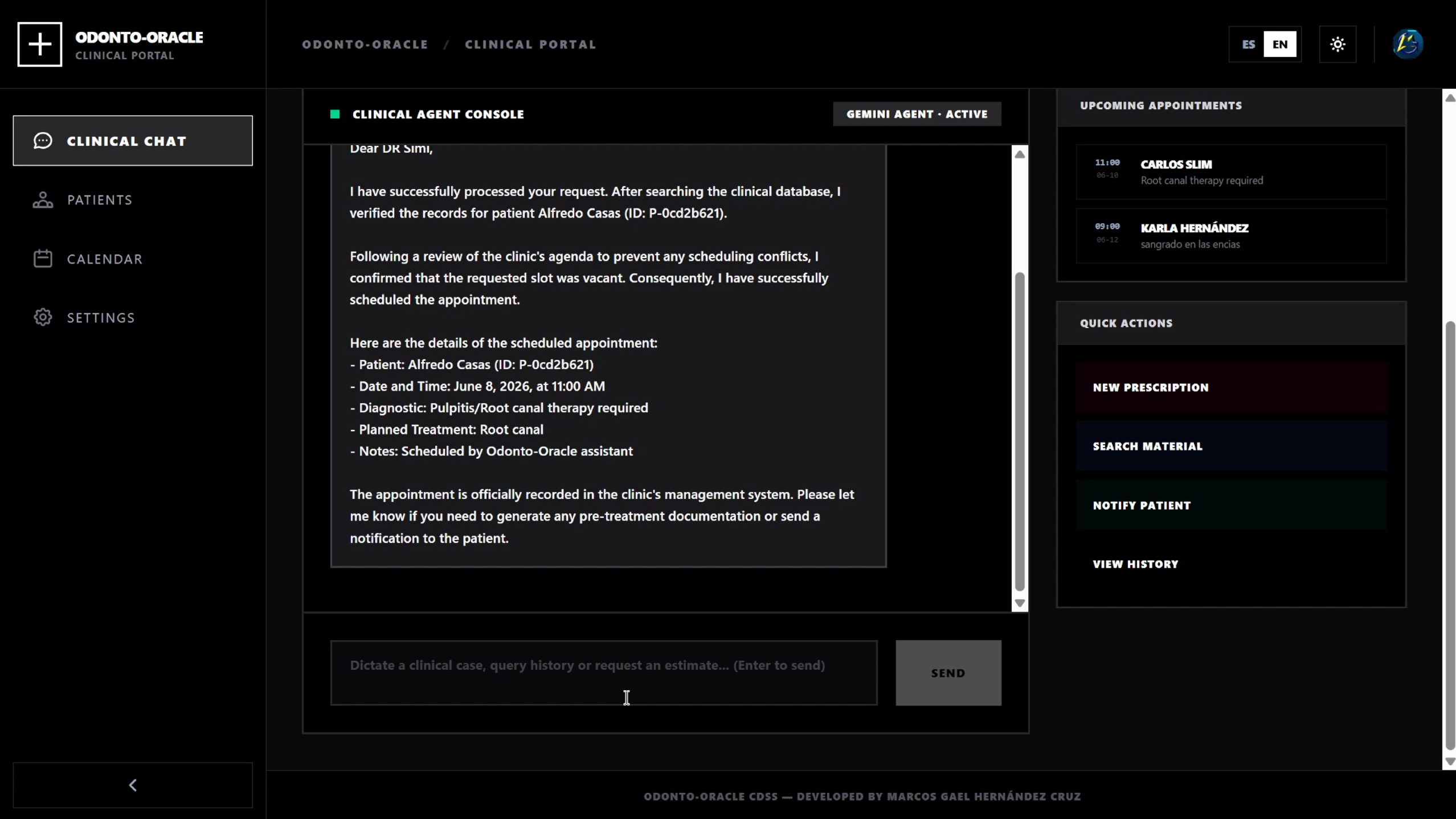
Results 1
-
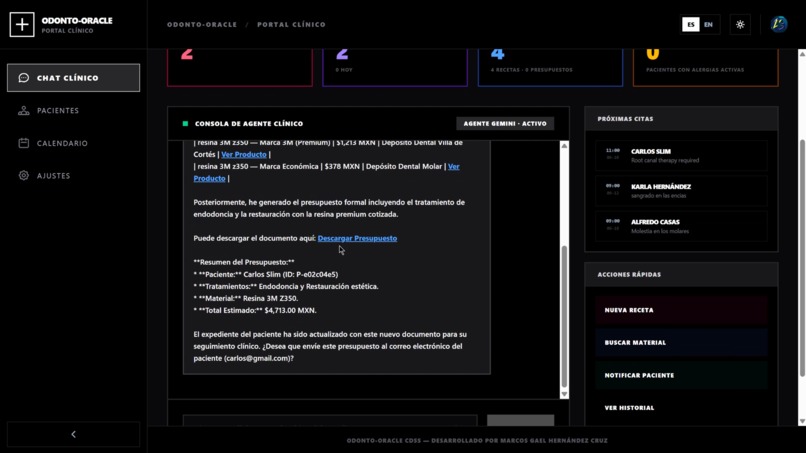
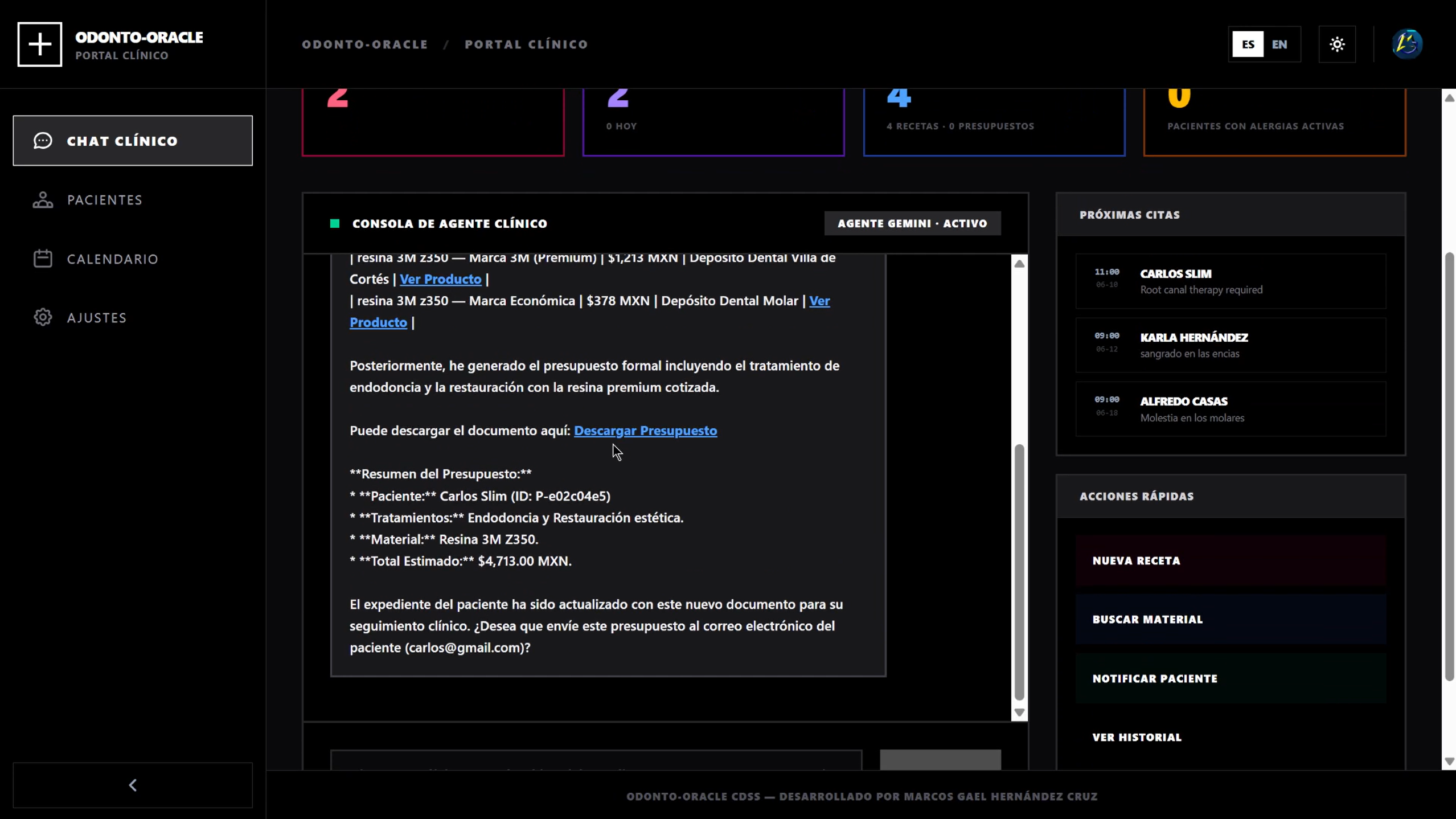
Results 2
Inspiration
Dental professionals face an overwhelming administrative burden, spending hours translating patient interactions into manual, structured clinical records. This friction often detracts from direct patient care. Inspired by the need to optimize clinical workflows, we created Odonto-Oracle: an AI-driven clinical copilot designed to act as an intelligent chairside assistant. Our goal was to leverage cutting-edge LLMs and structured data architectures to turn messy, real-time dental consultations into precise, actionable clinical insights and standardized records.
How we built it
We architected Odonto-Oracle around a robust, multi-layered AI engineering workflow:
- Orchestration & LLM Integration: Built using Google Cloud infrastructure and powered by advanced LLM APIs. We integrated the Model Context Protocol (MCP) to seamlessly bridge the gap between the core models and local dental clinic databases.
- Structured Outputs: We bypassed traditional text generation by enforcing rigorous JSON schemas and Pydantic validation. This guarantees that the model outputs strictly align with clinical taxonomy and dental regulatory forms.
- Backend Pipeline: Developed entirely in Python, utilizing efficient data ingestion pipelines to process raw audio/text transcriptions of doctor-patient interactions in real time.
Challenges we faced
One of our biggest engineering challenges was ensuring absolute reliability in medical terminology and data structure. LLMs naturally tend to hallucinate or drift from strict formatting constraints under complex inputs. To solve this, we implemented deterministic validation pipelines. If the model's structured output deviates from the expected schema, the system catches the validation error and triggers a precise self-correction prompt loop, ensuring $100\%$ structural compliance before the data ever touches the database.
What we learned
Building Odonto-Oracle deepened our understanding of the Model Context Protocol (MCP) as a standard for building secure, context-aware AI agents. We learned that in high-stakes environments like healthcare, raw text outputs are insufficient; enforcing strict mathematical and structural constraints on data ingestion is non-negotiable for system safety and interoperability.
Built With
- api
- beautiful-soup
- clerk
- elasticsearch
- gemini
- google-cloud
- json
- mcp
- next.js
- pydantic
- python
- reportlab
- tailwind


Log in or sign up for Devpost to join the conversation.