-
-
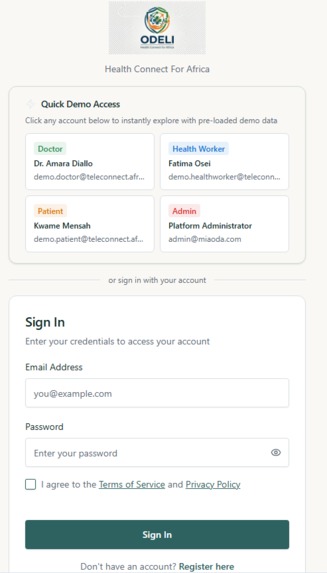
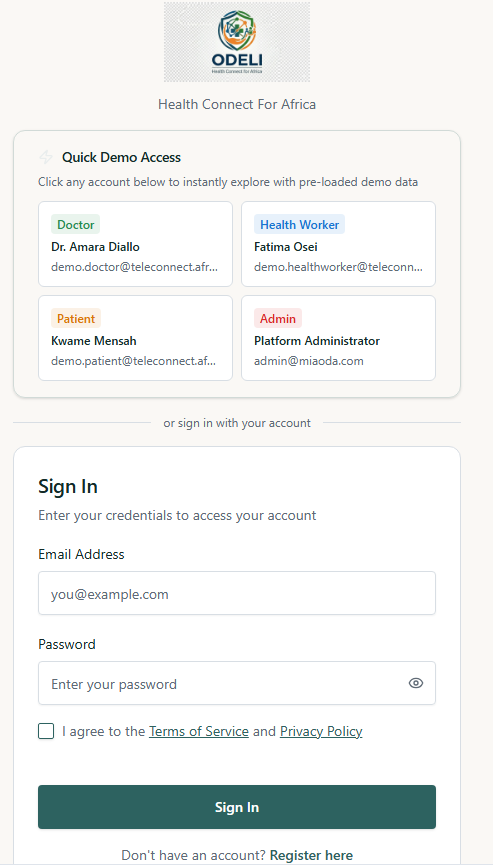
Login with Demo Credentials
-
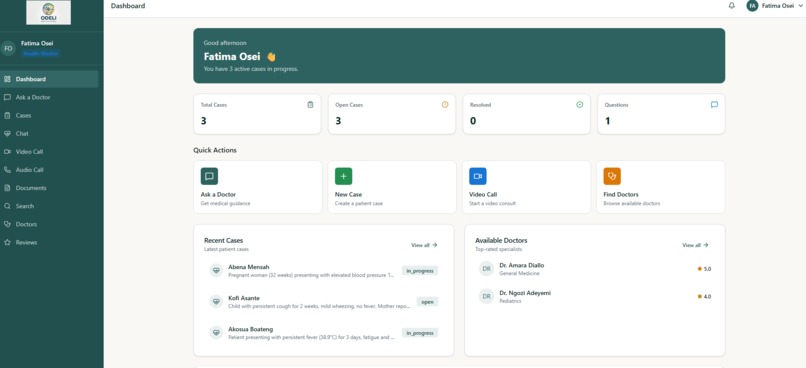
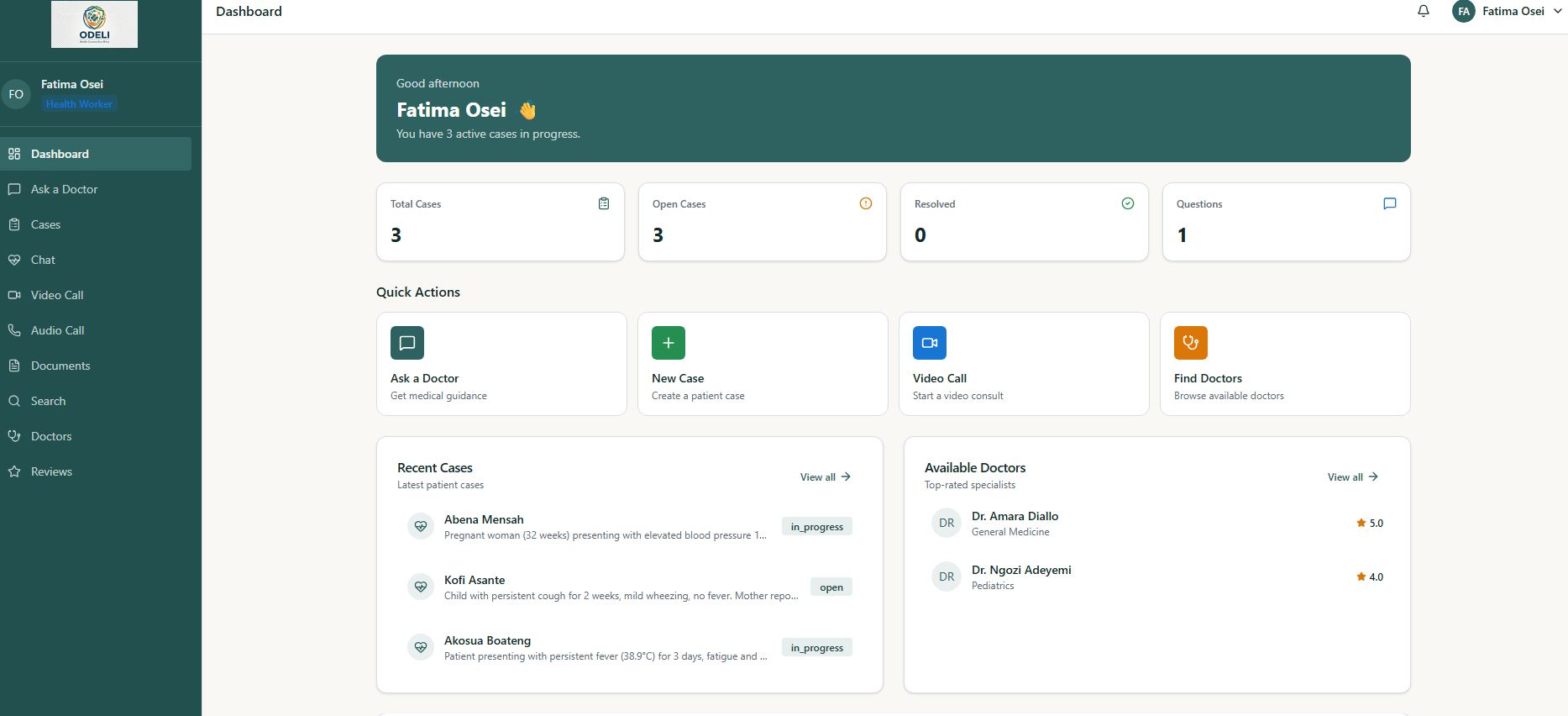
Patient Dashboard
-
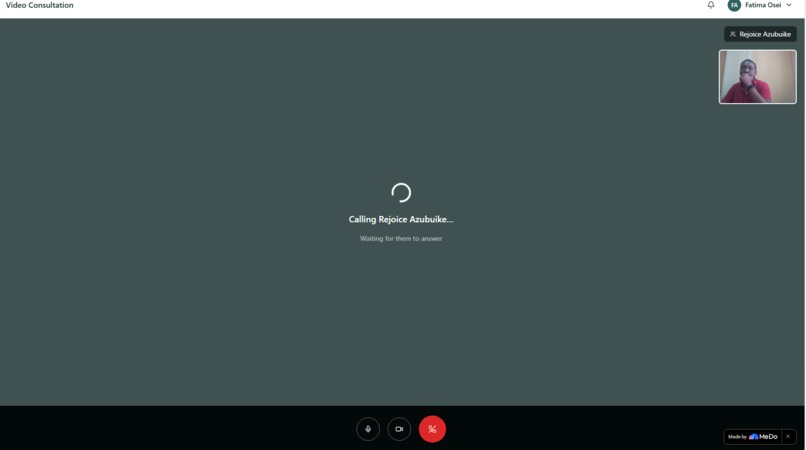
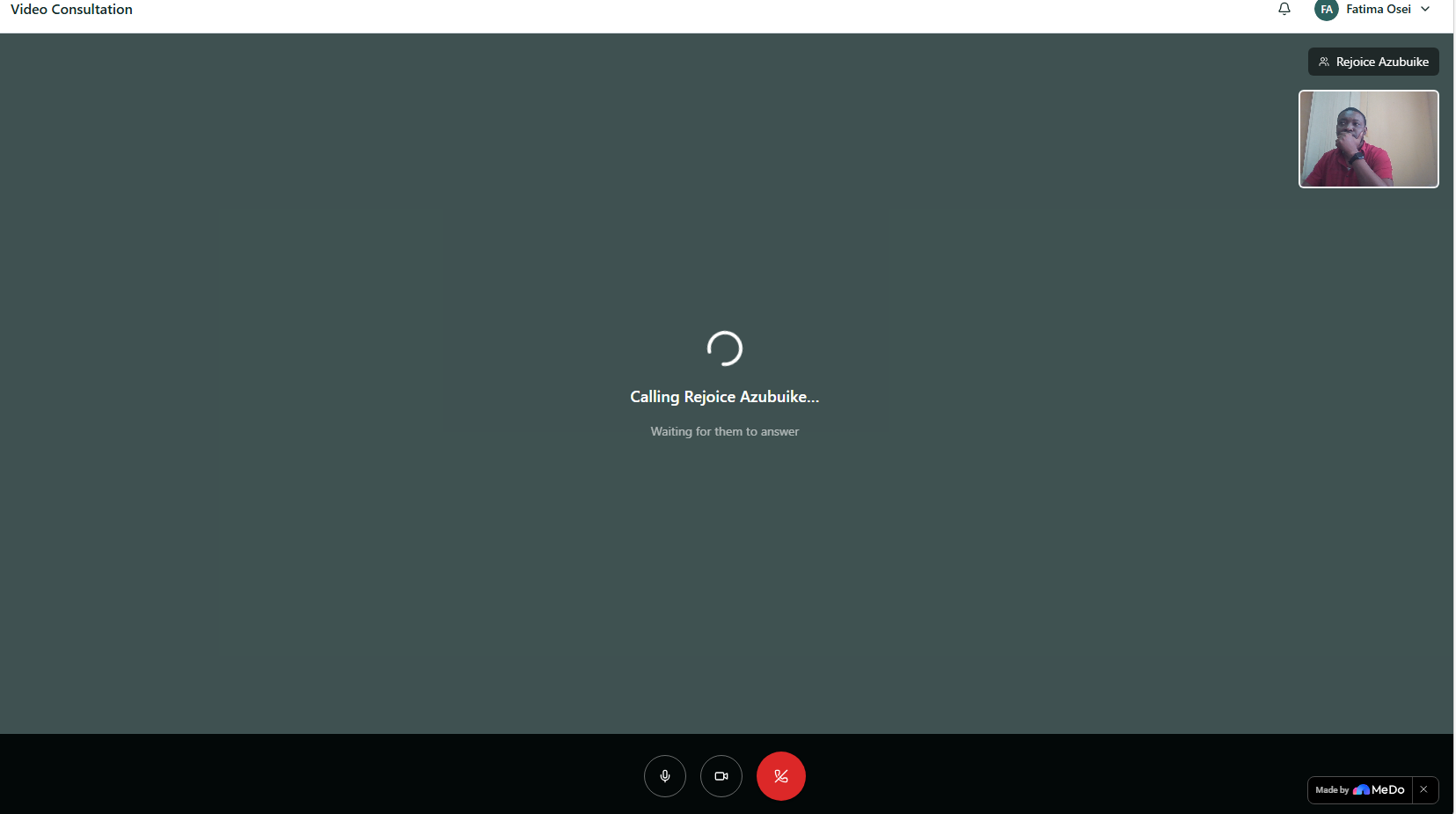
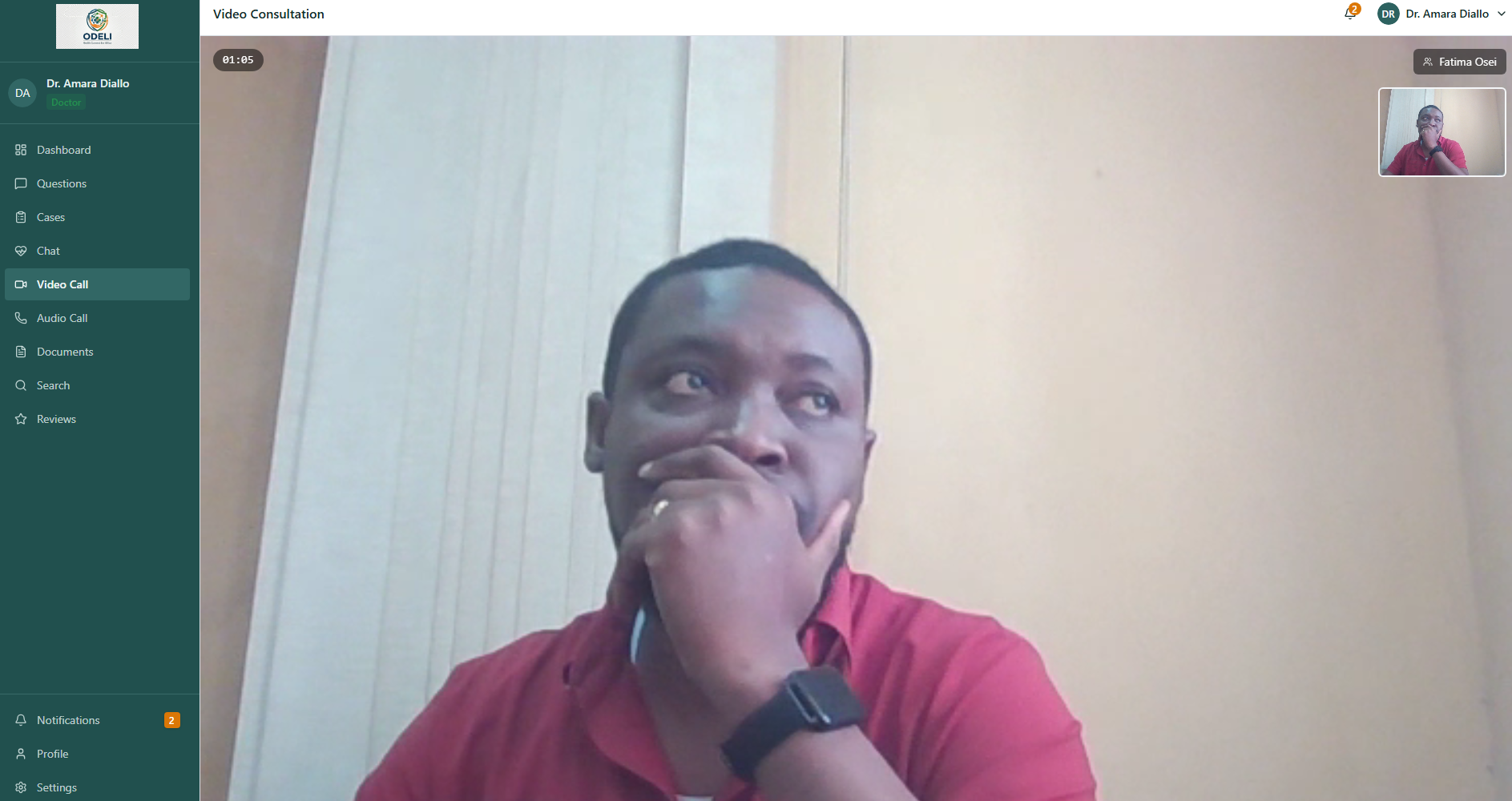
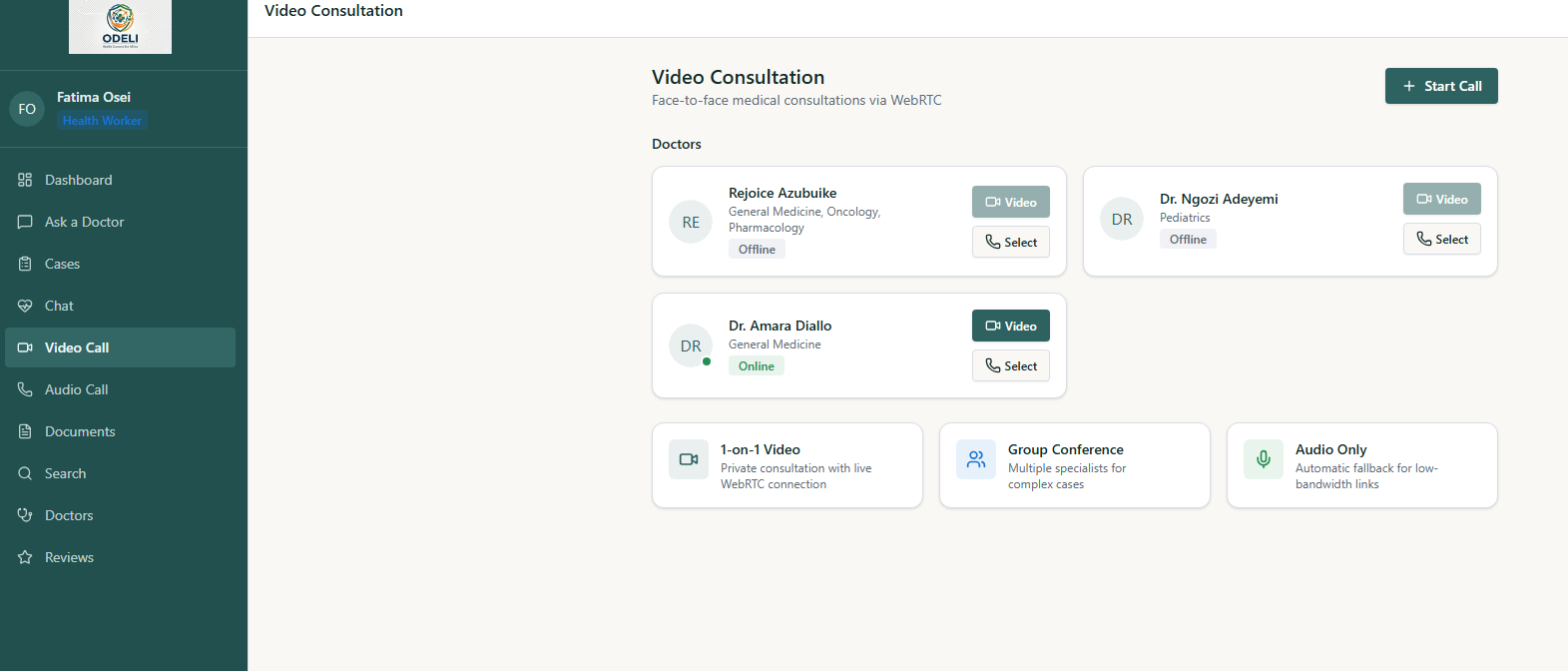
Live Audio/Video Call
-
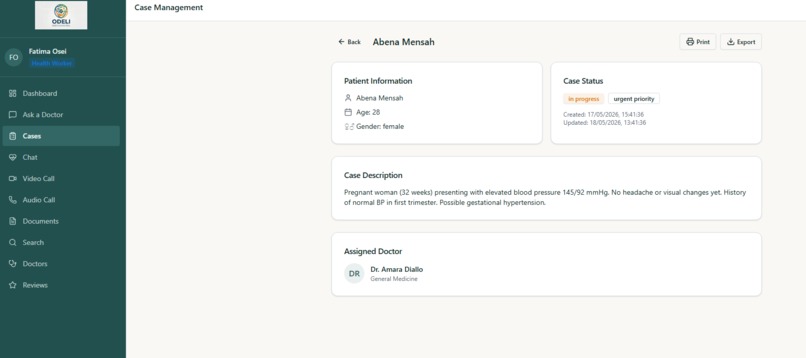
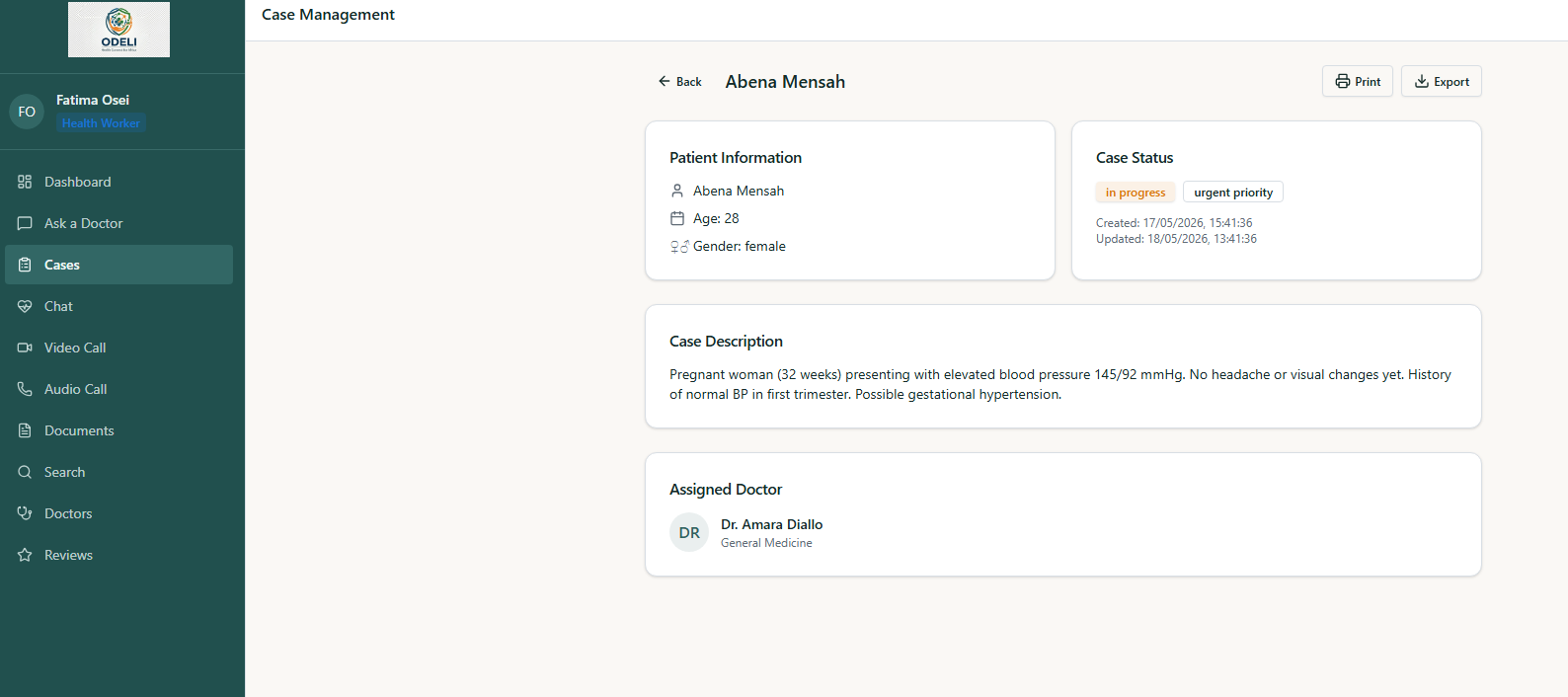
Patient Case Management
-
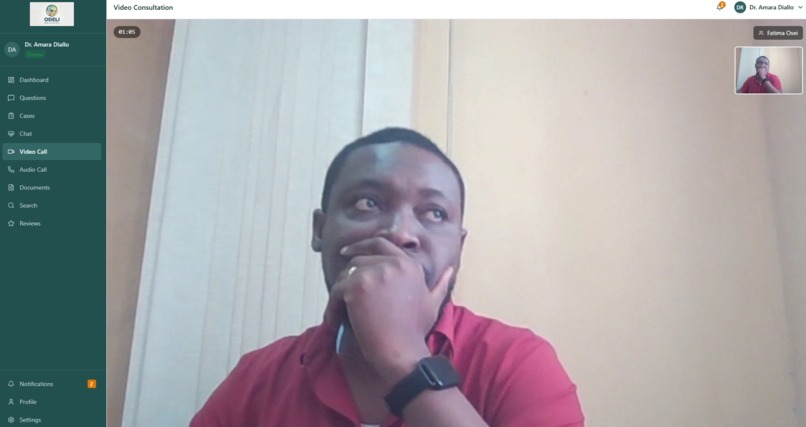
Video Call Interaction
-
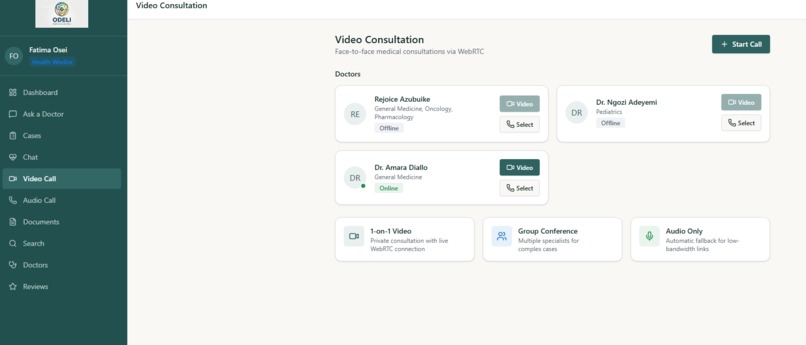
Video Consultation - View online doctors for connection
-
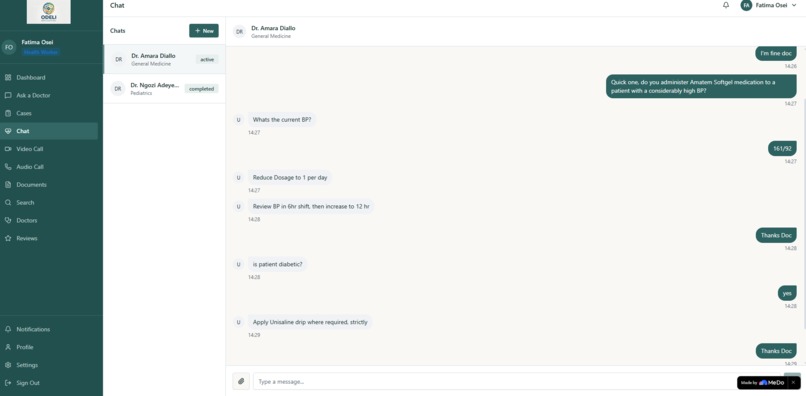
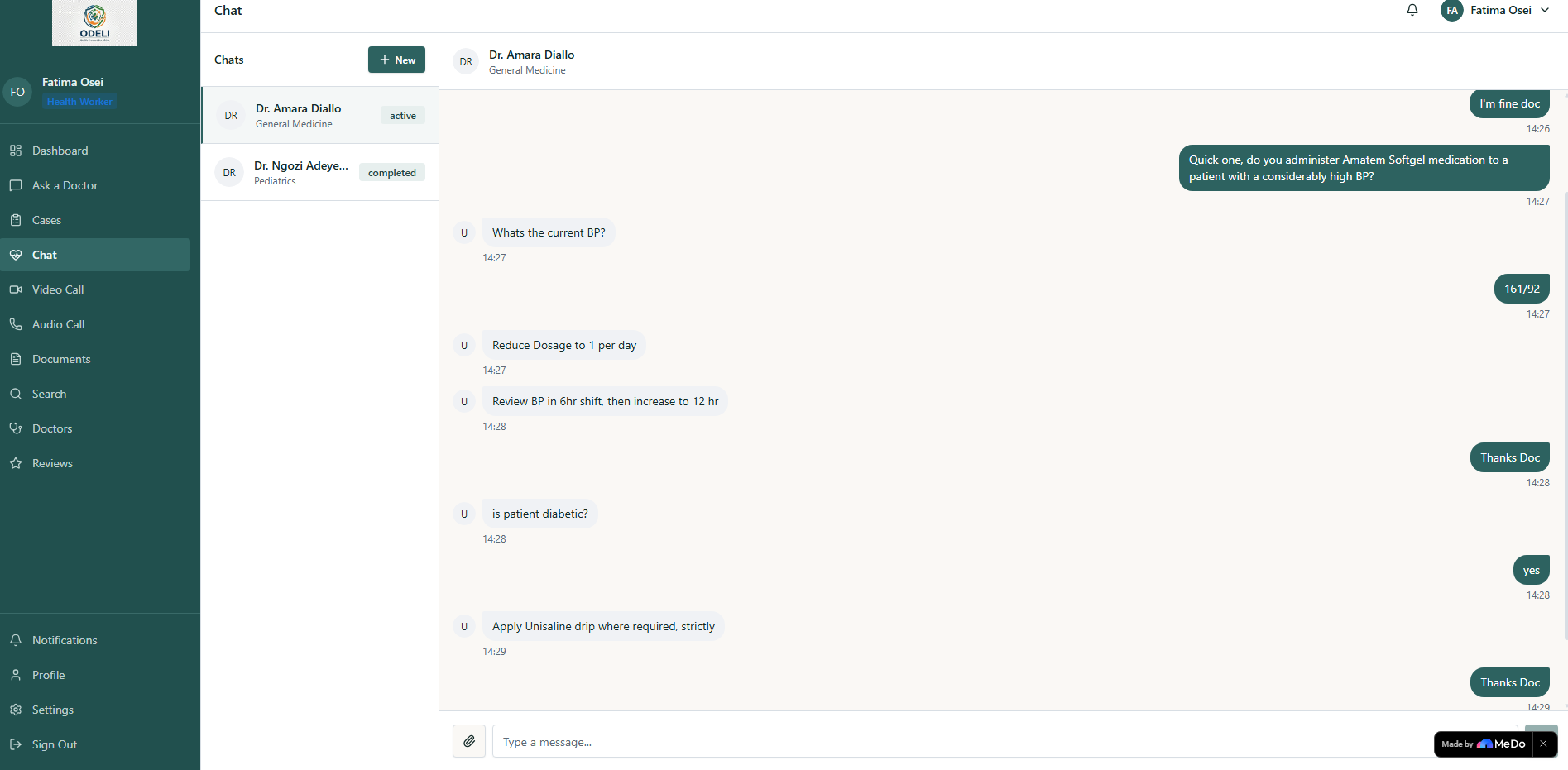
Live Chat
Inspiration
In 2017, I was part of a pilot test for a community healthcare app called Rural Nurse Aid. That experience put me directly on the front lines, allowing me to witness firsthand the severe challenges faced by community health workers in hard-to-reach, rural areas. The most critical gap was a lack of standby doctors. Without professional clinical backing, nurses were frequently forced to rely on visualized patterns and a "sixth-sense" approach to medication. Ever since, I have been driven to build a solution that delivers high-value, professional-quality healthcare access to these underserved communities.
What it does
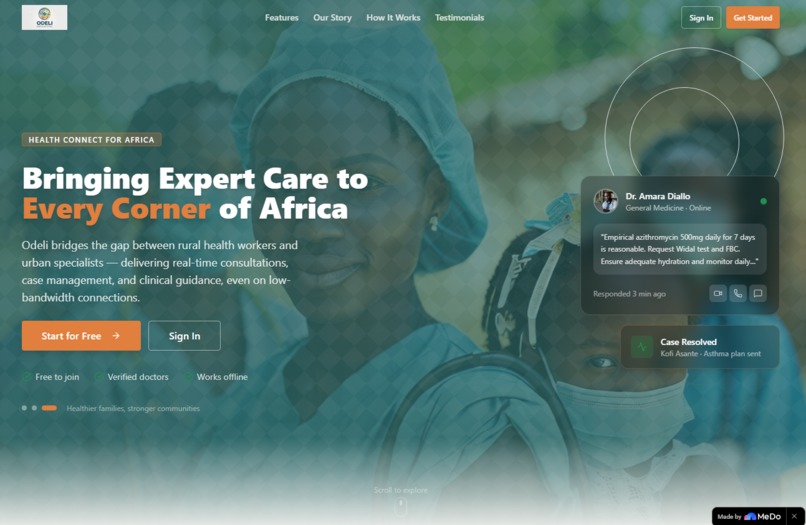
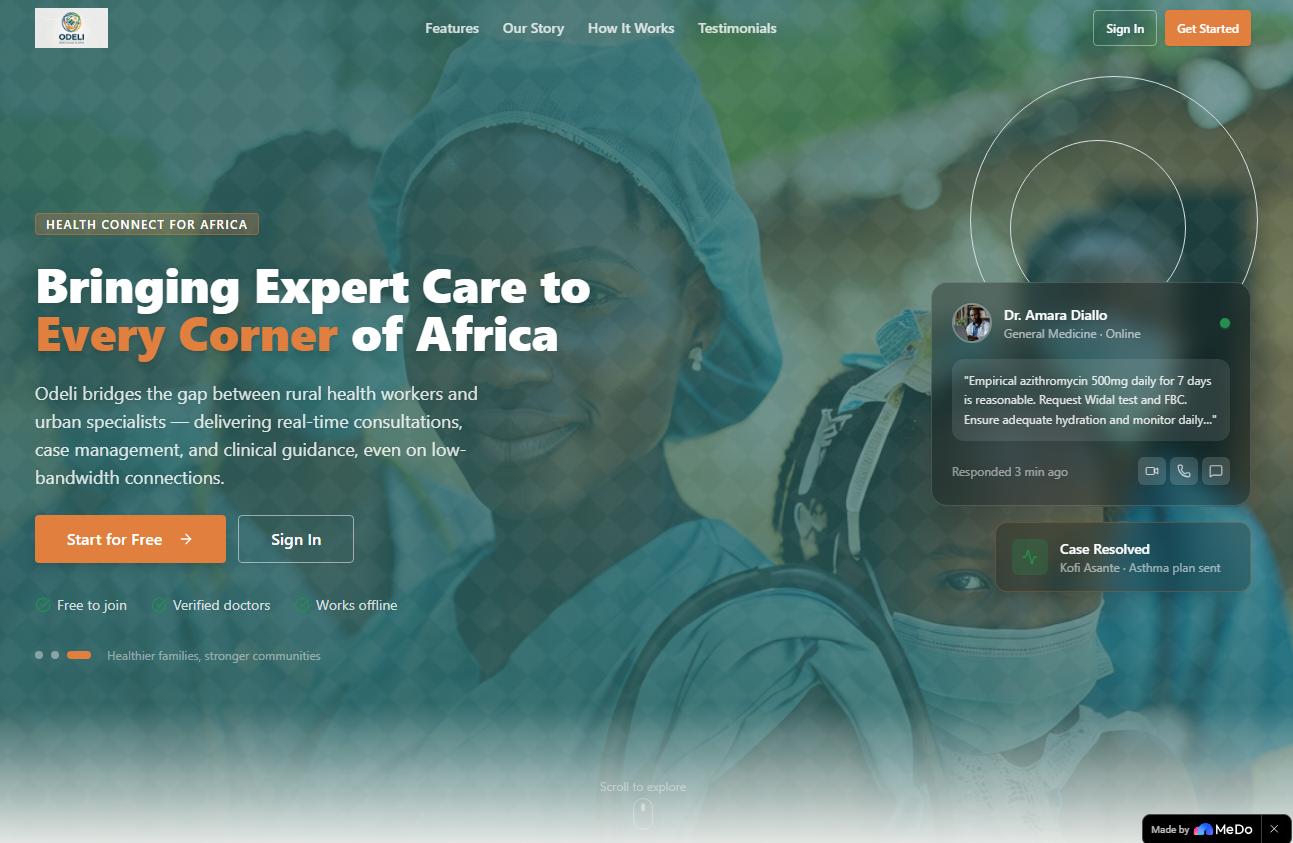
Odeli - Health Connect For Africa is a web-based telemedicine platform tailored for the African market. It bridges the urban-rural divide by connecting remote community health workers and patients directly with urban doctors for real-time medical consultations. Designed to operate seamlessly in low-bandwidth environments, the platform features multi-role dashboards, real-time Q&A, chat messaging, group video conferencing, secure document sharing, and a comprehensive case management system. Critically, it supports an offline mode that queues data and automatically synchronizes it once a network connection is restored.
How we built it
Building this platform seemed like a massive hurdle initially, but thanks to the medo.dev platform, I was able to transform this complex workflow into a functional reality. Even with little prior developer experience, the platform served as a major gamechanger, allowing me to map out the intricate role-based access controls, construct the real-time notification flows, and configure the low-bandwidth optimization protocols required to make the application viable for rural infrastructure.
Challenges we ran into
Designing a system that remains resilient in remote environments came with distinct hurdles. Engineering the automated low-bandwidth fallback—ensuring video streams automatically degrade to audio-only mode without dropping the consultation—was highly technical. Additionally, structuring the offline data synchronization to seamlessly handle queued messages and resolve document conflicts using precise timestamps required careful logic to prevent data loss.
Accomplishments that we're proud of
We are incredibly proud to have built a platform that directly addresses the infrastructure realities of rural Africa rather than ignoring them. Successfully implementing end-to-end encryption for sensitive medical records while simultaneously keeping the application light enough to run on unstable, low-connectivity networks is a massive win for us.
What we learned
This journey taught us that a powerful digital solution doesn't require a massive development background if you leverage the right modern tools. More importantly, we learned that true innovation in healthcare technology comes from deeply understanding the user's environment. Designing features like offline queuing isn't just an "add-on"—it is an absolute necessity when building for the front lines of rural healthcare.
What's next for Odeli - Health Connect For Africa
Now that the core telemedicine and offline synchronization infrastructure is established, we are looking toward expansion. Our next steps include integrating automated translation features for regional African languages, expanding platform access, and deploying localized field tests with rural clinics to ensure that no healthcare worker ever has to rely on guesswork again.
Built With
- medo
- react
- supabase
- vite


Log in or sign up for Devpost to join the conversation.