Inspiration
Florida, 2025. My school friends covered about $257.50 for me: the beach house, gas, burritos. A year later nobody has asked, and I still haven't paid. In a 2023 UK survey of 2,000 adults, 46% found asking friends for money back too awkward. So between close friends the debt waits on the person who owes. And when money is tight, a small transfer feels too small to send.
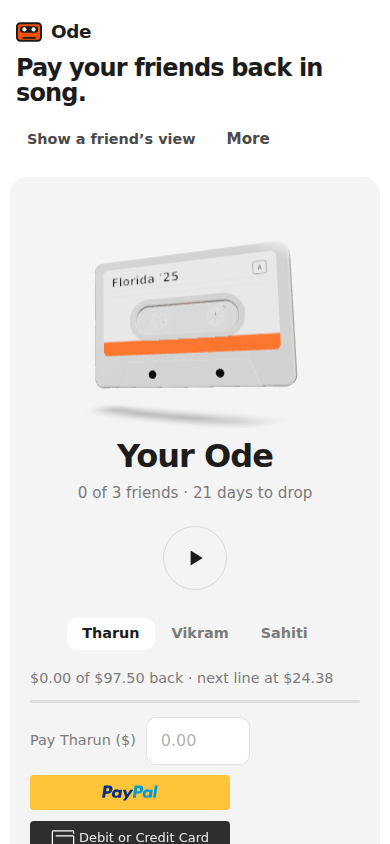
Ode makes paying back worth sending, and makes every small payment audible progress.
What it does
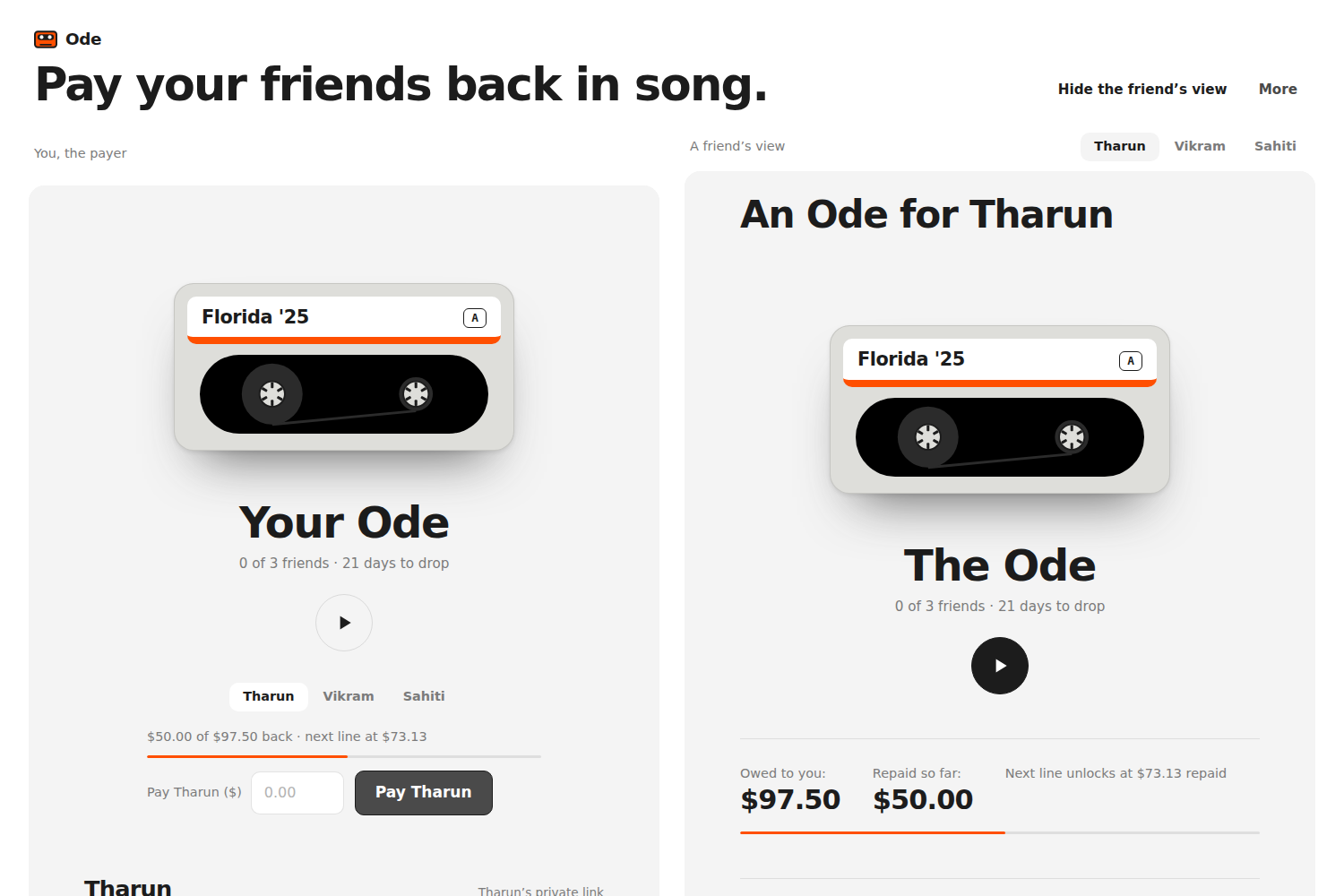
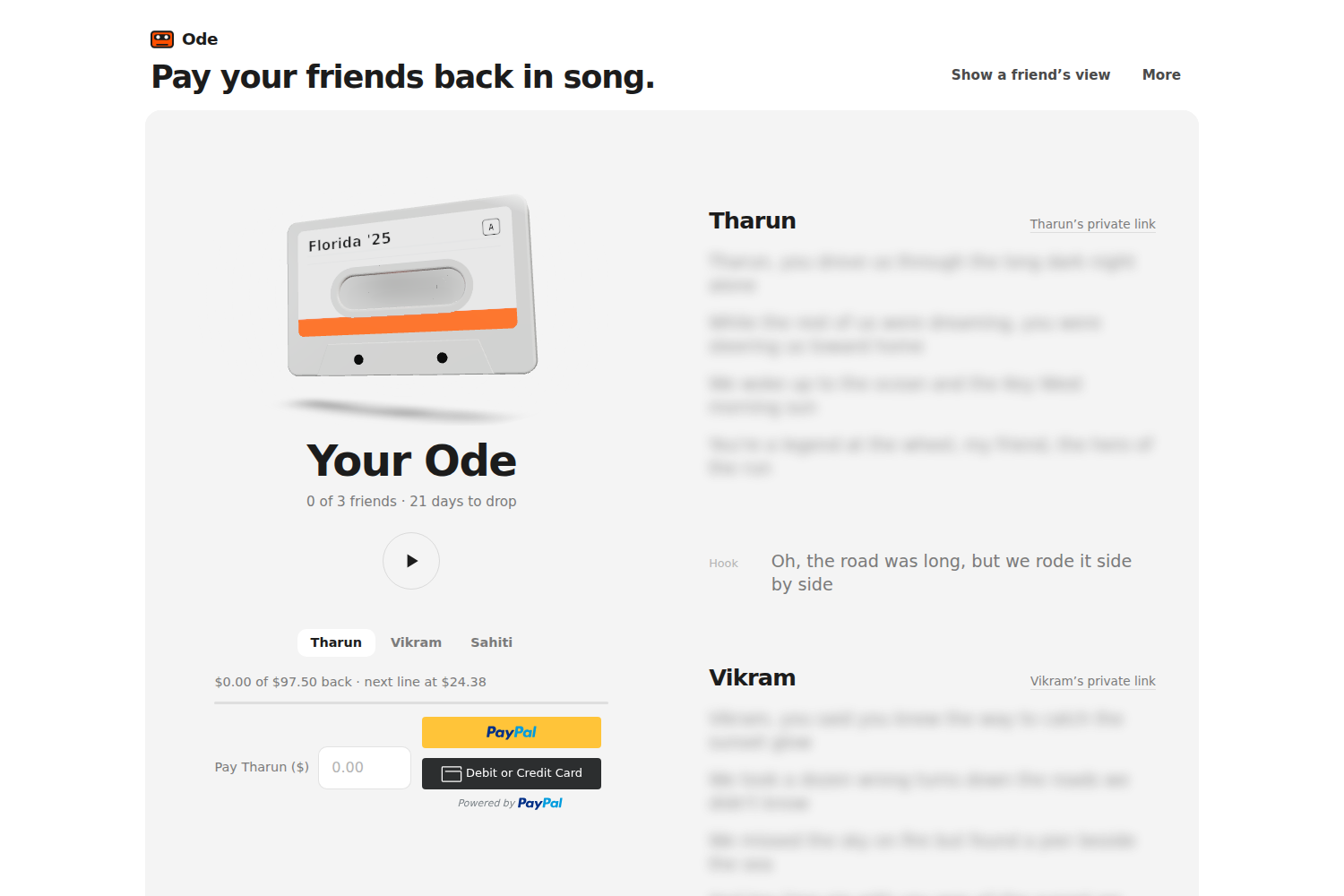
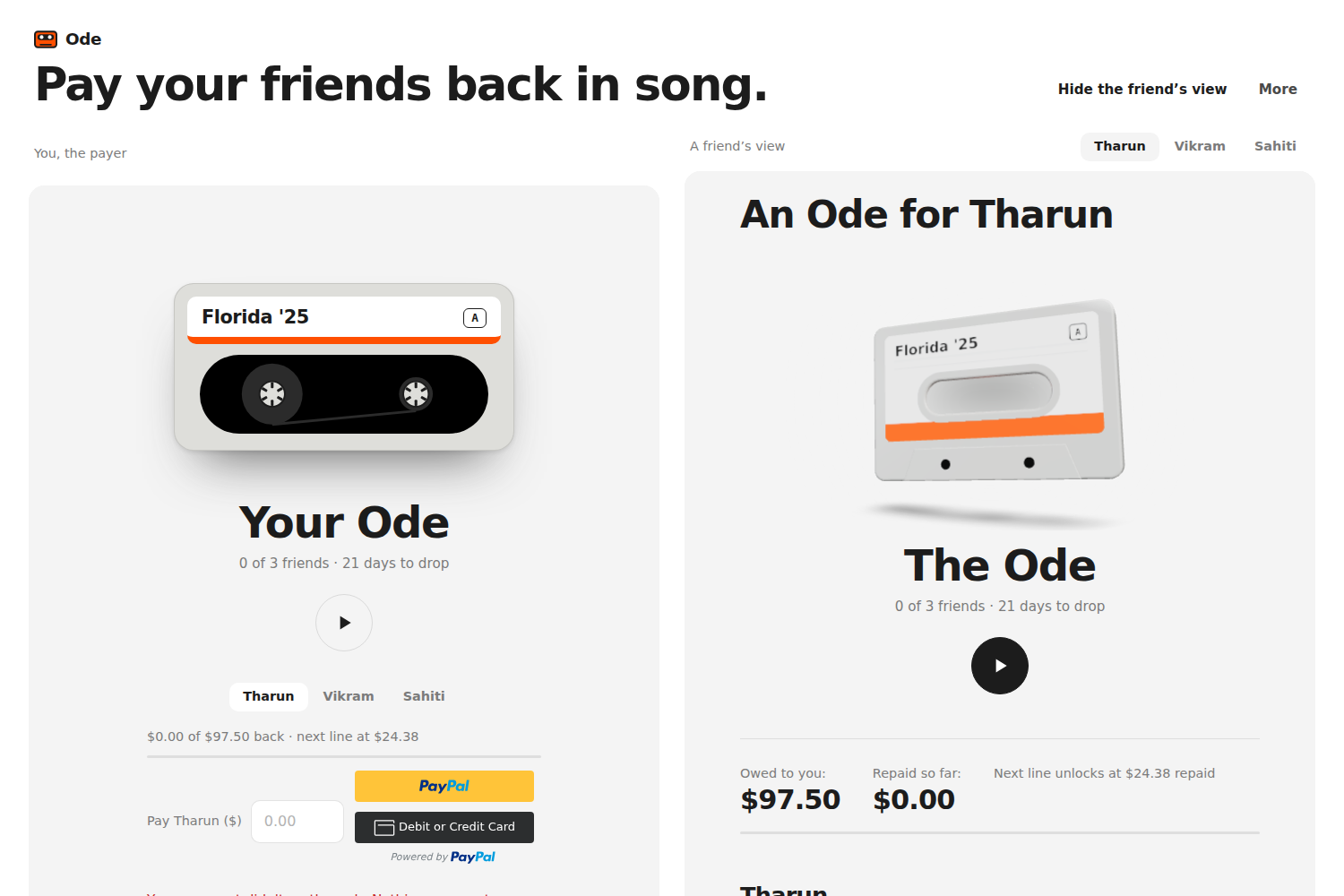
- You paste what you remember from the trip. Claude rebuilds who covered what and finds one inside joke for each friend, which you confirm.
- Claude writes a song about the trip: four lines per friend, memories only, never amounts or brand names. Eleven Music composes it.
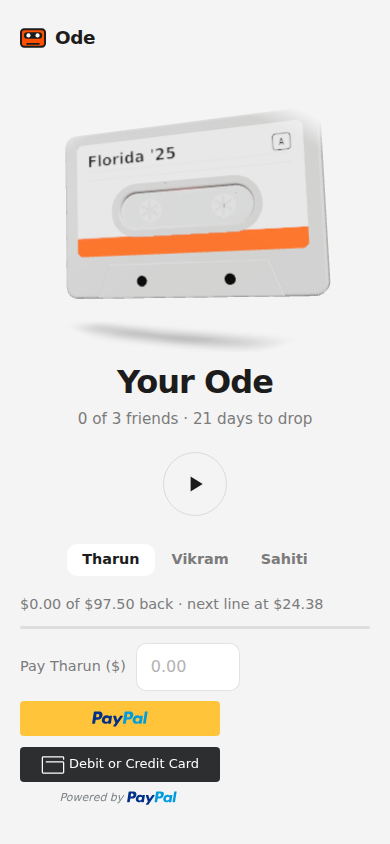
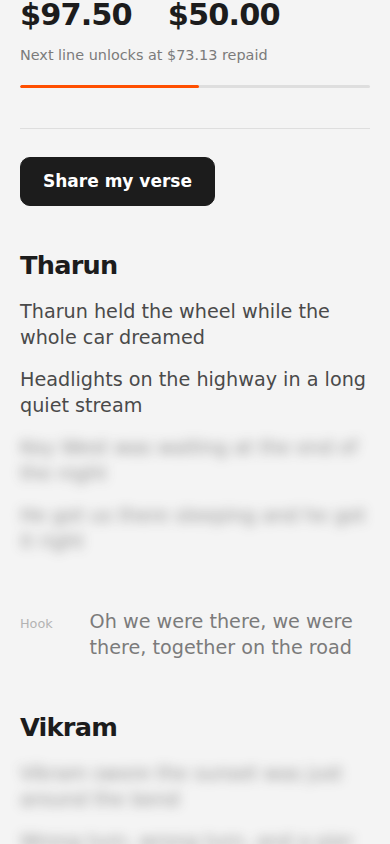
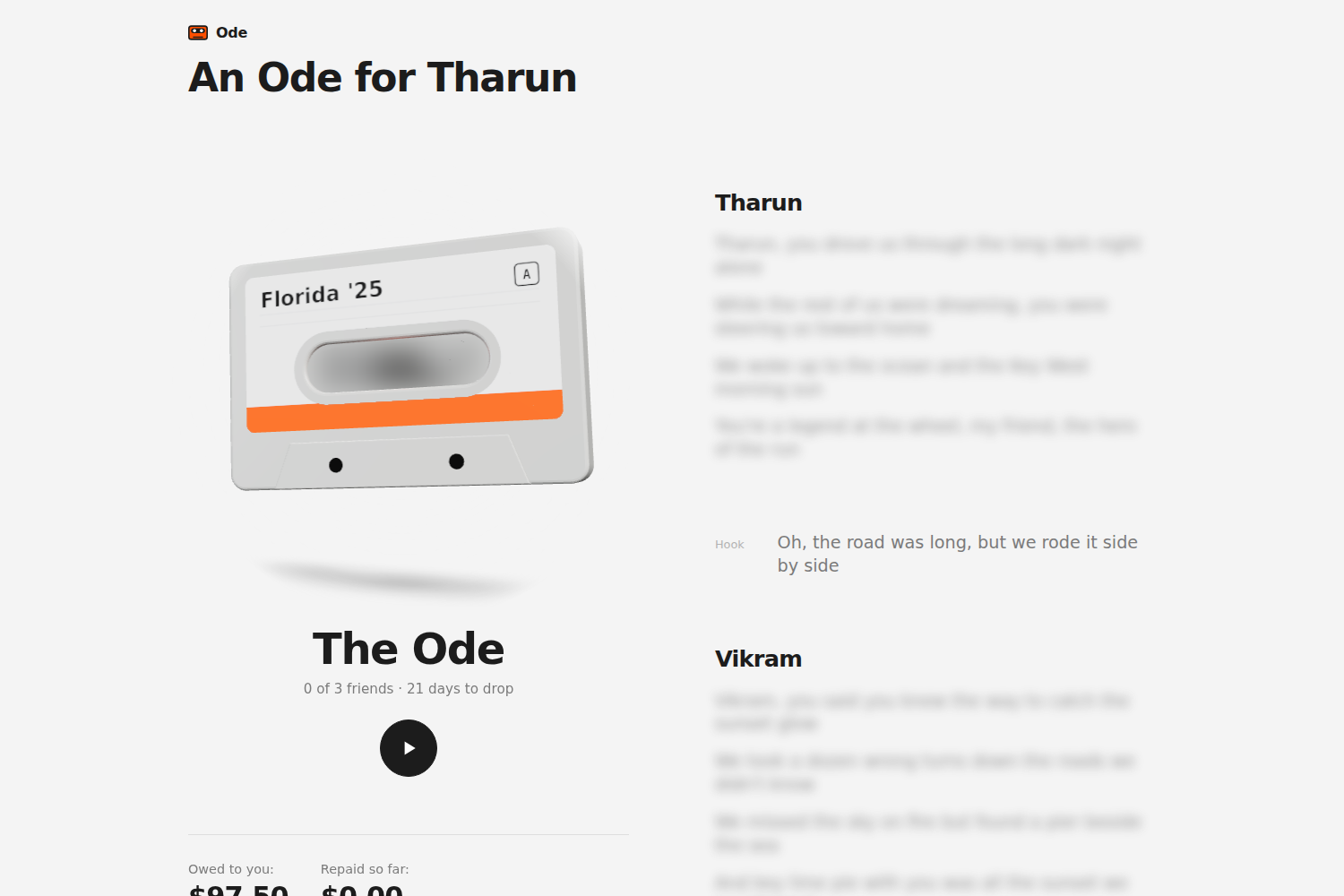
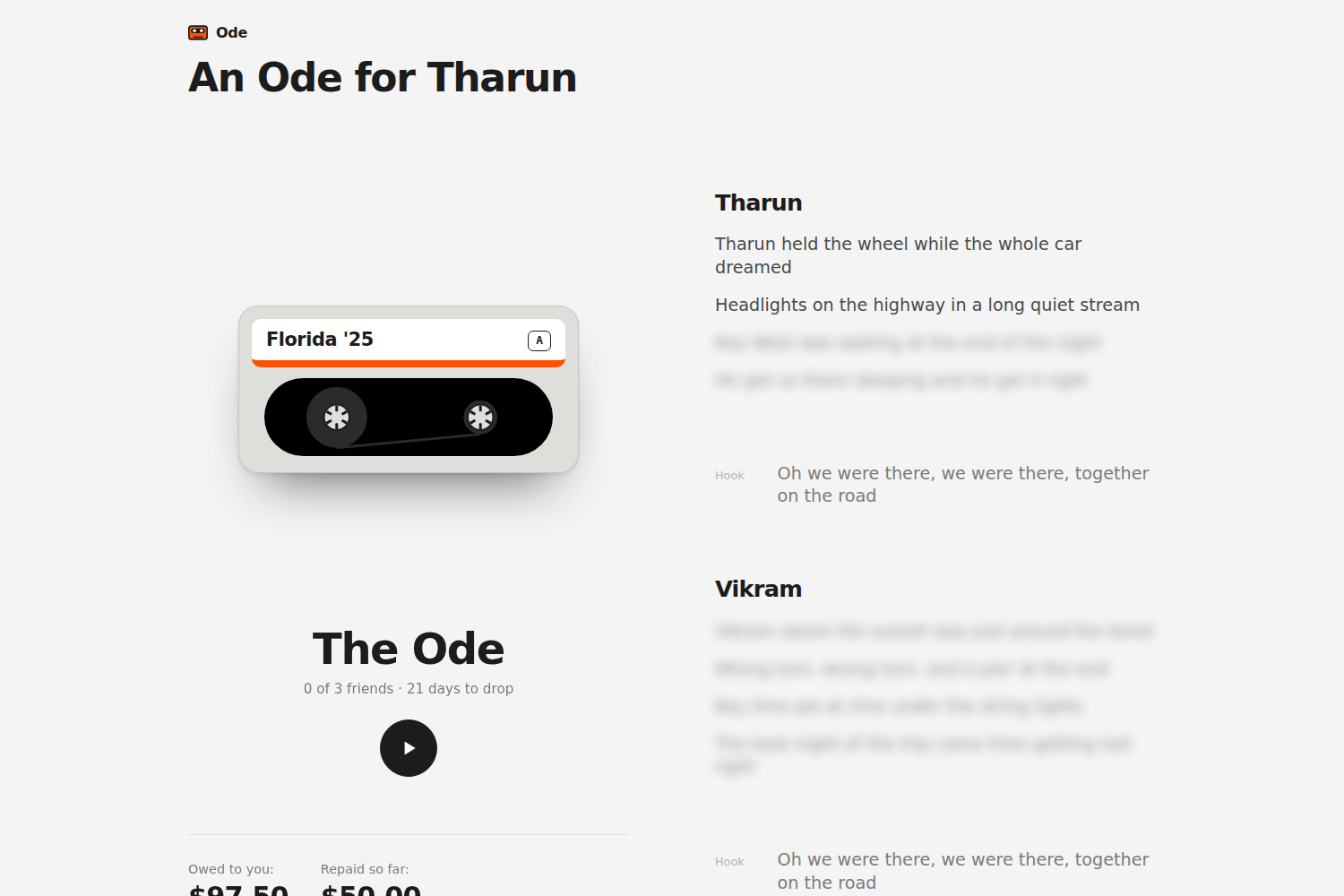
- Each friend's lines are locked, muffled and blurred. Every 25% you repay that friend through PayPal unlocks the next line, so small payments count.
- You set a release date. The chorus drops only when everyone is paid; miss the date and the Ode shows as delayed.
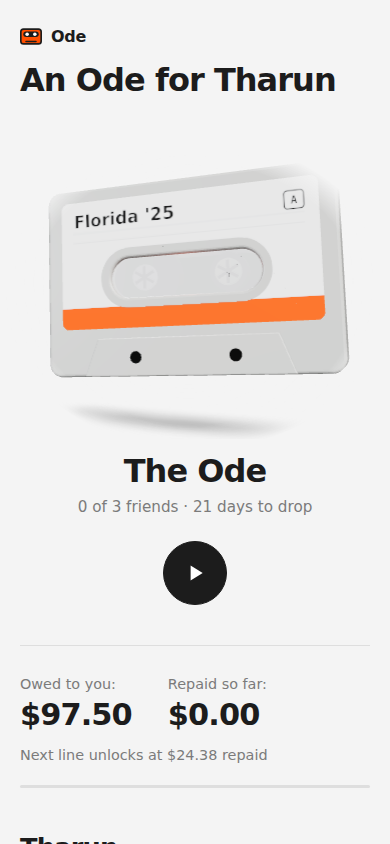
- Each friend has a private view that shows only their own amounts, updates live when you pay, and lets them share their unlocked verse as "An Ode for [name]".
- The demo Ode is sung in my own voice, using a one-off conversion. Odes you make in the app keep the generated vocals.
How I built it
- TypeScript on Render with Postgres. The song pipeline runs as a Render Workflow task.
- Claude: structured output for the ledger and inside jokes, then lyrics that fit the music model's limits.
- Eleven Music: one composition chunk per verse, so every verse has an exact time window. Word timestamps give each line its own window.
- ElevenLabs stem separation and speech-to-speech convert the demo Ode's vocals into my cloned voice.
- PayPal Orders v2 (sandbox): each order pays a different friend's account. The capture, or the verified
PAYMENT.CAPTURE.COMPLETEDwebhook, whichever arrives first, unlocks lines, keyed on the capture ID. The friend's page updates live.
Challenges
- One chunk per line sounded flat. Making each verse its own chunk fixed it, and line windows come from word timestamps.
- Testing against the real hosted site found two setup mistakes that no fake could: the webhook was subscribed to the wrong path, and the webhook ID setting held a URL instead of an ID. I added a health report so settings can be checked without logs.
- Staying within a music credit budget: a full Ode costs about 1,300 credits.
What I learned
Small, exact constraints (chunk durations, timestamps, payee per order) make a generative product feel dependable.
Evidence and limits
- A 2023 UK survey of 2,000 adults (Starling Bank, fieldwork by Opinium) found 46% felt too awkward to ask for money they are owed.
- PayPal's own research in Australia (July 2024) found half of Australians feel awkward asking friends to repay them, and 44% decide not to chase money they're owed for that reason. The same release says 63% always repay before being reminded, so Ode is for the rest.
- I ran a small test with friends, and they recognized my voice. That is directional, not proof.
- This is sandbox only: in production, PayPal's merchant fees fall on the receiver, so a launch needs a fee-free friends-and-family rail.
What's next
Voice conversion for every Ode, group Odes, "keep it or put it toward the next trip", automatic installments.
Built With
- claude-api
- elevenlabs-music
- elevenlabs-speech-to-speech
- elevenlabs-voice-cloning
- ffmpeg
- node.js
- paypal
- paypal-orders-api
- paypal-webhooks
- postgresql
- react
- render
- render-workflows
- typescript
- vite
