-
-
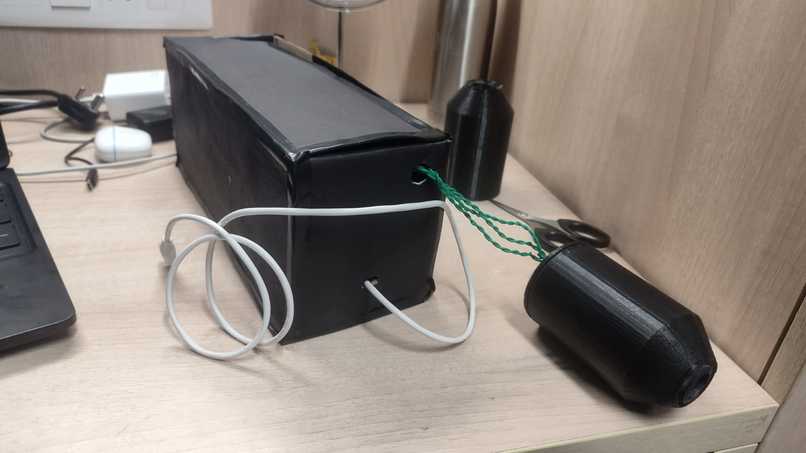
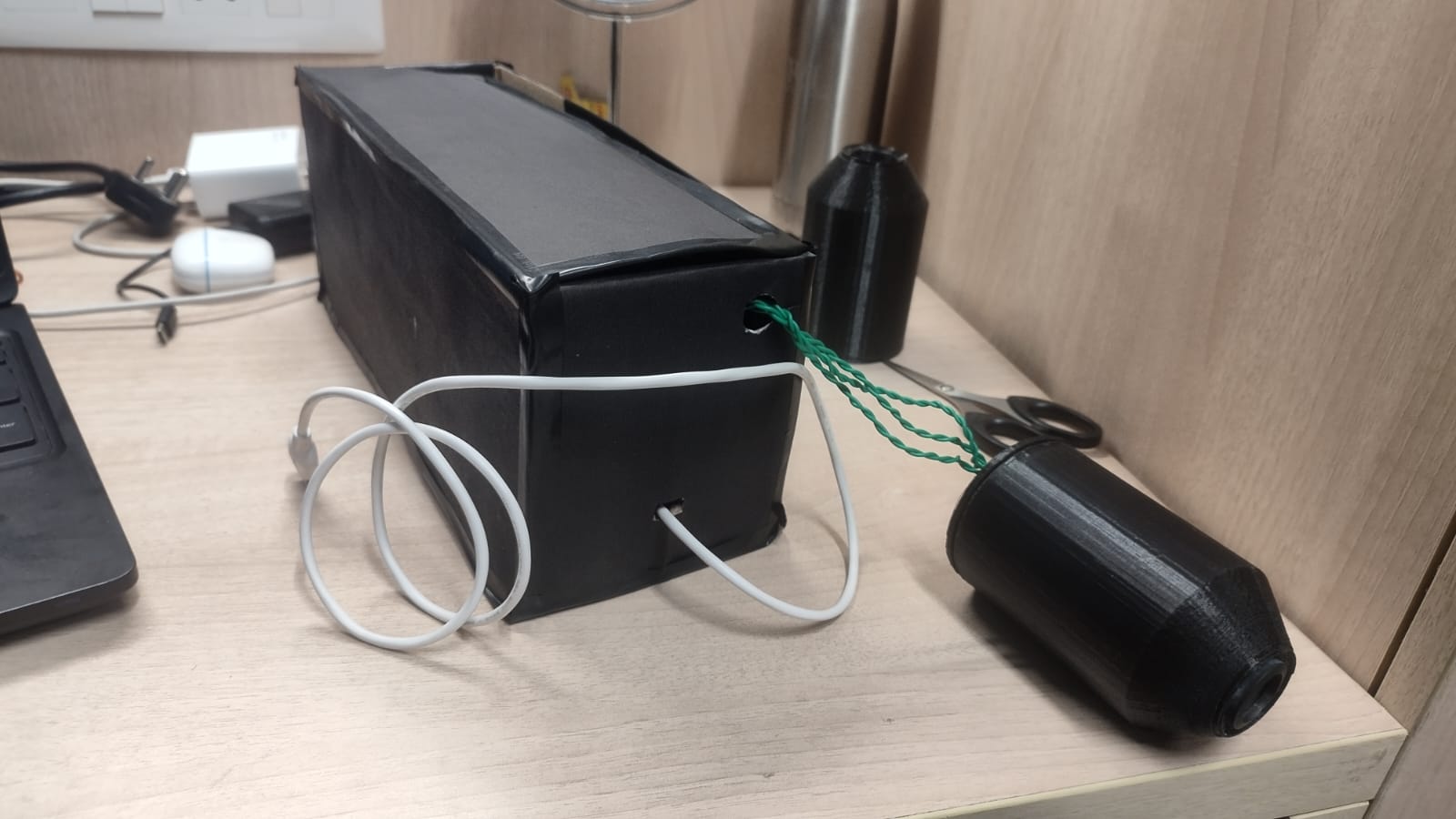
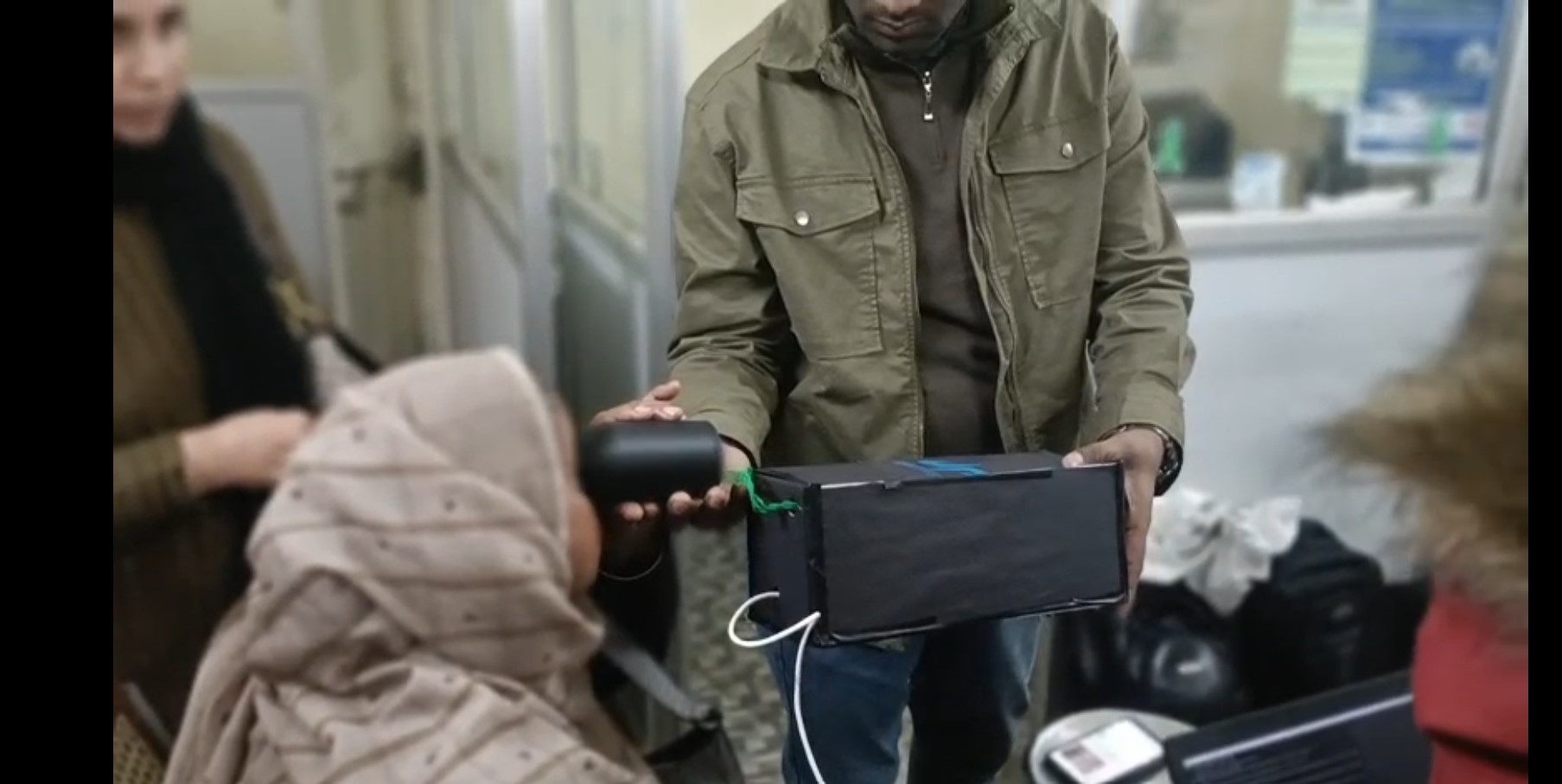
Our device
-
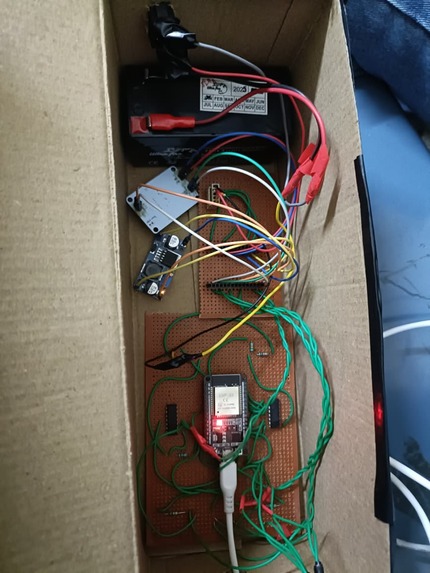
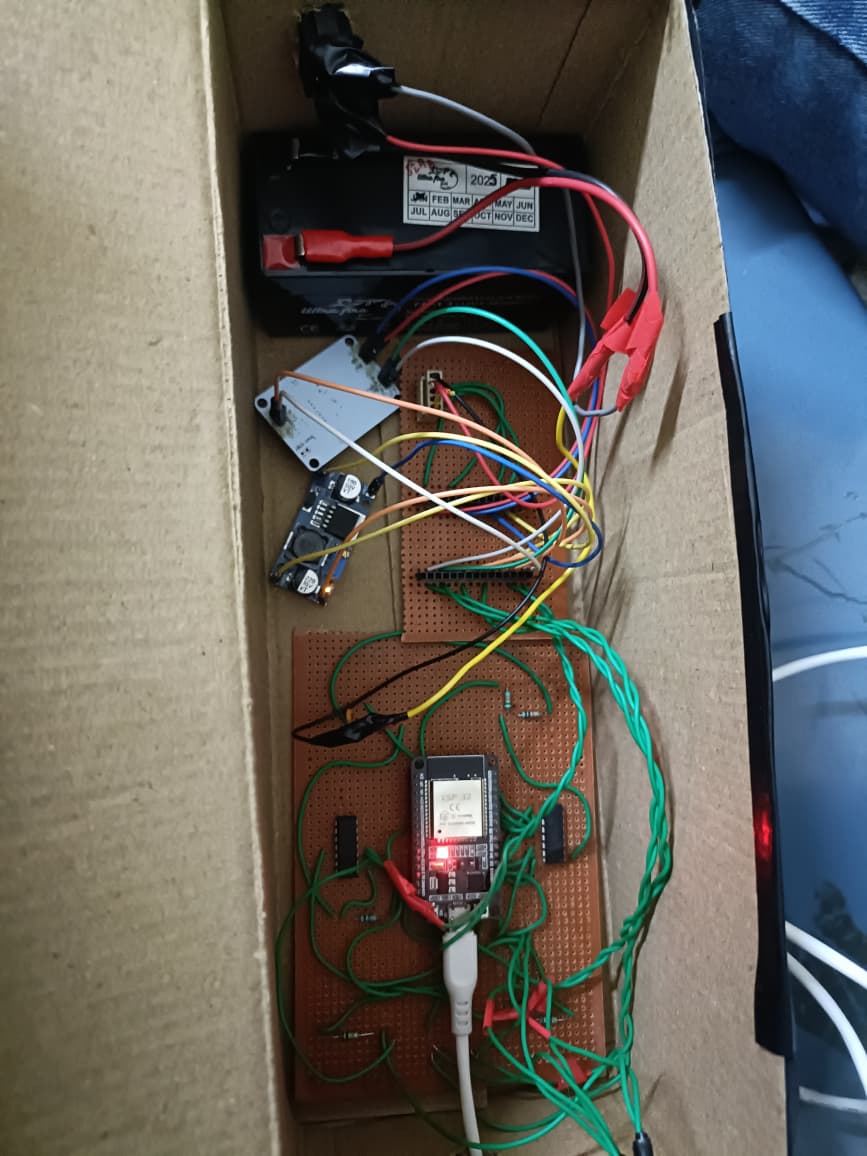
circuit diagram inside box
-
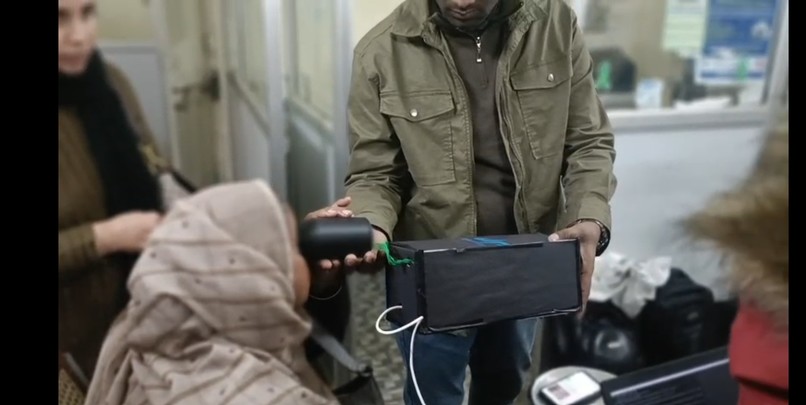
recording data of real patients
Inspiration
Glaucoma is a major cause of irreversible vision loss, and intraocular pressure (IOP) is an important parameter in its screening and monitoring. However, conventional IOP measurement often requires specialized clinical equipment and contact with the eye.
We wanted to explore a different question: Can we estimate IOP without physically touching the eye using affordable hardware and AI?
This led us to OcuWave — a prototype combining acoustic excitation, infrared optical sensing, embedded systems, signal processing, and machine learning.
What it does
OcuWave is a low-cost, non-contact prototype for estimating intraocular pressure (IOP).
The device uses a speaker to generate controlled acoustic excitation. This produces extremely small mechanical responses on the ocular surface. An infrared emitter and photodiode detect changes in reflected light caused by these micro-vibrations.
The captured signal is amplified, digitized, processed, and transmitted through an ESP32. A Temporal Convolutional Network (TCN) then analyzes the time-series signal and estimates IOP in mmHg.
The complete pipeline is:
Acoustic Excitation → Ocular Micro-Vibrations → IR Sensing → Signal Conditioning → ADC → ESP32 → Signal Processing → TCN → Estimated IOP
OcuWave is designed as a proof-of-concept for accessible, non-contact IOP screening and is not intended to replace clinically approved tonometers.
How we built it
We built OcuWave by combining hardware, embedded software, signal processing, and AI into a single pipeline.
Hardware
- ESP32 microcontroller
- Speaker for acoustic excitation
- Infrared emitter and photodiode
- Transimpedance amplifier (TIA)
- MCP3008 external ADC
- Wi-Fi communication
Software & AI
- Python-based signal processing
- Data acquisition and preprocessing
- Noise filtering and feature preparation
- Temporal Convolutional Network (TCN)
- Regression-based IOP estimation
- Client application for measurement control and visualization
- Cloud-based AI inference
The ESP32 controls the measurement process and acquires the sensor signal. The signal is then processed and passed to the trained TCN model for IOP estimation.
Challenges we ran into
The hardest part was not simply training the AI model — it was obtaining a clean and repeatable physiological signal in the first place.
The ocular micro-vibration signals are extremely small, making the system sensitive to:
- Electronic and ambient noise
- Sensor positioning
- Optical alignment
- Analog amplification
- ADC sampling and timing
- Hardware synchronization
- Measurement consistency
We went through multiple iterations of the hardware and software pipeline to improve signal quality, synchronization, and overall system stability.
Accomplishments that we're proud of
We are proud of building a complete working proof-of-concept rather than developing only an AI model.
OcuWave integrates:
- A custom non-contact sensing approach
- Acoustic excitation
- Infrared optical sensing
- Analog signal conditioning
- ESP32-based embedded acquisition
- Wireless communication
- Real-time signal visualization
- A TCN-based AI regression model
- End-to-end hardware-to-AI integration
Most importantly, we demonstrated that it is possible to capture useful information from acoustically induced ocular micro-vibrations and use that signal for IOP estimation.
What we learned
Our biggest lesson was that real-world AI starts with reliable data acquisition.
A model can perform well in development, but the quality and consistency of the physical signal directly affect everything downstream. We learned how small changes in sensor placement, environmental noise, timing, and analog circuitry can significantly influence the captured data.
We also gained hands-on experience integrating electronics, embedded systems, signal processing, wireless communication, and deep learning into one end-to-end system.
What's next for OcuWave
OcuWave is currently a proof-of-concept, and our next goal is to make the system more reliable, compact, and thoroughly validated.
Our future work includes:
- Collecting a larger and more diverse dataset
- Improving subject-independent model generalization
- Increasing measurement repeatability
- Performing more extensive comparison with clinical tonometry
- Improving the physical enclosure and user experience
- Reducing hardware size and cost
- Exploring edge AI for faster local inference
- Conducting further validation toward real-world screening applications
Our long-term vision is to explore whether OcuWave can contribute to affordable, portable, and accessible eye-health screening, particularly in environments where conventional clinical equipment may be difficult to access.
Built With
- acoustic-excitation-if-devpost-limits-the-tags-to-standard-recognized-technologies
- analog-electronics
- computer
- deep
- deep-learning
- embedded
- embedded-systems
- esp32
- for-the-built-with-tags
- i'd-use-these:-esp32
- infrared-sensing
- iot
- learning
- machine
- machine-learning
- mcp3008
- photodiode
- prioritize:
- processing
- python
- signal
- signal-processing
- systems
- temporal-convolutional-network-(tcn)
- wi-fi


Log in or sign up for Devpost to join the conversation.