-
-
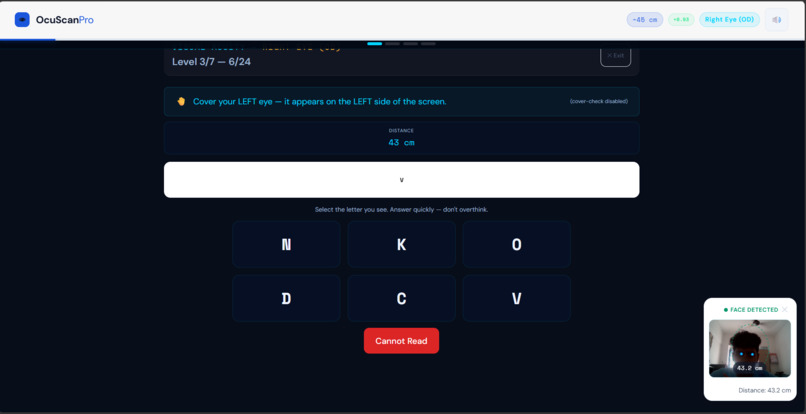
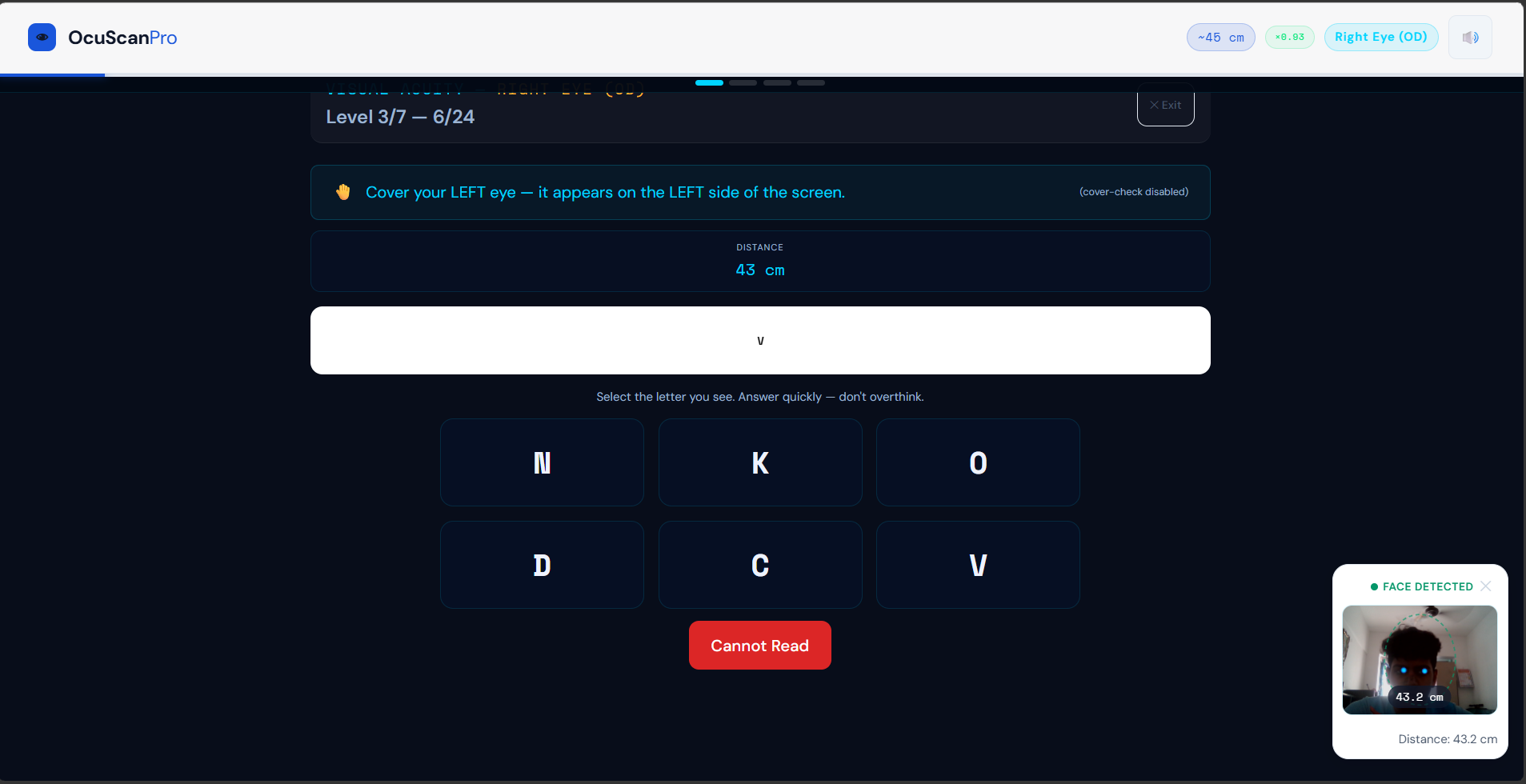
visual acuity
-
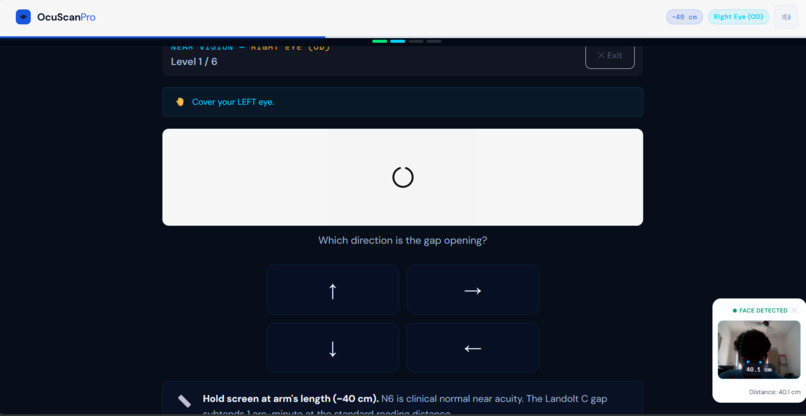
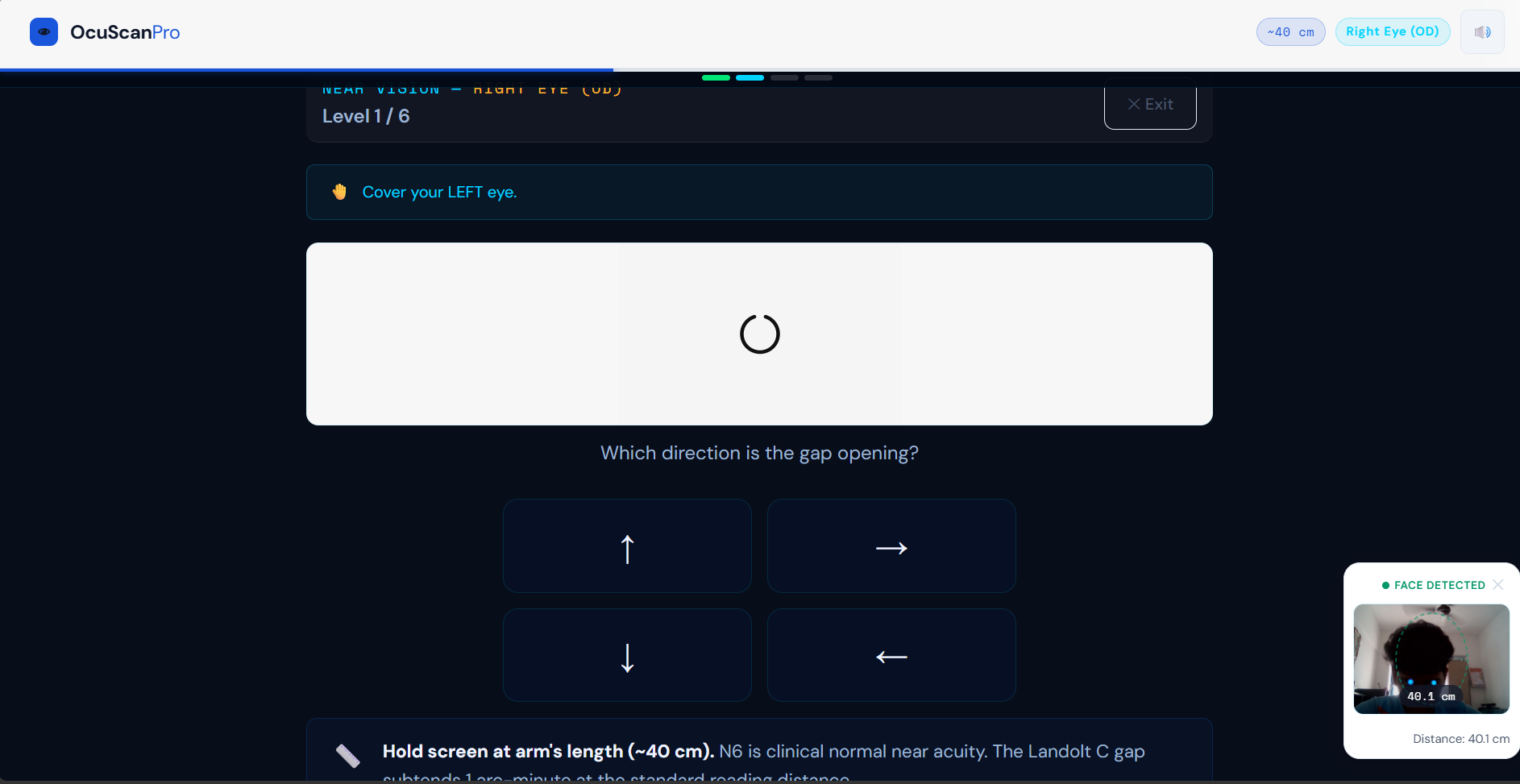
landolt c chart
-
-
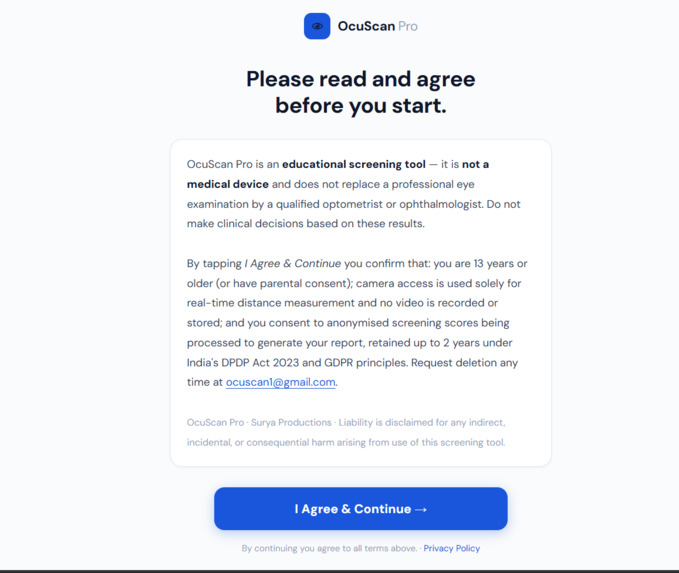
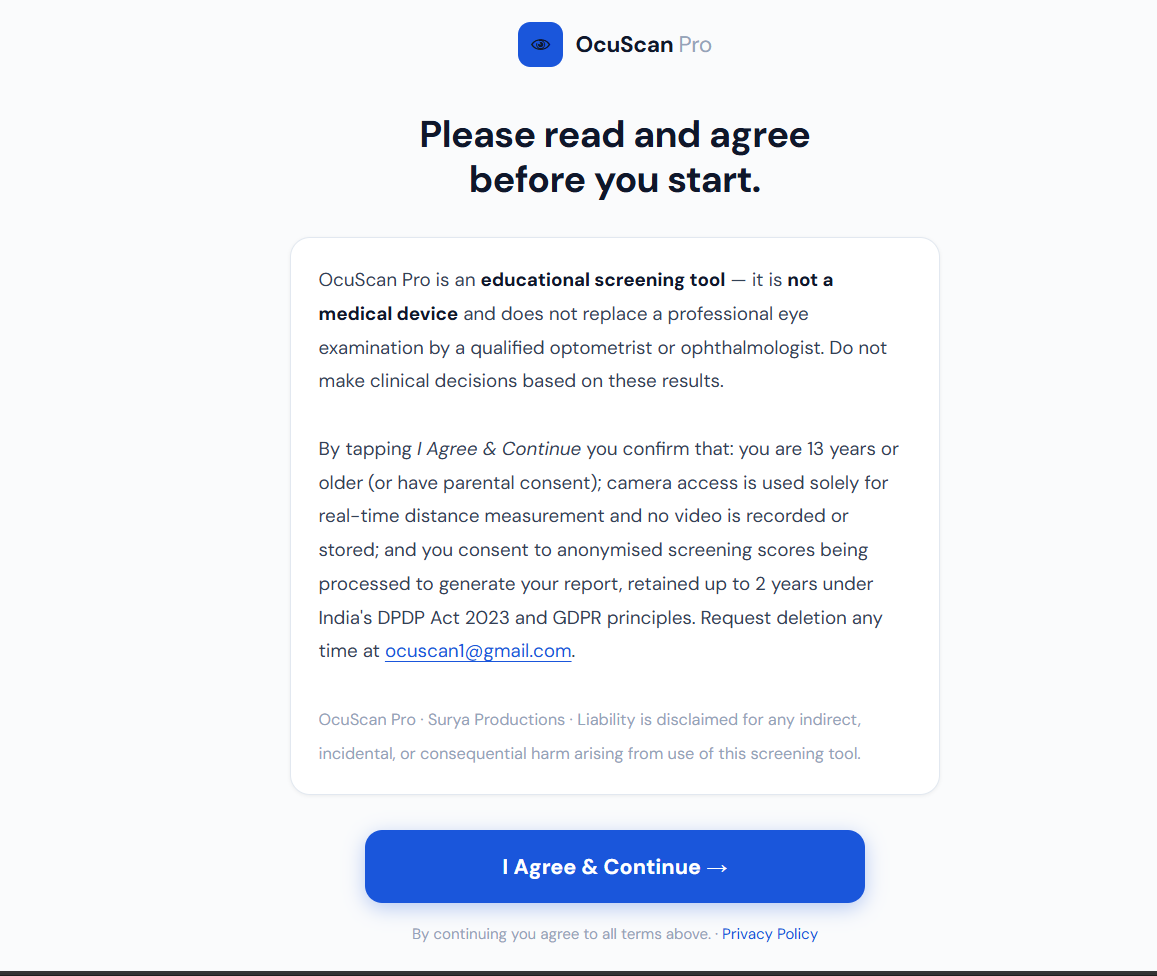
consent screen
-
-
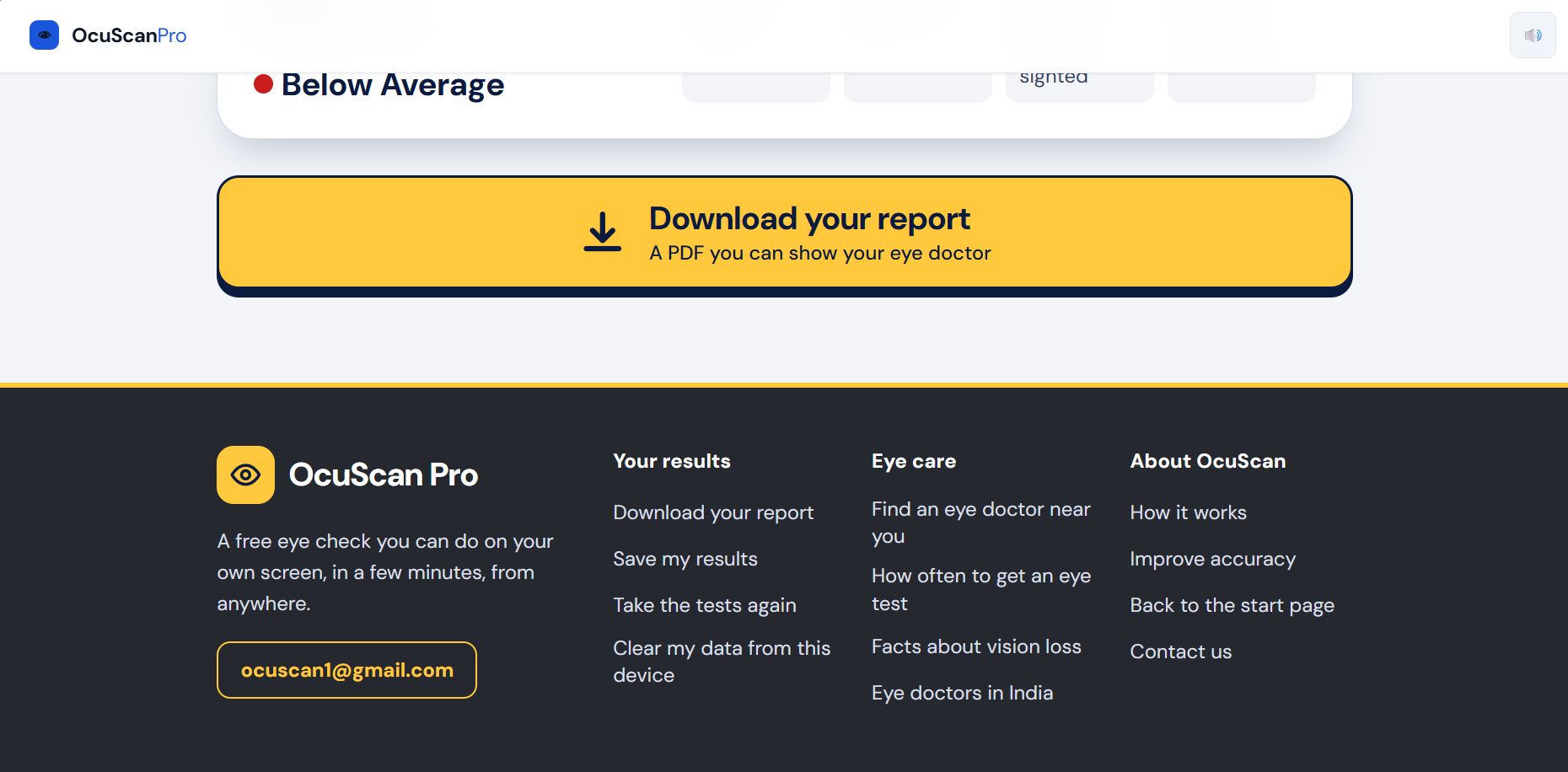
results
-
-
Inspiration
OcuScan Pro started from a very personal place. My younger sister was suffering from an undiagnosed refractive vision problem of -3D for over two years. She could not see the board properly, and even experienced continuous headaches. However, we came to know about her situation when she got her eyes tested.
This gave me an insight into how many other students may have been unknowingly suffering from such problems. While looking at various online vision tests, it was shocking to find out that very few considered basics such as screen size and distance while testing their eyesight. I wanted to build something better, a free, simple, and more accurate tool that people could actually use.
What it does
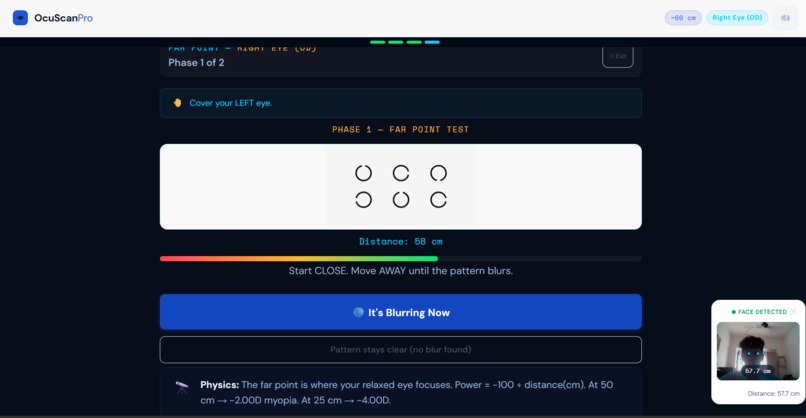
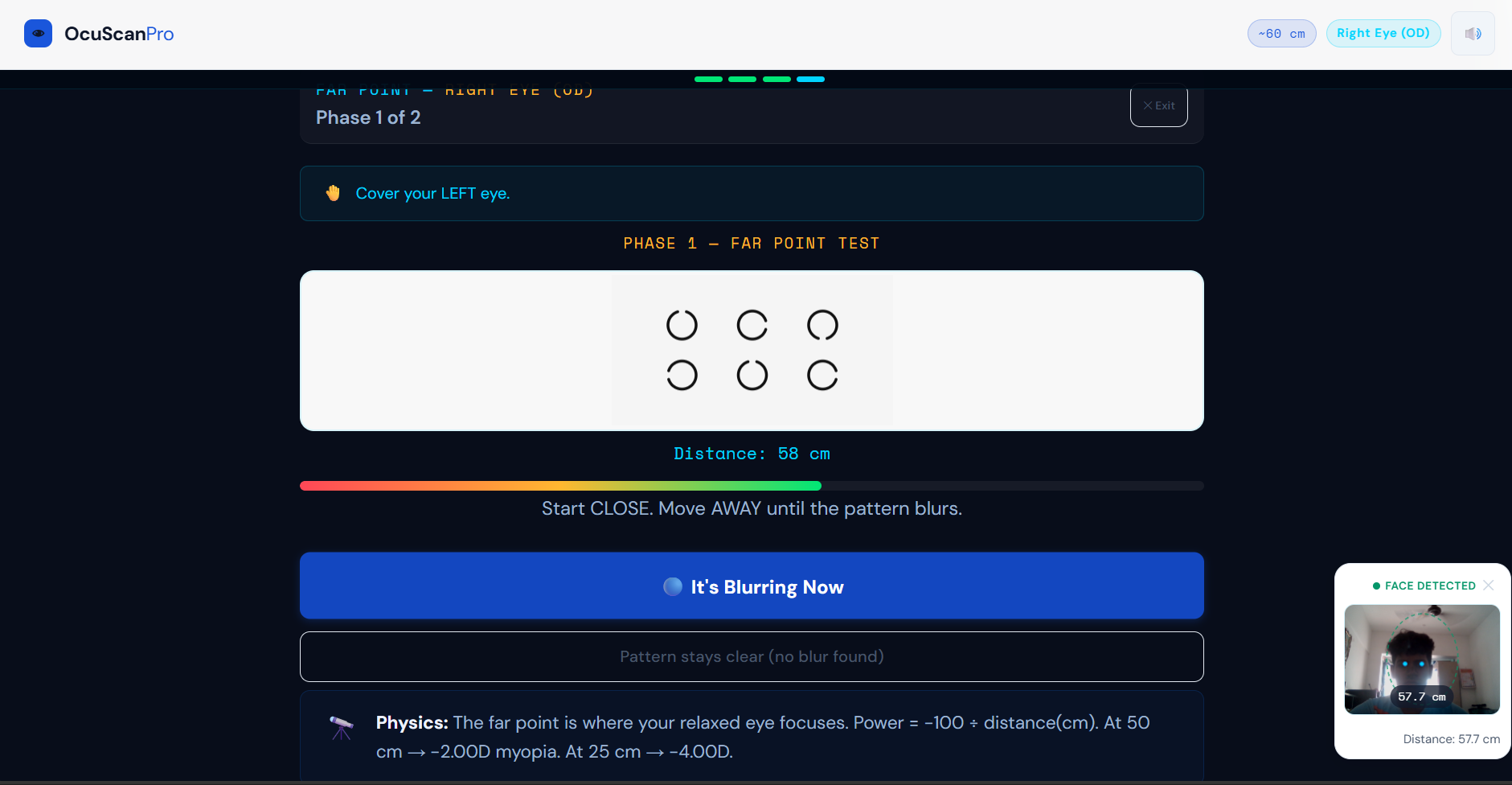
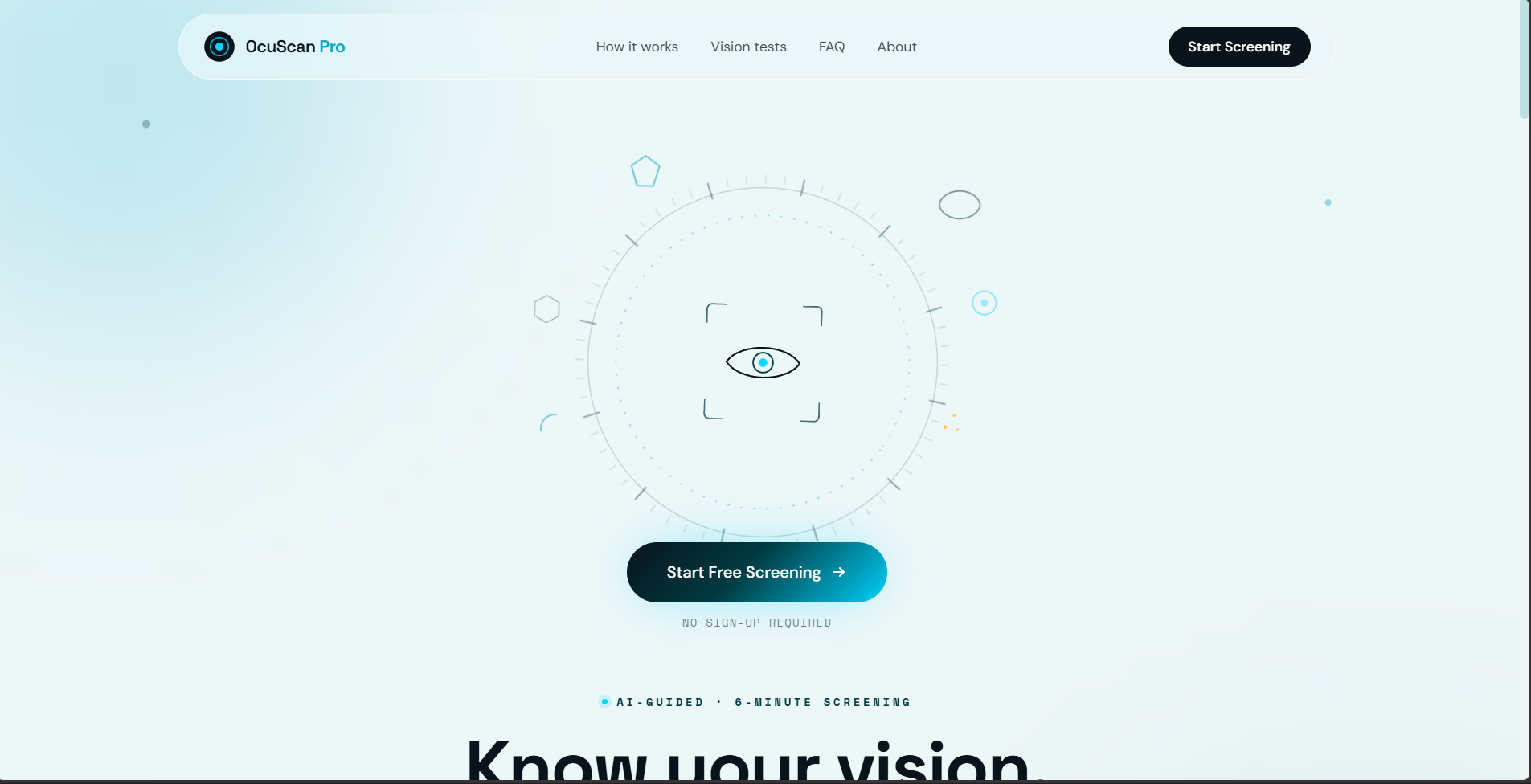
Powered by AI-driven computer vision, OcuScan Pro is a free browser-based vision screening tool that works on any smartphone or laptop. It uses the device camera and MediaPipe — specifically its AI-based Face Mesh and Iris Tracking models — to measure the user's distance from the screen in real time. This allows it to run four tests — Visual Acuity, Near Vision, Diopter (Far Point) Estimation, and Contrast Sensitivity — in about six minutes.
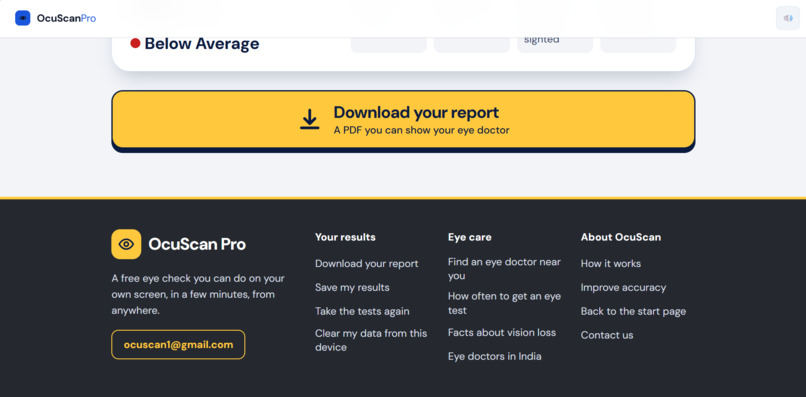
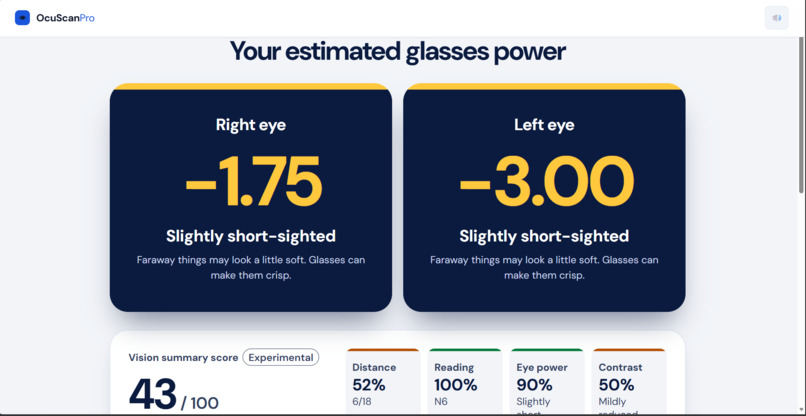
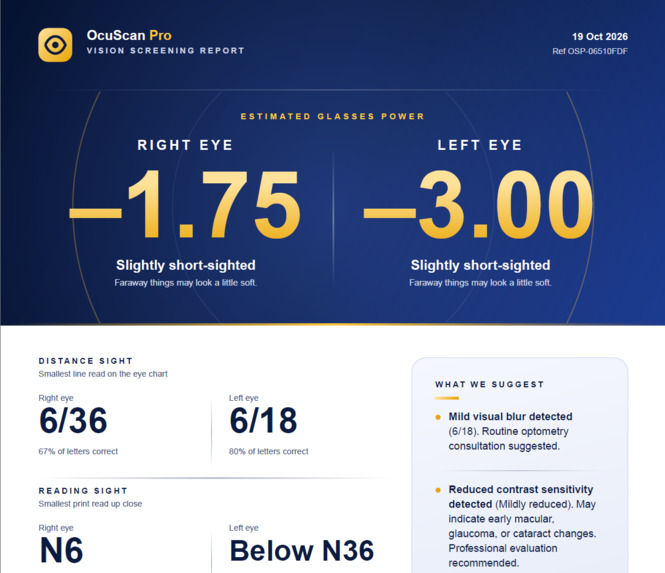
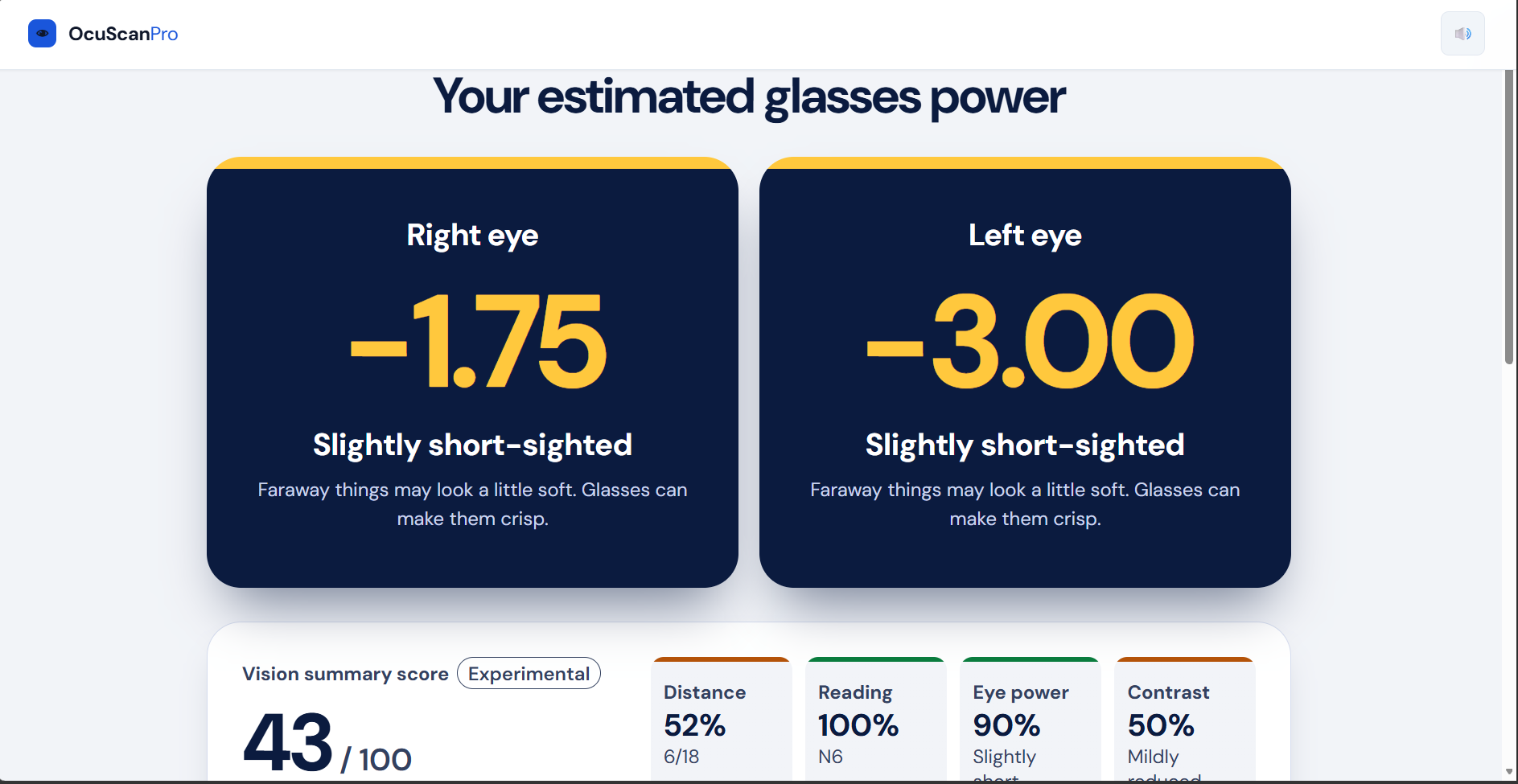
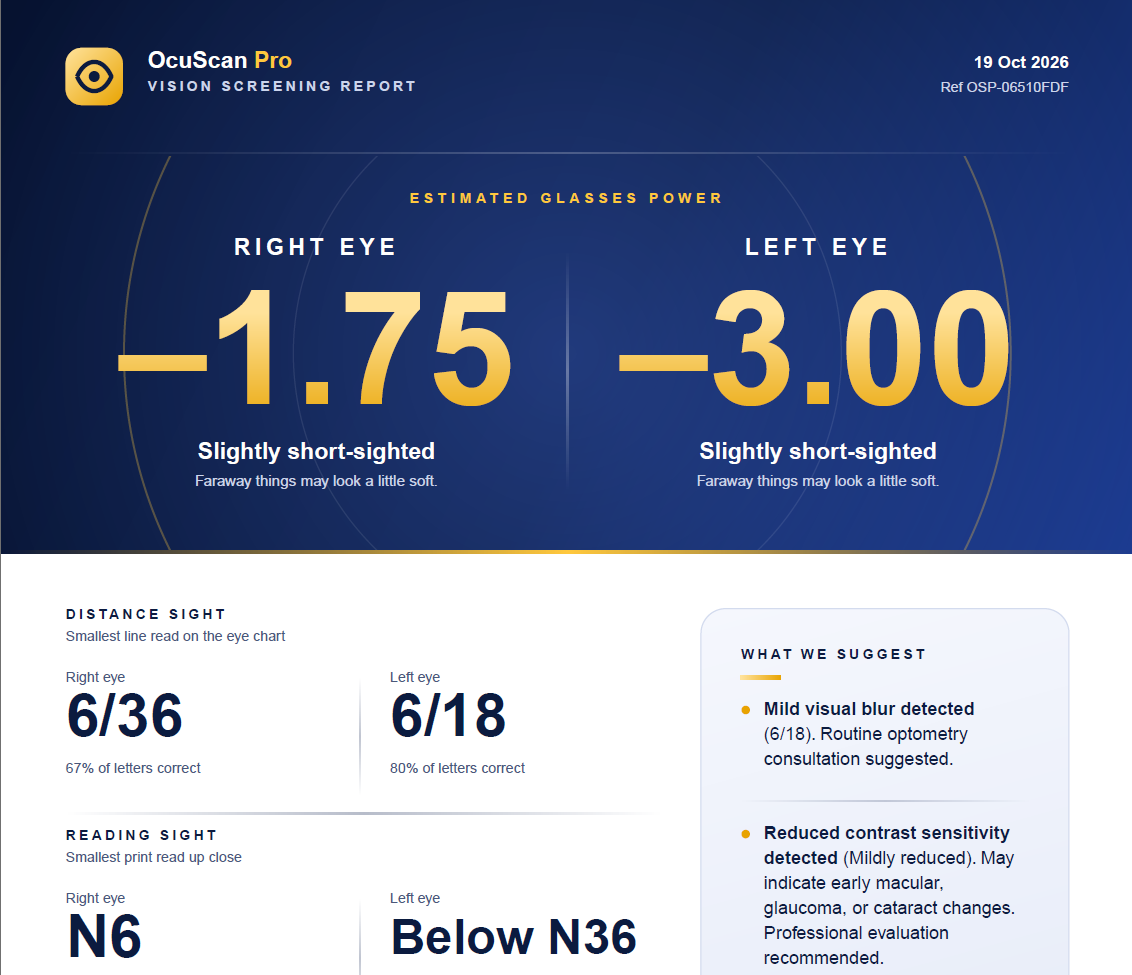
After completing the tests, the user gets an instant PDF report with an Ocular Health Index (OHI) score — a composite metric derived from performance across all four tests, normalized into a single easy-to-understand number — and clear recommendations. The tool is designed only as a screening platform. It clearly states that it is not a substitute for a proper eye examination by an optometrist or ophthalmologist.
How I built it
OcuScan Pro was created by me as a full-stack web application using JavaScript and Node.js. The main technical issue here was to keep the measurements consistent across various devices. This was solved with the use of Google’s MediaPipe Face Mesh and Iris Tracking to provide instant distance measurement, using the 468 points of a face landmarks model, which provides live detection of iris positions and calculation of the actual viewing distance of the user from the camera feed only. All core logic runs on the server to prevent tampering. Anonymous test results are stored in Supabase for future research, following India's DPDP Act with proper parental consent.
Challenges I ran into
Building such a platform required considerable technological effort. Managing a big code base, troubleshooting difficult problems, and operating under limited server capacity were constant obstacles. More precisely, making sure that the irises could be reliably tracked by MediaPipe despite variable illumination in real-life situations such as fluorescent lighting in a classroom, window glare, or dim light indoors was a major calibration issue. Similarly, rendering LogMAR-standard optotypes at the correct angular size across hundreds of different screen resolutions and pixel densities was a problem no existing library solved out of the box.** Mobile performance issues and inconsistent distance estimation under different lighting conditions required extensive testing.
On the non-technical side, explaining the project to schools and establishing appropriate parental consent processes for data collection was also challenging.
Accomplishments I'm proud of
I'm most proud of building a complete, working vision screening tool from scratch that anyone can access through a browser. Prior to conducting the test within schools, I performed controlled testing with 50 people who already had knowledge of their eye power. By comparing the screening results from OcuScan Pro with their existing prescription, I was able to have tangible data on how accurate the platform is. Those results gave me quite good accuracy of about +/-0.5D.
I also initiated conversations with the Rotary Club of Hiranandani and the Rotary Club of Palava for potential deployment in schools and rural areas. Most importantly, I learned to be honest about the tool's capabilities. I shifted the focus from trying to predict exact spectacle power to delivering transparent and responsible screening results.
What I learned
This project has taught me technical skills and also human aspects. I learned about how to code for backend development (heavy server side) and how to write automated tests using Microsoft Playwright. I also learned about how to apply computer vision to practical medical problems.
Apart from technical skills, I have learned how to effectively interact with schools and organizations. In particular, I have become aware of the ethical aspects associated with the creation of health care technological applications, such as that the screening tool should direct people to a professional, not replace one.
What's next for OcuScan Pro
However, this is just the initial step. The next step will be aimed at improving the accuracy of screening using machine learning algorithms. This step will involve testing the application with the help of optometrists. Moreover, I will expand this project to other organizations in Mumbai and Thane via Rotary clubs. I will also deploy this in schools in Thane and Mumbai region. Further, I have planned to use the collected anonymous data and match the self reported eye power to determine the accuracy and improve the accuracy and reliability of the application in future.
To keep the platform completely free for students while ensuring sustainability, I plan to introduce an ethical referral system where nearby eye clinics can receive leads from users who need further examination. In the long term, I hope OcuScan Pro can contribute to large-scale research on student eye health in India.
Built With
- bootstrap
- computer-vision
- css
- html
- javascript
- machine-learning
- node.js
- vanillajs


Log in or sign up for Devpost to join the conversation.