-
-
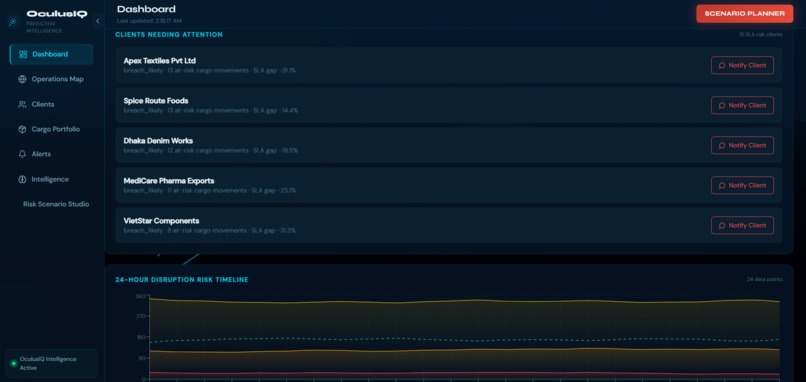
Dashboard
-
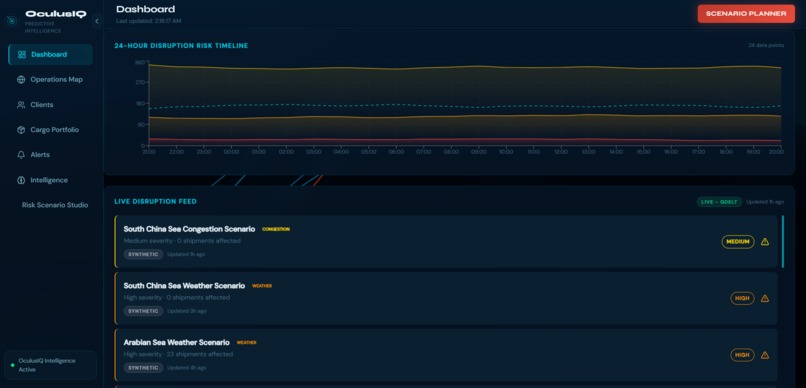
Dashboard
-
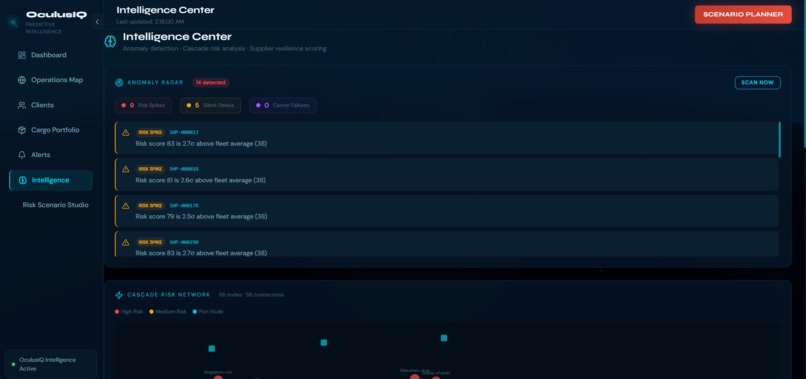
Intelligence
-
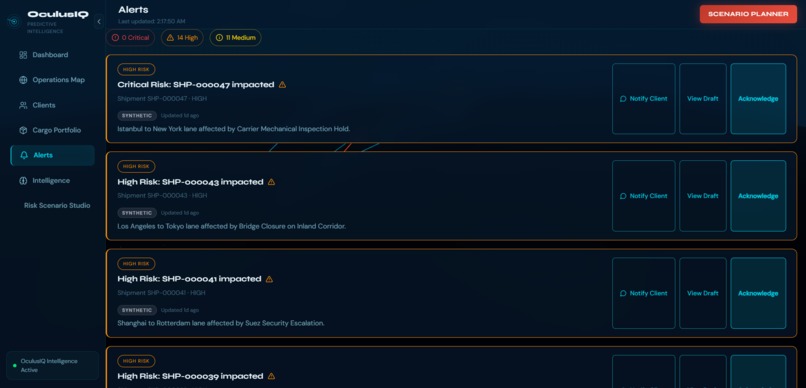
-
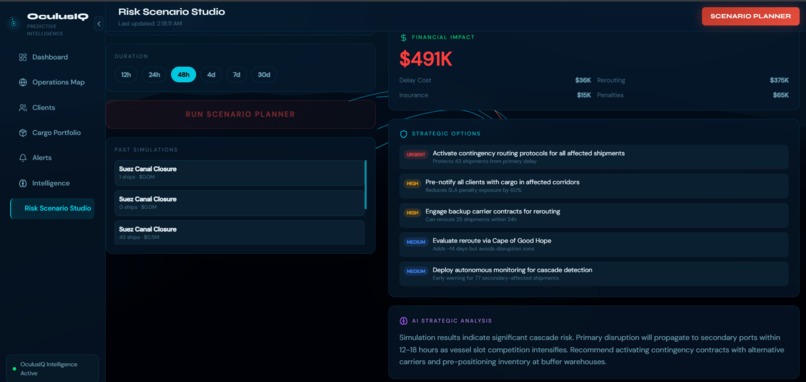
Risk Scenario Intelligence
-
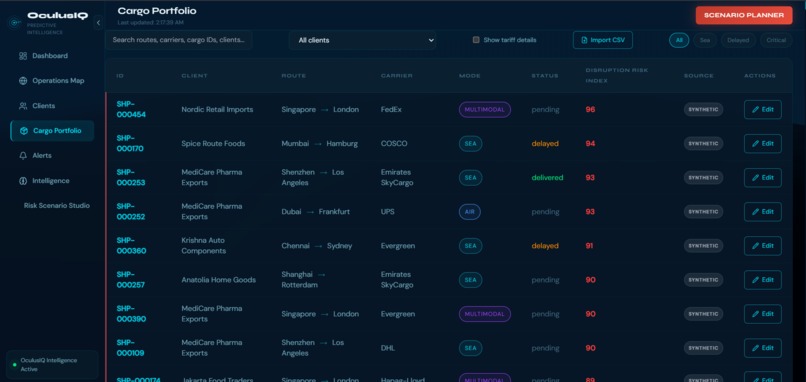
Cargo Portfolio
-
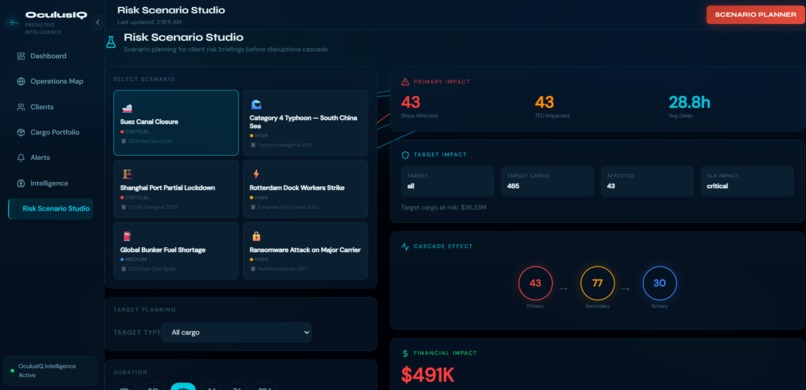
Risk Scenario Intelligence
-
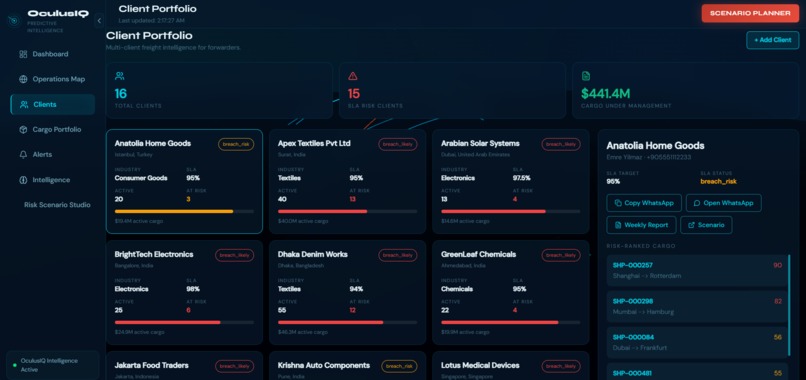
Clients
-
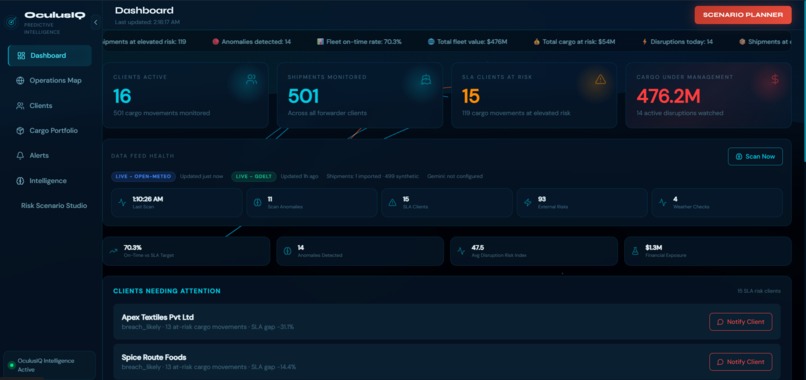
Dasboard
-
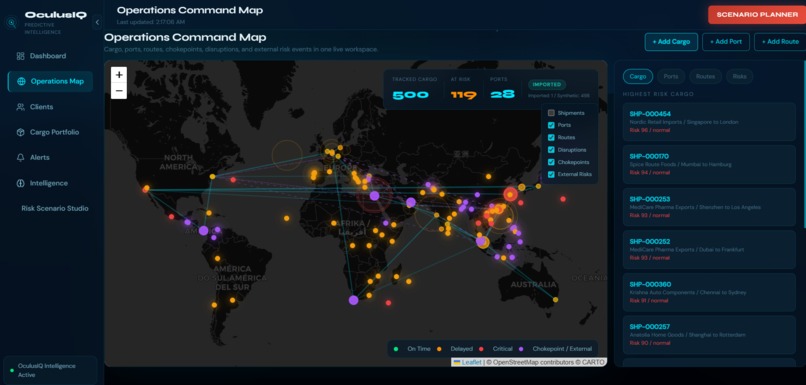
Operations Map
Inspiration
Supply chain operations are becoming increasingly complex, yet many freight forwarders and exporters still rely on spreadsheets, emails, carrier portals, and messaging applications to manage critical logistics operations. A single disruption such as a port strike, severe weather event, or route blockage can create cascading delays, financial losses, and communication challenges.
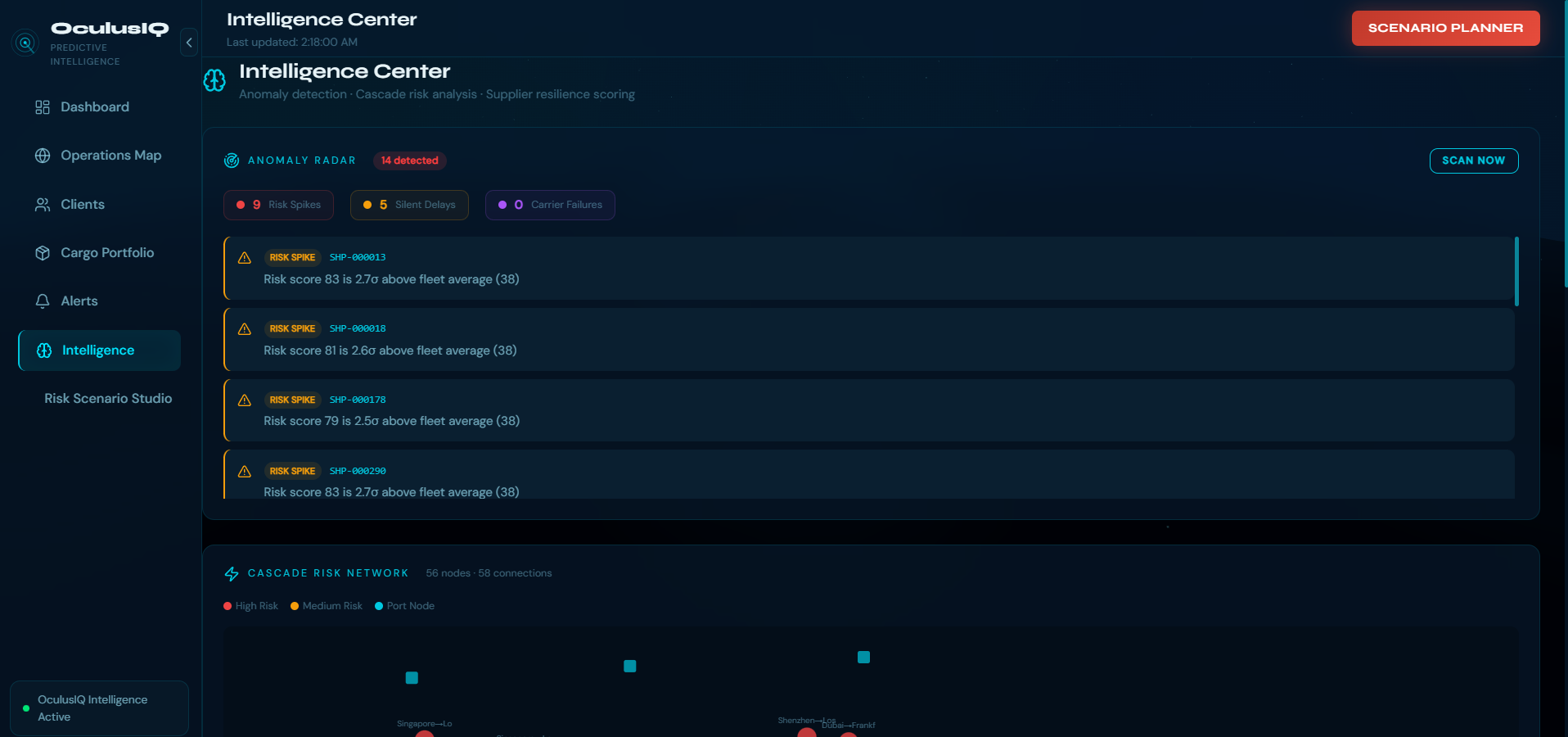
We built OculusIQ to transform supply chain management from reactive firefighting into proactive decision-making. Instead of simply tracking shipments, OculusIQ helps operators understand risks, predict disruptions, evaluate impacts, and take action before problems escalate.
What it does
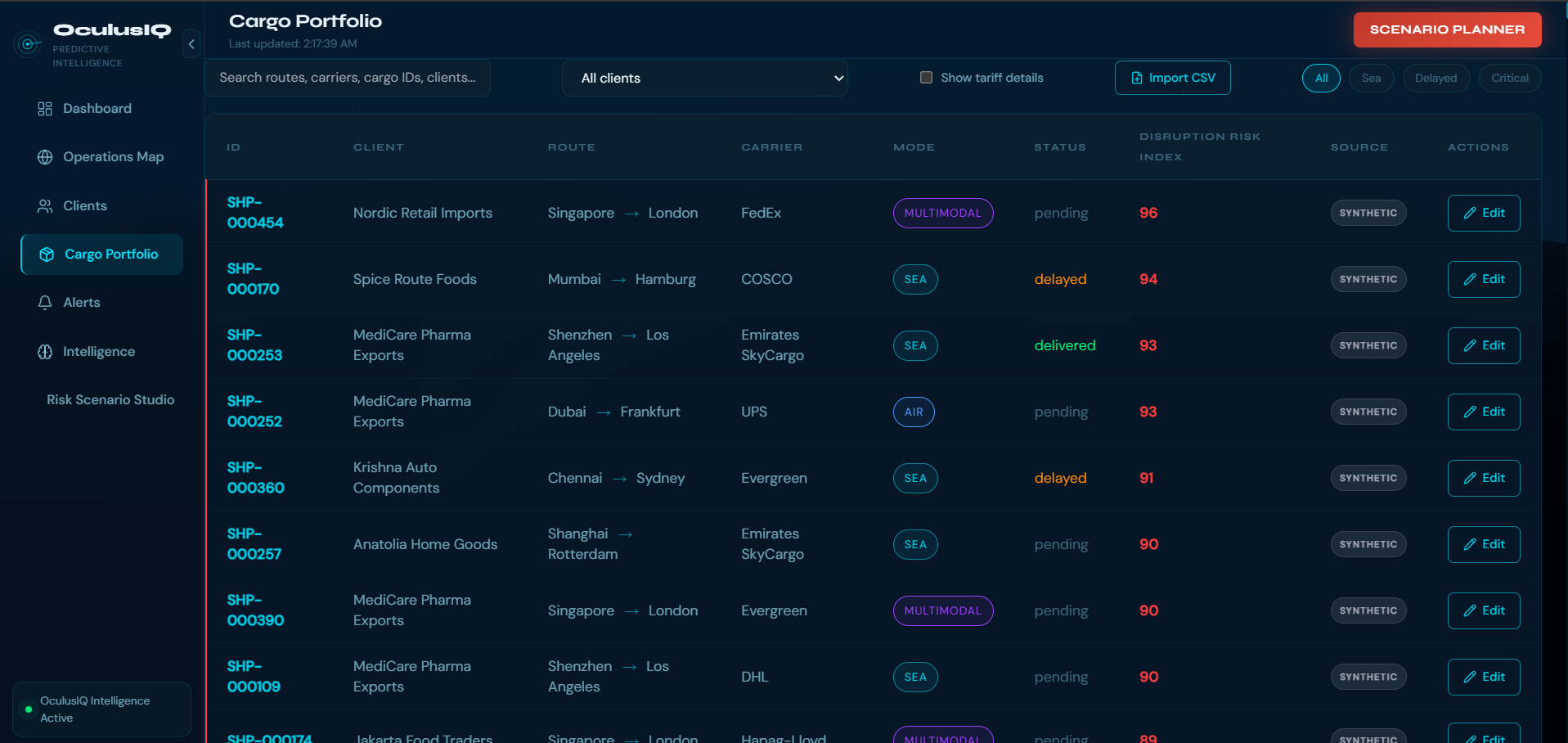
OculusIQ is an AI-powered Supply Chain Intelligence Platform designed for freight forwarders and exporters.
The platform provides:
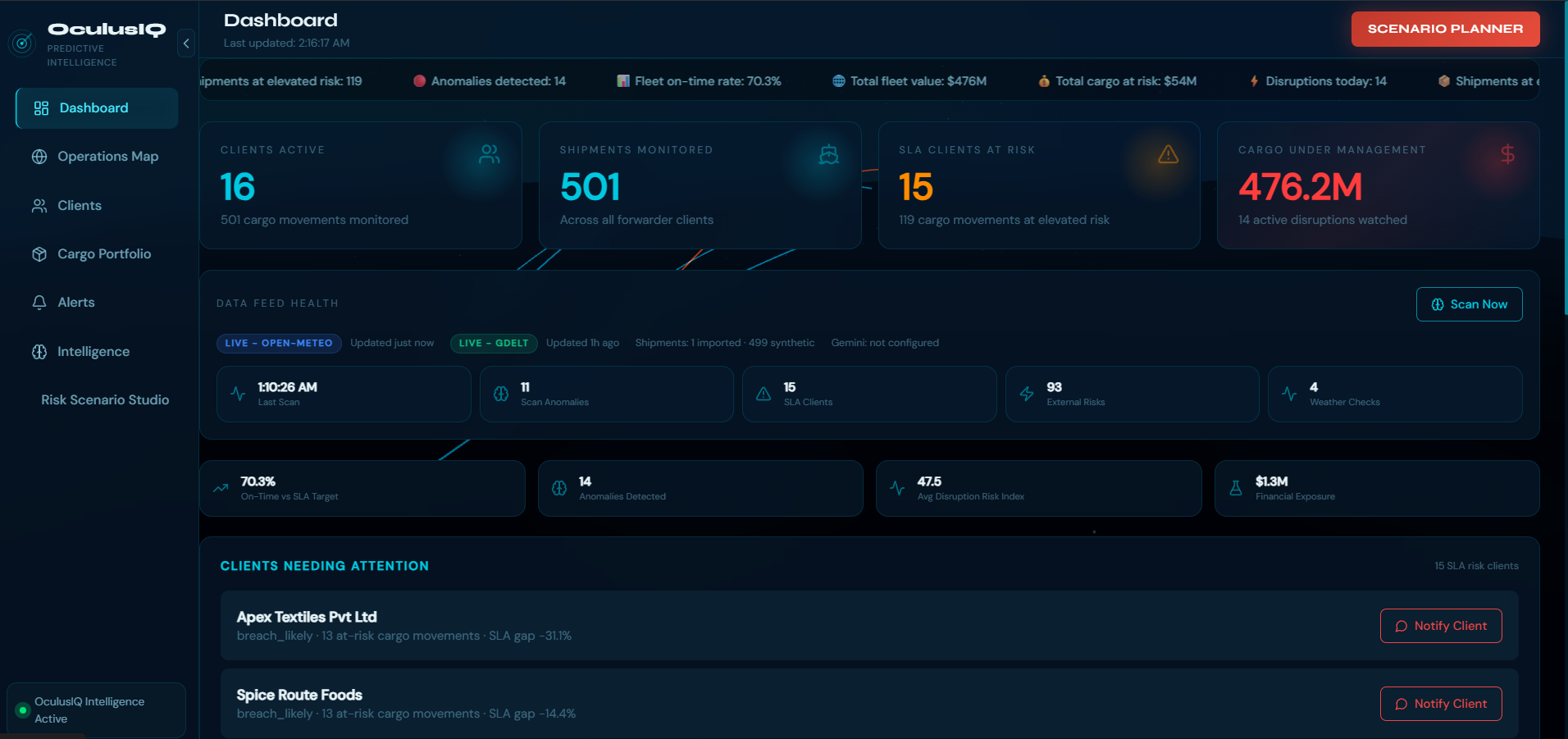
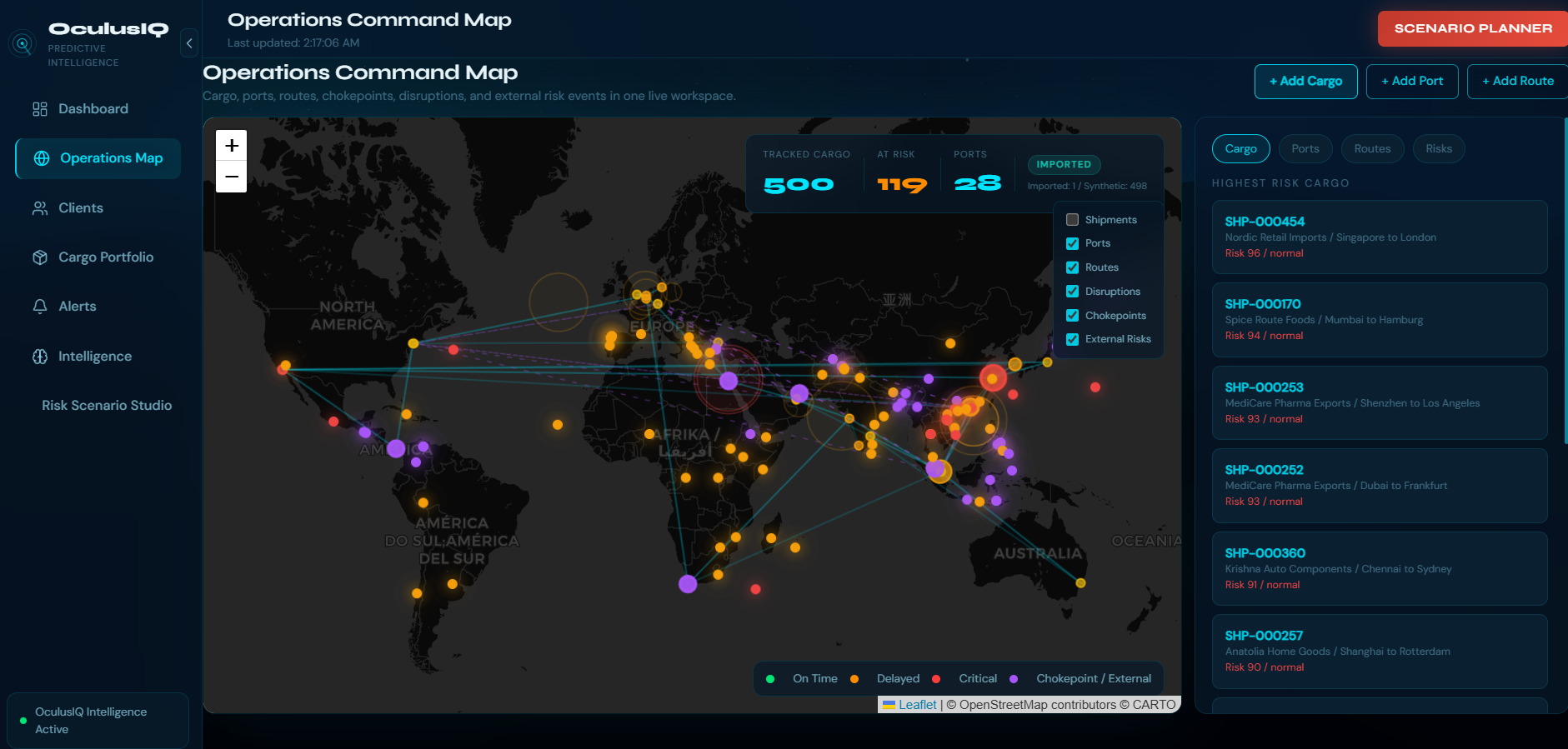
- Unified visibility across shipments, routes, ports, and clients
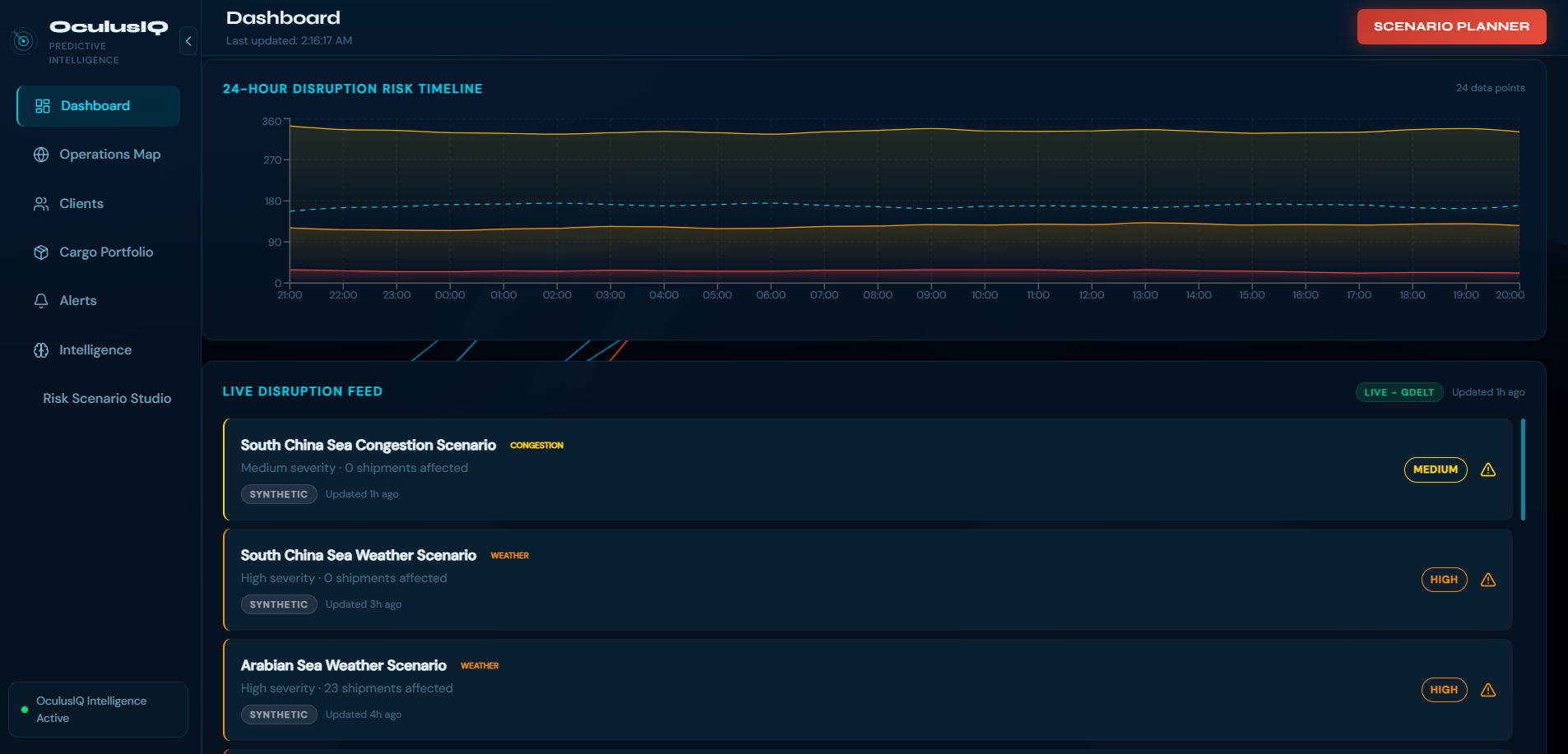
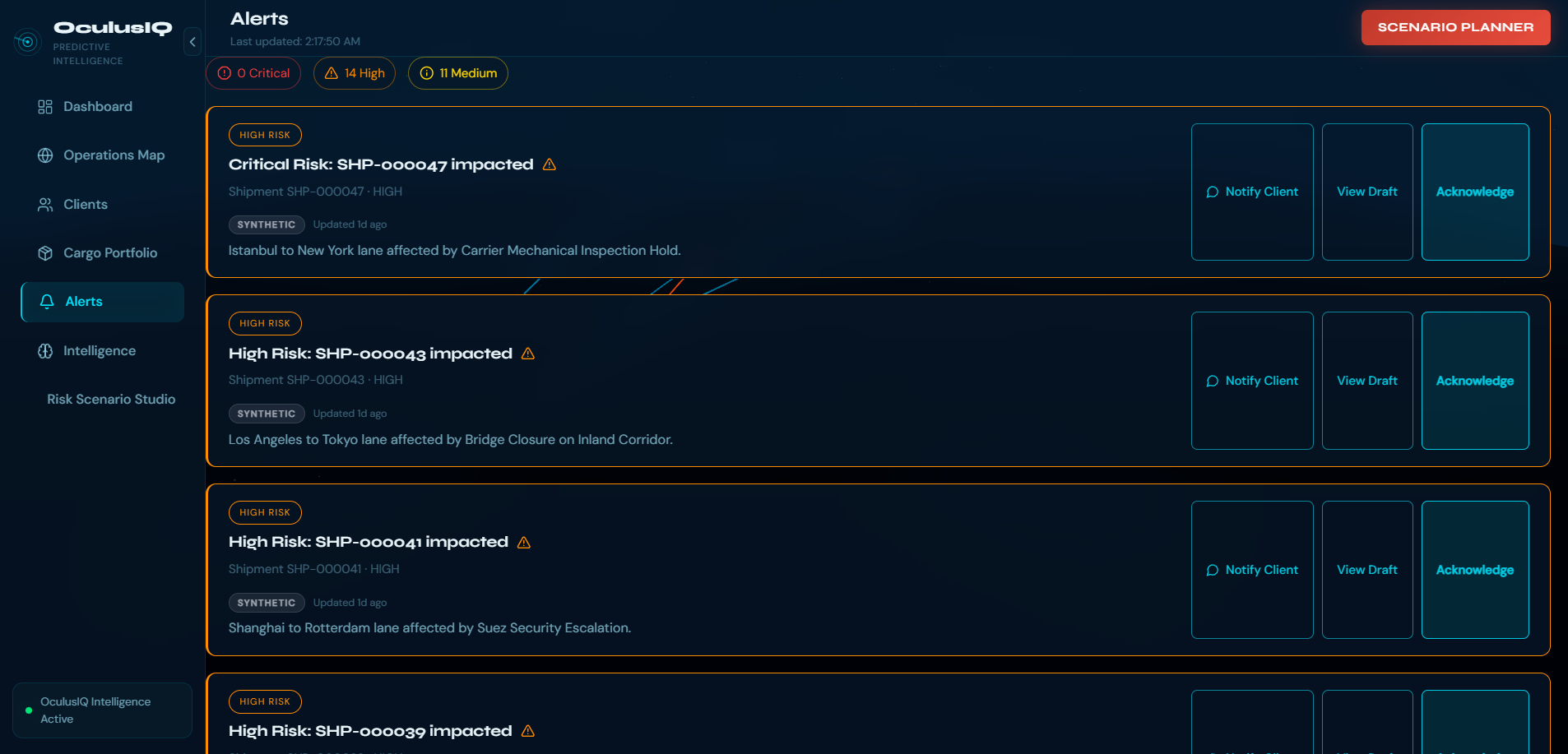
- AI-powered risk detection and disruption monitoring
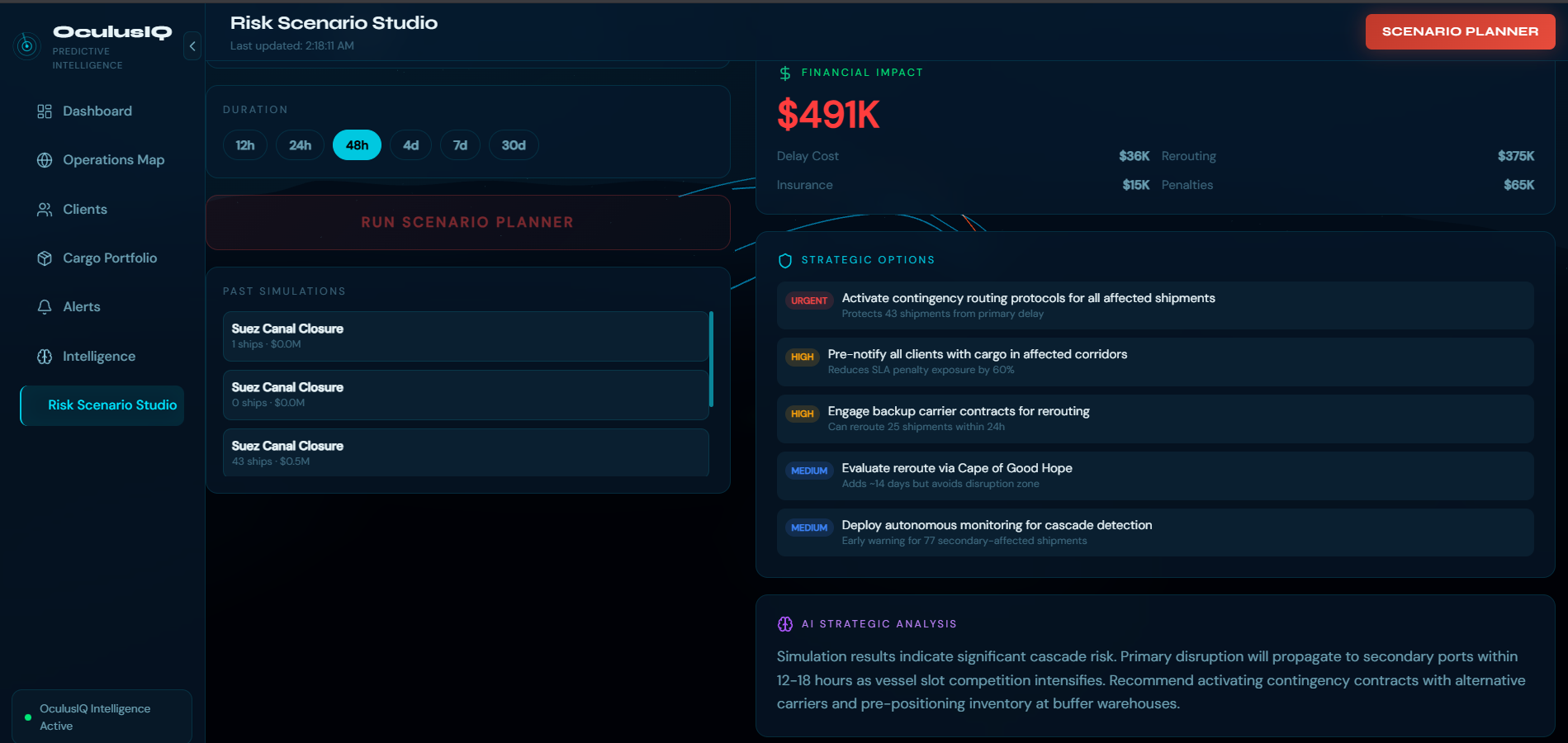
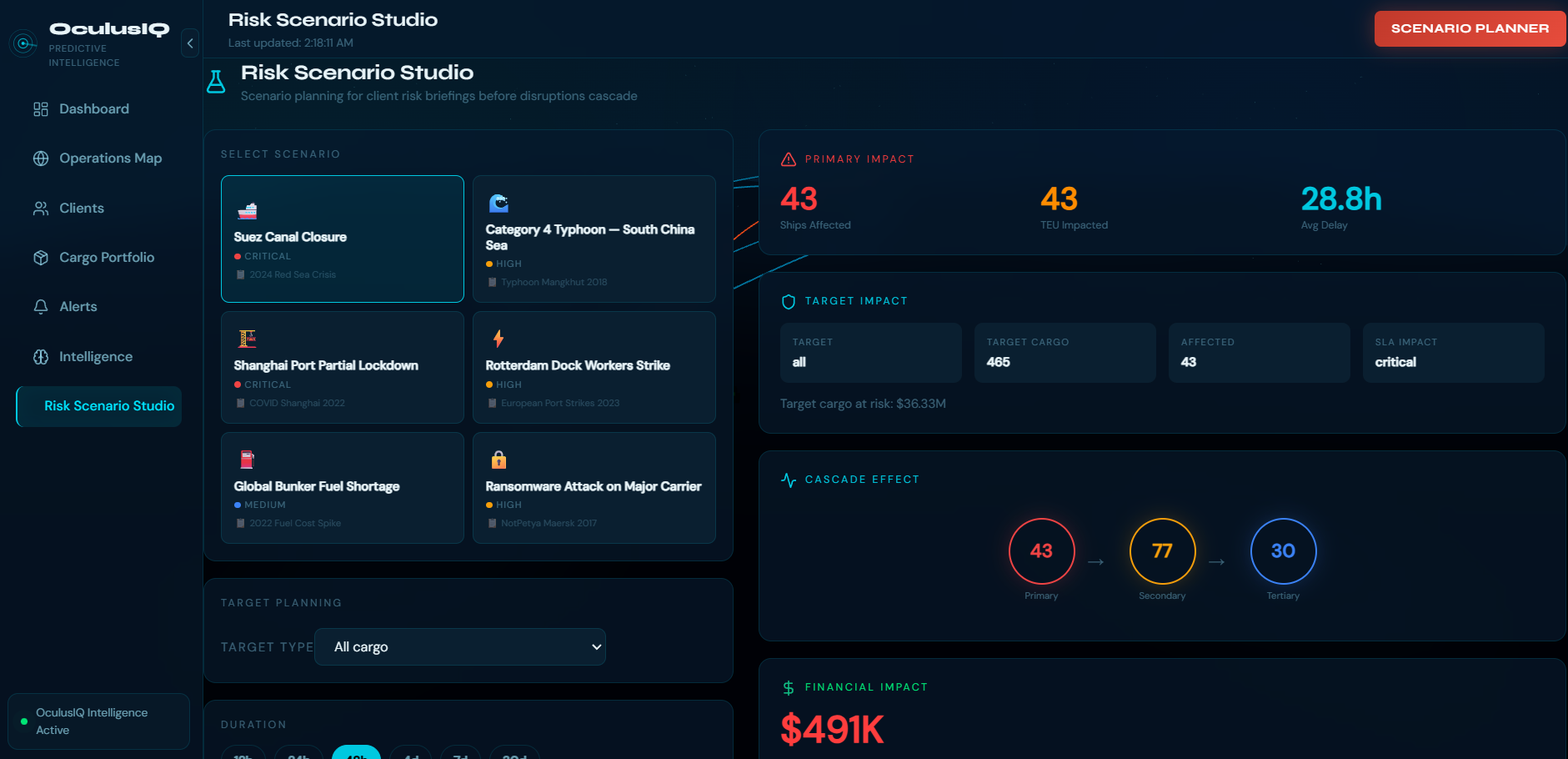
- Scenario planning for evaluating disruption impacts
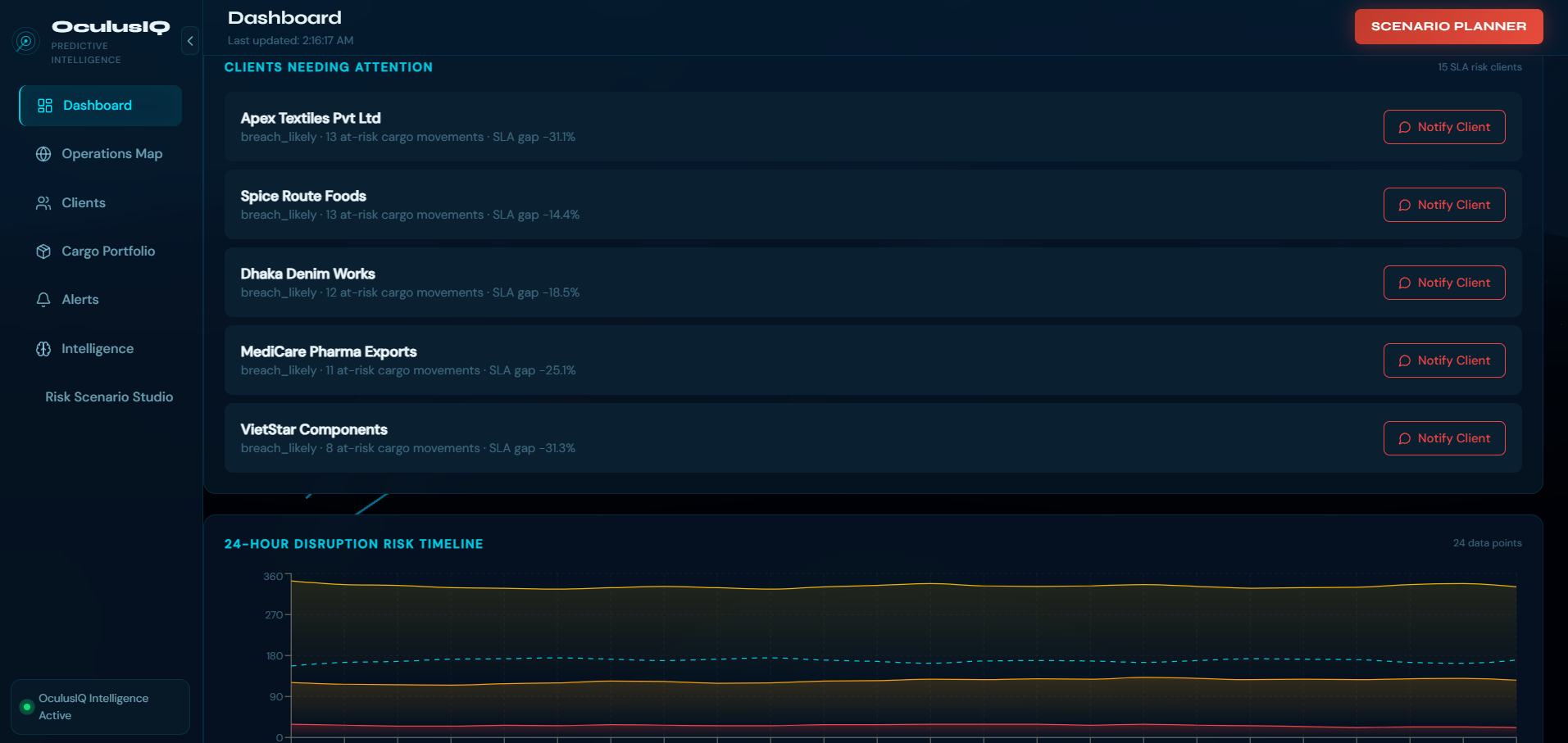
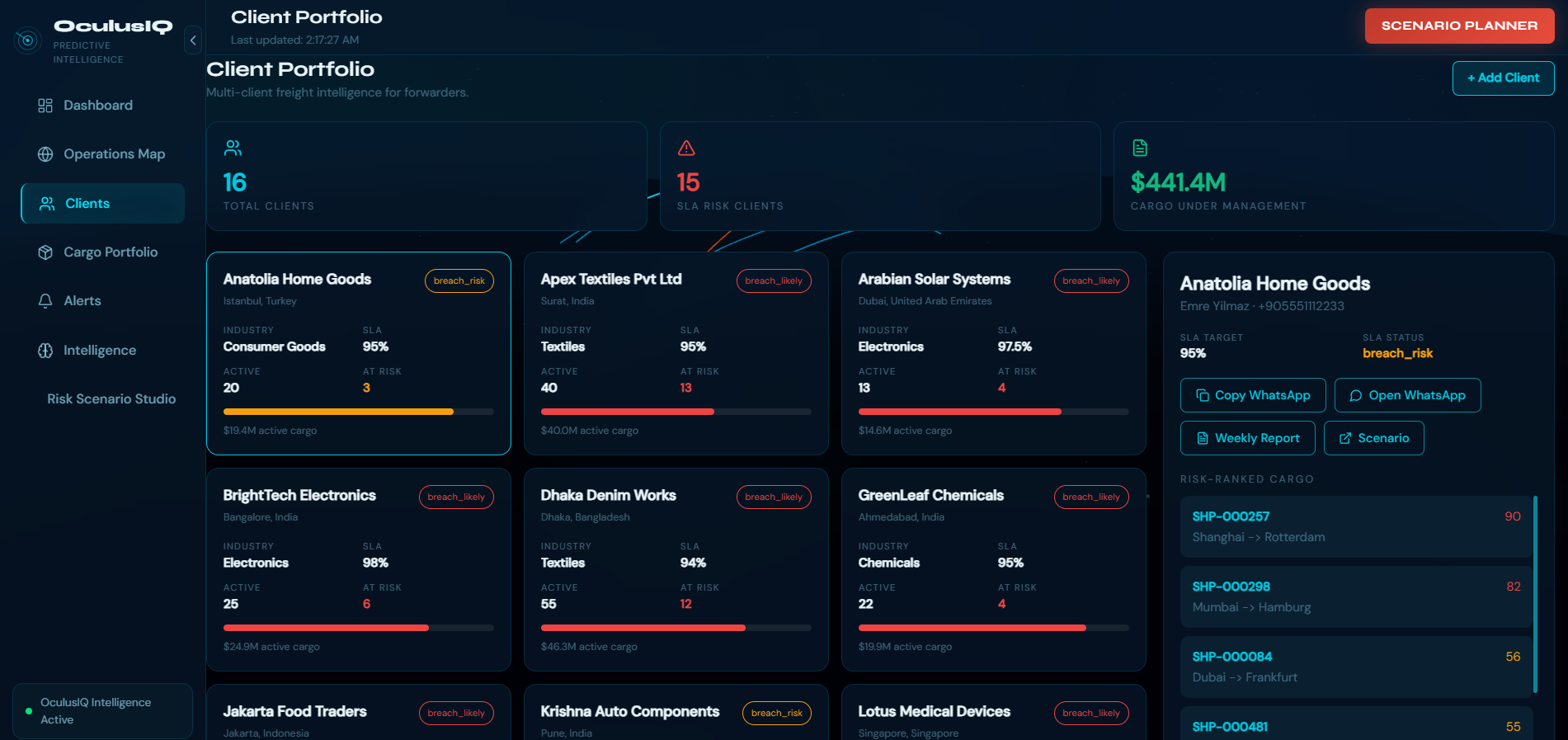
- SLA breach prediction for client performance monitoring
- Tariff and landed-cost intelligence
- Carbon footprint tracking and compliance insights
- Document intelligence for extracting shipment data from logistics documents
- Automated WhatsApp alert generation for rapid client communication
By consolidating operational data into a single command center, OculusIQ enables faster and more informed logistics decisions.
How we built it
Frontend:
- React
- Vite
- Interactive dashboards and visualizations
Backend:
- FastAPI
- Python
Database:
- SQLite
AI Layer:
- Gemini AI
External Integrations:
- Open-Meteo API
- GDACS API
- Nominatim API
The platform combines shipment data, external risk signals, and AI-driven analysis to generate actionable insights and recommendations.
Challenges we ran into
One of the biggest challenges was integrating multiple logistics data sources into a unified operational workflow. Supply chain information is often fragmented, making it difficult to provide a single source of truth.
Another challenge was designing an intelligence layer that does more than visualize data. We focused on generating meaningful outputs such as risk assessments, disruption simulations, client impact analysis, and automated communication workflows.
Balancing technical complexity with an intuitive user experience was also a major challenge throughout development.
Accomplishments that we're proud of
- Built a complete end-to-end supply chain intelligence platform
- Developed a centralized Operations Command Center
- Integrated AI-powered risk analysis and decision support
- Implemented disruption simulation and scenario planning
- Created client-focused SLA monitoring and alerting
- Automated operational communication through WhatsApp alerts
- Delivered a practical solution for real-world logistics challenges
What we learned
Through this project, we gained valuable experience in supply chain operations, logistics workflows, risk modeling, AI-assisted decision support, and full-stack application development.
We also learned how critical actionable intelligence is in operational environments where decisions must be made quickly and accurately.
What's next for OculusIQ
Future enhancements include:
- Live carrier and ERP integrations
- Advanced predictive forecasting models
- Enhanced AI copilots for logistics operations
- Real-time route optimization
- Expanded analytics and reporting capabilities
- Scalable cloud deployment
Our vision is to make OculusIQ a comprehensive intelligence platform that empowers logistics teams to Predict, Analyze, and Act with confidence.


Log in or sign up for Devpost to join the conversation.