-
-
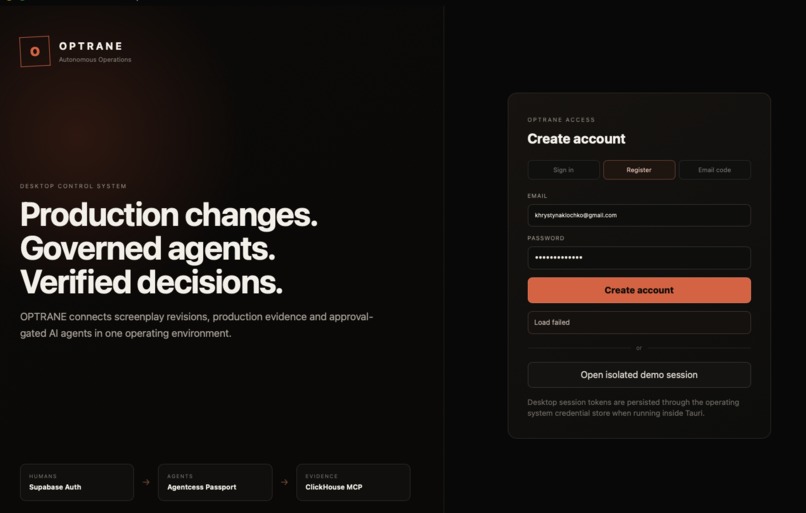
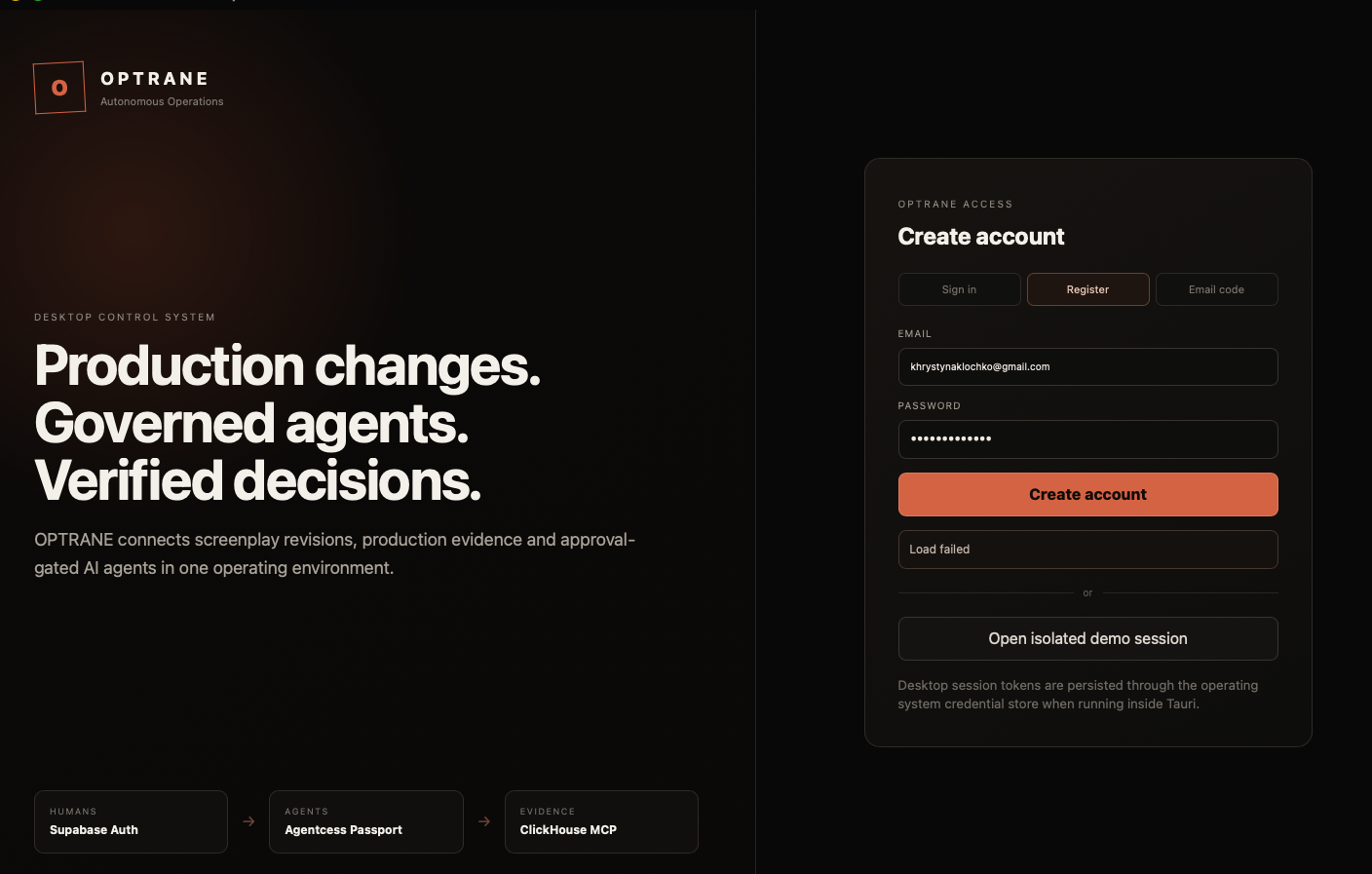
desktop app ui
-
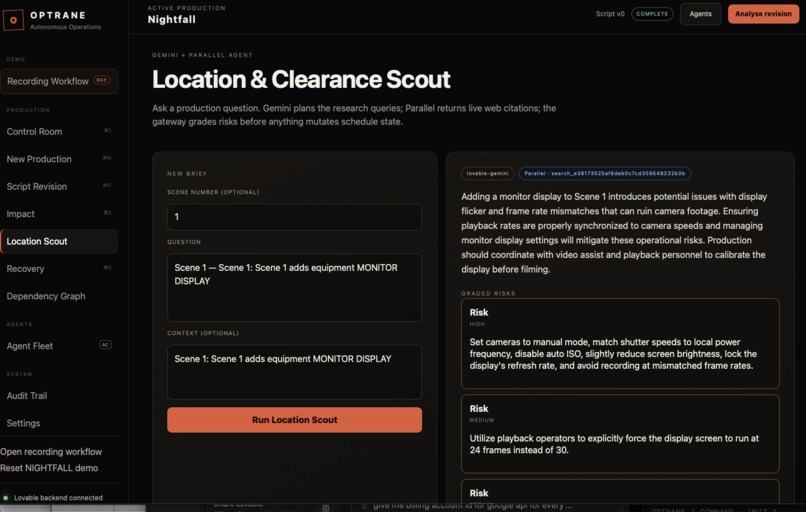
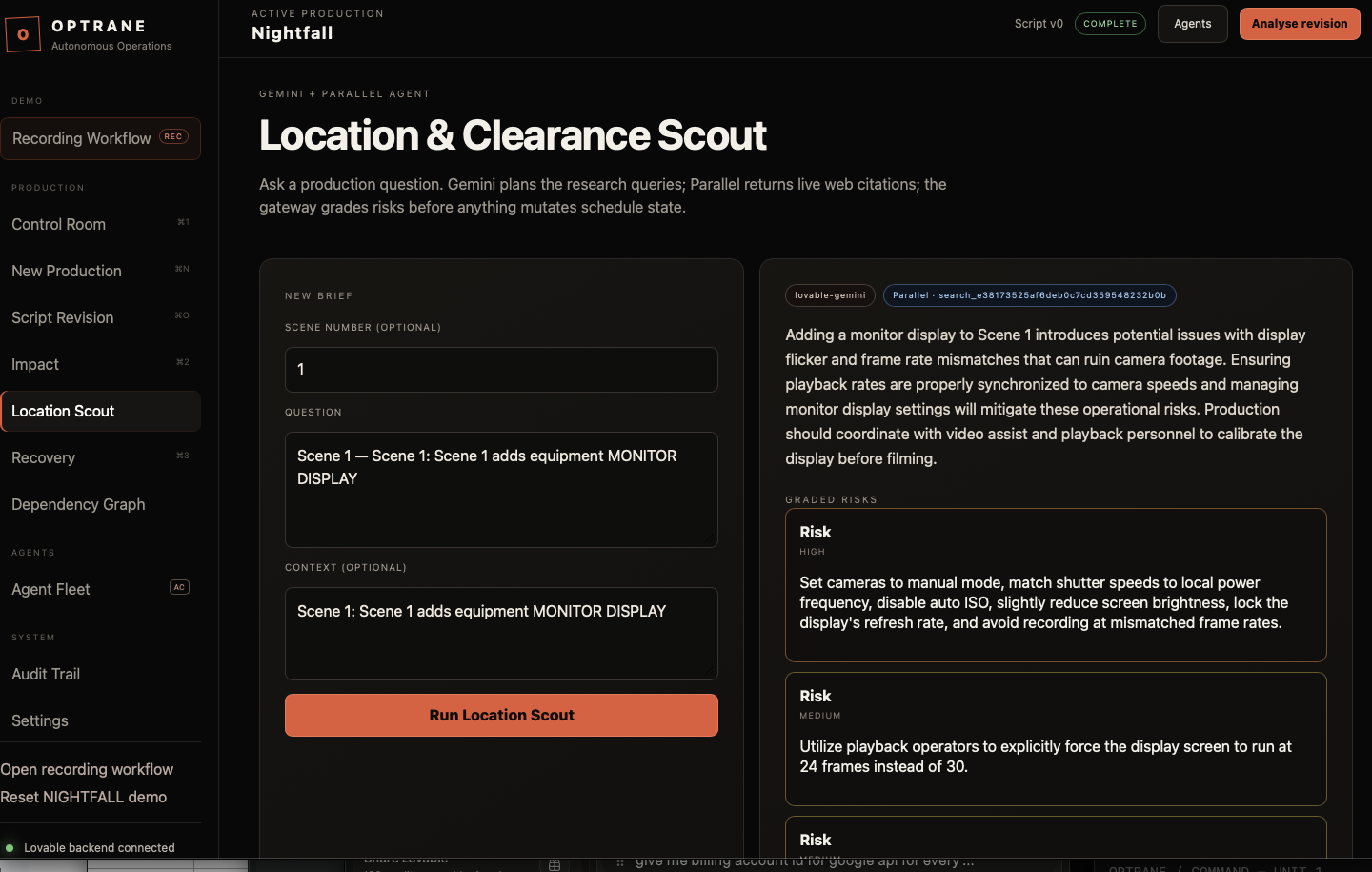
scout analysis with gemini
-
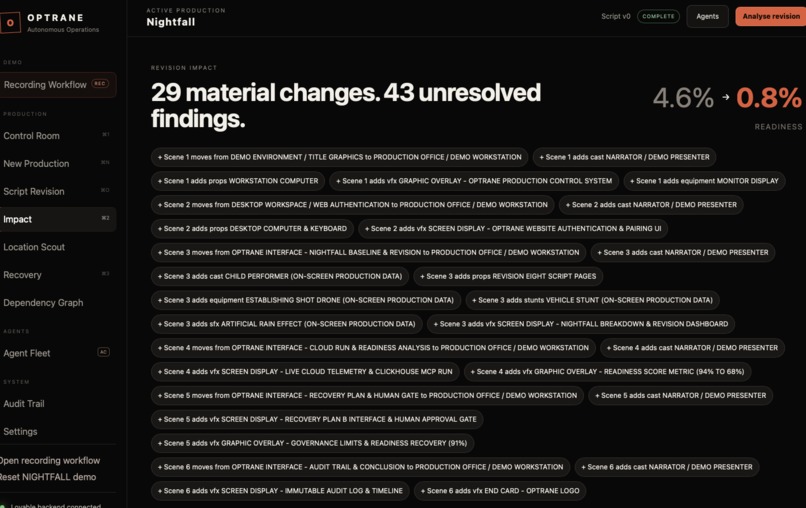
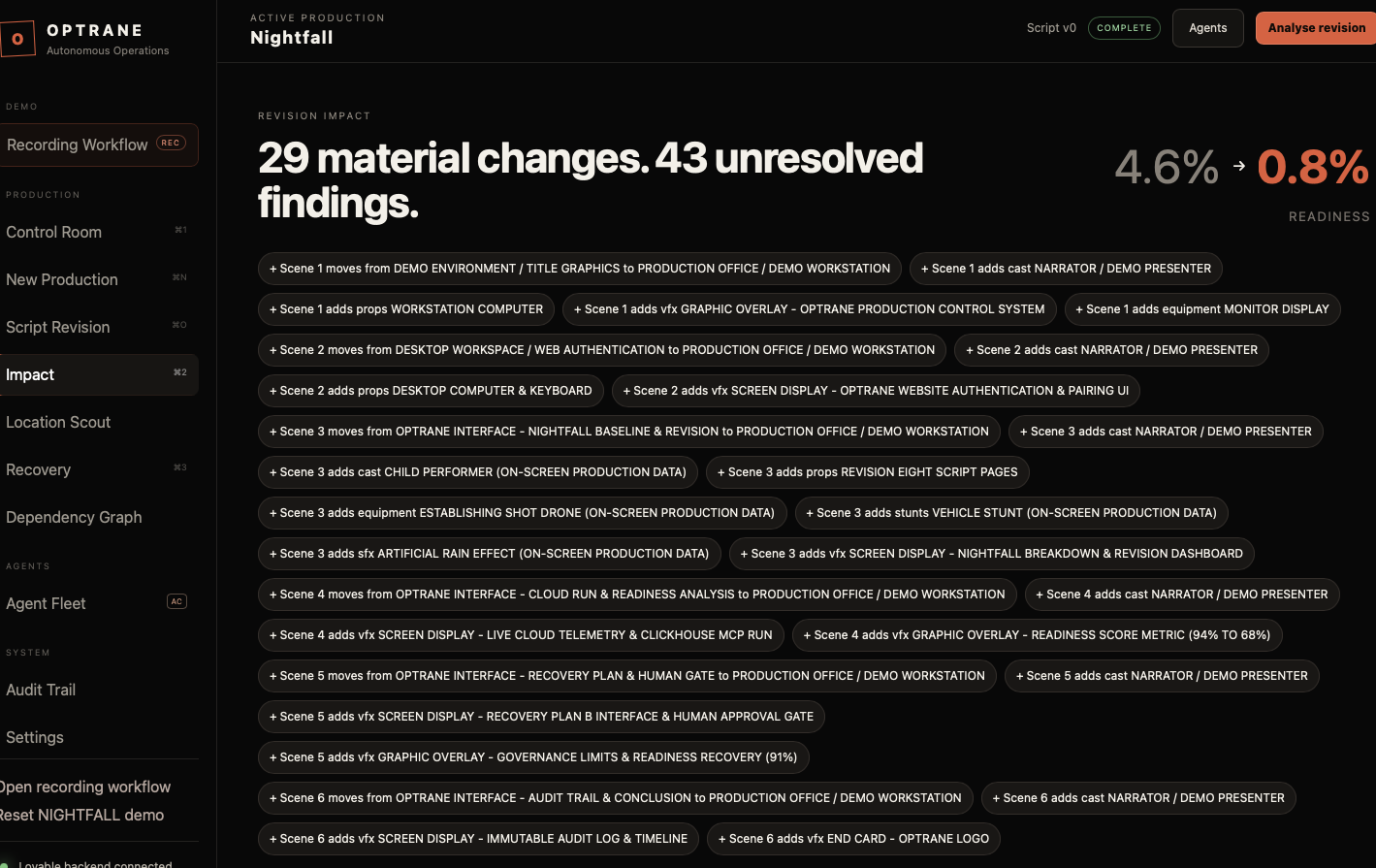
impact with gemini agent and parallel
-
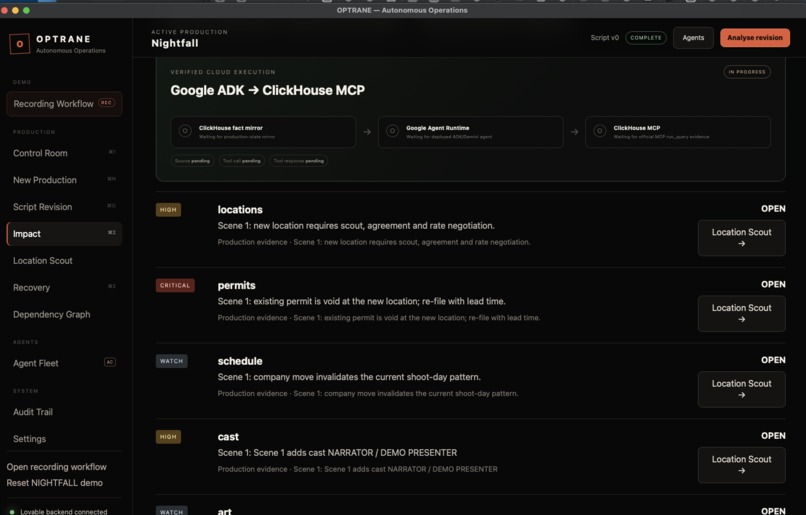
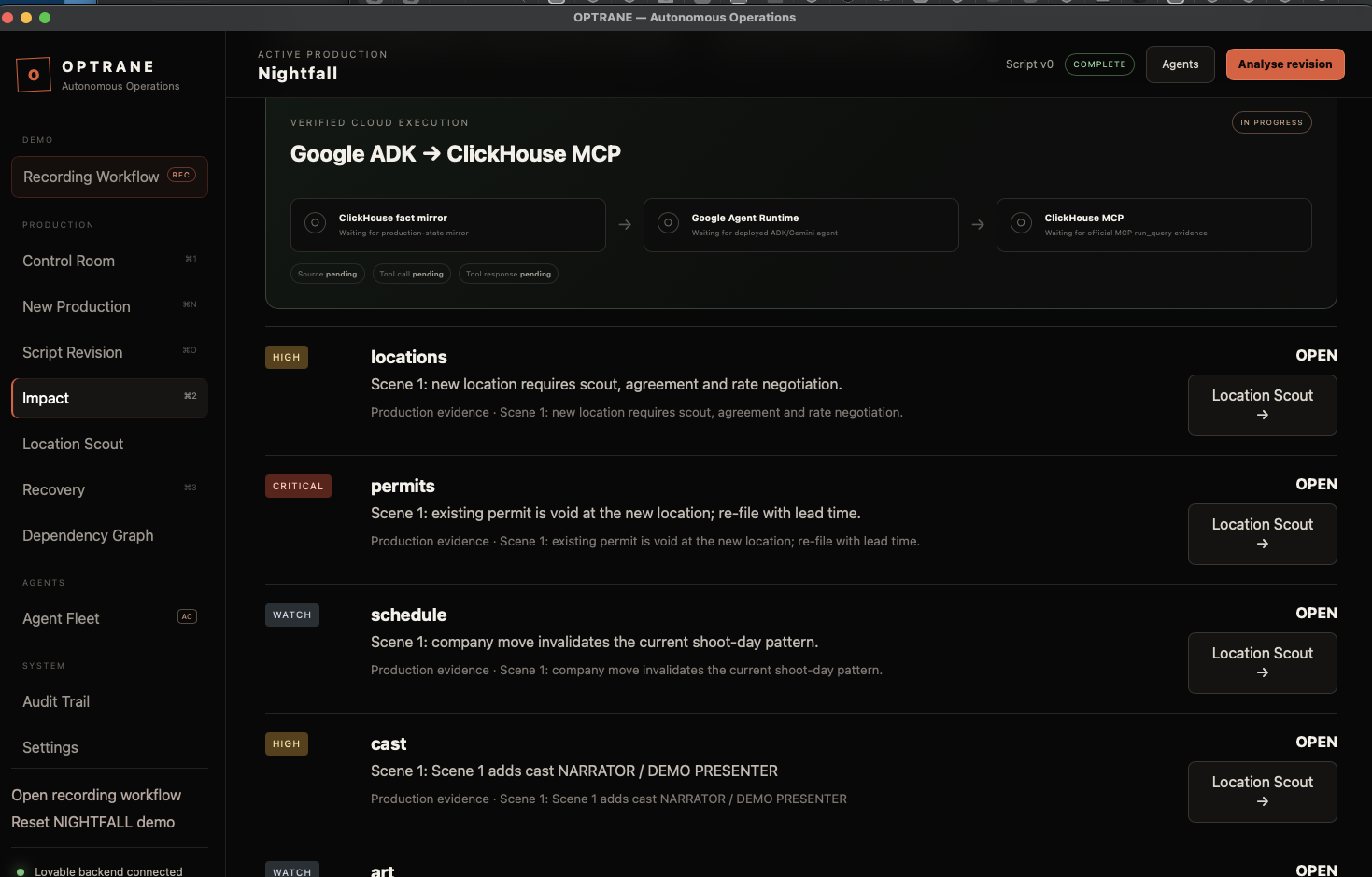
more of an interface
Inspiration
I directed a short film and two music videos, so I know how much work happens before anyone even gets to the creative part.
Planning a production means dealing with schedules, people, equipment, locations, budgets, approvals, files, last minute changes, and a lot of communication between people who are all working on different parts of the same project.
That planning burden is what inspired OCTRANE.
I wanted to explore what film production would look like if AI agents could take over more of the operational work, while still keeping humans in control of the creative decisions.
What it does
OCTRANE is an agentic production system for film and media workflows.
It gives a production team one place to manage AI agents, tasks, budgets, approvals, infrastructure, production data, and external services.
Different agents can handle different parts of production, for example scheduling, coordination, logistics, asset management, technical operations, infrastructure, or post production.
Each agent has its own role, permissions, rules, and budget.
The important part is that the agents are not just answering questions. They can actually participate in the workflow, call tools, coordinate with other agents, and react when something changes.
At the same time, sensitive actions can still require human approval.
How we built it
We built OPTRANE around Gemini agents and Google Cloud.
Gemini is used for reasoning, planning, and agent behaviour, while the backend handles the production state, permissions, budgets, APIs, and execution.
The application is separated into different layers.
The desktop interface is where the production team works.
The backend handles privileged operations.
Agents communicate with services through controlled APIs.
We also use Agentcess as the governance layer for agent access, permissions, budgets, and activity tracking.
Sensitive credentials and internal API logic are not exposed in the desktop or web client.
The goal was to create something closer to an operational system than a chatbot.
Challenges we ran into
The biggest challenge was deciding how much freedom an agent should have.
Once an agent can call APIs, spend money, modify resources, or interact with other systems, it needs clear limits.
We had to think carefully about permissions, budget caps, approvals, identity, and audit logs.
Another challenge was the interface.
Film production already has a lot of information, so adding agents can make things even more complicated if the system is not designed carefully.
We wanted users to understand what each agent is doing, why it is doing it, what it can access, and when a human needs to step in.
We also had to make sure that agent logic and sensitive endpoints were not exposed in the client application.
Accomplishments that we're proud of
I am proud that OPTRANE became more than a film themed AI assistant.
It is a working concept for how agents could actually become part of a production team.
Agents can have roles, tasks, budgets, permissions, and rules.
They can coordinate with each other while still operating inside defined limits.
We also built the system so the user facing application does not need direct access to sensitive credentials or privileged backend logic.
For me, the most interesting part is seeing how much of the production planning burden could eventually be handled automatically, while the director and production team stay focused on the work that really needs human judgement.
What we learned
The main thing I learned is that building the agent itself is not the hardest part.
The harder problem is making several agents work together safely.
Once agents start using tools and taking actions, you need to think about identity, permissions, budgets, approvals, failures, and accountability.
I also realised how well film production fits this type of system.
A production contains a huge amount of structured operational work around a relatively small number of important creative decisions.
That means agents can potentially remove a lot of coordination overhead without replacing the people responsible for the creative vision.
What's next for OPTRANE
Next, I want to make OPTRANE useful for a real production.
That means adding deeper scheduling and call sheet workflows, equipment and location coordination, vendor management, production budgets, cloud media workflows, post production automation, and more specialised agents.
I also want to continue developing Agentcess as the governance layer so every production agent has clearly defined access, permissions, budgets, and traceable actions.
Longer term, I see OPTRANE becoming a system that can coordinate a large part of the operational side of a production.
Film is the first use case, but the same architecture could eventually work anywhere people, AI agents, software systems, budgets, and physical operations all need to work together. P.S please change my track to Parallel
Built With
- codex
- gcp
- gemini
- javascript
- lovable
- parallel

Log in or sign up for Devpost to join the conversation.