-
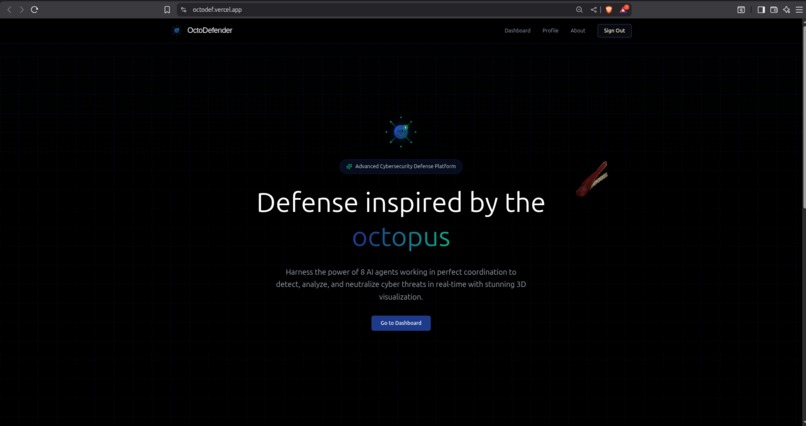
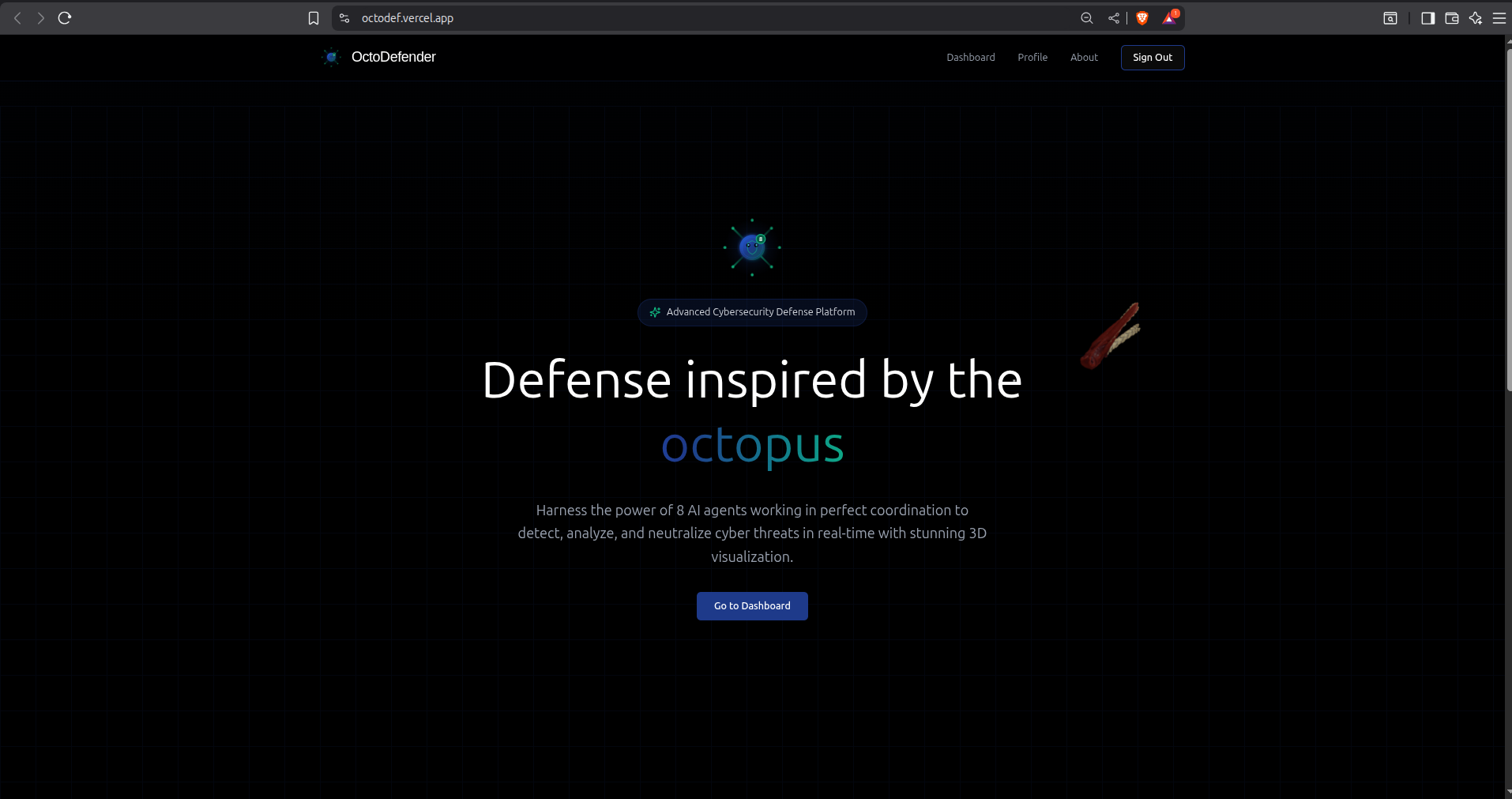
Landing Page
-
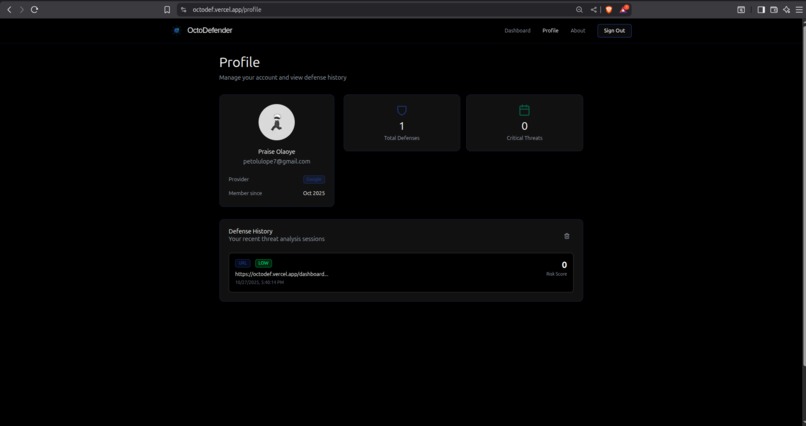
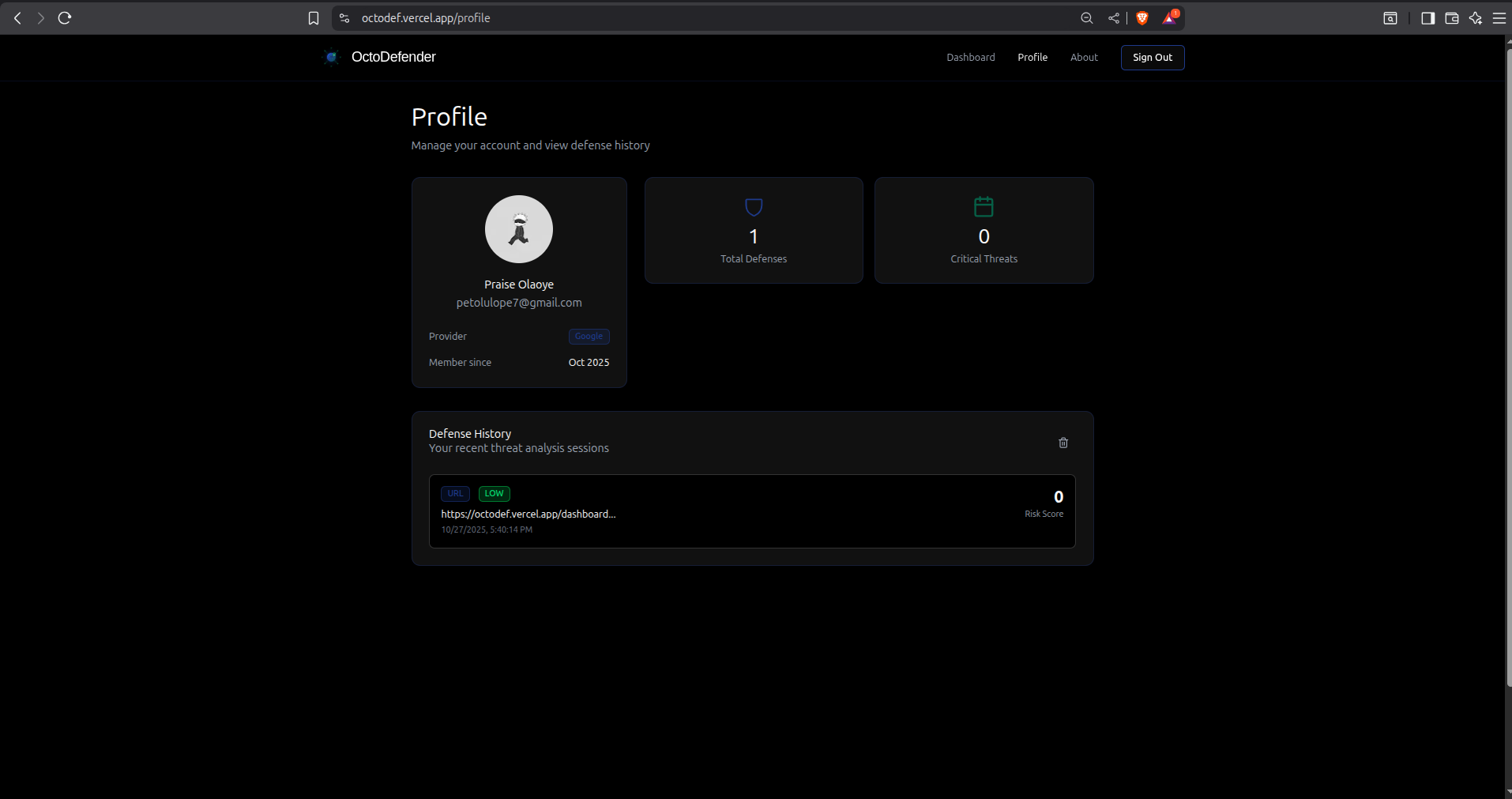
Profile Page
-
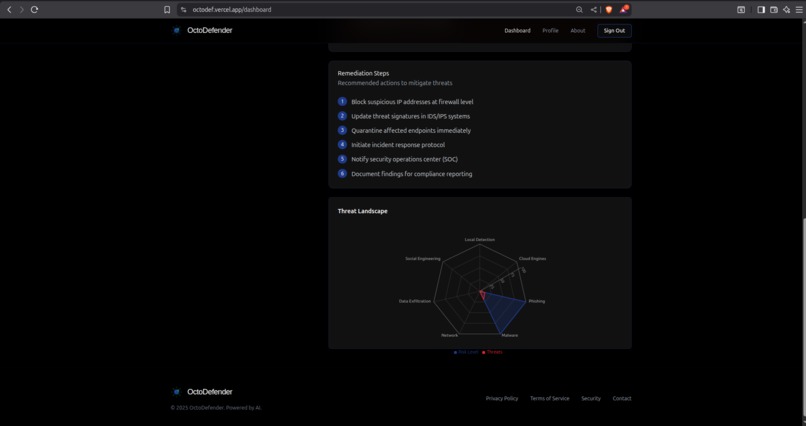
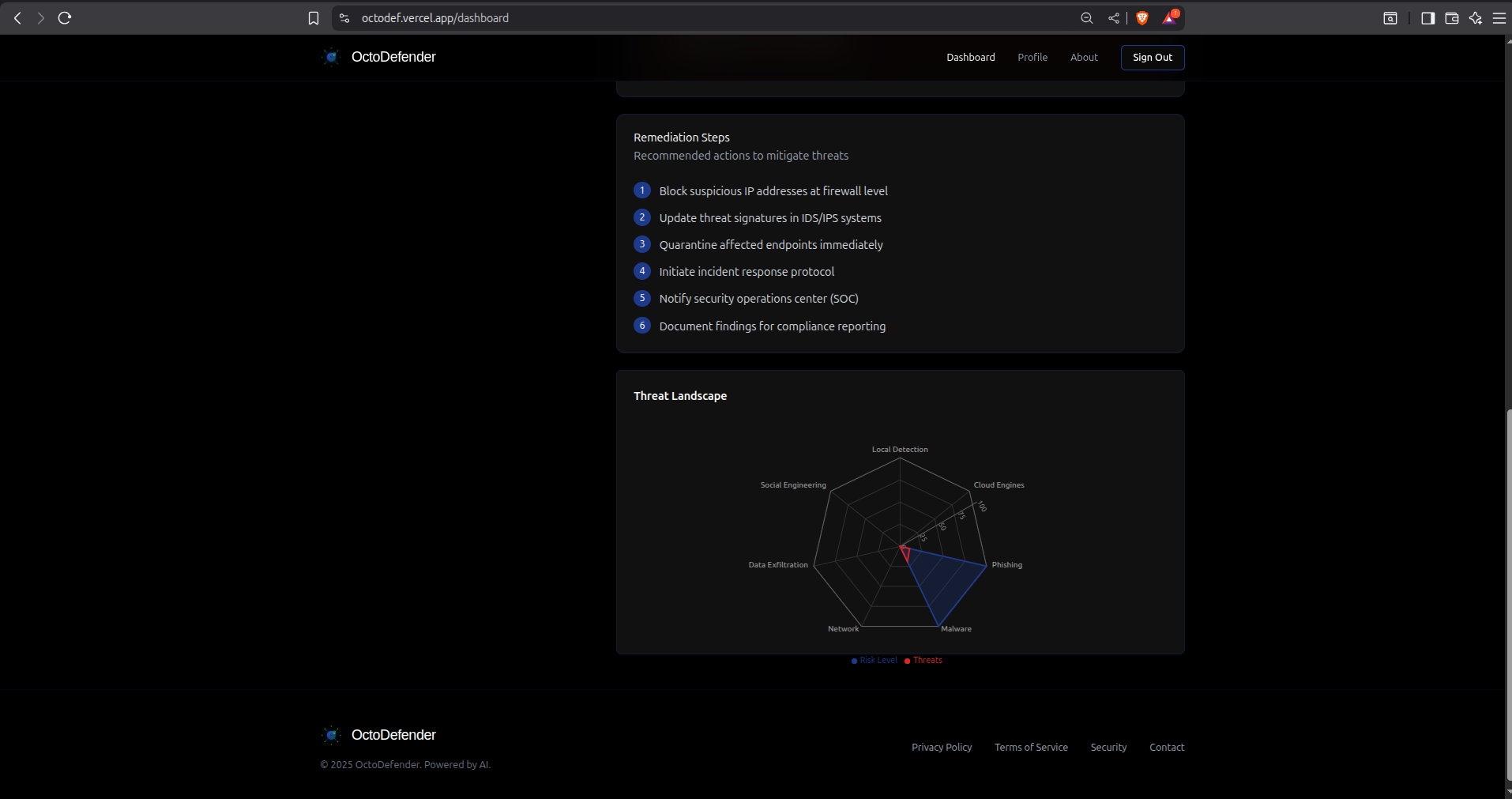
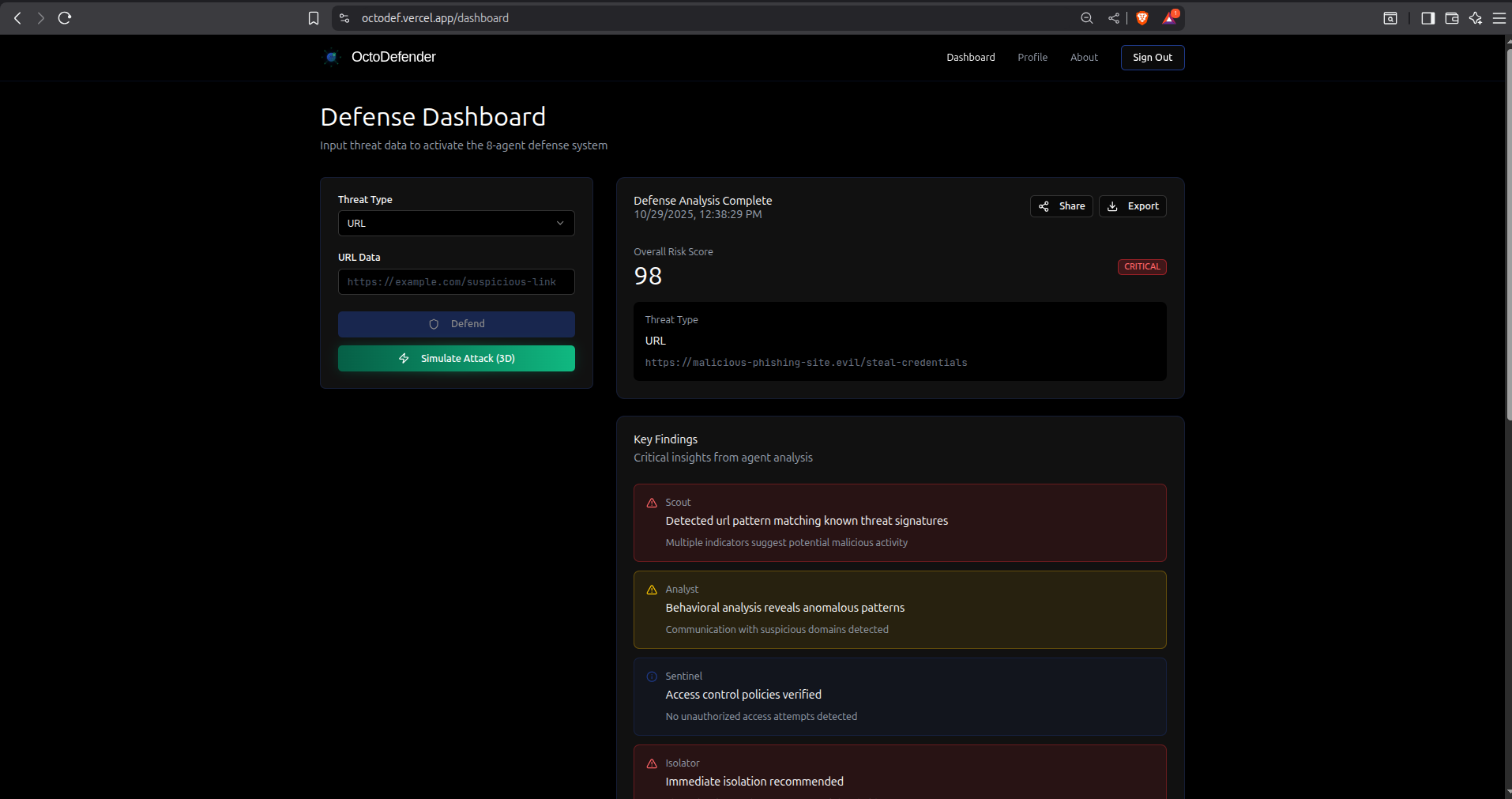
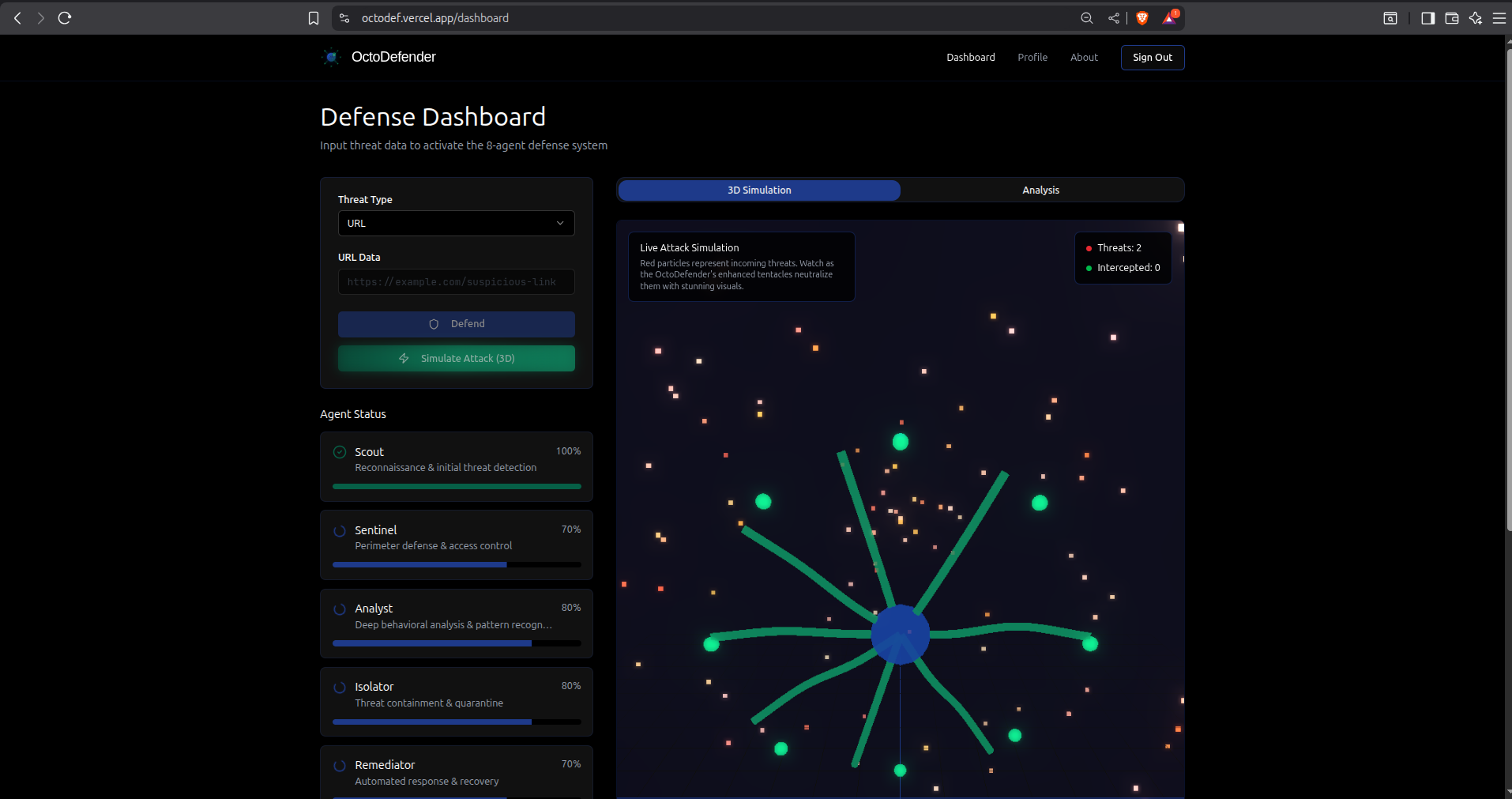
Attack example
-
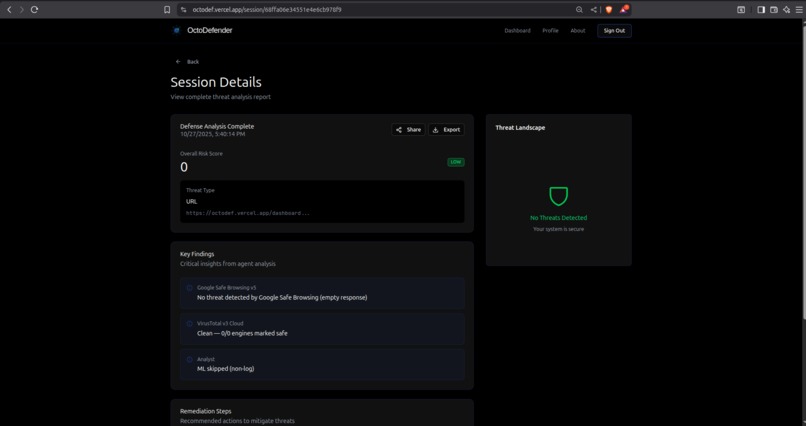
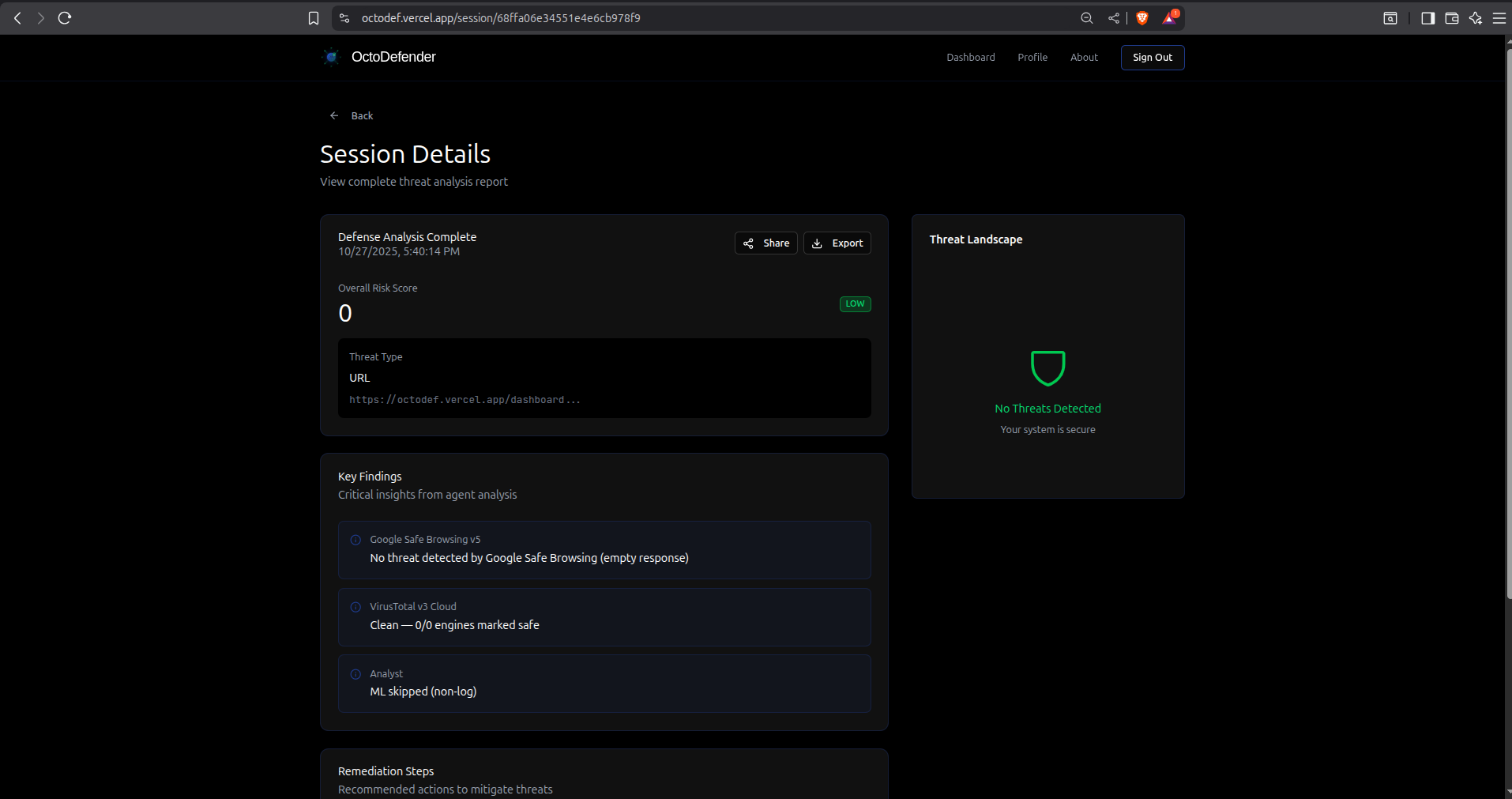
Shareable session/results page with team members or friends
-
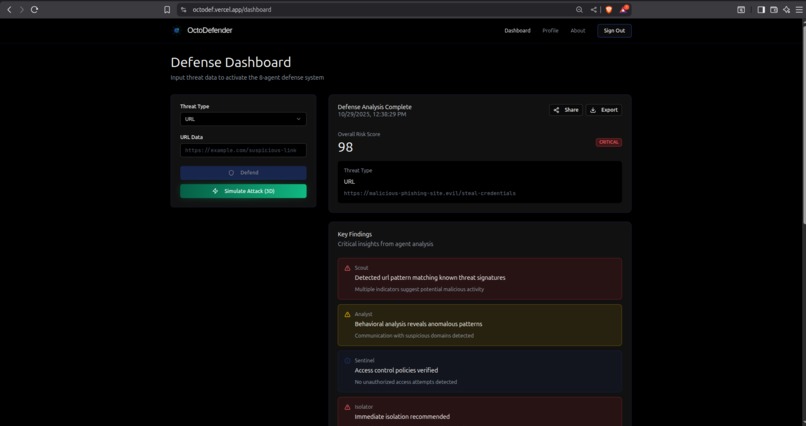
Attack example
-
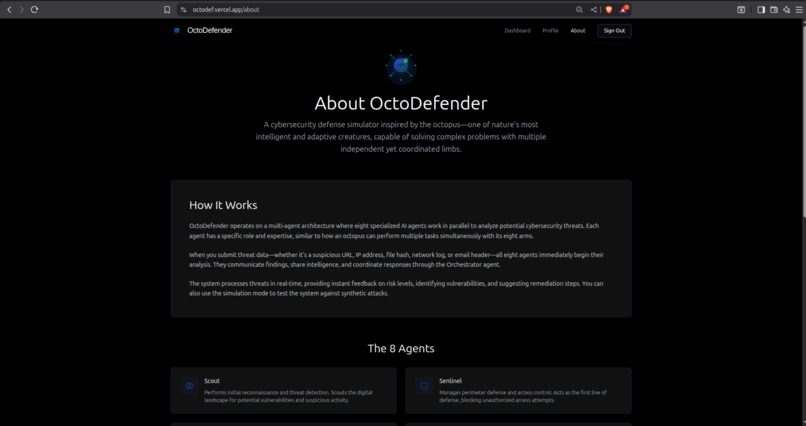
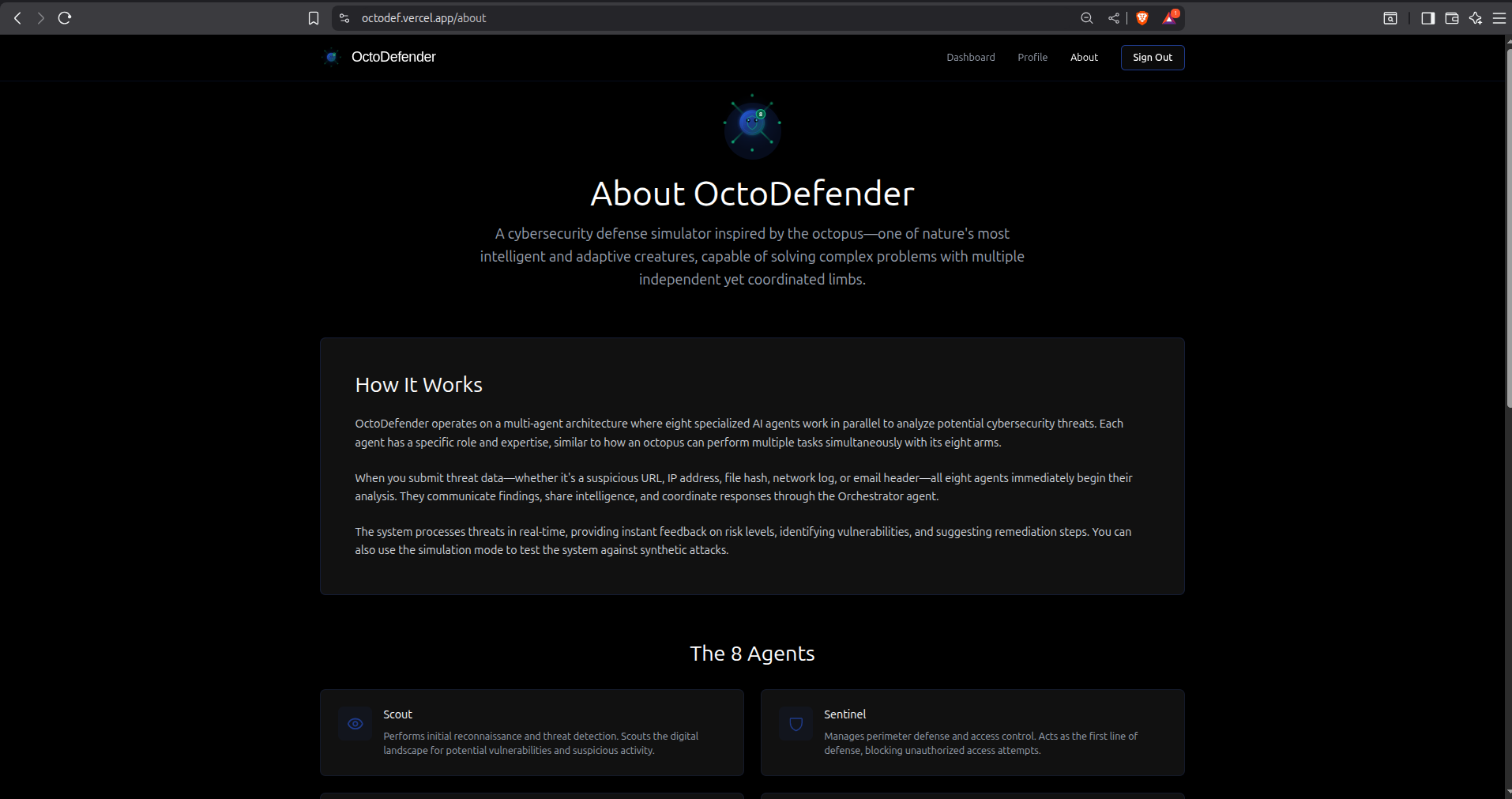
About Page
-
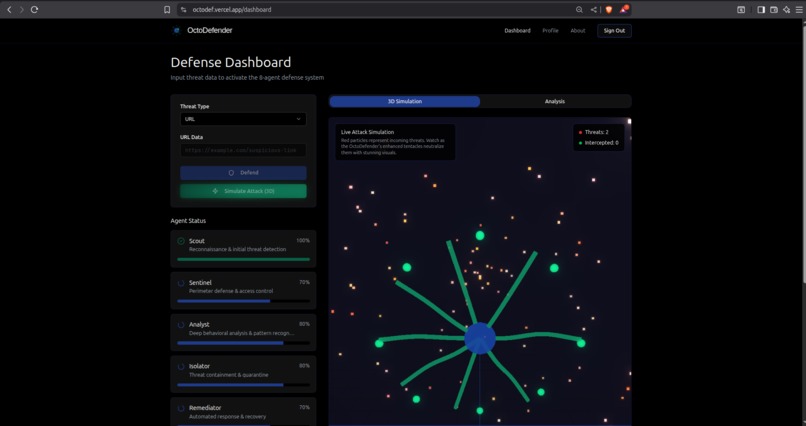
Simulating Attack with threejs
Inspiration
As a self-taught developer who only started learning HTML in January, I’ve spent the past year building project after project to learn by doing. Eventually, I got tired of building just for the sake of learning — I wanted to build something meaningful, something that could actually help people.
That’s when I discovered hackathons. I figured it would be the perfect opportunity to learn, create, and challenge myself — all at once.
When I joined this hackathon (almost at the deadline), I wanted to explore how people handle security online. I realized many users are careless with sensitive information simply because there aren’t easy or engaging ways to analyze or understand it.
That inspired me to build OctoDef, a platform that makes it easy — and even fun — to check how secure URLs, hashes, IP addresses, logs, and emails are, with an engaging Three.js interface to keep users interested while they learn about cybersecurity.
What I Built
OctoDef is a cybersecurity analysis web app that allows users to:
- Analyze URLs, IPs, emails, and file hashes for potential threats
- View real-time security results from multiple APIs
- Log in securely using OAuth (Google, GitHub, Twitter)
- Experience an interactive UI built with Three.js
🔗 Project Links
- 💻 GitHub Repository: OctoDef on GitHub
- 🌍 Live Demo: octodef.vercel.app
- 📖 About Page: octodef.vercel.app/about
⚙️ How I Built It
OctoDef was built with Next.js, my most recently learned framework. Since Next.js is full-stack, it made integrating multiple APIs and managing authentication straightforward.
Here’s a breakdown of the stack and APIs used:
| Component | Tool / API |
|---|---|
| Framework | Next.js |
| Authentication | NextAuth.js (Google, GitHub, Twitter OAuth) |
| Database | MongoDB Atlas |
| UI & 3D Visualization | Three.js |
| Threat Scanning | VirusTotal API |
| IP Reputation | AbuseIPDB API |
| URL Safety | Google Safe Browsing API |
| Malware Analysis | Hybrid Analysis API |
| File Hash Lookup | MalShare API |
What I Learned
- How to integrate multiple cybersecurity APIs into a single unified platform
- Handling Node.js modules inside Next.js environments
- Implementing multi-provider OAuth authentication
- Designing an engaging yet secure user experience
- Understanding the balance between usability and security awareness
Challenges I Faced
“Every bug taught me something new.”
Node.js package compatibility in Next.js
Some Node packages didn’t behave the same way in browser/server environments.
I had to carefully separate backend logic into API routes and use environment variables effectively.
Time pressure
I joined close to the deadline, so planning and development had to happen fast.
Despite that, I managed to implement all the major features and polish the experience.
API rate limits and security keys
Managing multiple external APIs required careful handling of secrets and keys.
Closing Thoughts
Building OctoDef was a turning point for me as a developer. It combined everything I’ve learned so far — from frontend design to backend API integration — and helped me understand how security and creativity can work together.
Hackathons like this prove that you don’t have to be an expert to make something impactful — you just have to start.
Task List
- [x] Built core scanning engine
- [x] Integrated multiple APIs
- [x] Implemented authentication
- [x] Added 3D interface with Three.js
- [x] Deployed to Vercel
This project was: Fun , Challenging , and Rewarding 🏆
Built With
- abuseipdb
- google-safe-browsing
- hybrid-analysis-api
- javascript
- malshare-api
- mongodb
- next-auth
- nextjs
- tailwindcss
- three.js
- typescript
- vercel
- virustotal


Log in or sign up for Devpost to join the conversation.