Inspiration
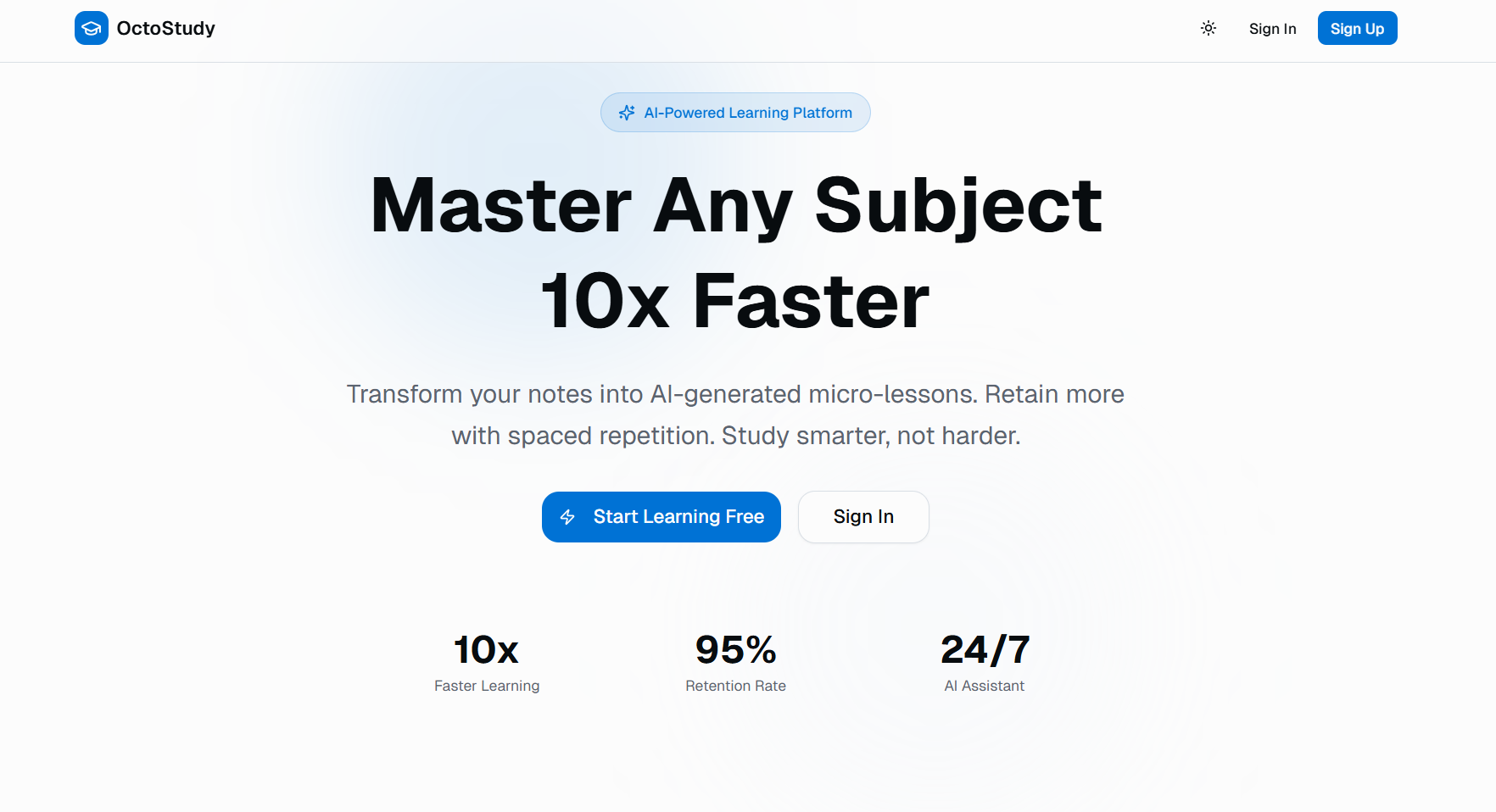
OctoStudy started from a simple observation: rereading notes feels productive but rarely leads to long-term retention. I wanted a low-friction tool that turns passive notes into active learning — short, teacher-like micro-lessons and quick quizzes — and couples that with simple study mechanics (Pomodoro + spaced repetition) so learners actually practice recall.
The octopus metaphor fits naturally: many small tentacles (micro-lessons) working together to improve retention.
What it does
- Converts raw study material (pasted text, PDFs, or web pages) into AI-generated micro-lessons.
- Automatically creates active-recall quizzes (2 MCQs + 1 short answer) for each lesson.
- Schedules reviews using a spaced repetition system (SRS) to optimize memory retention.
- Runs focused study sessions with an integrated Pomodoro timer.
- Tracks progress with simple, meaningful metrics (cards due, accuracy, streak).
How we built it
- Frontend: Next.js (App Router) + TypeScript + Tailwind for a clean, responsive UI.
- Backend: Next.js API routes handling content ingestion, LLM calls, and SRS updates.
- AI layer: Openrouter-compatible LLM with carefully designed prompts that return strictly structured JSON.
- Database: Postgres (Supabase) for production, with a lightweight SQLite/JSON fallback for local development.
- Learning logic: A simplified SM-2 spaced repetition algorithm implemented in JavaScript and covered with unit tests.
- Deployment: Vercel for hosting, Supabase for database.
Challenges we ran into
- Ensuring LLM output consistency; early responses often broke JSON structure, requiring prompt refinement and validation retries.
- Handling PDF and web content extraction, which varies widely in formatting and quality.
- Designing an SRS system that is simple, explainable, and stable under repeated reviews.
- Balancing scope and polish as a solo developer — choosing a flawless core workflow over extra features.
Accomplishments that we're proud of
- A complete, demo-ready flow: import → generate → study → schedule reviews.
- Reliable LLM prompts that consistently generate structured lessons and quizzes.
- A fully implemented and tested spaced repetition engine.
- A smooth, responsive study session UI with real-time feedback.
- A development mode that allows testing without excessive API usage.
What we learned
- Prompt engineering is as critical as traditional coding in AI-first applications.
- Active recall and spaced repetition dramatically outperform passive review.
- Smaller, well-polished features impress more than many unfinished ones.
- Validating and testing AI outputs is essential for reliability.
What's next for OctoStudy
- Add user accounts and syncing with Supabase Auth.
- Improve lesson relevance using vector-based semantic search.
- Enhance the SRS with response-time awareness.
- Release a mobile-friendly PWA for offline study.
- Add deeper analytics to visualize retention over time.
Built With
- llm
- next
- openrouter
- react
- sql
- supabase
- tailwind
- typescript
- vercel

Log in or sign up for Devpost to join the conversation.