-
-
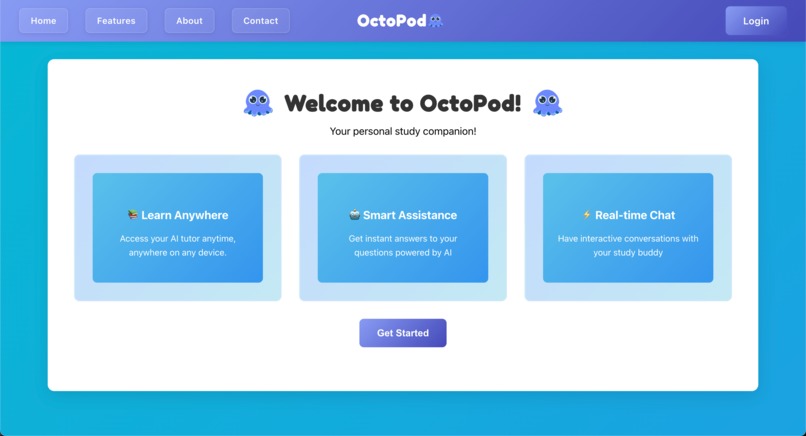
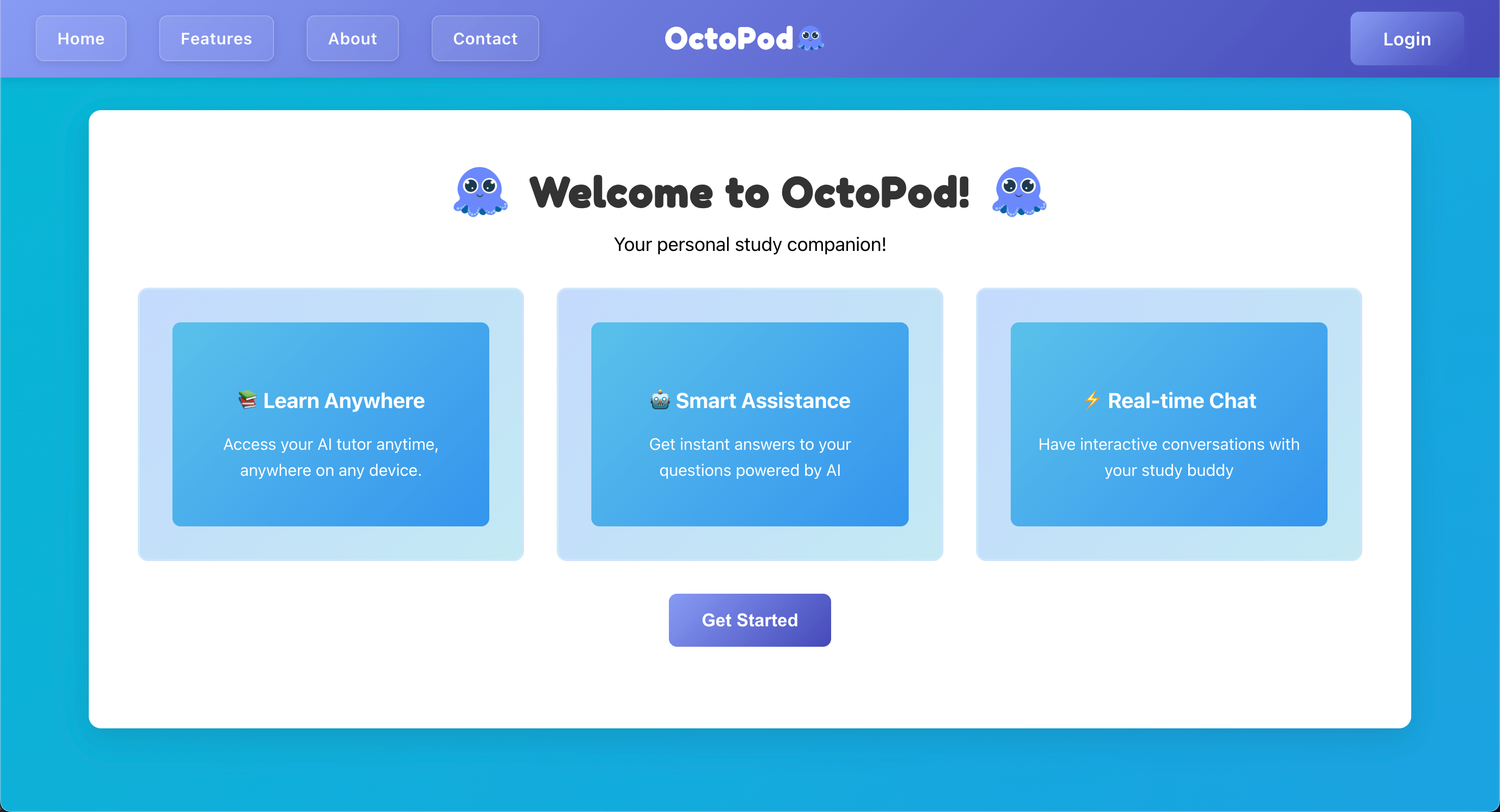
Home Page
-
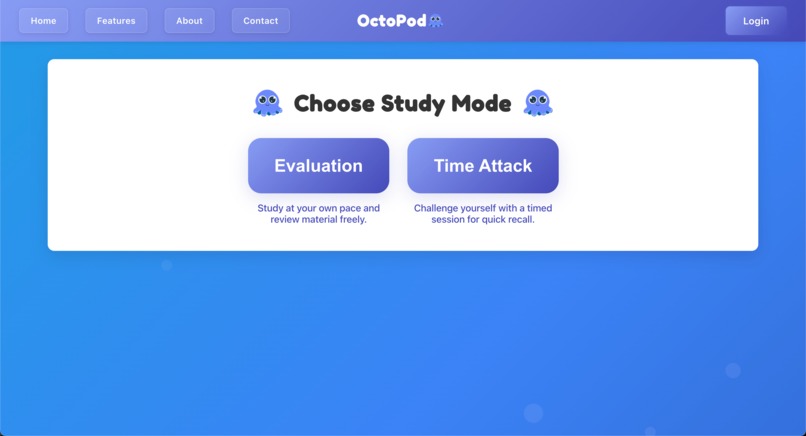
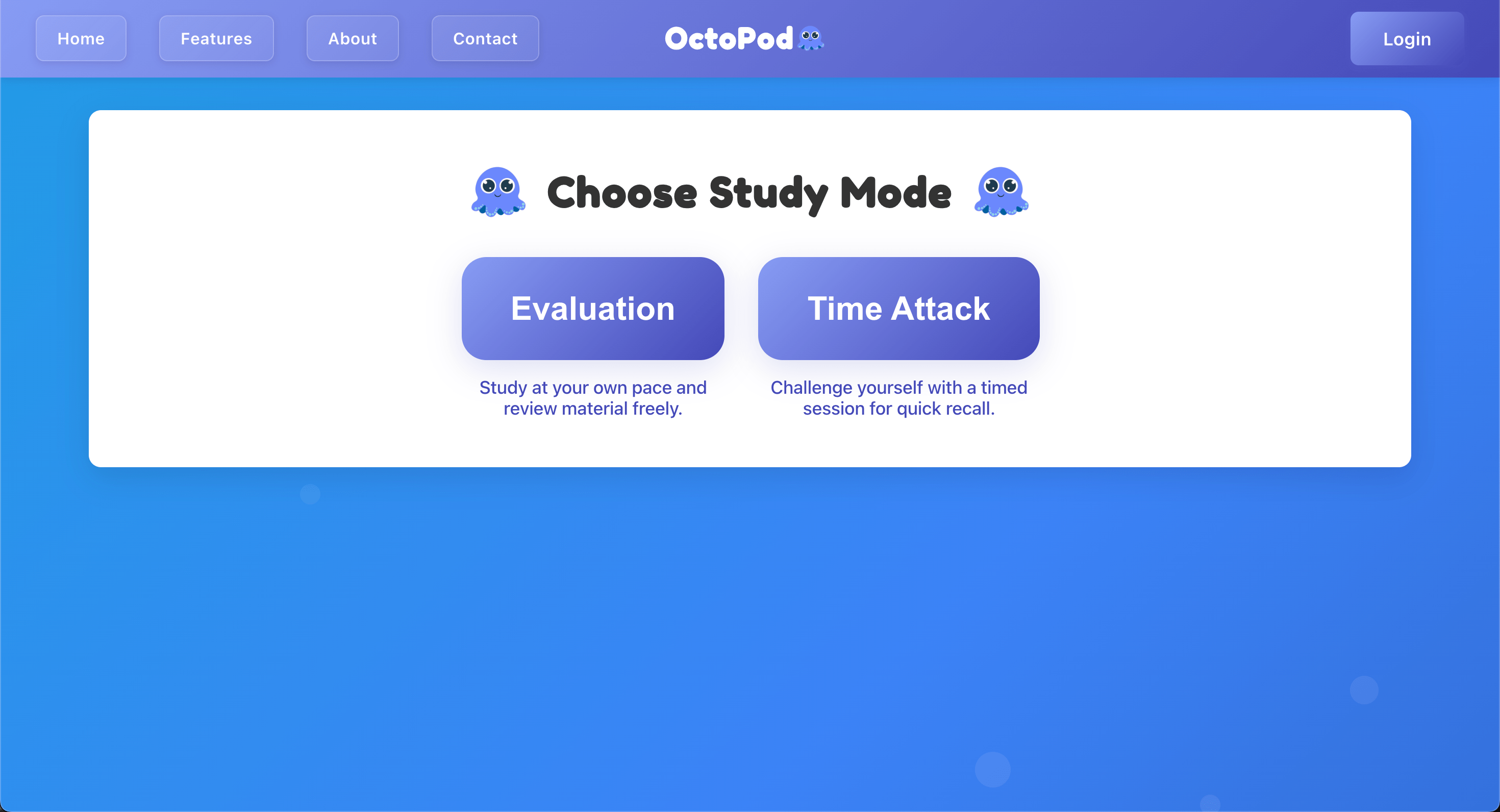
Learning Modes
-
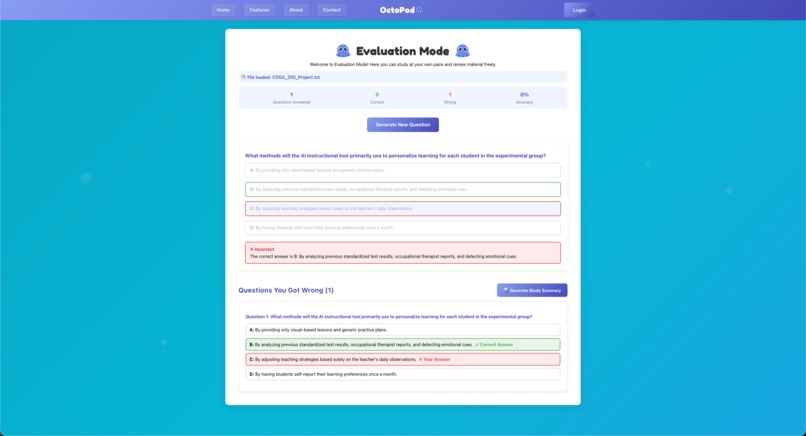
Evaluation Mode
-
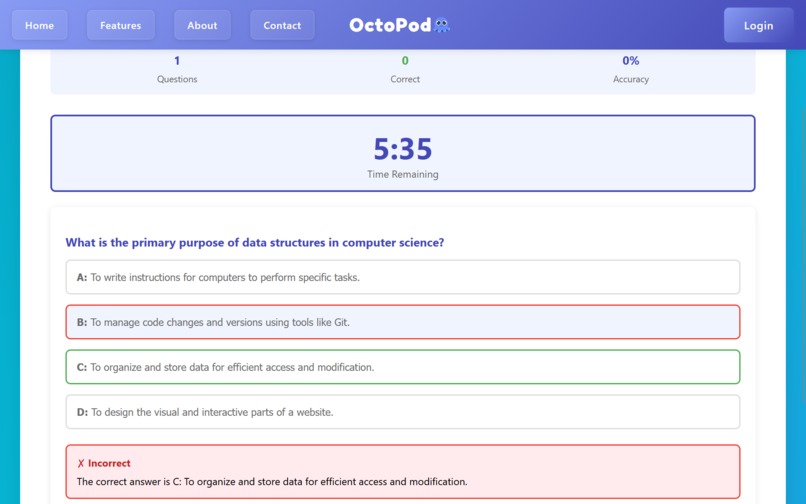
Time attack Mode
-
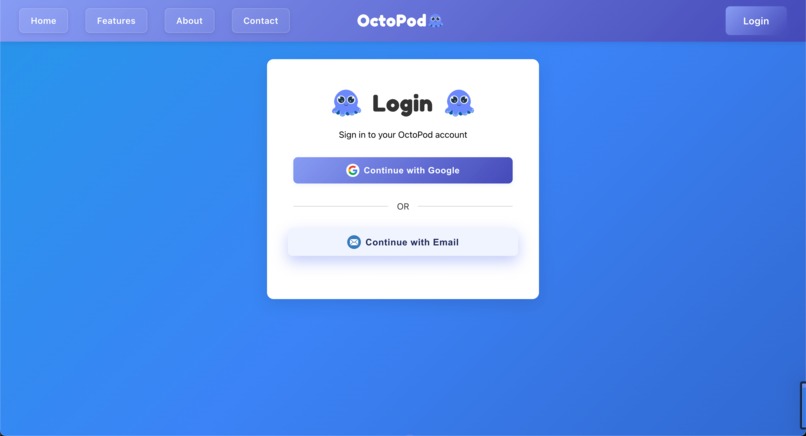
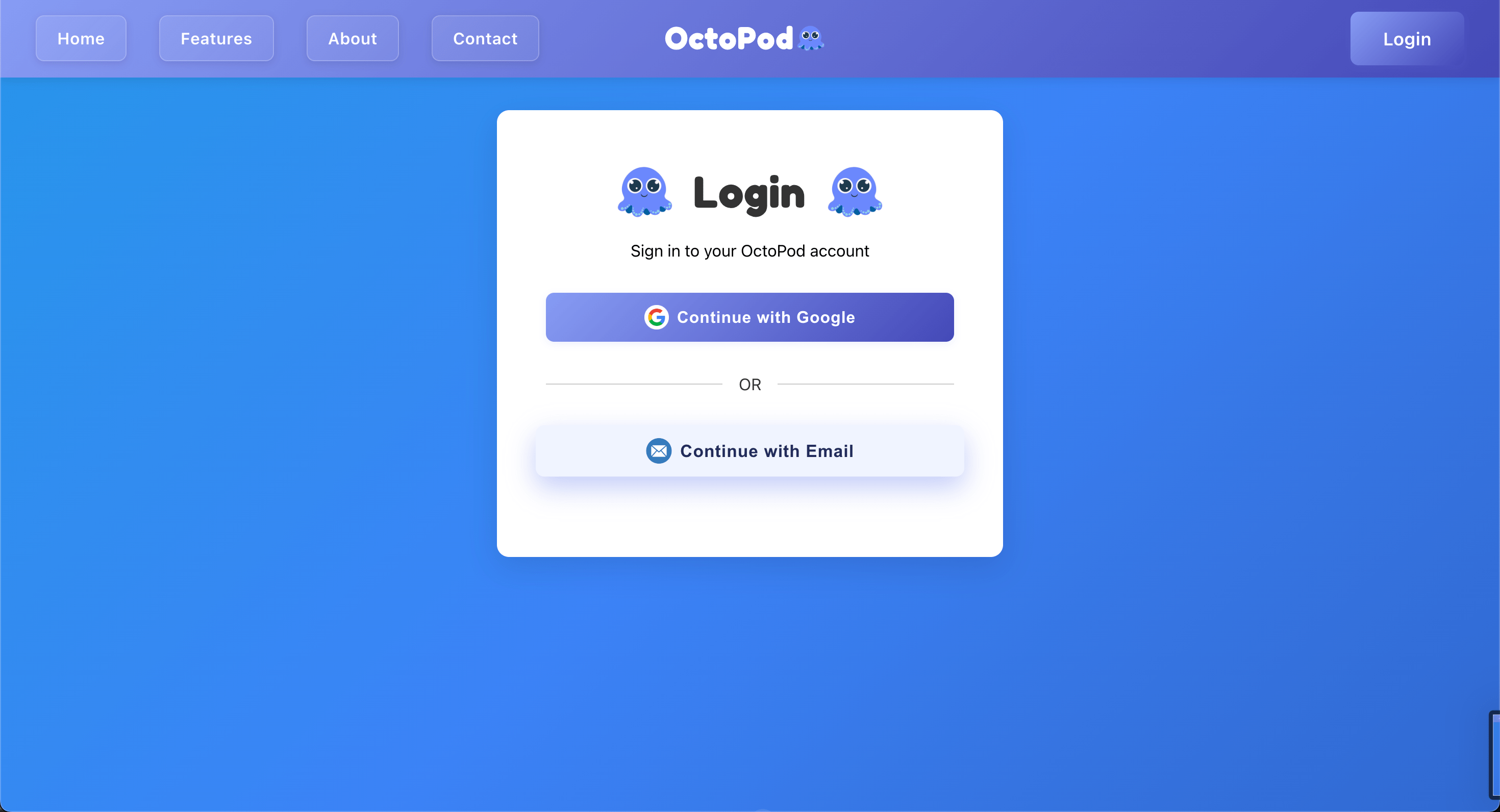
Login
-
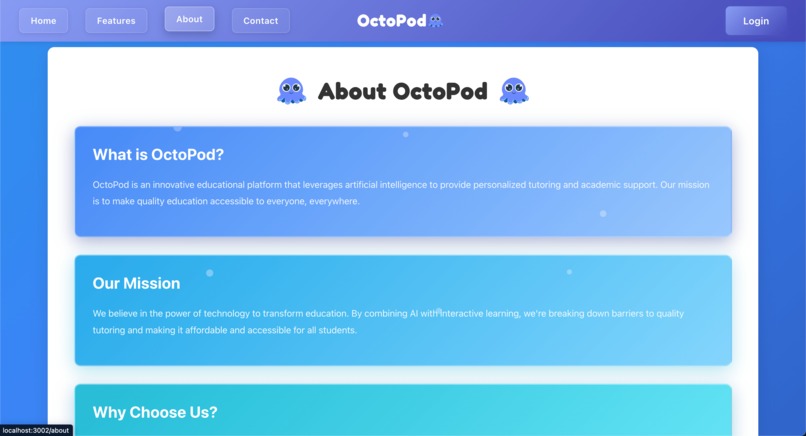
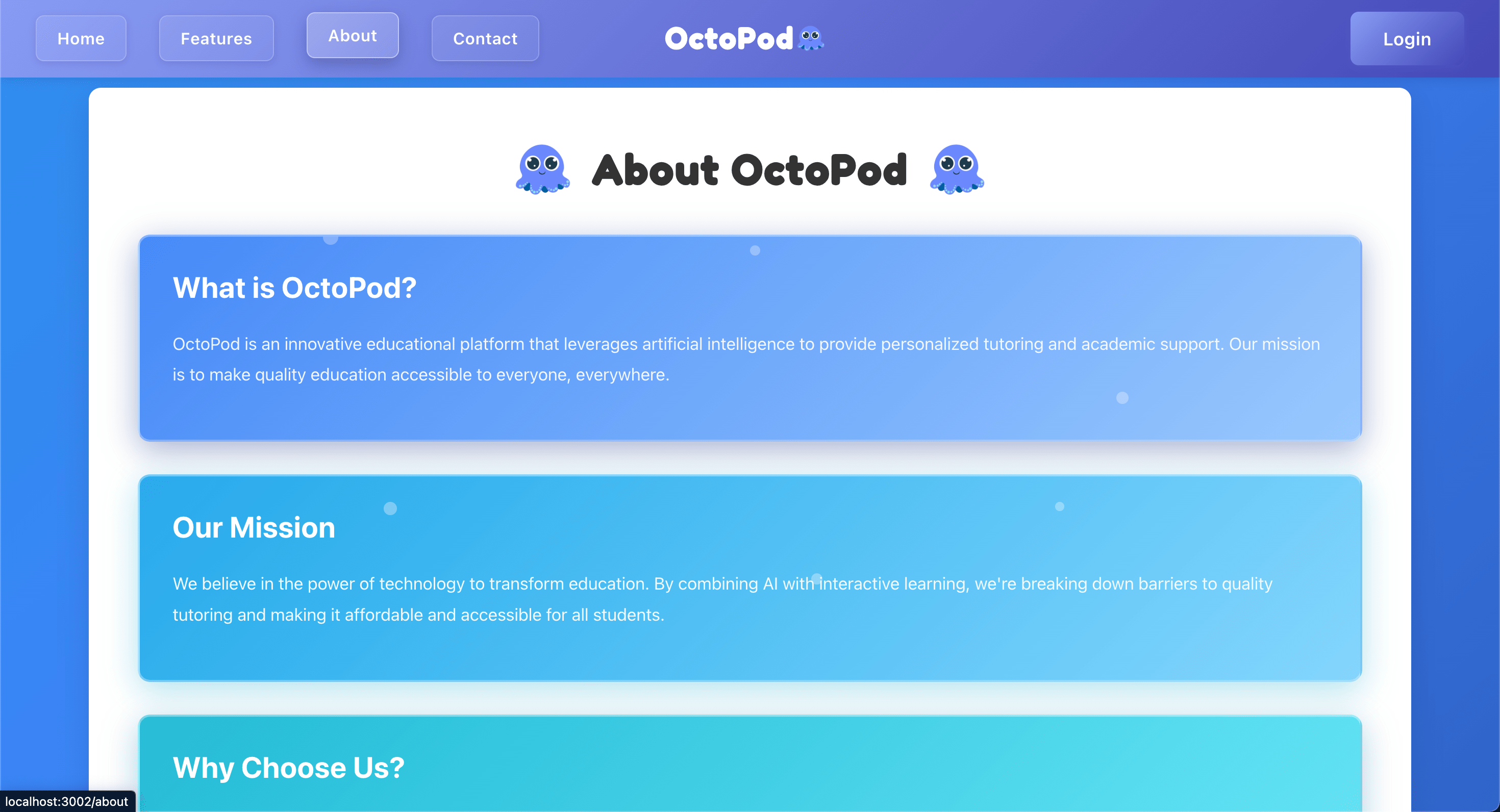
About
-
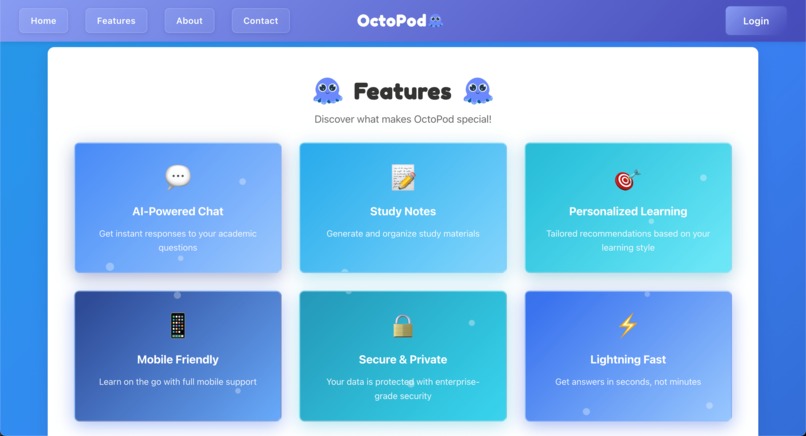
Features
-
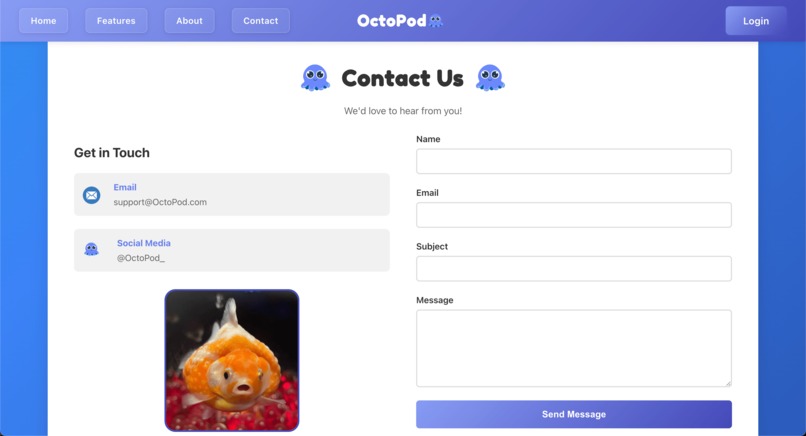
Contact


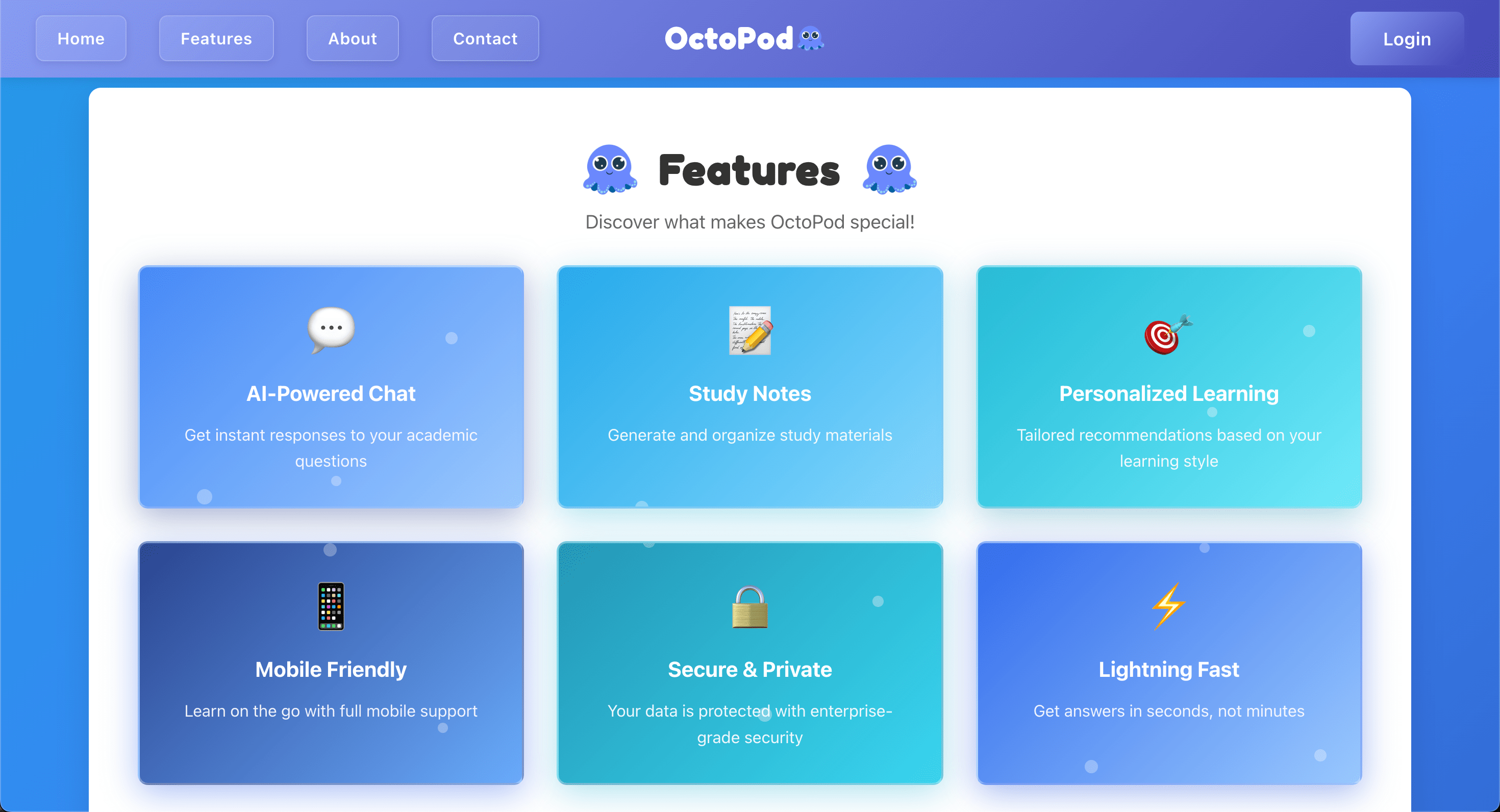
Inspiration
Amid the rapid evolution of the world today, it can feel easy to be left behind. From the development of AI to the rising competition for higher education, it has become increasingly important to strive to learn faster than ever before. The wide variety of socioeconomic and cultural backgrounds among students only intensifies this problem. As students ourselves, we recognize the diverse range of abilities and learning styles of students from elementary school to post-secondary school. We wanted to create an affordable tool that anyone can use to shrink the education gap and make quality education accessible for everyone.
What it does
Often, the most difficult part is knowing when you have truly grasped the concept. OctoPod solves this problem by providing procedurally generated practice problems based on the concepts the student is trying to study. OctoPod receives the student’s notes as input and can generate endless multiple-choice questions for students to practice on. A summary at the end provides feedback on topics that the student struggles with, and allows them to save time by streamlining their studies.
How we built it
OctoPod was developed with ReactJS, JavaScript, HTML, and CSS. Claude Sonnet 4.5 helped with much of the raw programming.
Challenges we ran into
We encountered numerous roadblocks during our development process. The most frustrating was the number of similar AI education websites online, which makes it very difficult to do:
- Differentiating our product from others
- Collecting accurate and consistent responses from ai models
- Learning how to use new languages and APIs.
- Debugging
Accomplishments that we’re proud of
We successfully built our first full web app from scratch, learning how to structure pages with HTML, style them with CSS, and bring everything to life using React.js. Along the way, we figured out how to manage components, handle user interactions, and connect different parts of the app into a smooth, functional experience. Overall, we’re proud of what we've learned and how far our technical skills have grown in a short time.
What we learned
We learned how to build a web app from the ground up, using HTML for structure, CSS for styling, and React.js to create interactive, dynamic features.
What's next for OctoPod
With a few small tweaks, OctoPod will be able to accept a variety of file formats, including PDFs, videos, and audio. Further in the future, OctoPod has the potential to evolve into a full-fledged AI tutor. Its question generation capabilities and feedback encourage daily practice and improvement. It can keep engagement by introducing streaks and daily goals. It may also be able to plan weekly study schedules and assign homework.

Log in or sign up for Devpost to join the conversation.