-
-
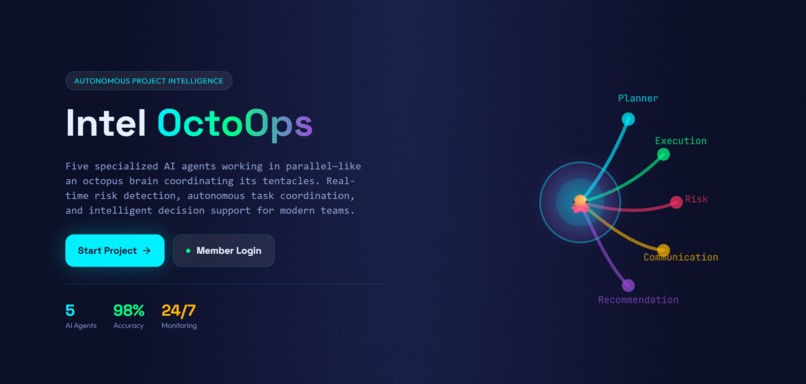
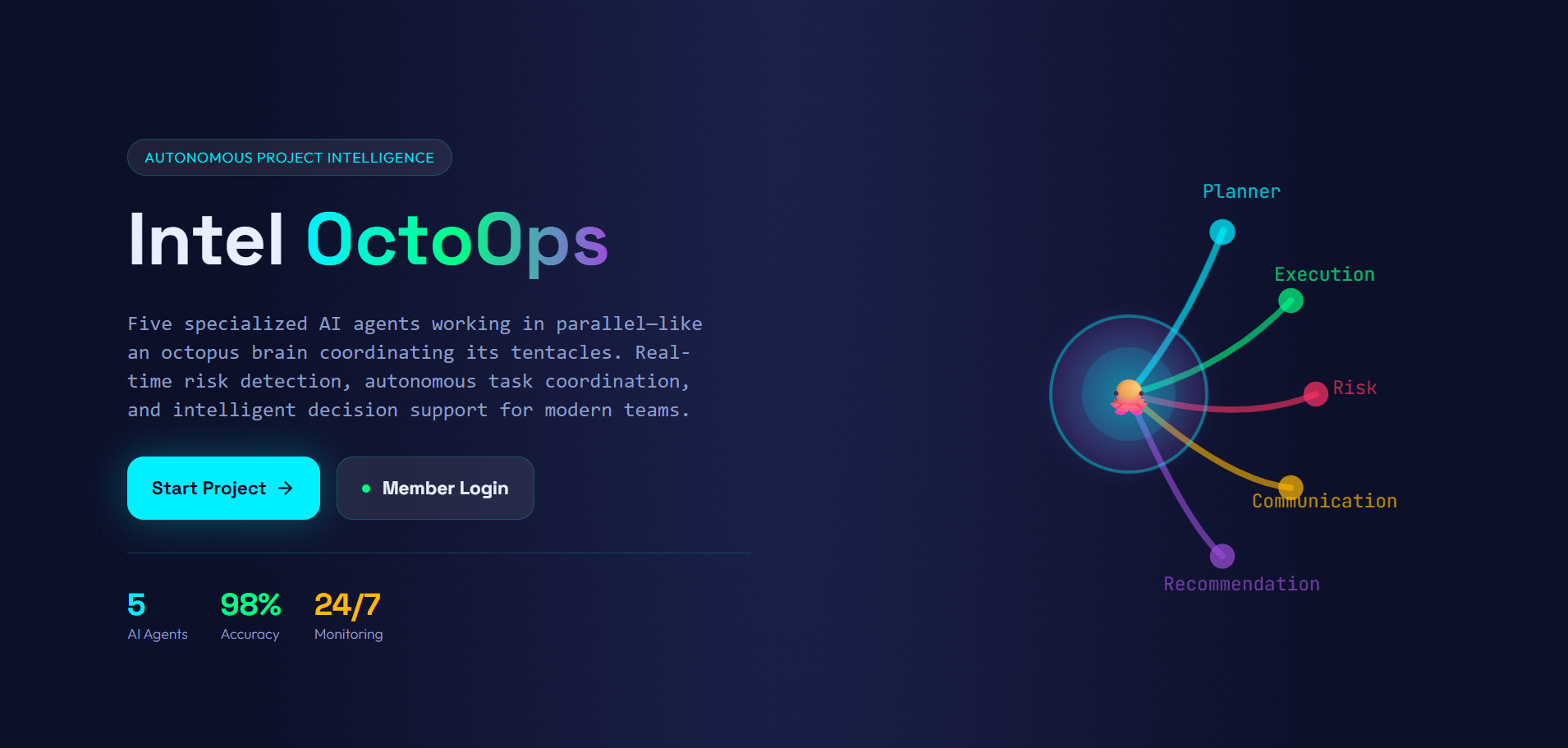
OctoOps acts like an octopus brain for teams coordinating tasks, decisions, and risks across multiple AI agents.
Inspiration
Inspired by the octopus, a creature known for intelligent multitasking and distributed decision-making, we wanted to build a system that could think like a project leader, monitor many moving parts at once, and step in before things go wrong. That idea became OctoOps.
What it does
OctoOps is a multi-agent AI project manager that actively helps teams plan, execute, and deliver projects. Instead of being a passive task tracker, OctoOps: Breaks project briefs (text or images) into structured tasks and milestones Assigns tasks and tracks progress in real time Predicts risks like delays, overload, and blocked work Sends proactive notifications and reminders via email or Slack Provides recommendations and future predictions to guide better decisions Each responsibility is handled by a specialized AI agent, working together like the tentacles of an octopus.
How we built it
Frontend: Next.js with Tailwind for a clean, agent-centric UI Backend: Node.js and Express for orchestration and task logic AI Layer: Multiple specialized AI agents (Planner, Execution, Risk, Communication, Recommendation) coordinated through a central controller Multimodal Input: Text and image inputs allow OctoOps to understand project briefs, whiteboards, and diagrams Data Layer: Structured project memory for tasks, deadlines, team members, and decisions Notifications: Automated task assignments and deadline reminders via email or Slack UI Concept: An agentic dashboard where each AI agent is visually represented and animated based on activity Each agent reasons independently and contributes structured insights that are synthesized into clear, actionable outcomes.
Challenges we ran into
Designing clear boundaries between agents to avoid overlapping responsibilities Making agent decisions explainable instead of “black box” responses Keeping the MVP focused while still demonstrating true agentic behavior Structuring project data so the AI could reason consistently across tasks, timelines, and people
Accomplishments that we're proud of
Built a working multi-agent AI system with real coordination and decision synthesis Successfully processed both text and image-based project inputs Implemented proactive task notifications and reminders Designed an agentic UI concept that visually explains AI reasoning Created a solution that feels practical, scalable, and useful beyond the hackathon
What we learned
Agentic AI systems are far more powerful when roles are clearly defined Structured data is critical for reliable AI reasoning Proactive systems are more valuable than reactive tools Visualizing AI activity dramatically improves trust and understanding
What's next for OctoOps
Add deeper integrations with tools like GitHub, Notion, and Jira Expand predictive capabilities using historical project data Introduce organization-level intelligence through OctoMind Improve the agentic UI with richer animations and timelines Launch OctoOps as a collaborative SaaS for startups and small teams
Built With
- gemini
- mongodb
- nextjs
- node.js
- onrender
- typescript
- vercel
- websockets


Log in or sign up for Devpost to join the conversation.