-
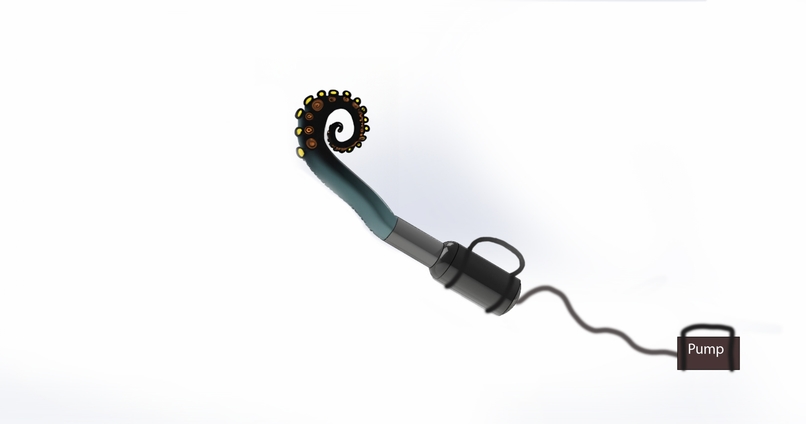
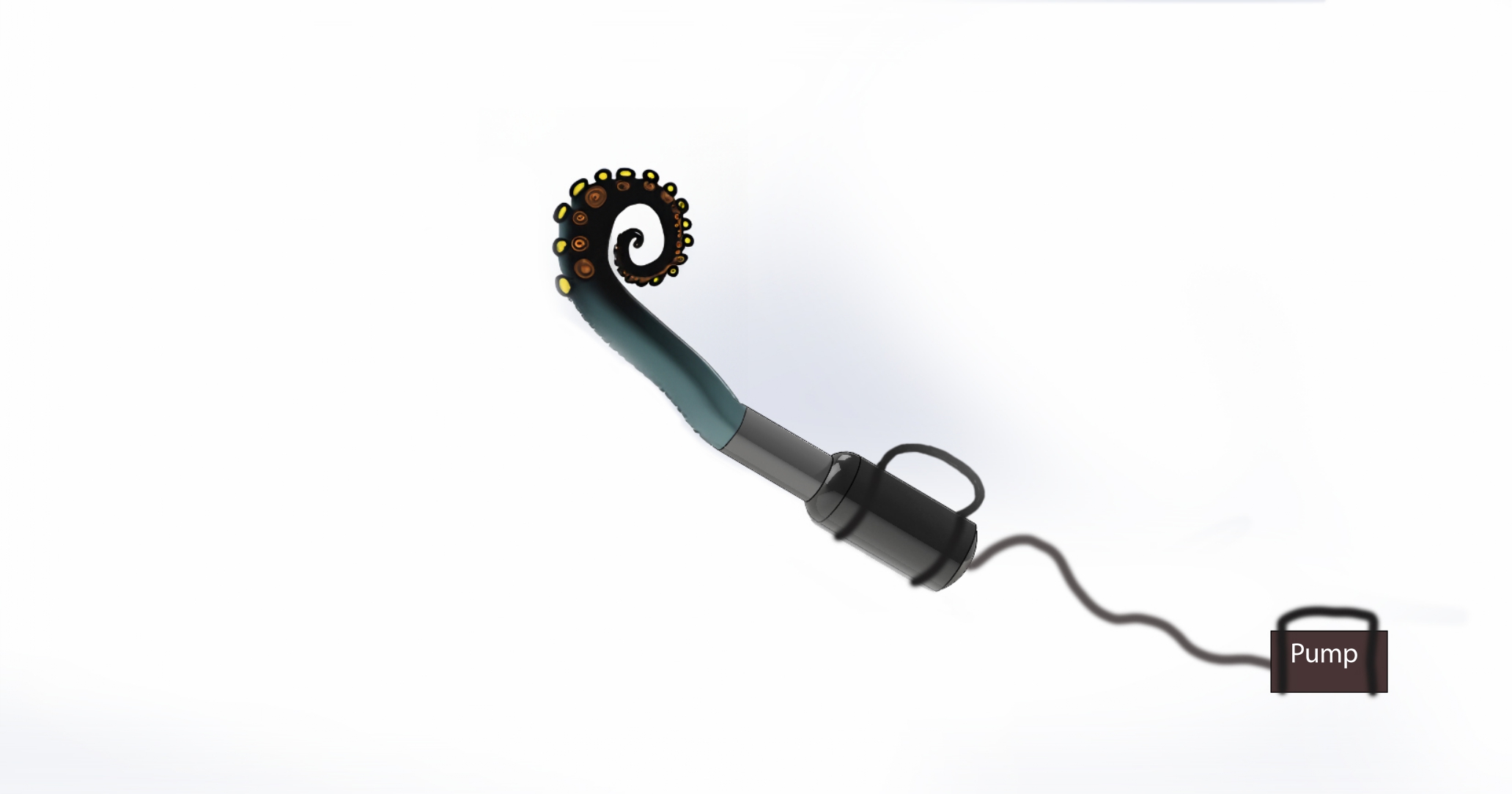
Final 2D Prototype
-
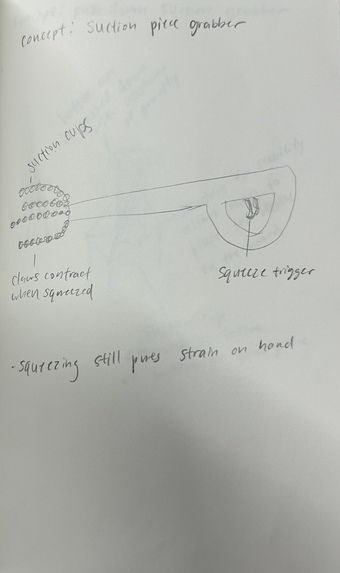
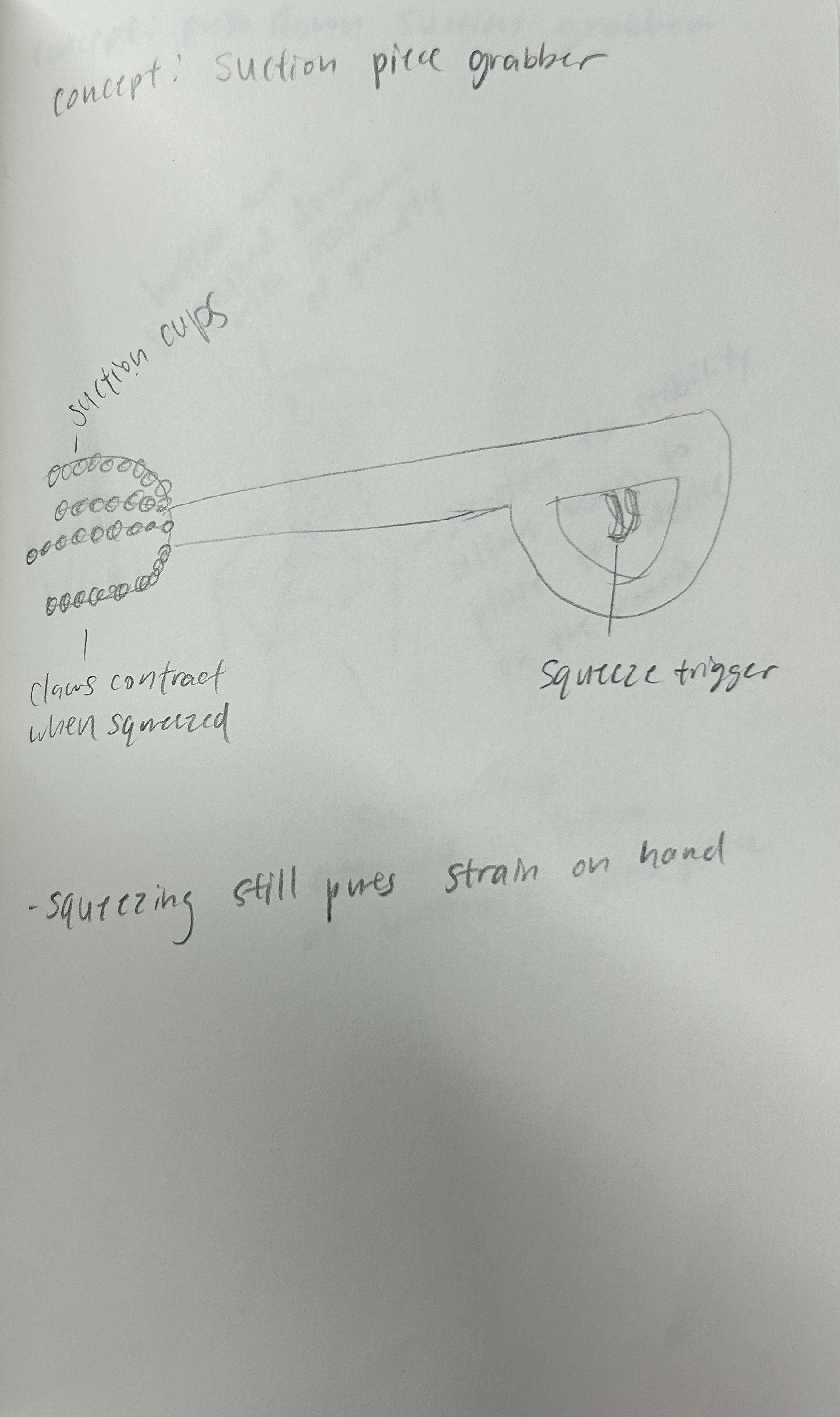
Concept 1: Suction Piece Grabber
-
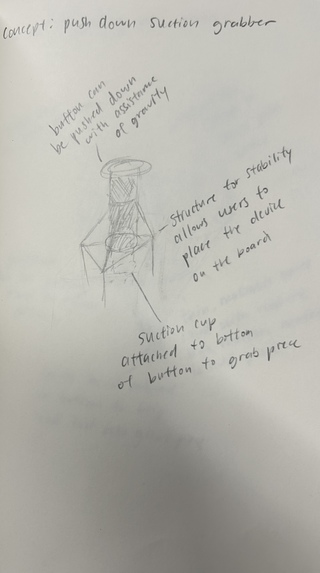
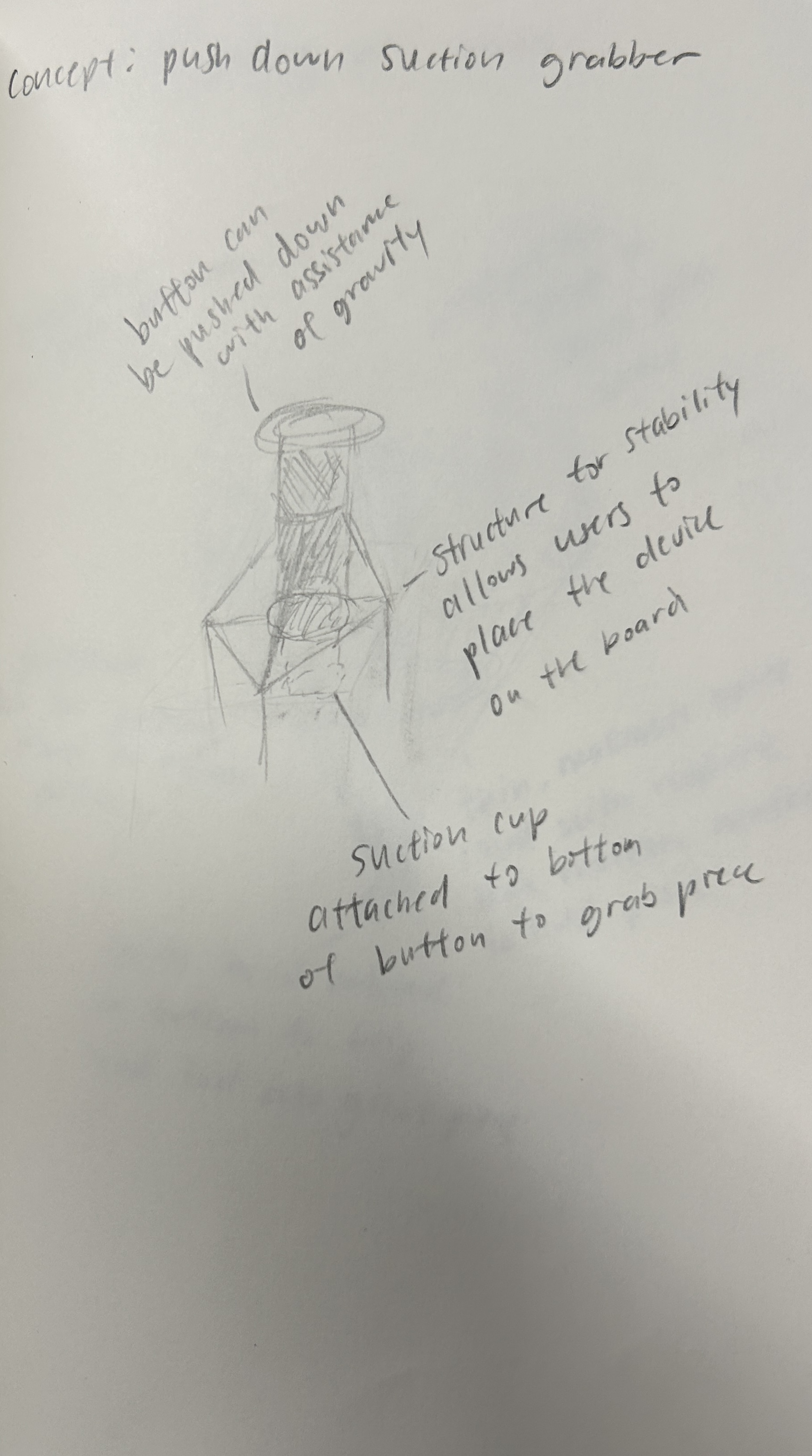
Concept 2: Push Down Suction Grabber
-
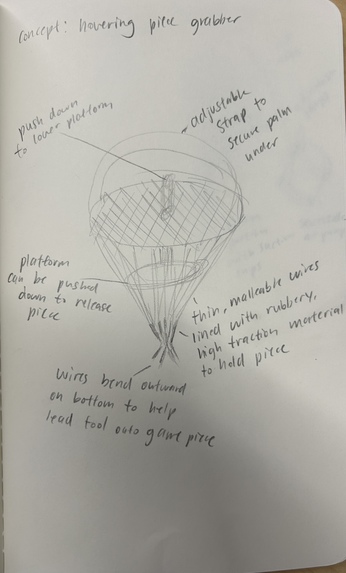
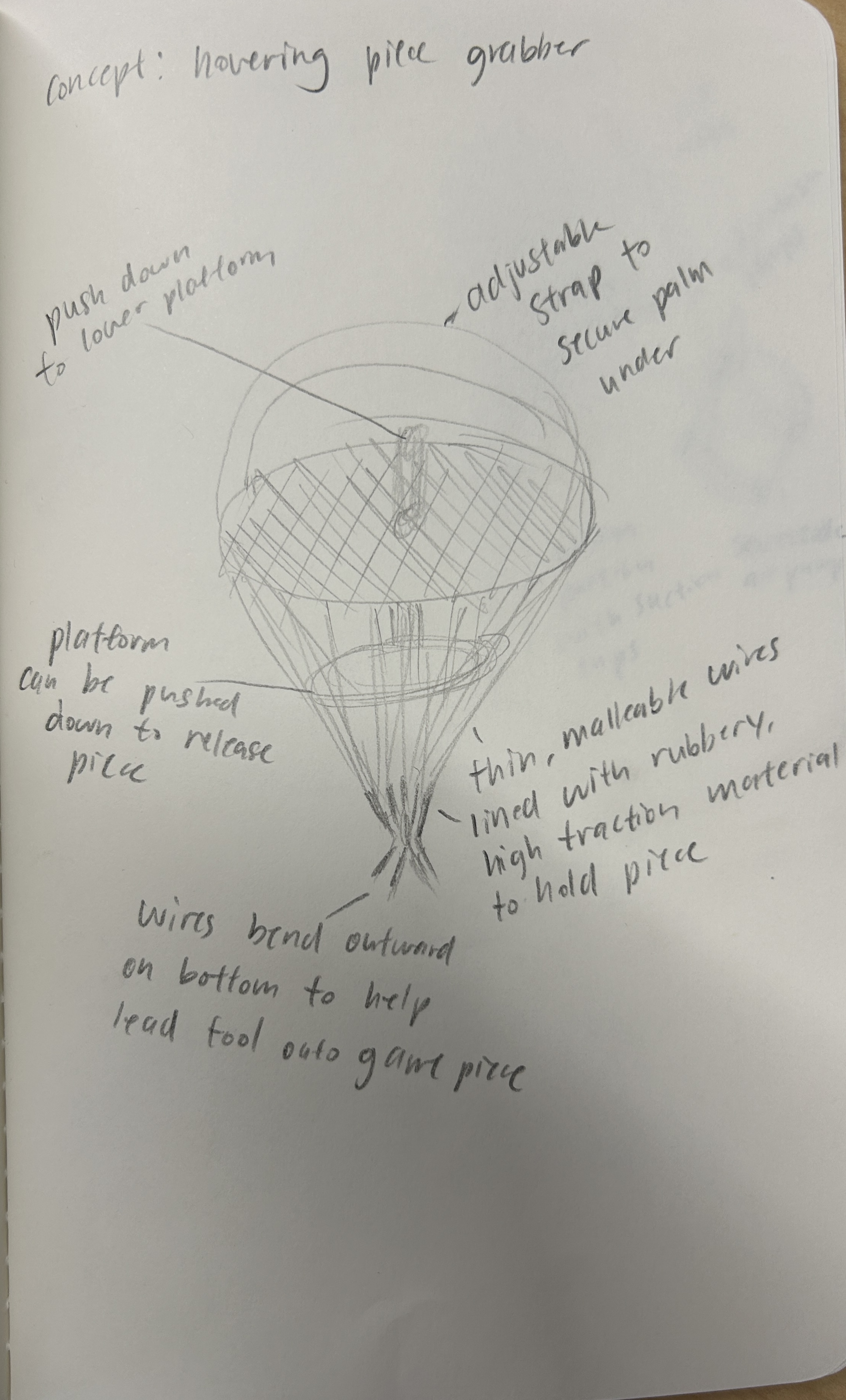
Concept 3: Hovering Piece Grabber
-
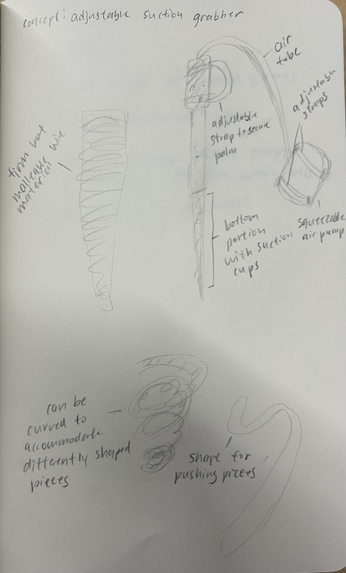
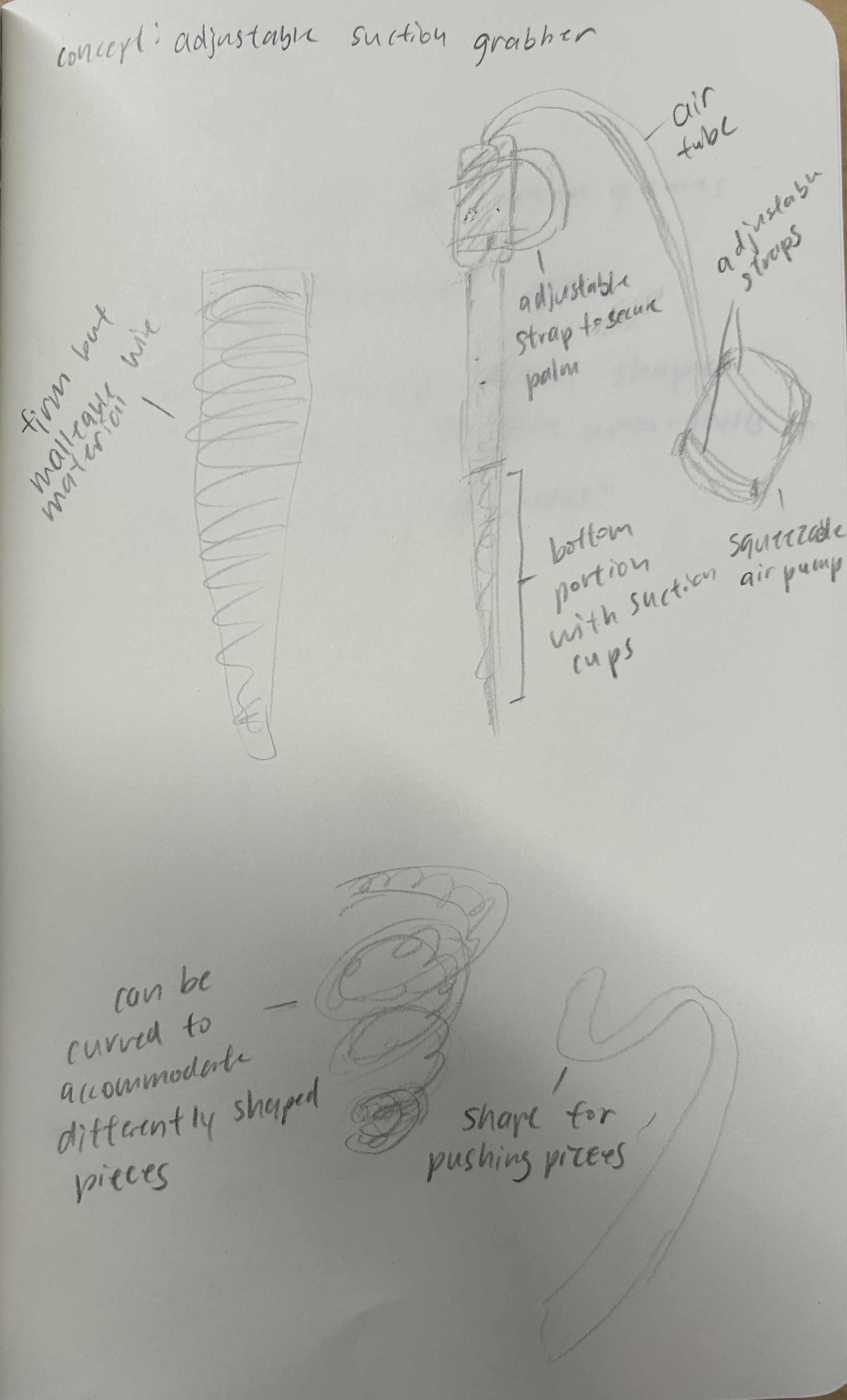
Final Concept: Adjustable Suction Grabber
-
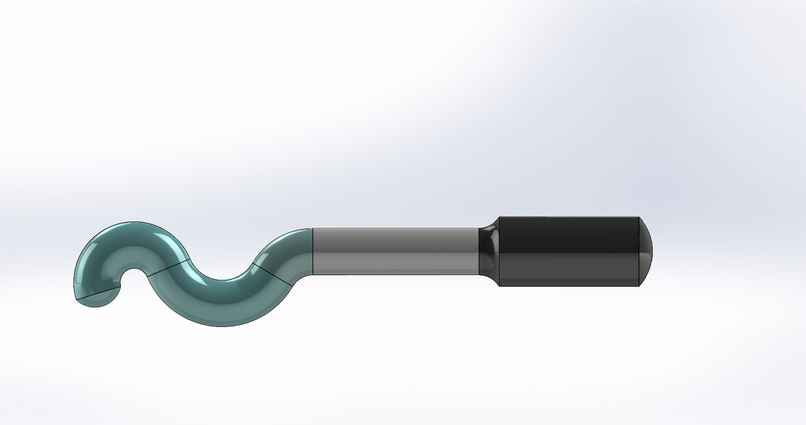
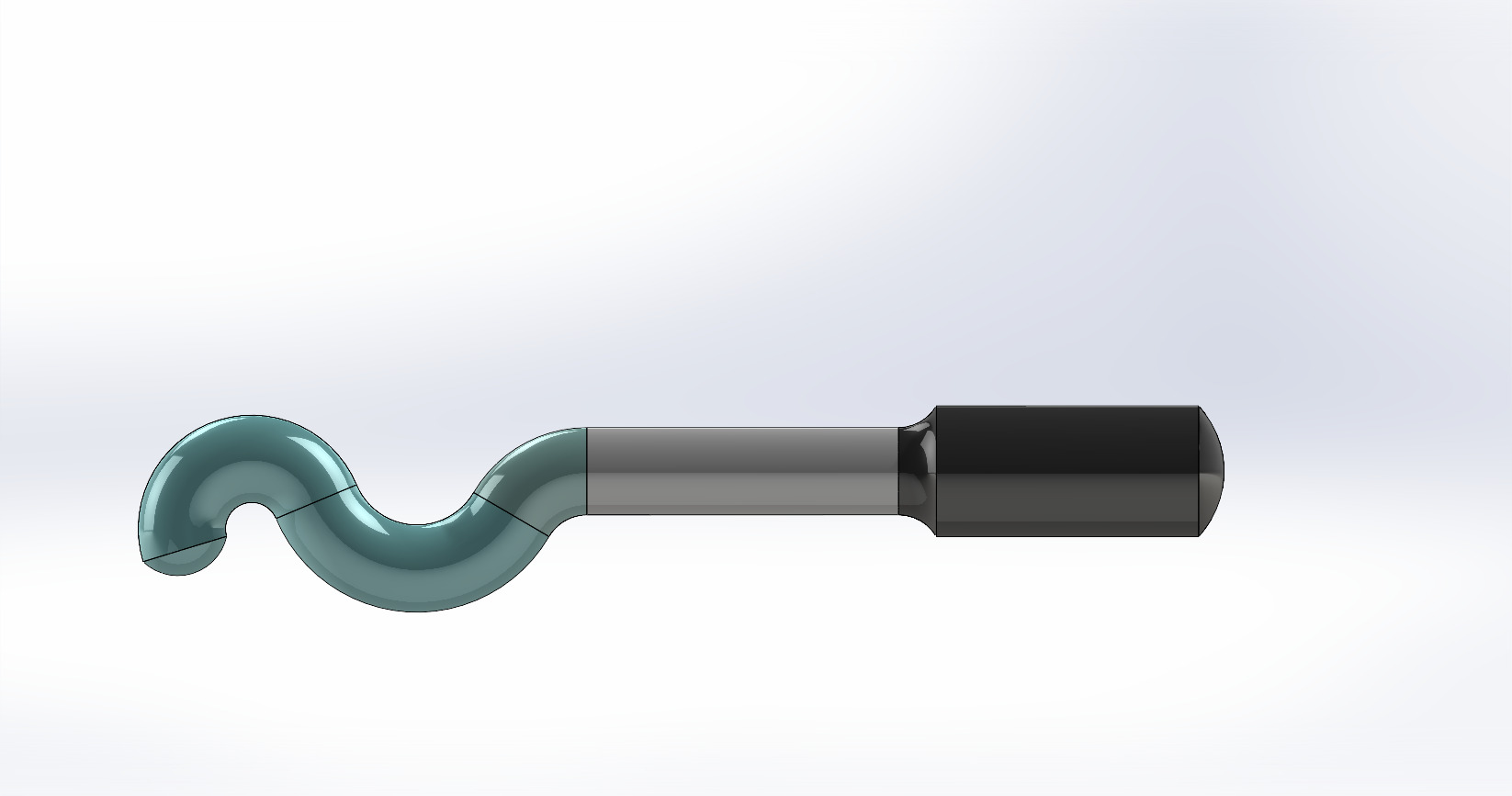
SolidWork Concept 1
-
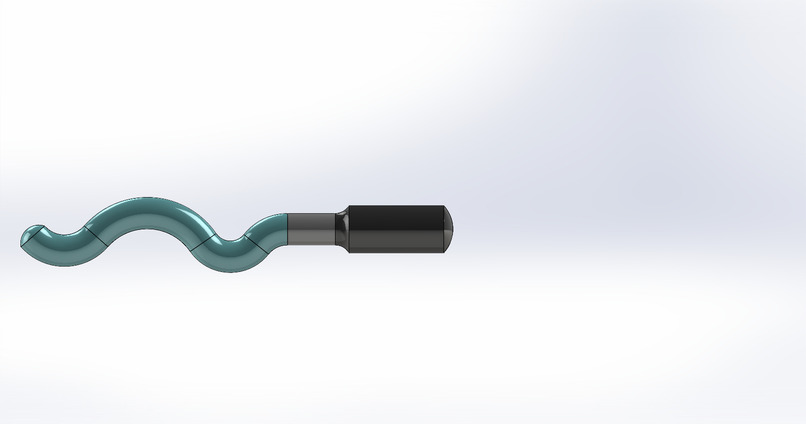
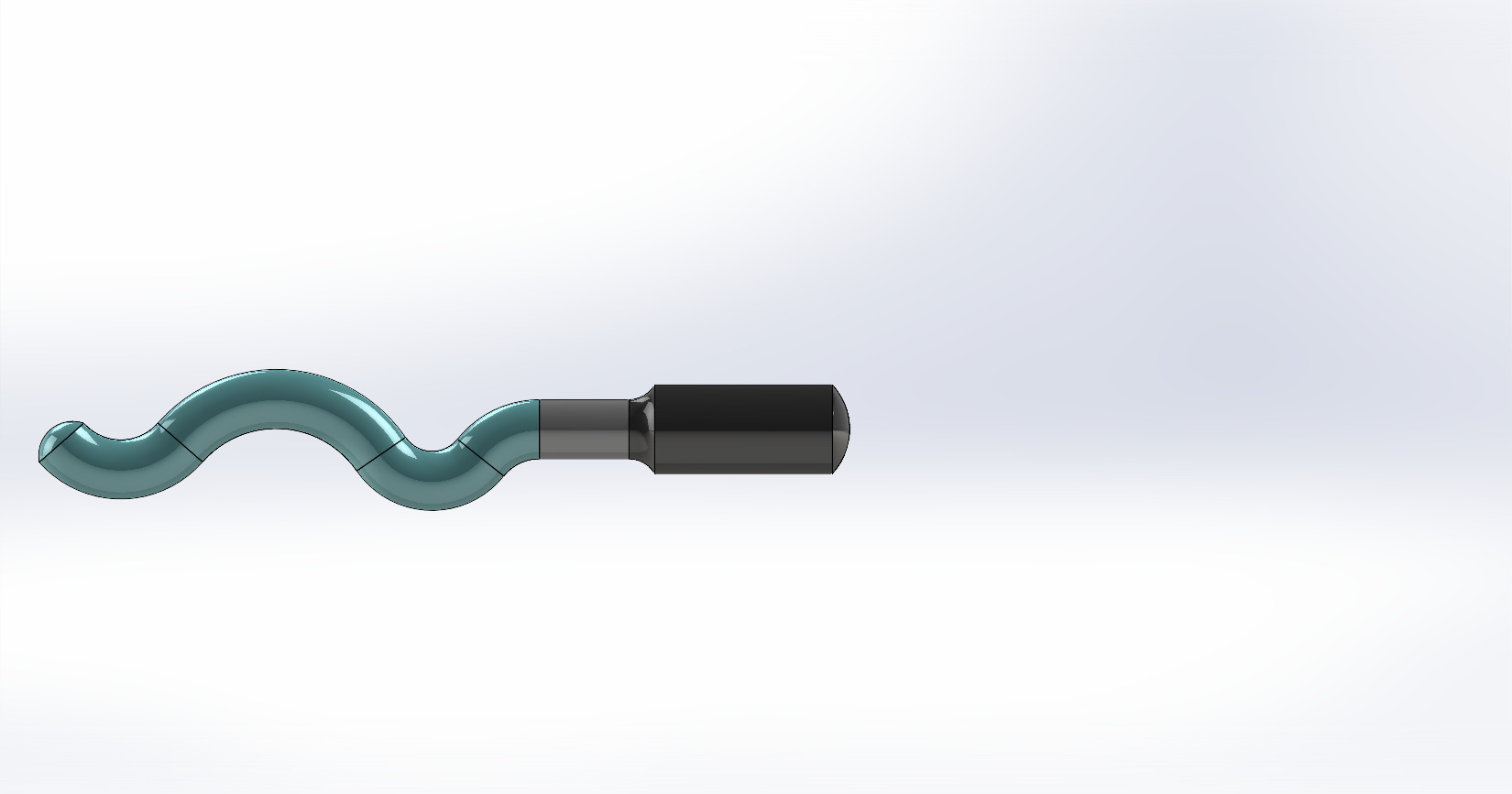
SolidWork Concept 2
-
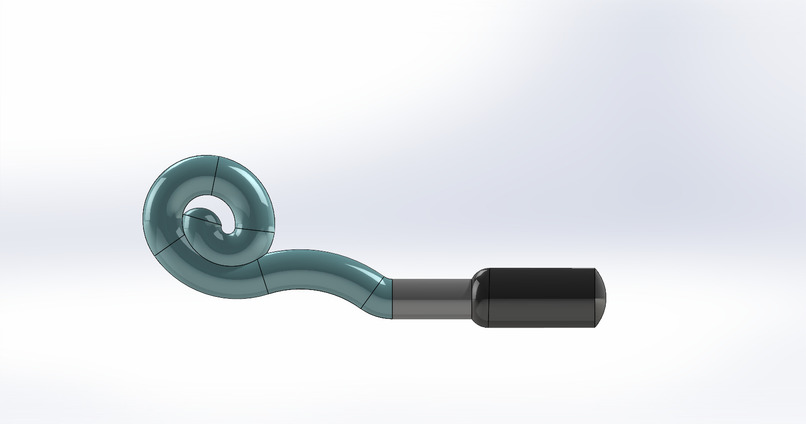
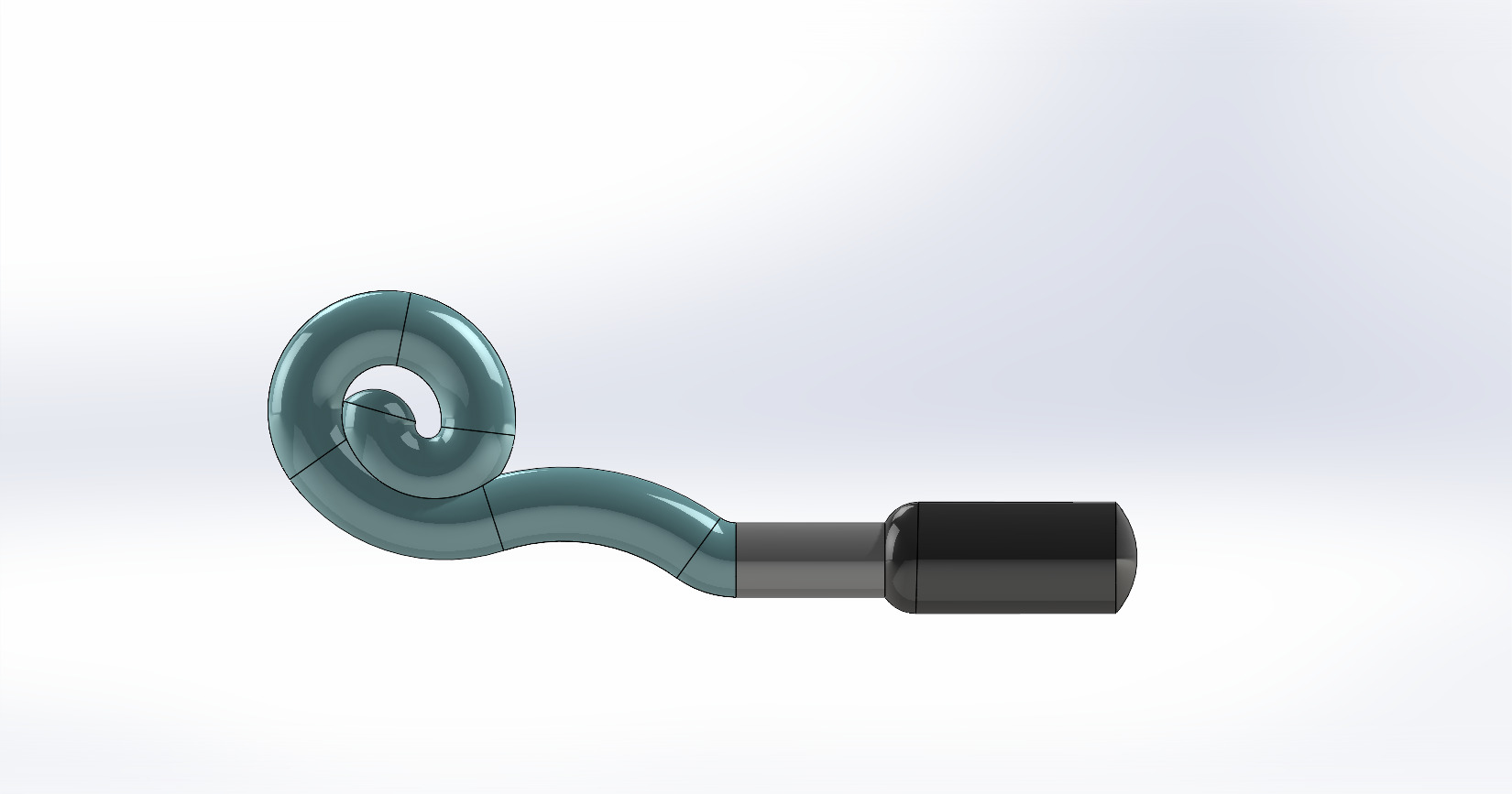
SolidWork Concept 3
Inspiration
Amily has a friend who experiences hand tremors. She noticed her friend regularly struggles with tasks requiring precise movements, for example twisting off the caps of water bottles. When they want to play games together, this severely limits their range of options. For instance, peg games where players must pick up pieces and place them into specific slots etched into the game board would be unfeasible with tremors.
According to Our World in Data, there are 830 million people worldwide who are aged 65 and older. Playing board games are engaging social opportunities for seniors that improve their overall quality of life and well-being. However, many experience physical difficulties such as arthritis that impede their ability to participate (source: All Seniors Care Living Centres). Additionally, arthritis is not solely limited to the elderly population. It affects more than 350 million people globally and is a leading cause of disability (source: Global RA Network).
What it does
Our concept is a malleable piece grabber lined with suction cups that functions by placing pressure on a squeezable air pump. The piece grabber section is inspired by the shape and dexterity of octopus tentacles. The material here is firm but can be molded into different shapes, similar to the workings of a wire pipe cleaner. The end of this section is encased with suction cups that will attach to the game piece based on how the user maneuvers the tool. Opposite of this end is a grip with an adjustable velcro strap that allows the user to secure their palm against the tool.
The suction cups contain holes in the centers that connect to an air tube which protrudes out the bottom of the grip and links to a semi-flat manual rubber air pump. This pump is also fixed with adjustable velcro straps that allow the user to fasten it against different parts of their body based on their preference. Some suggestions are securing it to the foot and using the pump like a pedal or against the inside of an arm and pressing the pump against the body.
The pump functions similar to a turkey baster, where the user must first press down to expel air, creating a mini vacuum, and then position the tool so that a suction cup on the piece grabber section is pressed against the top of the piece. Once the pressure is released from the pump, the piece will stick to the tool, and the user can then lift the contraption up and move it to its new position. Placing pressure on the pump again will push air out of the suction cup holes, releasing the piece.
How we built it
We began by researching existing accessibility solutions for picking up board game pieces. We found a DIY idea that utilizes painter’s tape to create a makeshift handle on top of circular checkers pieces. Then, we delved into broader accessibility tools for tremors or arthritis.
The idea was conceptualized through multiple rounds of brainstorming, pencil and paper sketching, evaluating, and revising. Amily utilized SolidWorks to create the final 3D prototype and Adobe Photoshop to create the 2D one.
Challenges we ran into
During the initial brainstorming sessions, we considered solutions that involved magnetic forces. The idea was to attach magnets to individual pieces and use separate magnets to attract or release them. However, we quickly realized that this would require too many moving parts and would likely complicate things rather than simplify them for our intended users. We also explored the idea of using moldable putty to easily pick up the pieces but had concerns about potential residue and the challenge of releasing the pieces from it. Eventually, we came across a robotic arm with an air-vacuum suction tip that could attach to objects and move them around. This led us to decide to pursue a suction-based tool as a more practical solution.
Our initial idea was inspired by grabber tools, where the user would squeeze a trigger to close a claw lined with suction cups. However, as we considered how users would interact with this design, we identified a few issues. First, when the game pieces are positioned closely together, the opening and closing of the claw would disturb nearby pieces, making it difficult to target the one the user wants to move. Additionally, for users with joint issues, the repetitive squeezing of the trigger could quickly lead to fatigue and discomfort.
The next idea was meant to address the issue of fatigue from squeezing by adopting a vertical tube with a suction tip at the bottom end. Users could push down from above to lower the tip on top of the game piece which would pick it up. Since they are aided by the force of gravity due to the vertical form, this would be easier on their hands than squeezing. This, however, would require some sort of structure to stabilize the bottom portion of the tube, as it had to be placed on a surface first before they could press down on it. The tool would therefore again not be reliable in scenarios where the positioning of the structure conflicts with other nearby game pieces. This also raised the question of how to develop an effective release mechanism that would allow the piece to easily separate from the tool.
We continued to explore the idea of a tool that would grab a piece from above, as that seemed to be the best method to avoid disturbing nearby pieces. The next concept involved a flat circular surface with an adjustable strap above it that allowed the user to secure their palm against the surface and move the tool around using arm movements instead of hand ones. Thin metal wires, similar to those used in head scratchers, drop downwards and inwards from the circumference of the circular surface to create a cone-like shape. The bottom tips of these wires bend outwards to help guide the intended piece into the cone. This area of wires is also coated with a high-traction rubber material that would easily grip and hold onto the piece. Although this design would create the least amount of pressure on the user’s hand compared to the past two, the issue of a proper release mechanism persisted. An idea to remedy that was another circular platform in the middle of the cone of wires that could be pushed down against the piece to force it out. However, this would either require the user to engage individual fingers or have to use their other hand to help out, which again is too much of a hassle for a device that is meant to make their lives easier.
Outside of the ideation process, we encountered difficulties in shaping the 3D prototype to contain the multiple fluid parts of the proposed design. We decided to use the 3D model to demonstrate its malleability and suggest possibilities for how the grabber section could be shaped and then create an additional 2D model that displays the different sections in tandem.
Accomplishments that we're proud of
We're really proud of how our project turned out, especially since it's our first designathon. At first, we were uncertain about our ability to deliver a quality design, as we both had limited hands-on experience and were not certain where to begin. Being able to take the leap and push ourselves against the limits of our knowledge has been an incredibly fulfilling learning experience.
One of the coolest things was being able to keep iterating and refining our ideas. We found issues, fixed them, and used them as opportunities to make our design even better. We are proud of pushing the boundaries of what's possible and learn from our mistakes. This experience has been invaluable, and we're excited to apply the skills and insights gained to future design challenges!
What we learned
We learned that there are many different factors at play when trying to create a user-centered solution, such as technical or mechanical concerns as well as the importance of collaborating and gathering multiple perspectives. In the initial stages of the process, our research played a critical role in establishing context and possible routes we could pursue when brainstorming.
When we began to lean towards a specific direction with the design concept, we found it incredibly helpful to receive constructive feedback from others. Many provided new and insightful questions to tackle which allowed us to further refine the concept. Our communication skills improved as well since we were able to improve our understanding of the workings of the design, allowing us to convey our thoughts and intentions more efficiently and succinctly.
What's next for OctoGrip
The next phase for this project would be to gather more feedback and input, especially from potential users such as those with tremors or joint pain in their hands. Due to the fast-paced nature of this event, the insight we received was limited to other event participants. If the design is still viable after the critiques of various stakeholder groups, then we would build a high-fidelity working prototype to begin testing.
Through extensive user testing, we would be able to discover potential areas of improvement and attempt to find solutions for them. Ideally, this iteration process would continue over numerous rounds so that we may strive for as inclusive of a design as possible.
Built With
- adobe-generative-fill
- photoshop
- solidworks

Log in or sign up for Devpost to join the conversation.