-
-
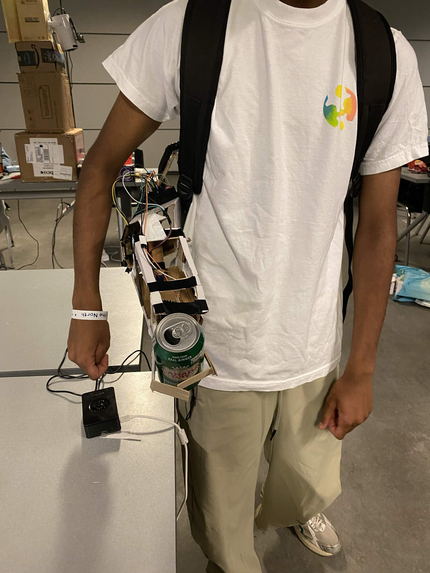
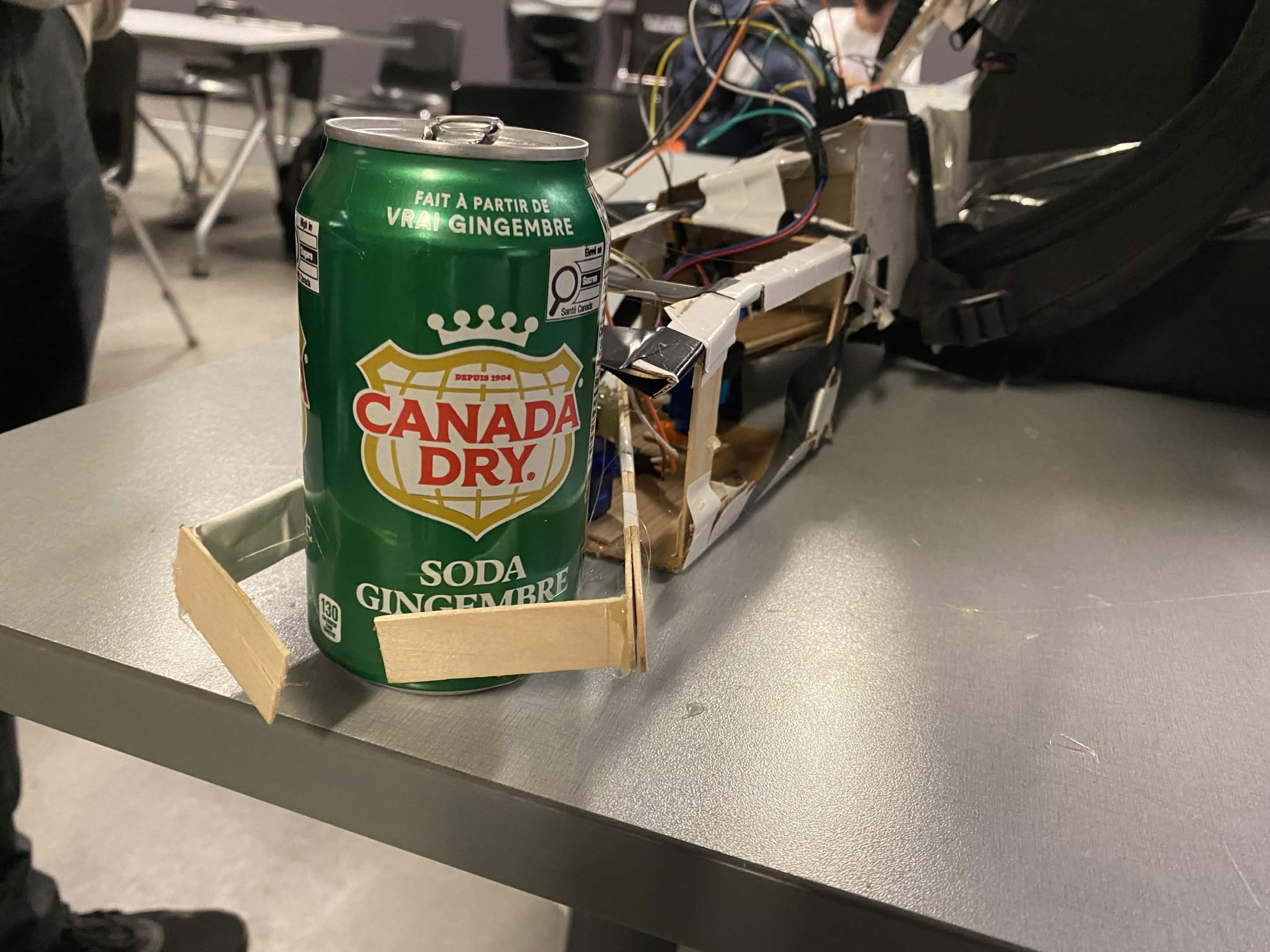
Static, holding can
-
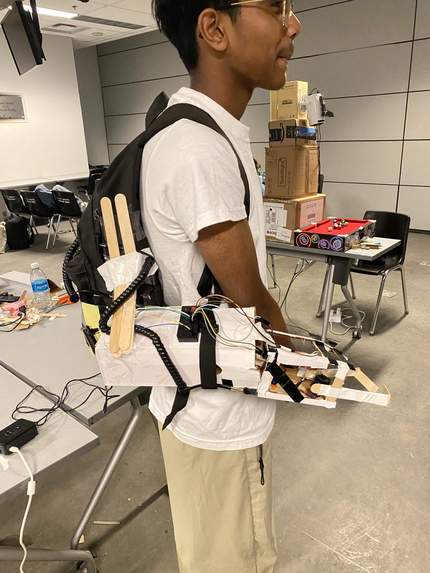
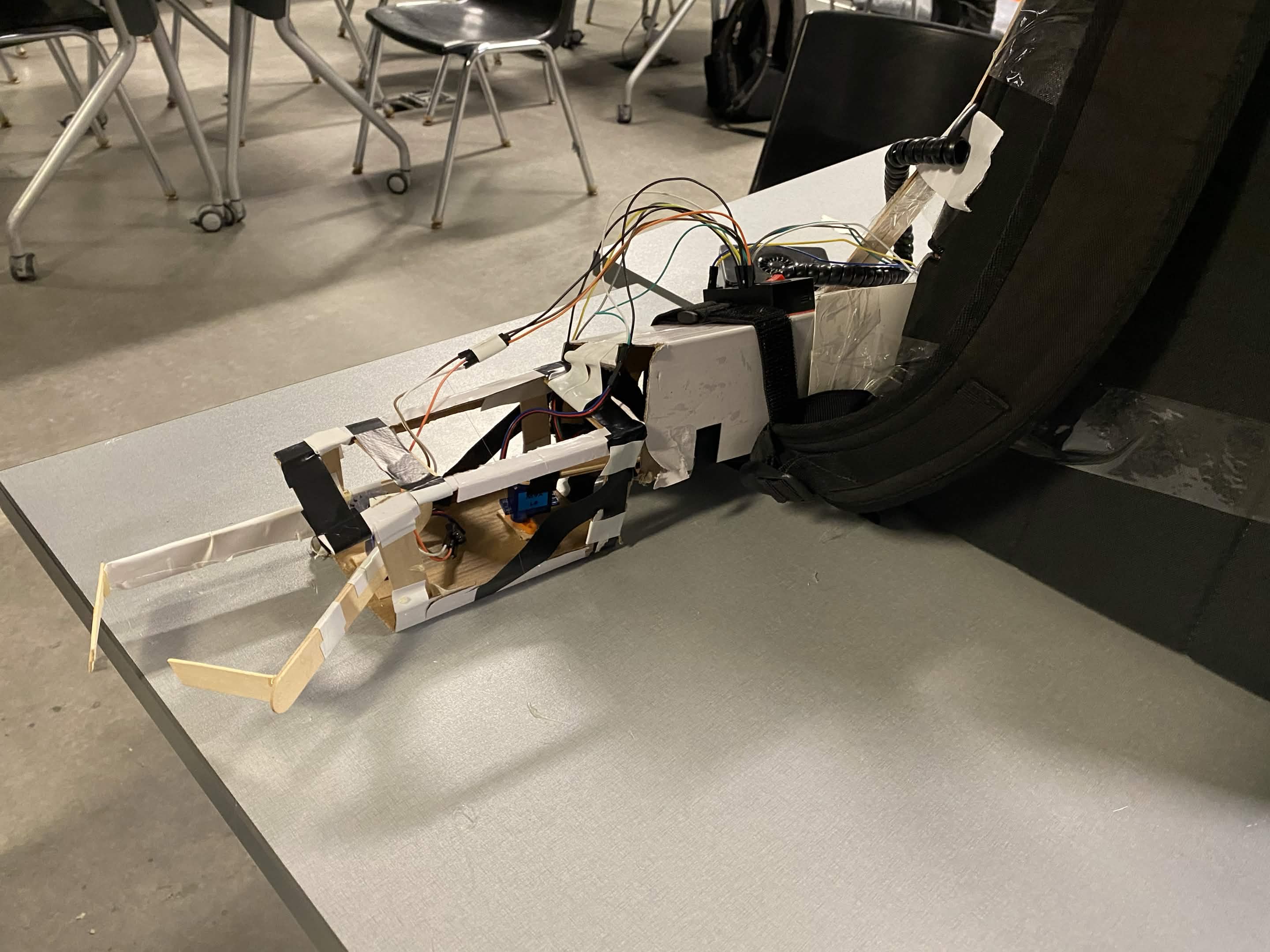
Static, holding nothing
-
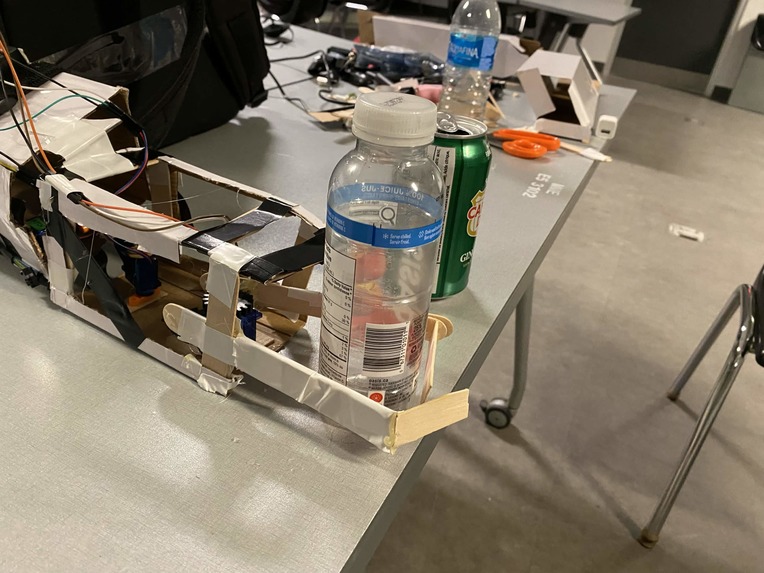
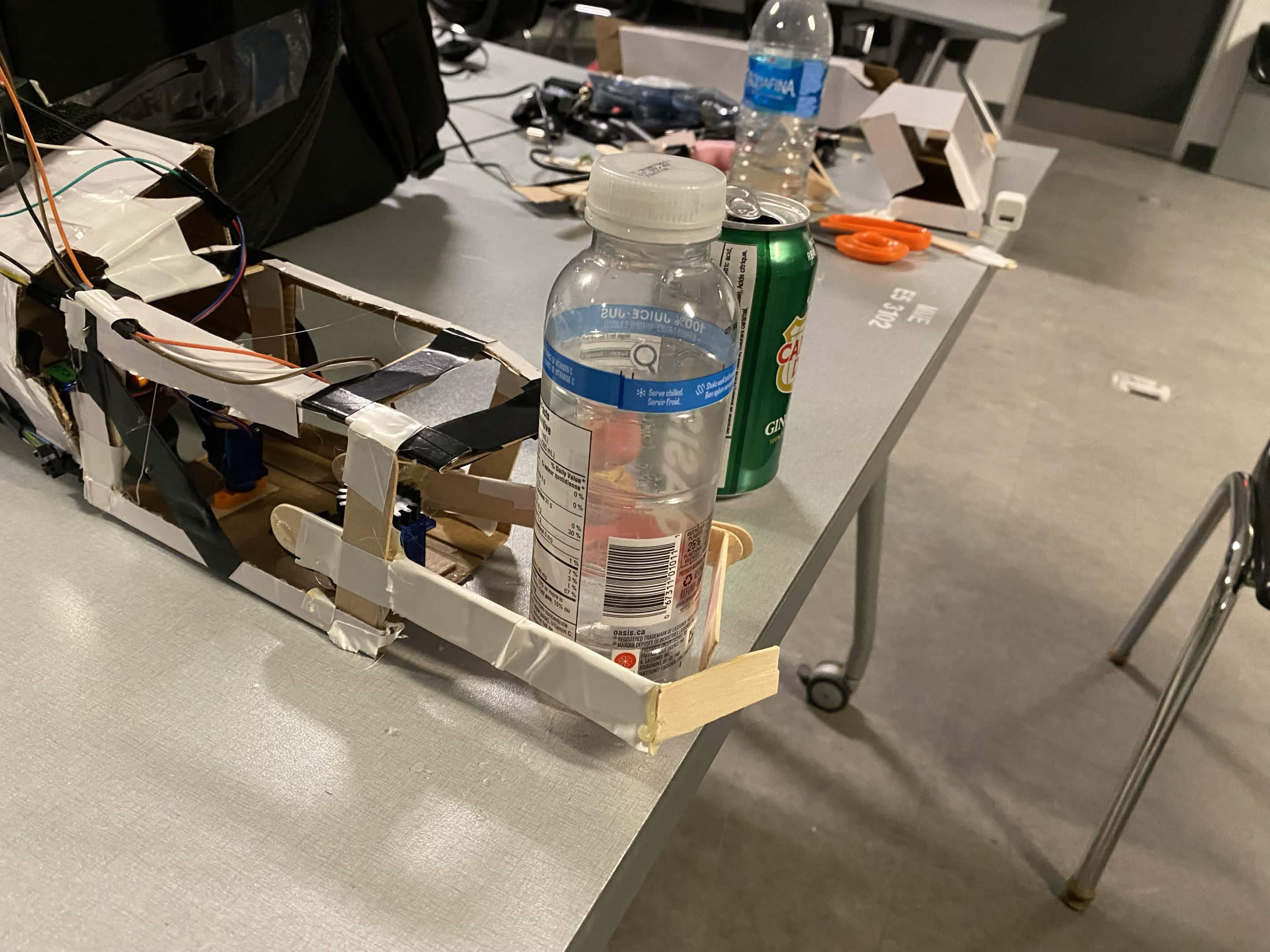
Holding bottle
-
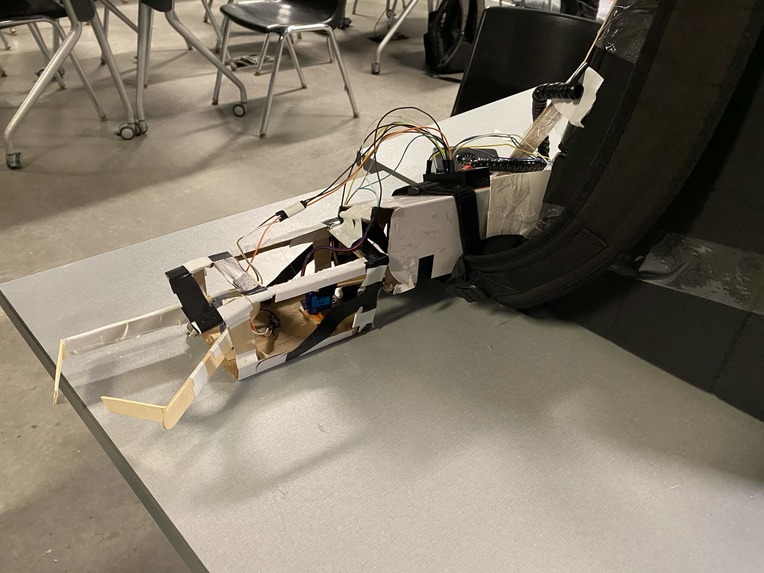
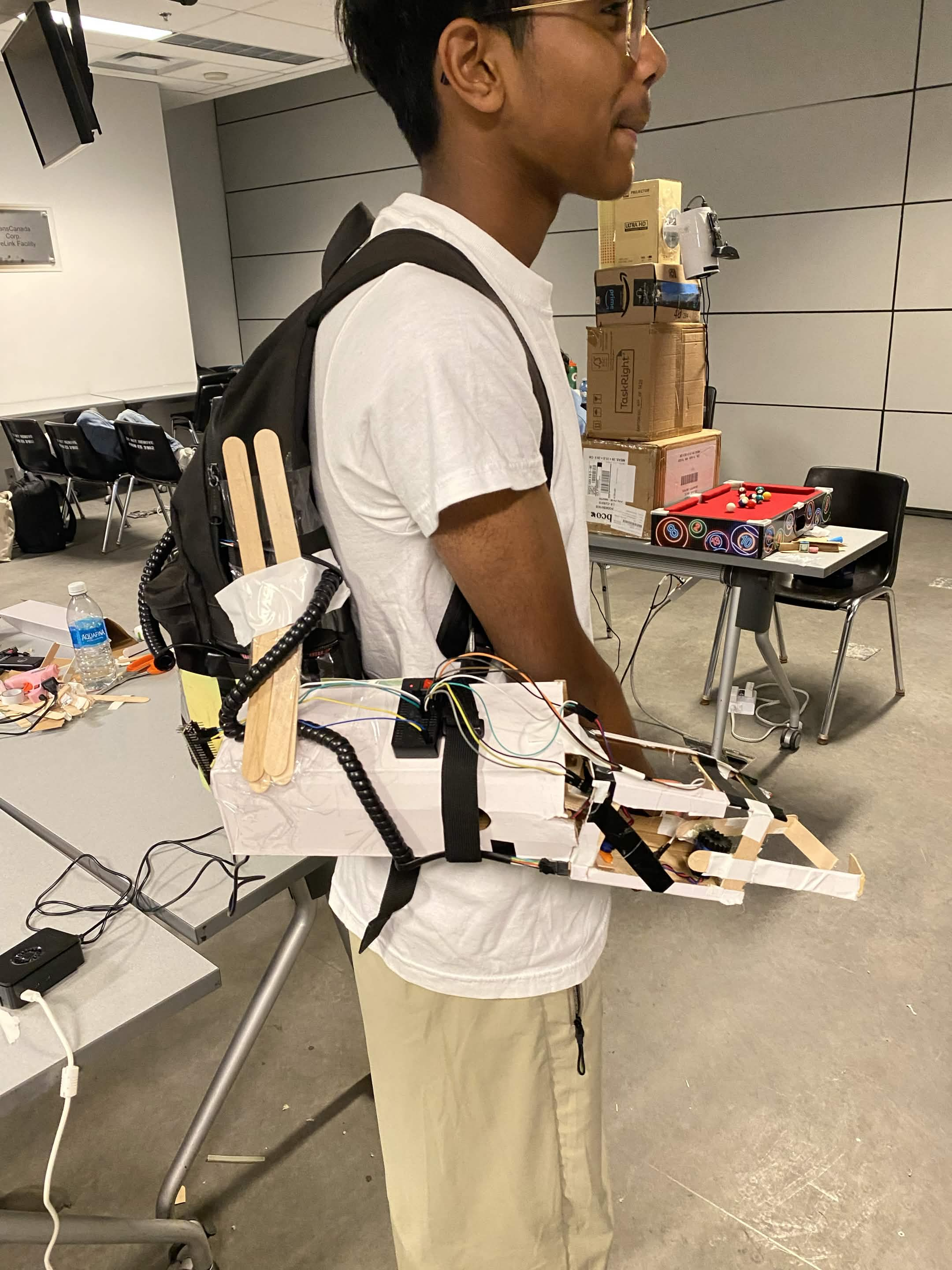
Arm, facing left
-
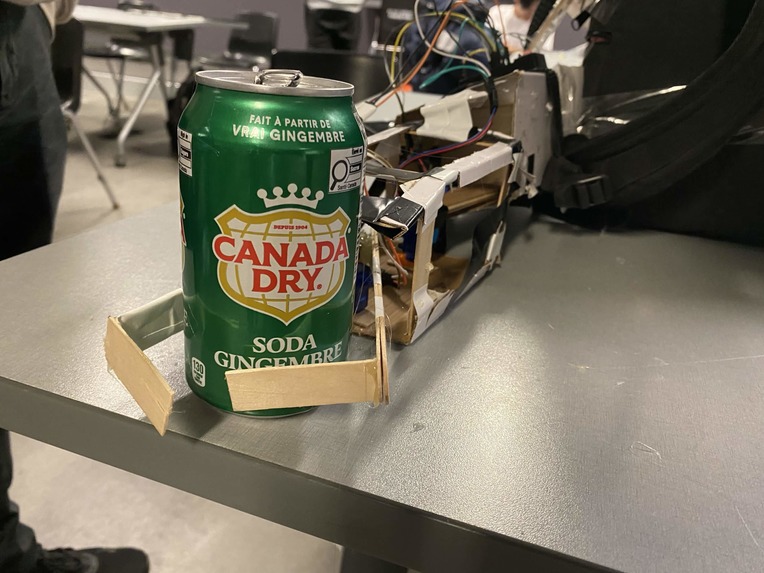
Holding can
-
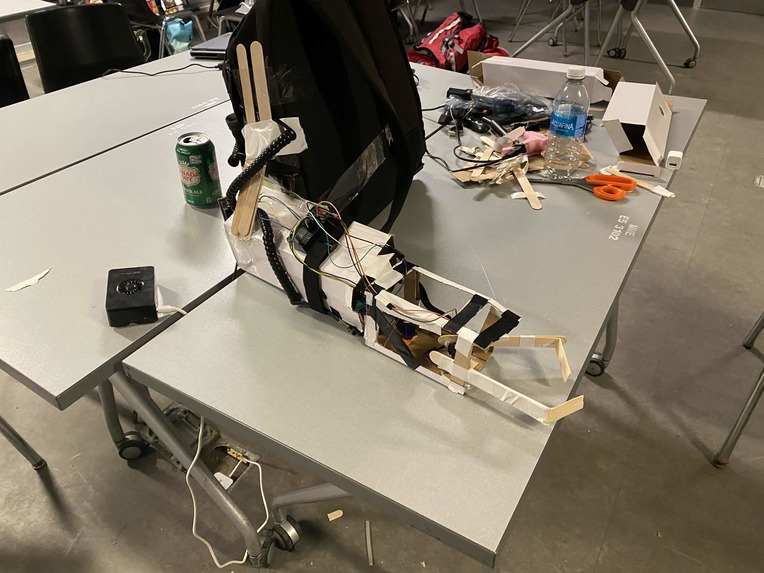
Arm powered off
-
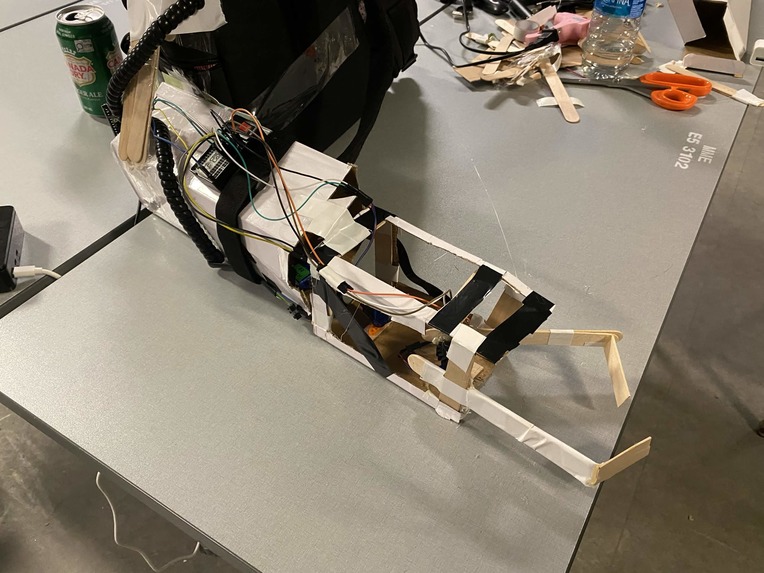
Arm, facing right
Inspiration
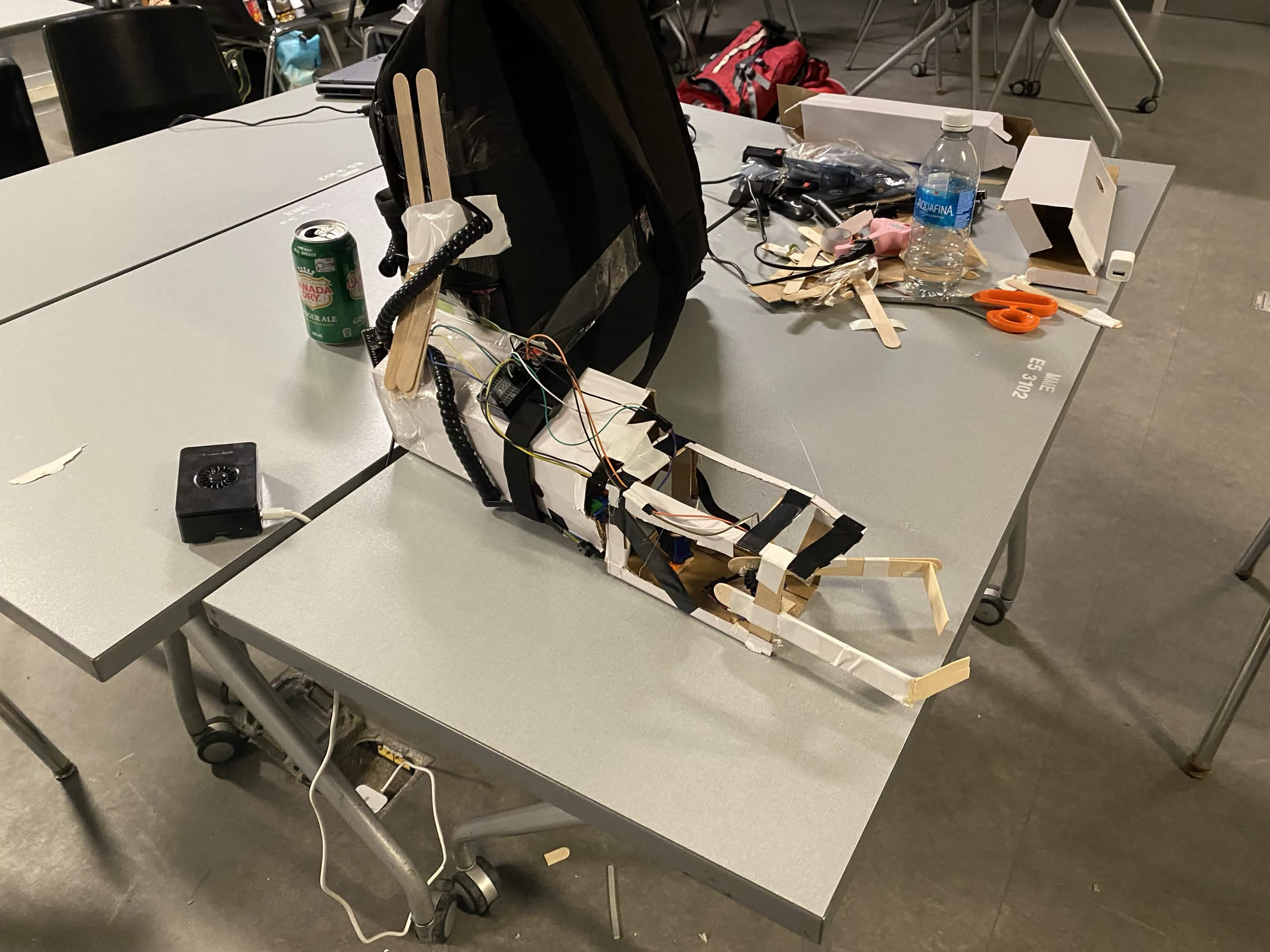
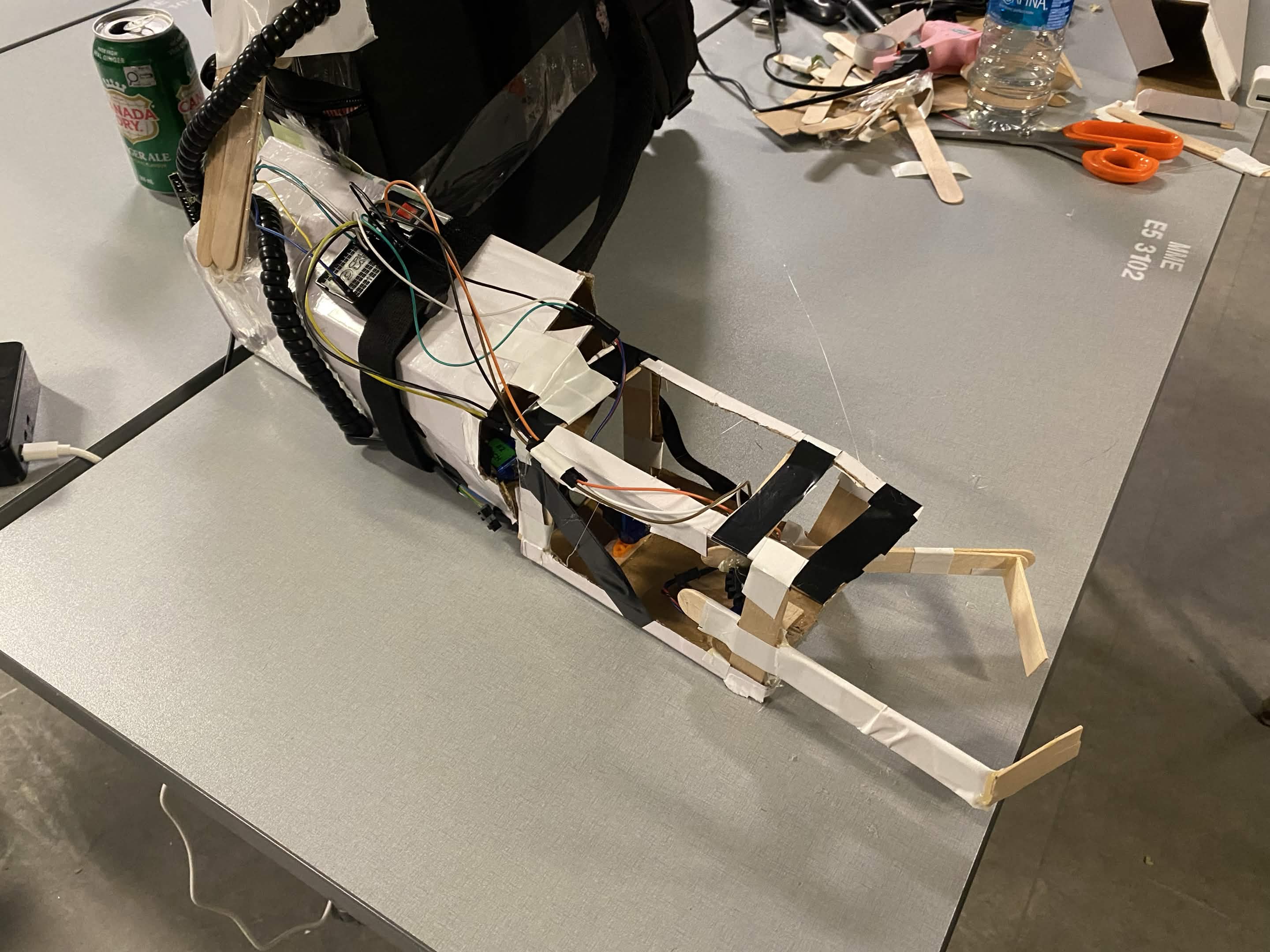
We were inspired by Doctor Octopus and wanted to build our own low-budget, wearable version of one of his robotic arms. We also wanted to challenge ourselves to turn simple materials like popsicle sticks, cardboard, and small servos into something that feels like a real robotic device.
What it does
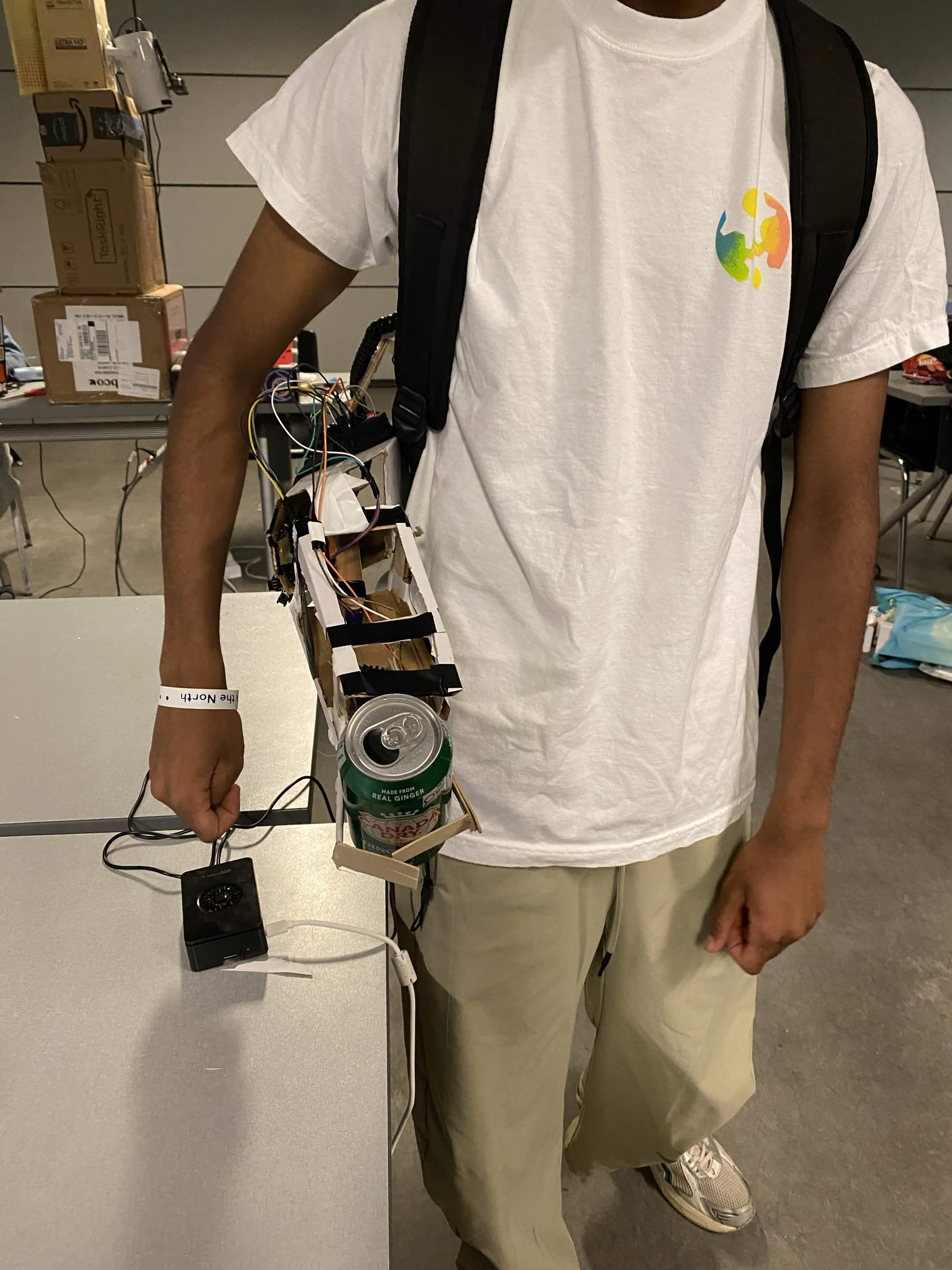
Octavius is a backpack-mounted robotic arm controlled through a Raspberry Pi and Arduino Nano. An iPhone connects to the Pi’s private Wi-Fi network and can send commands using voice shortcuts, photos, or a web controller. The arm can move horizontally and vertically, control a claw, and perform preset motions such as waving.
How we built it
We built the arm around a lightweight popsicle-stick frame with cardboard panels for the exterior. The shoulder is fixed to the backpack, while two micro servos control the arm’s horizontal and vertical movement. A third servo operates the claw using a cable mechanism. The Raspberry Pi processes commands from the iPhone and sends them to the Arduino Nano through USB. The Arduino controls the servo signals while a separate power supply powers the servos.
Challenges we ran into
Our biggest challenge was working within the limitations of micro servos. They are small and affordable, but they cannot lift much weight, so we had to keep the arm short and lightweight. Power was another challenge because the Raspberry Pi and servos need different power arrangements. We also had to figure out how to make the Pi communicate with the Arduino and create a private Wi-Fi network without relying on venue internet.
Accomplishments that we're proud of
We are proud that we turned a fun idea into a working physical system using inexpensive and accessible materials. We successfully set up the Raspberry Pi as its own Wi-Fi network, created communication between the Pi and Arduino, and designed an arm structure that can be worn in a backpack. We are also proud of the cardboard and popsicle-stick aesthetic because it makes the project look intentionally improvised while still showing the technology underneath.
What we learned
We learned how to set up a Raspberry Pi headlessly, create a private Wi-Fi network, communicate with an Arduino over USB, and control servos safely with an external power supply. We also learned that mechanical design and weight distribution are just as important as the code. A small change in the arm’s length or weight can make a huge difference in how well the servos perform.
What's next for Octavius
Our next step is to improve the arm’s strength and reliability so it can pick up lightweight objects more consistently. We would also like to add better vision processing, smoother motion, stronger joints, and a more advanced claw. In the future, Octavius could become a more capable wearable assistant that responds to voice commands, recognizes objects, and performs useful tasks.


Log in or sign up for Devpost to join the conversation.