-
-
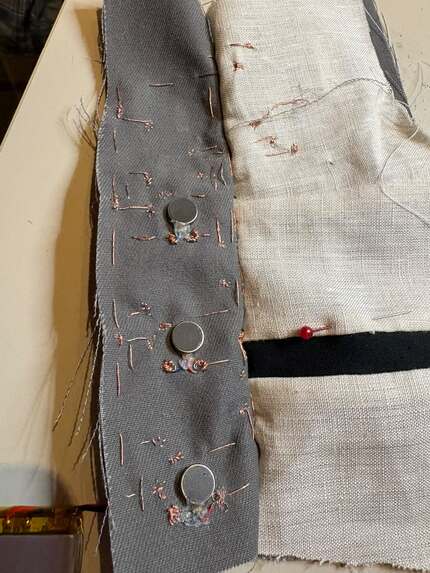
Front
-
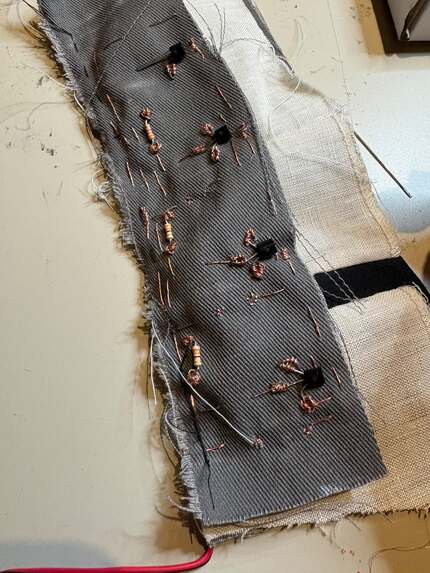
Back
-
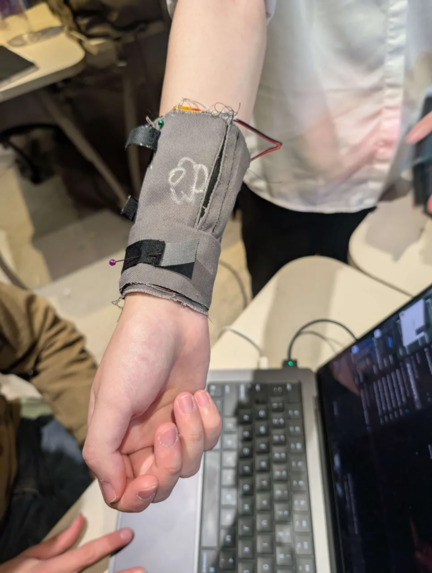
Final Product
-
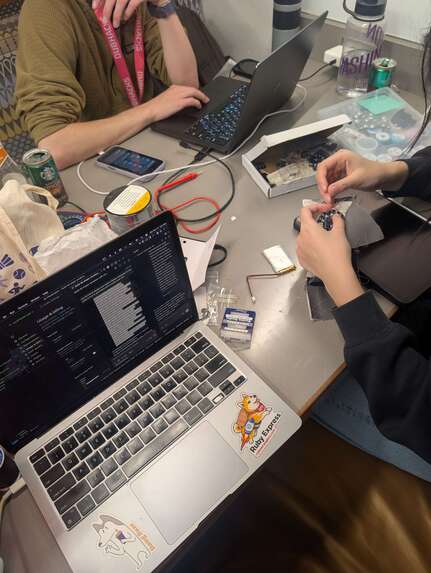
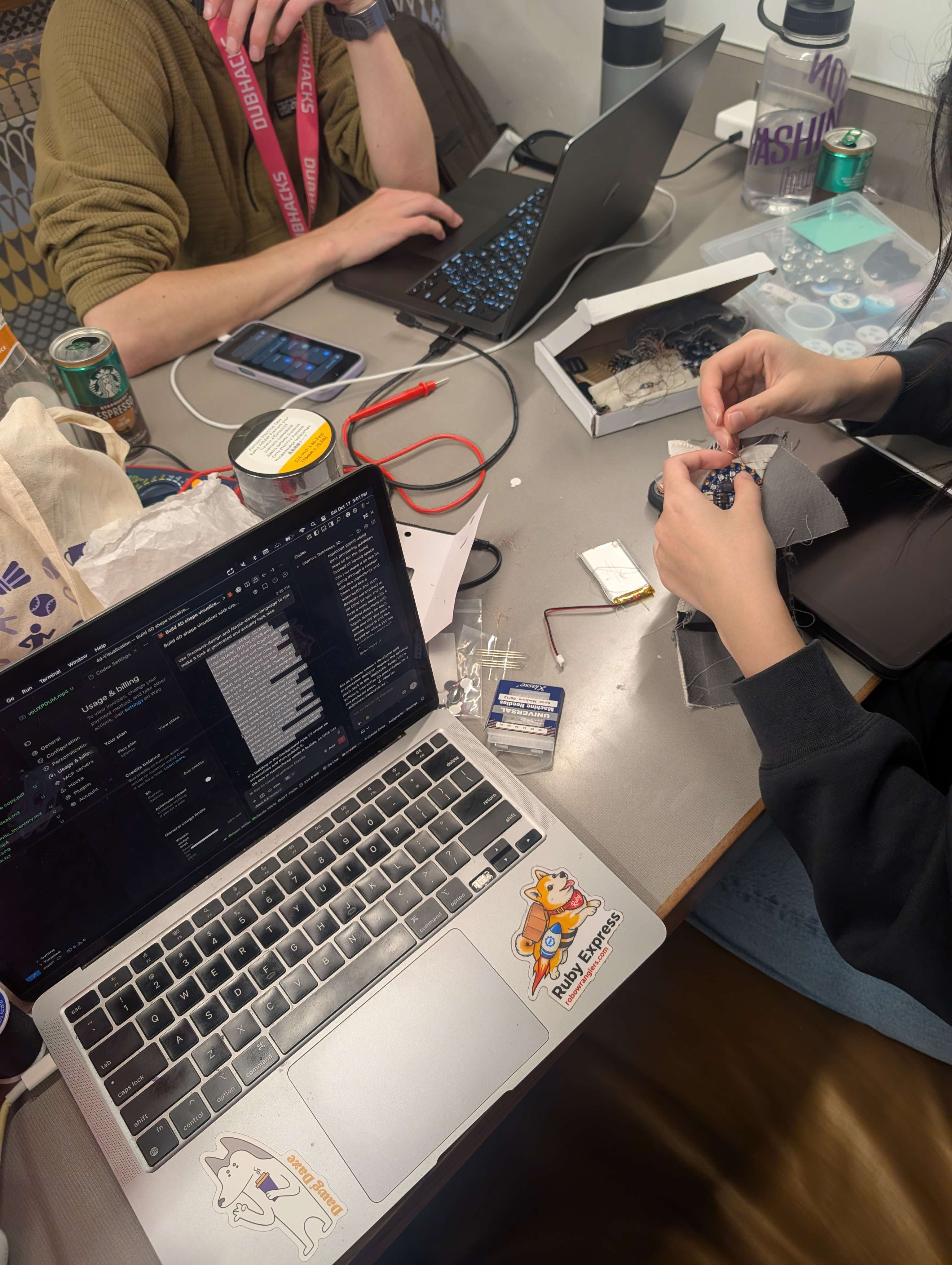
Sewing + coding
-
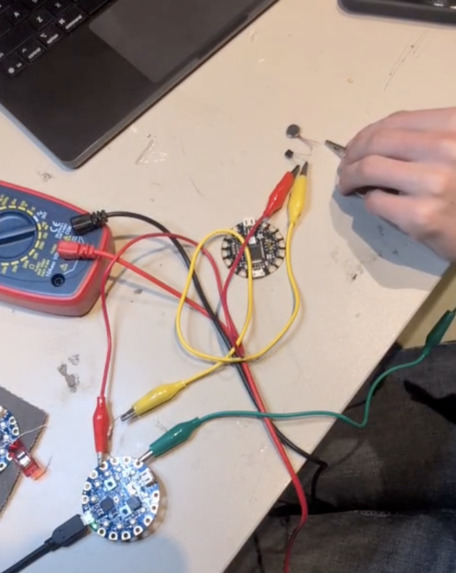
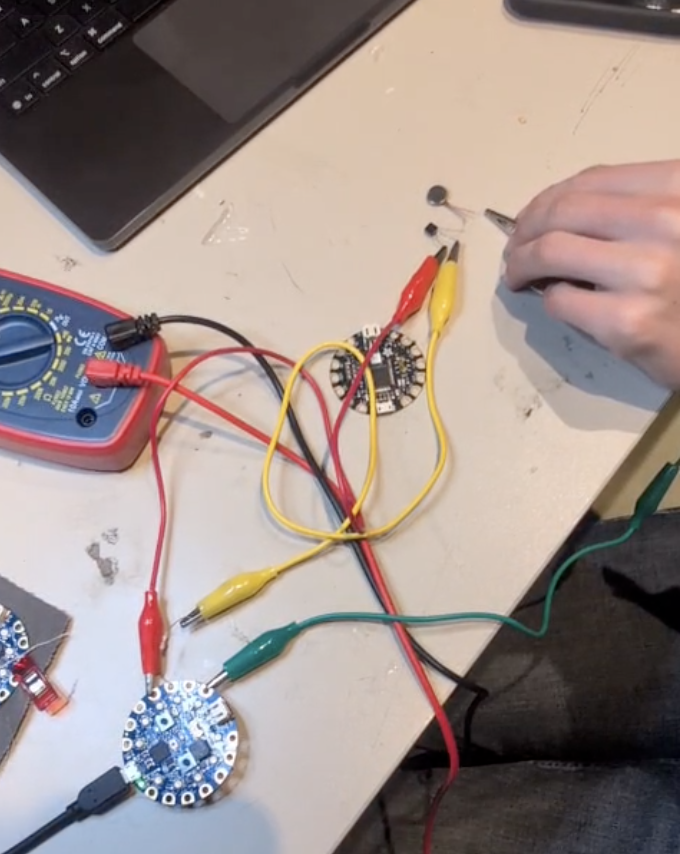
Testing
-
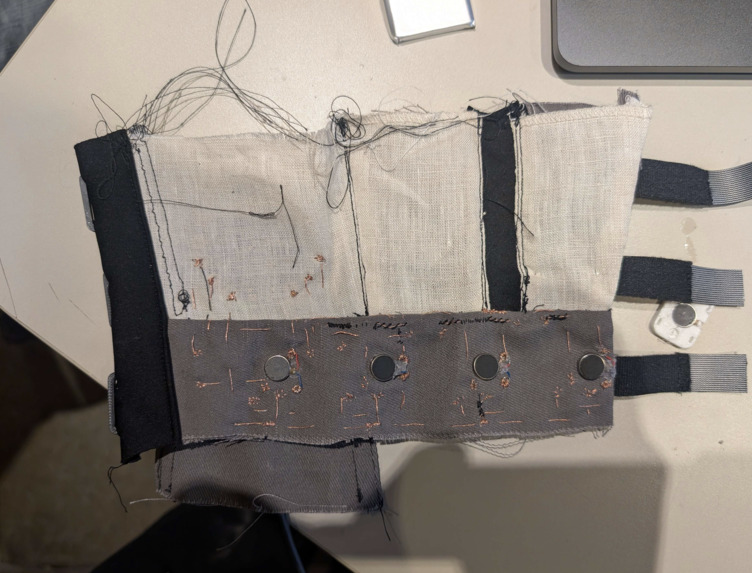
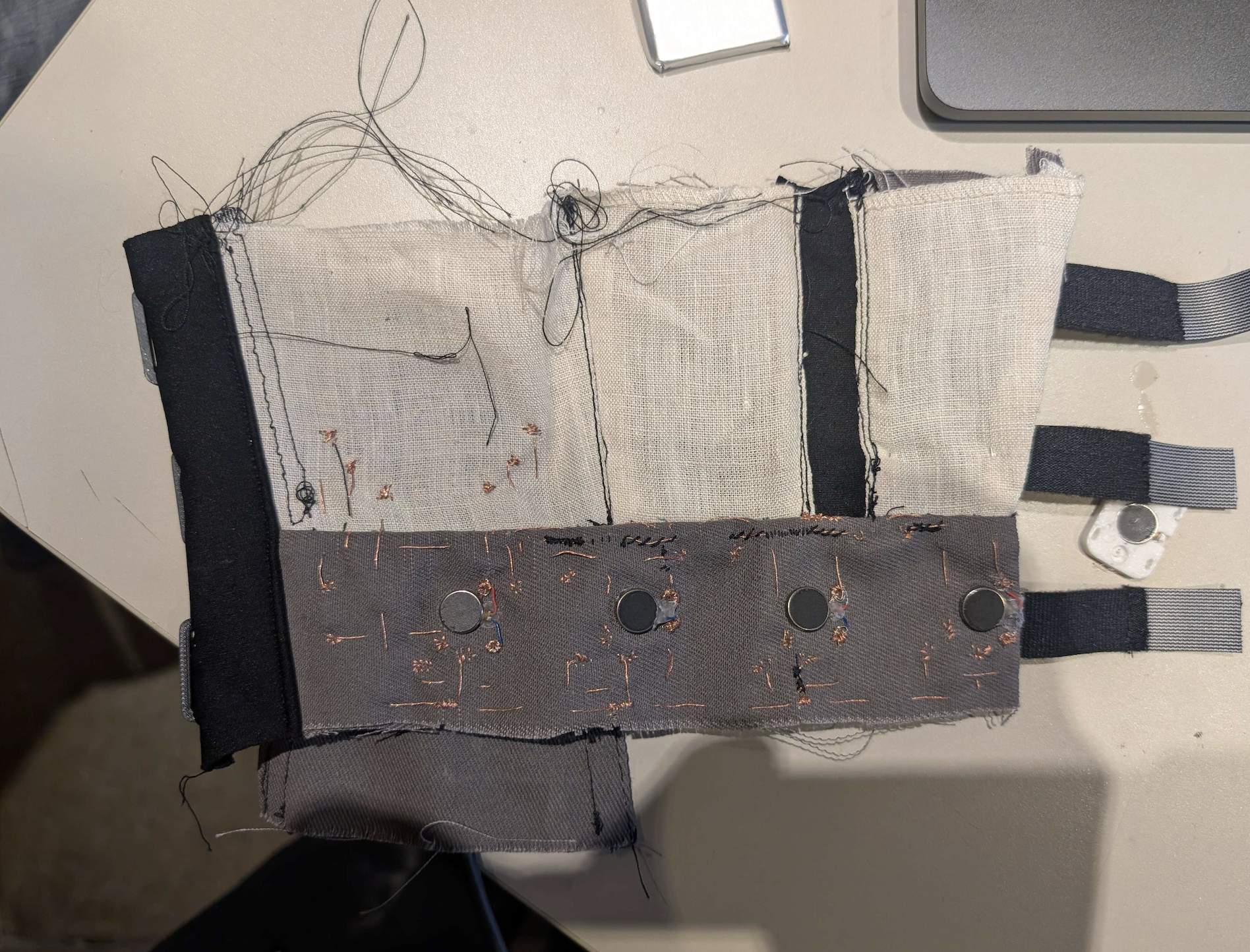
Haptic Motors
-
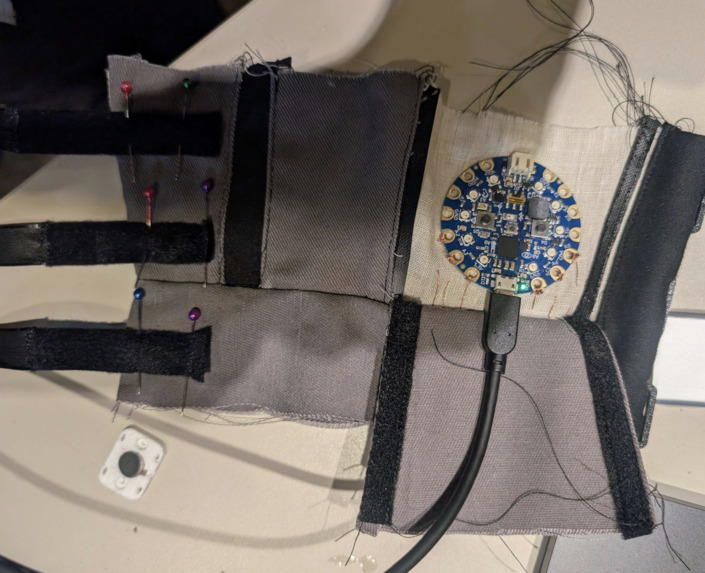
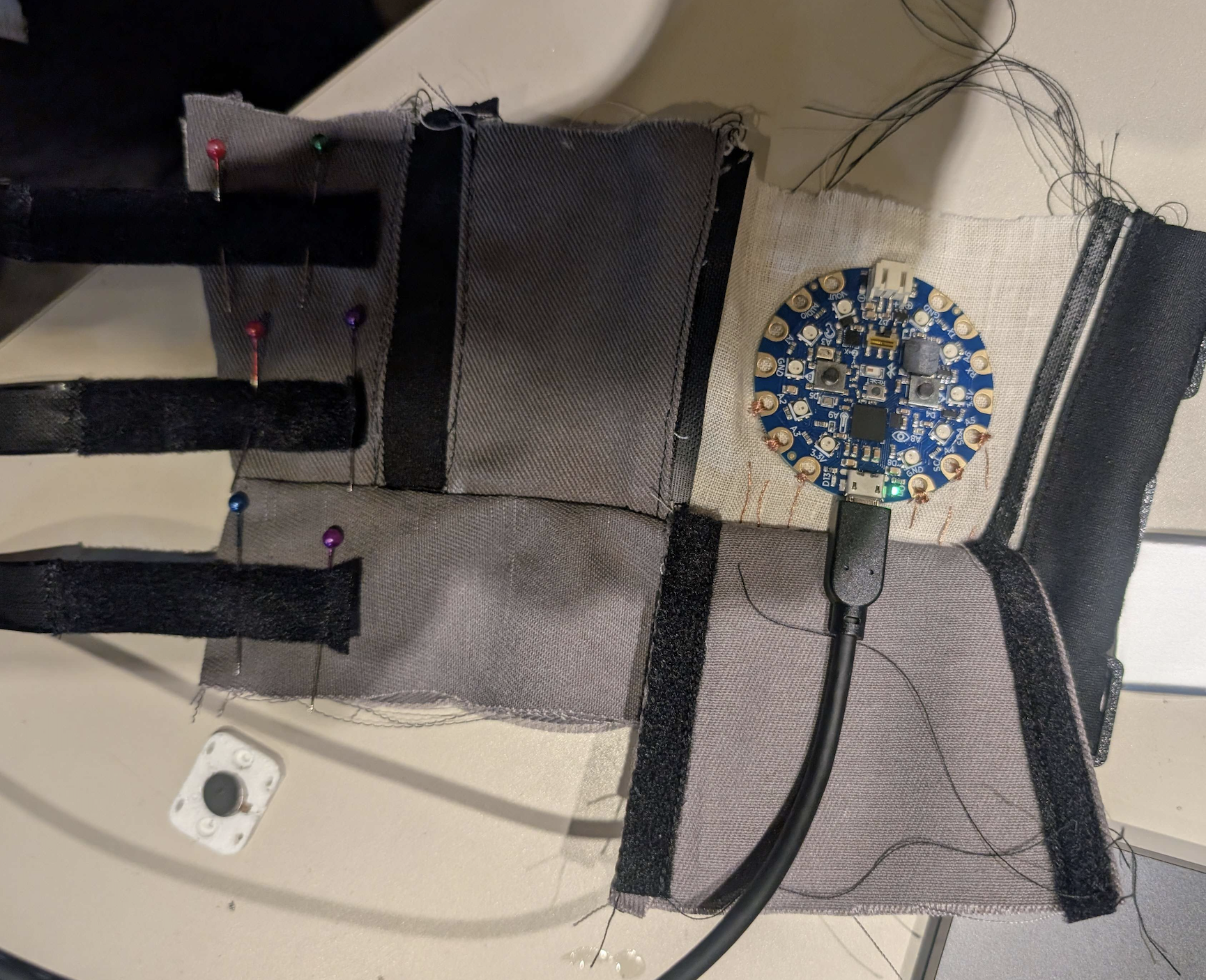
Arduino Setup
-
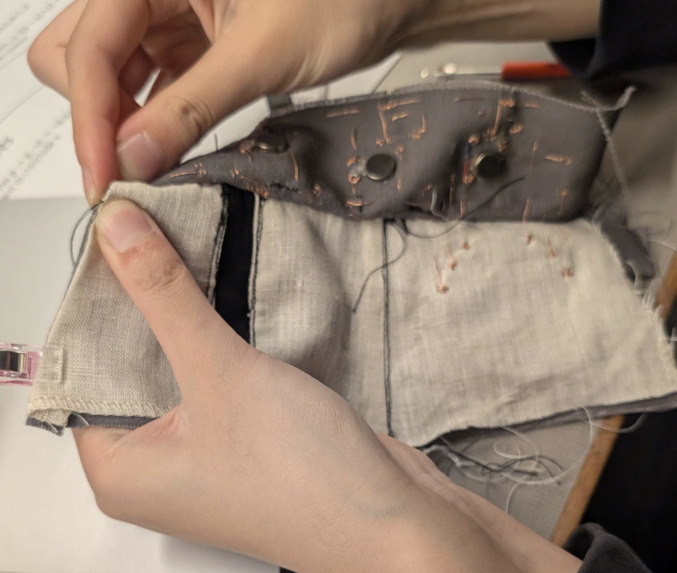
Sewing
-
Testing
Inspiration
This project essentially started after one of our friends, after using steroid-based eye drops, had trouble seeing for 8 hours after using it. When we looked into assistive technology, we found so many of tools for navigation like smart walking canes, but fewer that focused on smaller tasks like finding an object on a table and reaching for it. We wanted to build something that could help with those everyday movements.
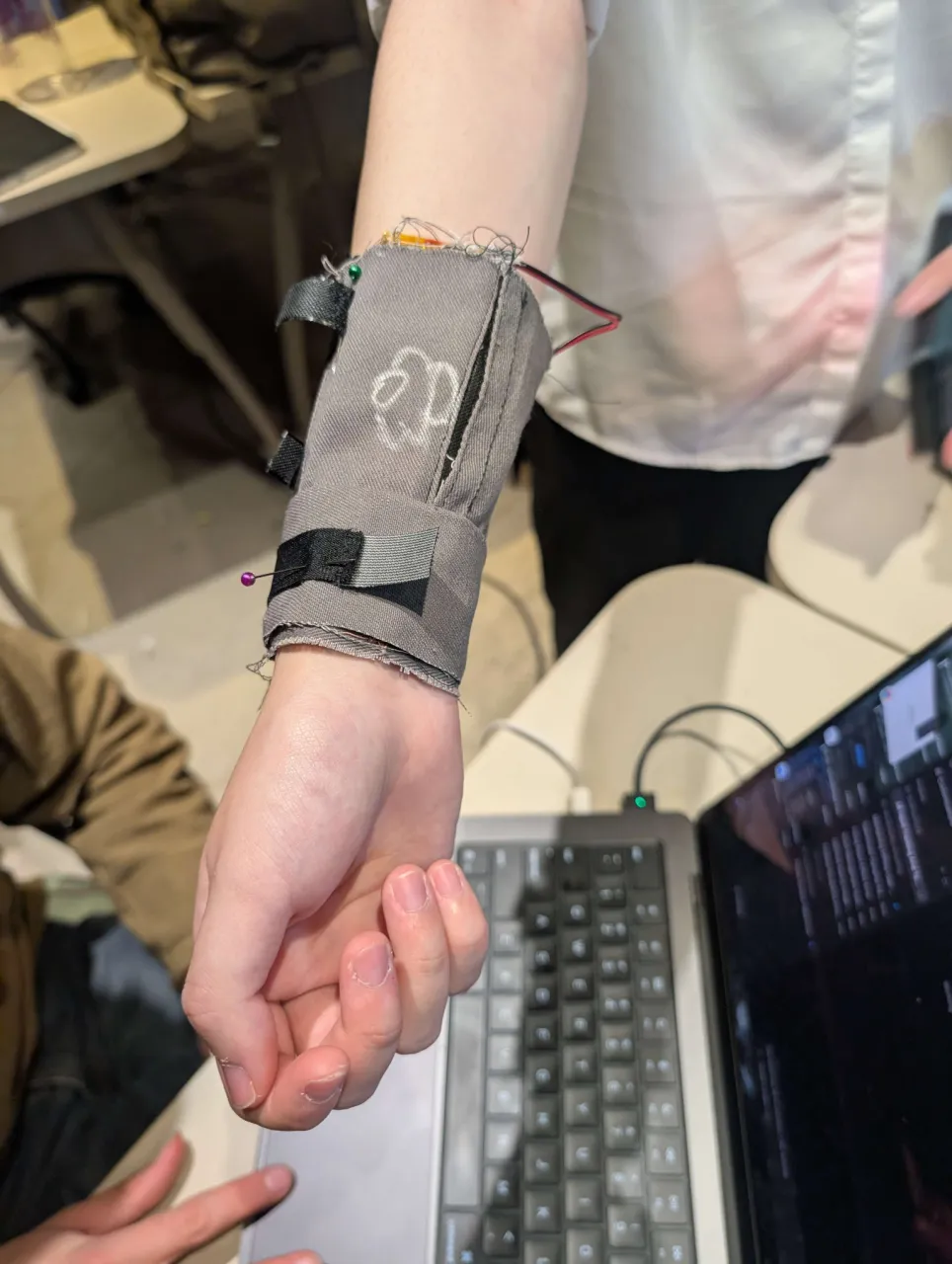
Our V1 version at the start of the day used a large 3d printed bracelet with servo motors that physically pushed against the user’s hand to communicate direction. It gave us a starting point, but we wanted to make the device softer, less bulky, and easier to wear. So we then pivoted a couple hours into the competition, and we spent the rest of the day building a new version using fabric and haptic feedback.
What it does
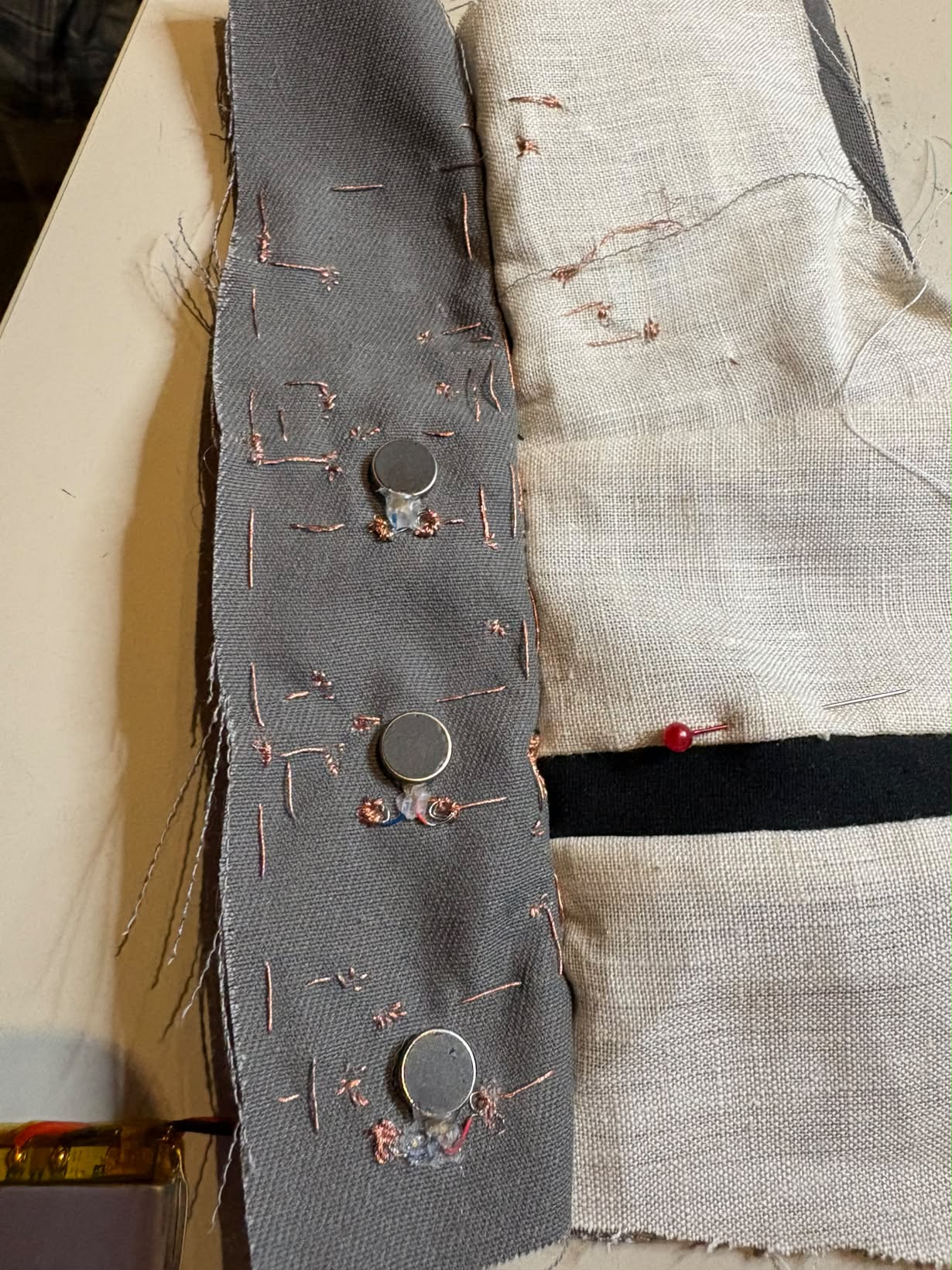
This project is a wearable assistive prototype designed to help blind and low-vision users locate and reach for objects. The idea is to connect visual information from a camera to physical cues on the wrist, so someone can feel which direction to move their hand. Essentially, there are 4 haptic motors, one for each cardinal direction, and with different combinations of them we can tell them hand positions and objects.
We decided to go with haptics instead of servos, so our goal was to make the guidance feel more natural while putting the electronics into something closer to a wearable garment.
How we built it
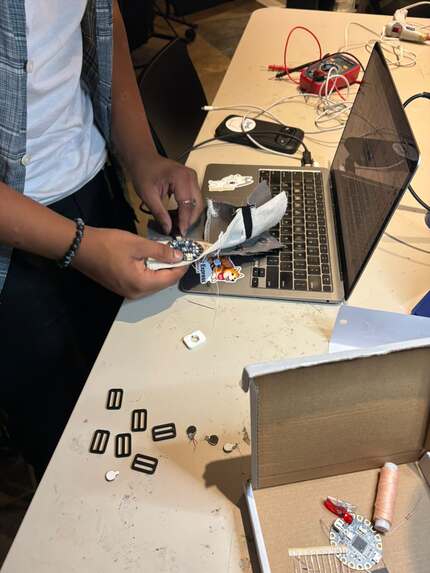
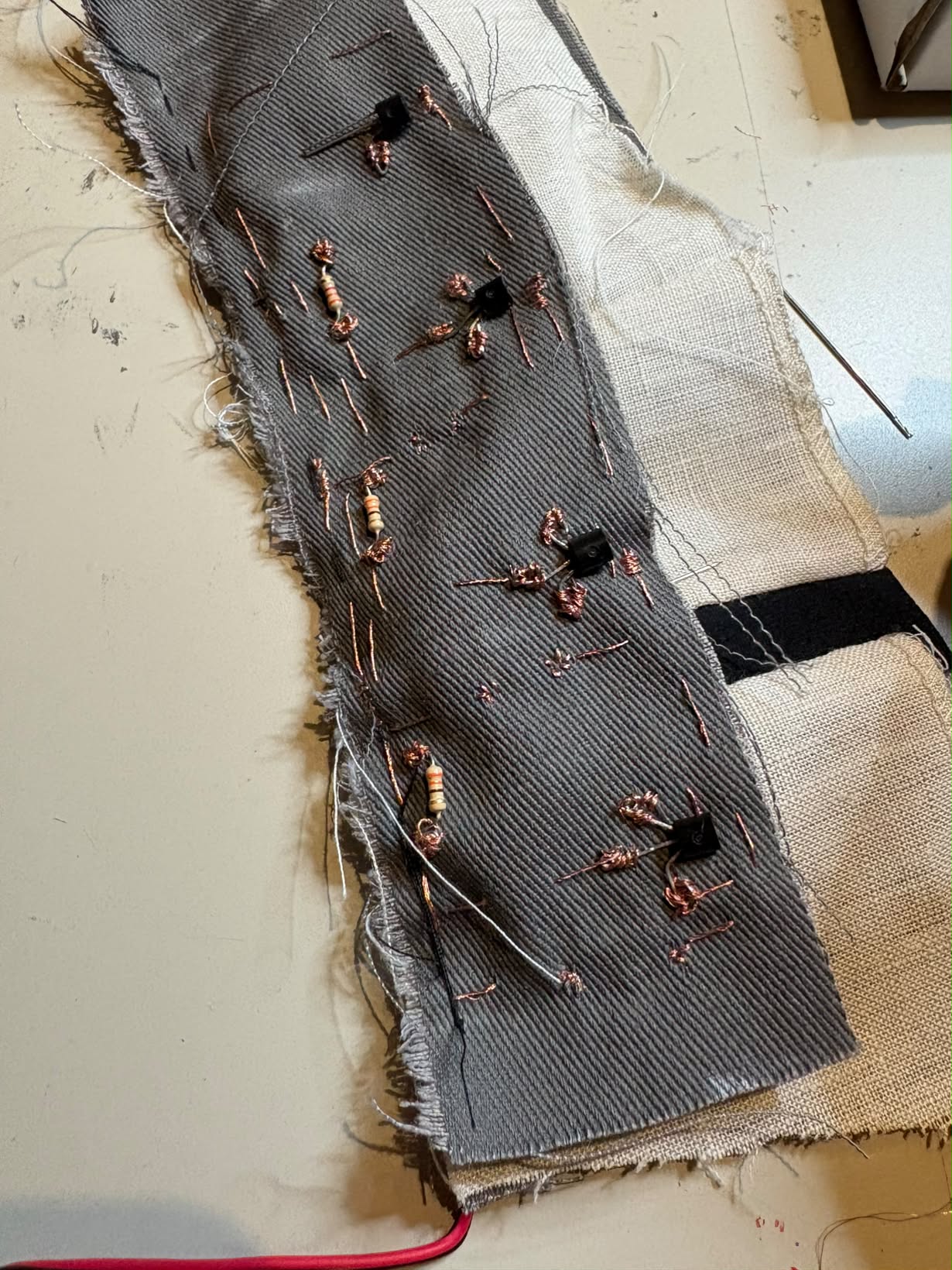
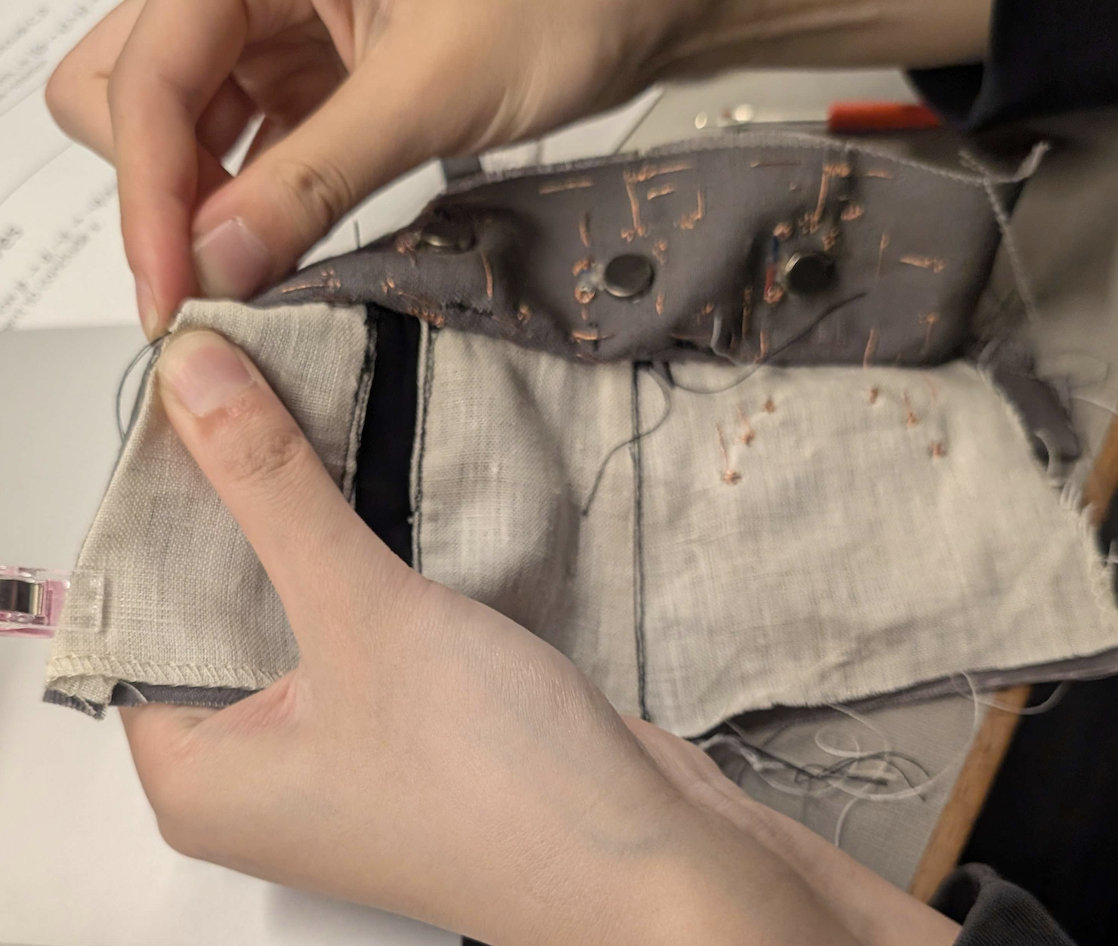
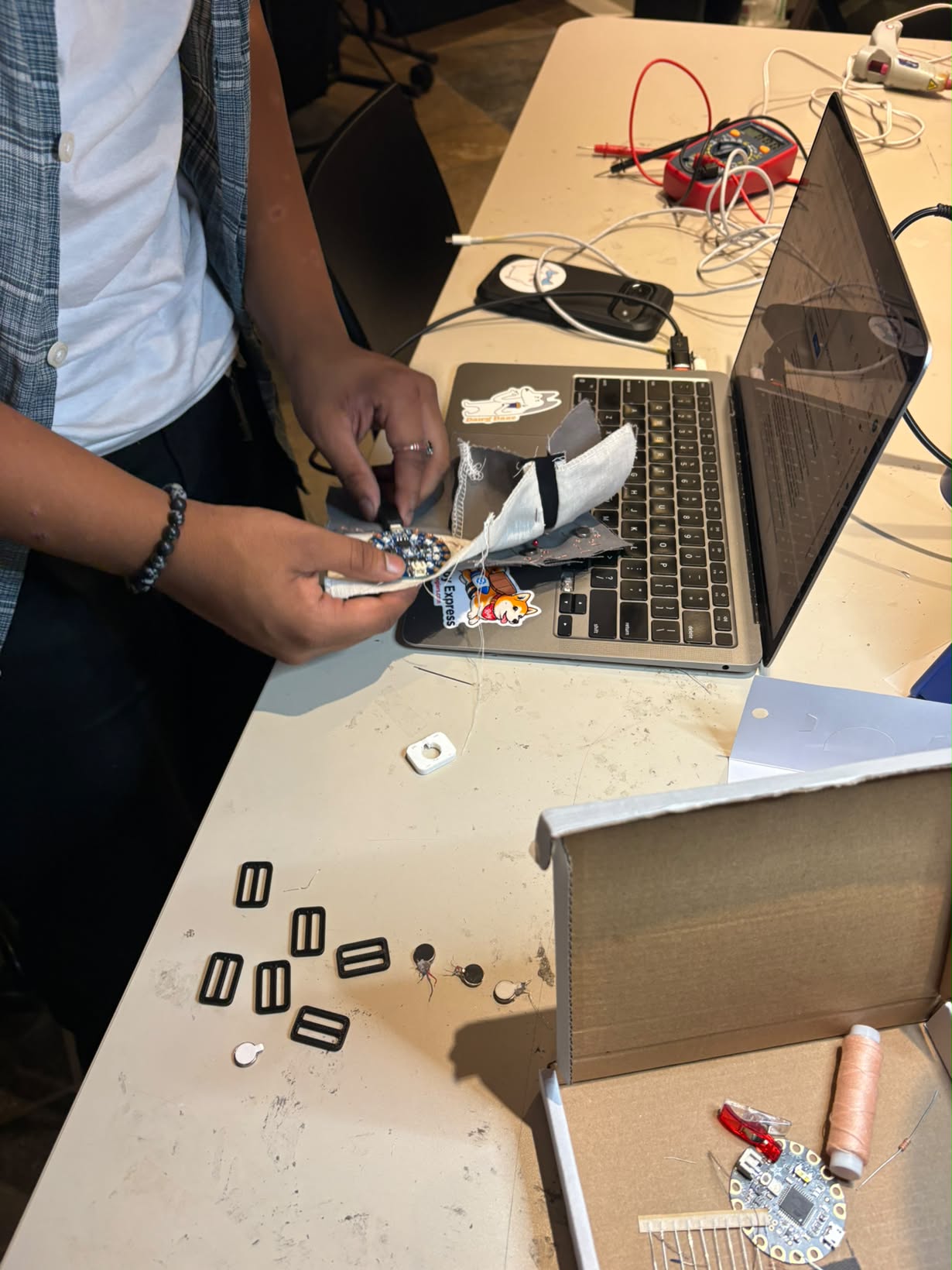
We built fabric wristbands and integrated small vibration motors to provide directional feedback. The hardware is positioning the motors and wiring them to a microcontroller using conductive threading, and then figuring out how to package the components without making the wristband uncomfortable or difficult to move in.
On the software side, we worked on connecting the camera-based object detection and guidance logic to the haptic output. That meant thinking through how information about an object’s location should translate into a signal someone could actually understand through their wrist. We essentially took audio input, fed it to Perceptron which converted into guidance signals on the haptic bracelet. We also had a memory aspect that saved specific objects.
Challenges we faced
Moving from a rigid bracelet to fabric changed more than the appearance. Fabric bends and shifts, so component placement became part of the problem. We had to think about how to keep the motors in useful positions while leaving enough flexibility for someone to wear the device. With fabric, we essentially were able to make it an all fits one device.
Another challenge was deciding what the vibrations should communicate. Making a motor vibrate is straightforward, making that vibration clearly mean “move your hand this way” takes more thought.
We also had to work through the electronics and power constraints of putting multiple motors into a small wearable with a LOT of troubleshooting. So we essentially had to balance sewing, electronics, and coding all at once.
What we learned
We learned how much the physical design affects the usefulness of an assistive device. The software can identify a direction, but that information only helps if the person wearing the wristband can understand the feedback and comfortably act on it.
This weekend also pushed us to think differently about iteration. We already had an approach using servos, but rebuilding with fabric and vibration motors let us explore a different way of communicating the same information.
What’s next
It is still a prototype. Our next step is to find out how well this version supports the everyday tasks that inspired us to build it in the first place. Then build better software that is actually scalable and has more use cases so it can help blind people in genuinely every way. Also potentially add more motors or wristbands on each hand so we can have more combinations of haptics to mean different things.


Log in or sign up for Devpost to join the conversation.