-
-
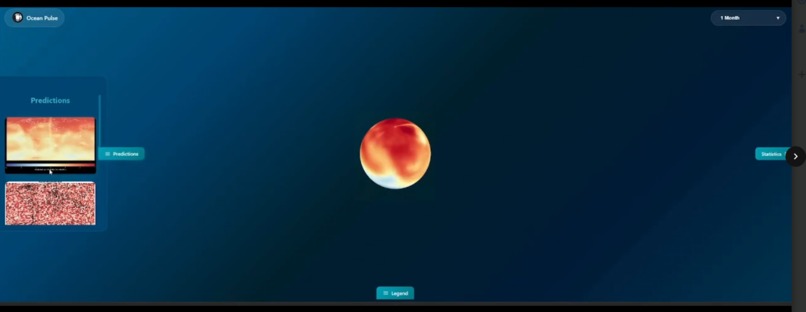
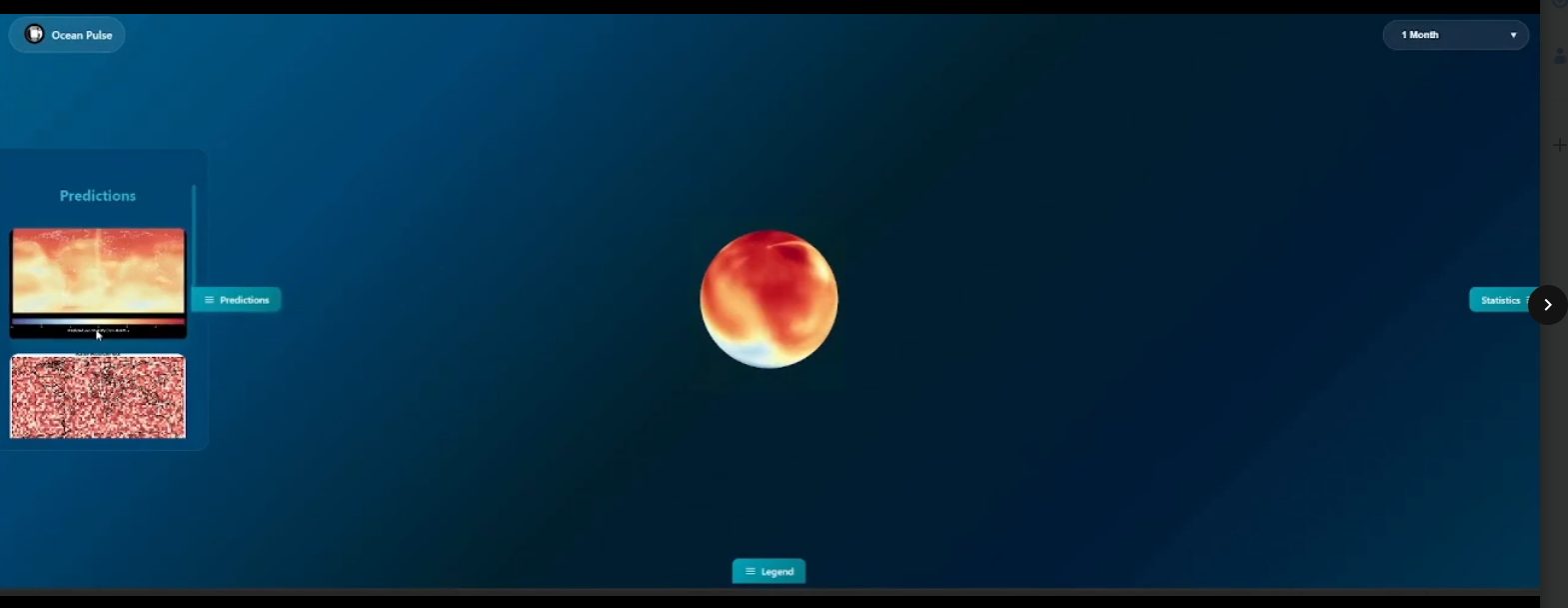
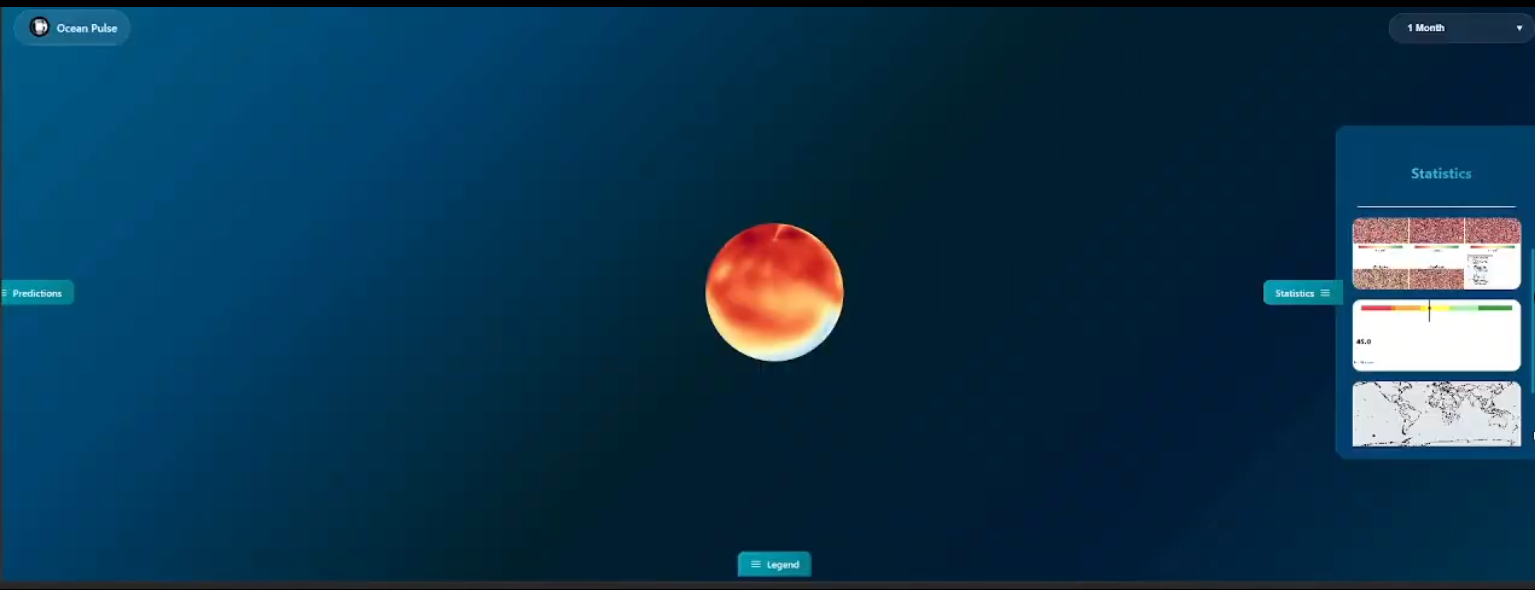
OceanPulse's User Interface
-
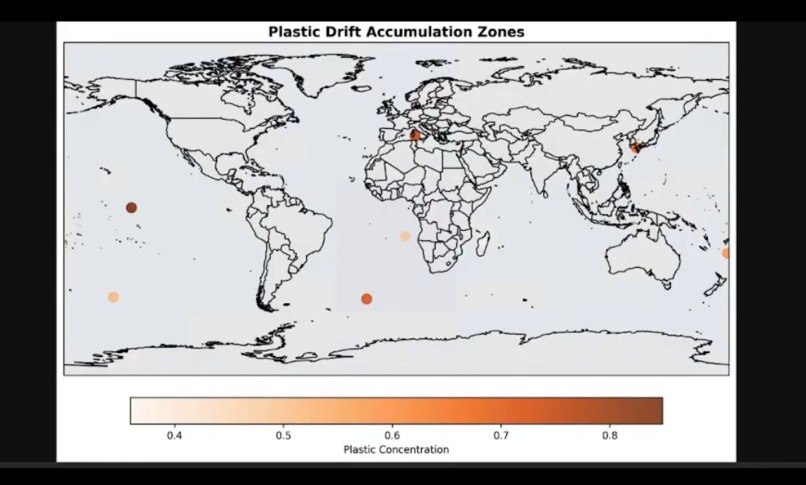
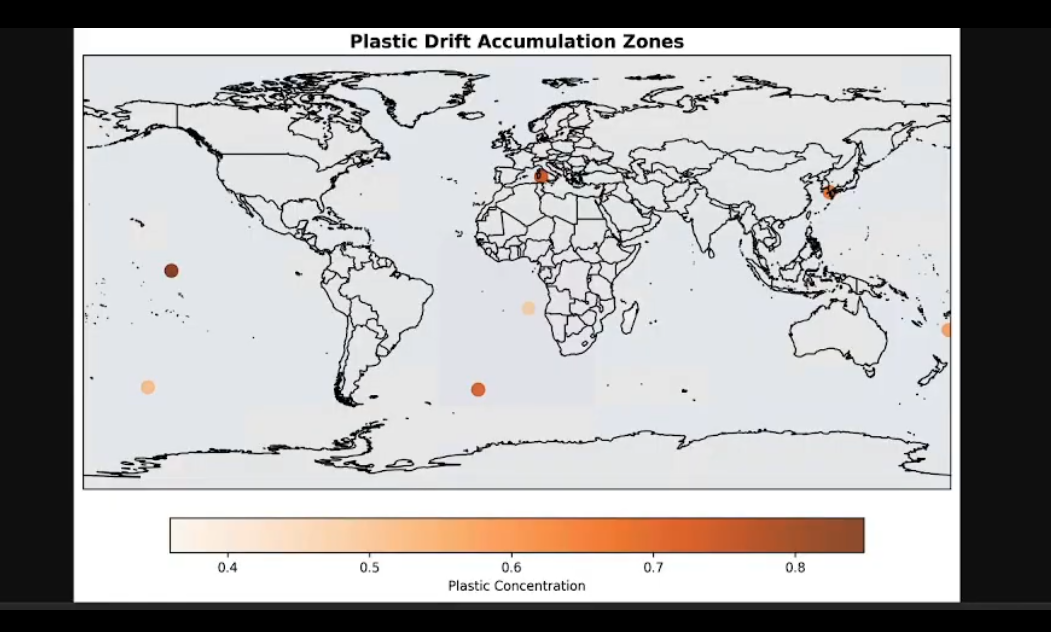
Example of a prediction map
-
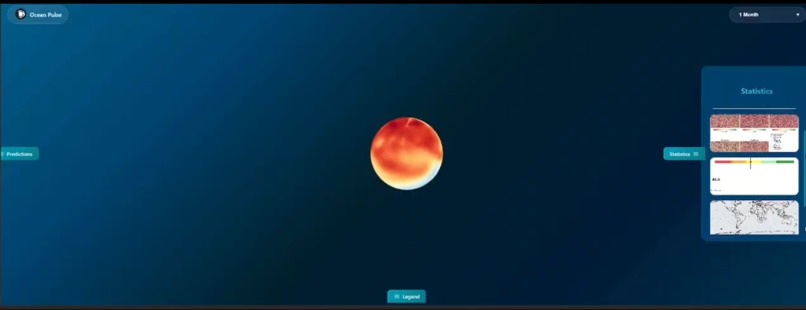
Oceanpulse's user interface P2
We track our vitals everyday, through stat lines such as heart rate, steps taken, sleep. But when it comes to the planet's health, there's no stat line or dashboard. Oceanpulse was born by a simple idea:
If Earth had a smartwatch, what would it tell us?
Climate change is a rampant problem, and we hear about it's issues everyday. From droughts, glacier melting, forest fires, and flooding, it seems all of Earth's problems are related to such an intangible thing. Oceanpulse invisible climate signs to something we can finally see; the pulse of the world.
- OceanPulse uses multiple public databases to make its predictions, including:
- NASA Ocean Color – satellite-derived ocean biology and productivity metrics.
- NOAA OISST v2 High-Resolution – daily sea surface temperature analyses.
- Copernicus Marine Service – ocean currents, salinity, and biogeochemical data.
- Global Fishing Watch – vessel tracking and fishing effort data.
- Ocean Networks Canada – in-situ ocean sensor measurements.
- ESA Copernicus SciHub – Sentinel satellite imagery for environmental monitoring.
- NASA OCO-2 – high-precision atmospheric CO₂ measurements.
- HYCOM – ocean circulation model outputs.
These datasets allow OceanPulse to track ocean health, predict marine heatwaves, monitor fish migrations, and detect greenhouse gas leaks in near real time.
These datasets are ingested through Oceanpulses machine learning algorithms, which takes historical data of over 50 years, satellite observations, currents, fish movements, and greenhouse gas emissions. Through it's multiple databases, Oceanpulse can accurate short-term predictions for 2-3 months. These forecasts include marine heatwaves, shifts in fish migration, and potential carbon leak hotspots, providing actionable insights for fisheries, governments, NGOs, and climate researchers.
Oceanpulse transforms raw data into actionable and more digestible content which can be helpful for multiple groups;
- Fisheries: Ocean pulse fish migration and helps to avoid over fishing or population collapse.
- Governments: Detect potential greenhouse gas leaks, monitor marine heatwaves, and prioritize reef protection.
- NGOs & Conservation Groups: Target cleanup efforts, conservation projects, and resource allocation with precision
- Climate Researchers: Quantify blue carbon sinks, model climate feedback, and improve short-term environmental forecasts.
Built With
- css
- data
- dataset
- empress
- esa-copernicus-scihub
- express.js
- global-fishing-watch
- hycom
- machine-learning
- matplotlib
- nasa
- nasa-oco-2
- noaa-oisst-v2-high-resolution
- numpy
- ocean
- ocean-networks-canada
- pandas
- plotly
- python
- pytorch
- randomforestregressor
- three.
- transformer


Log in or sign up for Devpost to join the conversation.