OceanEcho
Inspiration
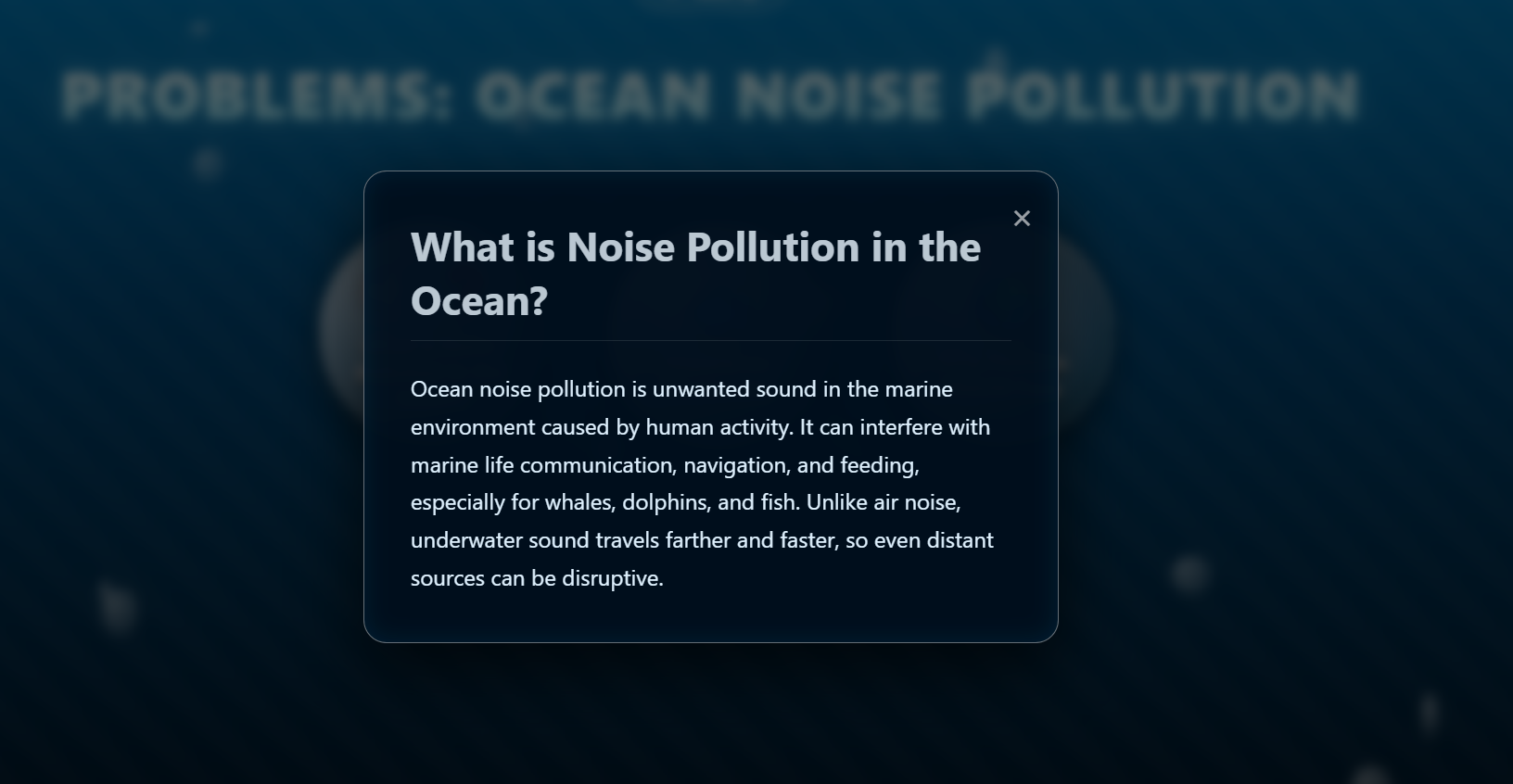
Our team was inspired by a lesson in our AP Environmental Science (APES) class about echolocation and how marine animals rely on sound to communicate, navigate, and survive. This made us realize that while people often talk about plastic pollution or oil spills, ocean noise pollution is one of the least known environmental problems affecting marine ecosystems.
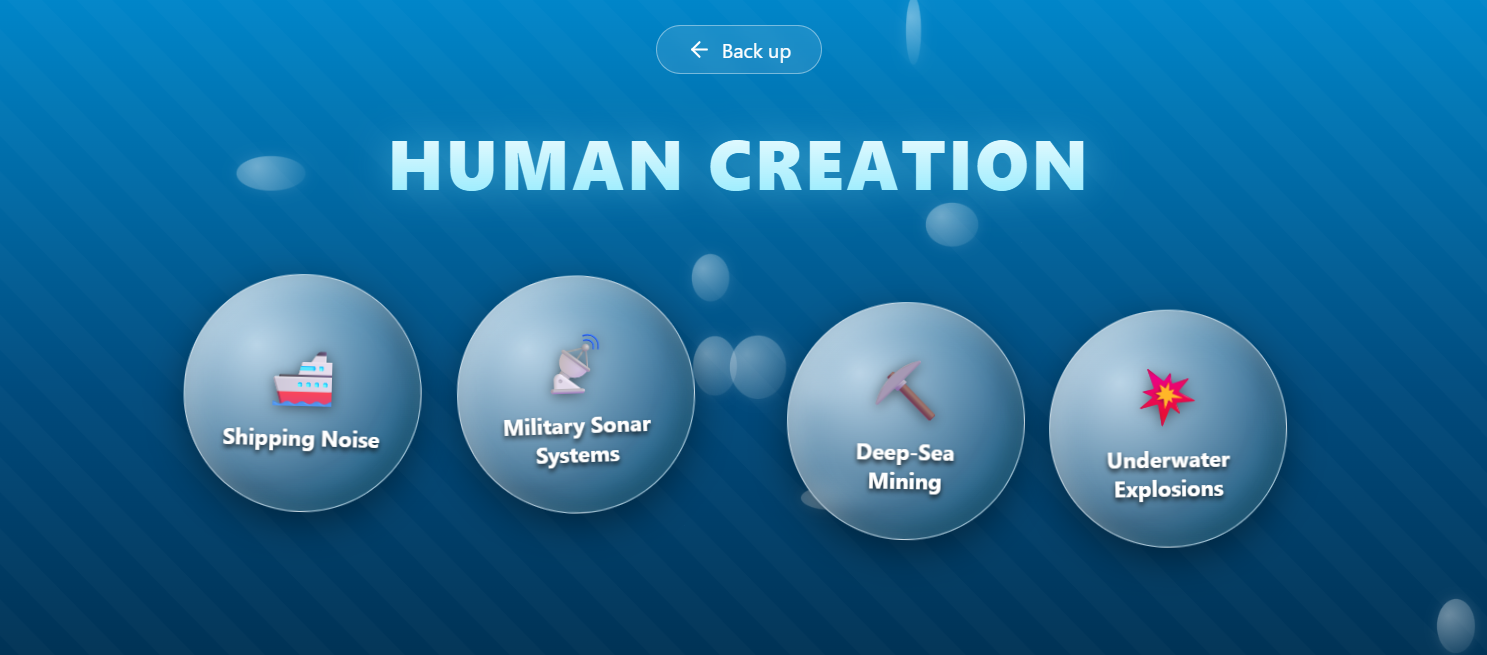
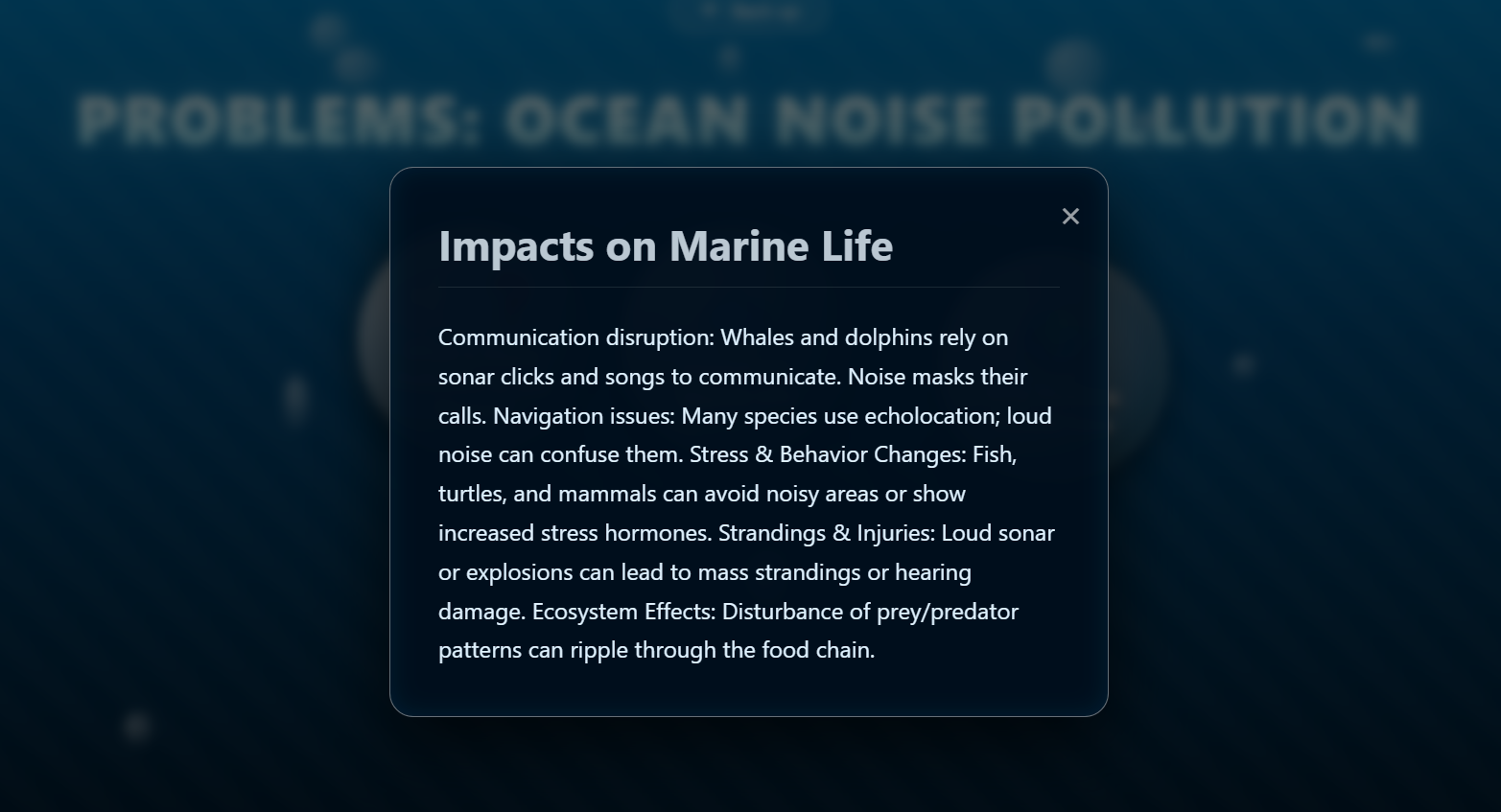
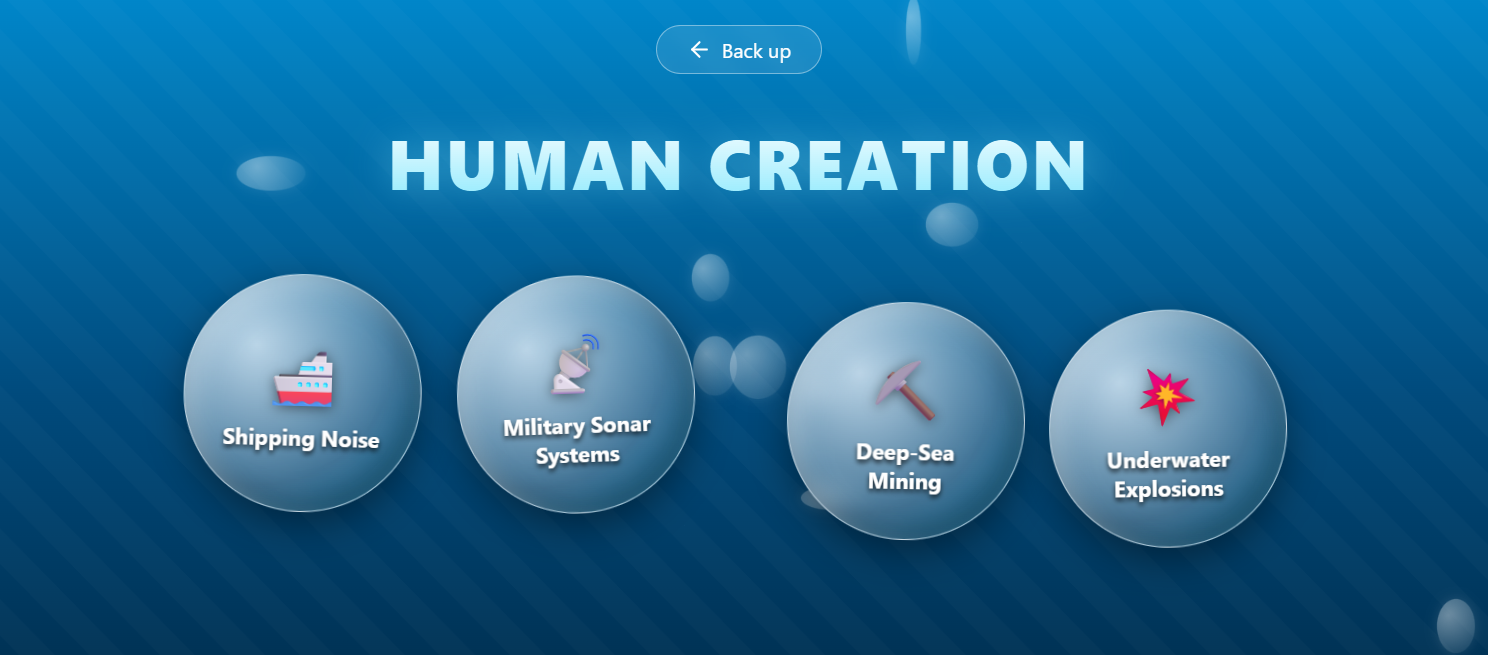
Ships, sonar systems, underwater mining, and even underwater explosions create constant noise beneath the ocean’s surface. Marine animals such as whales and dolphins rely heavily on sound to find food, communicate, and travel long distances. When the ocean becomes too noisy, these animals struggle to survive.
With OceanEcho, we wanted to both educate people about this overlooked problem and explore how technology and AI could potentially help reduce harmful underwater noise.
What it does
OceanEcho is a prototype platform that combines education and AI tools to help people understand and address ocean noise pollution.
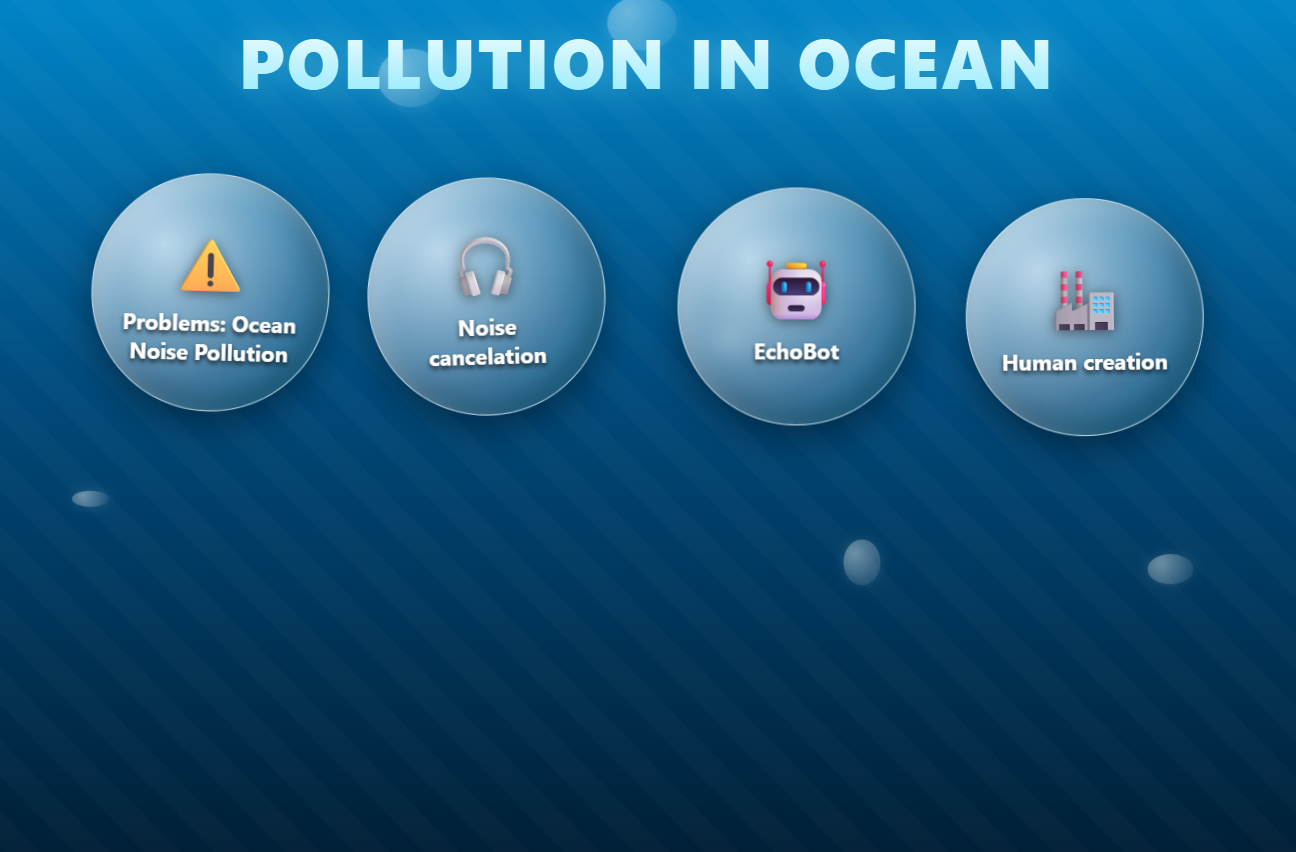
Our project includes several key features:
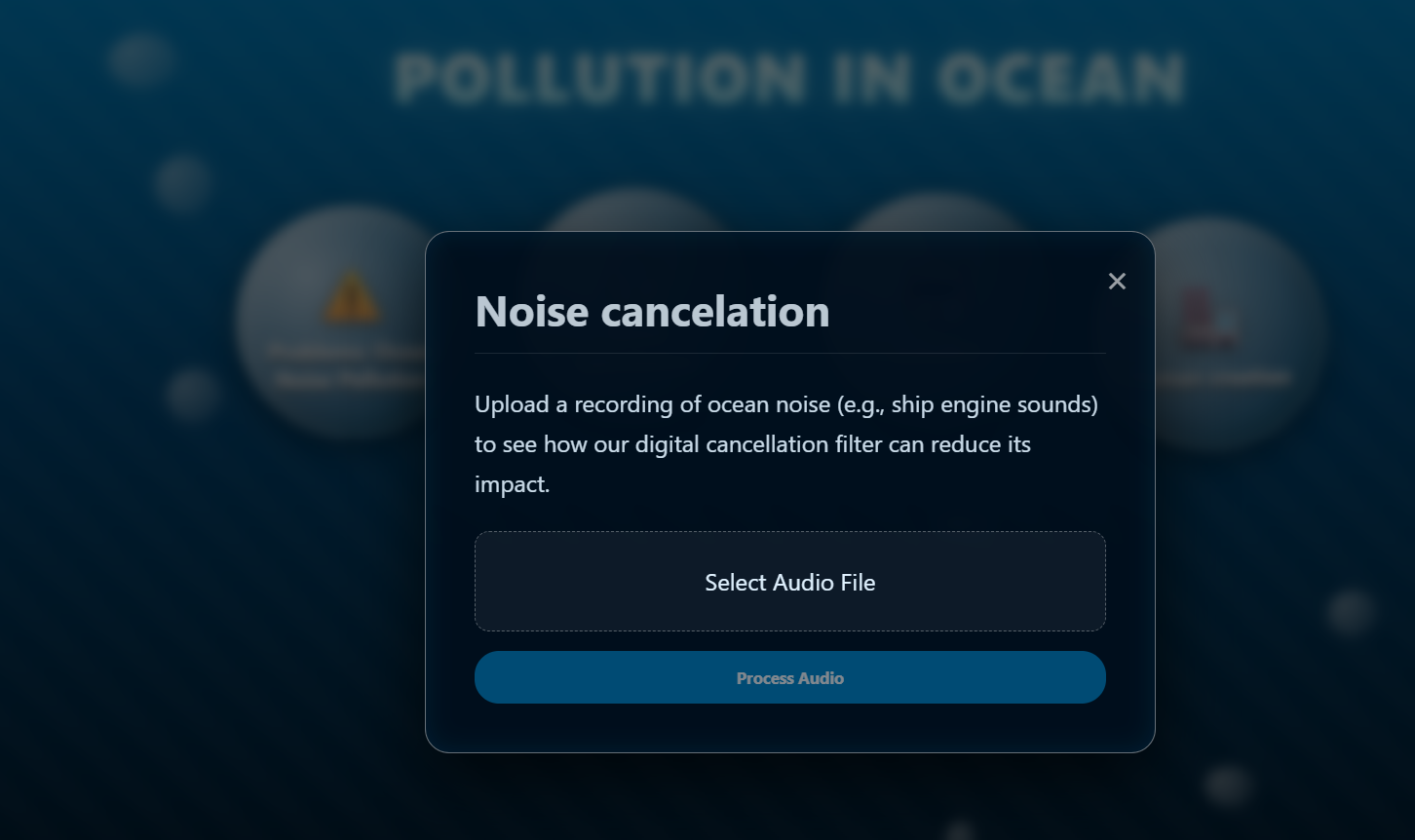
- AI Noise Cancellation: Users can upload ocean audio containing noise from ships, sonar systems, or other sources. Our system analyzes the audio and applies filtering techniques to reduce unwanted noise.
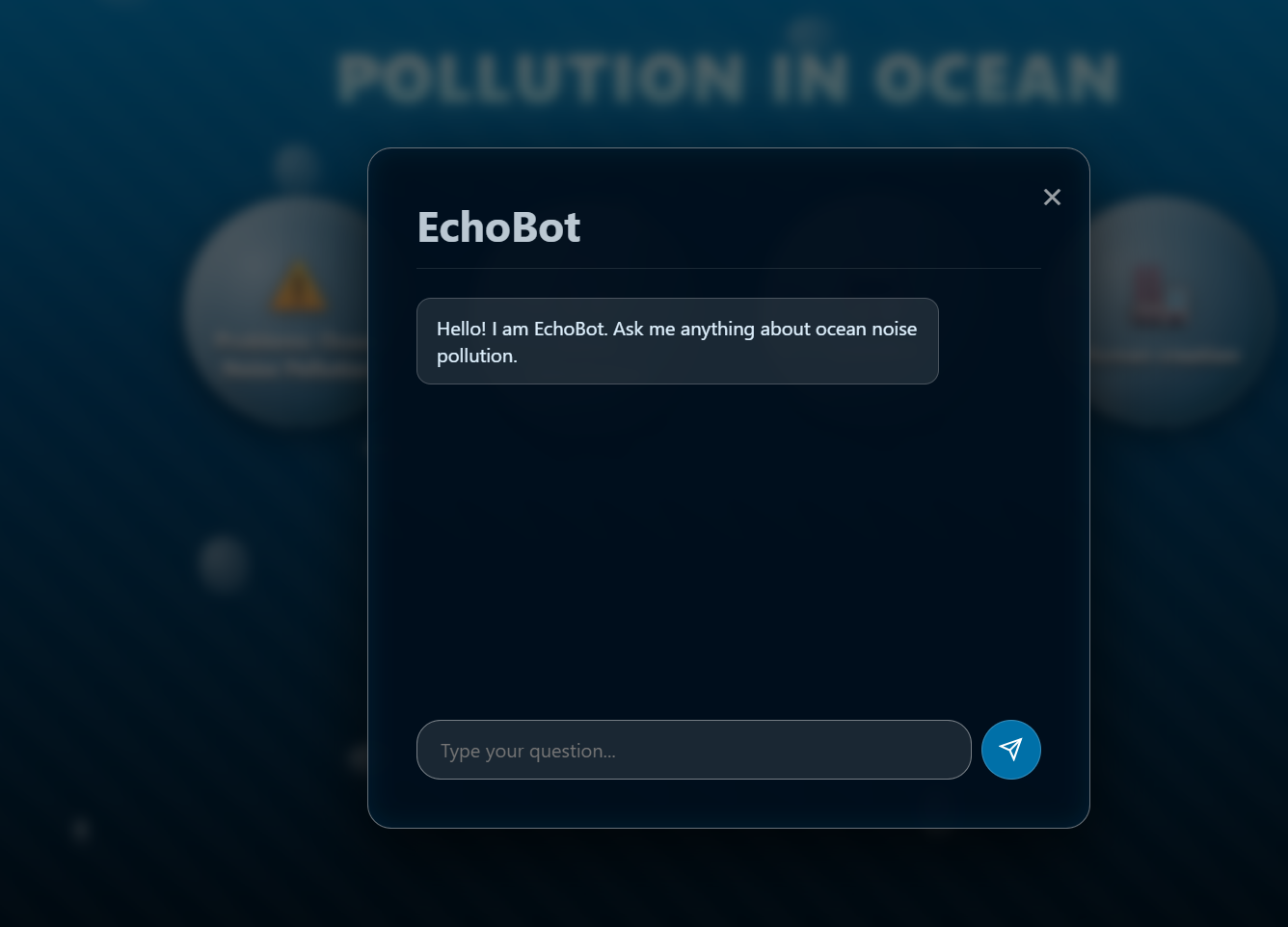
- EchoBot: An AI chatbot that answers questions about ocean noise pollution, its causes, and how it affects marine animals.
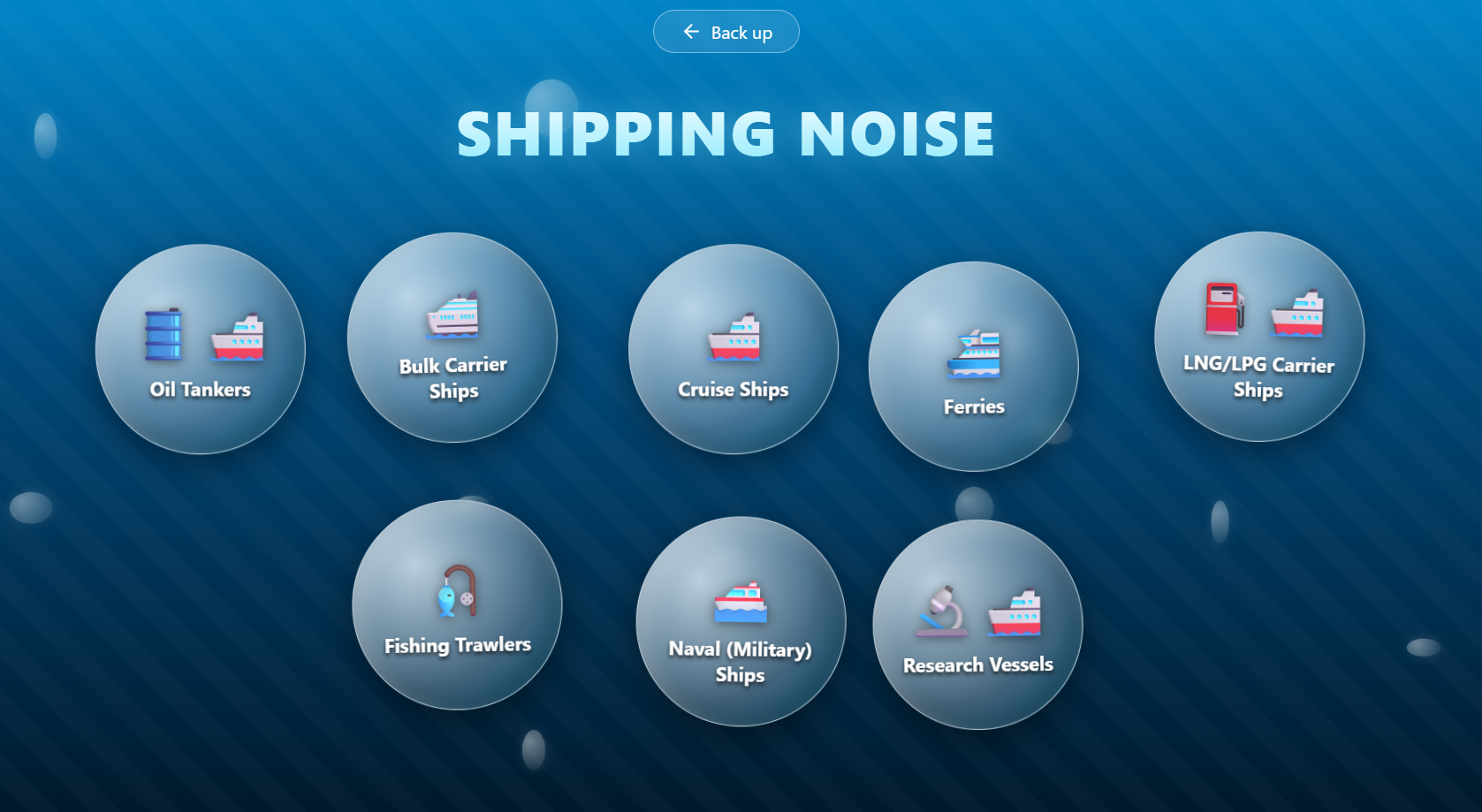
- Educational Sections: Users can explore information about different sources of ocean noise pollution, their frequency ranges, and their environmental impact.
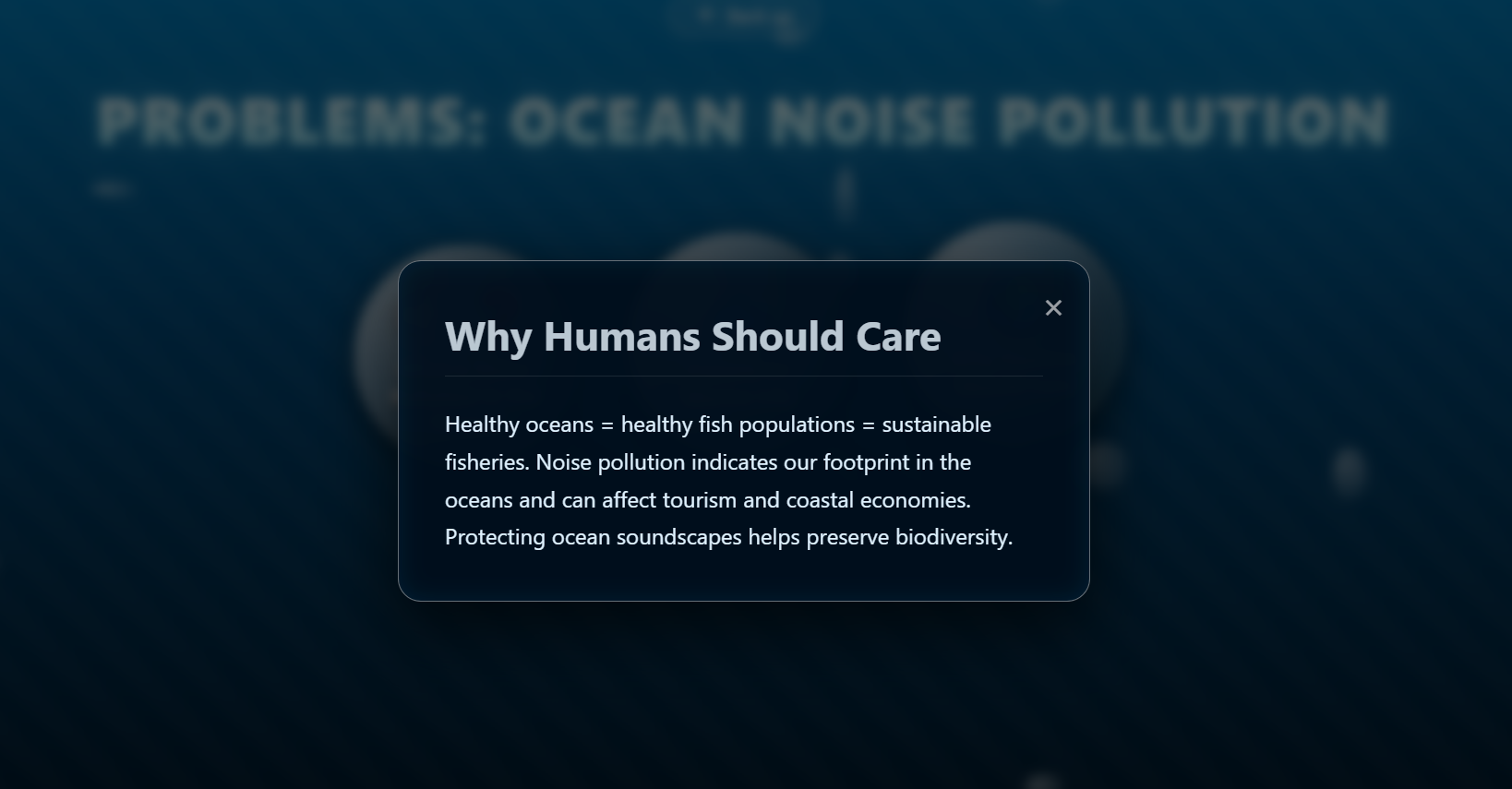
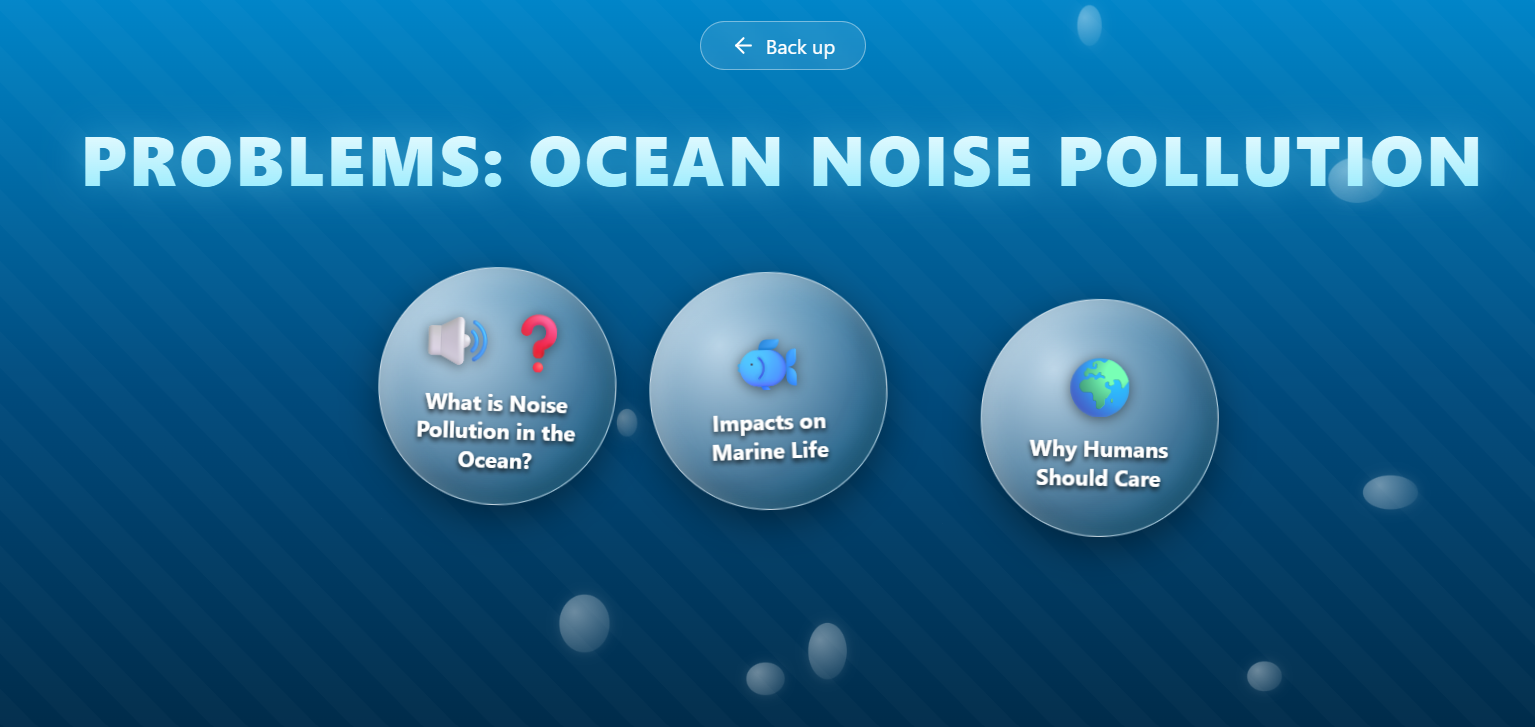
- Problem Overview: A section explaining why ocean noise pollution is an important issue and why it deserves more attention.
The goal of OceanEcho is to raise awareness while demonstrating a potential technological solution.
How we built it
We divided responsibilities among our three team members to efficiently build the project during the hackathon.
- Ayesha Khurram – Backend & AI Developer: Built the AI components including the noise processing system and EchoBot chatbot.
- Hansika – Frontend Developer: Designed and developed the user interface and interactive experience.
- Rupa – Designer & Researcher: Conducted research on ocean noise pollution and created the educational content and visual design.
The backend system processes uploaded audio files, analyzes their frequency spectrum, and applies filtering methods to reduce noise. EchoBot was built to provide simple explanations about ocean noise pollution and help users learn more about the issue.
Because this project was created during a 36-hour hackathon, we focused on building a functional prototype that demonstrates the concept.
Challenges we ran into
One of the biggest challenges we faced was the limited time. Designing an idea, building the AI components, and developing the user interface within 36 hours required careful coordination and teamwork.
Another major challenge was implementing the noise cancellation system. Audio signal processing can be complex, and we encountered several technical issues while trying to filter underwater noise effectively.
Despite these obstacles, our team was able to collaborate and build a working prototype.
Accomplishments that we're proud of
We are proud that we were able to:
- Build a working AI-based noise reduction prototype
- Create EchoBot, an educational AI chatbot
- Design a platform that combines environmental awareness with technology
- Successfully complete a full project within a hackathon timeframe
Most importantly, we were able to highlight an environmental issue that many people are not aware of.
What we learned
Throughout this project we learned about:
- Ocean acoustics and marine communication
- Audio signal processing and frequency analysis
- Building AI-powered applications
- Backend and frontend integration
- Collaborating effectively in a fast-paced hackathon environment
This project showed us how technology and environmental science can work together to address real-world challenges.
What's next for OceanEcho
OceanEcho is currently a prototype, but there are many ways to improve it in the future.
Possible next steps include:
- Training more advanced AI models to detect and classify underwater noise
- Improving the accuracy of the noise cancellation system
- Integrating the system with real underwater sensors
- Expanding EchoBot with more environmental data and knowledge
- Developing tools for real-time ocean noise monitoring
In the future, technologies like OceanEcho could help researchers monitor ocean environments and reduce harmful noise pollution, helping protect marine ecosystems.


Log in or sign up for Devpost to join the conversation.