-
-
Home
-
Map
Inspiration
The recent increase in public awareness of the problems posed by ocean pollution inspired us to build this website in order to aid ocean clean-up efforts.
What It Does
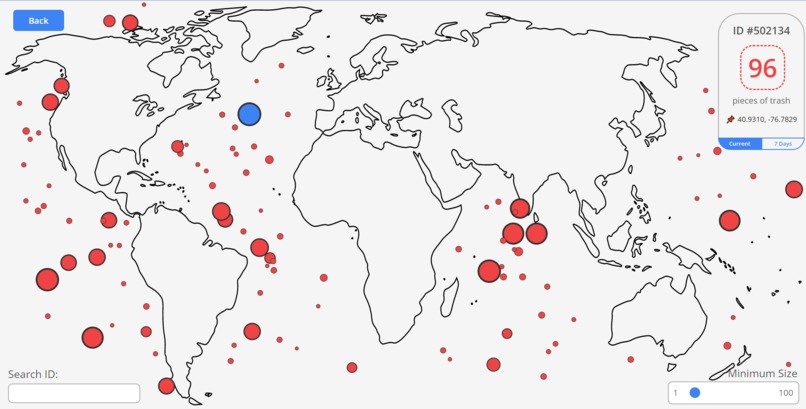
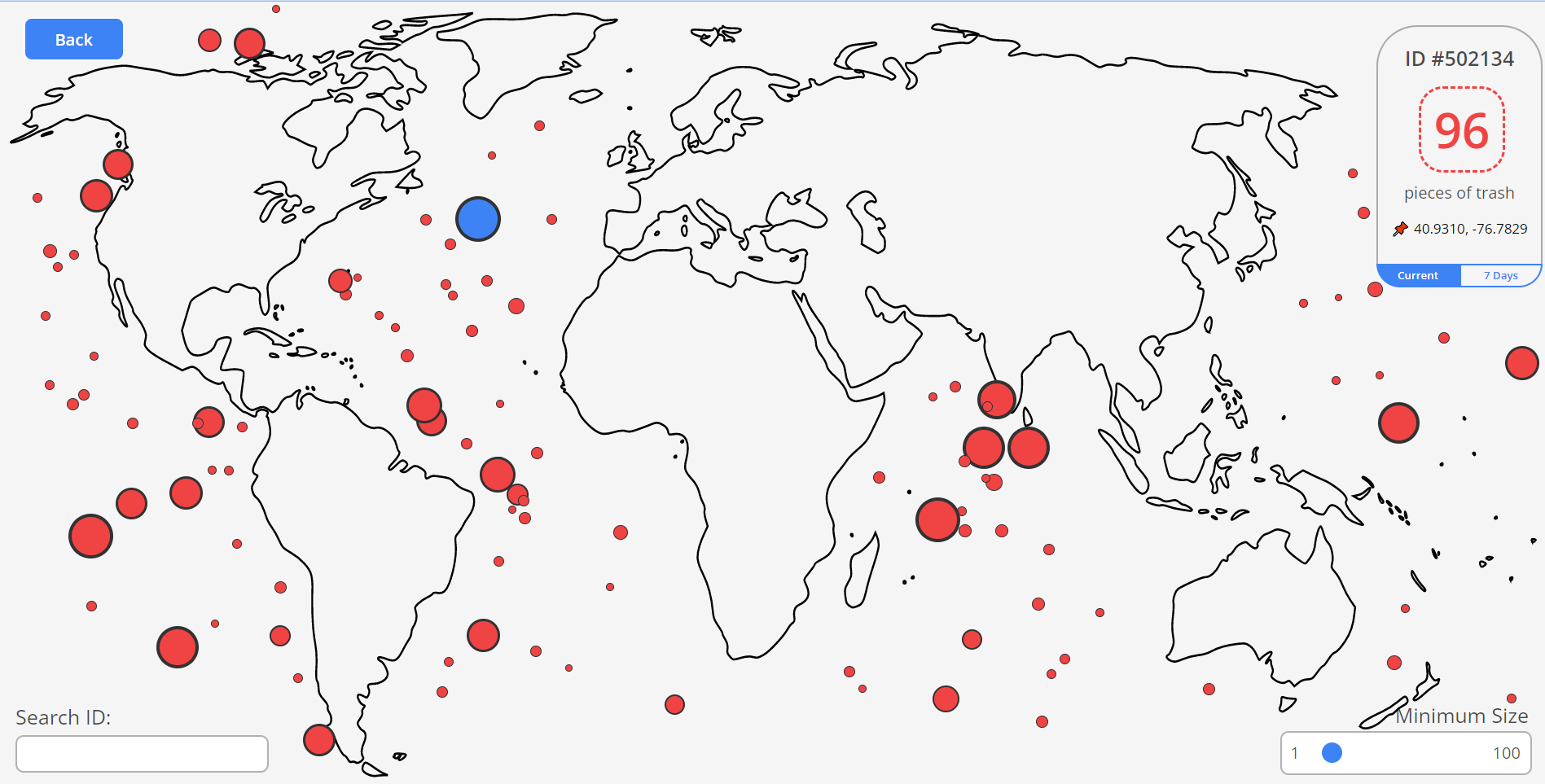
Ocean.ai provides a simple interface to monitor large oceanic garbage patches across the world. Through the addition of Python-driven physical models, we let users predict the future position of trash across a given time period. This allows researchers, clean-up efforts, and curious individuals to track the ocean's trash.
How We Built It
We used VueJS to build the frontend of the website. Data analysis was performed through Python scripts managing CSV data files.
Challenges
We had significant challenges with finding reliable wind data and then doing the physics simulation to estimate where trash would end up, however, we are happy with the end result as we were able to find updated wind data to the nearest 0.25 of a degree of latitude and longitude.
Accomplishments
We are very pleased with the aesthetics of the website built with VueJS. We are also proud of our advanced data modeling and our custom draggable world map of trash.
What We Learned
We learned a lot about efficiently sourcing data to use for our predictions. Additionally, we greatly improved our skills and knowledge of VueJS.
What’s Next
We plan to improve the accuracy of our physical models and extend the valid prediction time period. These features will further improve the usefulness of ocean.ai to ocean clean-up.
Built With
- css
- csv
- html
- javascript
- python
- vuejs


Log in or sign up for Devpost to join the conversation.