-
-
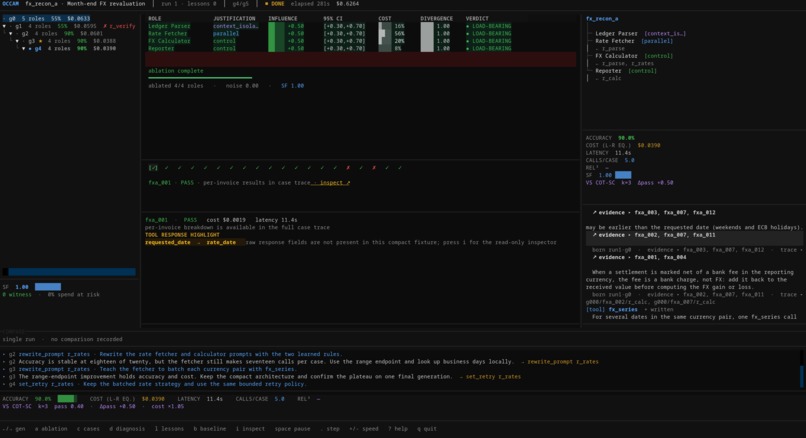
Terminal ss
-
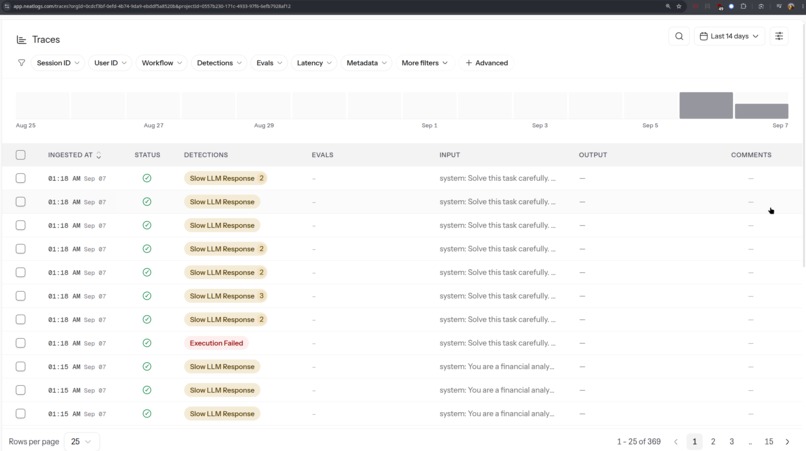
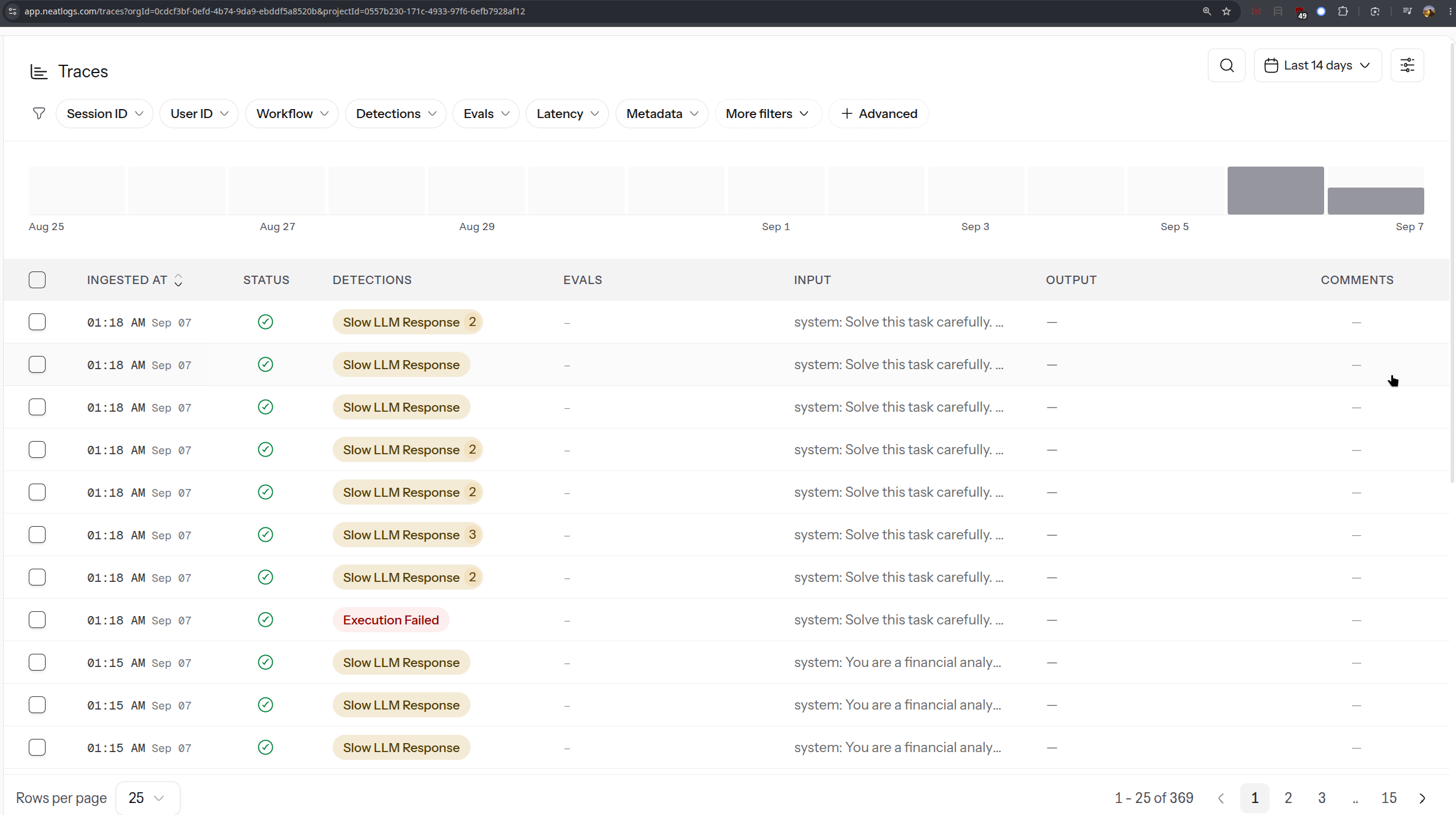
neatlogs ss (really helped find a llm tool call bug)
-
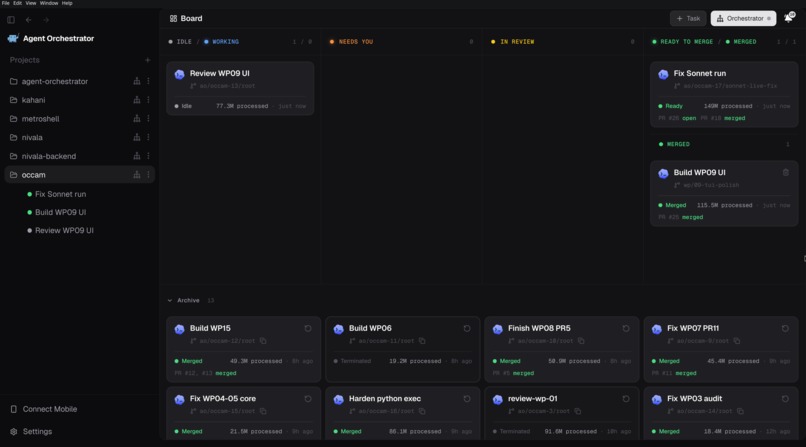
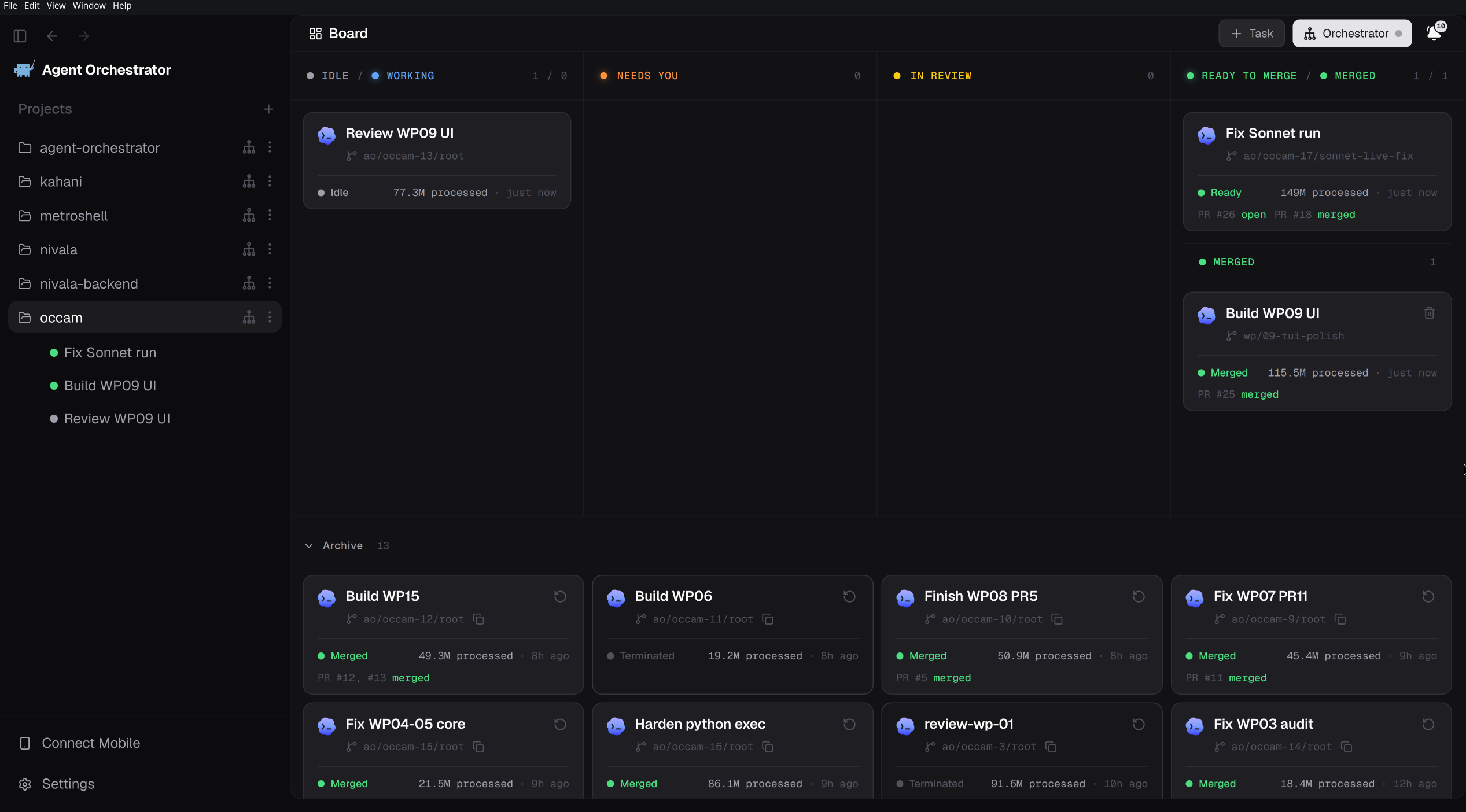
AO KANBAN BOARD (hundreds of millions of tokens processed)
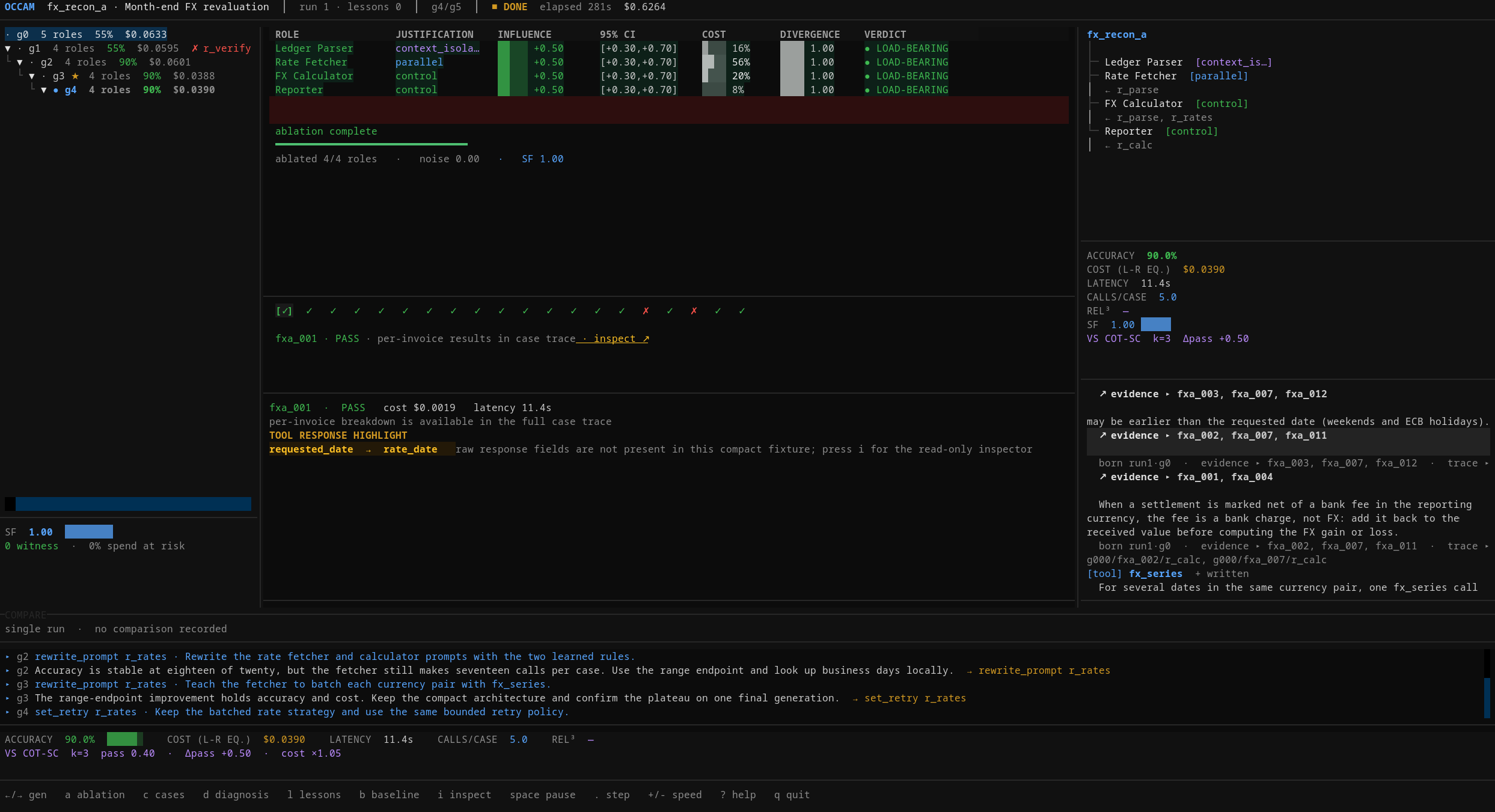
Demo Video + Build process: https://drive.google.com/drive/folders/1PWatKjEtgXLlo92KSVJUeHEDi5oECm49?usp=sharing
Inspiration
We spent two days reading before writing a line of code. Track 1 said "design, test, and improve agents," so we went down the whole rabbit hole — ADAS, AgentSquare, AFlow, GPTSwarm, the Darwin Gödel Machine, harness optimization. Every paper said the same thing louder: automated multi-agent design works.
Then we found a June 2026 paper (arXiv:2606.13003) that audited six of those exact frameworks and said it doesn't. They lose to a single agent doing chain-of-thought, at up to 10× the cost. Agents agreed unanimously in over 90% of cases. An "all-assistant" setup beat task-specific experts. The paper's term for agents that burn tokens without changing the answer stuck with us: expensive witnesses.
So we almost built something the literature had just disproven. Instead we built the thing that paper asked for in its final paragraph — measure structural fidelity, whether each agent actually causes anything — and found nobody had.
What it does
- Designs a multi-agent team, runs it on a real task, then ablates every role — reruns each case with that agent removed to see if the answers change.
- WITNESS agents get pruned. LOAD-BEARING stay. UNCERTAIN never get touched.
- Diagnoses failures, mutates once, loops. Writes down lessons about its tools that the next run's architect reads first.
- The task is real accountant work: month-end FX revaluation of a multi-currency ledger, using live ECB rates from the Frankfurter API. Measured against a cost-matched single-agent baseline.
Everyone else's diagram grows. Ours shrinks.
How we built it
- Python + Textual TUI, built with AO — parallel worker sessions on isolated git worktrees, one work package per session, every merge a PR.
- Engine and TUI share nothing but a directory. The engine appends to an event log; the TUI tails it. Replay is indistinguishable from live — so the interface got built before the engine existed, and every demo is deterministic.
- Caching is what makes ablation affordable: knock out role 4 and roles 1–3 are cache hits.
- Tools are deliberately under-documented — nothing about ECB holidays, nothing about the batch endpoint. The agent has to earn those.
- A leak guard rejects any "lesson" containing a date or a number. It has to be a rule, never an answer.
- Traced end to end in Neatlogs; inference on GLM-4.7-Flash via TensorMux and GPT-5 nano via AI Grants India.
Challenges we ran into
- Then the brief moved. Mid-hackathon the sponsors clarified they wanted real third-party tools, not benchmark scores. We had three benchmarks wired up. We dropped all three and rebuilt the substrate on a live API overnight. The measurement layer — the actual idea — survived untouched, which is the only reason that was survivable.
- We caught ourselves being wrong. Going back to primary sources, we found errors in our own notes: a "35%" we'd cited was cost, not accuracy. A quote we'd attributed to Anthropic doesn't exist. An API quirk we were about to teach the agent turned out to be completely false when we tested it live. Teaching an agent a fake rule would have been worse than teaching it nothing.
- Every provider had a trap. Sonnet 5 removed sampling parameters — our code sent
temperatureon every call and got 400s, while curl worked because we'd naturally omitted it. GLM's hidden reasoning tokens eatmax_tokensfirst, so truncation looks identical to an empty answer. Frankfurter silently ignores legacy param names and hands back the wrong currency with a 200. - Rate limits, not tokens, were the wall. 50M granted tokens and still throttled at ~15 requests a minute.
- We hardened a sandbox nobody asked for. Hours on
python_execsecurity that belonged to the demo. Better system, wrong call on the clock. - The last mile got us. The full loop reached generation one on real cases with real API calls and a valid event log. Accuracy convergence is where the clock won.
Accomplishments that we're proud of
- The paper's finding reproduced itself inside our tool. We made every role declare why it exists. We never told the system which justifications were suspect — but the red WITNESS rows came back
verificationandensemble, and the green ones came backparallelandcontext_isolation. That's the paper's conclusion, rediscovered live, on a finance task, by a system nobody told. - We were honest about noise from day one. Models aren't deterministic even at temperature 0, so we measure the noise floor before every ablation, compare per-case instead of in aggregate, report confidence intervals, and refuse to prune anything statistically unresolved. Leave-one-out is a first-order Shapley approximation and we say so out loud rather than hoping nobody asks.
- We shipped a spec, not just code. Eleven PRD documents written before implementation — which is why two people plus a fleet of agents didn't collide, and why a mid-hackathon pivot cost one rewrite instead of a restart.
What we learned
- Measure the parts, not the whole. Everyone reports end-to-end accuracy. Almost nobody asks whether each piece earned its tokens. Once you ask, a lot of architecture turns out to be decoration.
- "The agent failed" is usually a lie. Nearly every bug was a contract mismatch — a dropped parameter, a reasoning field eating a budget, an ignored query arg. Suspect the plumbing before the model.
- Read the newest paper before you build on the popular one. Two days of reading nearly sent us to build a 2024 idea. The same two days are what gave us the whole project.
- Restraint is invisible. A system that correctly declines to add an agent is doing something better than one that adds five — and it looks like nothing happening. Making that visible was as hard as the algorithm.
What's next for OCCAM
- Ablate the lessons too — prune memory that never changed an outcome.
- Structural fidelity as a public metric across the major frameworks. If the paper is right, most score badly.
- Pairwise ablation, for roles that only matter together.
- More tool environments — a task is just two files. Email, payments, issue triage. We picked FX for deterministic ground truth, not because the engine needs finance.
- An efficient frontier: not the smallest team that works, but the best architecture at every cost ceiling — and the exact point where another agent stops paying for itself.
Built With
- agent-orchestrator
- neatlogs
- python
- textual


Log in or sign up for Devpost to join the conversation.