-
-
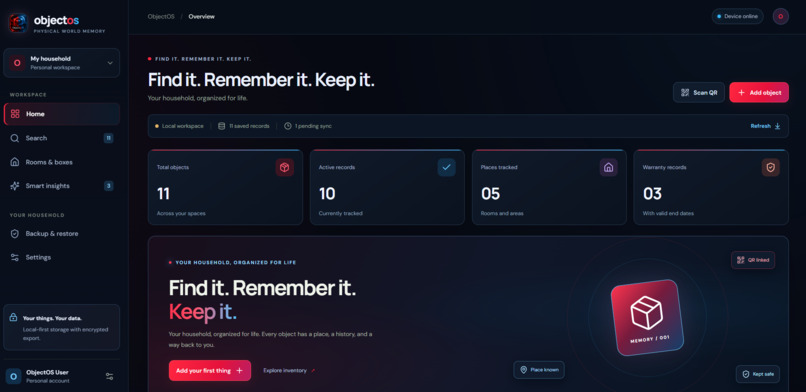
Opening
-
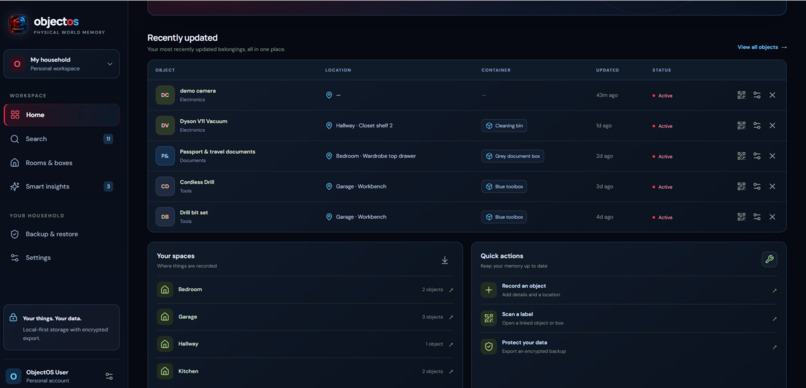
list
-
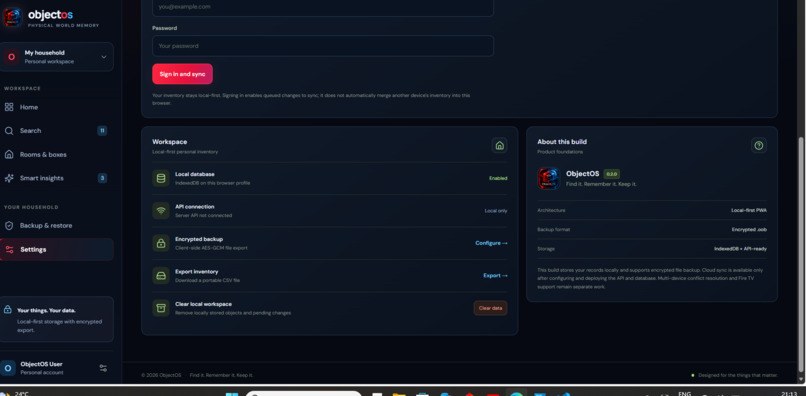
version
-
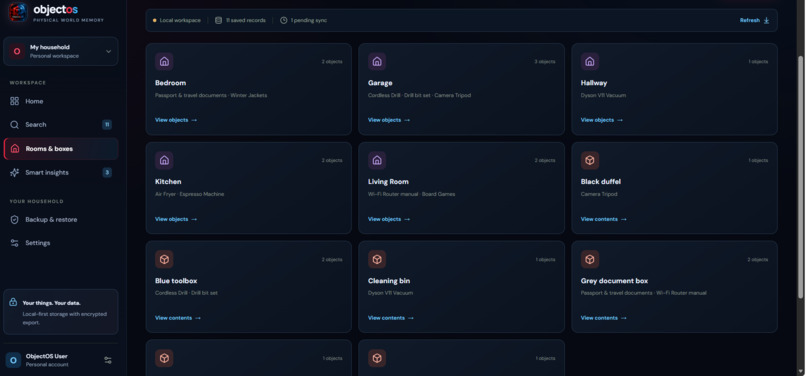
storage
-
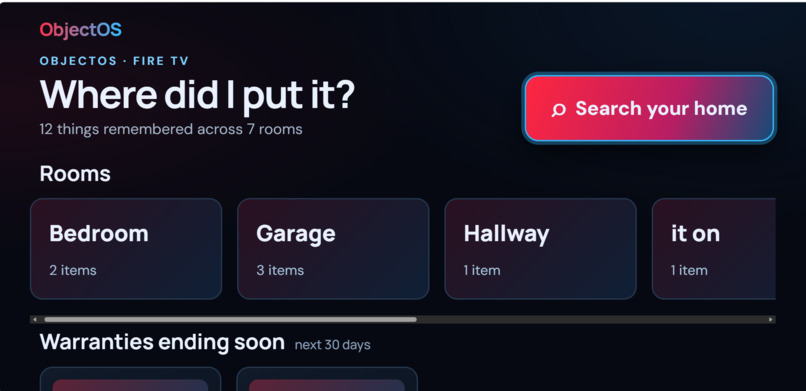
tv screen
-
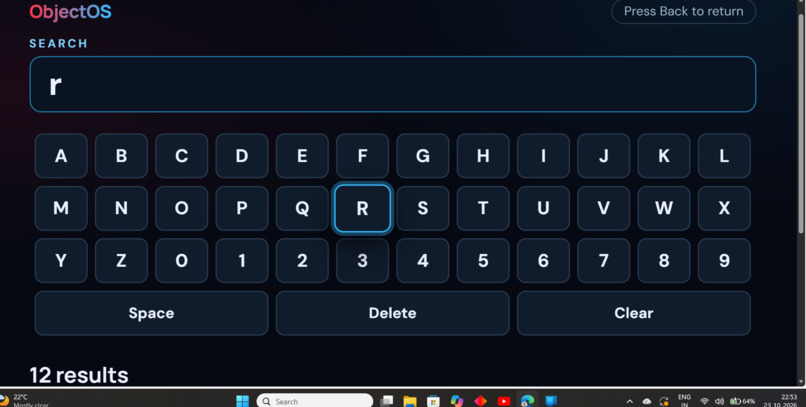
tv search bar
-
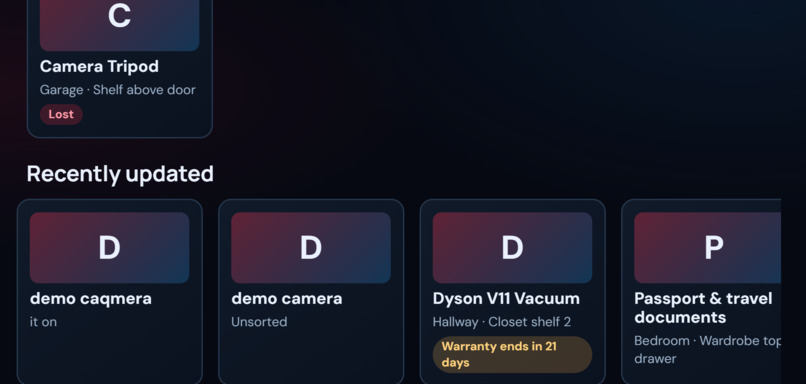
tv feautures
Inspiration
People often forget where they keep household belongings, stored boxes, and important item information. Searching through rooms and storage spaces wastes time, while details such as descriptions, documents, warranties, and repair history can become difficult to track. This inspired us to build ObjectOS — a digital memory for the home** that helps people organize their belongings and retrieve information more easily.
What We Built
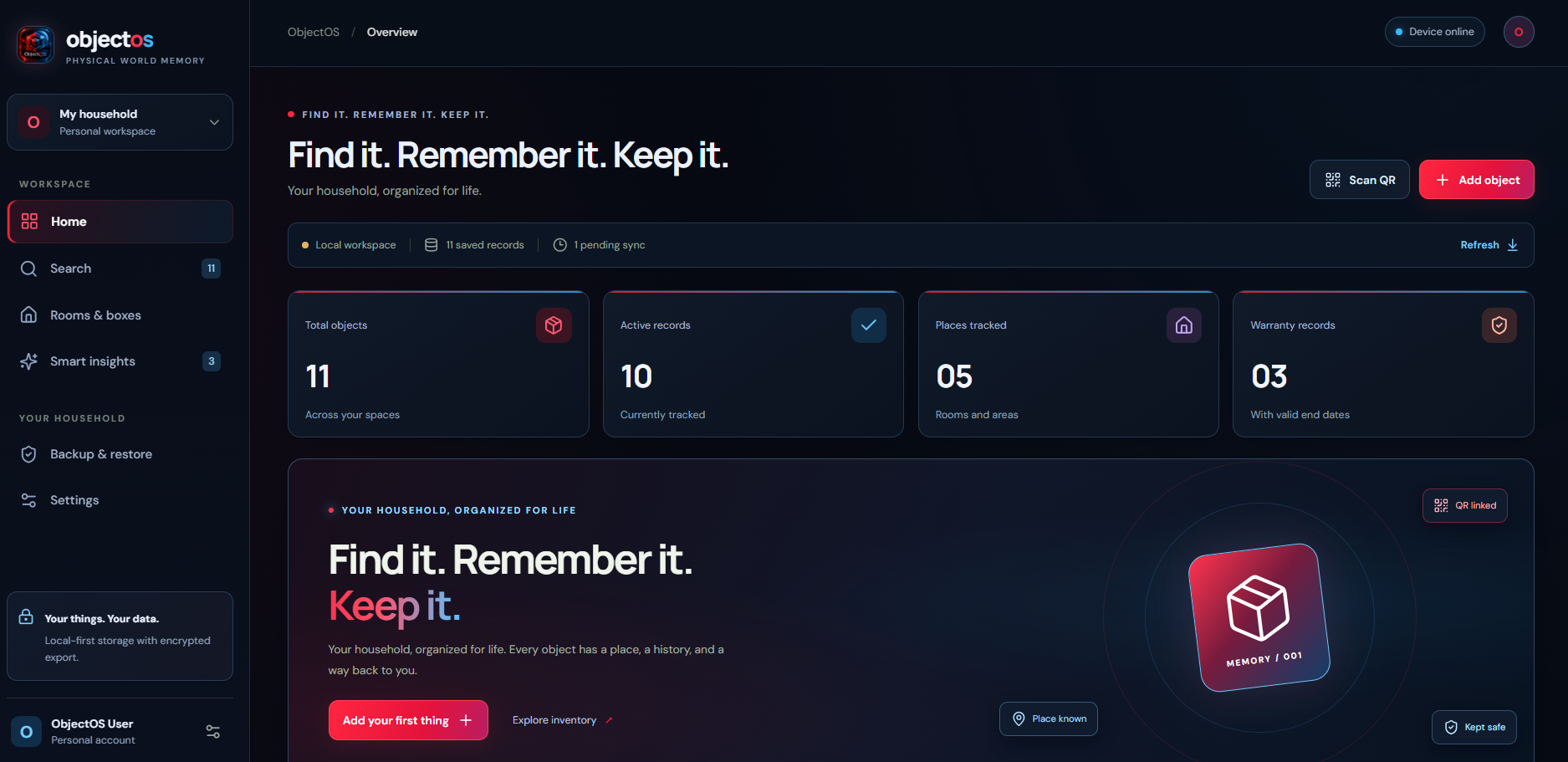
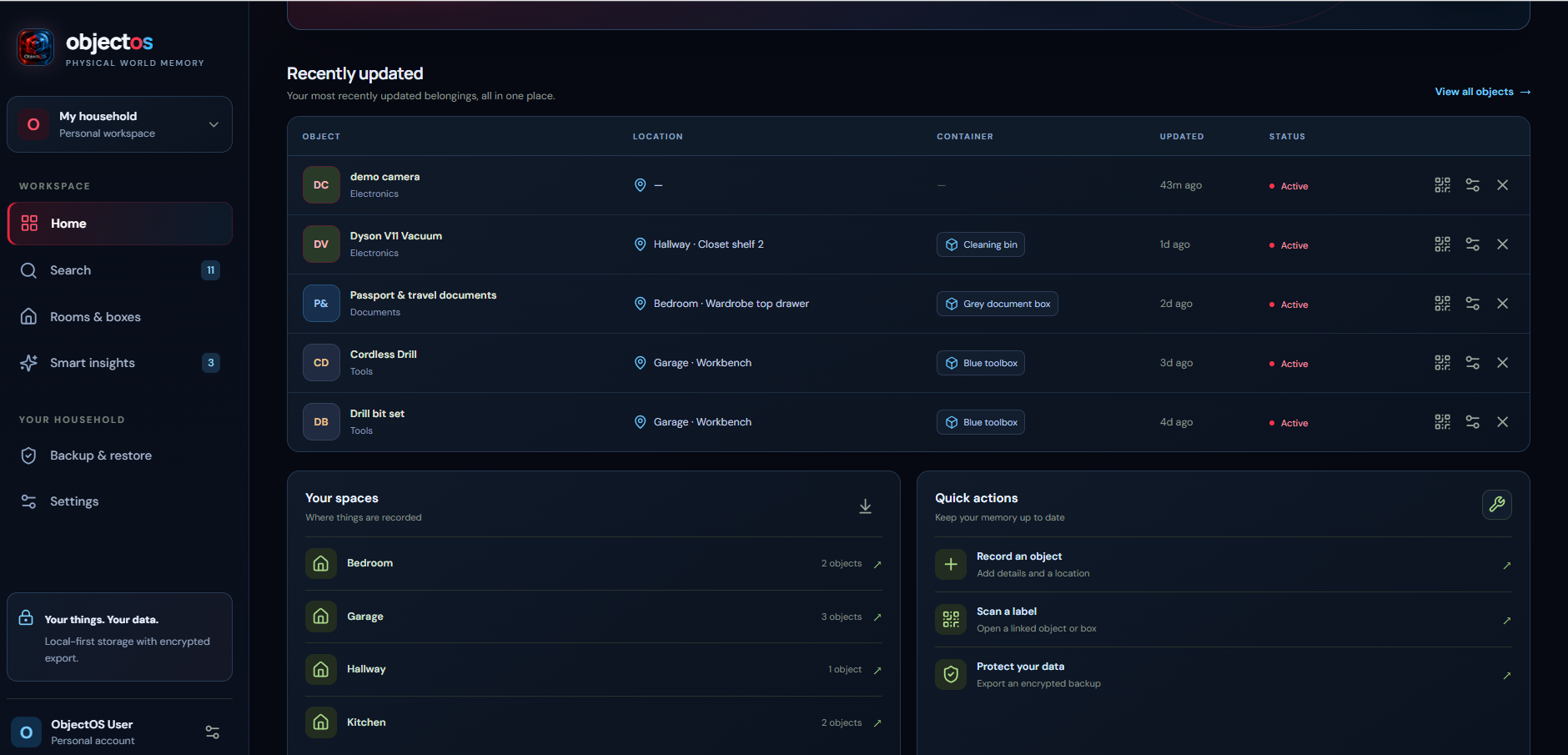
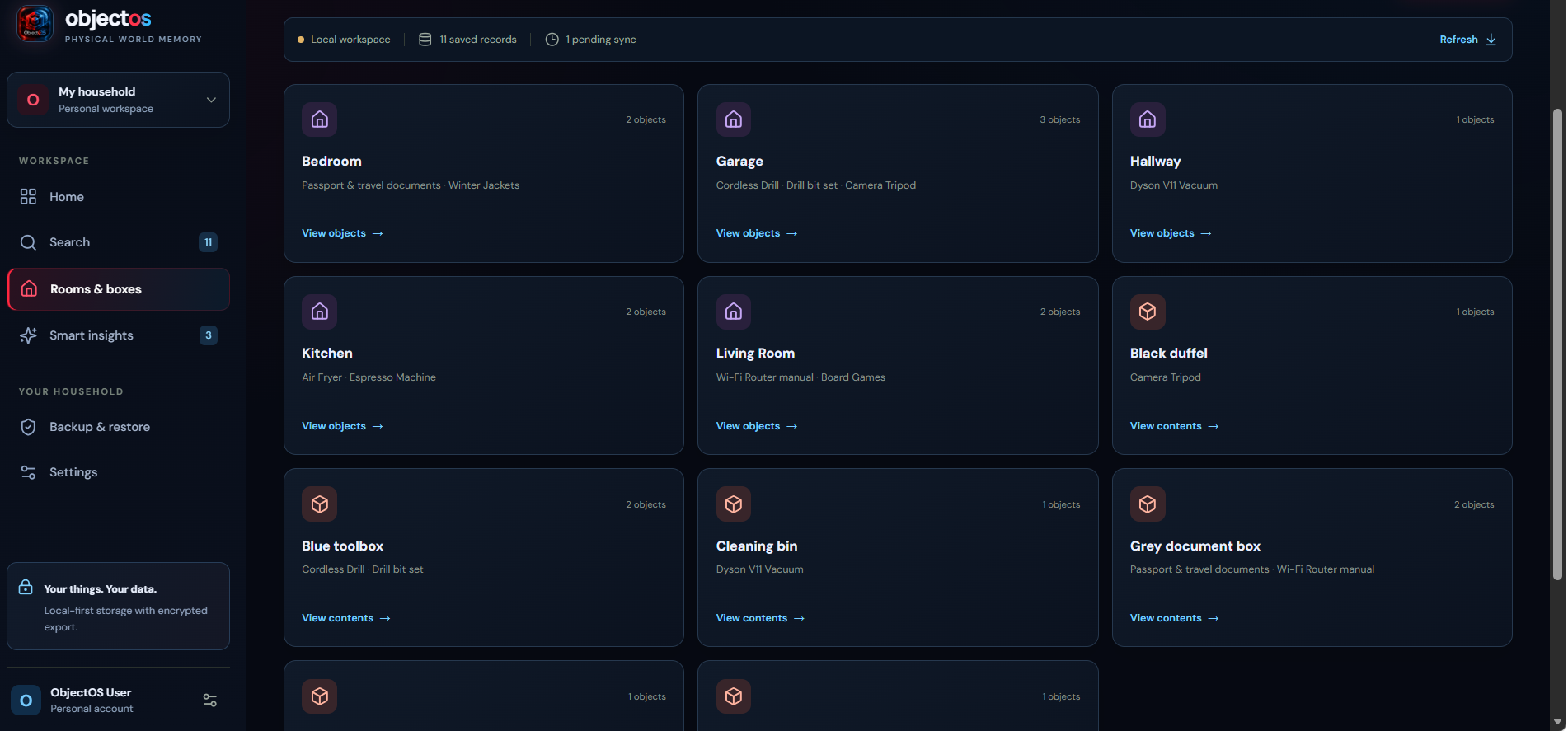
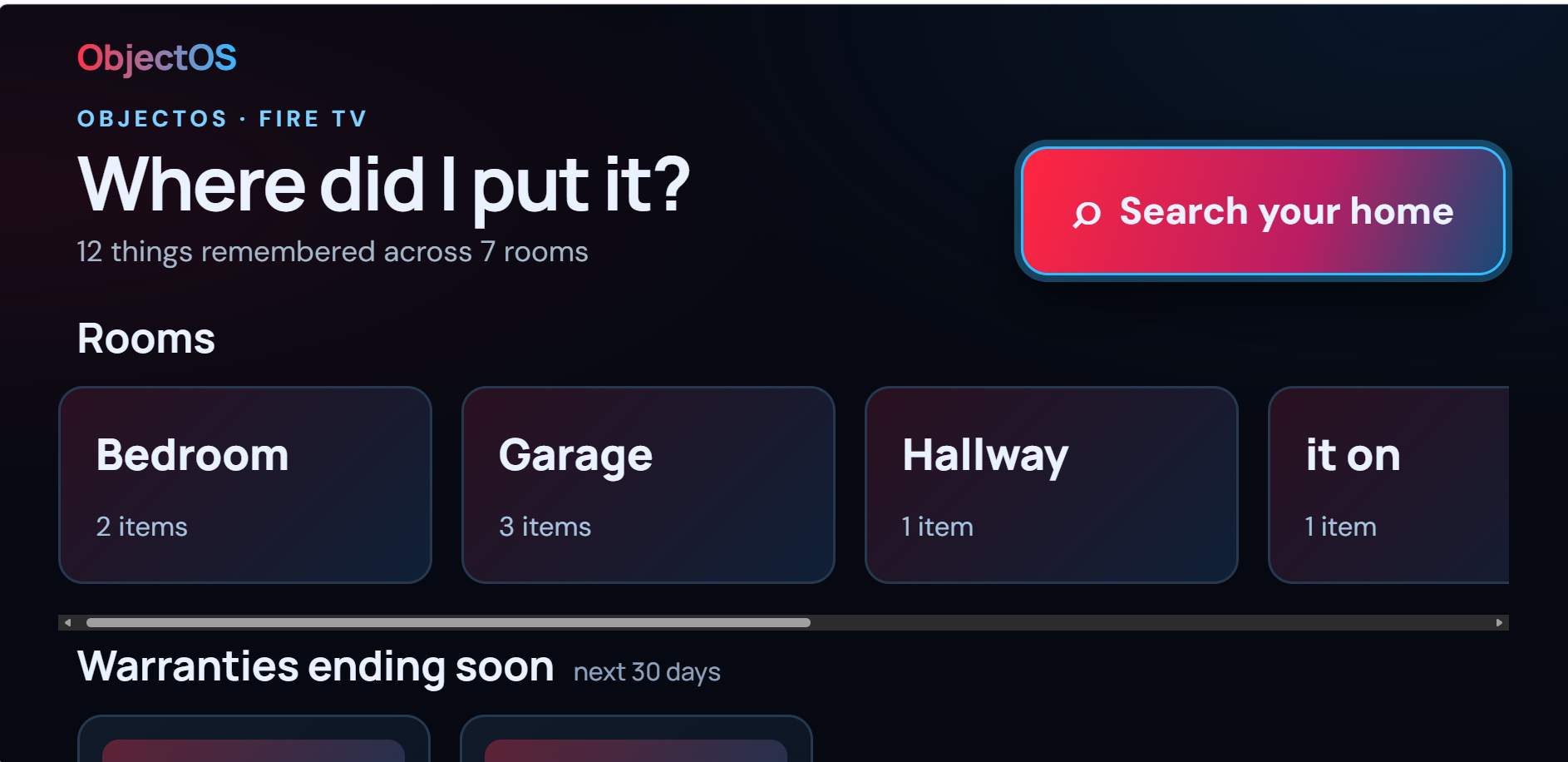
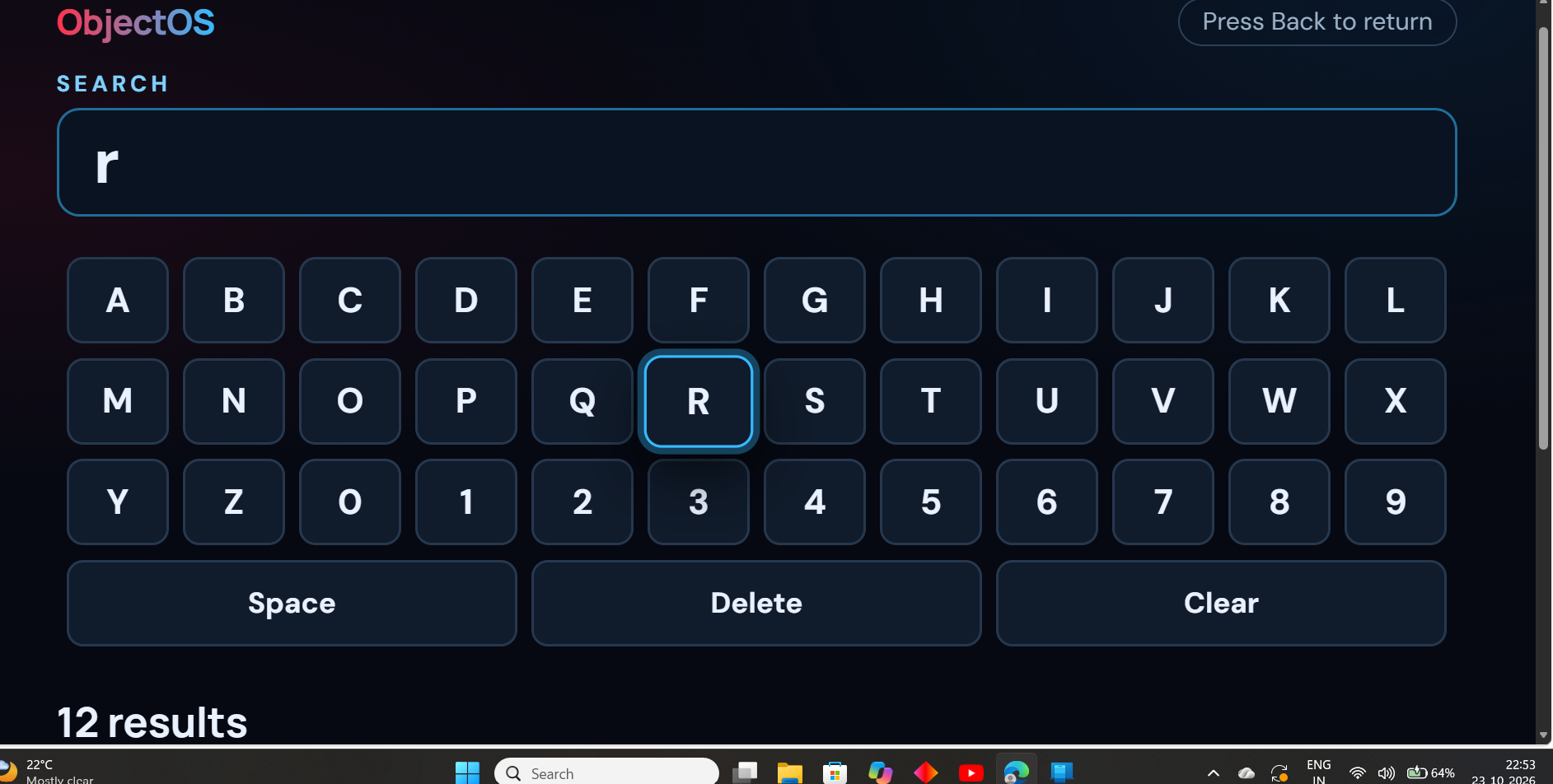
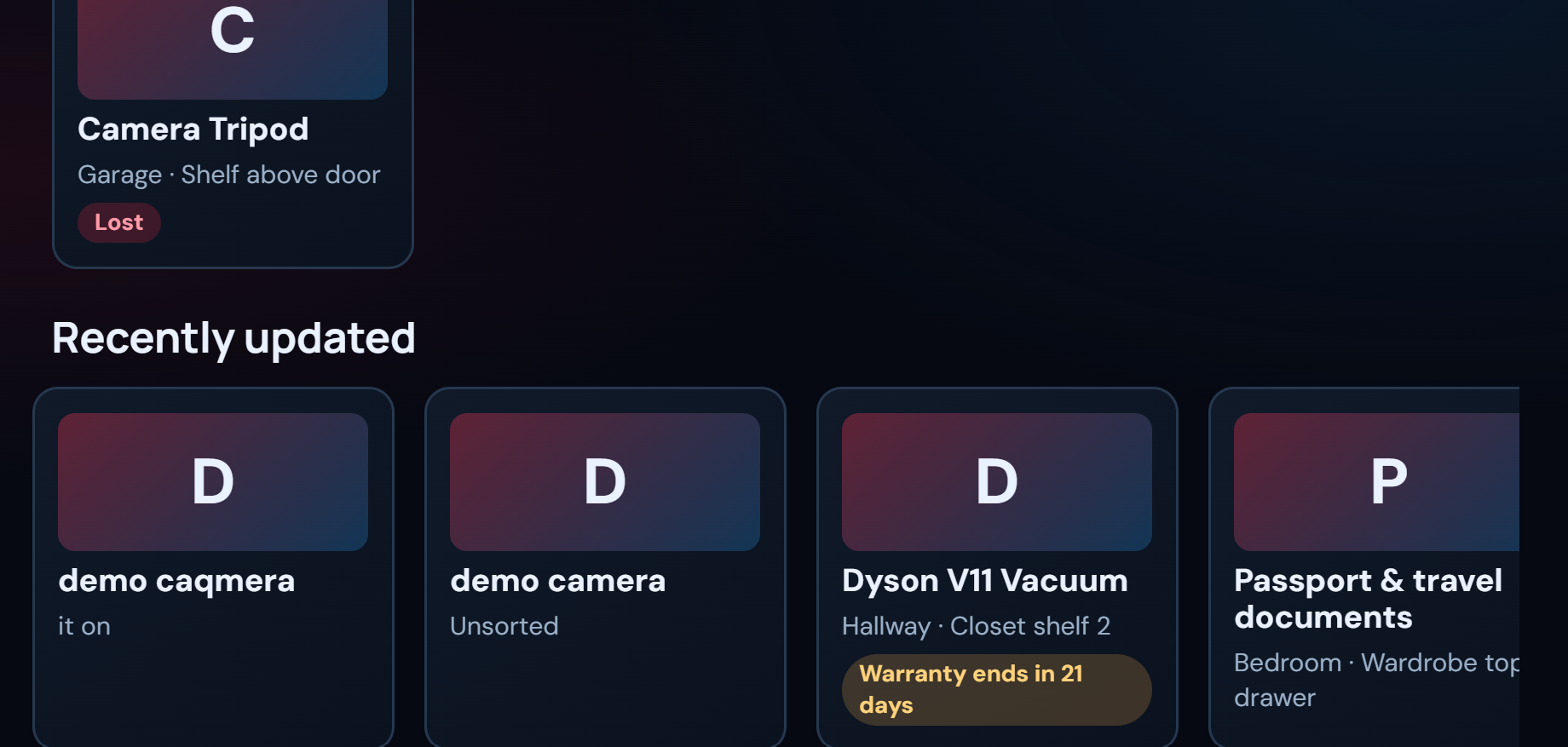
ObjectOS is a local-first household inventory platform with a distinctive Crimson Eclipse visual identity. It provides a web dashboard and a TV-oriented interface for browsing inventory records. Users can manage item information, edit descriptions, and preserve records in browser-based storage.
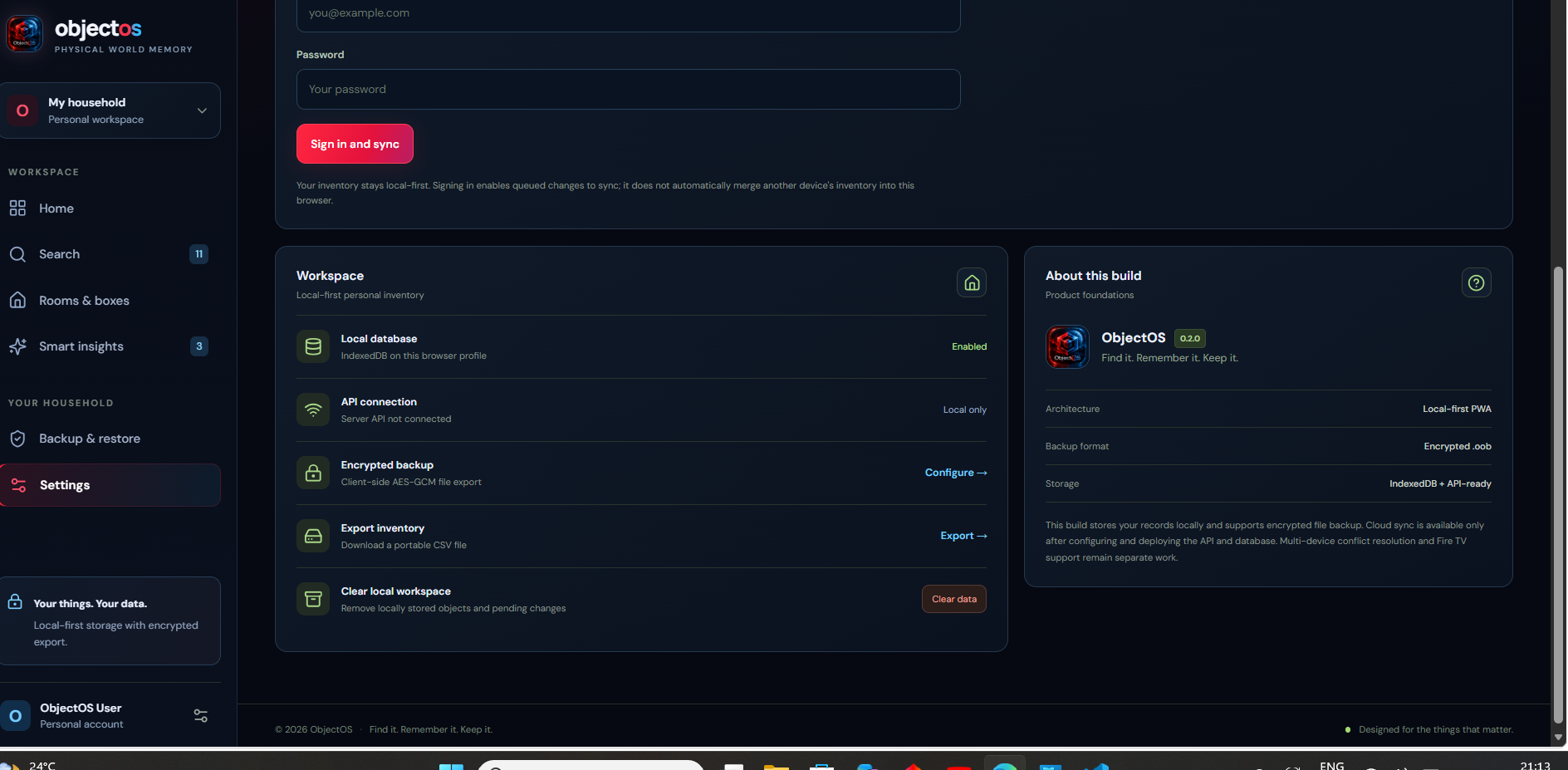
We also implemented CSV import and export to support data portability, along with encrypted backup creation and restoration. These features help users maintain control over their inventory data.
How We Built It
We built the application using React, TypeScript, Vite, and CSS. Browser-based storage supports the local-first inventory experience, while dedicated modules handle CSV processing and encrypted backup portability. The project also includes a server-side foundation and a TV-oriented interface.
Our development process involved implementing the core experience, checking TypeScript, running unit tests, building the production bundle, and manually testing important workflows such as editing records, refreshing the application, importing CSV data, and restoring backups.
Challenges We Faced
One challenge was maintaining consistency between the dashboard and TV-oriented interface. We tested that edited item descriptions remained consistent across both modes and survived refreshes.
Data portability was another important challenge. We tested backup restoration with an incorrect passphrase and a corrupted backup, confirming that both were rejected without changing the inventory. We also tested CSV import preview and controlled import to verify that an existing item was updated instead of duplicated.
We also encountered a TypeScript issue in the Web Crypto backup implementation and corrected it before successfully running the type check and production build.
What We Learned
Building ObjectOS strengthened our understanding of React and TypeScript application structure, browser storage, CSV parsing, encrypted backups, data validation, and practical software testing. We learned that a useful application needs more than an attractive interface: it must also preserve data, handle invalid input safely, and provide reliable ways to export and restore information.
Future Scope
Future improvements may include verified cloud synchronization, stronger multi-user household support, and testing on physical Fire TV hardware. These remain future goals rather than capabilities we claim to have fully validated.
Our goal is to make ObjectOS a dependable digital memory for the home — helping people spend less time searching for their belongings and more time using them.
Built With
- android-studio
- css
- csv
- express.js
- indexeddb
- node.js
- prisma
- react
- typescript
- vite
- web-crypto-api

Log in or sign up for Devpost to join the conversation.