-
-
Know your risk. Improve your lifestyle. Stay healthy.
Inspiration
What it does
How we built it
Challenges we ran into
Accomplishments that we're proud of
What we learned
What's next for Obesity Risk Classifier and Recommendation System
Inspiration
The inspiration for this project came from the increasing global prevalence of obesity and its associated health risks such as diabetes, cardiovascular diseases, and hypertension. The goal was to build a system that can help individuals understand their obesity risk early and take preventive action through data-driven insights.
What it does
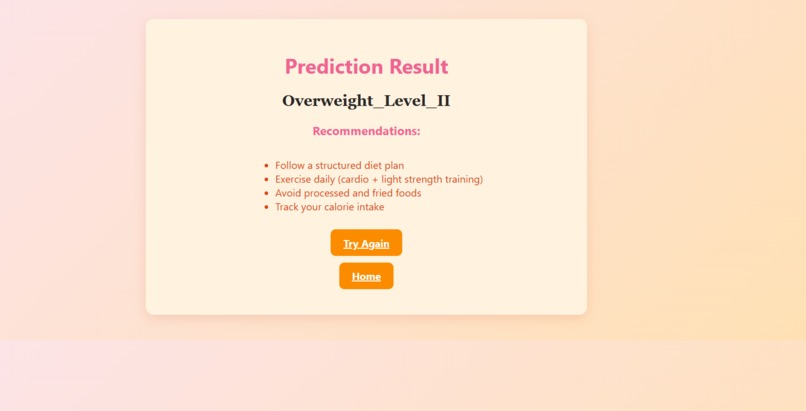
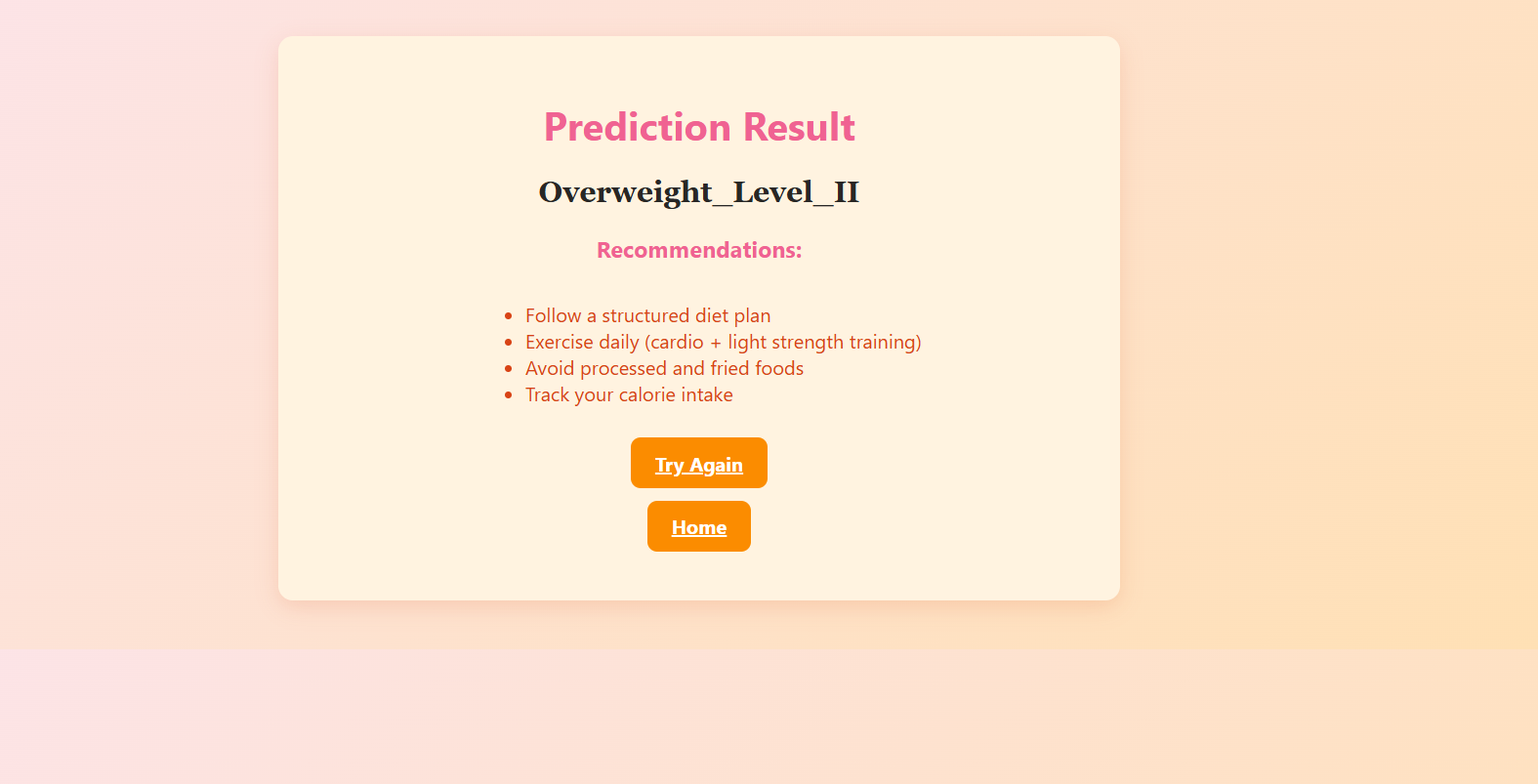
This project predicts an individual's obesity risk level using machine learning models and provides personalized recommendations to improve lifestyle and health. It classifies users into different risk categories based on input features such as age, BMI, physical activity, and dietary habits, and then suggests actionable improvements.
How we built it
We built the system using a machine learning pipeline:
- Data preprocessing: cleaning, encoding categorical variables, and feature scaling
- Model training: implemented multiple algorithms including Decision Tree, Random Forest, Extra Trees, and LightGBM
- Model evaluation: compared models using metrics like accuracy, precision, recall, and F1-score
- Prediction system: selected the best-performing model for final predictions
- Recommendation module: generated tailored health suggestions based on predicted risk levels
Challenges we ran into
- Handling missing and inconsistent data during preprocessing
- Selecting the most effective model among multiple algorithms
- Avoiding overfitting while maintaining high accuracy
- Interpreting model outputs to generate meaningful recommendations
- Tuning hyperparameters for models like LightGBM
Accomplishments that we're proud of
- Successfully implemented and compared multiple machine learning models
- Built a complete pipeline from data processing to prediction and recommendations
- Achieved reliable performance in predicting obesity risk levels
- Integrated predictive analytics with practical, user-friendly recommendations
What we learned
- How to preprocess and engineer features for structured datasets
- The strengths and weaknesses of different machine learning algorithms
- How ensemble methods like Random Forest and Extra Trees improve performance
- The importance of evaluation metrics in model selection
- How to translate model outputs into actionable real-world insights
What's next for Obesity Risk Classifier and Recommendation System
- Deploy the model as a web or mobile application
- Incorporate real-time user input and feedback
- Improve recommendations using more advanced personalization techniques
- Integrate additional health data such as wearable device inputs
- Explore deep learning models for enhanced prediction accuracy

Log in or sign up for Devpost to join the conversation.