-
-
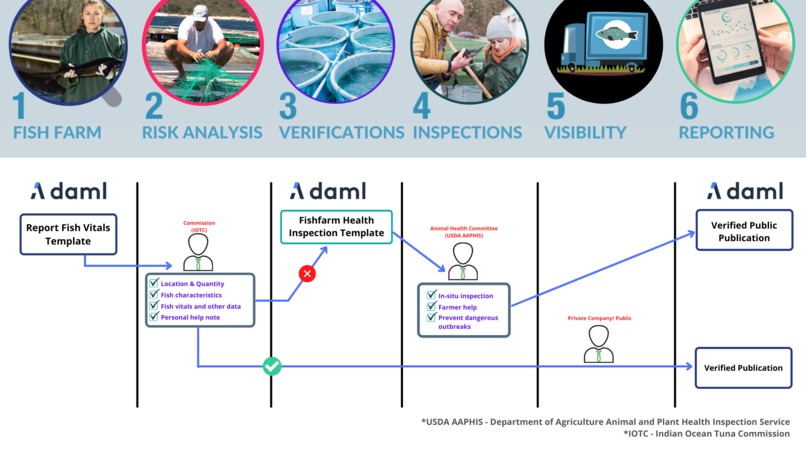
Smart Contract Solution for Fishfarms
-
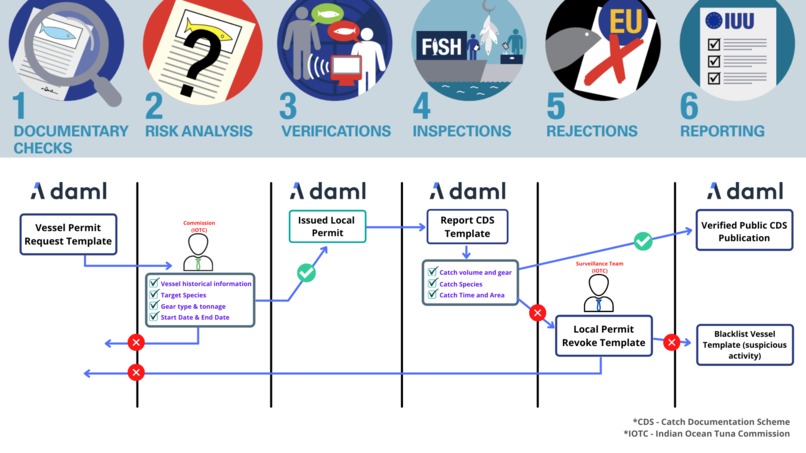
Smart Contract Solution for Vessels
-
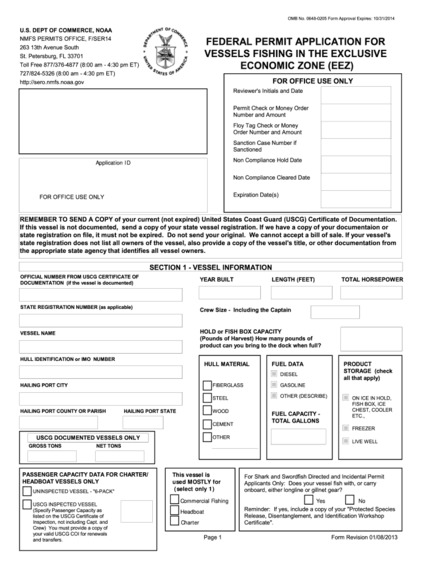
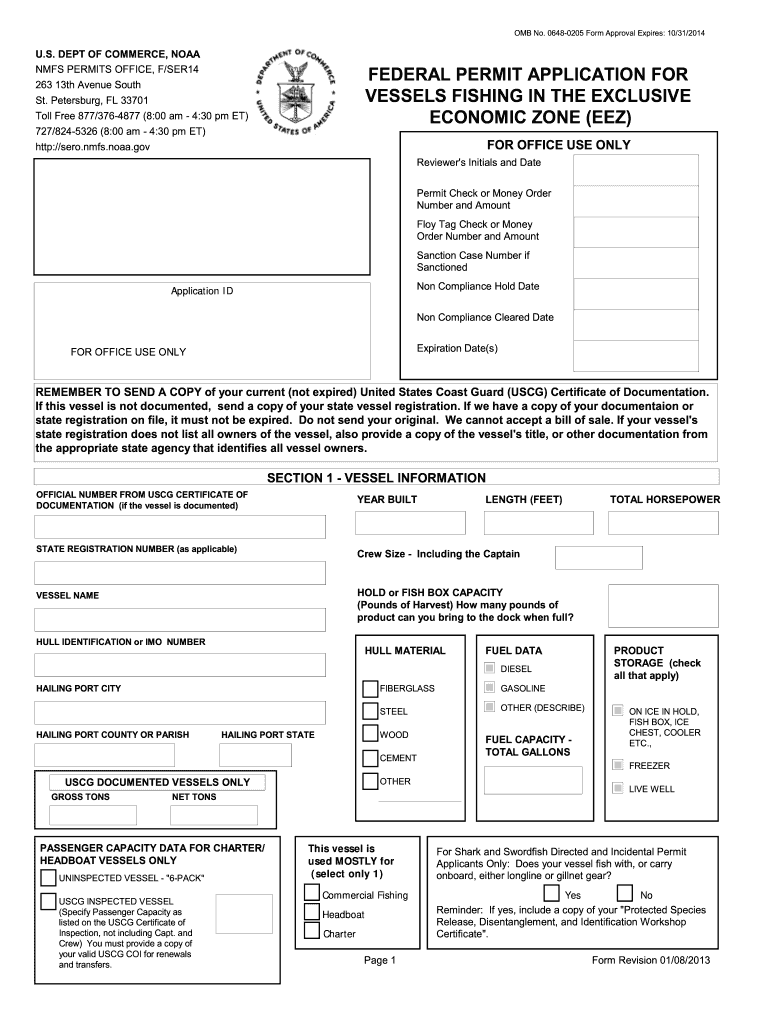
Permit template reference
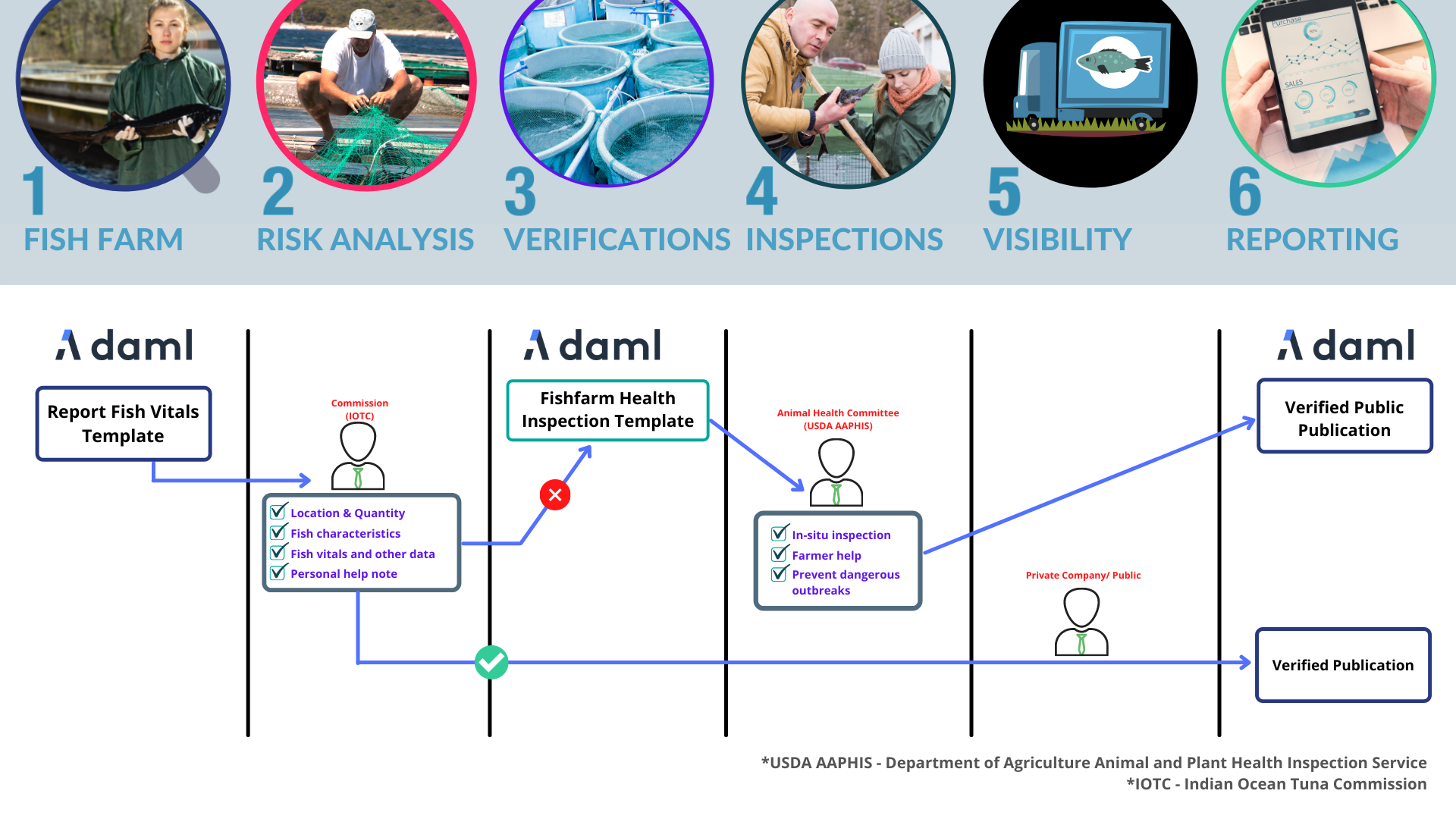
Inspiration
Increased demands for fish products continues to increase worldwide, nations face a challenge to ensure Illegal, Unregulated and Unreported (IUU) products are not entering their markets. Also, the fish farming community is going to incur a heavy loss due to endemic or fish disease outbreaks due to irregular inspections. To summarize the major problems are:
- illegal fishing puts key stakeholders and supply chain at risk
- vulnerable coastal communities and fish farmers that abide by rules but lose out due to endemic and rampant frauds. Robust recording and reporting of catch and trade data, recognizing the need for more real-time trade. This will ensure the dramatic changes in how particular species are targeted and they adhere to management.
According to the UN Food and Agriculture Organization (FAO) illegal, unreported and unregulated fishing activities are responsible for the loss of 11–26 million tonnes of fish each year, which is estimated to have an economic value of US$10–23 billion.
To protect the oceans, we need to prevent its exploitation and strengthen fish farmers.
What it does
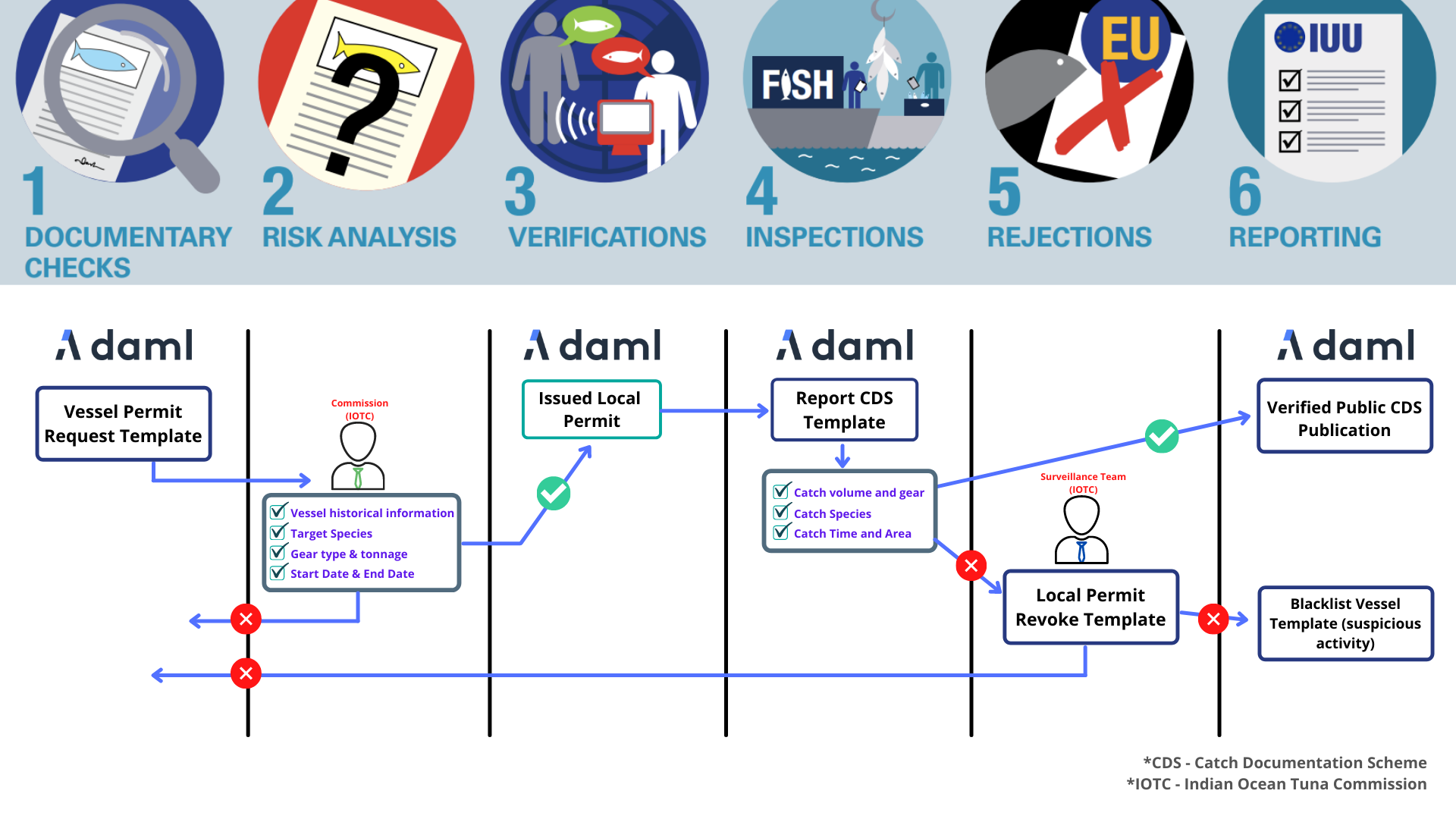
Our approach helps to strengthen the legal frameworks. Fishing is one particularly important activity where reporting can be unreliable but better data visualization and decentralized export and import data for all fish products could reveal the areas where illegal things are going on. For our solution, we built a smart contract to Provide a Permit to Vessels on request and the Vessels need to report the Catch Documentation Scheme (CDS) of their activities if found suspicious or violator then the permit would be Revoked and the Vessel would be blacklisted as well. CDS serves to understand,
- Origin of seafood
- provide vital data to fisheries management and transparency along the food chain

Secondly, I used DAML contracts to connect farmers to Fisheries Bodies to help bring more transparency into the local fish market supply chains. The farmer would be required to upload all fish farm details and if any potential signs of losses or outbreaks are found Animals Health or other officials would connect and perform an in-situ inspection to prevent farmer's losses.

The UN General Assembly in its annual resolution on sustainable fisheries proclaimed 5 June as the "International Day for the Fight Against Illegal, Unreported and Unregulated Fishing." In the same resolution, the UN also declared 2022 as the International Year of Artisanal Fisheries and Aquaculture, which will help focus attention on the small-scale fishermen and women who comprise 90 per cent of the world's fisheries workforce.
How we built it
There are some important DAML Contract Templates involved:
- VesselPermitRequest - It allows Vessels to obtain catch permits to catch fish in the sea under the jurisdiction
- LocalPermit - It can be revoked under serious violations
- ReportCDS - It allows the Vessel party to report all catches to Commission and surveillance party.
- FishVitalReport - It allows fish farmers to report all data to the Regulatory body for inspection and immediate help if any signs of an outbreak are observed.
The important commands exercised are:
- IssueLocal: Issue local permit to Vessel
- Revoke: Revoke permit of Vessel in case of violations
- Deny: Deny a request for a permit may be due to a filled quota, incomplete data etc.
- Approve Vitals: Approve all fish farm vitals for public and supply chain agencies
- Health Inspection: Alert local animal health for farm inspection and saving farmer's fish farm from losses due to endemic, etc.

Challenges we ran into
It has been a smooth journey following DAML documentations and luckily I faced no problems, maybe m implementation was small. Also, deciding which data to keep and discard especially for the hackathon prototype was challenging too but it was done finally.
Accomplishments that we're proud of
I am happy that I was able to understand the working of DAML and its precise implementation to fit my problem statement. Making a full-fledged UI Dashboard was challenging as I don't have good knowledge of the frontend but Daml Hub solved many of my problems.
What's next for OASISFISH - A DAML way to save Marine friends
Our next step is a fully functional dashboard with adequate biological indicators and environmental impact assessment. Also, collecting data of fisheries activities through electronic monitoring (I plan to bring in IoT devices to report location, fish vitals via DAML JSON APIs) and observer coverage to conduct the scientifically robust stock assessment. Our OASISFISH would not only serve to regulate vessels in seas but will be a boon to millions of fish farmers who are at no mercy when there is a disease outbreak and suffer a heavy loss- with our system the health officials are always aware of local problems.
About me
Hello, my name is Sumit, I am a high schooler from India. I love tinkering with new technology. I'm just passionately curious. My daily routine involves dealing with electronics, code, distributed storage and cloud APIs. I also spend some time writing articles, blogs, teaching students at my founded community, steptostem.com, and on online forums responding to questions put up by the community. I love hackathons where I get to meet people from all over the world as well as to work with exciting technologies that come up every day. I enjoy being a polymath. Feel free to connect and share ideas with me.
DAML LEDGER ID: x785eje8xr3ql8bz
Built With
- daml
- damlhub
- vscode


Log in or sign up for Devpost to join the conversation.