Inspiration
With hospitals at full capacity during the COVID-19 pandemic, doctors and nurses find themselves with longer and longer shifts and unexpected stressors. In addition to combatting risk of infection, our frontline healthcare workers have to fight the psychological tolls and traumas from the lack of social support, a sense of helplessness from seeing lives lost each day, and the stresses of making life or death decisions. We saw the need for a mental health app that catered to these modern day heroes and aimed to create a free app where they could find mental health support and wellness exercises to integrate into their daily routines.
What it does
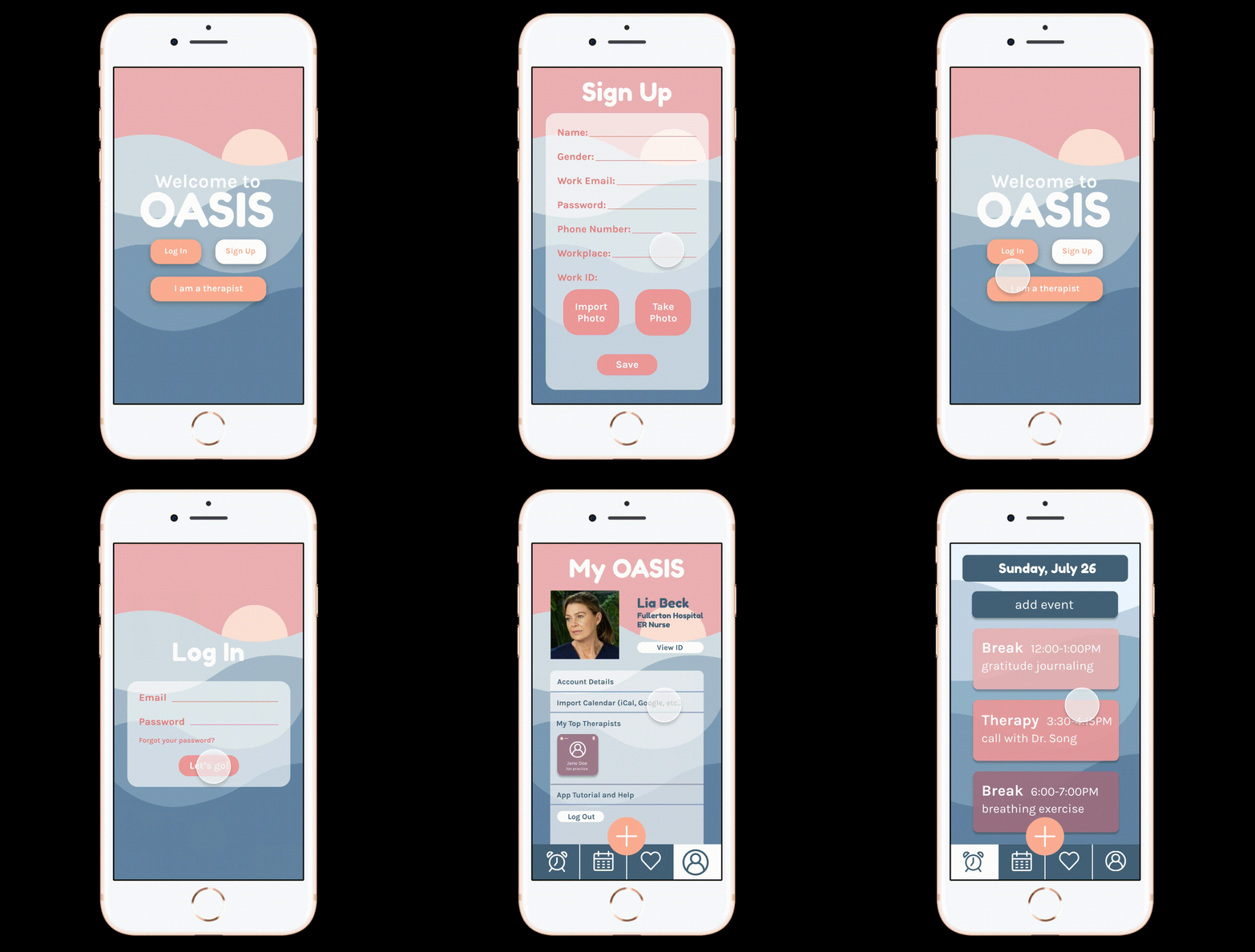
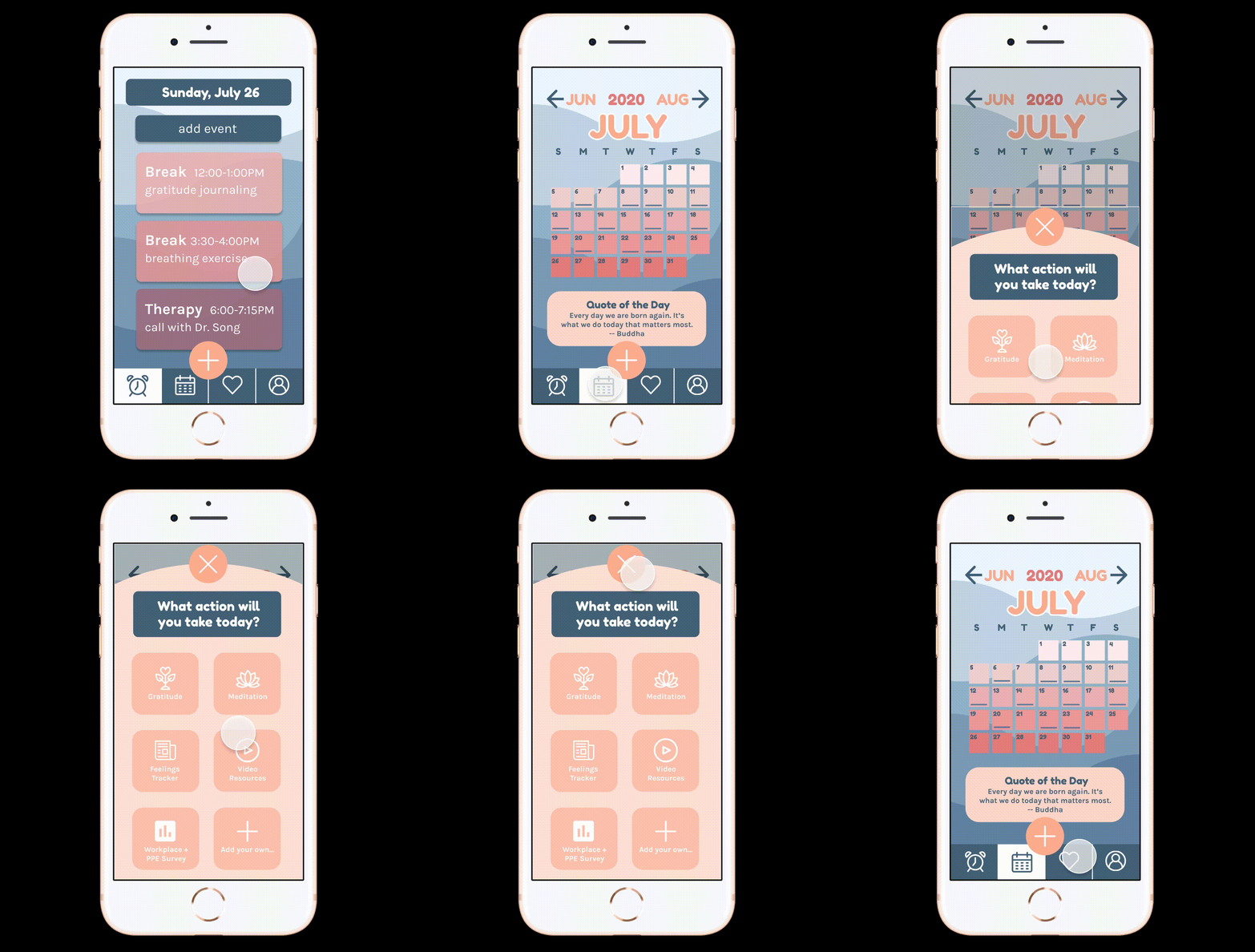
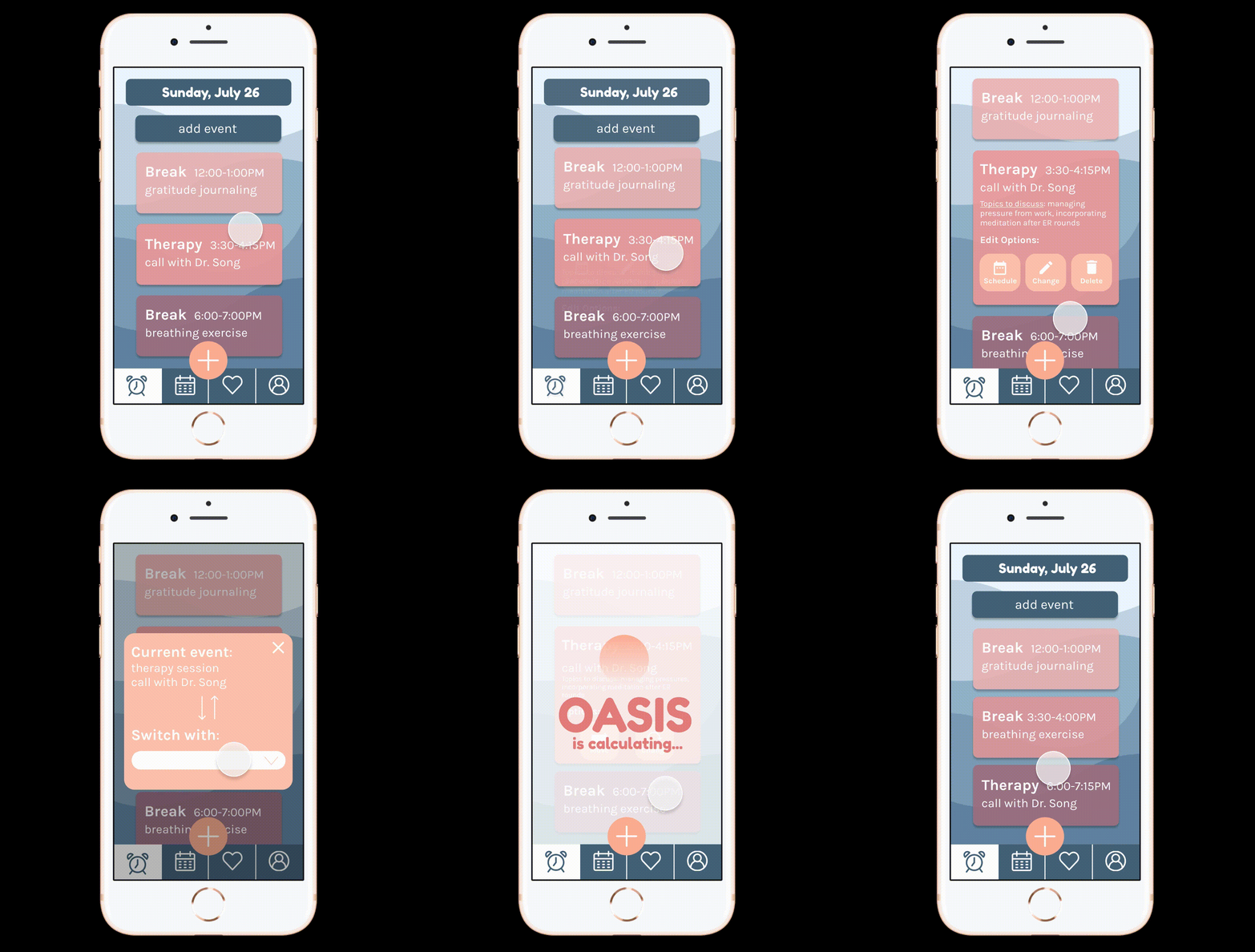
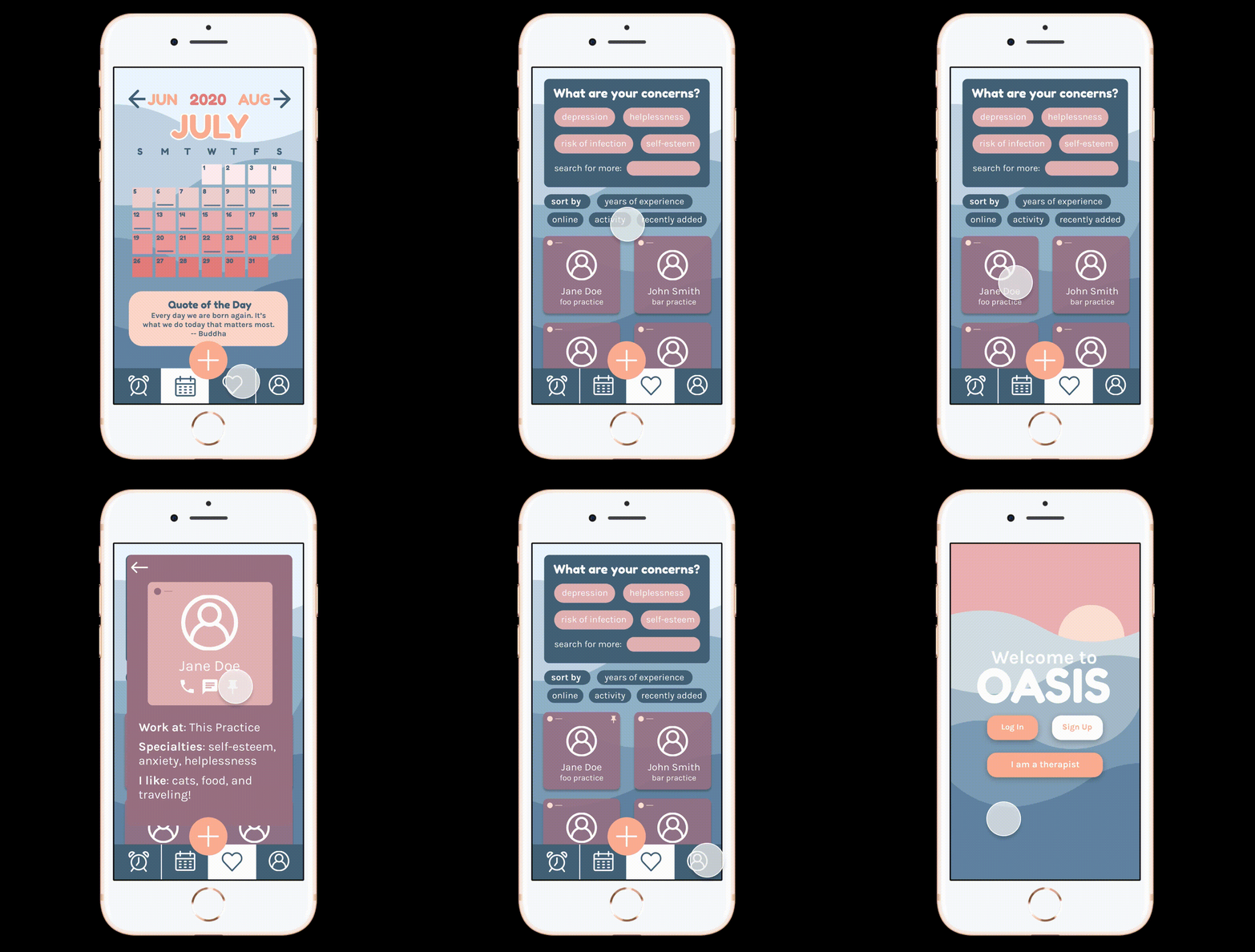
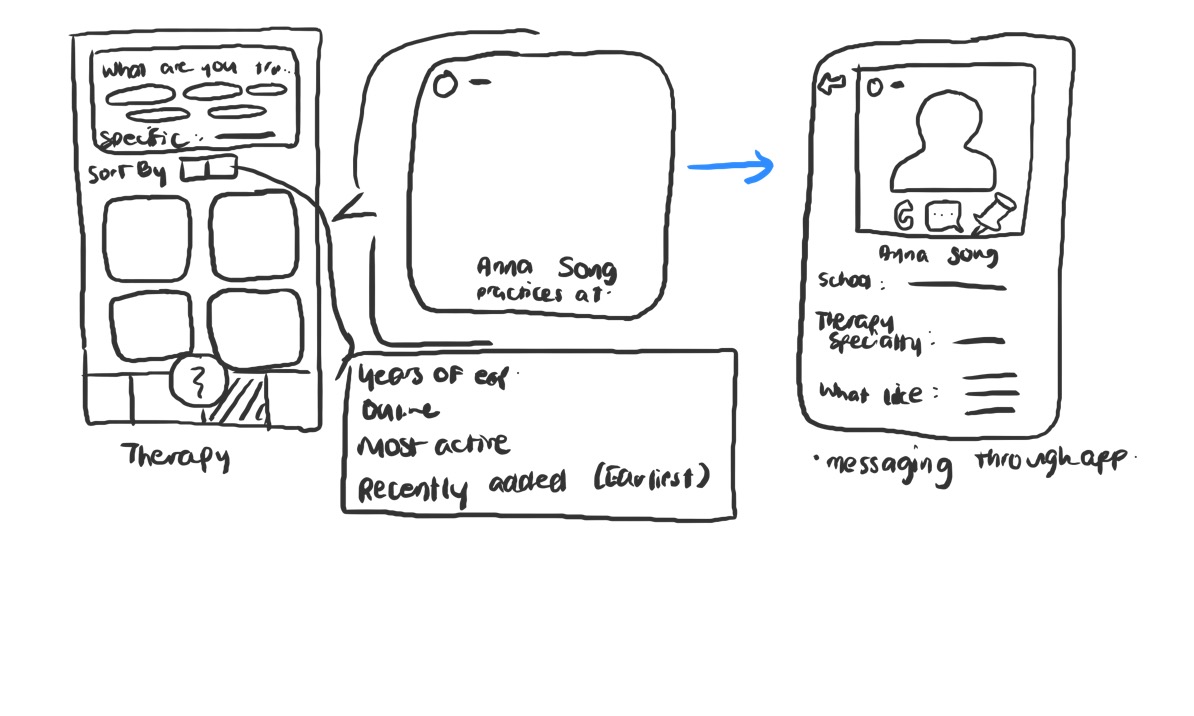
With OASIS, we aim to create a digital safe space that helps ease the mental burdens on our frontline healthcare workers. OASIS is a free wellness app geared to fit the hectic and sometimes emotionally distressing work schedule of a healthcare provider. OASIS also connects healthcare workers with trained therapists and listeners so they can talk to someone at any time.
How we built it
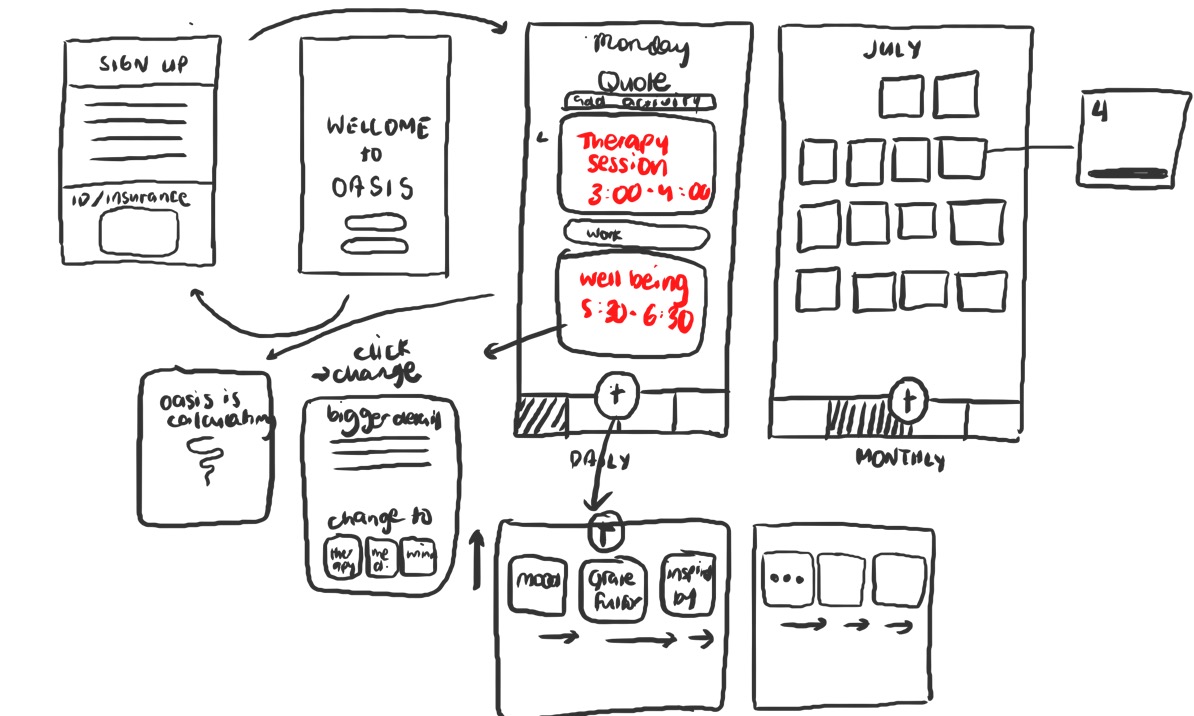
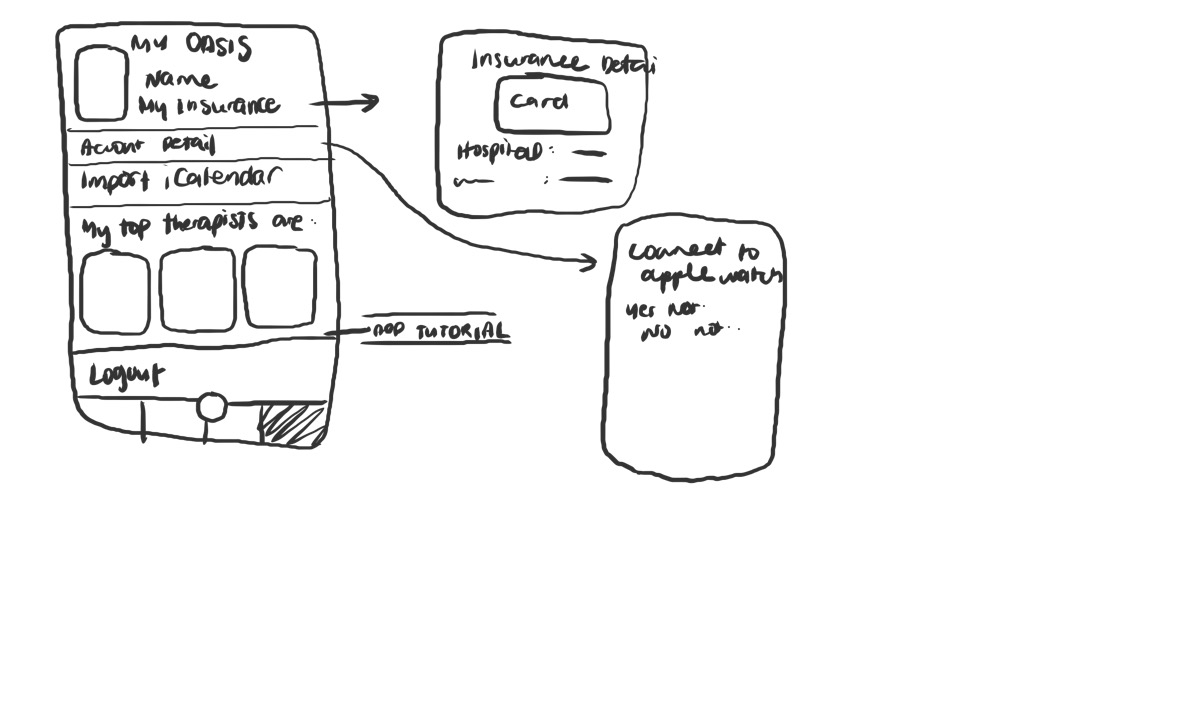
We used Zoom whiteboarding for the wireframe, Figma for the prototype, Illustrator for the logo and background, and iMovie for the video.
Challenges we faced
We initially spent a lot of time brainstorming and deciding on a problem that had a straightforward audience and possible solution. We were also relatively new to Figma, so it took some time to learn about and use many of the features, but in general our working process was very smooth.
Accomplishments that we're proud of
We came into the challenge with humble expectations, not expecting that we would be able to create such a uniform and comprehensive Figma file. We are extremely proud of how, in such a short time frame, our brainstorming transformed into the screens and video displayed in our submission.
What we learned
Most of our group members had minimal prior experience with Figma before this weekend, so we had a great time figuring out the tools and design process as we created the screens. Though our collaboration, we learned different techniques from each other as well.
What's next for OASIS
For now we are targeting health care workers to give them access to mental health resources in trying times, but we firmly believe that mindfulness is for everyone. We hope to further extend our audience to users of all different backgrounds by partnering not just with hospitals but also with health insurance companies and larger companies in general so that their employees can access the free mental health resources that they deserve.
Describe the problem your solution addresses? (150 word limit)
Every day, our healthcare workers log excruciatingly long hours, work around PPE shortages, risk their health, and witness countless deaths due to coronavirus. A recent study by JAMA found that during the pandemic, almost 50% of healthcare workers reported “clinically concerning levels of depression and anxiety,” and 71% reported “significant psychological distress”. While many mental health apps exist, their high cost can often be a barrier to accessing the care that a healthcare worker may need. Hospitals also have a responsibility to ensure their employees can access resources they need to maintain mental health, but may not have the capability to provide in-depth support. We plan on partnering with hospitals to fund therapy/mental health services with no cost to their employees. Our product, OASIS, aims to alleviate some mental health concerns of these healthcare professionals by providing free therapy/wellness exercises that are easily integrated into their busy schedules.
Why did you pick this solution and how does it address the problem? (150 word limit)
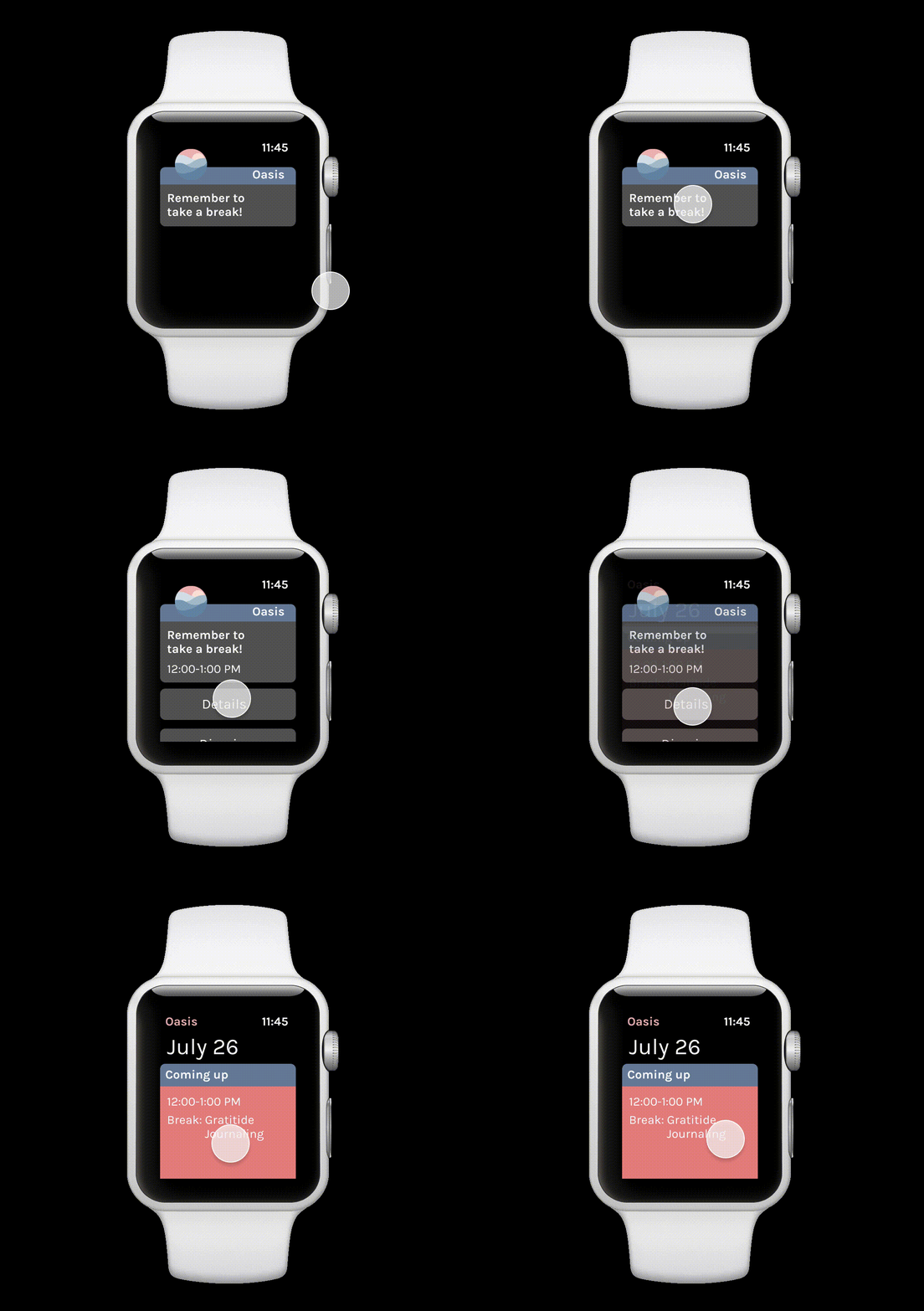
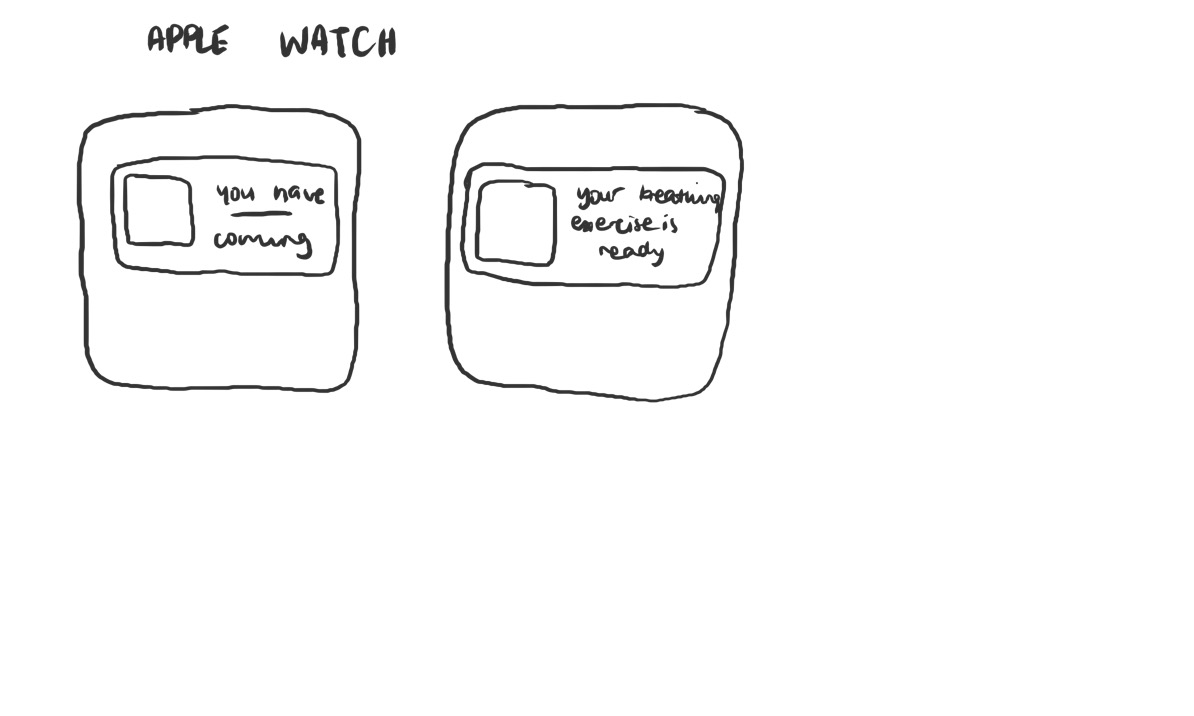
Multiple mental health apps are currently offered to the general public, but they generally provide a singular service and are not tailored for healthcare workers. OASIS combines these services in a mobile app with Apple Watch integration. OASIS serves as a daily reminder to healthcare professionals that they are appreciated, supported, and important. It encourages the formation of self-care habits by suggesting small actions during breaks in working schedules, such as writing three gratitudes or completing five minutes of meditation, and visualizing the user’s progress on a monthly calendar. Users are also encouraged to book sessions with a selection of licensed therapists at no cost, decreasing the friction between them and trained help. Through OASIS , healthcare workers can access a variety of resources in one place, taking only a few minutes out of their busy day to take a break and check on their emotional wellbeing.
Built With
- figma


Log in or sign up for Devpost to join the conversation.