-
-
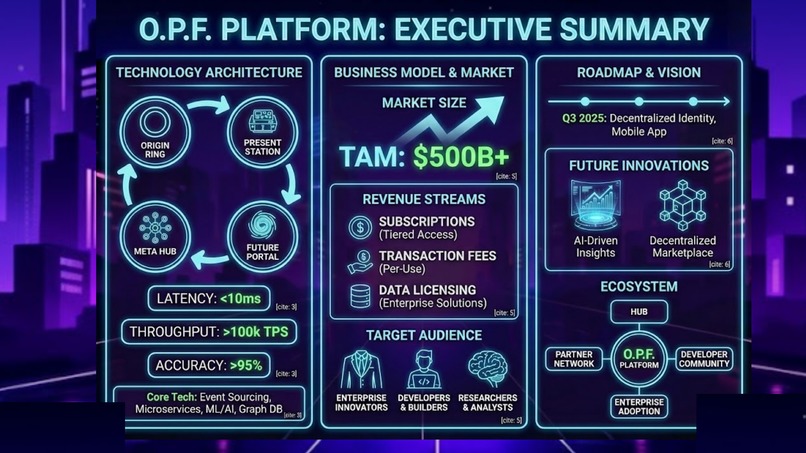
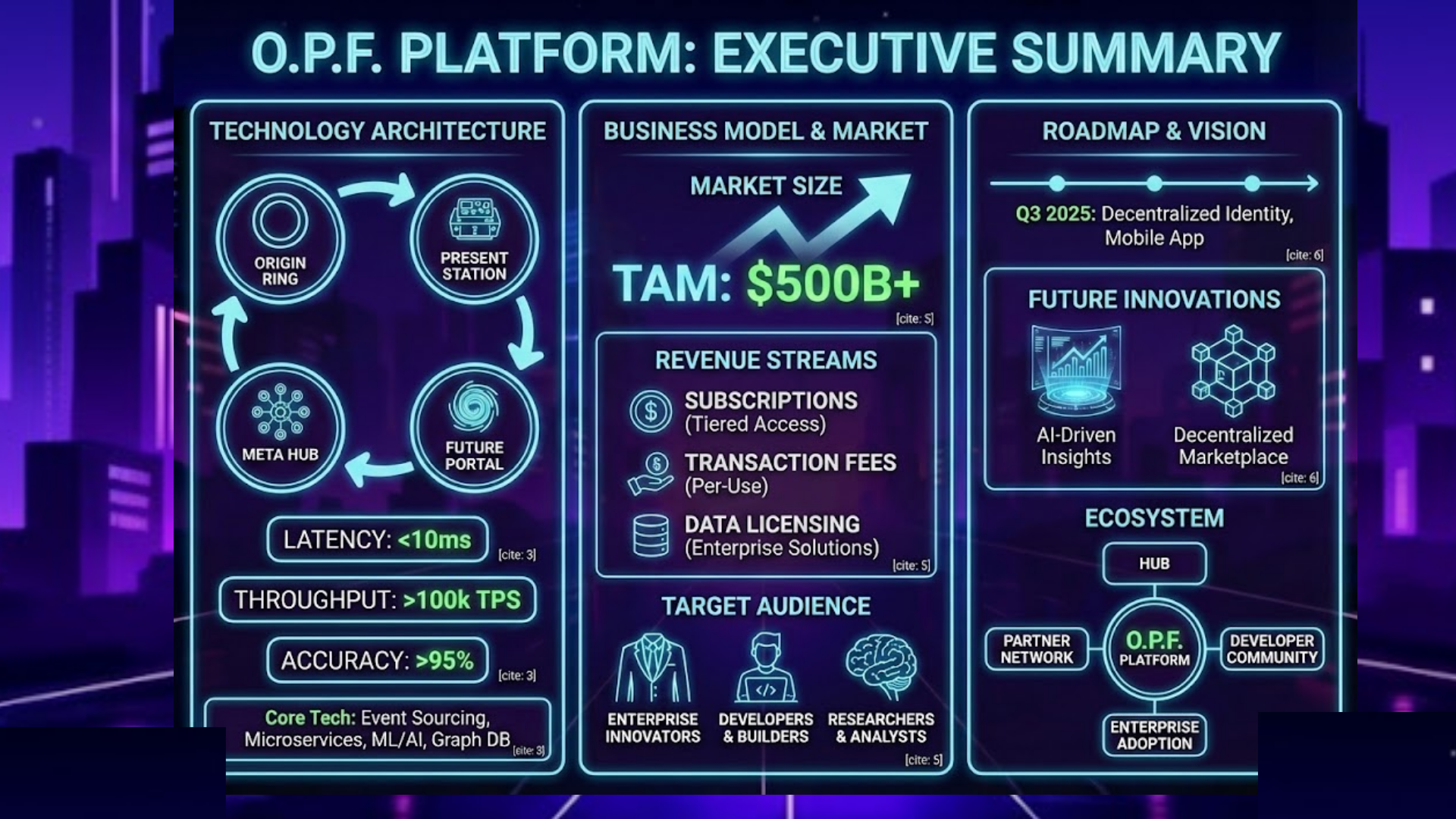
O.P.F. Platform: Executive Summary covering Technology Architecture, Business Model, Market, and Future Vision.
-
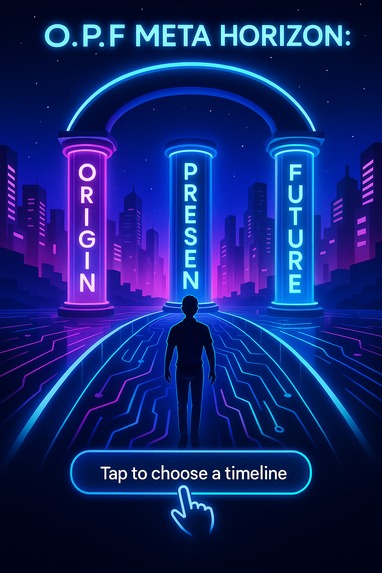
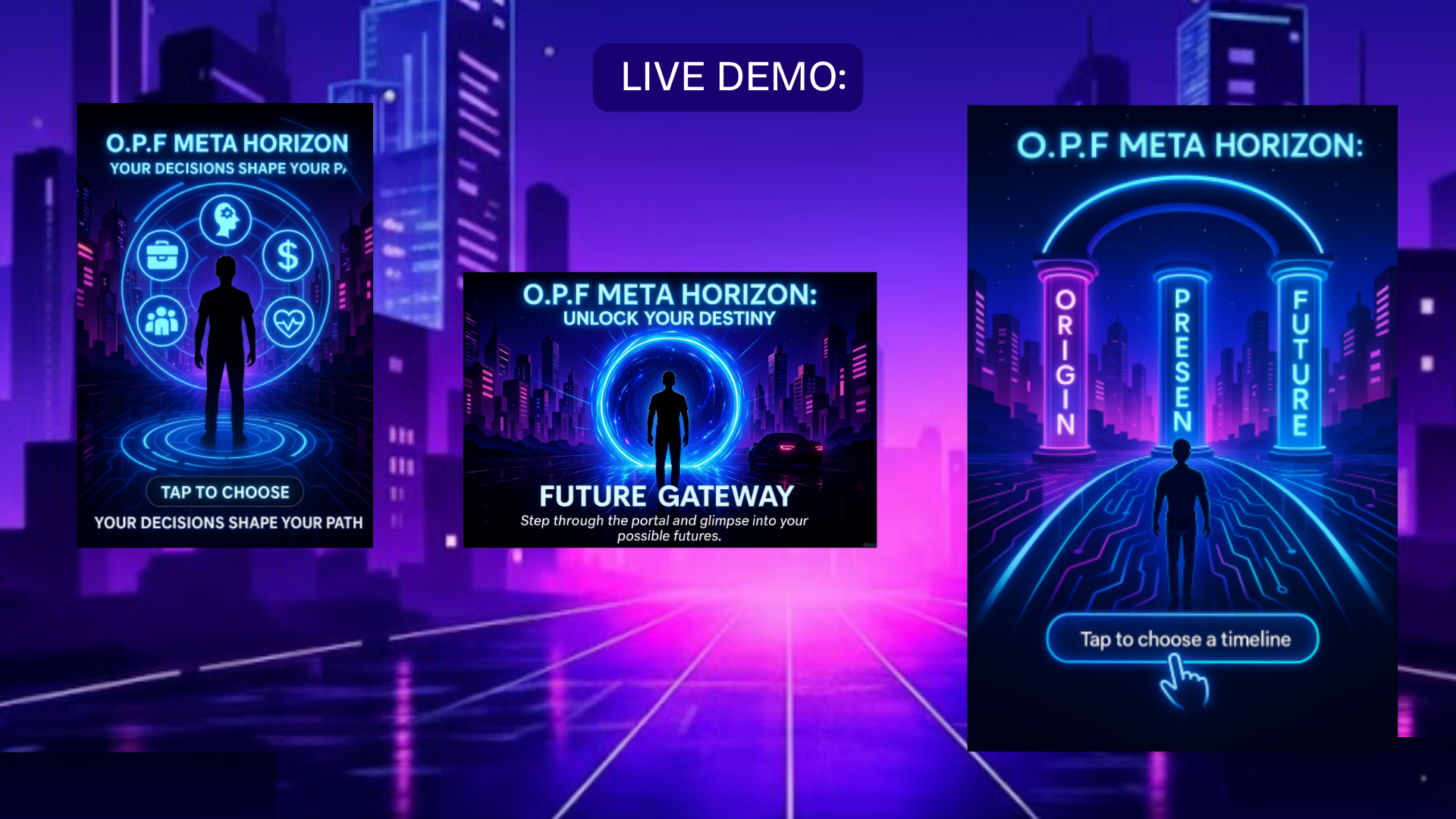
O.P.F. Meta Horizon Live Demo: Experience the Future Gateway, an interactive model showcasing reality and destiny.
-
Roadmap and Vision: AI Insights, Decentralized Marketplace, Mobile Companion, and a growing ecosystem of features.
-
Team, Competition, and Contact: Key members, competitive advantages, and information for partnership discussions.
-
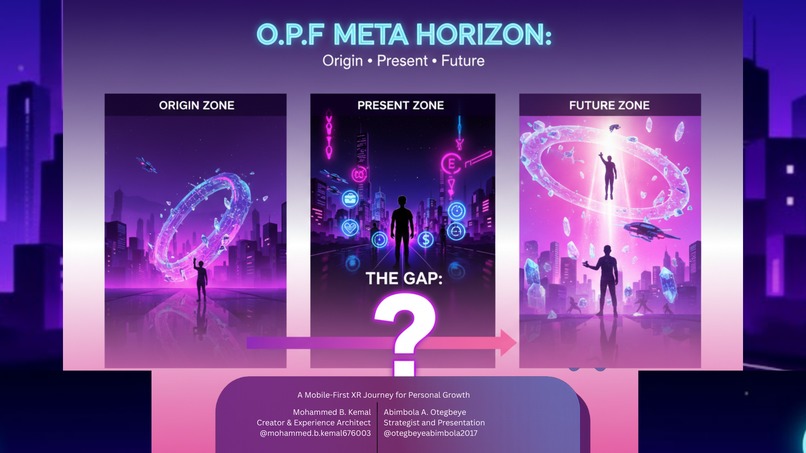
Bridging the gap with a scalable, mobile-first ecosystem that connects your Origin, Present, and Future into one immersive journey.
-
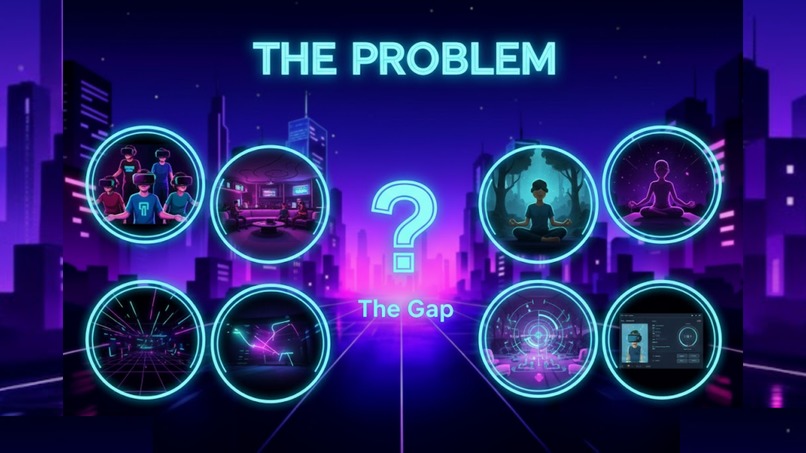
Rigorous mobile-first philosophy, the world is performance-optimized for seamless touch interactions and high accessibility on any device.
-
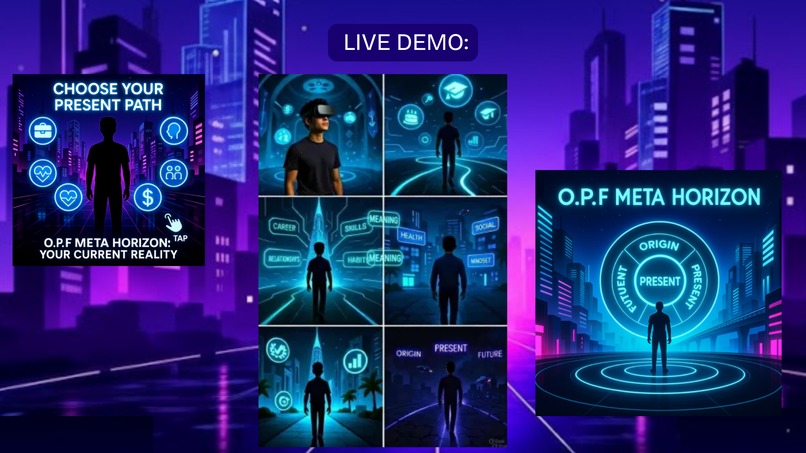
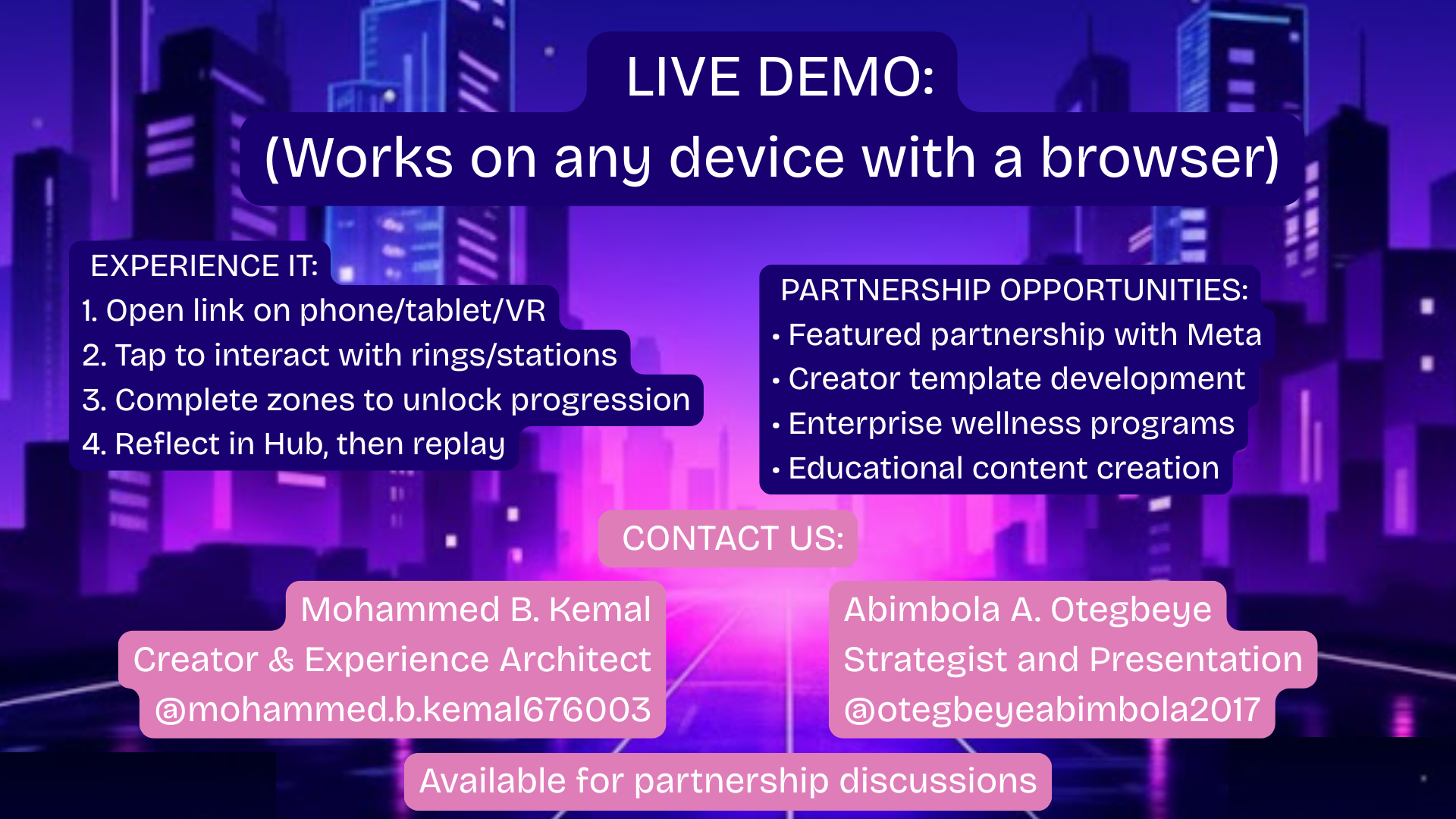
Live Demo: O.P.F. Meta Horizon, a Future Gateway to unlock your destiny and showcase the platform's features1.1
-
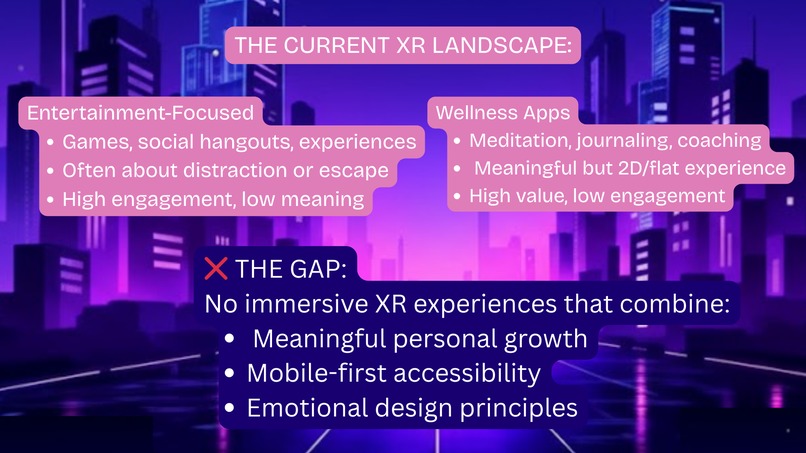
Bridging the gap between mobile accessibility and immersive headset experiences through seamless, data-driven innovation
-
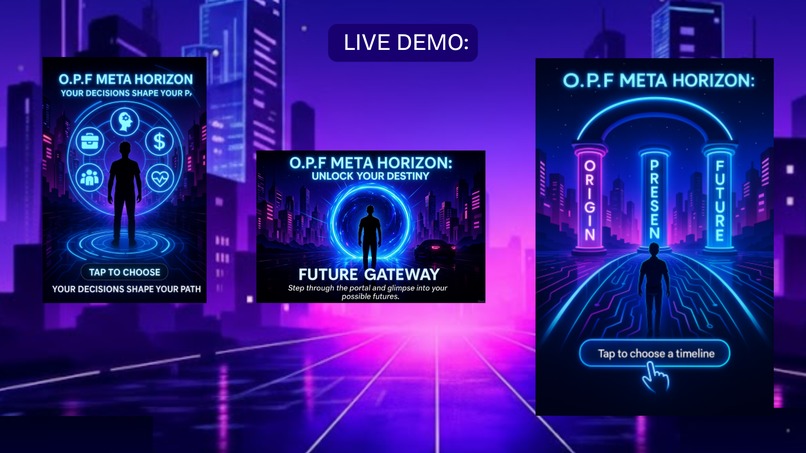
Live Demo: O.P.F. Meta Horizon, a Future Gateway to unlock your destiny and showcase the platform's features.
-
O.P.F. Platform: Thank You slide with an inspirational quote about imagination and contact details.
-
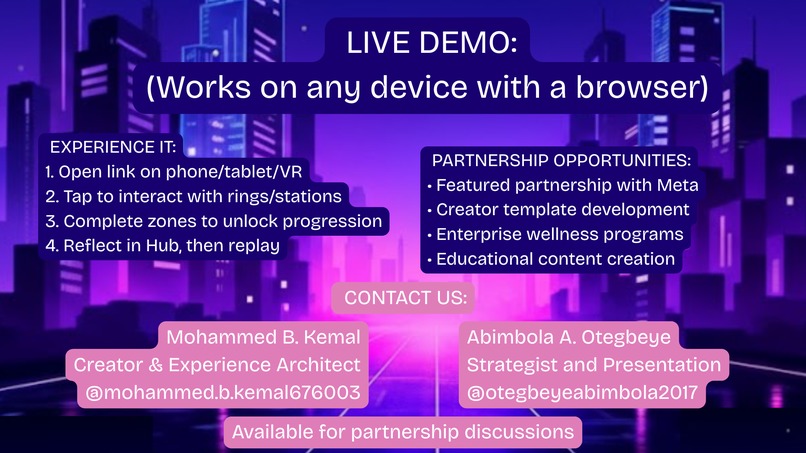
Live Demo and Contact: Highlighting cross-device compatibility, key features, and contact information for the team.
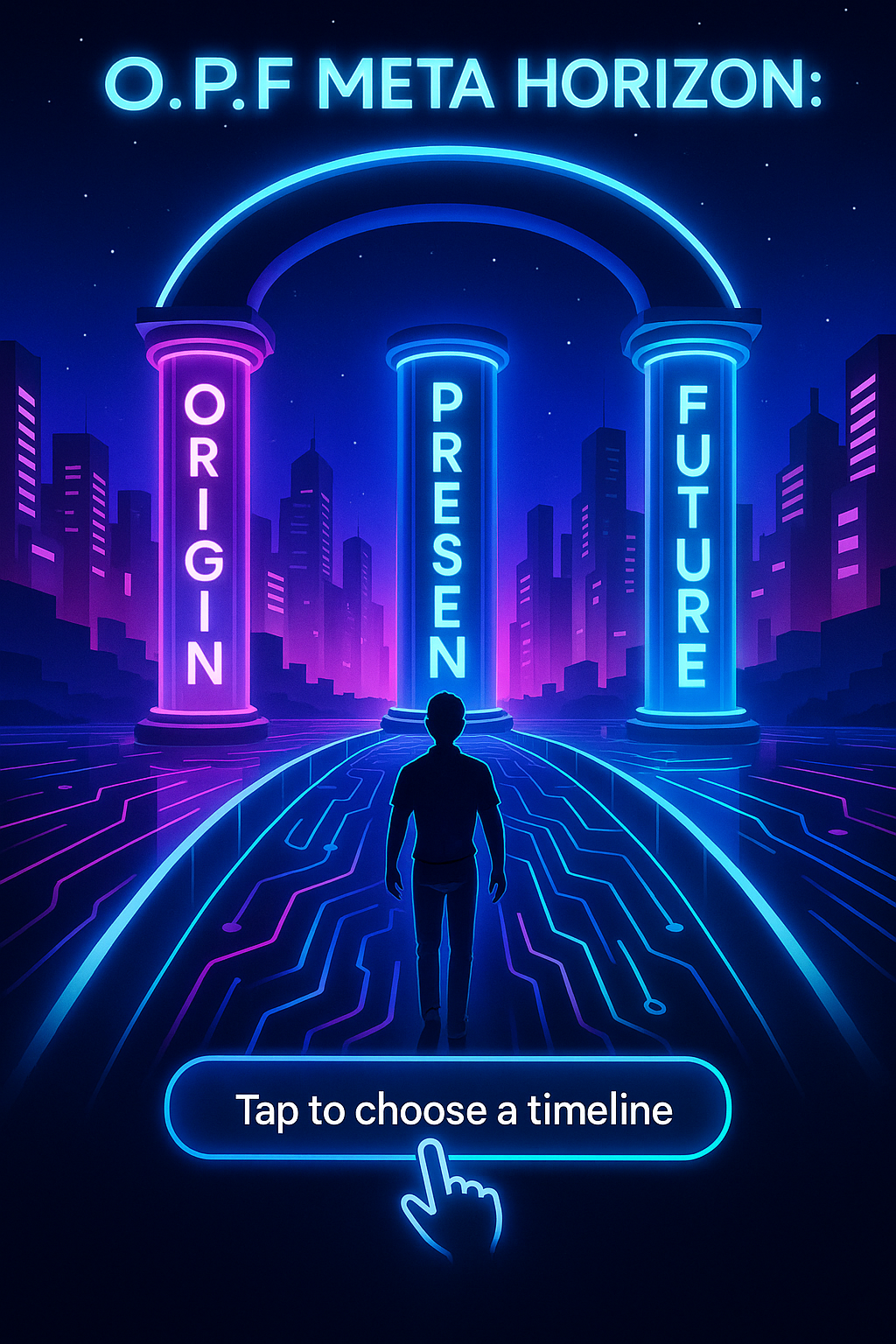
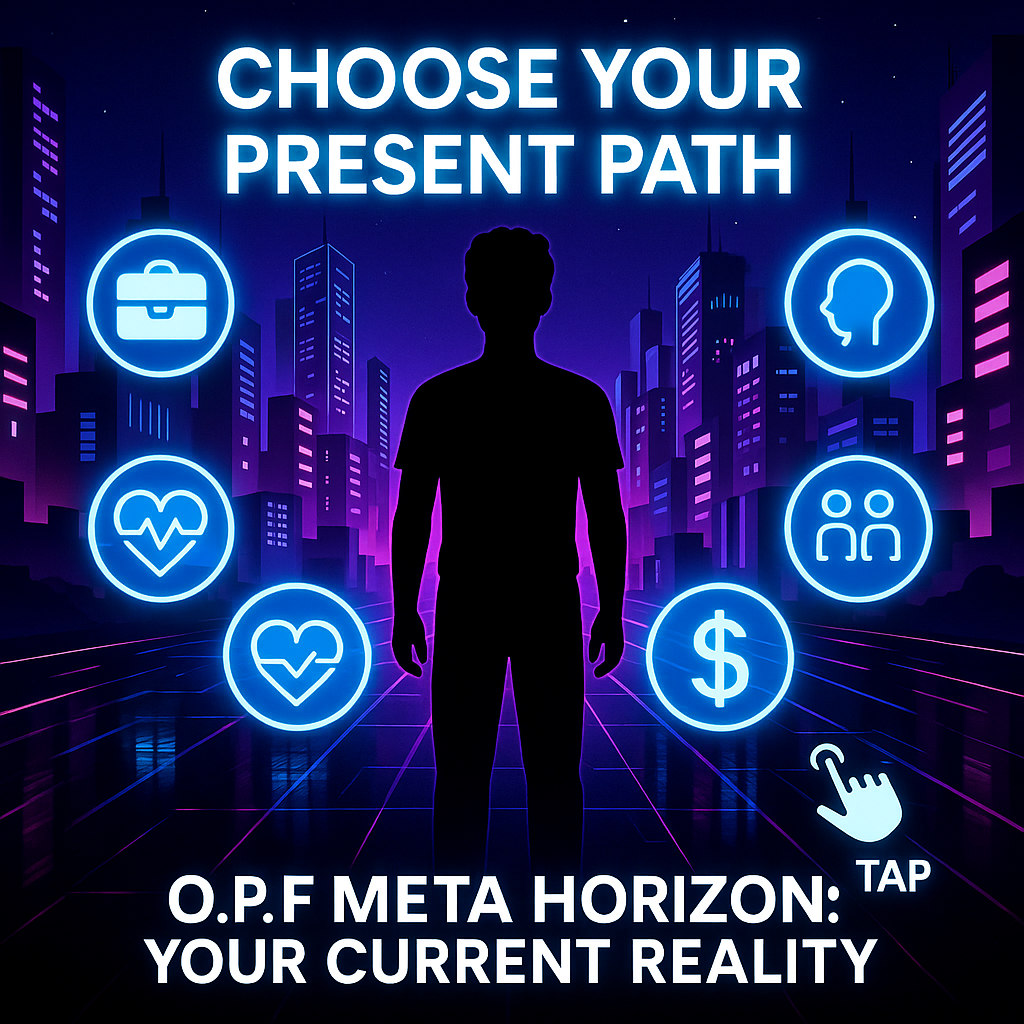
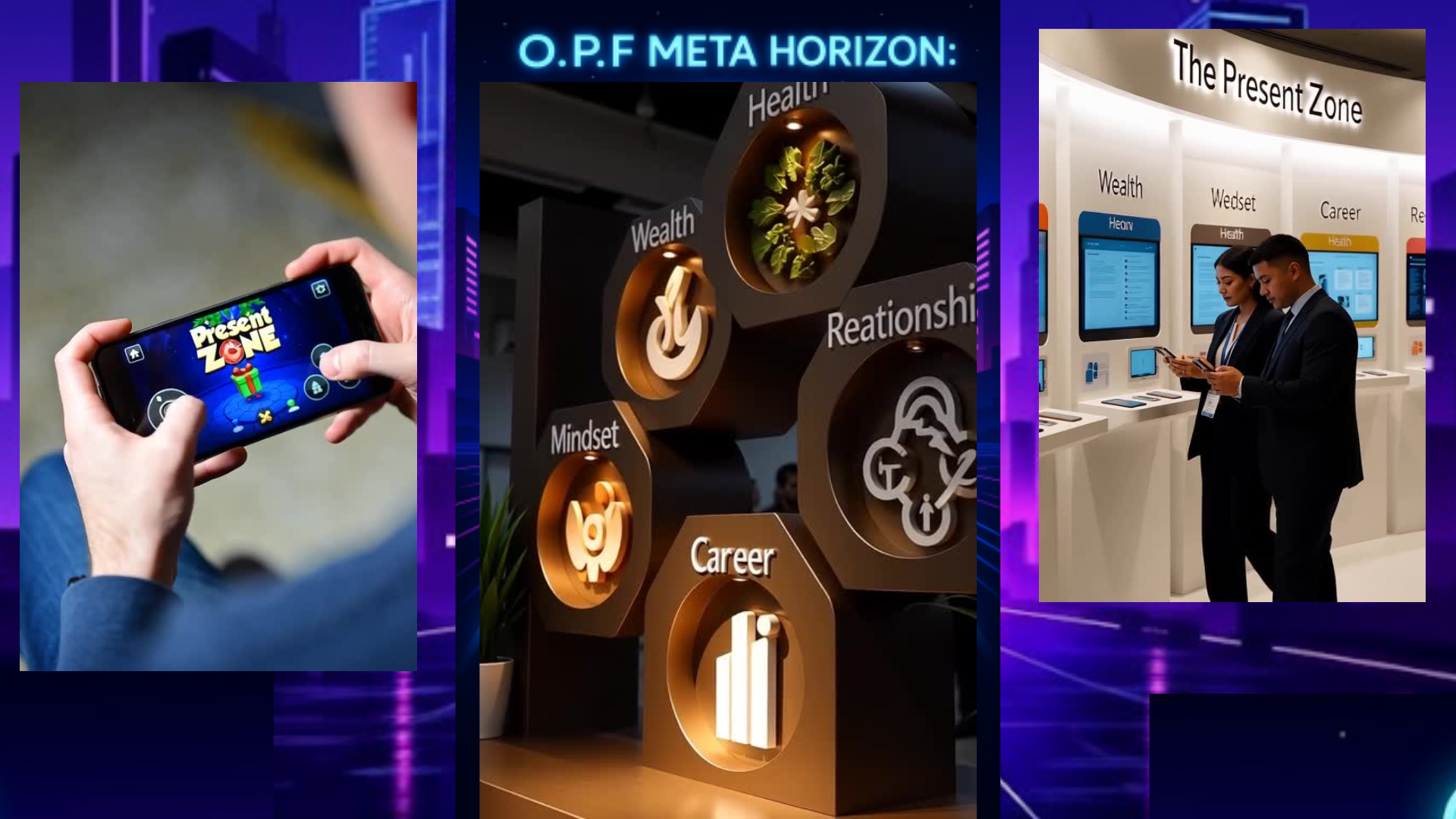
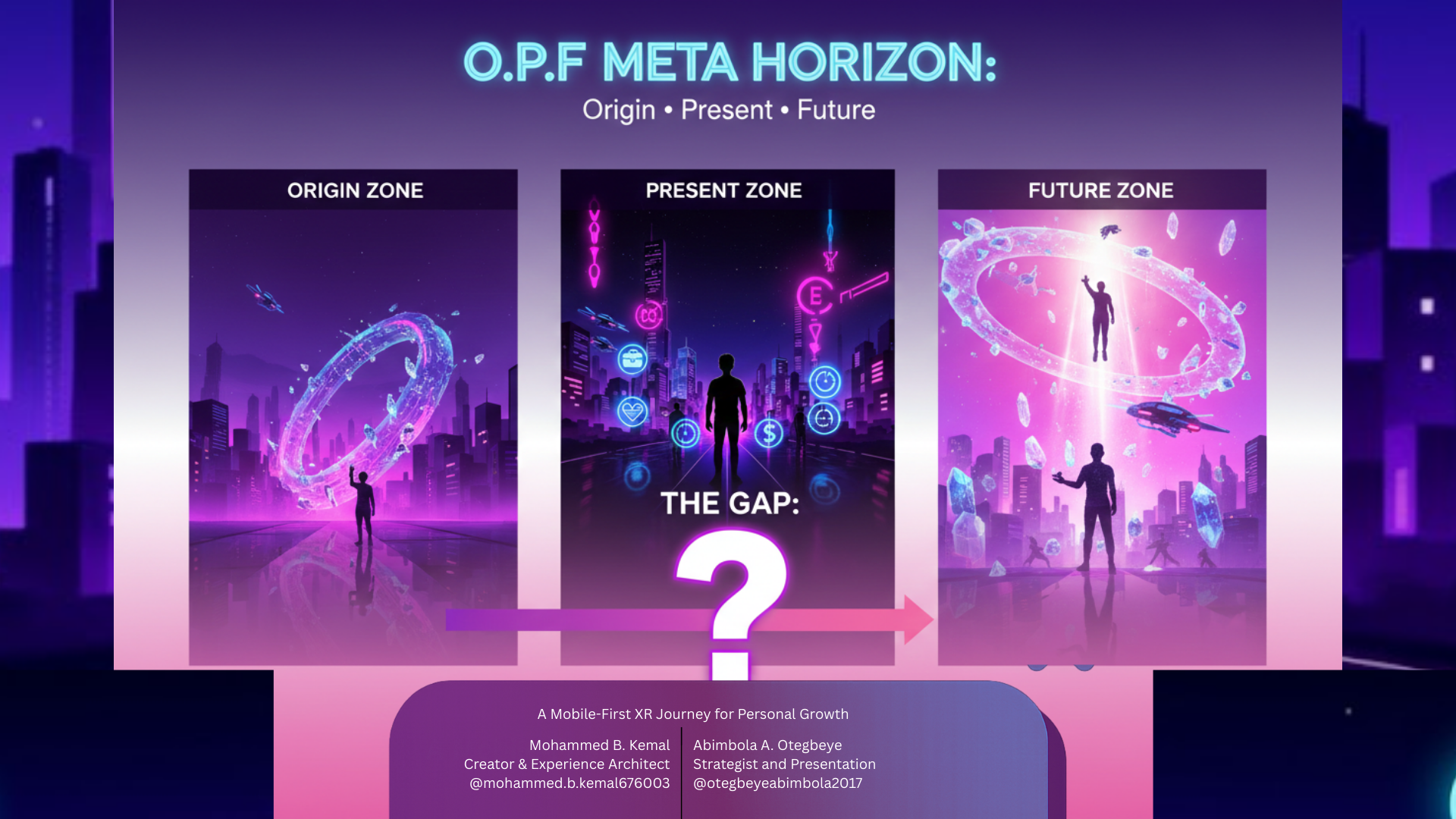
Inspiration
O.P.F Meta Horizon was inspired by a simple idea: what if a user could visually walk through their own Origin, Present, and Future and the system adapts to their decisions in real time? We wanted to create an XR experience that feels meaningful, personal, and emotionally engaging, even without access to Meta Horizon in my region. So we built a full interactive prototype from scratch using Three.js + WebXR, optimized for mobile and browser, so anyone can try it instantly. The goal was to demonstrate the full mechanics, design language, and dynamic progression system we would deploy on Meta Horizon if we had access to the platform.
What it does
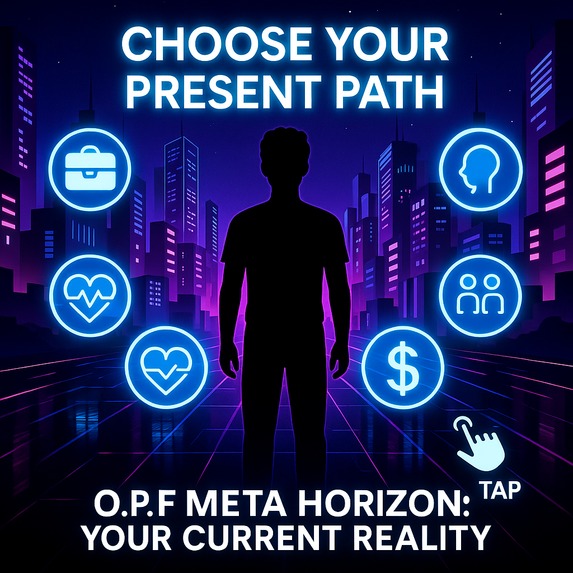
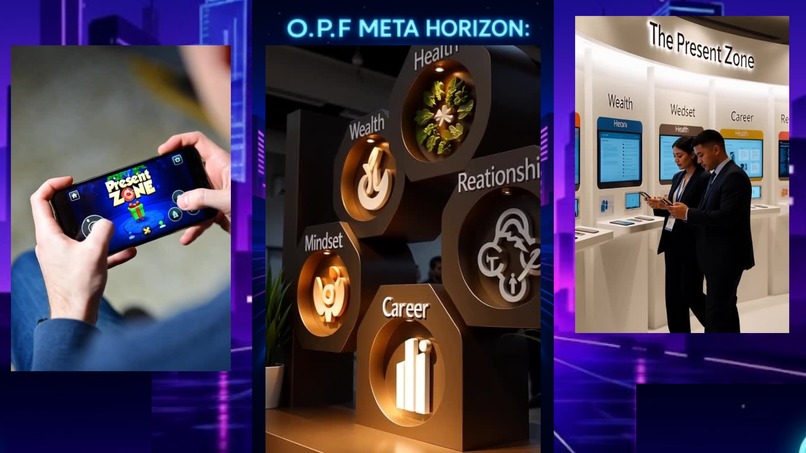
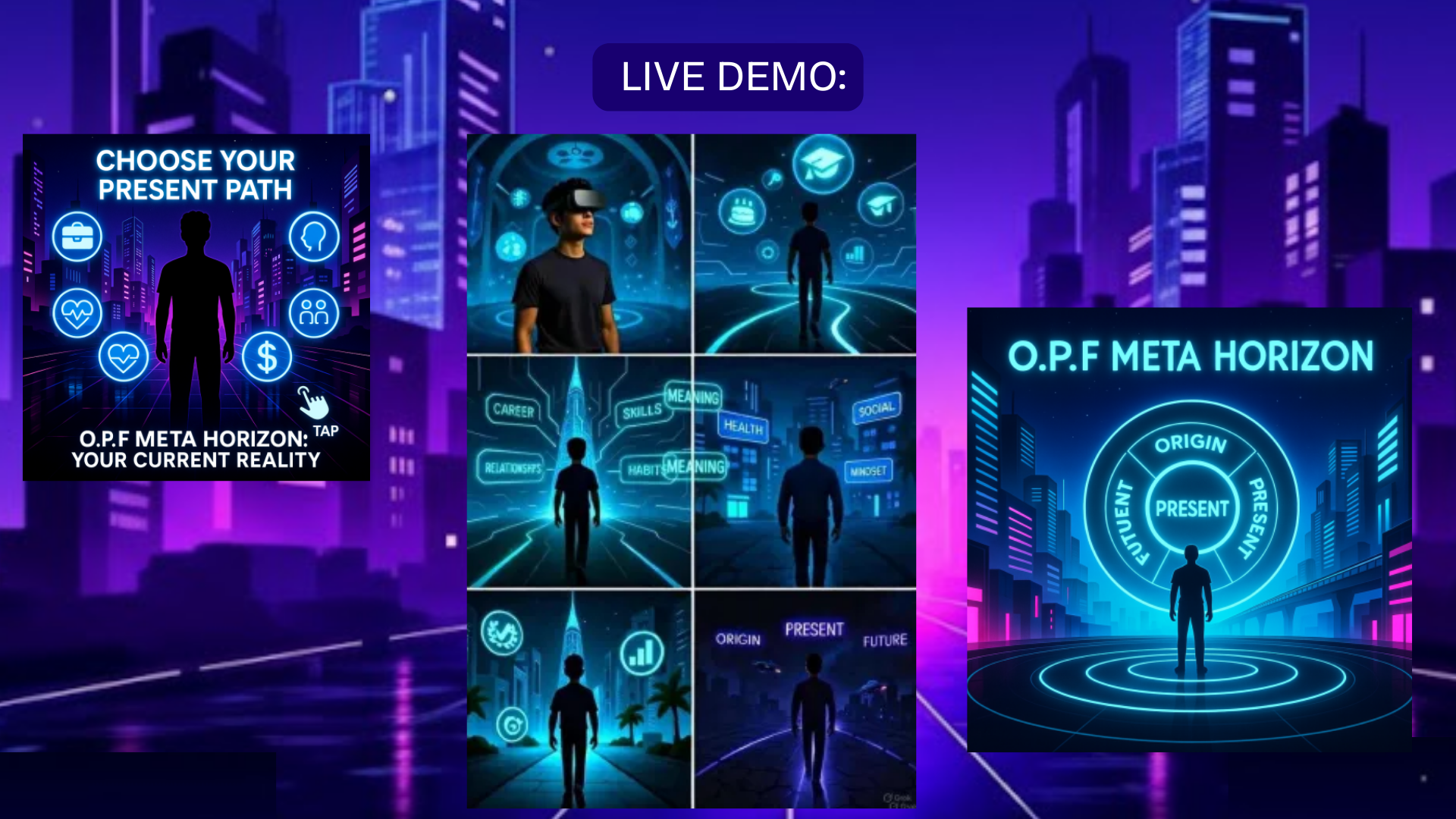
O.P.F Meta Horizon is a three-zone XR journey: ORIGIN — Memory Rings Users explore floating memory rings, collect them, and unlock their personal timeline. PRESENT — Life Stations A neon cyber-street where each station increases stats like: • Health • Wealth • Mindset • Career • Relationships Each choice shapes the user’s path. FUTURE — Destiny Rings Floating rings, god rays, sky platforms, and portals reveal possible futures based on choices. HUB — Reflection Chamber Displays: • Total XP • Origin/P resent/Future completion bars • Stats summary • Replay option
How we built it
We built the entire system using Three.js, custom animation loops, raycasting for interaction, dynamic object creation, state management, UI overlays, and WebXR session handling. All assets (zones, lighting, colors, rings, stations, portals) were hand-coded with no external 3D models. The design language matches the neon-purple, pink-cyan, and gold palette of my visual reference boards. Key features developed: ✔ Fully functional 4-zone XR environment ✔ Click/tap interactions for all objects ✔ XP + stat progression ✔ Portal unlock system ✔ Dynamic UI with animations ✔ Mobile optimization ✔ VR mode via WebXR ✔ Full prototype hosted on Replit
Challenges we ran into
The primary challenge was maintaining visual richness and emotional impact while adhering to strict mobile performance budgets. We had to ruthlessly simplify complexity, focusing on polished core features rather than numerous half-finished ones. Another challenge, highlighted by our initial WebXR development, was ensuring a seamless transition of custom logic and unique interaction models into the Horizon platform, especially in areas like custom UI and object interaction.
What we learned
We learned that when building for a competition with a tight deadline, it's crucial to "underpromise and overdeliver" by keeping the initial concept simple and focusing entirely on polish and performance. We also validated that mobile-first design is inherently more accessible and innovative, as its constraints force clarity, which is a key requirement for mobile Horizon Worlds. Building this pushed us deeply into: • Real-time rendering • Performance tuning for mobile • Writing clean, modular, scalable game logic • Working around platform limitations • Designing systems emotionally meaningful for users We proved that even without direct access to Horizon OS tools, it's possible to simulate a complete, production-ready interaction model.
Accomplishments that we're proud of
We are most proud of successfully creating a new category of 'Purpose-Driven XR' that is accessible to non-gamers and works flawlessly on a range of mobile devices. We achieved performance targets that demonstrate what's possible within mobile XR constraints, while retaining the essential psychological design that drives player transformation. This project is a strong case study in Progressive Enhancement, starting simple and ensuring content availability for all devices.
Next steps
The immediate next step is integrating advanced social features like leaderboards and social sharing. Our long-term vision is to evolve O.P.F. into a creator platform and marketplace, allowing coaches, educators, and other creators to build and sell their own purpose-driven modules and themes on the O.P.F. framework. We also plan to pursue Enterprise Licensing for corporate and educational wellness programs, including: • Hand/gesture interactions • Horizon avatars • Voice-guided narrative • Multiplayer shared experience • Published Horizon world • Real persistence + cloud saves
RISK MITIGATION
Critical Risk: Platform Dependency
- Risk: Building exclusively on Meta Quest locks us into their ecosystem
- Mitigation: Abstract XR layer using OpenXR, maintain WebGL fallback
- Escape Path: Design for eventual port to Pico, Apple Vision, SteamVR
Business Model Infrastructure:
· Token/Economy Engine: Blockchain . digital ownership ledger · Creator Monetization: Revenue share system, tip jar, asset sales · Subscription Services: Tiered access, premium features
Cross-Platform Bridge:
Meta Avatar SDK Integration Meta Social Graph API Platform Store Requirements
PHASED ROADMAP
Development Phases:
Phase 1 (Months 1-3): Core Prototype
- Unity + Meta XR Simulator + Basic Avatars
- Single-shard test world
- Basic movement/interaction
Phase 2 (Months 4-9): Platform Foundation
- Multiplayer backend (Photon/Nakama)
- Content pipeline
- Creator tools v1
Phase 3 (Months 10-18): Scale & Ecosystem
- World sharding system
- Plugin SDK
- Economy systems
Built With
- css3
- custom
- engine
- game
- html5
- javascript
- orbitcontrols
- raycasting
- replit
- three.js
- webxr


Log in or sign up for Devpost to join the conversation.