-
-
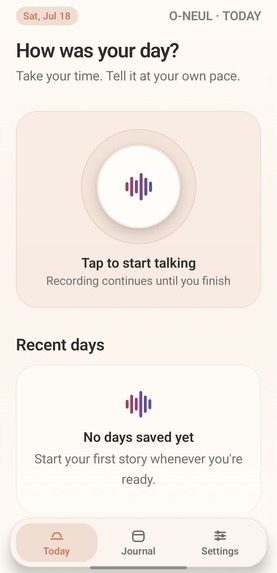
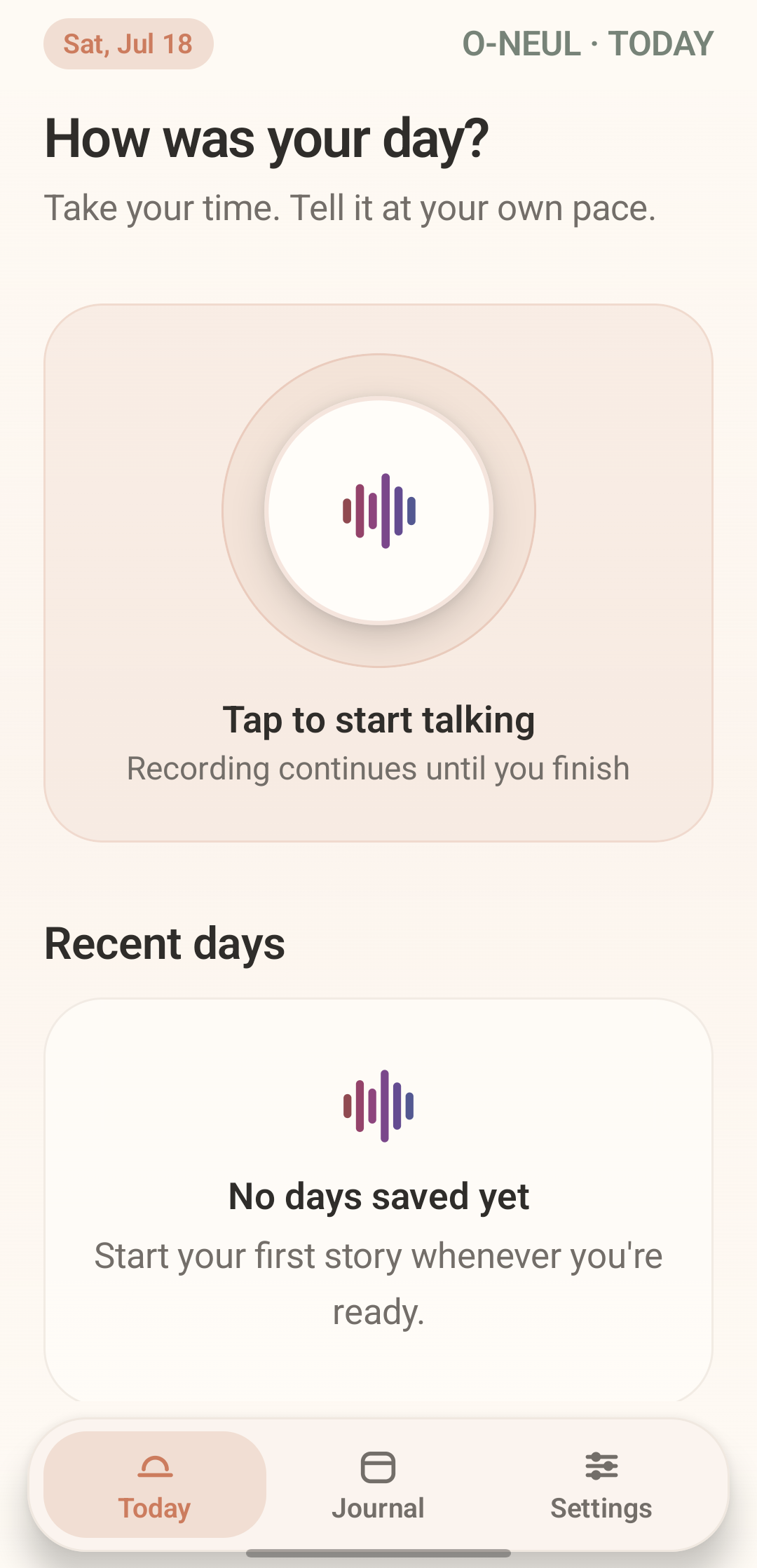
1. Home Voice-first journaling starts with a simple question: “How was your day?”
-
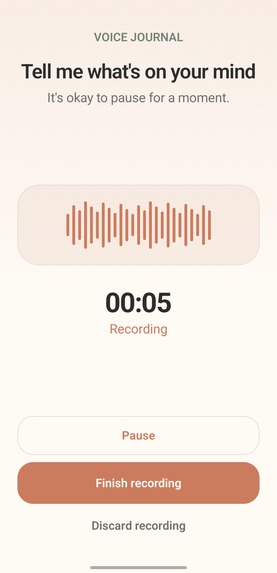
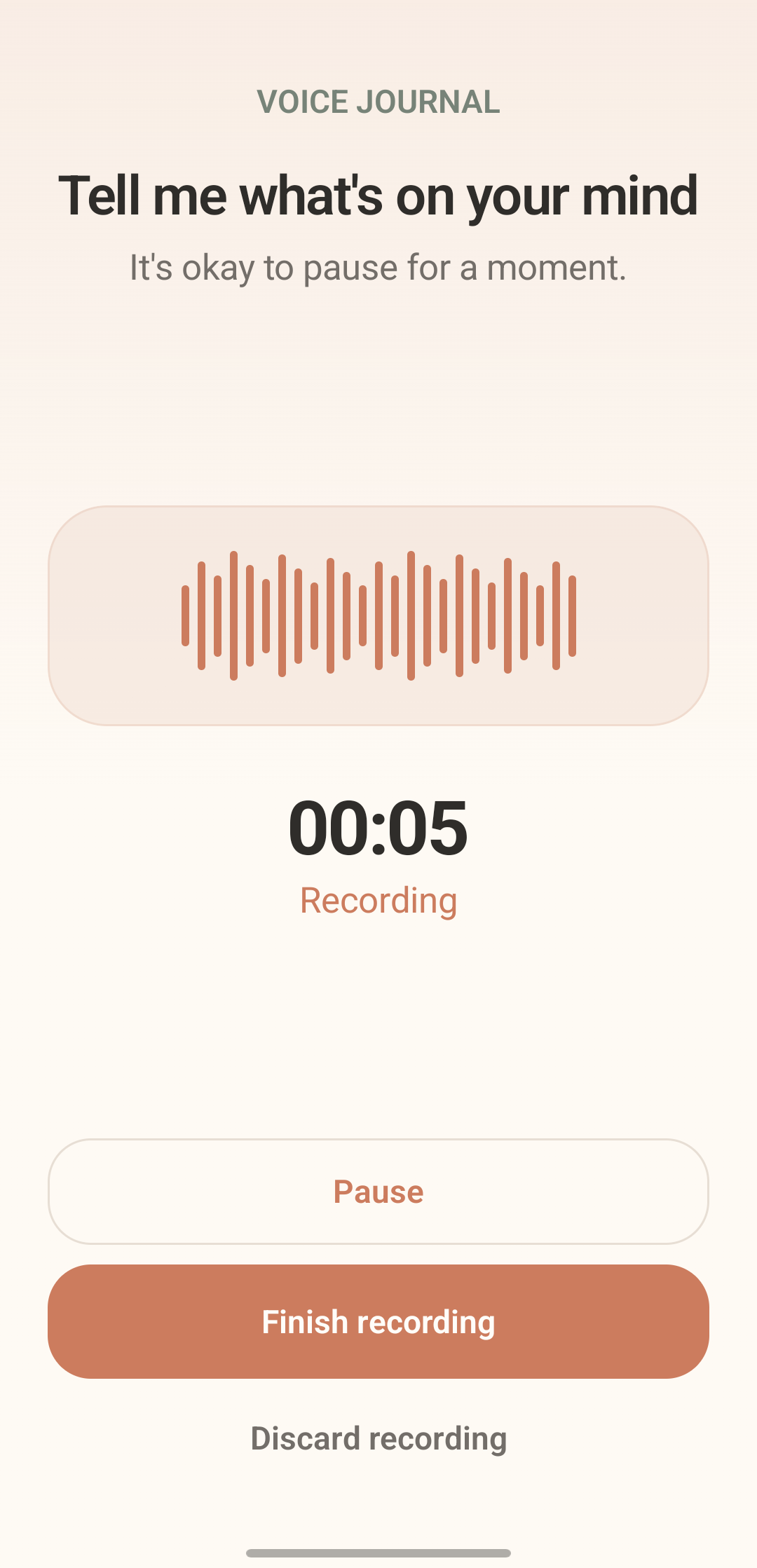
2. Recording Record thoughts naturally, with pause and resume controls for a comfortable voice journaling experience.
-
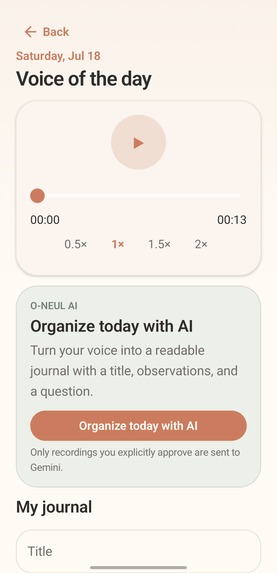
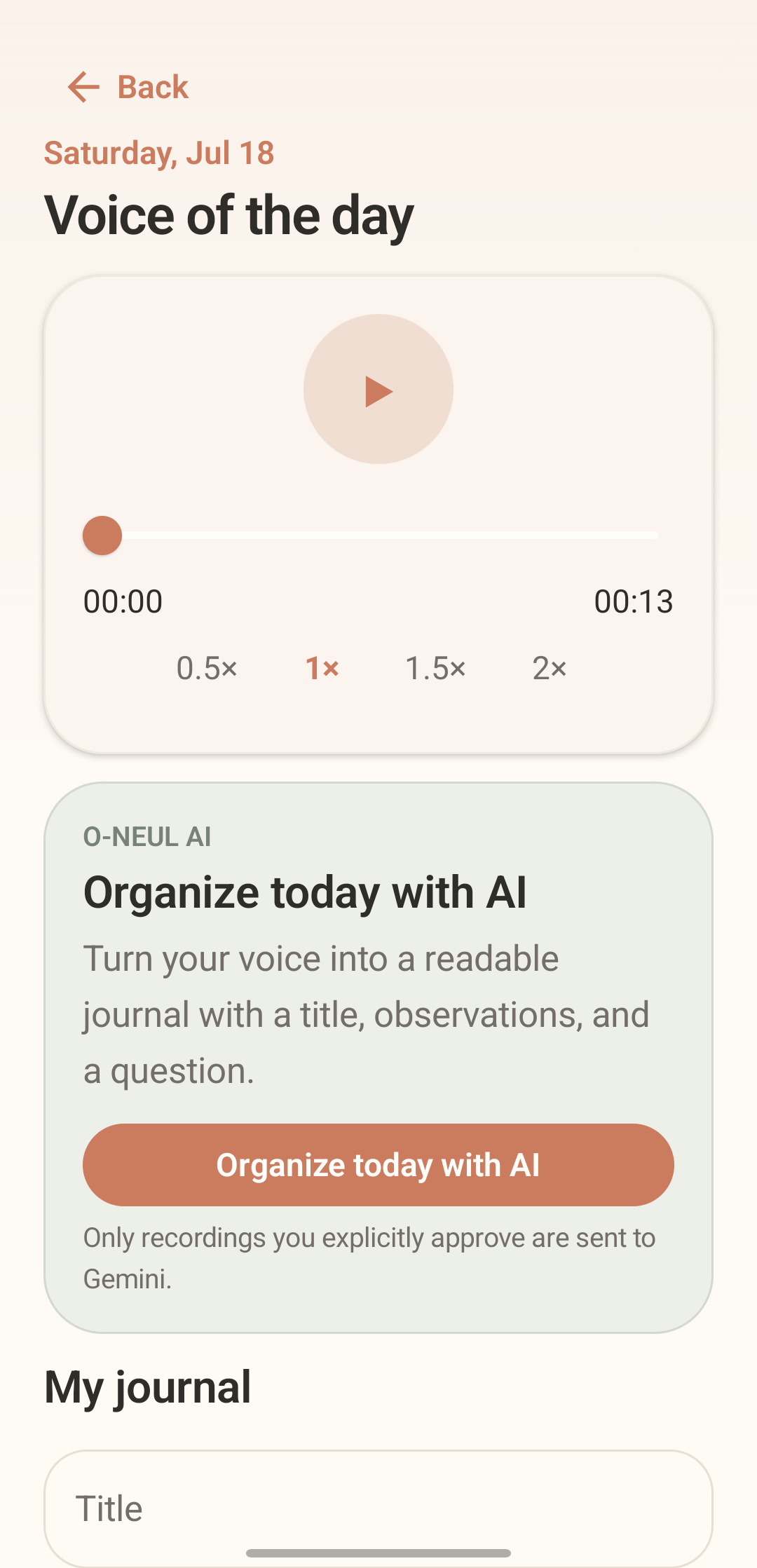
3. Journal and AI consent Users explicitly choose when to send a recording for AI organization—nothing is analyzed automatically.
-
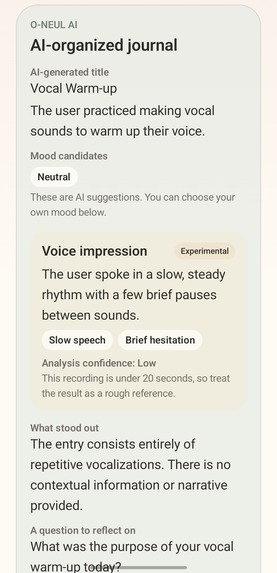
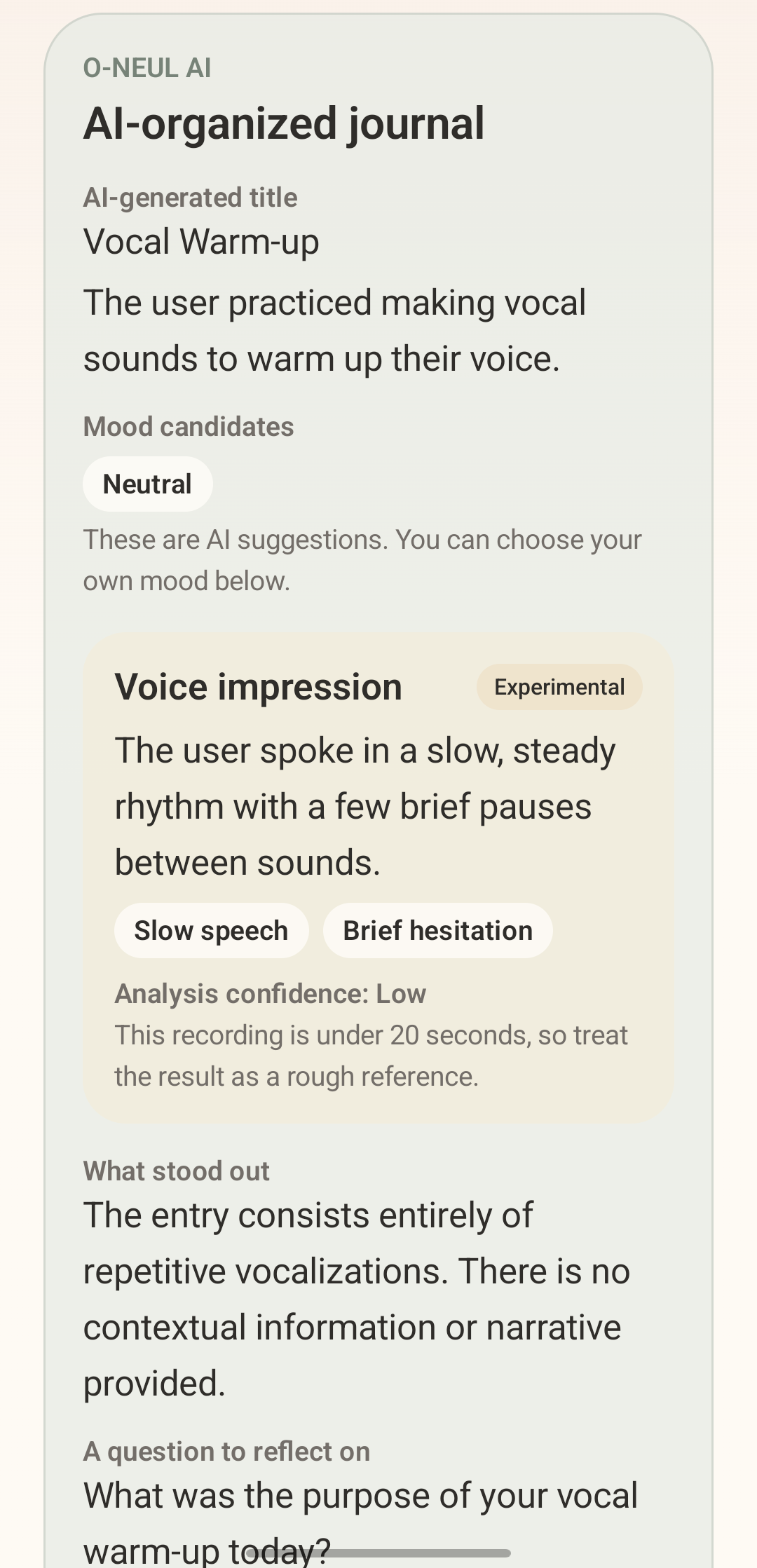
4. AI-organized journal AI transforms a spoken reflection into a title, summary, observations, mood suggestions, and a follow-up question.
-
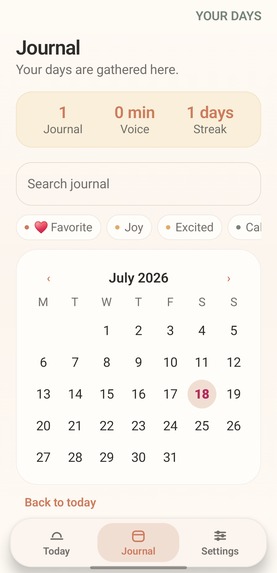
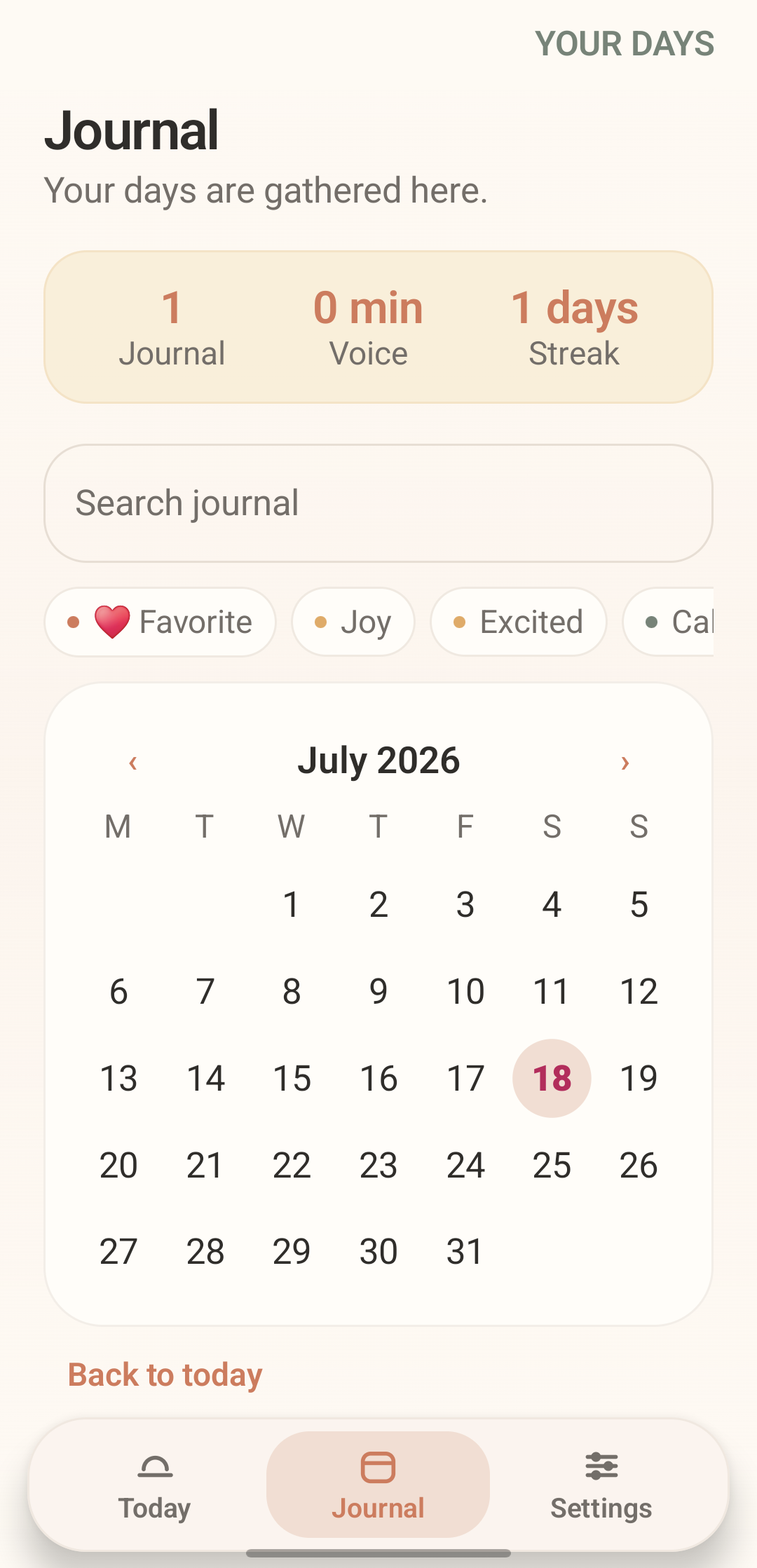
5. Journal calendar Browse locally stored journal entries by date, mood, favorites, or search.
-
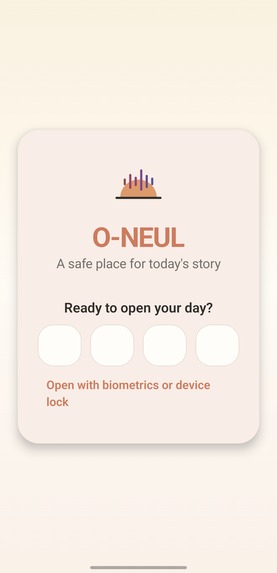
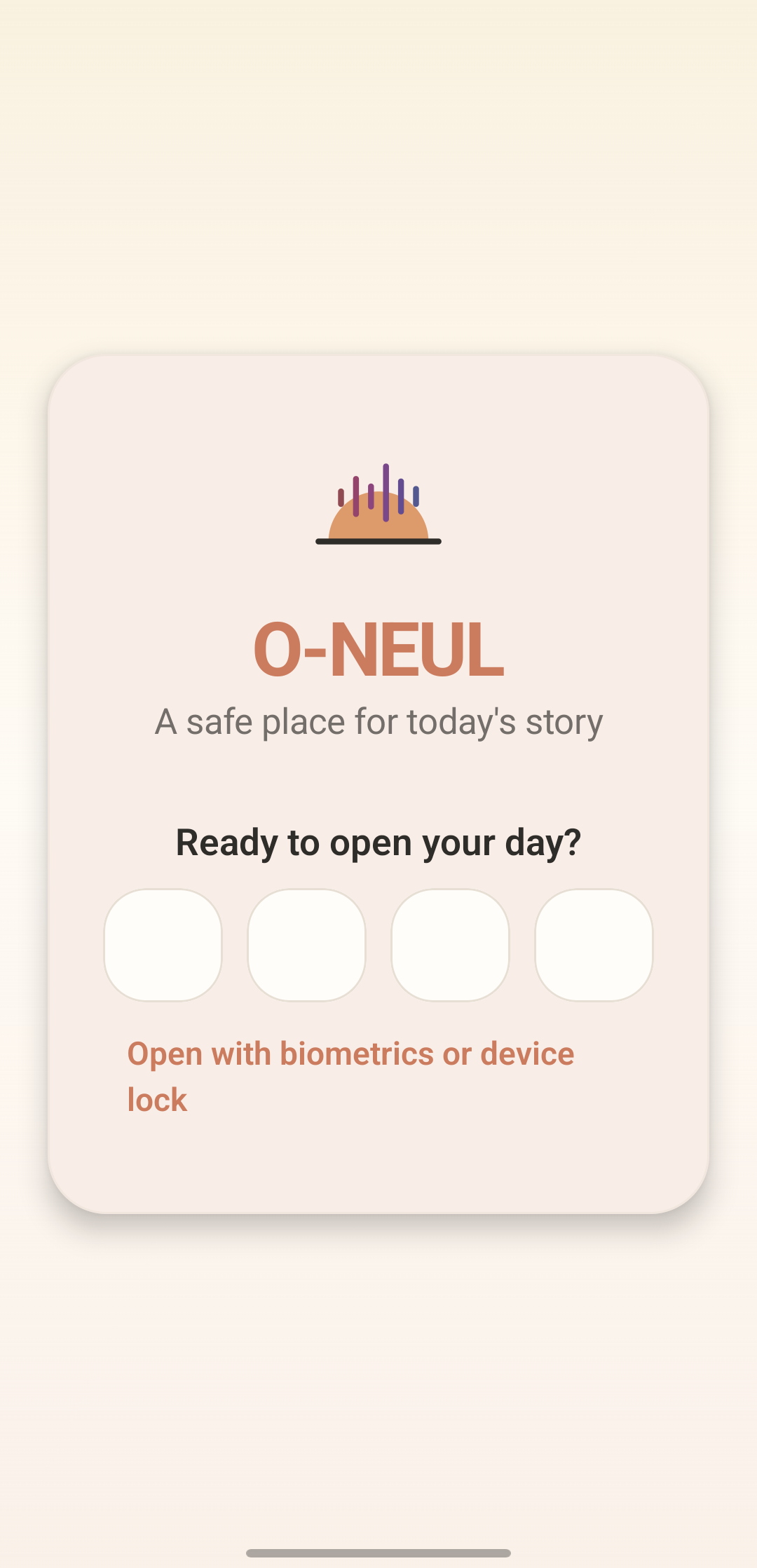
6. Privacy lock Protect private journals with PIN, biometrics, or the device lock.
Inspiration
Most journaling apps start with a blank page, but many people find it difficult to organize their thoughts after a long day. I wanted to create a journal that begins with something more natural—your own voice.
As an Android developer, I was also interested in exploring how AI could support reflection without pretending to understand or diagnose people. That idea became O-NEUL—named after the Korean word for "today"—a private AI voice journal that helps users capture meaningful moments while keeping their data on their own device.
What it does
O-NEUL lets users record voice journals naturally without worrying about writing.
With a single AI analysis, it generates:
- Full transcription
- Journal title
- Readable summary
- Observation-based reflection
- Follow-up question
- Mood suggestion
- Optional memory candidate
Unlike many AI journaling apps, O-NEUL does not attempt to diagnose emotions or personality. Instead, it focuses on helping users better understand what mattered today.
Everything—including recordings, journals, and memories—is stored locally.
How I built it
The app is built as a native Android application using Kotlin and Jetpack Compose.
Major technologies include:
- Kotlin
- Jetpack Compose
- MVVM Architecture
- Room Database
- Firebase AI Logic
- Gemini
- Firebase App Check
- Android MediaRecorder
- Android Biometric API
AI is isolated behind a gateway layer so different providers can be adopted in the future without changing the journal model.
Challenges I ran into
The biggest challenge was balancing useful AI features with user privacy.
Rather than uploading an entire journal history, O-NEUL keeps everything locally and only sends the currently selected recording (and minimal relevant context when necessary) for AI analysis.
Another challenge was preventing AI from sounding overly generic. Instead of producing common empathetic responses, I designed prompts that encourage observation-based reflections while avoiding medical or psychological claims.
Accomplishments that I'm proud of
- Privacy-first architecture
- Local-first journal storage
- Observation-focused AI responses
- Memory system that reconnects meaningful moments over time
- Multilingual support
- Native Android experience
What I learned
Building O-NEUL taught me that good AI products are not about generating more text—they're about knowing what AI should and shouldn't do.
Privacy, transparency, and user control became just as important as model quality.
What's next for O-NEUL — A Private, Local-First AI Voice Journal
Future plans include:
- Play Store release
- Subscription support
- Better long-term memory retrieval
- More natural AI conversations
- Wear OS companion support
- Smarter contextual memory connections
Built With
- android
- codex
- firebaseailogic
- geminiapi
- jetpackcompose
- kotlin
- openai

Log in or sign up for Devpost to join the conversation.