-
-
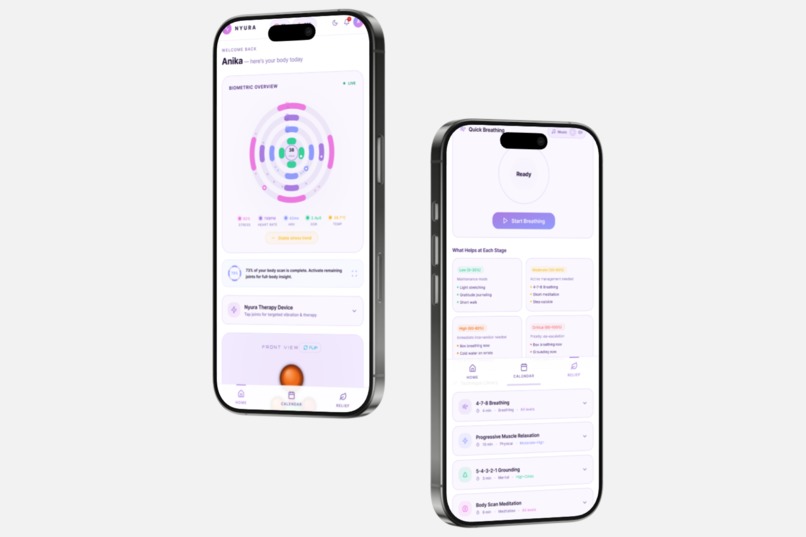
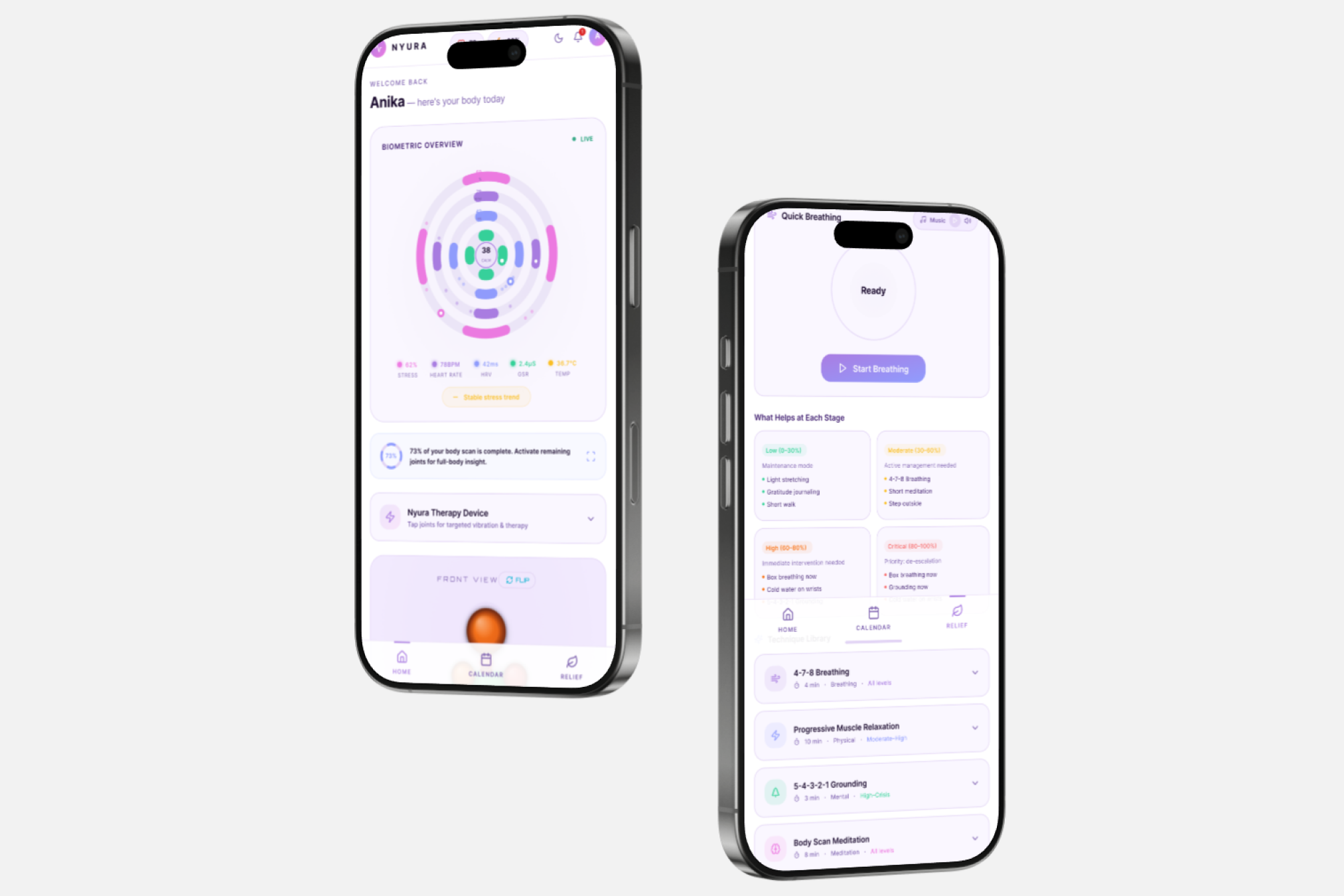
Nyura Mobile App Mockup- Light Mode
-
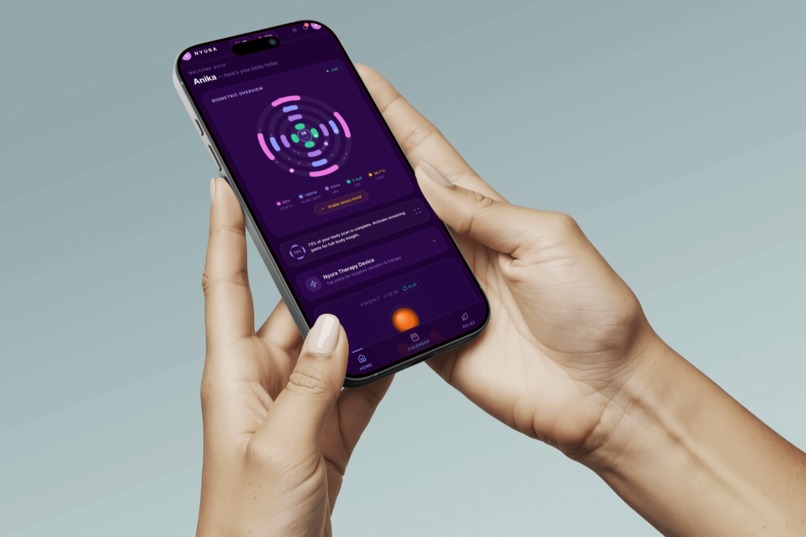
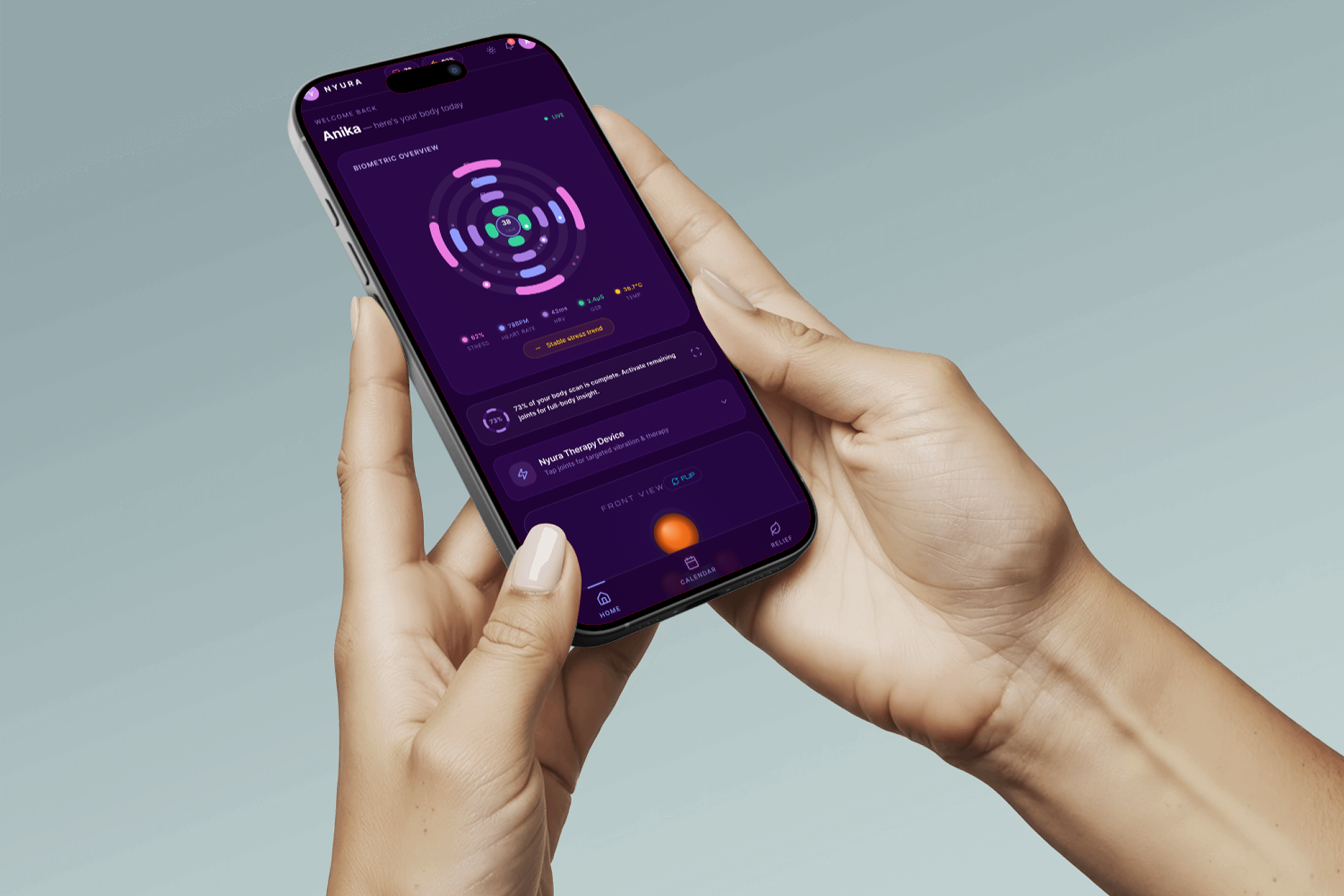
Nyura Mobile App Mockup- Dark Mode
-
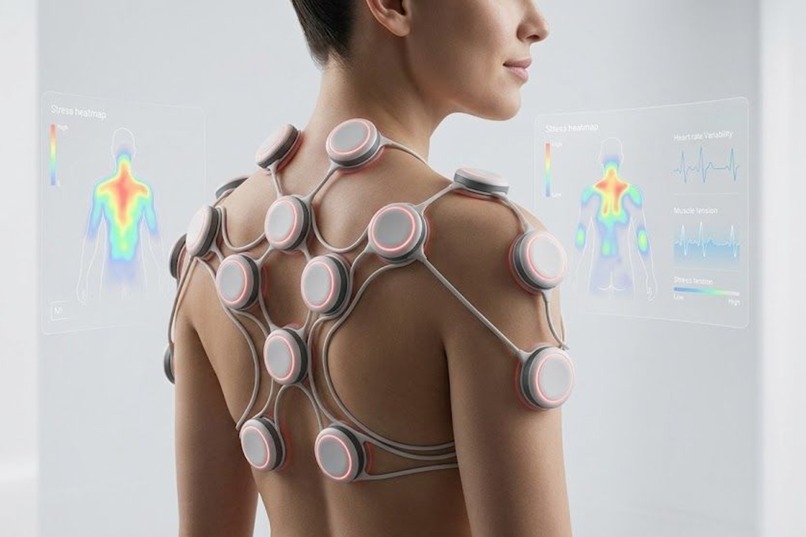
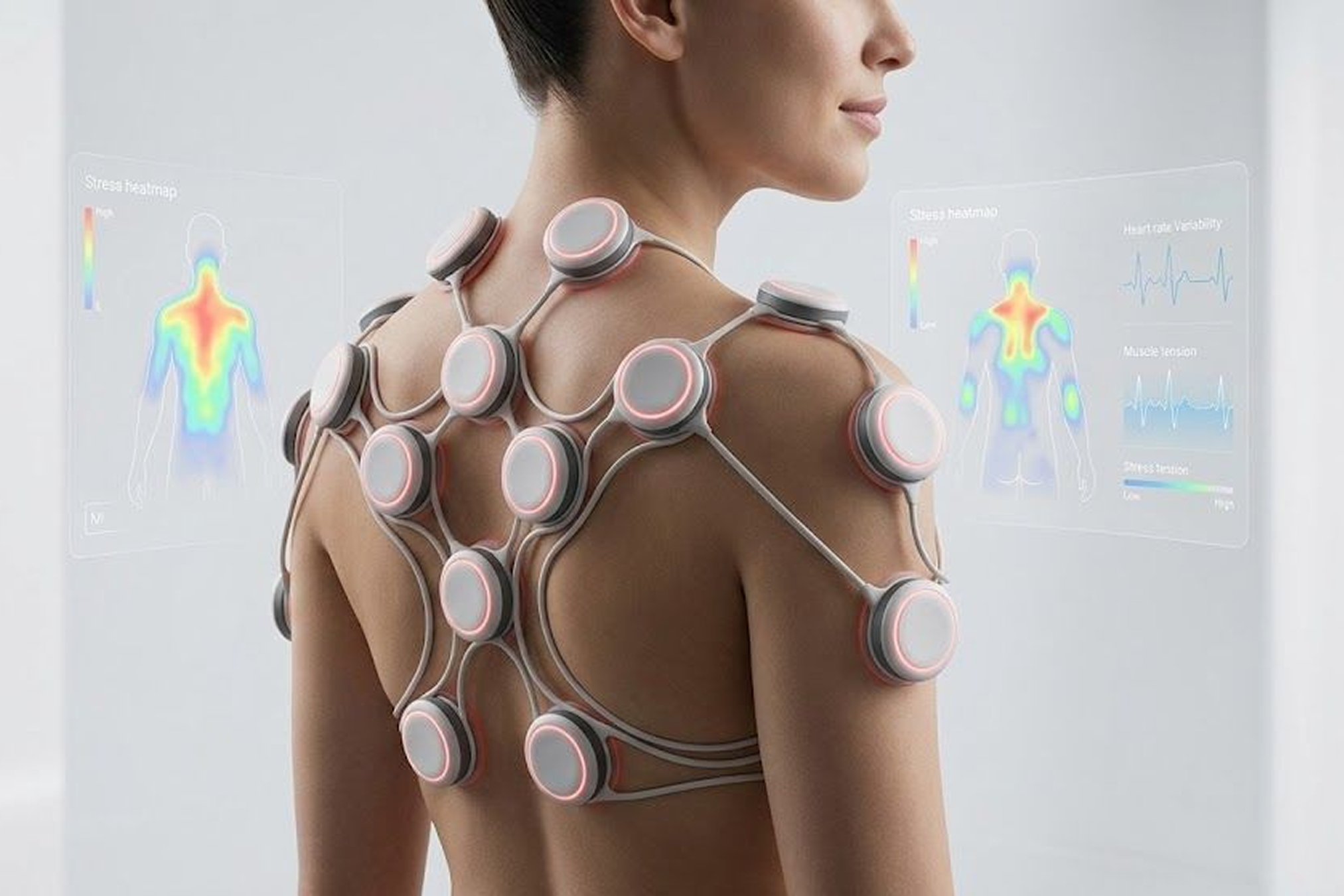
Nyura Therapeutic Stress Rig
-
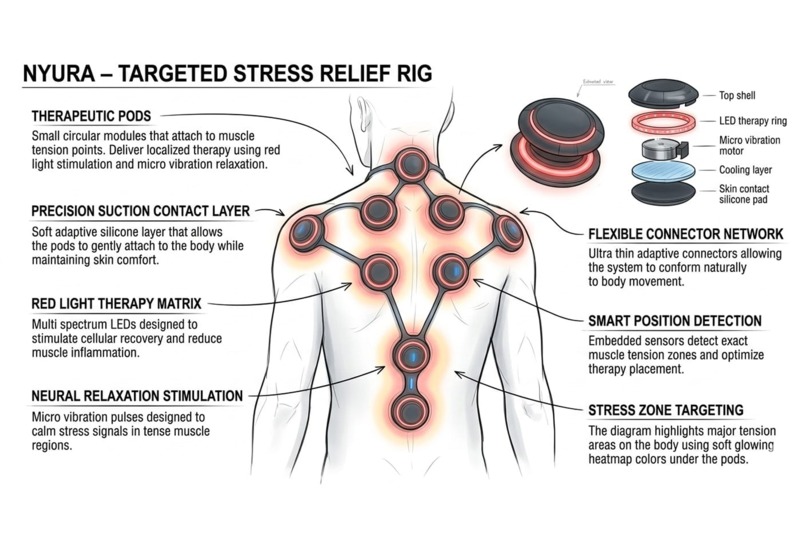
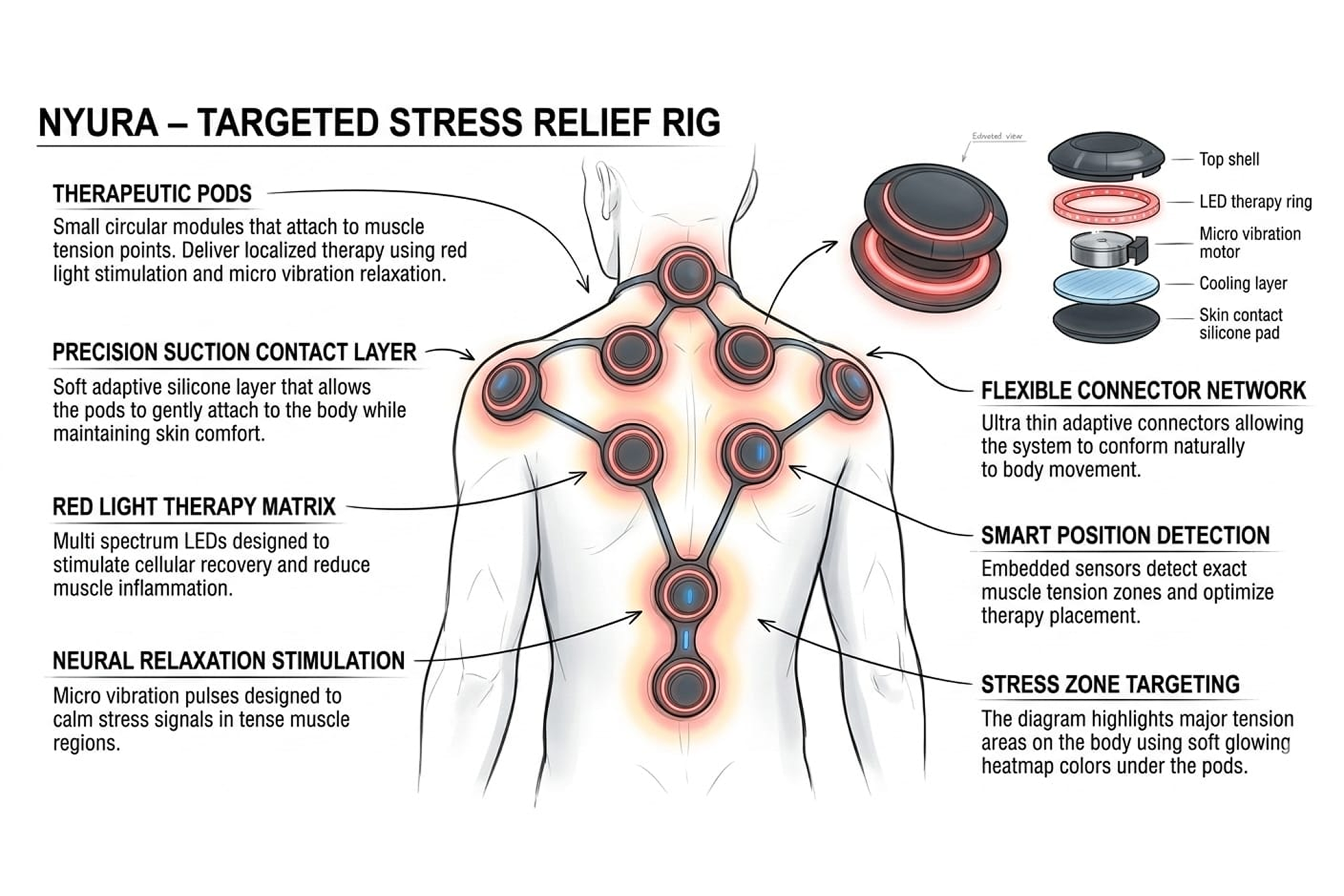
Nyura Therapeutic Stress Rig Diagram
-
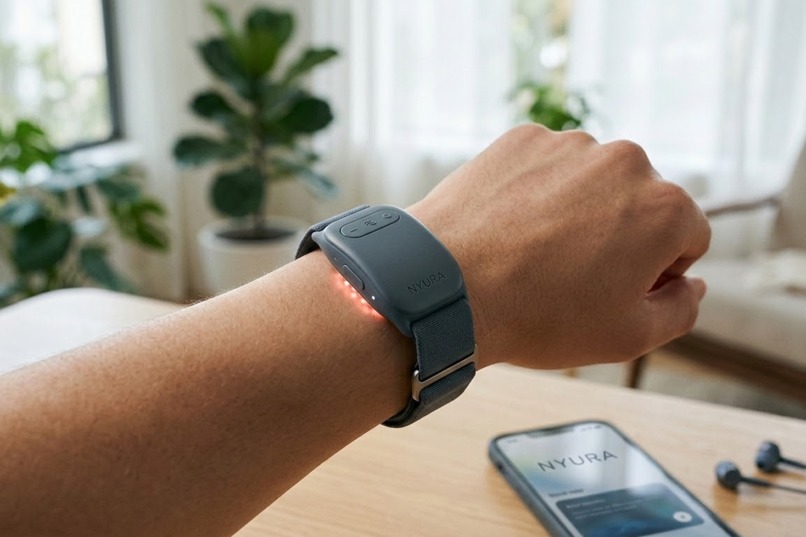
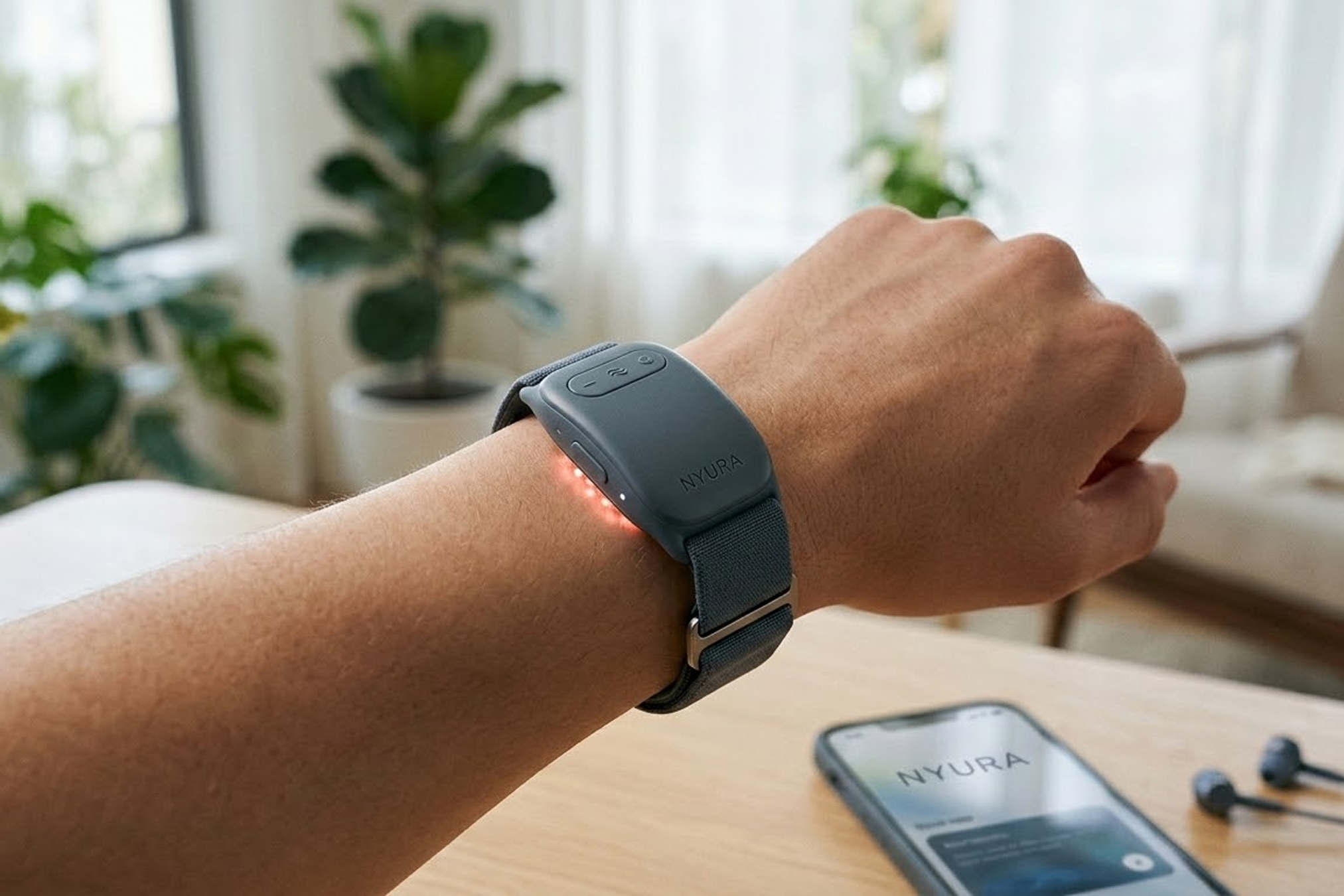
Nyura Therapeutic Sensor Wristband
-
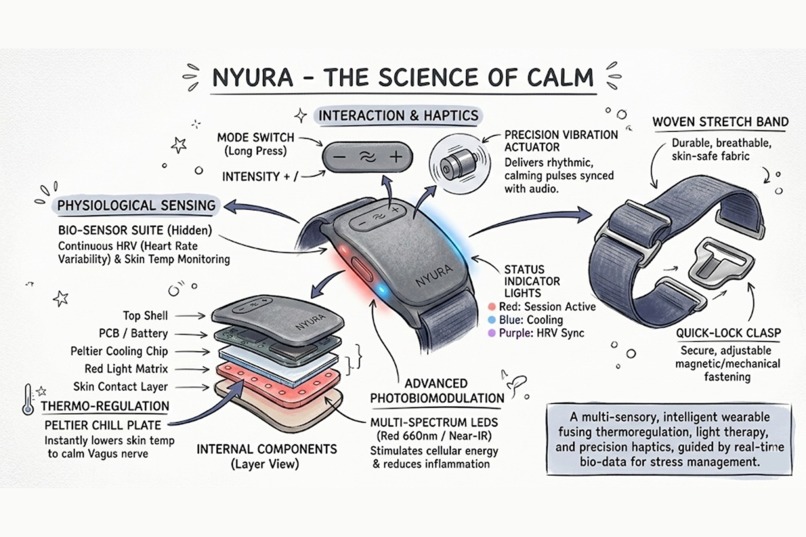
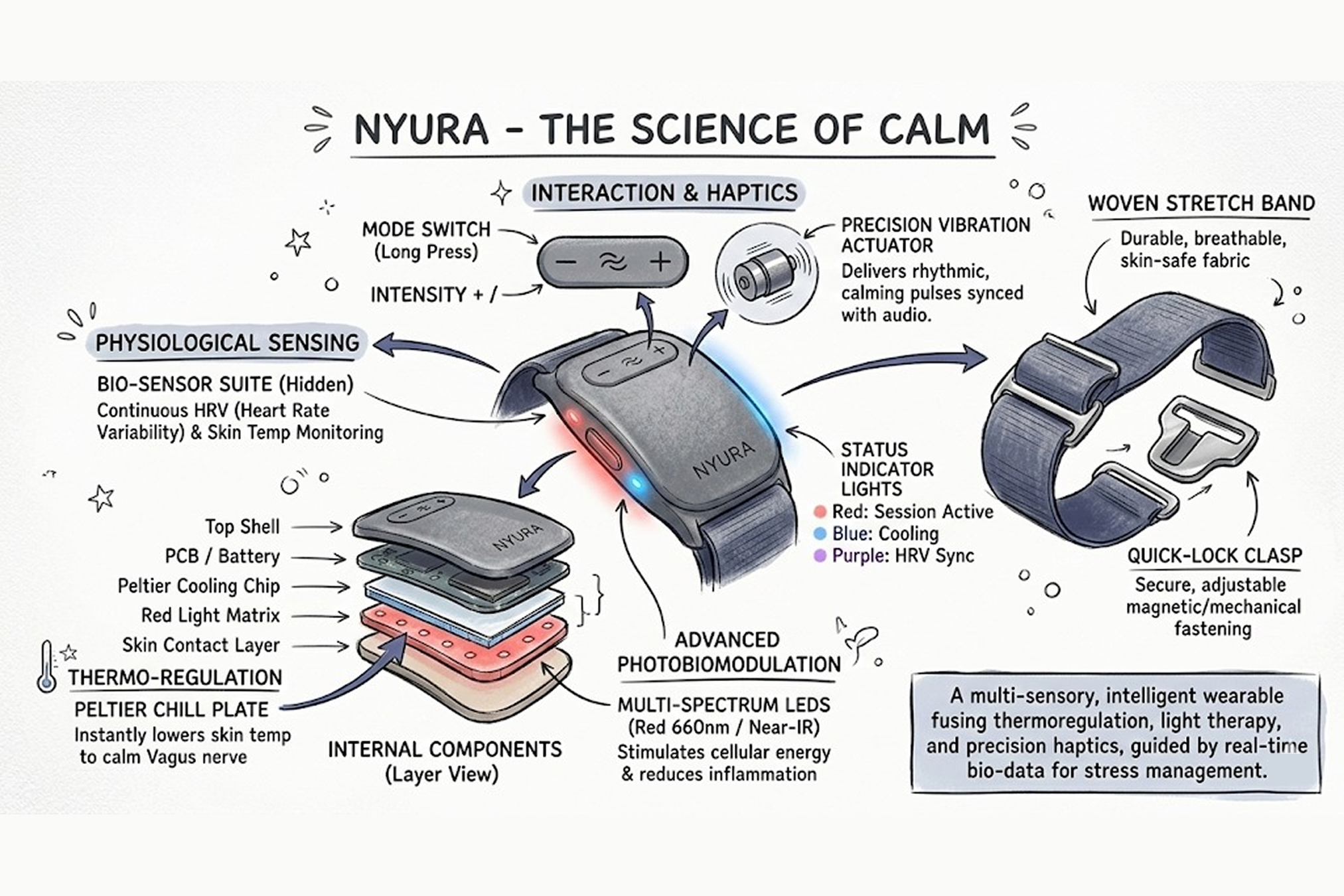
Nyura Therapeutic Sensor Wristband Diagram
Inspiration
Stress is one of the most powerful factors affecting human wellbeing, yet it often remains invisible until it manifests as physical or emotional symptoms. Many people only recognise stress after it has already caused fatigue, anxiety, muscle tension, or burnout.
We were inspired by the idea that the human body constantly generates physiological signals such as heart rate variability, muscle tension, and neutral stress responses. These signals are part of interoception, the body's ability to sense internal states, but most of them remain unconscious.
This led us to a key question. What if people could actually see their stress before they felt the consequences?
Nyura explores the idea of transforming these hidden signals into a new perceivable sense. By making stress visible and understandable, users can intervene earlier and build healthier long-term habits.
What it does
Nyura is a speculative wellness system that allows users to sense, track, and regulate physiological stress signals in real time.
The system introduces a new perceptual layer that translates internal stress signals into intuitive visual feedback. Instead of relying on occasional biometrics or self-reporting, Nyura continuously monitors physiological patterns and converts them into meaningful insights.
Nyura consists of three integrated components: Sensor Wristband A wearable device that continuously monitors physiological signals such as heart rate, HRV, muscle tension, and neural stress indicators. Therapeutic Stress Rig A targeted therapy device that attaches to stress zones on the body and provides localized relief through stimulation and red light therapy. Nyura Mobile App The central interface visualizes stress patterns through body heatmaps, daily timelines, and actionable insights that guide users towards effective stress regulation.
Together, these components allow users to understand where stress accumulates in their body, how it evolves throughout the day, and how their actions influence their physiological state.
How we built it
Nyura was developed as a speculative UX design sprint focused on designing a system that could extend human perception of internal physiological signals.
We began by researching how stress affects the body and how current wellness tools detect stress. We identified that most existing solutions rely heavily on self-reporting or simple biometric metrics, which do not provide a complete picture of how stress accumulates in the body.
From this research, we explored the concept of interoception and designed Nyura as a system that translates internal signals into intuitive visual information.
The product ecosystem was designed around three layers:
- Sensing through wearable physiological monitoring
- Visualization through the Nyura mobile interface
- Intervention through guided recovery techniques and therapeutic hardware
Using Figma Make, we designed the user experience, data visualizations, and interaction flows that demonstrate how users would track, understand, and regulate their stress.
Challenges we ran into
One of the biggest challenges was designing for something that people cannot normally perceive. Stress is abstract and internal, so we needed to create visualizations that make invisible physiological signals intuitive and easy to understand.
Another challenge was preventing information overload. Physiological data can easily become overwhelming, so we focused on simplifying complex signals into clear visual representations such as body heatmaps and stress timelines, instead of raw metrics.
Designing a speculative sensing system also required balancing realism with imagination. We wanted the technology to feel futuristic while still being grounded in believable physiological signals and wellness practices.
Accomplishments that we're proud of
We are proud of designing a system that transforms an invisible physiological experience into a clear and actionable visual interface.
Nyura demonstrates how design can extend human perception and create a new form of sensory awareness around stress.
We are also proud of creating a complete ecosystem rather than just a mobile interface. The integration of wearable sensing, therapeutic hardware, and intuitive software creates a holistic wellness experience.
Finally, we are proud of the clarity of the user experience. Instead of overwhelming users with complex biometrics, Nyura communicates stress in a simple, visual, and actionable way.
What we learned
This project taught us that the most impactful wellness technologies are not just about collecting data but about helping people interpret and act on that data.
We learned how important it is to translate complex physiological signals into visualizations that users can immediately understand.
We also learned how speculative design can help imagine future possibilities. By designing tools for capabilities that may not yet exist, designers can explore how technology might expand human perception and improve well-being.
What's next for Nyura- Making Stress Visible
Nyura represents the beginning of a new way for people to understand their internal physiological state.
In the future, Nyura could evolve into a platform that predicts burnout before it happens by identifying long-term stress patterns and behavioral triggers.
Work environments could become stress-aware spaces where lighting, sound, and environmental conditions adapt to support collective well-being.
Nyura could also integrate with therapists and healthcare professionals, enabling deeper insights into long-term physiological stress patterns and improving preventative mental health care.
Our vision is a future where people are not only aware of their stress but are empowered to understand, regulate, and improve their well-being before stress becomes harmful.
Built With
- aftereffects
- claude
- figma
- figmamake
- gemini


Log in or sign up for Devpost to join the conversation.