-
-
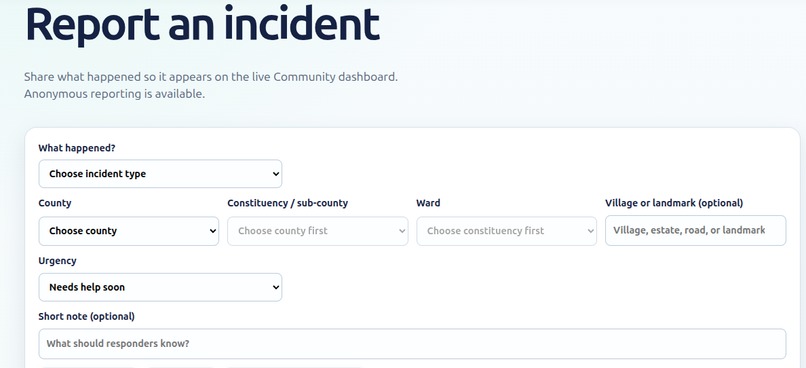
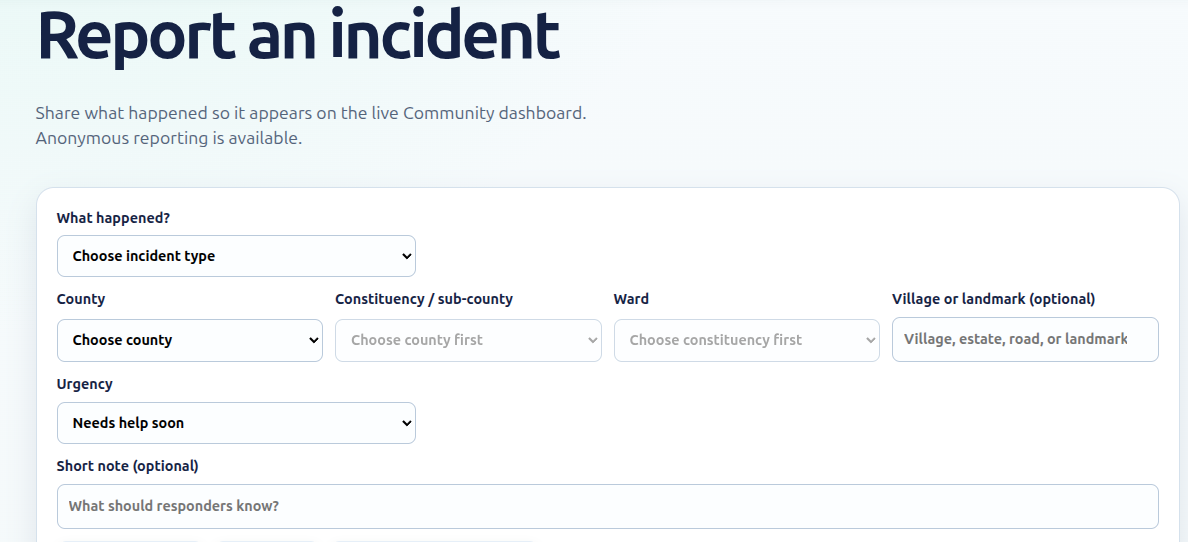
Incident
-
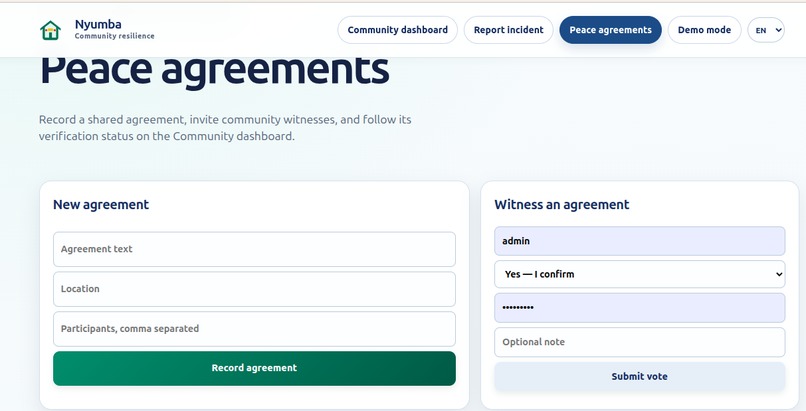
Agreement
-
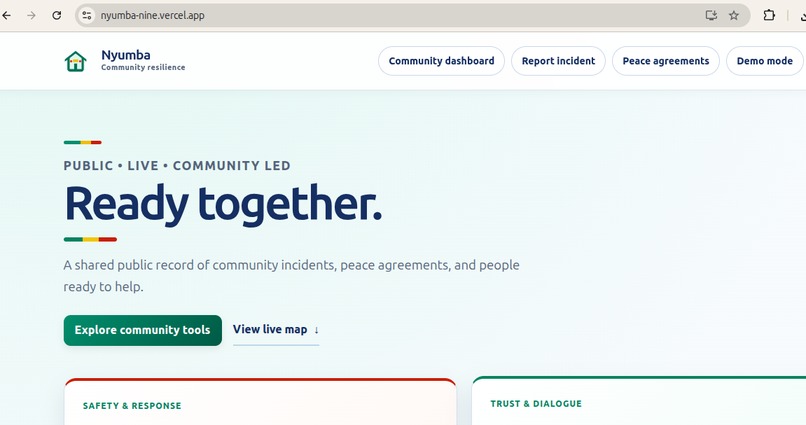
Dashboard
Inspiration
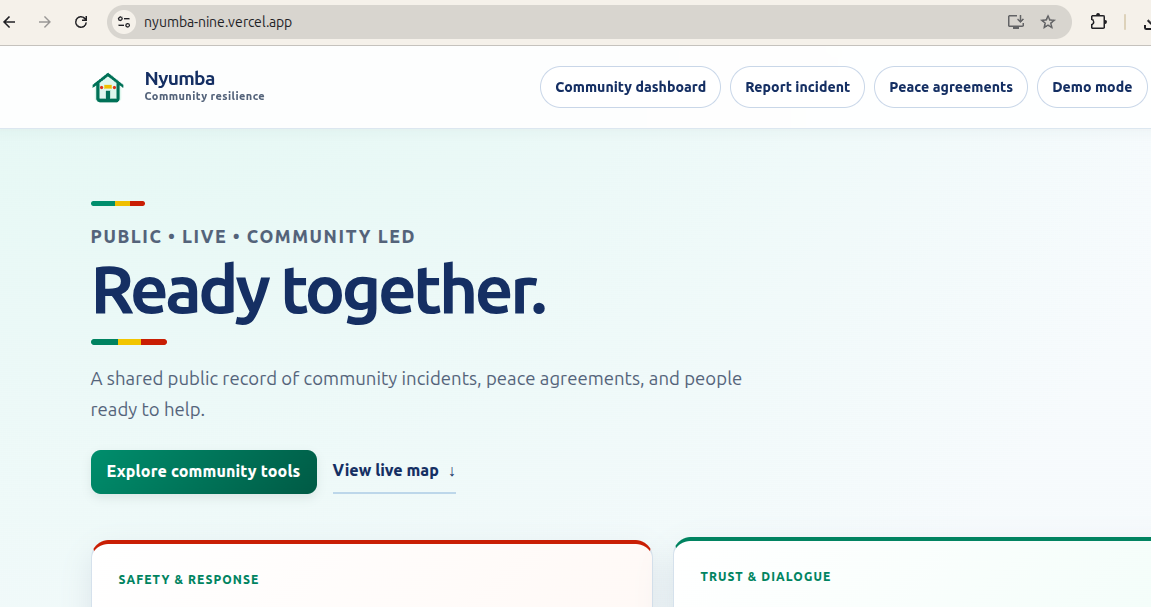
Nyumba means “home” in Swahili. The project was inspired by a simple question: how can communities coordinate during local conflict, flooding, shortages, or disruptions when connectivity is unreliable and trust matters as much as information? We wanted to create one practical place for community leaders, volunteers, responders, and mediators to report incidents, coordinate support, and document peace agreements safely.
What it does
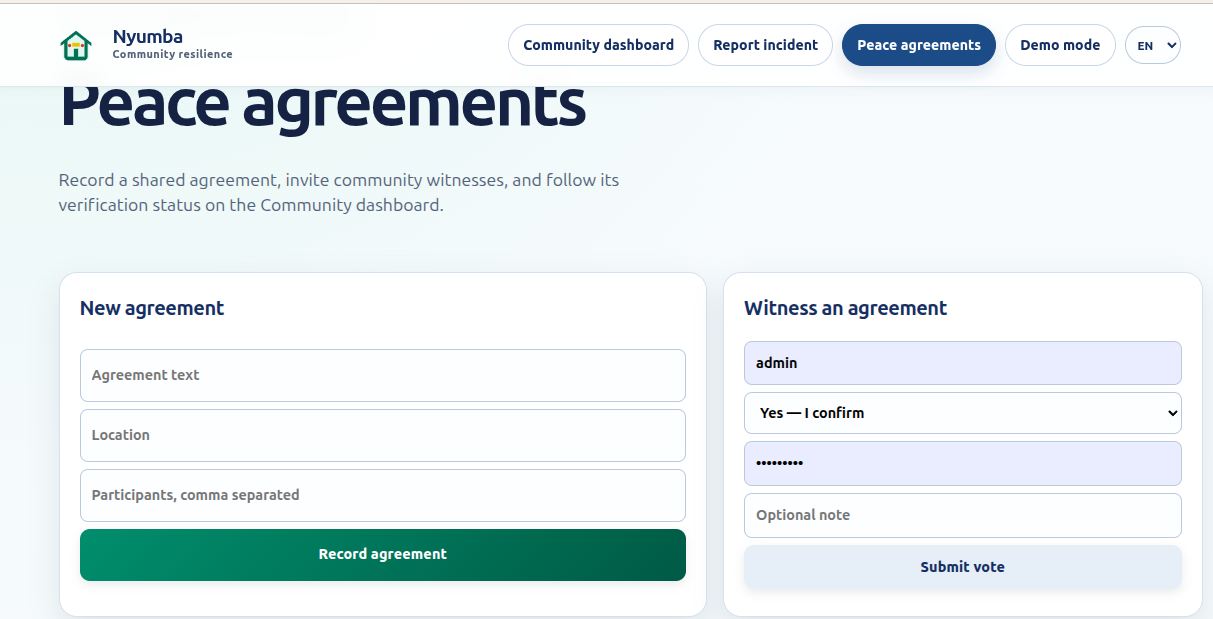
Nyumba is an offline-friendly community resilience platform for Kenyan communities. It supports incident reporting with Kenya’s location hierarchy, maps incidents and response resources, coordinates volunteers and supplies, and provides clear local guidance. Its PeaceTech ledger also encrypts agreements, accepts anonymous witness votes, verifies agreements after three positive votes, and generates QR- enabled peace receipts with a tamper-evident local hash-chain reference.
How we built it
The platform uses FastAPI for the backend, SQLite for local-first storage with optional Postgres deployment support, and a mobile-first progressive web app for the interface. Leaflet and OpenStreetMap power the incident-and-response map. AI-style recommendations are handled by a deterministic local CommunityAI service. This keeps the application usable without an API key or network connection, while clearly labelling recommendations as guidance rather than live emergency intelligence. GPT-5.6-powered Codex accelerated repository inspection, focused implementation, debugging, testing, diff review, and documentation. I made the key product, engineering, and safety decisions, especially around offline- first operation, encryption, explainable guidance, and avoiding unsupported live-data claims.
Challenges we faced
The main challenge was balancing useful coordination features with safety and trust. We needed to avoid presenting simulated information or AI guidance as a replacement for verified emergency services. We also had to design agreement verification so sensitive agreement text stays encrypted while receipts can still provide useful integrity evidence. Another challenge was keeping workflows coherent across the dashboard, incident map, volunteer dispatch, witness validation, and receipt generation while maintaining a simple demo experience.
What we learned
We learned that resilience tools need clear boundaries: local guidance must be explainable, trust records need privacy by default, and offline capability is a core product feature rather than an afterthought. We also learned that Codex is most effective as a human-in-the-loop collaborator: it speeds up implementation and validation while product responsibility stays with the builder.

Log in or sign up for Devpost to join the conversation.