-
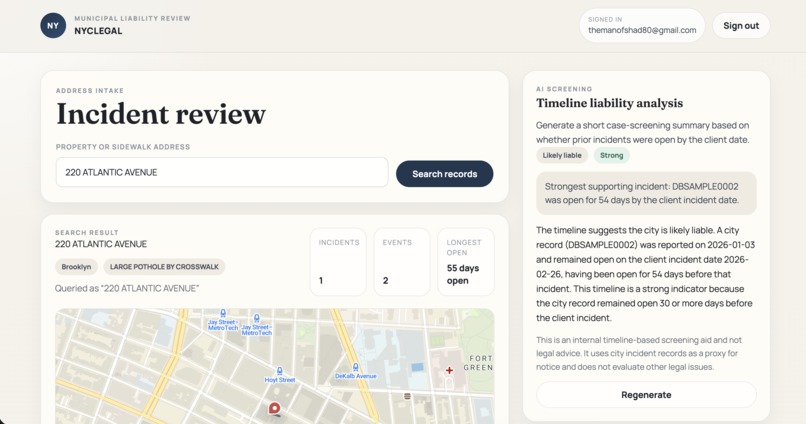
Main dashboard
-
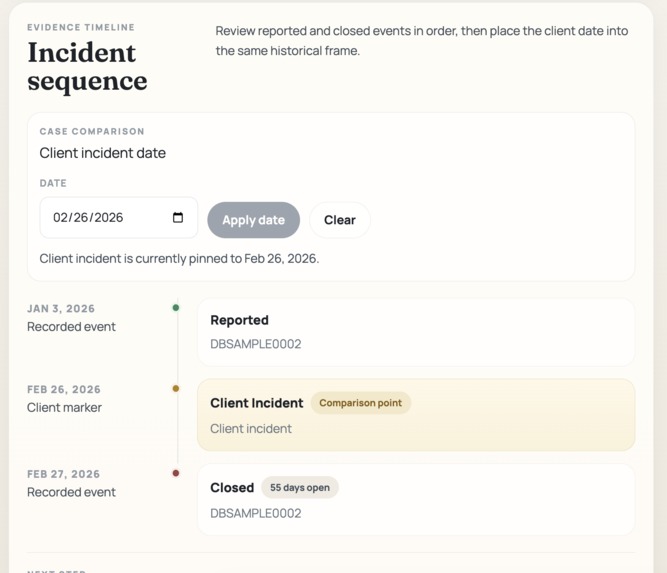
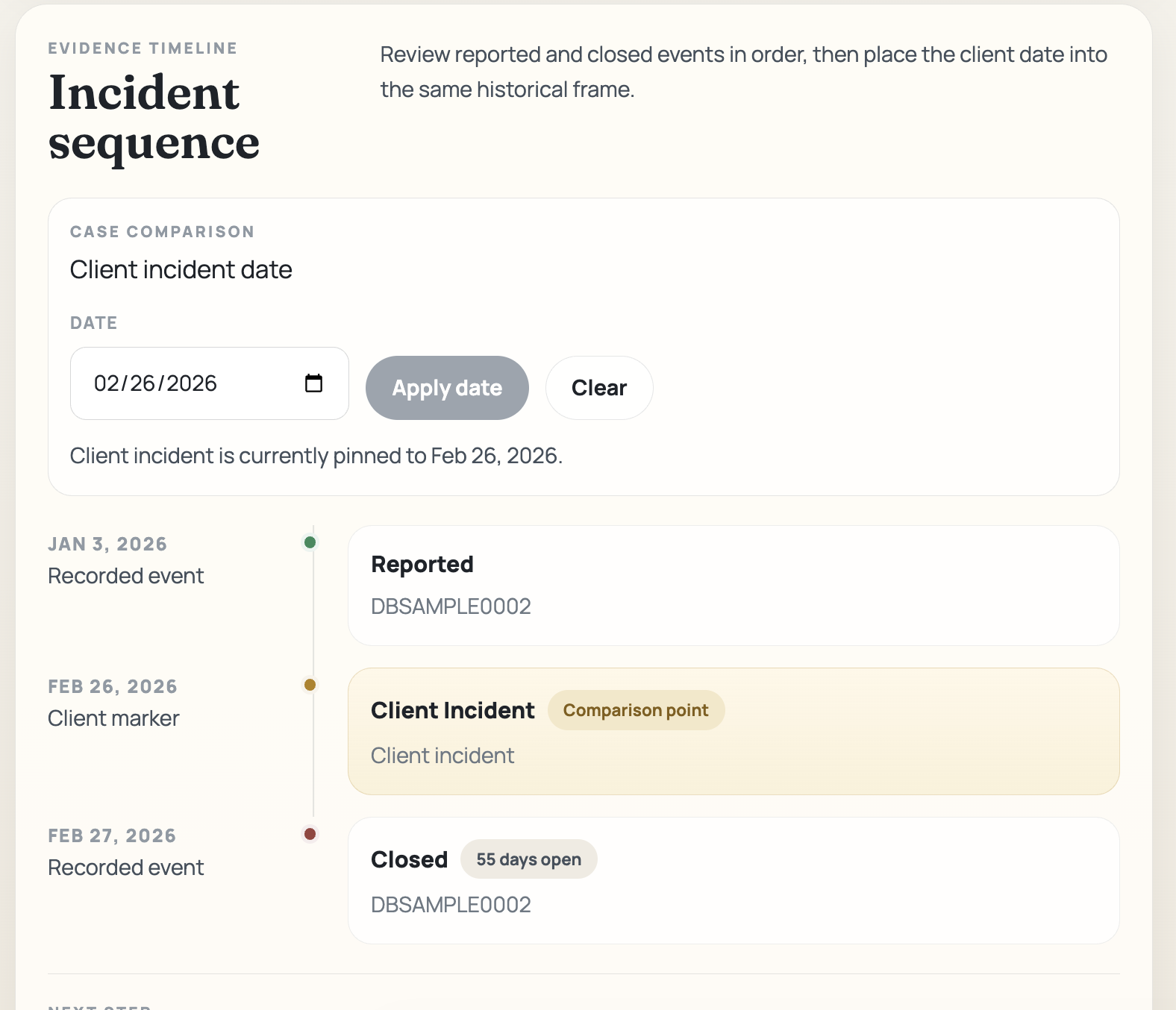
Timeline view
-
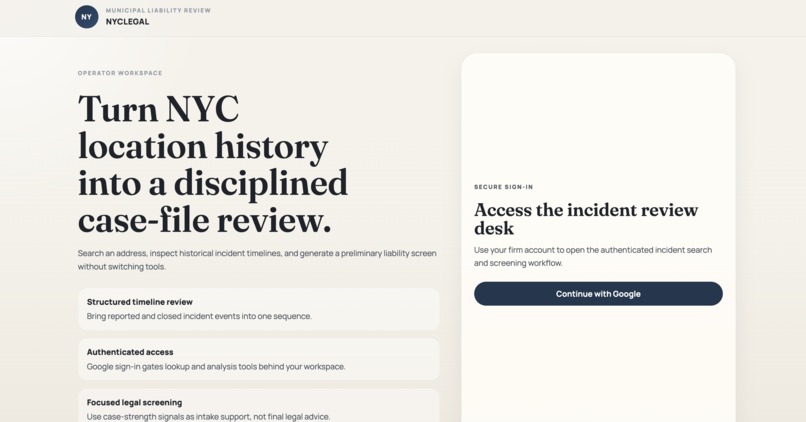
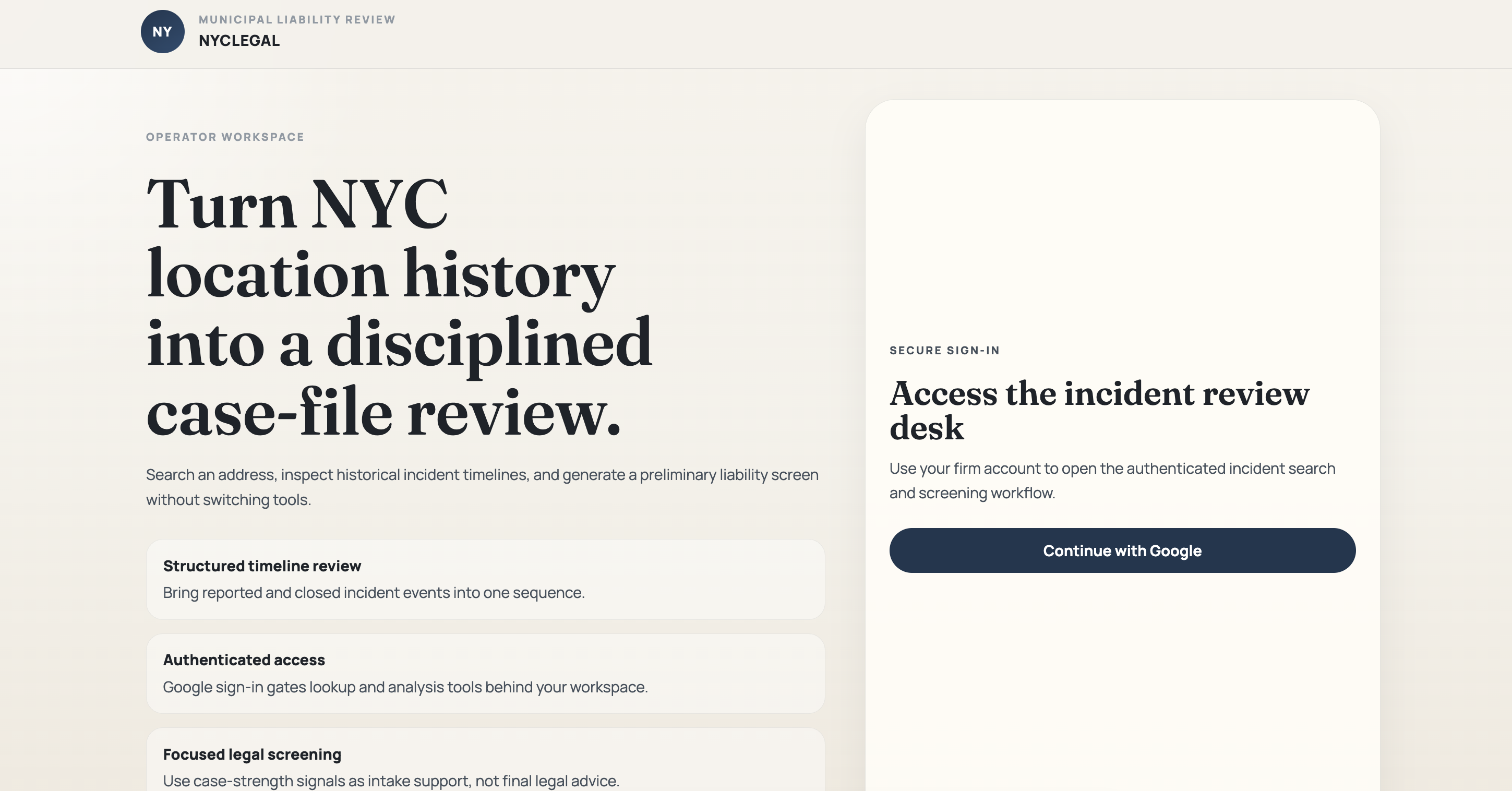
Homepage
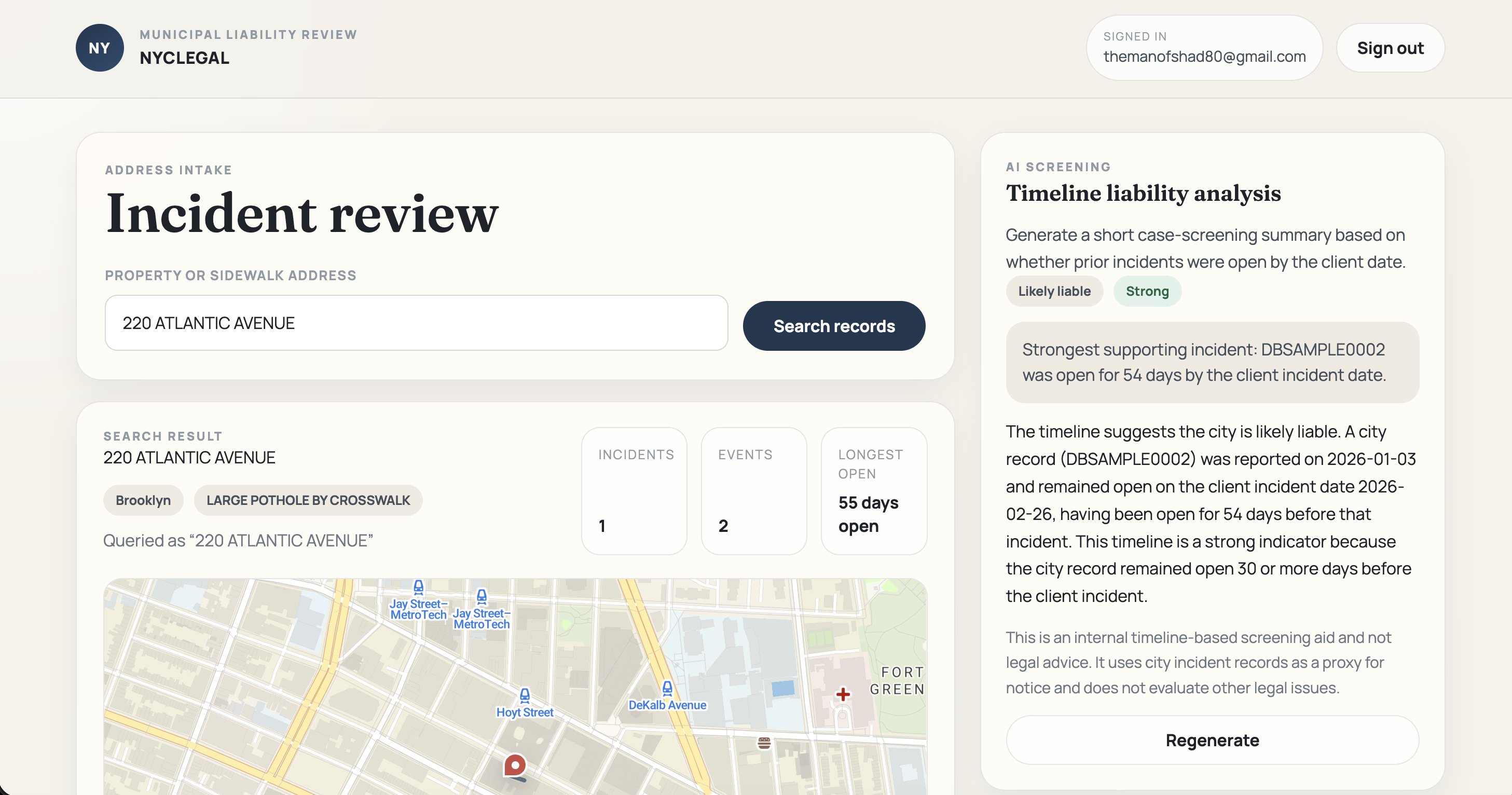
NYCLegal: Github Repo
Inspiration
NYCLegal started with a conversation one of our teammates had with a New York City personal injury lawyer. He described one of the most frustrating parts of his day-to-day work: when a case involves the city, there is often a huge amount of guesswork just to figure out whether the case is even worth pursuing.
The information exists, but it is scattered, inconsistent, and difficult to work with. Important details about complaints, locations, repair history, and timelines are often buried in messy public records. Getting the right information through formal channels can take weeks, and even then it may lead to a dead end. That means lawyers spend valuable time chasing facts before they can make a confident decision about a case.
We built NYCLegal to reduce that uncertainty. Instead of forcing legal teams to manually piece together city records, we wanted to create a tool that makes the first pass of case screening much faster, clearer, and more structured.
What NYCLegal does
NYCLegal is a dashboard for municipal liability intake and early case review.
We aggregate relevant datasets from NYC Open Data and turn them into a workflow that is actually usable for legal professionals. A user can search an address, review incident history tied to that location, and see the sequence of reported and closed events in a single timeline. The platform also helps place a client's incident date directly into that history, which makes it easier to evaluate whether there may have been prior notice or unresolved conditions before the client's injury.
The dashboard includes:
- Address-based search for NYC incident records
- Normalized location results so messy public data is easier to review
- A map view for geographic context
- A chronological event timeline showing reported and closed incidents
- A client incident date comparison tool
- An AI-assisted preliminary case-screening summary based on the timeline
The goal is not to replace legal judgment. The goal is to give lawyers and intake teams a much better starting point, faster.
How we built it
We built NYCLegal as a full-stack web app.
- Frontend: React, TypeScript, Vite, Tailwind CSS, and MapLibre
- Backend: FastAPI
- Auth and data platform: Supabase
- AI support: OpenAI for generating concise screening summaries from structured incident timelines
On the backend, we ingest and normalize public city incident data so that location records can be searched more reliably. On the frontend, we built a secure dashboard where users can search an address, inspect incident history, visualize the location on a map, and run a timeline-based liability screen. We also added authentication so the workspace feels like a real tool for legal operators rather than just a data demo.
Challenges we ran into
Accomplishments that we're proud of
What we learned
What's next for NYCLegal
Built With
- fastapi
- openai
- python
- react
- supabase
- tailwind
- typescript

Log in or sign up for Devpost to join the conversation.