-
-
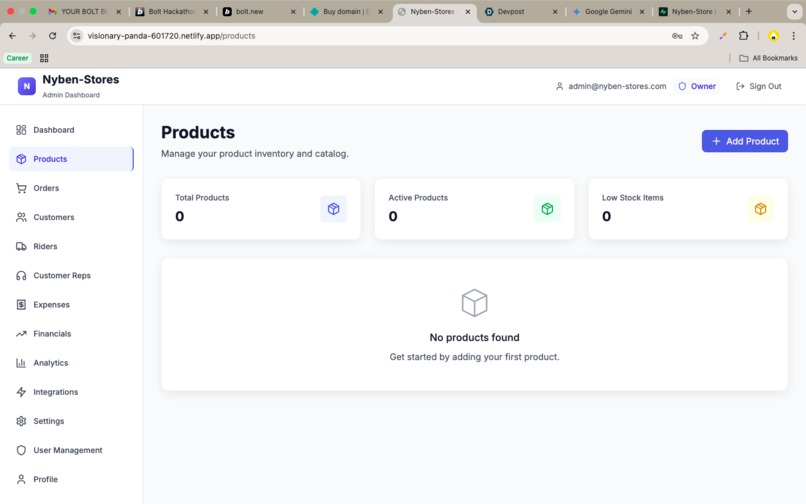
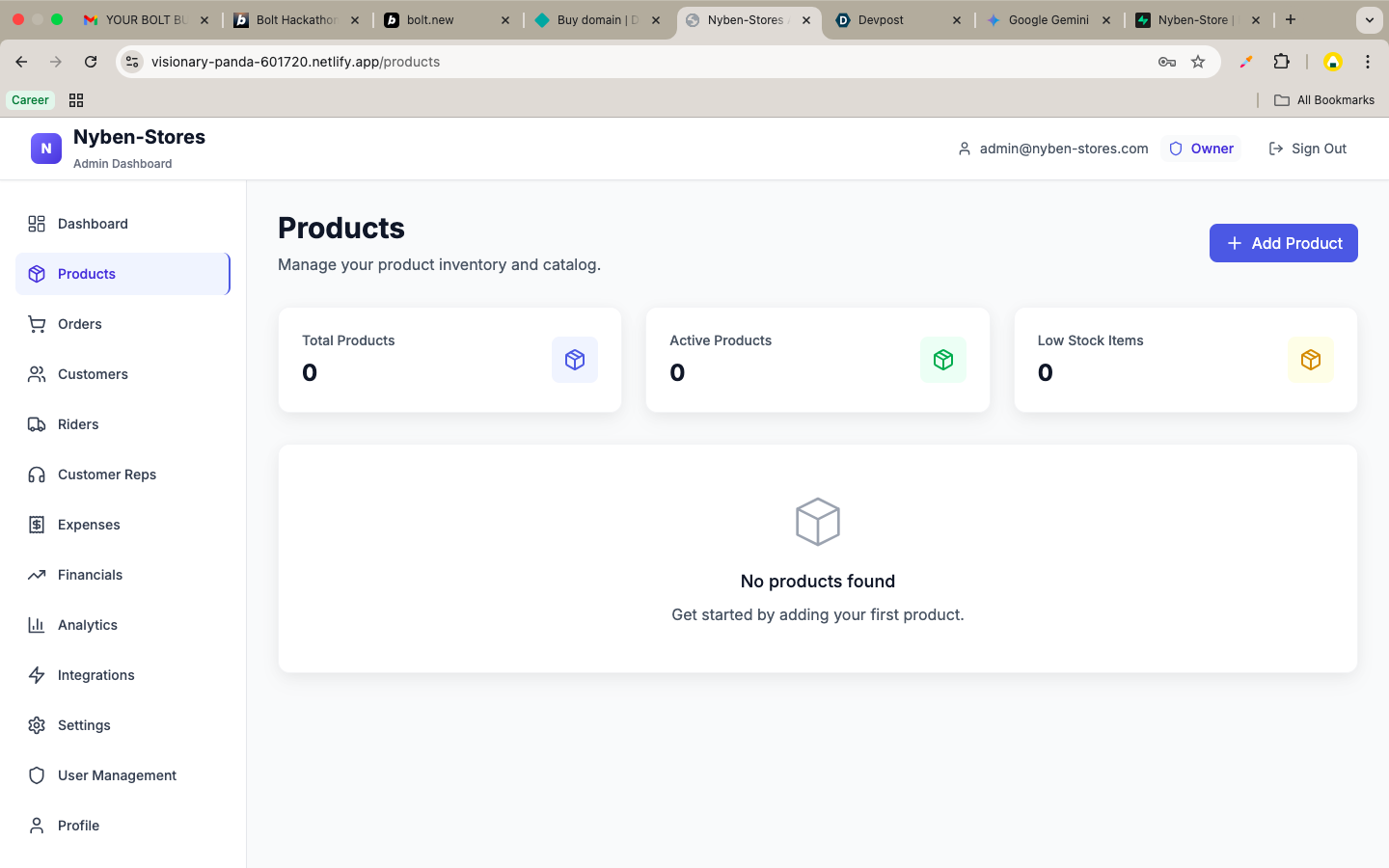
Products Page
-
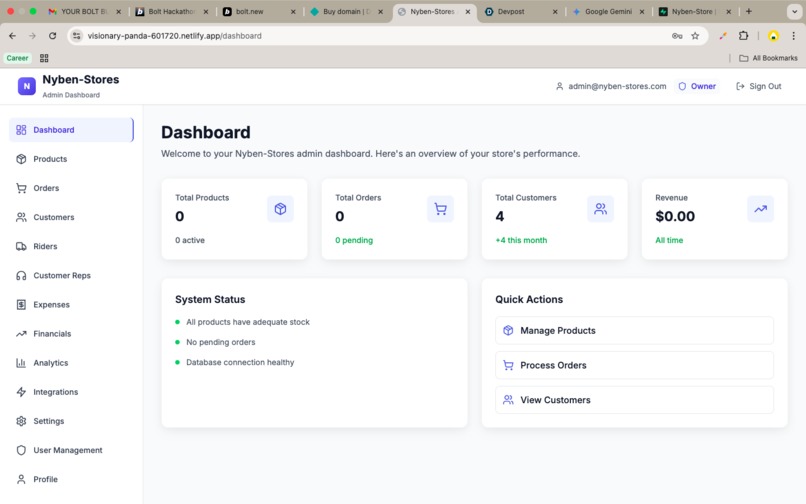
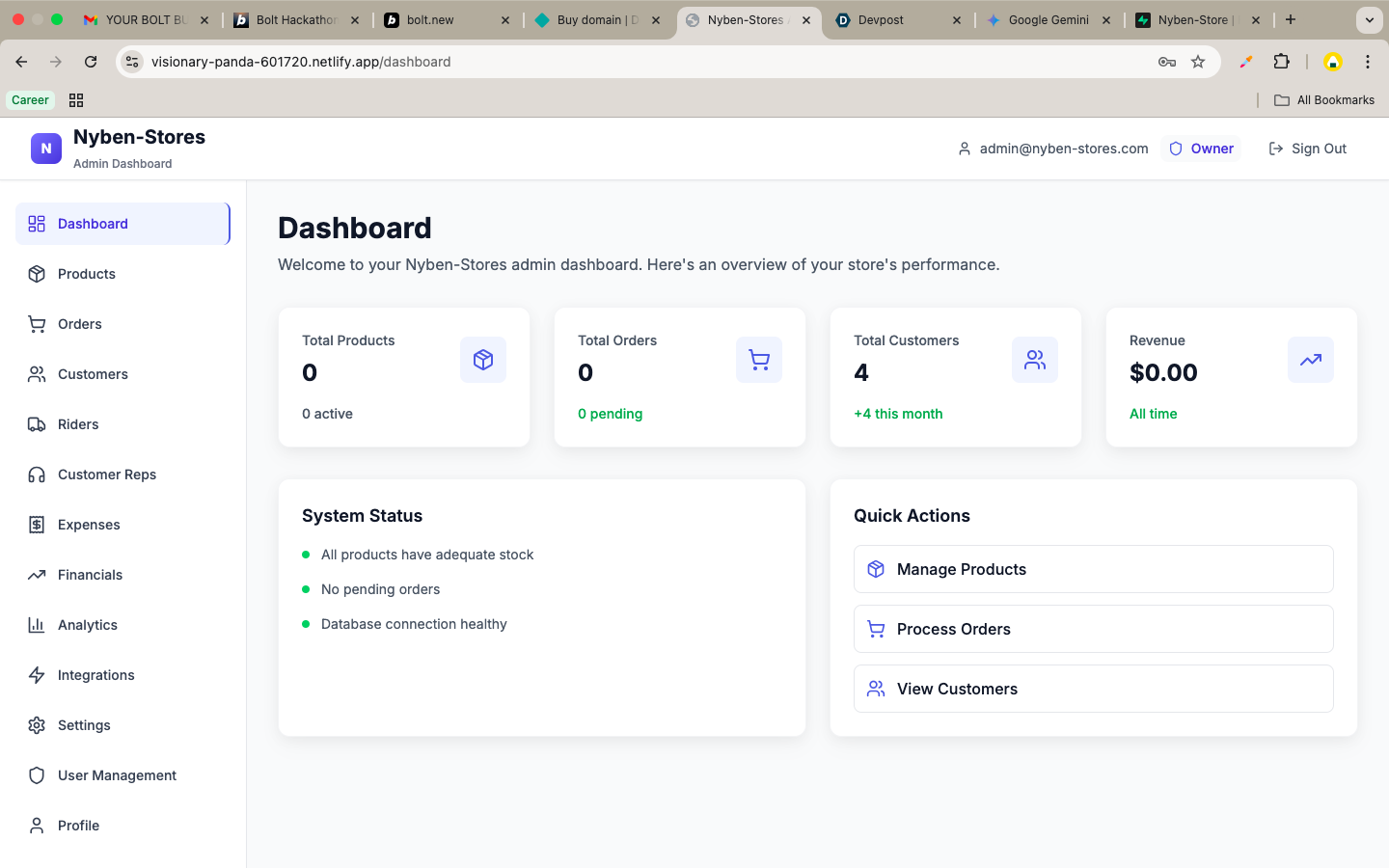
Dashboard Page
-
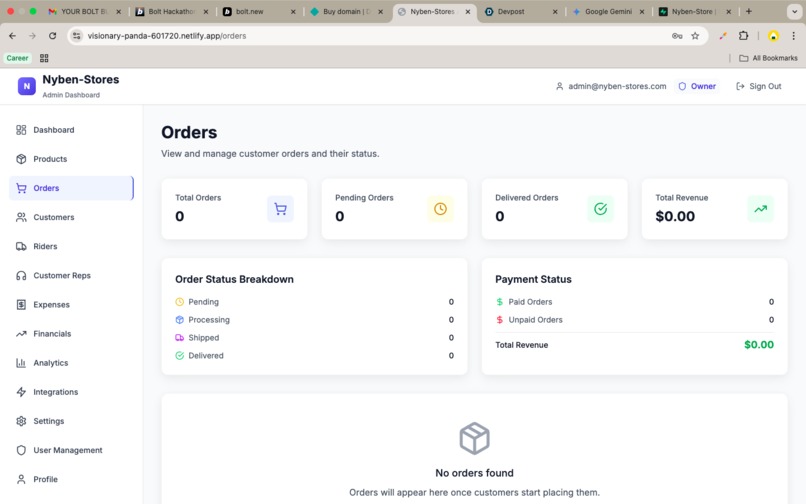
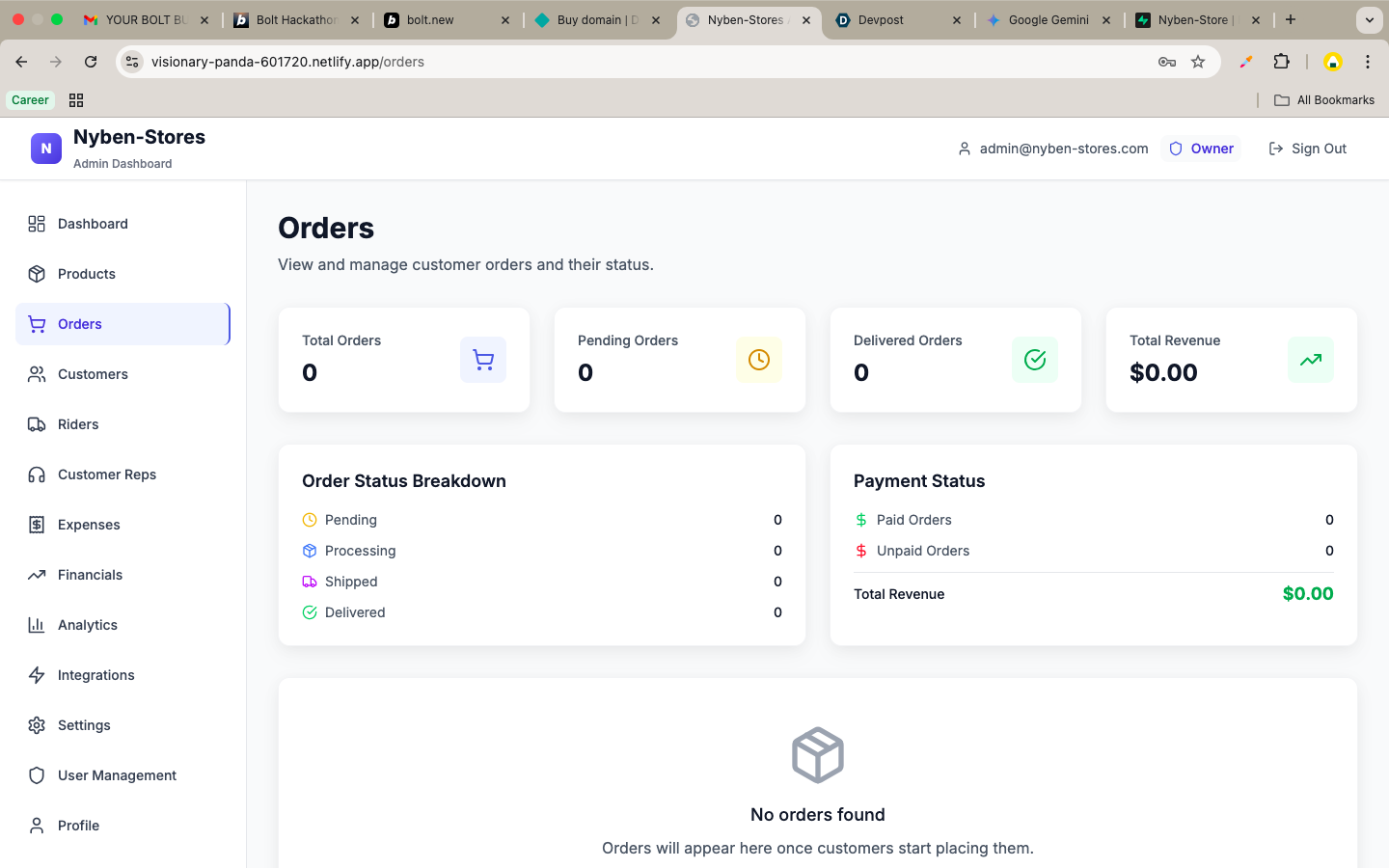
Orders Page
-
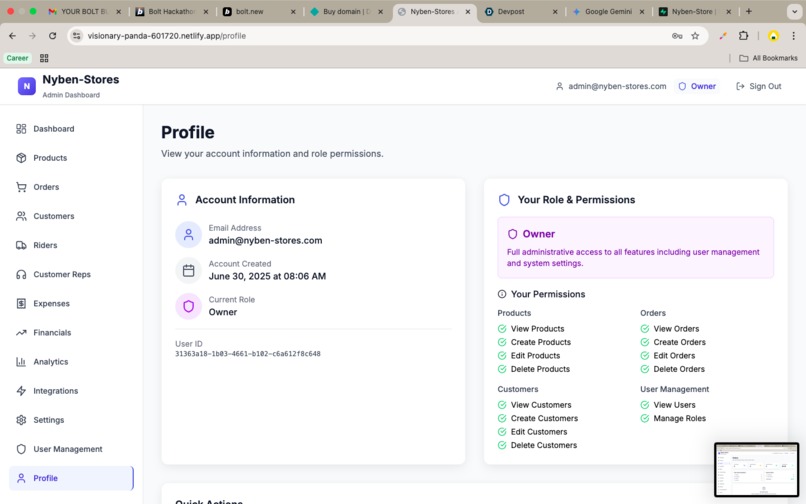
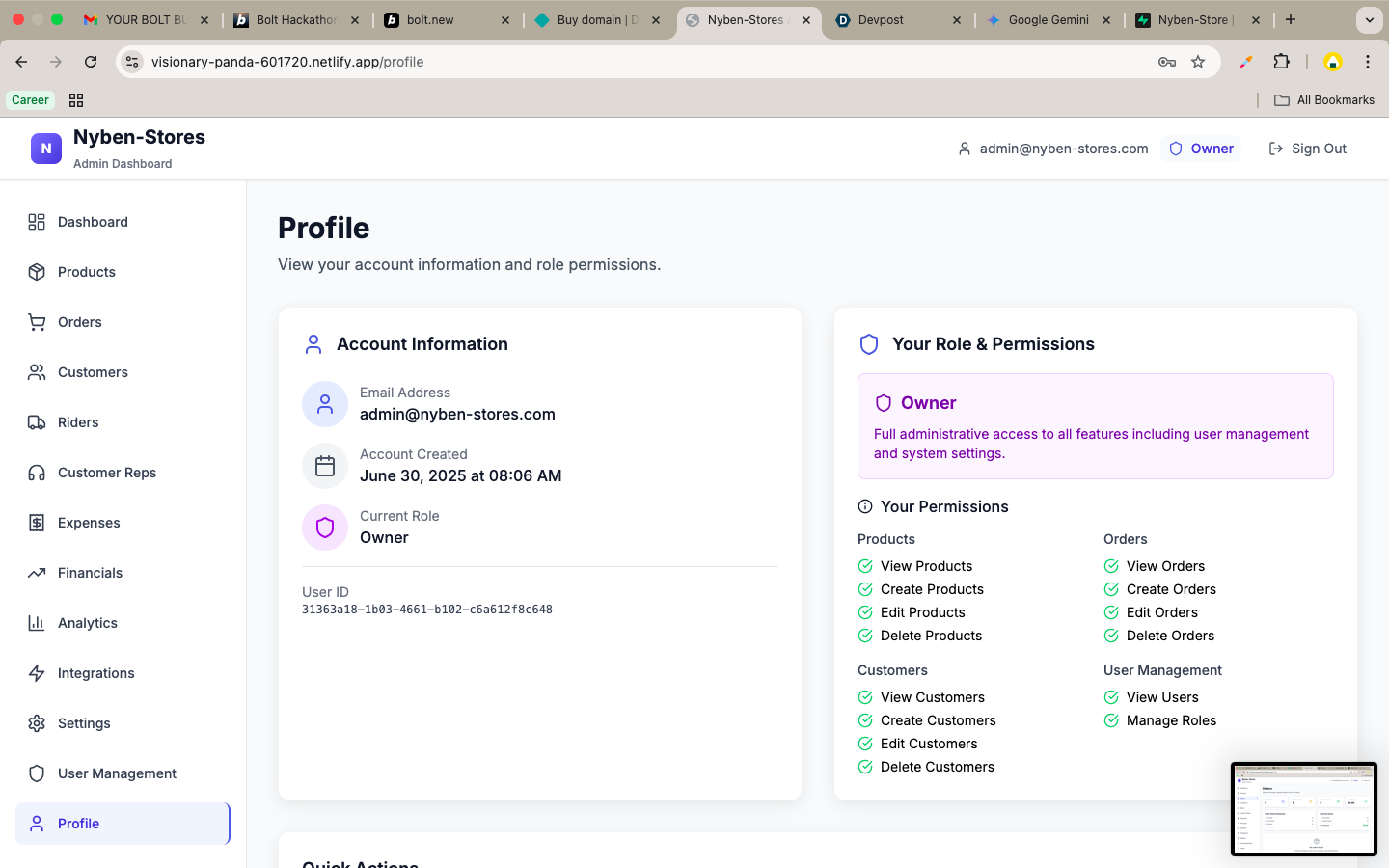
Profile Page
Inspiration
My inspiration for the Nyben-Stores Admin dashboard came from a very personal place. My brother runs an e-commerce business, and I've watched him struggle firsthand with the immense challenge of managing his operations. He relied heavily on Google Sheets for everything from inventory to accounting, which constantly led to lost information, missed deadlines, and overwhelming frustration. Seeing his exhaustion and the limitations it placed on his business, I knew I had to help him build a robust, all-in-one administrative dashboard to centralize and streamline every aspect of his work.
What I Learned
My primary learning curve began with a clear objective: speed and scalability. I realized that for him, and for others like him, the solution needed to be built and iterated upon rapidly. This led me to research the best tools for accelerating full-stack development, which is when I discovered AI-powered platforms like Bolt.new. My key takeaway was the immense potential of AI to automate boilerplate and accelerate development, allowing me to focus on core logic and problem-solving rather than repetitive setup.
How I Built My Project
Initially, I was genuinely surprised by Bolt.new's capabilities. The idea that an AI could scaffold so much of a project so quickly was amazing, and I immediately saw its potential to help me build fast, not just for my brother, but to assist other small businesses facing similar operational challenges.
However, the journey wasn't without its significant hurdles. My first attempt involved using Next.js, and I made the mistake of trying to build the entire platform at once, without breaking the complex tasks into manageable phases. This approach quickly backfired. I discovered that Bolt.new wasn't yet fully optimized or configured to seamlessly handle Next.js projects, which caused major integration issues, particularly with Supabase. I found myself battling errors everywhere – missing pages, UI glitches, and frustrating roadblocks that prevented successful Supabase integration despite manual database setup and extensive debugging. It was incredibly frustrating, and I ultimately had to abandon that version and start a completely new project.
This pivotal moment taught me the critical importance of an iterative, phased approach when working with AI development tools, and the need to choose the most compatible technology stack. For the current, successful version of the Nyben-Stores Admin dashboard, I switched to React. This allowed for smoother integration with Supabase and provided a more stable foundation, enabling me to build systematically, phase by phase, ensuring each component worked before moving to the next.
We've now successfully implemented core features like:
Secure Admin Authentication
Comprehensive Product Management (CRUD)
Efficient Order Management
Customer Viewing
Robust Role-Based Access Control (RBAC), which includes managing different user types like Sales, Inventory, Dispatch, and Support.
And now, we're expanding into Rider and Customer Representative Management, Expenses and Financial Tracking, and laying the groundwork for Analytics, Integrations, and Settings.
Challenges Faced
The primary challenge was navigating the initial complexities of AI-generated full-stack development, specifically the compatibility issues when attempting to use Next.js with Bolt.new and Supabase simultaneously. The lack of proper integration at that stage meant I couldn't connect Supabase effectively, forcing extensive manual setup and debugging that ultimately failed. This led to a significant setback, but it also reinforced the value of modular design, careful technology stack selection, and a patient, phased development strategy. Overcoming this meant adapting, restarting, and learning to guide the AI more precisely.
What's Next for Nyben-Stores Admin
Looking ahead, we are excited to expand the Nyben-Stores platform even further to drive more visibility, increased sales, and enhance customer retention. Our key next steps include:
Storefront Enhancements: Developing a full-fledged, customer-facing e-commerce storefront with advanced search, filtering, and powerful product presentation features like customer reviews and ratings.
Marketing & Promotions: Implementing dynamic promotional banners and a robust discount code/coupon system to drive sales.
Localized Payment Integration: Prioritizing seamless integration with local mobile money and bank transfer payment gateways, which are crucial for our target markets in Ghana, Kenya, and Nigeria, alongside existing Stripe capabilities.
Reporting & Analytics: Building out comprehensive dashboards for sales trends, inventory insights, and customer behavior to inform strategic decisions.
Automated Order Fulfillment: Streamlining the dispatch process with features for shipping label generation and automated customer notifications on order status changes.

Log in or sign up for Devpost to join the conversation.