-
-
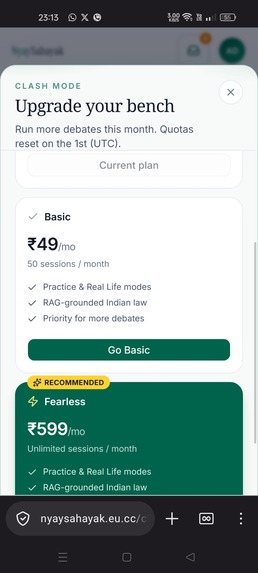
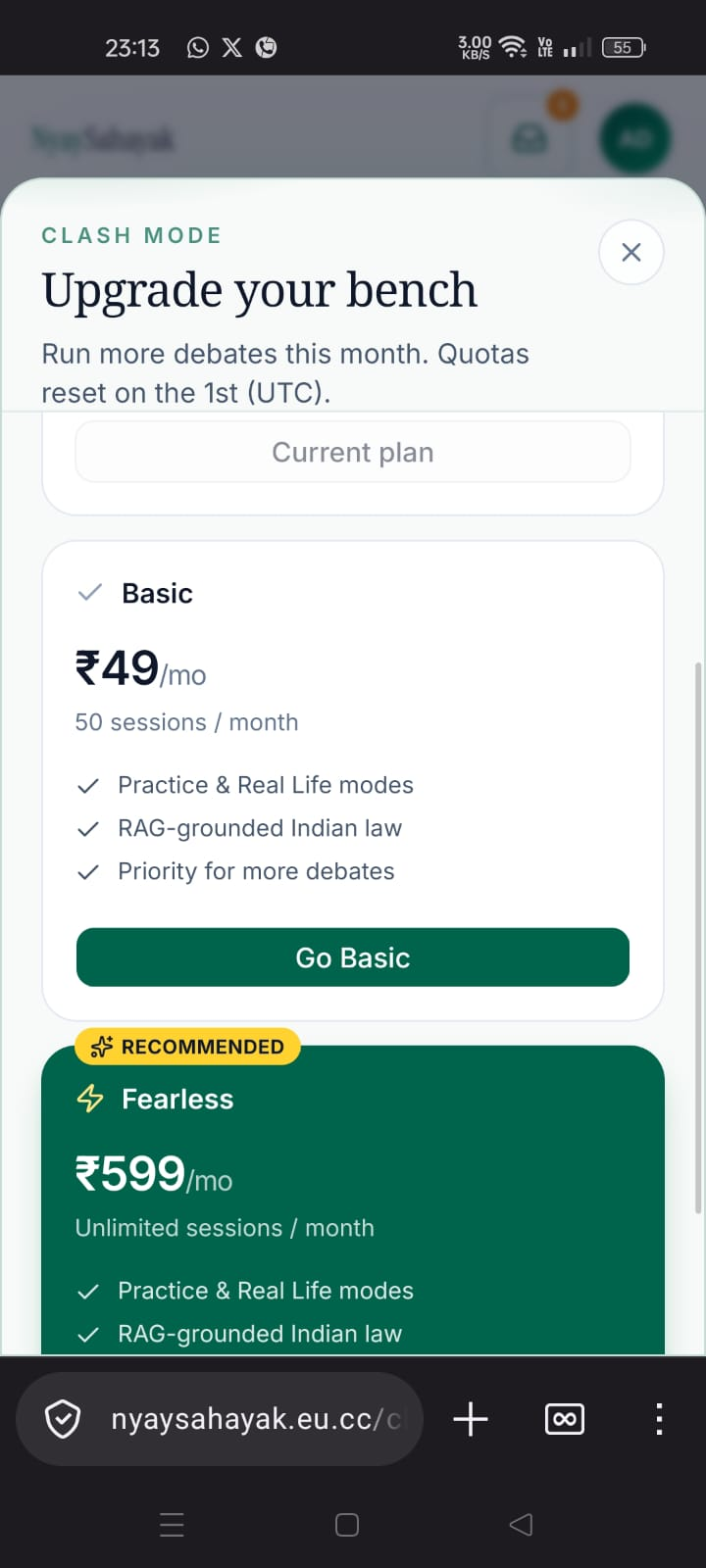
Subscription Plans
-
-
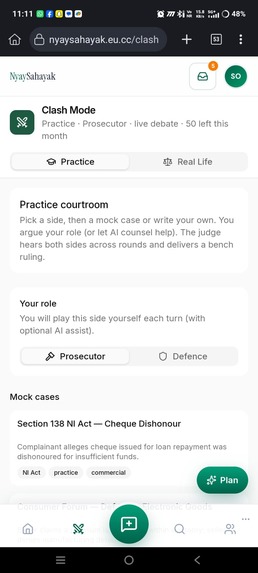
App
-
-
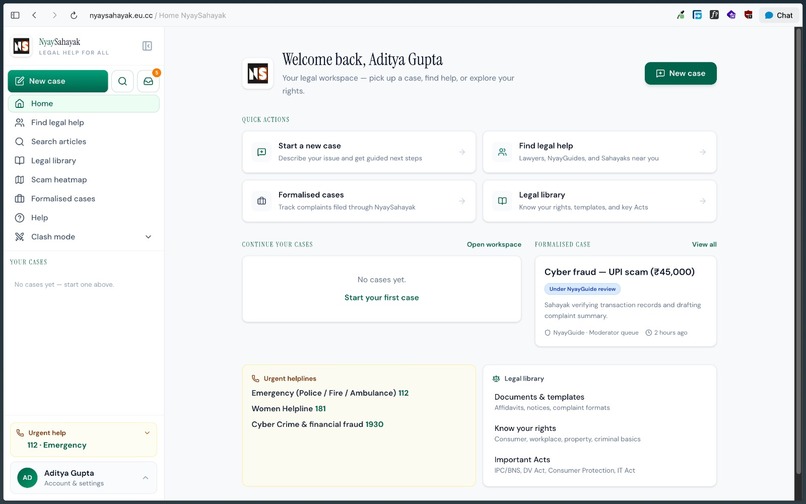
-
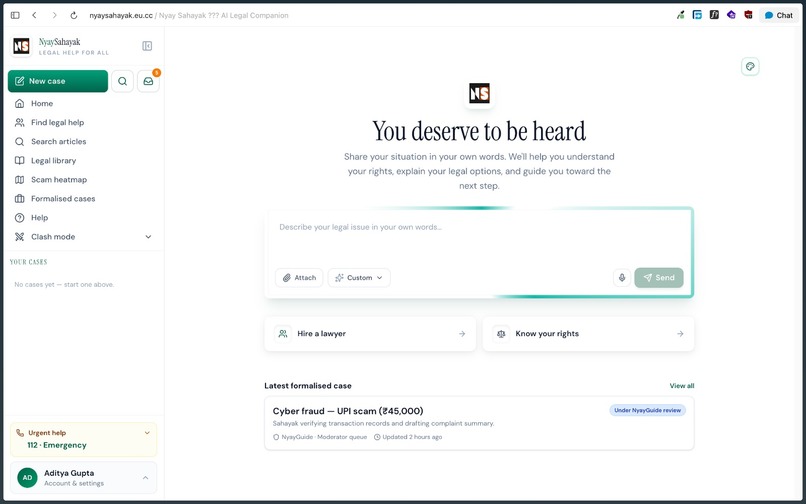
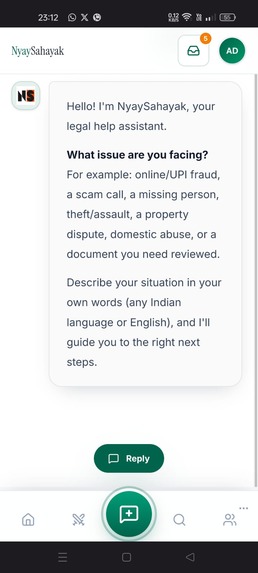
Chatbot
-
-
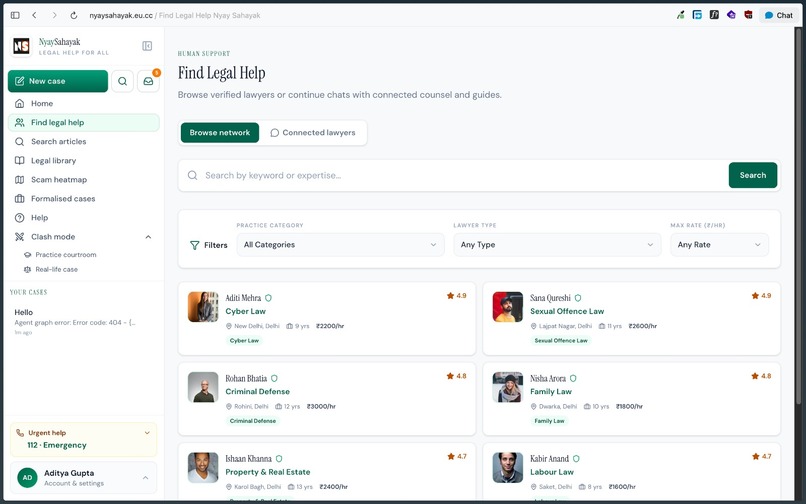
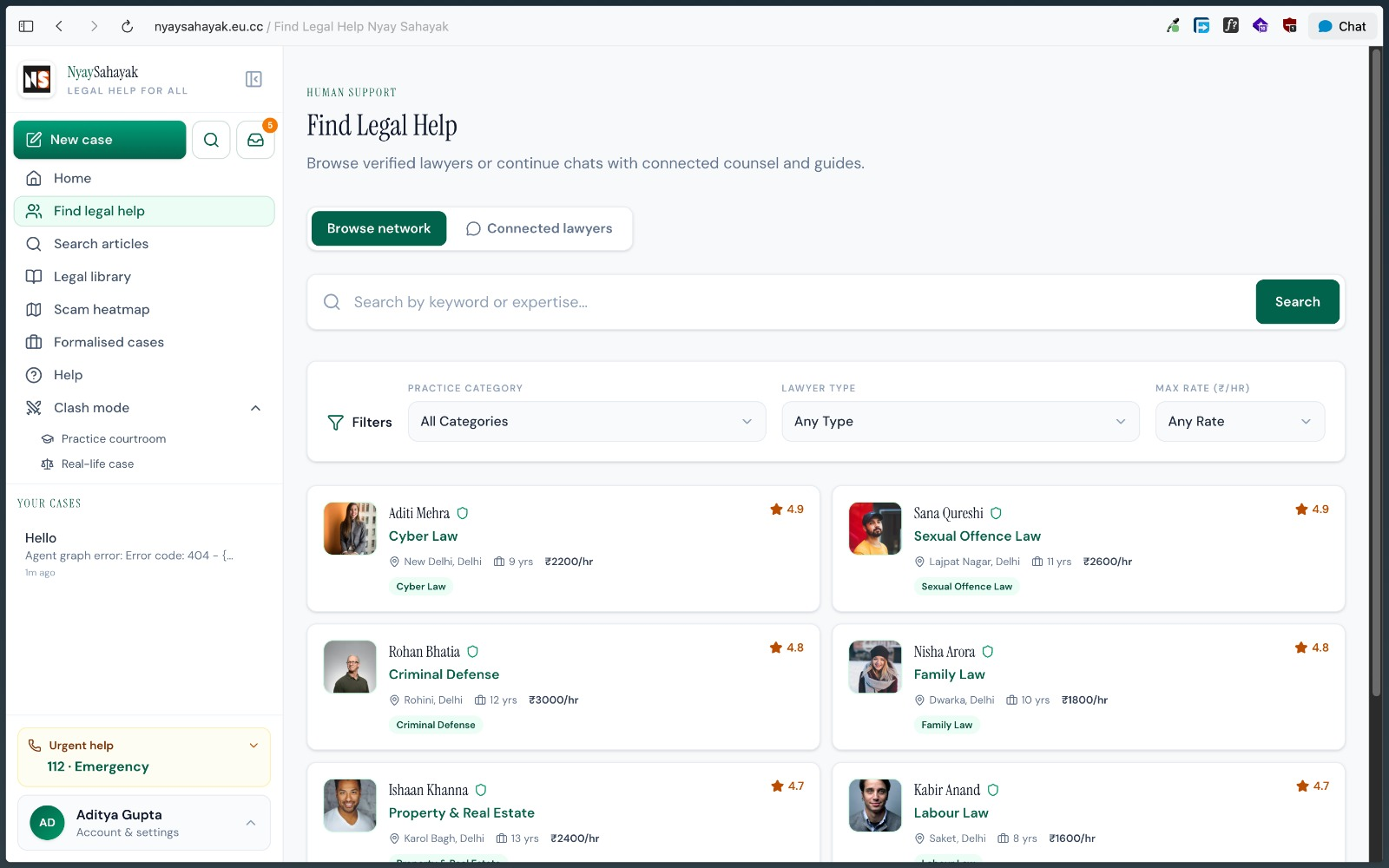
Lawyer Connect
-
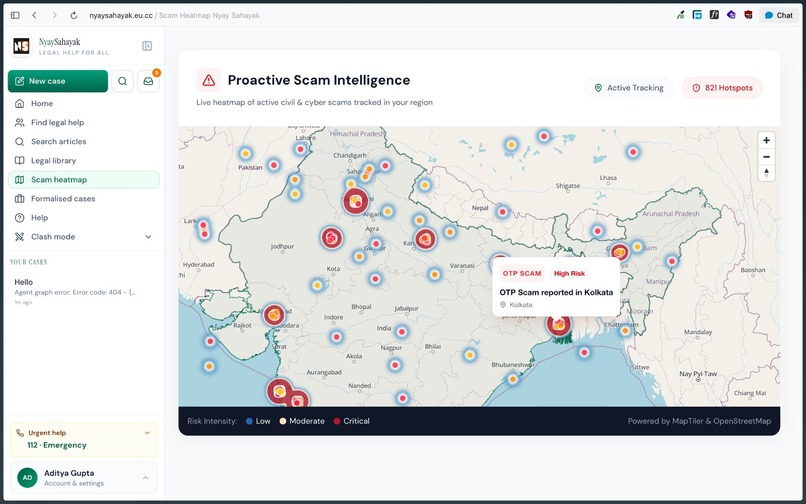
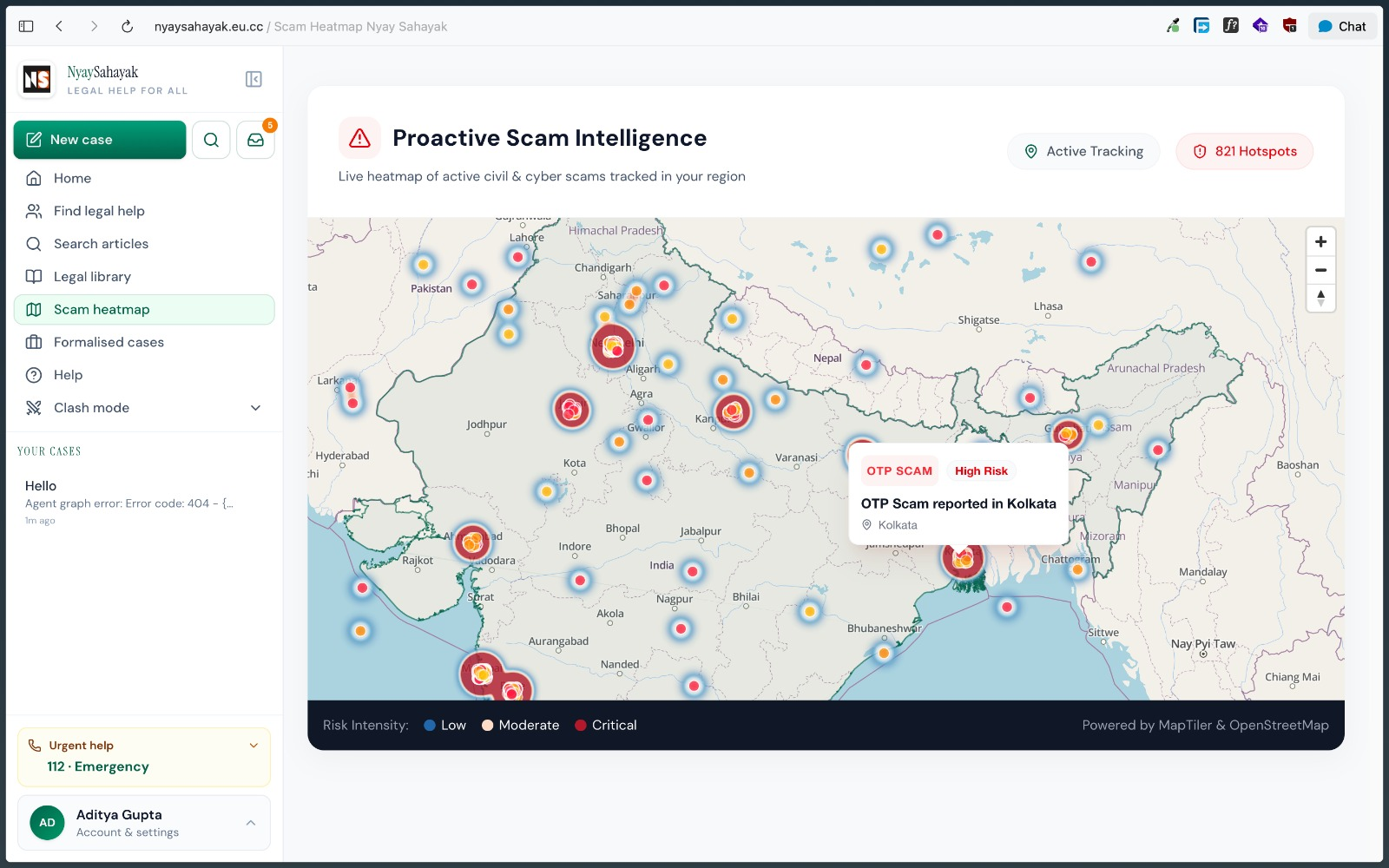
Proactive Scam Intelligence
-
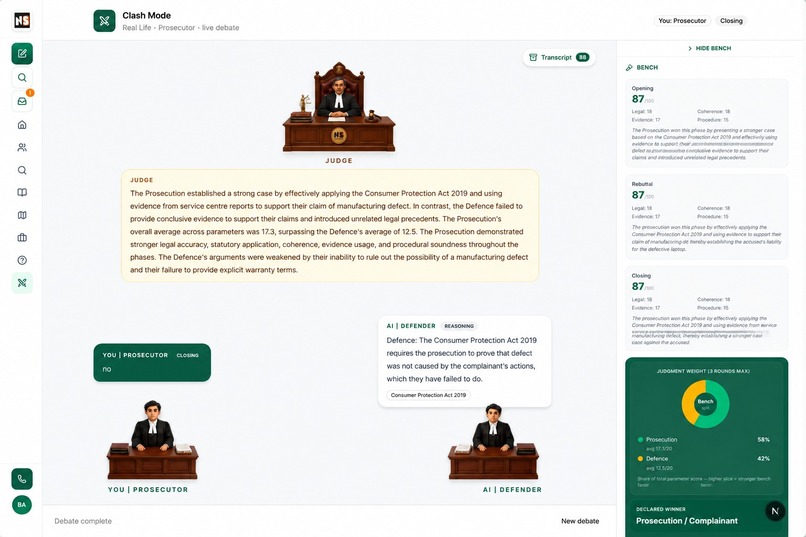
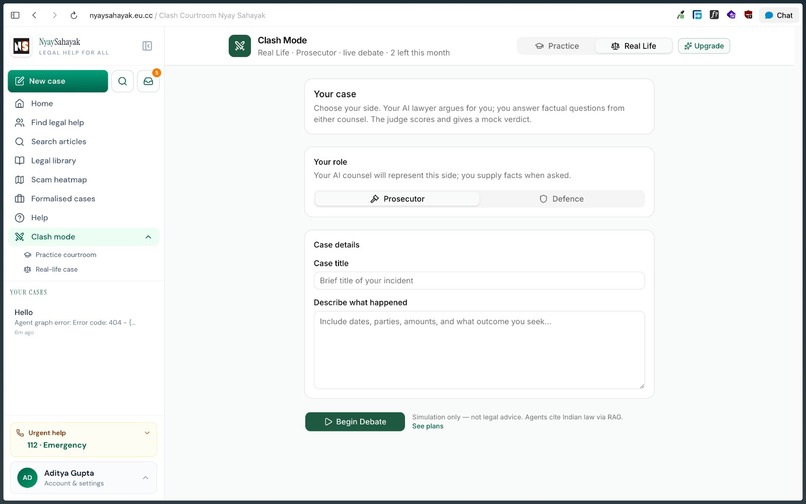
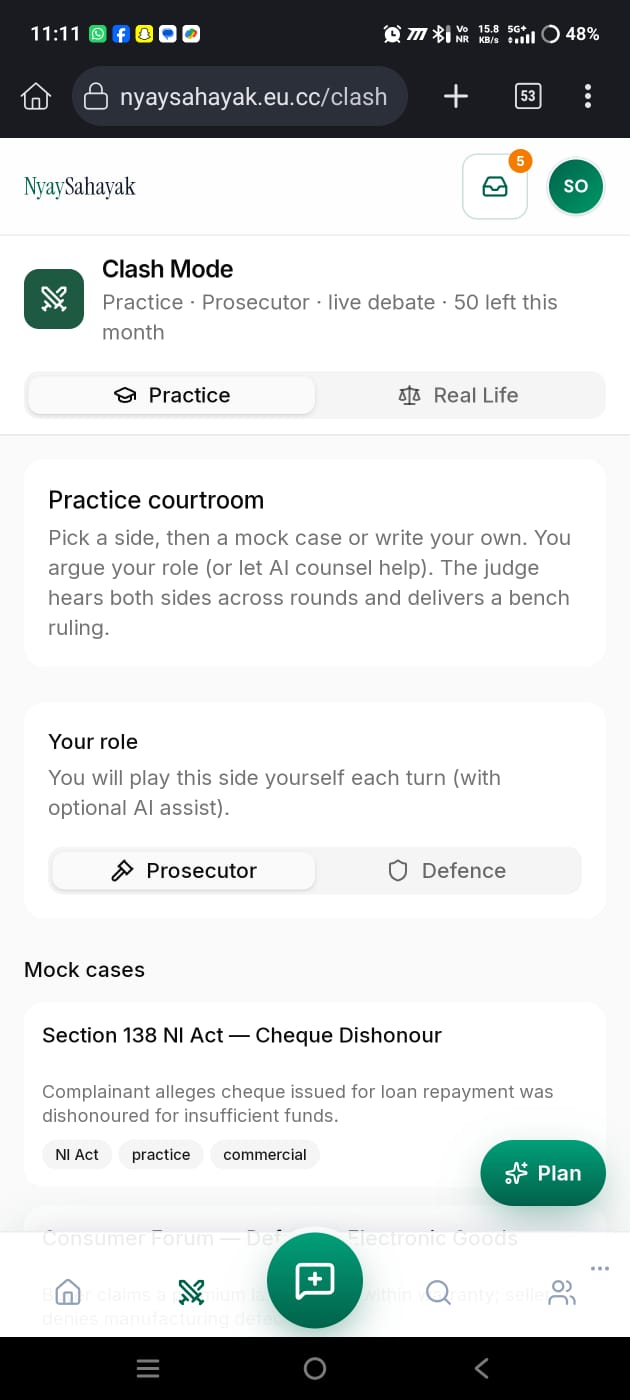
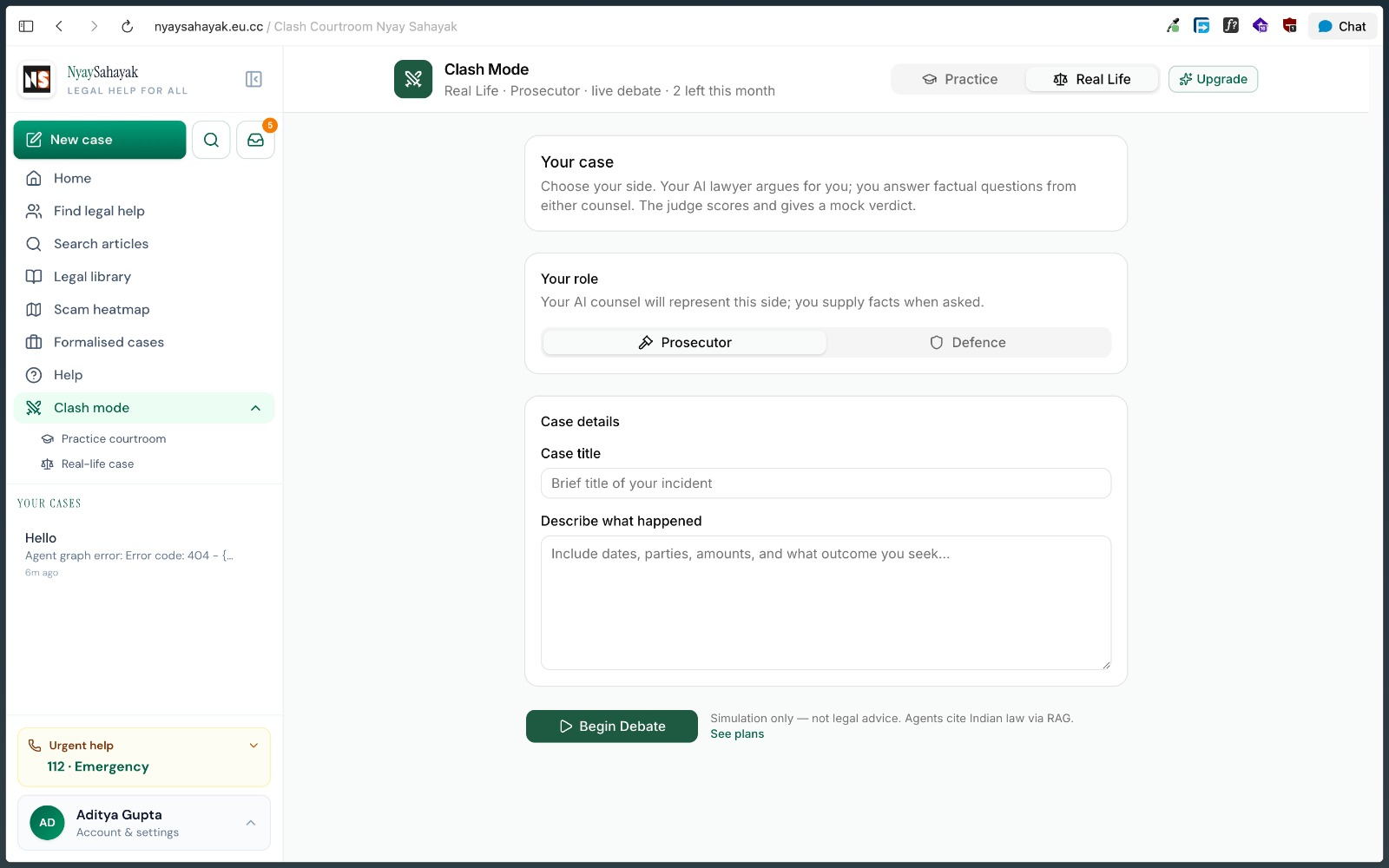
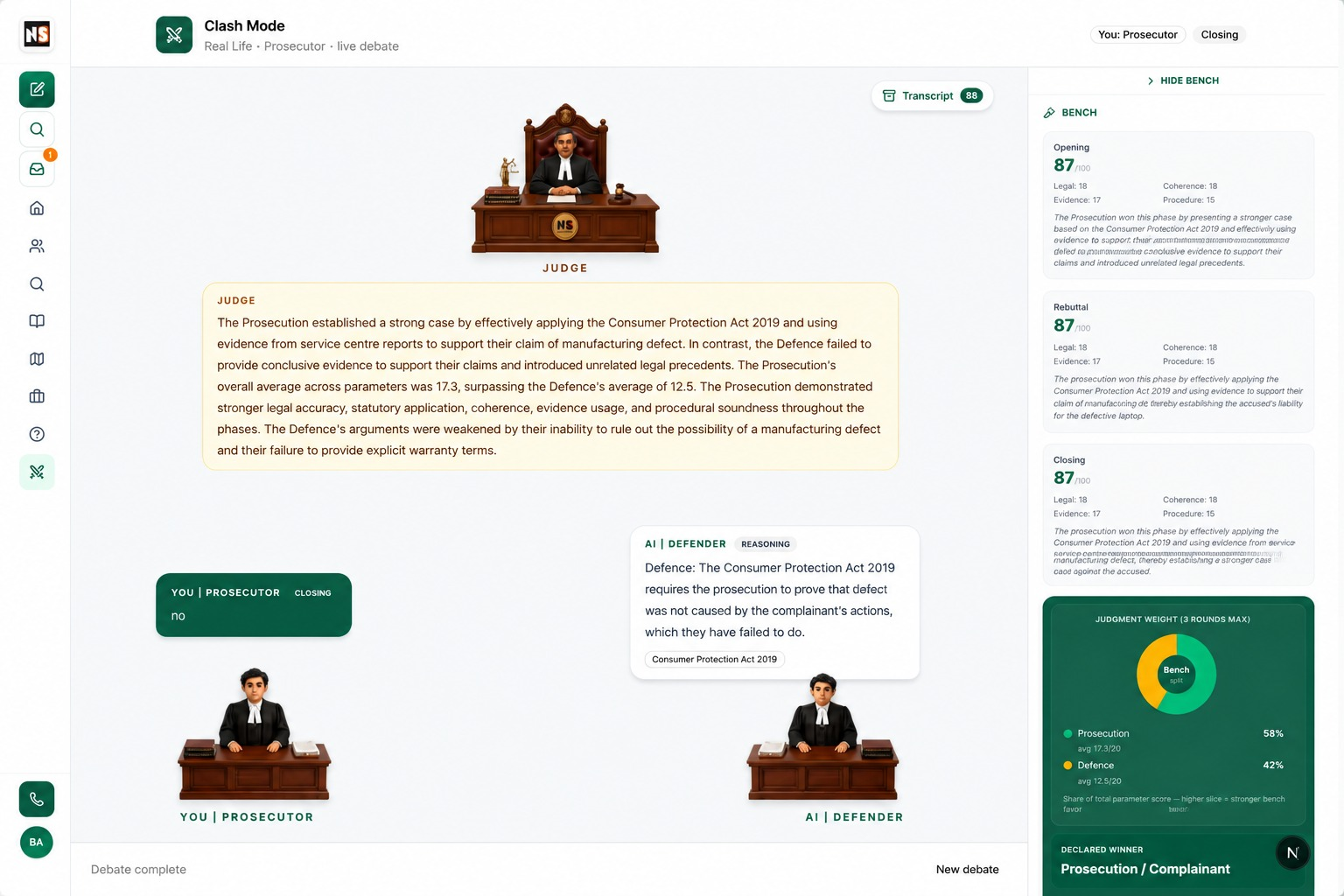
Clash Mode
Inspiration
NyaySahayak started with a simple observation: when an ordinary citizen faces a legal or grievance-related problem, the biggest barrier is often not the absence of a law or institution—it is not knowing what to do next.
Imagine someone losing money to a cyber scam, a woman facing harassment, or an elderly citizen struggling with a government grievance. They may not know whether to approach the police, a cybercrime portal, a lawyer, a legal-aid institution, or another authority. For many people, especially those from rural and semi-urban communities, language barriers, low digital literacy, procedural complexity, and fear make this even harder.
This led us to one fundamental question:
Can AI help a citizen move from confusion to structured first action?
That question became the foundation of NyaySahayak.
What it does
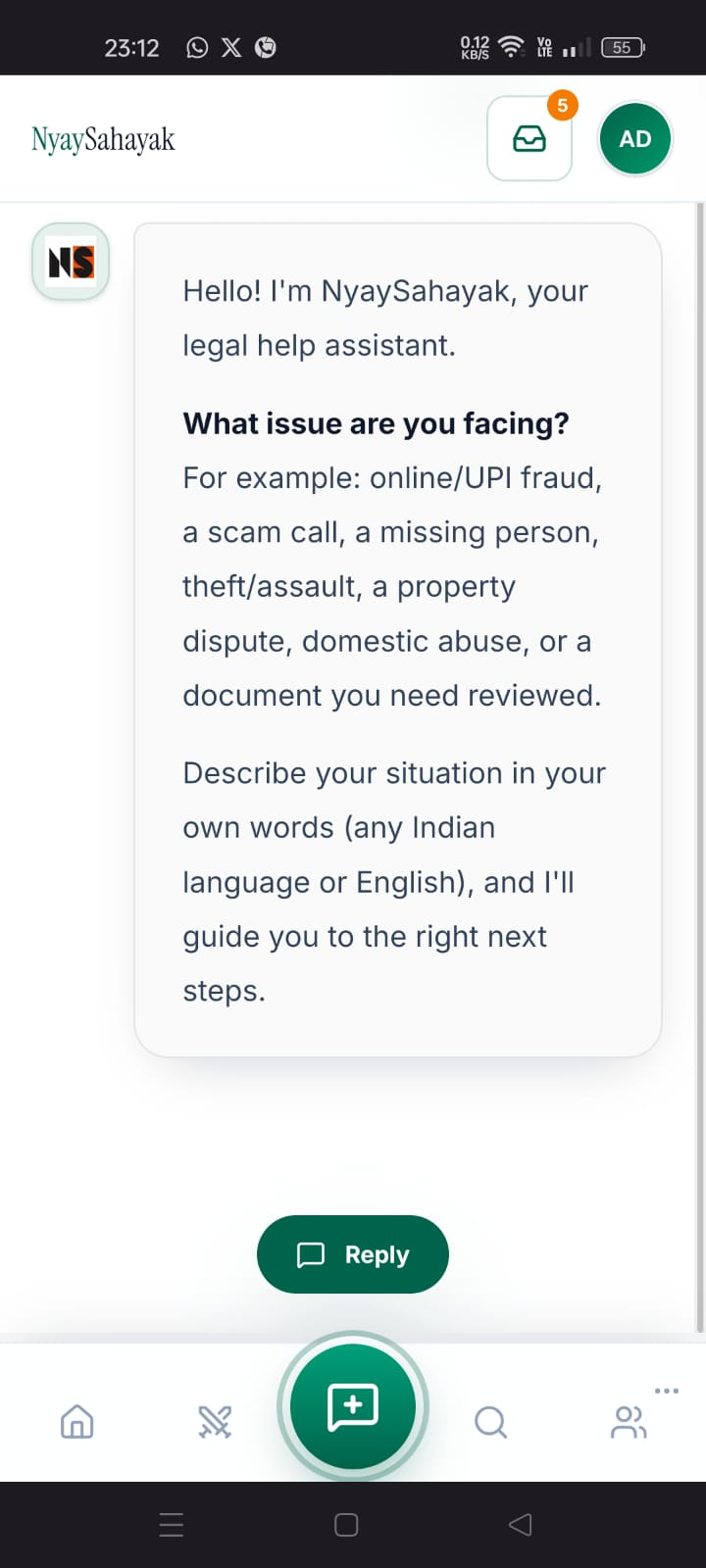
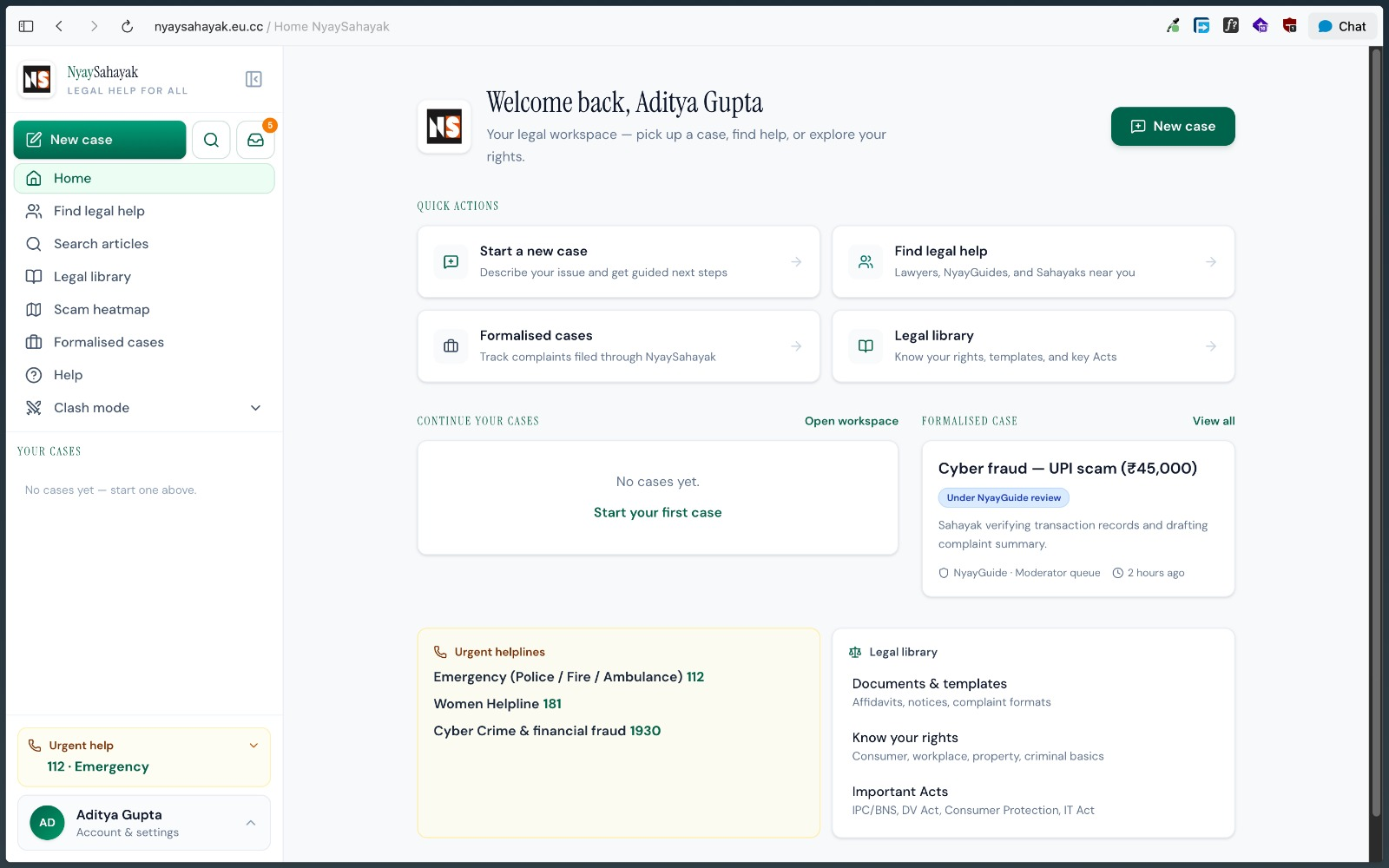
NyaySahayak is an AI-powered justice-access platform that helps citizens transform unstructured legal and grievance-related problems into structured, actionable workflows.
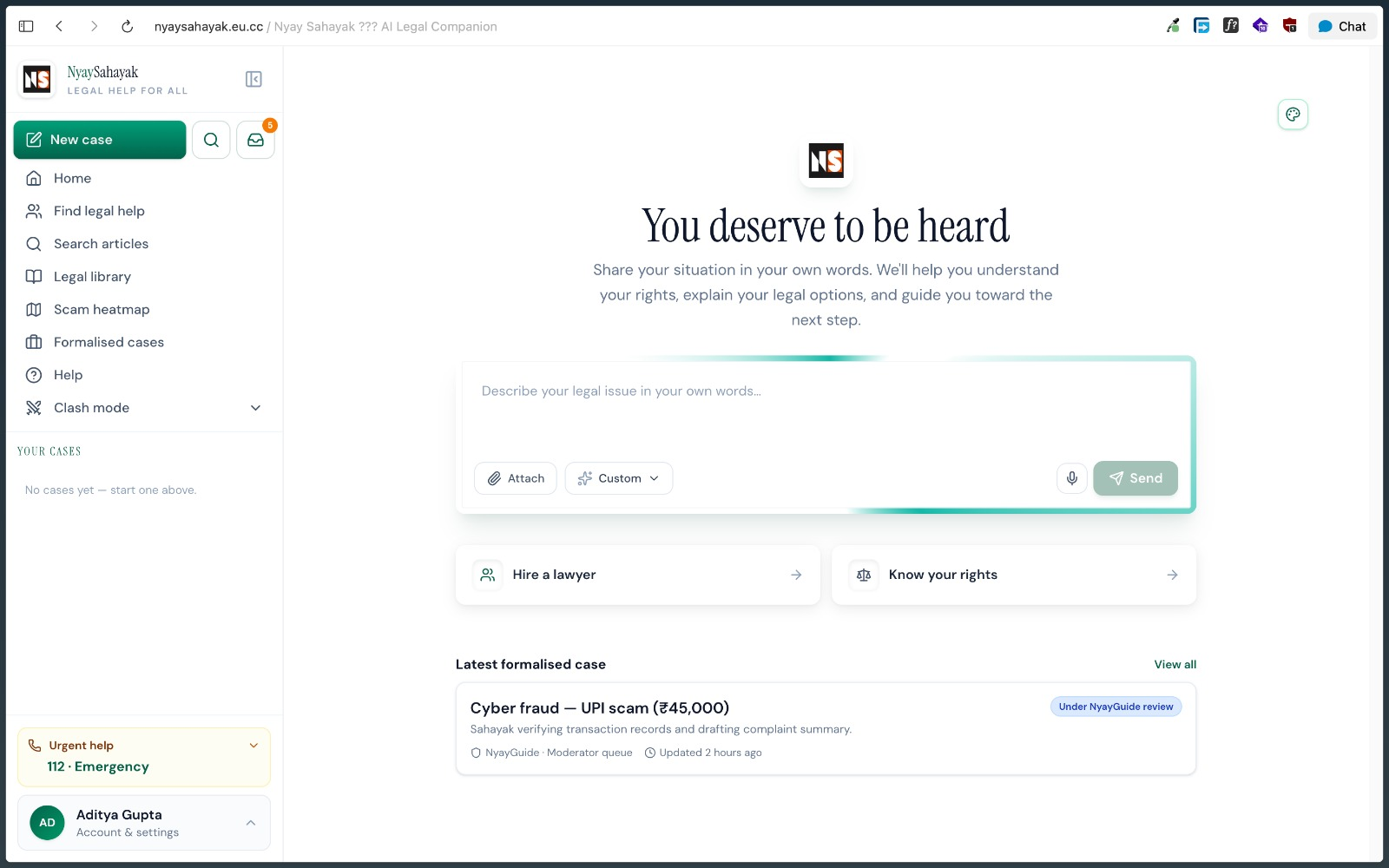
A citizen can explain their problem through voice or text in natural language. NyaySahayak understands the context, extracts the relevant facts, analyses the nature and urgency of the issue, and generates a structured case summary.
Instead of simply providing generic legal information, the system guides the citizen toward the appropriate next step and institutional pathway.
For sensitive or higher-risk matters, our Human-in-the-Loop Legal Moderator layer allows trained human reviewers to validate AI-generated outputs, correct potential errors, and verify the recommended pathway.
We also designed NyayGuides as a last-mile support layer. They are trained community facilitators—not lawyers—who can help digitally vulnerable citizens organise documents, navigate local offices, and complete procedural steps. We also integrated the existing Gram Nyalayas in rural areas by routing suitable cases to Gram Nyalayas and tapping an often ignored part of rural India by appointing the Panchayat Sachiv as our Nodal Guide. Apart from this we have Lawyer connect, Proactive Scam intelligence layer that analyses and reports scam patterns and trends in any area and helps to spread awareness and combat methods. Also we integrate the services of NALSA, DALSA etc.
Our goal is not to replace lawyers, courts, police, or government institutions.
We want to make the existing justice ecosystem easier for citizens to navigate.
How we built it
We approached NyaySahayak as a trust and workflow problem, rather than simply building another legal chatbot.
The system is designed as a layered AI architecture:
Citizen Intake → Context & Intent Understanding → Legal Knowledge Retrieval → Domain Analysis → Case Structuring → Threat Assessment → Human Moderation → Institutional Routing → Resolution Tracking
The AI workflow is designed to handle natural-language citizen narratives and convert them into structured information that can be acted upon.
Our architecture includes specialised workflows for areas such as cybercrime, scam analysis, document analysis, domestic and financial fraud, civil matters, report generation, and legal forwarding.
We also designed a risk-based escalation mechanism so that higher-risk cases can receive human review rather than being handled entirely autonomously.
The technology stack and architecture have been designed around agent orchestration, retrieval from structured legal knowledge, vector-based semantic search, API-driven services, and a scalable web/mobile interface.
A major part of our architecture is the human feedback loop. When a legal moderator validates or corrects an AI output, that verified interaction can contribute to improving future domain-specific reasoning and routing.
For the Build with Gemini version, our focus is on making the AI layer an active part of the product workflow rather than using an LLM merely as a chatbot or text-generation feature.
Challenges we ran into
1. AI accuracy in a sensitive domain
Legal and grievance-related decisions can have serious consequences. We therefore had to design around the risk of hallucinations, incorrect interpretation, and inappropriate routing.
Our response was to introduce risk assessment, explainability, source-grounded reasoning, and human moderation for sensitive cases.
2. Solving the last-mile problem
We realised that giving someone the correct digital information does not necessarily mean they can act on it.
This led us to design the NyayGuide layer to bridge the gap between digital guidance and real-world execution.
3. Understanding natural citizen language
People do not describe their problems like legal textbooks. They use everyday language, local expressions, incomplete information, and sometimes voice rather than text.
Designing the system to understand these unstructured narratives and convert them into structured case information became a central challenge.
4. Balancing automation with trust
Our goal is to use AI for scale without making the system blindly autonomous.
This led to our core principle:
AI gives us scale. Human oversight gives us trust.
Accomplishments that we're proud of
NyaySahayak has been repeatedly validated through national and state-level innovation competitions, giving us strong external feedback on both the problem and the solution. Winner — Best Idea, Techathon 3.0, organised with the Government of West Bengal and the Patent Office, under the Best Idea track. Runner-Up — Best Solution, Techathon 3.0, competing alongside other selected innovation teams. Top 15 nationally — India Innovates, under the Digital Democracy track organised by Delhi Ministry having 26k+ participants. Top position — IIIT Surat Brandathon, competing among 200+ teams. Top position — HackArena Zonals, among participating teams. 3rd Place — Hult Prize Campus Round. Additional finalist and top-ranking positions across multiple national innovation competitions and ideathons.
These experiences have helped us repeatedly test our problem statement, communicate the solution to different audiences, receive expert feedback, and continuously refine NyaySahayak.
For us, these achievements are not just awards—they represent external validation that the problem matters and that the solution has the potential to create meaningful impact.
What we learned
Our biggest learning has been that AI capability alone does not create trust.
When we started, it was easy to think about building an AI system that could answer legal questions. But as we developed the concept, we realised that information is only one part of the problem.
A citizen needs to know:
What happened? → What does it mean? → How urgent is it? → What should I do? → Where should I go? → What support do I need?
That changed our thinking from building a legal AI chatbot to building a justice-access workflow.
We also learned that human oversight, privacy, explainability, institutional routing, and last-mile support cannot be added as afterthoughts. They have to be part of the architecture from the beginning.
Most importantly, we learned that our strongest opportunity is not replacing the existing justice ecosystem—it is connecting citizens to it more effectively.
What's next for NyaySahayak
Our immediate focus is to move from competition and prototype validation toward controlled real-world pilots.
We want to begin with focused, high-impact use cases such as cyber fraud and selected citizen grievances, validate the AI workflow with real users and legal experts, and measure outcomes such as:
- quality of case structuring,
- routing accuracy,
- time saved,
- successful completion of first actions,
- human intervention rates, and
- user trust.
From there, we plan to expand into additional domains and geographies while strengthening multilingual and voice-first capabilities.
We also envision a Proactive Scam Intelligence Layer that can identify recurring fraud patterns and emerging regional threats from validated complaint data, allowing NyaySahayak to move beyond reactive assistance toward proactive public-safety intelligence.
Our long-term vision is to build a trusted digital layer between citizens and India's justice and grievance ecosystem.
We want a future where taking the first step toward justice does not depend on someone's legal knowledge, language, location, or digital literacy.
NyaySahayak — From Confusion to Structured First Action.
Built With
- cloudsql
- fastapi
- gemini
- javascript
- langgraph
- nextjs
- postgresql
- python
- react
- tailwind
- typescript
- vertex-ai

Log in or sign up for Devpost to join the conversation.