Inspiration
NYAYAOS started with a simple question: Why is it still so difficult for an ordinary person to understand what to do when they face a legal problem?
Before building anything, I spent a lot of time researching the problem. One of the most important sources I came across was the UNDP India report, “Enhancing Meaningful Access to Justice in India: A People-Centred Justice Needs Assessment.” The report studied people's actual experiences with justice and highlighted problems such as lack of awareness about legal aid, complicated procedures, lack of information, language barriers, distance from legal services and lack of trust.
One finding that really stood out to me was that 80% of people who had not used legal aid had never heard of it. That made me realise that the problem is not only whether legal services exist. People also need to know where to go, what their rights are and what they should do next.
I also looked at the World Justice Project's research on the global justice gap and the India Justice Report. The more I researched, the more I realised that there is a gap between a person's actual problem and the legal system that is supposed to help them.
That gap became the reason I started NYAYAOS.
What it does
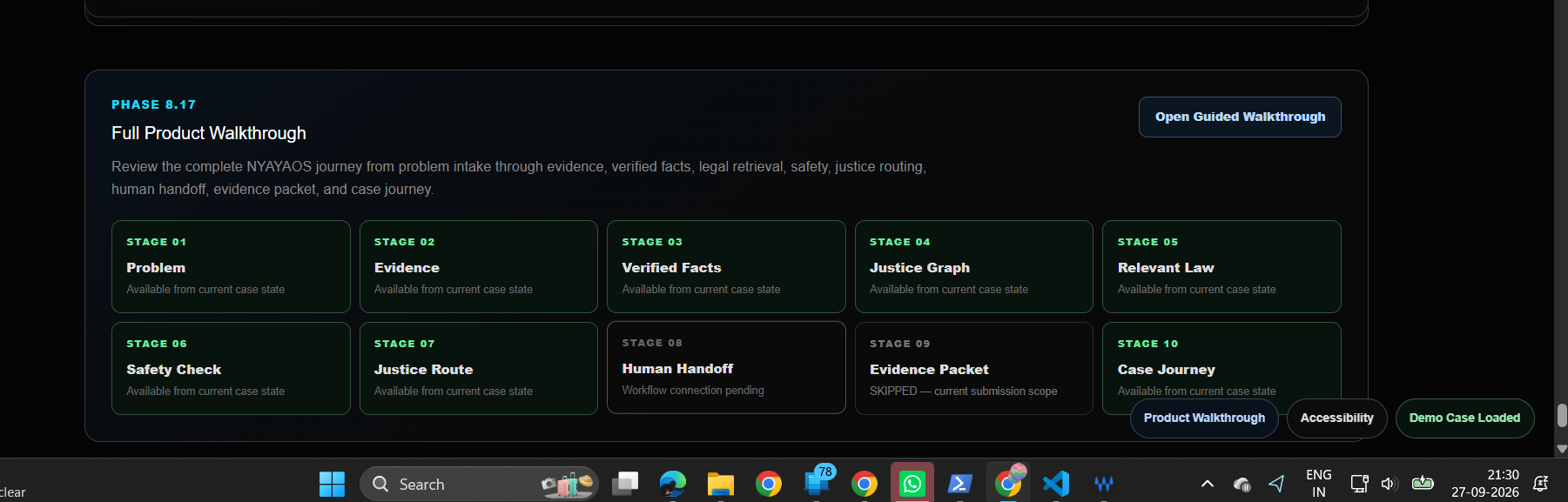
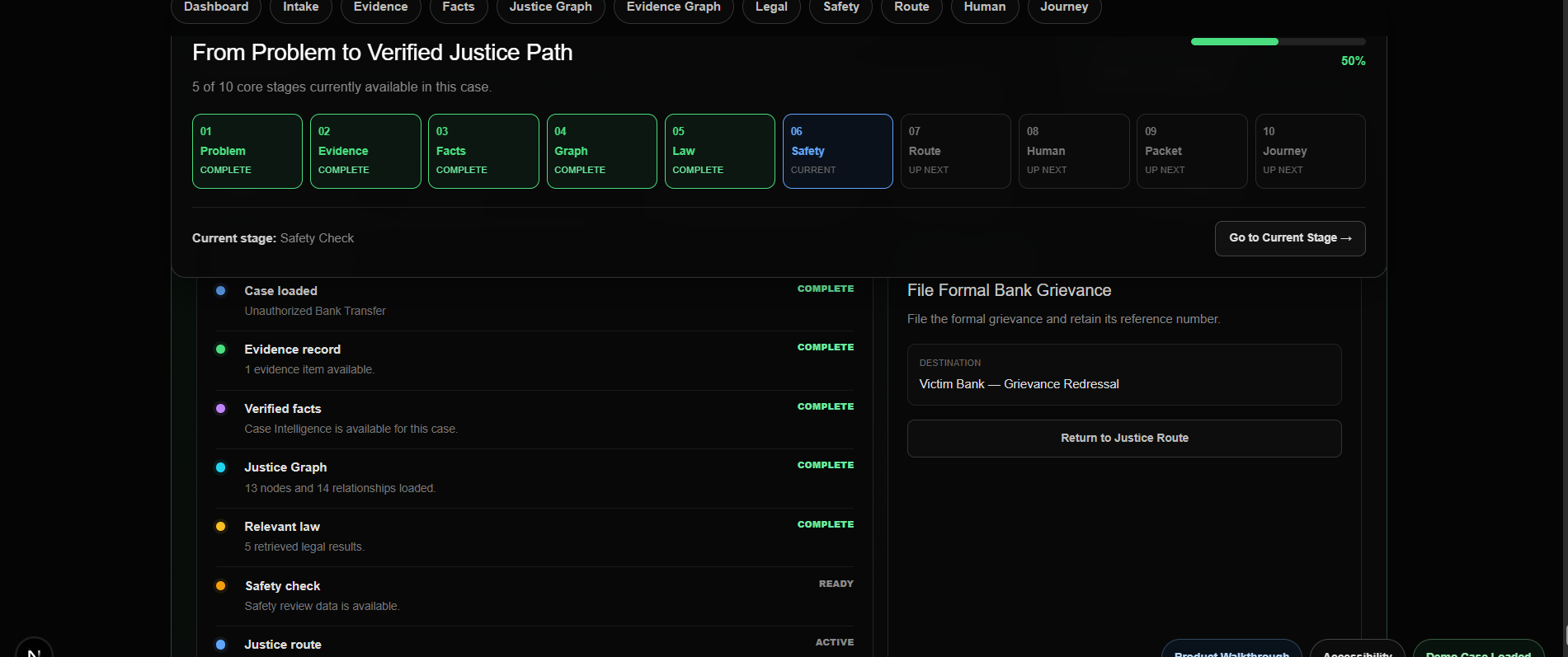
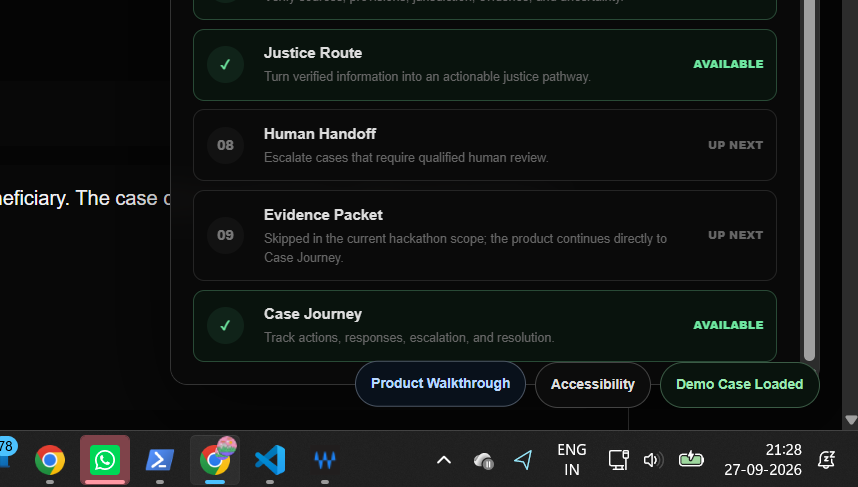
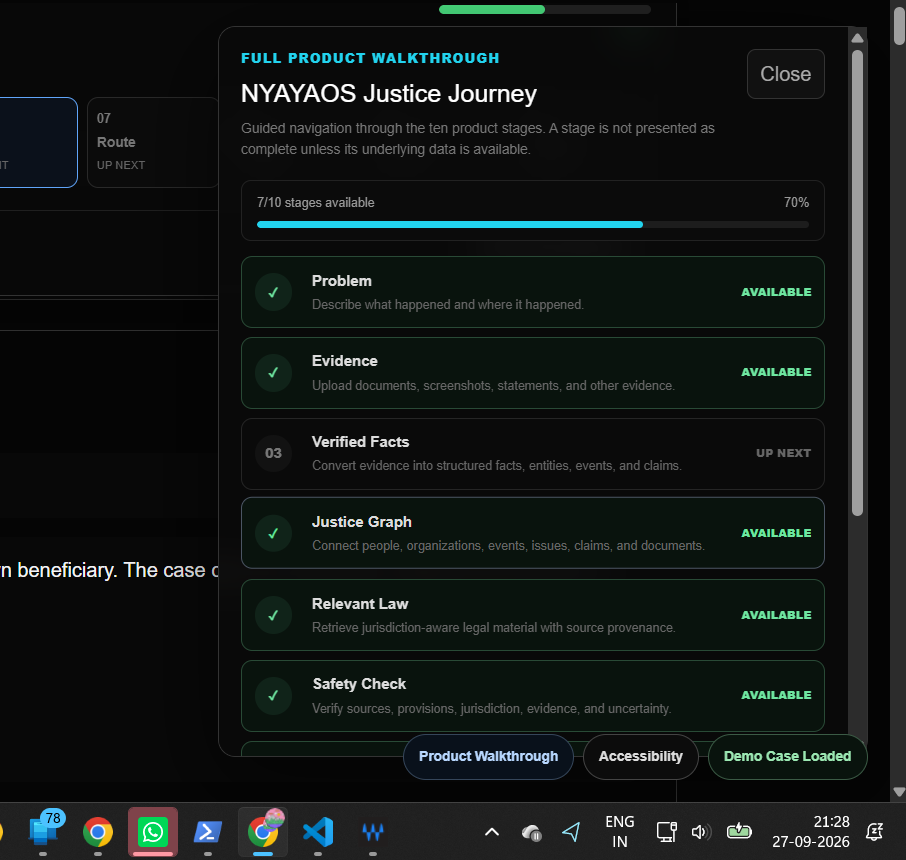
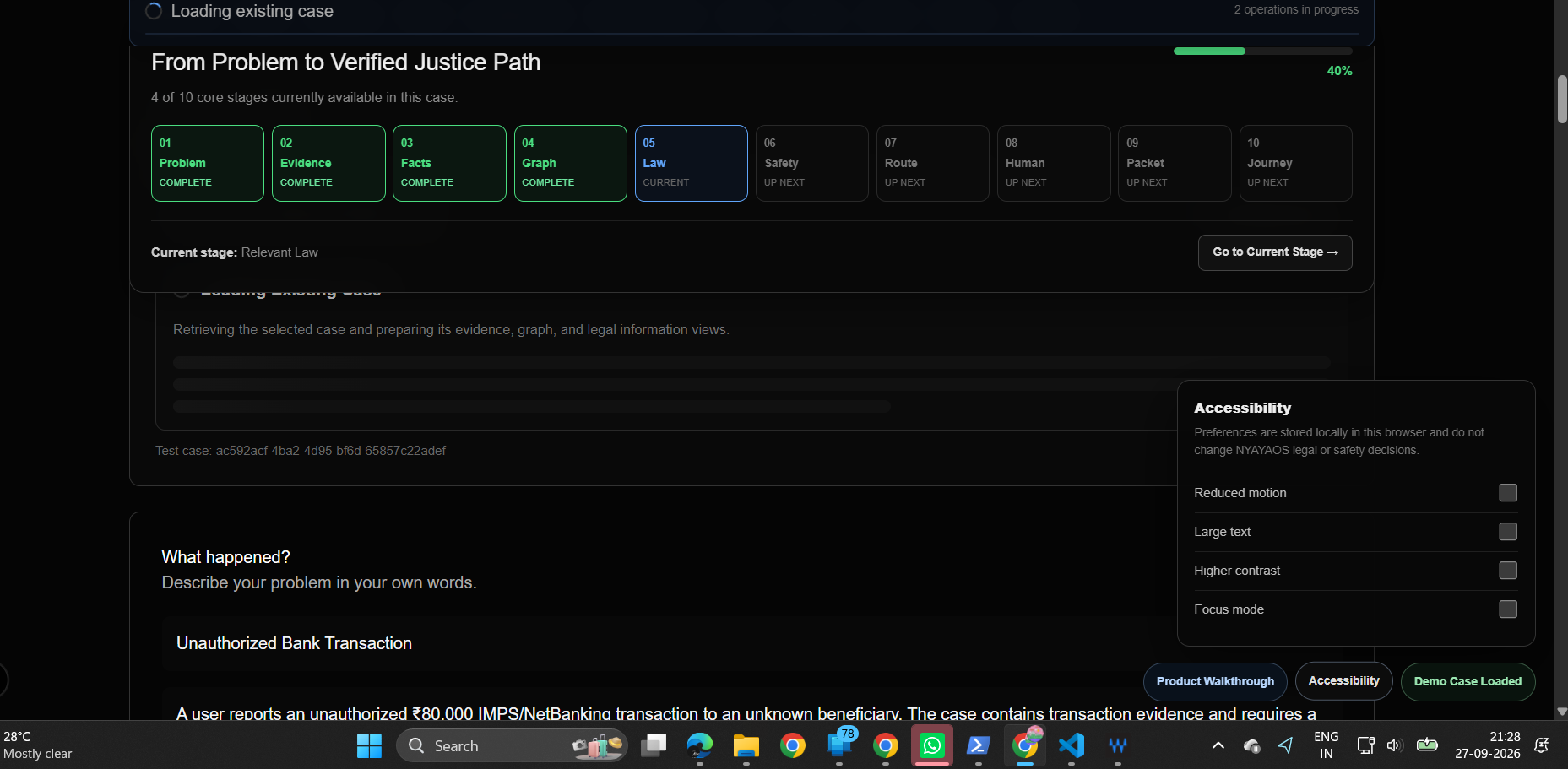
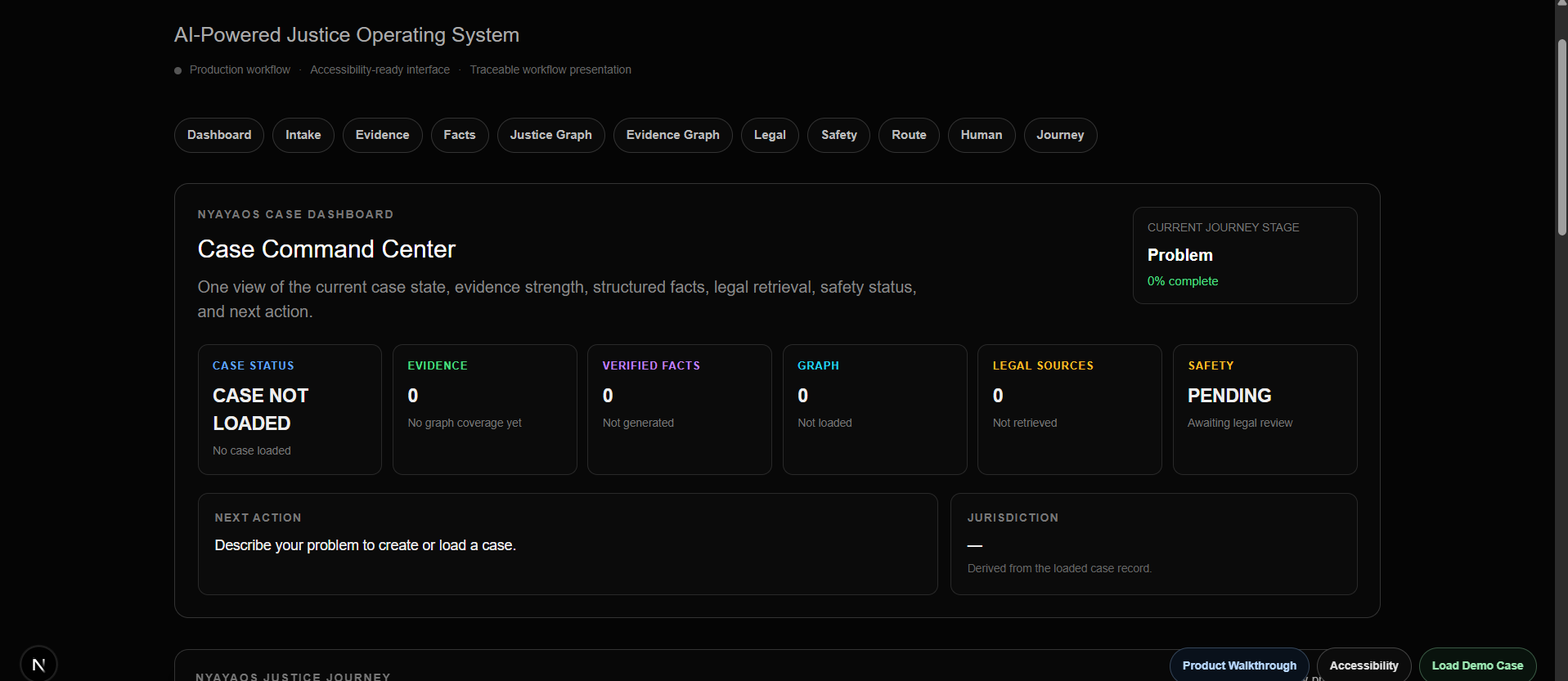
NYAYAOS is an AI-based platform that helps a person understand and navigate a legal problem from the point where the problem happens to the point where they can take the next appropriate step.
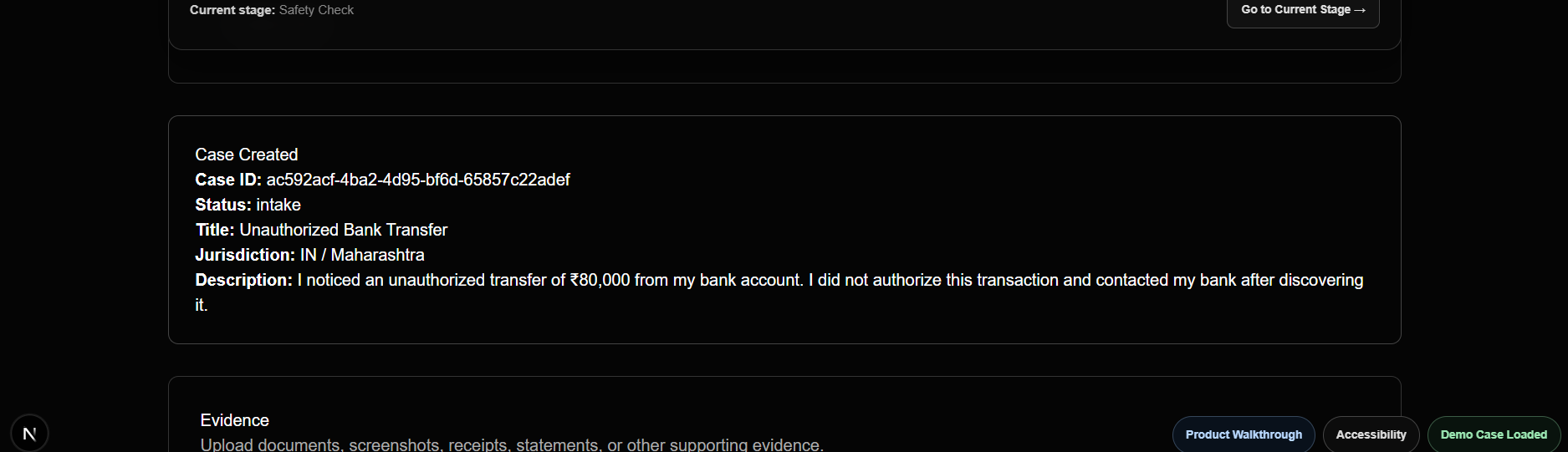
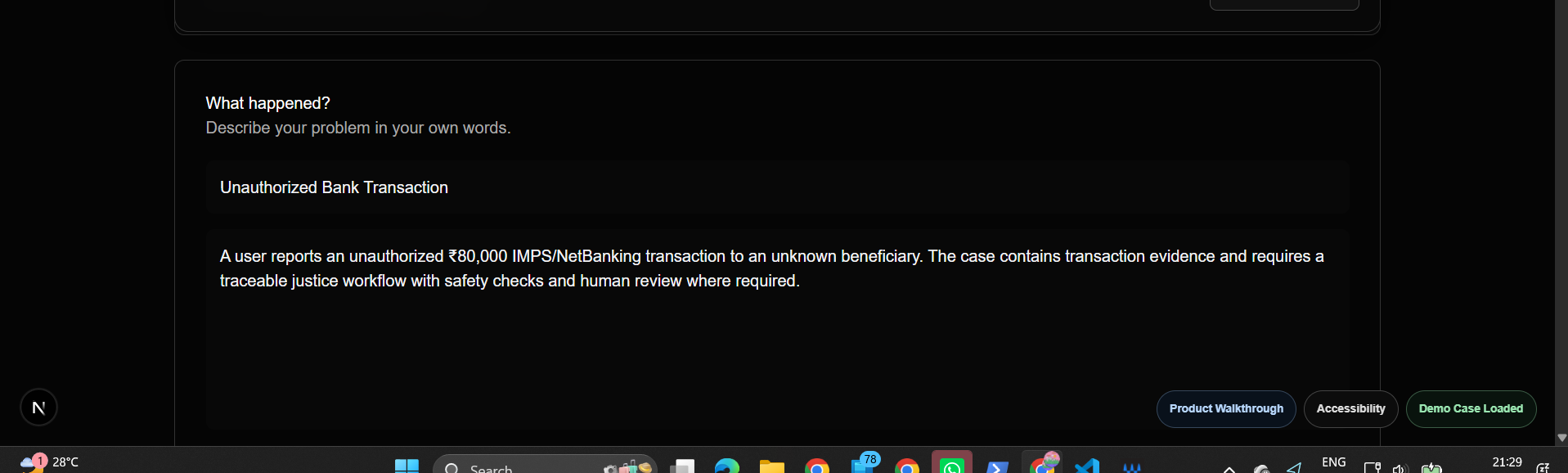
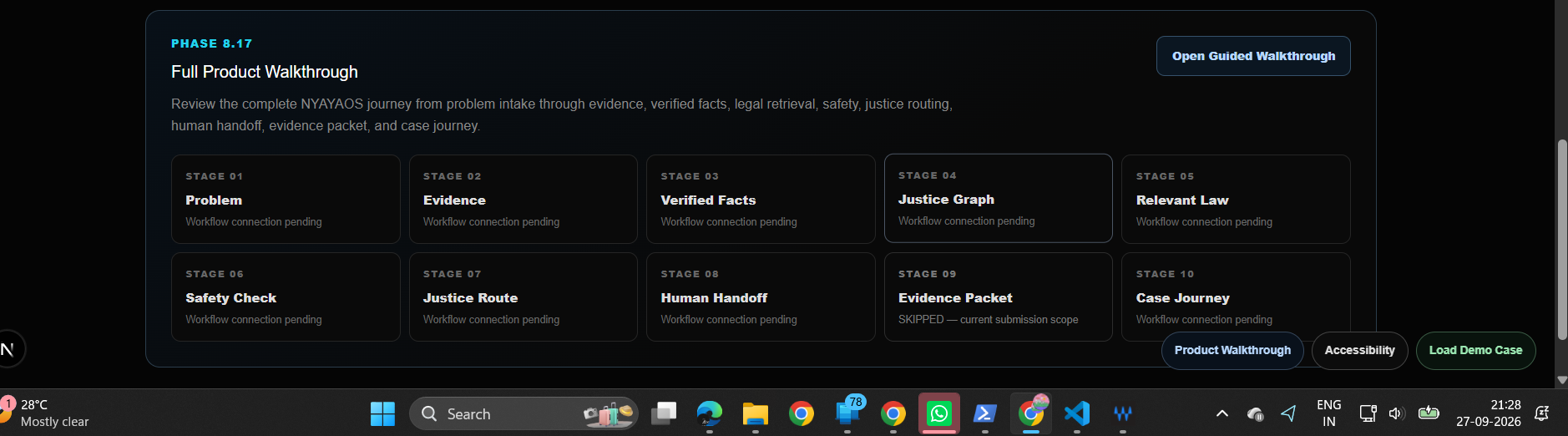
A user can explain their situation in normal language and provide documents or other evidence. NYAYAOS then helps organise the information, identify the important facts, find relevant legal information and explain possible next steps.
I am focusing my initial work on areas such as cyber and financial fraud, consumer problems, employment issues and housing-related problems.
The important part for me is that NYAYAOS is not meant to replace a lawyer or a court. It is meant to make the first part of the journey easier.
A person should not have to understand complicated legal terminology before they can even figure out where to start.
How I built it
I did not start by choosing an AI model and then looking for a problem to solve. I first researched the problem and then designed the technology around what I found.
I built the backend using FastAPI, with PostgreSQL/Supabase for storing case information and pgvector for retrieval. I used document-processing tools to extract information from uploaded documents and built a retrieval-based system so that legal information can be connected to relevant sources instead of depending only on the AI model's memory.
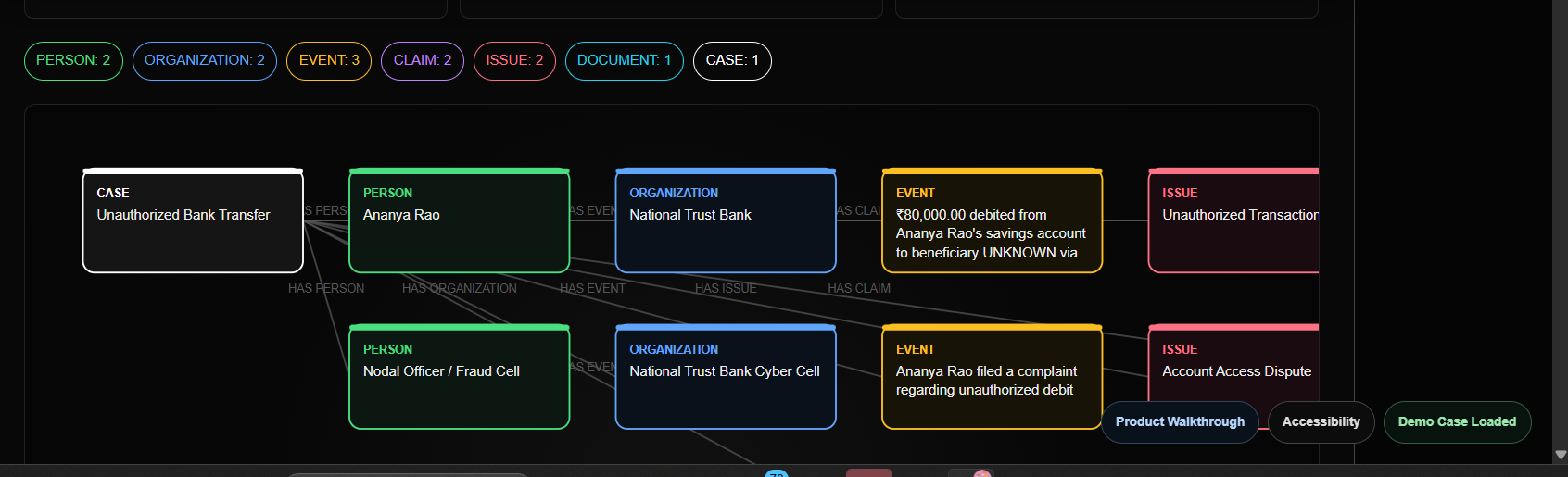
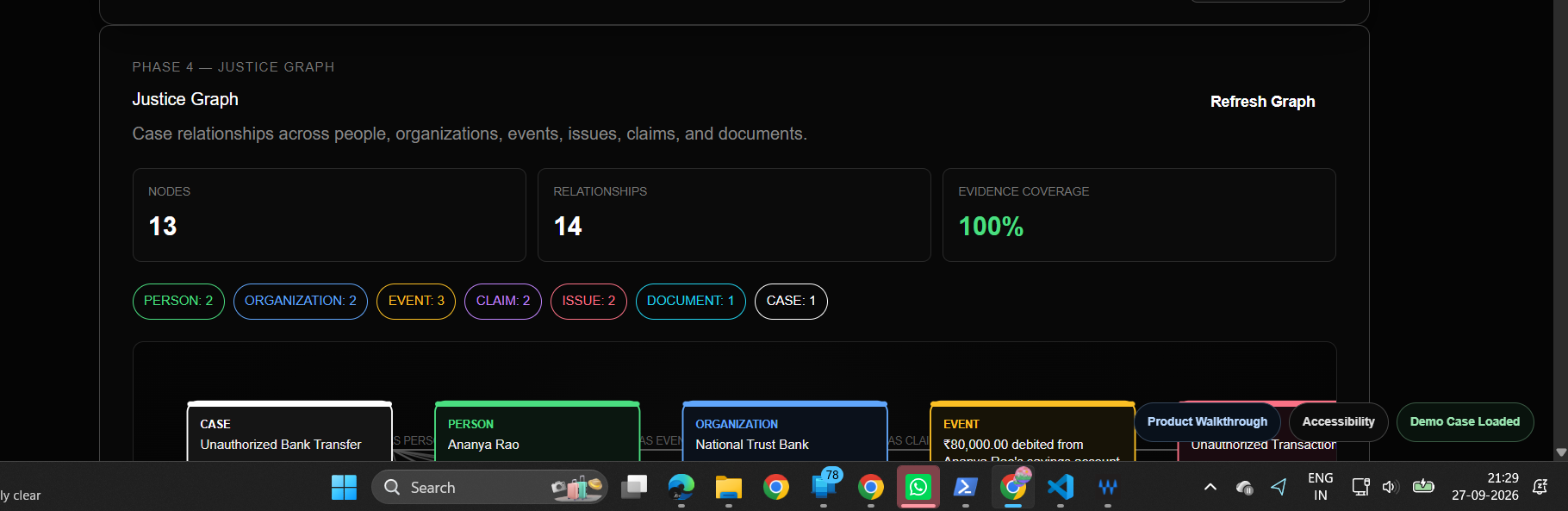
I also designed two important parts of the system: a Justice Graph and an Evidence Graph.
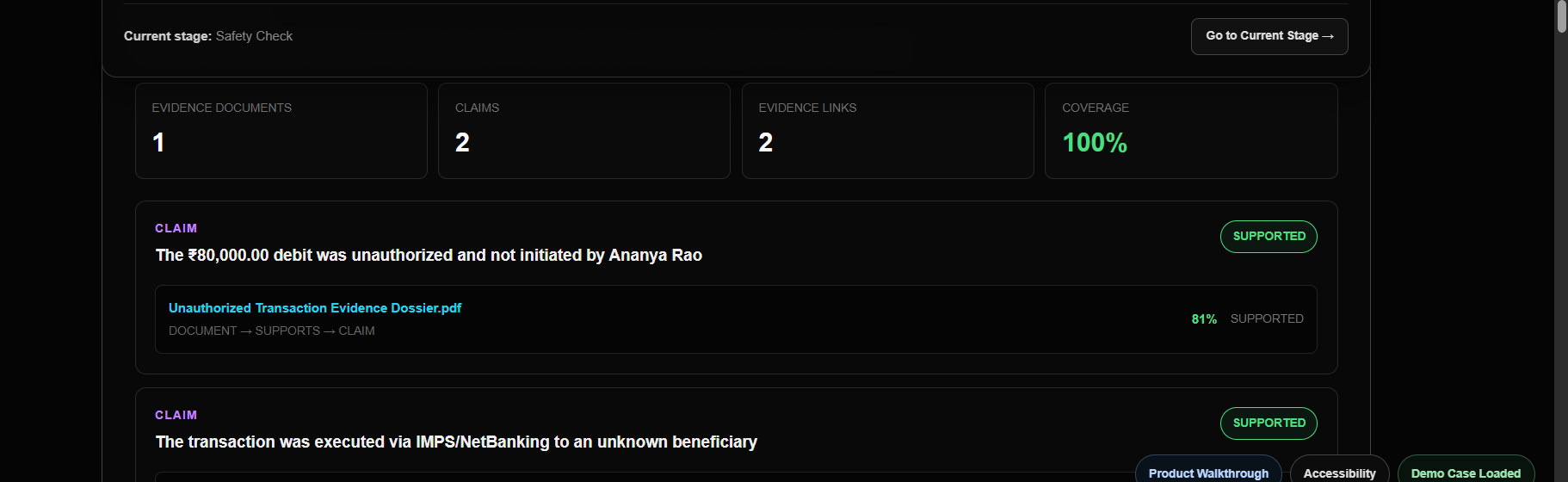
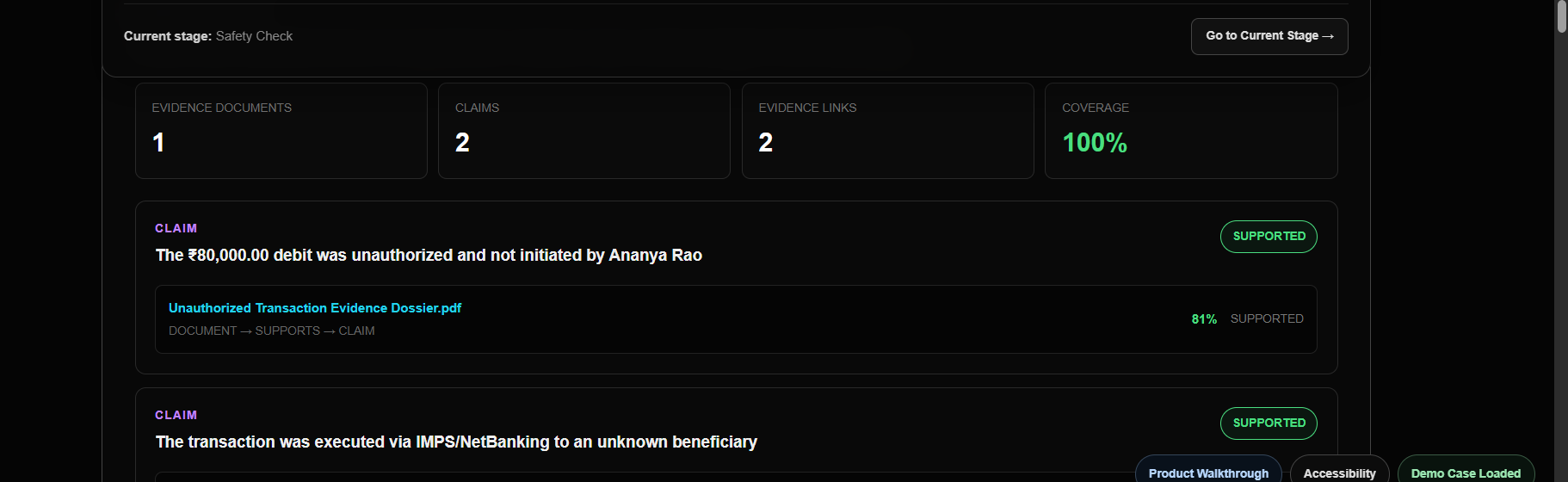
The Justice Graph helps represent the people, events, issues, authorities and actions involved in a case. The Evidence Graph connects important claims with the documents or evidence supporting them.
I also added safety checks and a human-handoff approach because I realised during my research that legal situations can be sensitive and that an AI system should know when a person needs proper professional or institutional help.
Challenges I ran into
The biggest challenge was understanding how much responsibility comes with building something for the legal domain.
Initially, it was tempting to think of NYAYAOS as a legal chatbot. But while researching and building it, I realised that simply giving an answer is not enough.
A real legal problem can contain missing information, multiple people, different dates, documents, evidence and different possible procedures.
For example, someone saying “My employer has not paid me for several months” is not enough information to determine the complete situation. I need to understand what happened, what evidence exists, where the person is located, what type of employment it is and what has already been done.
I also faced challenges with document processing, reliable retrieval, connecting evidence with claims, designing the database structure and making sure the system does not confidently provide unsupported information.
Another challenge was deciding what the AI should not do. This became just as important as deciding what it should do.
Accomplishments that I'm proud of
What I am most proud of is the journey I took before reaching the current version of NYAYAOS.
I spent considerable time researching the problem instead of immediately building an AI application.
The UNDP People-Centred Justice Needs Assessment was particularly important to my work because it helped me understand the problem from the perspective of people actually trying to access justice.
I studied the justice gap, legal-aid awareness, procedural barriers and the role of technology in improving access to justice.
Then I converted those findings into a technical architecture.
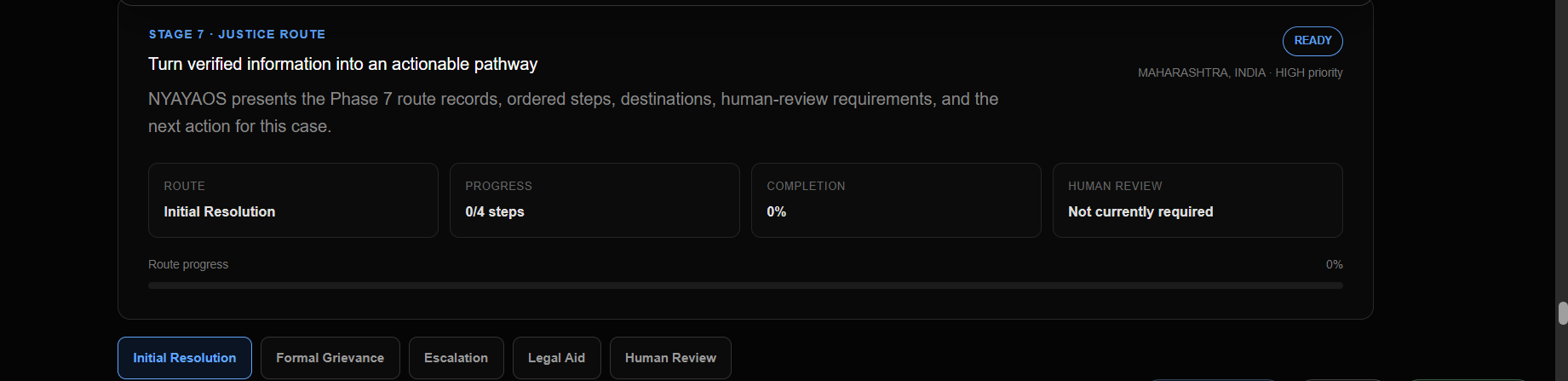
I built the initial NYAYAOS system, created the case and evidence structures, implemented document processing and retrieval, and started building the different justice workflows.
I am also proud that the project changed as my understanding improved. I did not force my original idea onto the problem. My research changed the way I designed the product.
For me, that was one of the biggest achievements of the project.
What I learned
The biggest thing I learned is that building technology for justice is very different from building a normal AI application.
A system can produce a very convincing answer and still be wrong. In a legal situation, that can have serious consequences.
Because of this, I learned the importance of reliable sources, evidence, retrieval, transparency and human involvement.
I also learned that access to justice is not only about having laws and courts. A person needs to understand their situation, know what options exist, find the right authority or service and know what to do next.
The UNDP research helped me understand this much more clearly.
Most importantly, I learned to start with the actual problem rather than the technology.
I started with a question, spent time researching it, studied the gaps I found, changed my initial assumptions and then built NYAYAOS around those findings.
What's next for NYAYAOS
There is still a lot I want to improve.
My next steps are to expand the number of legal and justice domains, improve support for Indian languages, make document and evidence understanding better, strengthen the legal retrieval system and improve connections with legal-aid organisations and human professionals.
I also want to test NYAYAOS with real users and measure whether it actually helps them understand their options and take the correct next step.
In the long term, I want NYAYAOS to become more than a chatbot. I want it to become a navigation layer between people and the justice system.
The problem that started this project was simple: a person should not have to understand the legal system before they can ask for help from it.
That is the problem I am trying to solve with NYAYAOS
Built With
- agents
- ai
- artificial
- civic
- fastapi
- generative
- intelligence
- large
- law
- models
- next.js
- pgvector
- postgresql
- python
- rag
- react
- supabase
- typescript

Log in or sign up for Devpost to join the conversation.