-
-
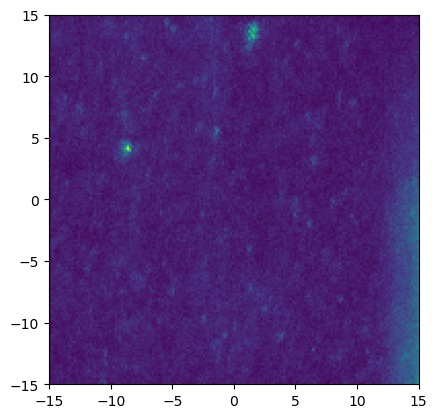
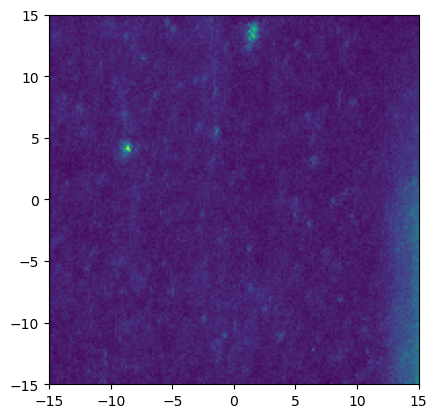
Original FSM visualization provided by Argonne.
-
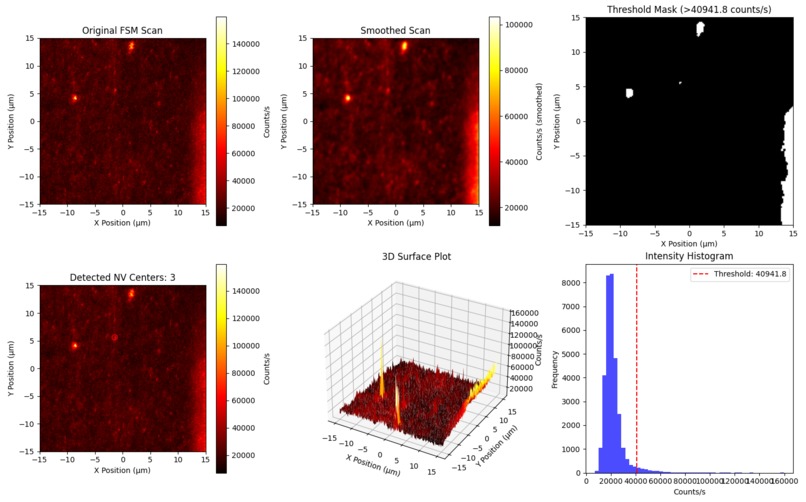
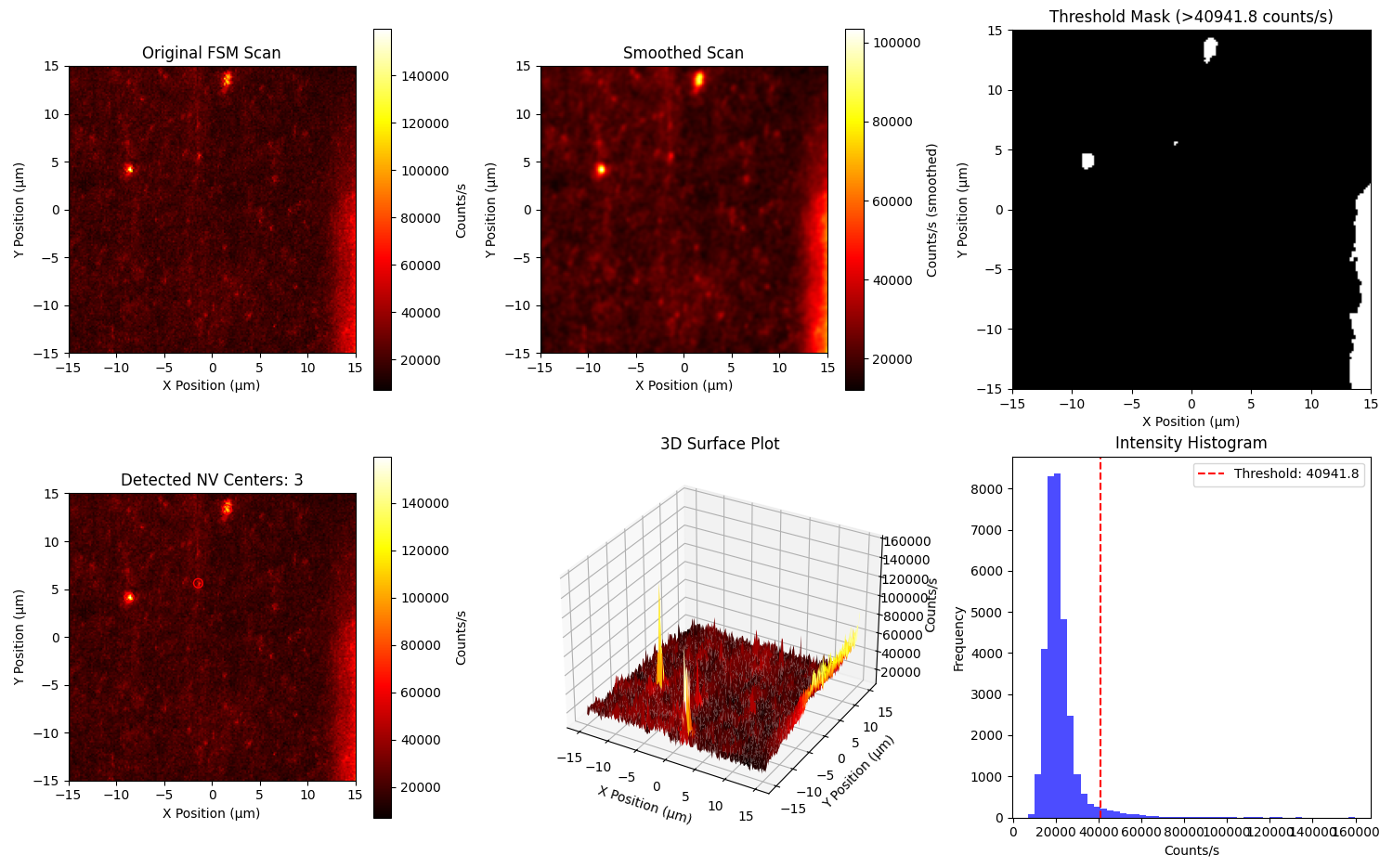
Processed and identified version of the same FSM scan.
Inspiration
Our sustainable approach to quantum information science was inspired by real-world bottlenecks and delays encountered at Argonne National Laboratory and the University of Chicago Pritzker School of Molecular Engineering. These institutions are at the forefront of quantum research, yet face significant challenges in scaling quantum technologies and integrating them with sustainable practices to address urgent global issues like climate change modeling, secure communication, drug discovery, and biosensing.
What it does
NVision is an algorithmic solution for identifying nitrogen-vacancy centers in FSM (fluorescence scanning microscopy) scans. By processing FSM data, NVision rapidly and consistently detects NV centers, enabling faster, more reliable, and standardized analysis. NVision is light and easy to integrate with most laboratory equipment. This supports the development of sustainable, high-performance, room-temperature quantum computing.
How we built it
We developed NVision as a Python-based image processing pipeline. The system uses Gaussian smoothing for noise reduction, adaptive thresholding for peak detection, and statistical analysis to map NV center coordinates. The tool features a user-friendly GUI for drag-and-drop file selection, parameter adjustment, batch processing, and comprehensive visualization, making it accessible to researchers with varying technical backgrounds.
Challenges we ran into
Attempting to integrate our app into our website and debugging cluster detection.
Accomplishments that we're proud of
Solving precisely the problem we set out to solve for Argonne with enough time to create an elegant GUI and website to accompany the solution.
What we learned
Sometimes simplifying your goals makes achieving them far more feasible, and that can end up leading you to achieve new ones you had never even considered before.
What's next for NVision
Our hope is that this hackathon project becomes the foundation for a global initiative that partners with science labs to understand and address their software needs. We want to start as a non-profit, so we can focus on building trust and delivering real value to researchers without commercial pressures. As we grow and learn from the community, we envision evolving into a sustainable, mission-driven company that continues to empower scientific discovery on a larger scale.
Built With
- css
- html
- perplexity
- python
- typescript
- v0

Log in or sign up for Devpost to join the conversation.