-
-
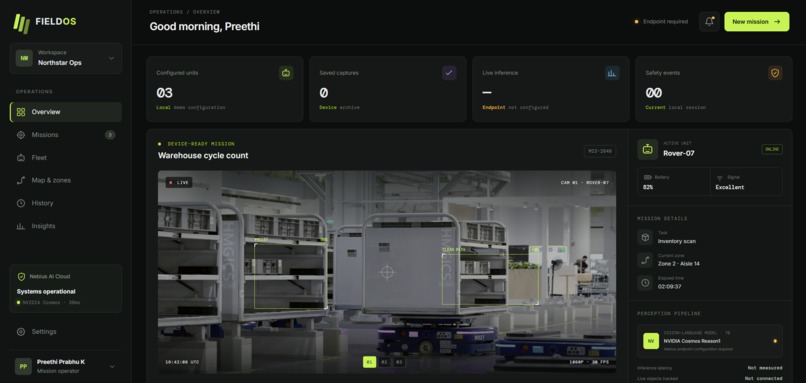
Built with NVIDIA AI, Powered by Nebius — Intelligence Beyond the Screen.
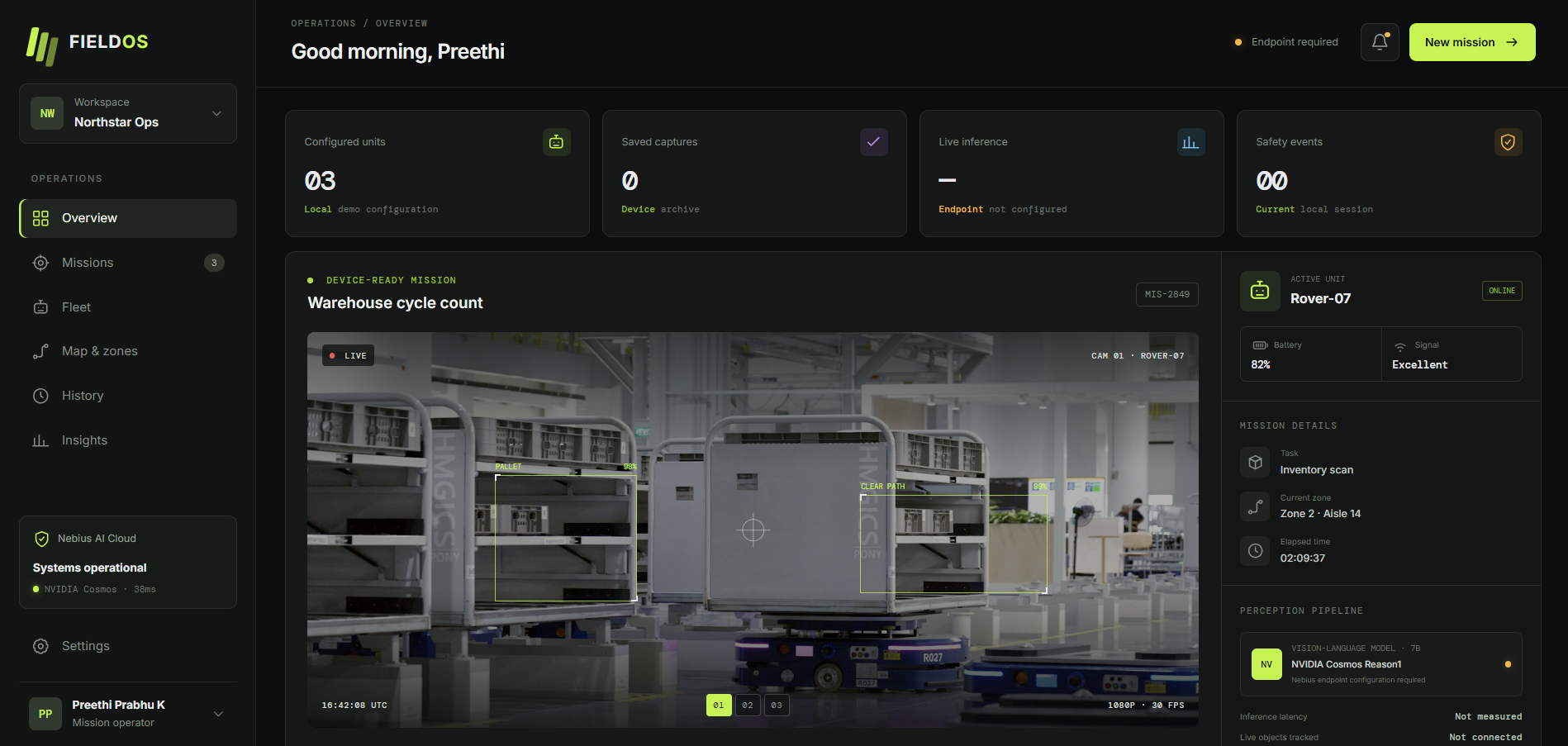
About the Project: Inspiration I was inspired by a simple question: What if AI could move beyond understanding images and text to actually understand and respond to the physical world? Real-world environments such as factories, warehouses, laboratories, and public spaces require continuous monitoring for hazards and abnormal situations. Traditional monitoring often depends on fixed rules or constant human supervision. I wanted to explore how AI could see, understand, decide, act, and verify in a continuous loop. This idea led me to build EdgeGuard AI — an Autonomous Physical Safety & Inspection Agent, designed to demonstrate how Physical AI can transform camera and sensor data into real-time decisions and actions.
How I Built It: EdgeGuard AI follows a :Sense → Understand → Decide → Act → Verify architecture. Sense: Cameras and edge sensors capture information from the physical environment. Understand:NVIDIA open-source AI models analyze the scene and identify objects, hazards, and abnormal situations. Decide:An agent runtime interprets the AI output and determines the appropriate response. Act: The system can trigger alerts, movement commands, or inspection actions. Verify: The environment is observed again to verify whether the action was successful. I use Nebius AI Cloud for scalable workloads such as sensor-data processing, simulation, synthetic-data generation, and policy evaluation through Serverless Jobs. Nebius Serverless Endpoints support low-latency model inference for real-time operation.
By combining NVIDIA models, agent-based reasoning, and Nebius infrastructure, I designed the system to connect AI perception with autonomous action rather than stopping at simple object detection.
What I Learned: Building EdgeGuard AI helped me understand that Physical AI is much more than running a vision model. A useful physical agent needs multiple components to work together: Perception → Context → Reasoning → Action → Feedback I learned how important inference latency, reliable perception, agent coordination, sensor information, and continuous verification are when AI decisions interact with the physical world. I also learned how cloud infrastructure can complement physical and edge systems by supporting computationally intensive workloads such as simulation, synthetic-data generation, and policy evaluation.
Challenges I Faced: One of my biggest challenges was creating a reliable connection between AI perception and physical actions. Detecting a hazard is only the first step; the system must also determine what action should be taken and verify whether that action was effective.
Another challenge was balancing accuracy and response time. A physical AI system needs to respond quickly, so I had to consider how model inference, agent reasoning, and actions could work together efficiently. I also had to consider real-world variations such as lighting, camera angles, moving objects, unexpected events, and sensor noise. This showed me why continuous feedback and verification are important instead of treating every AI prediction as perfect.
Why It Matters: EdgeGuard AI demonstrates my approach to Physical AI: building systems that do more than observe the world—they can understand it, reason about it, respond to it, and verify their actions. Through this project, I wanted to explore how NVIDIA open-source models and Nebius AI Cloud can be combined to create intelligent systems capable of operating in dynamic physical environments. EdgeGuard AI is my step toward a future where AI agents can support safety, inspection, robotics, and autonomous physical operations.
How we built it: Challenges we ran into Accomplishments that we're proud of What we learned What's next for NVIDIA PhysXSentinel Ai Agent
Built With
- agent
- autonomous
- cloud
- data
- deep
- detection
- edge
- fusion
- generative
- inspection
- learning
- machine
- nebius
- nim
- object
- physical
- python
- real-time
- robotics
- safety
- sensor
- serverless
- simulation
- understanding

Log in or sign up for Devpost to join the conversation.