Inspiration
There are already too many AI calorie apps that do the same thing: you take a photo, it guesses the calories, and you're alone with the number.
A calorie counter tells you what you ate. A coach pays attention to how you eat, notices patterns, and helps you plan the next meal. Most people quit food trackers within weeks. We think that's not because logging is hard but because the app never gives anything back.
So we built Nüwa around one idea: to make nutrition choices easy and personalized, allowing users to integrate the food they like into their daily routines with the assistance of Nü, our AI companion.
What it does
Nüwa is an AI nutrition coach that sticks with you. Its name for itself is Nü.
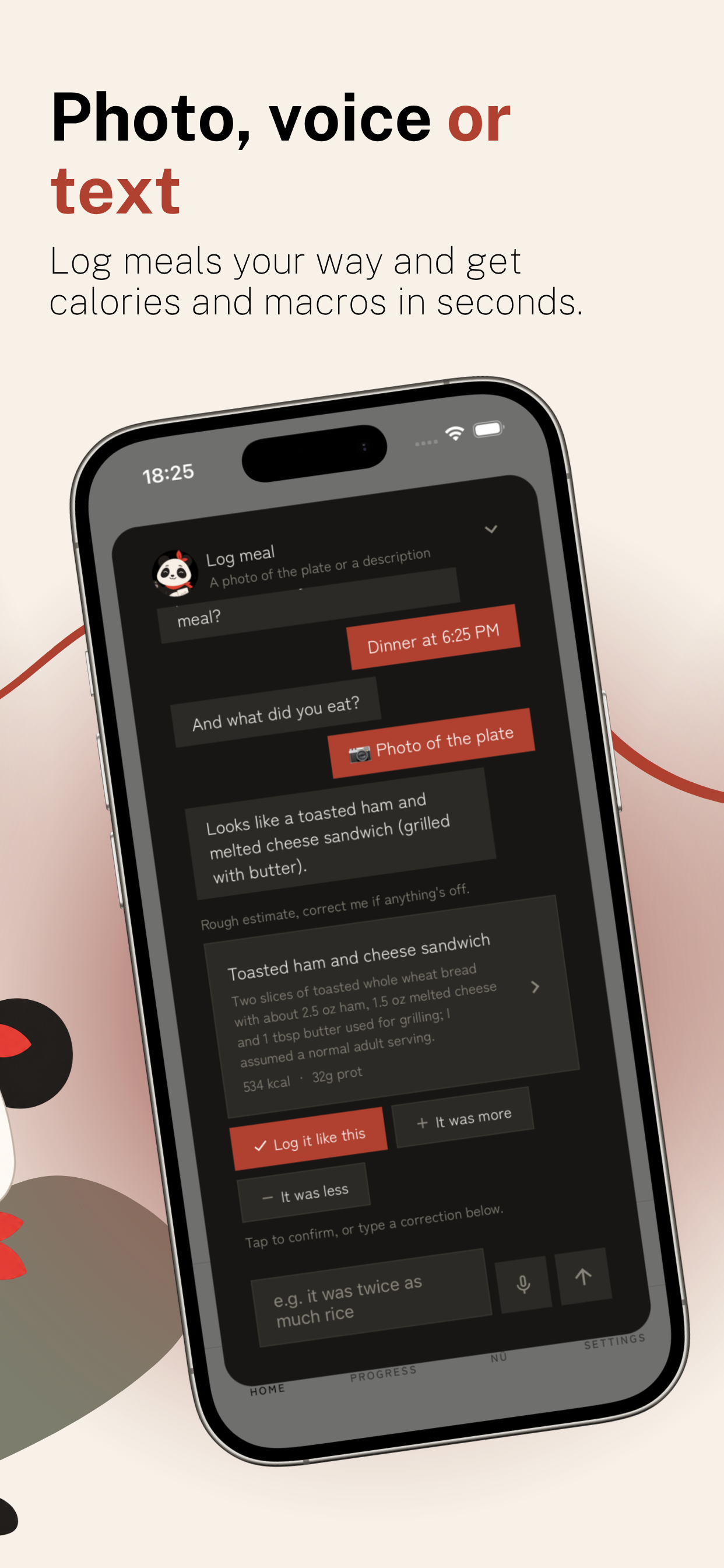
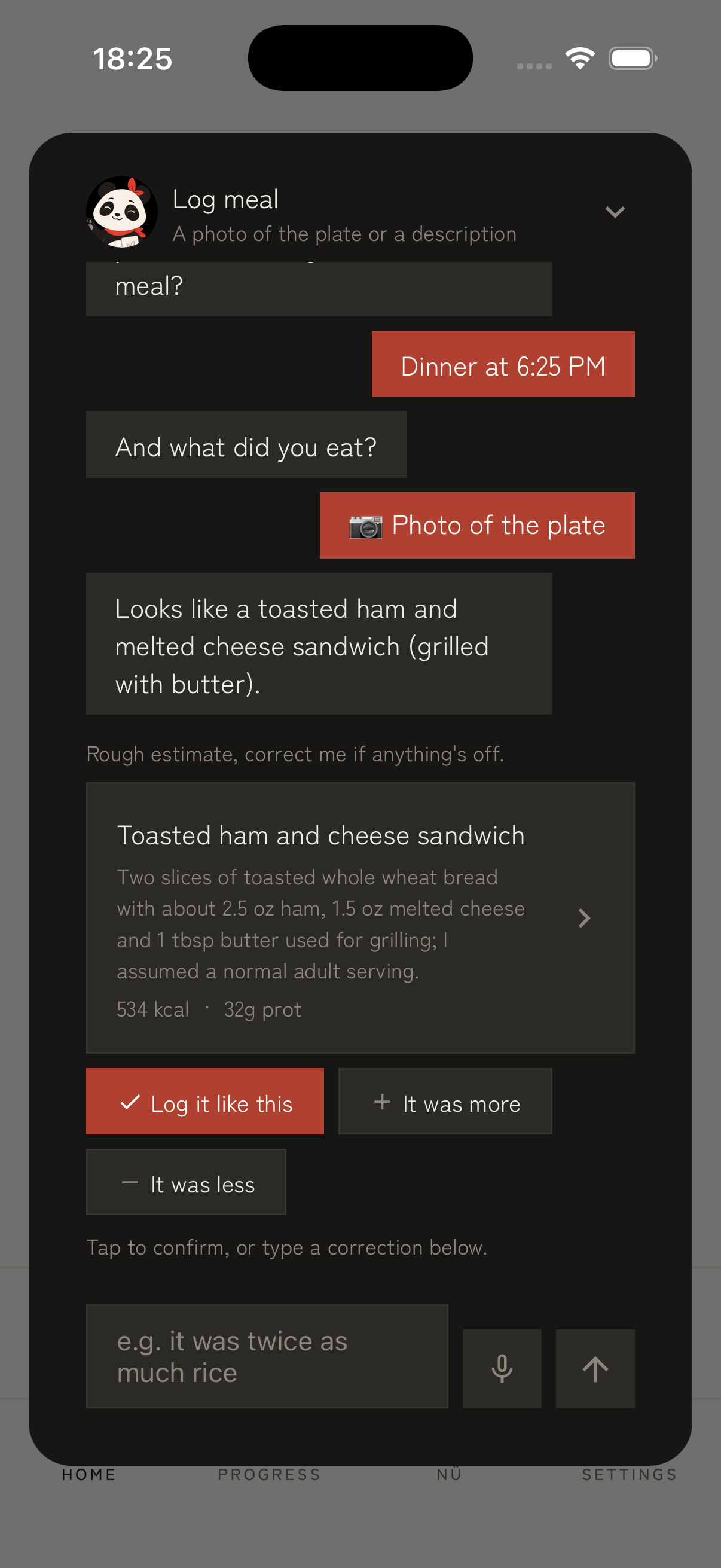
Logging with less effort. You tell Nü what you ate by typing, speaking or taking a photo of the plate. It turns that into a meal with calories and macros and compares it with targets built from your profile and goal. If a photo leaves something out (portion size, the sauce, how it was cooked), Nü asks a short follow-up question instead of trusting its first guess.
Food memory. Nü remembers the dishes you actually eat and learns when you usually eat them. Your usual lunch becomes a single tap, with no photo and no retyping. The memory also tracks which dishes you keep correcting, so it knows which estimates it can't trust yet.
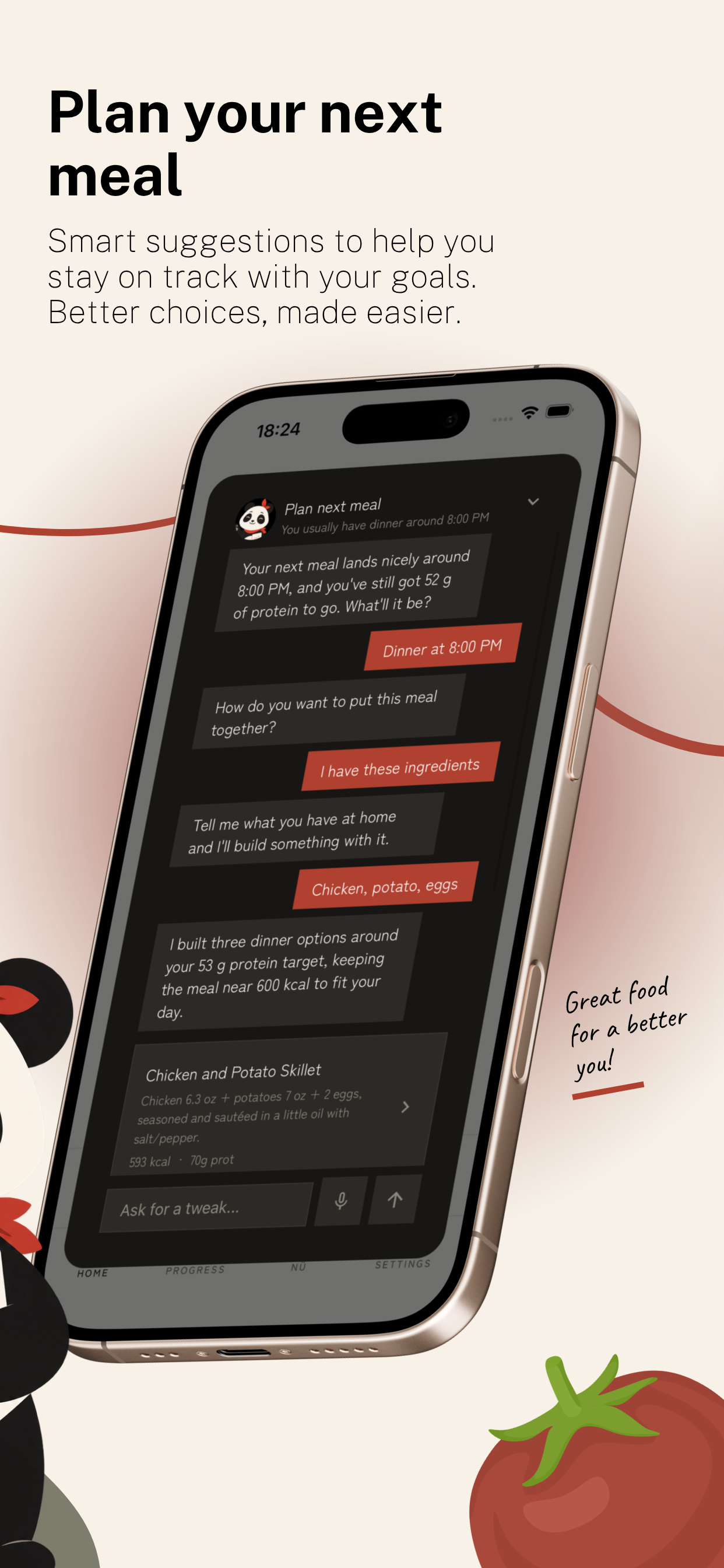
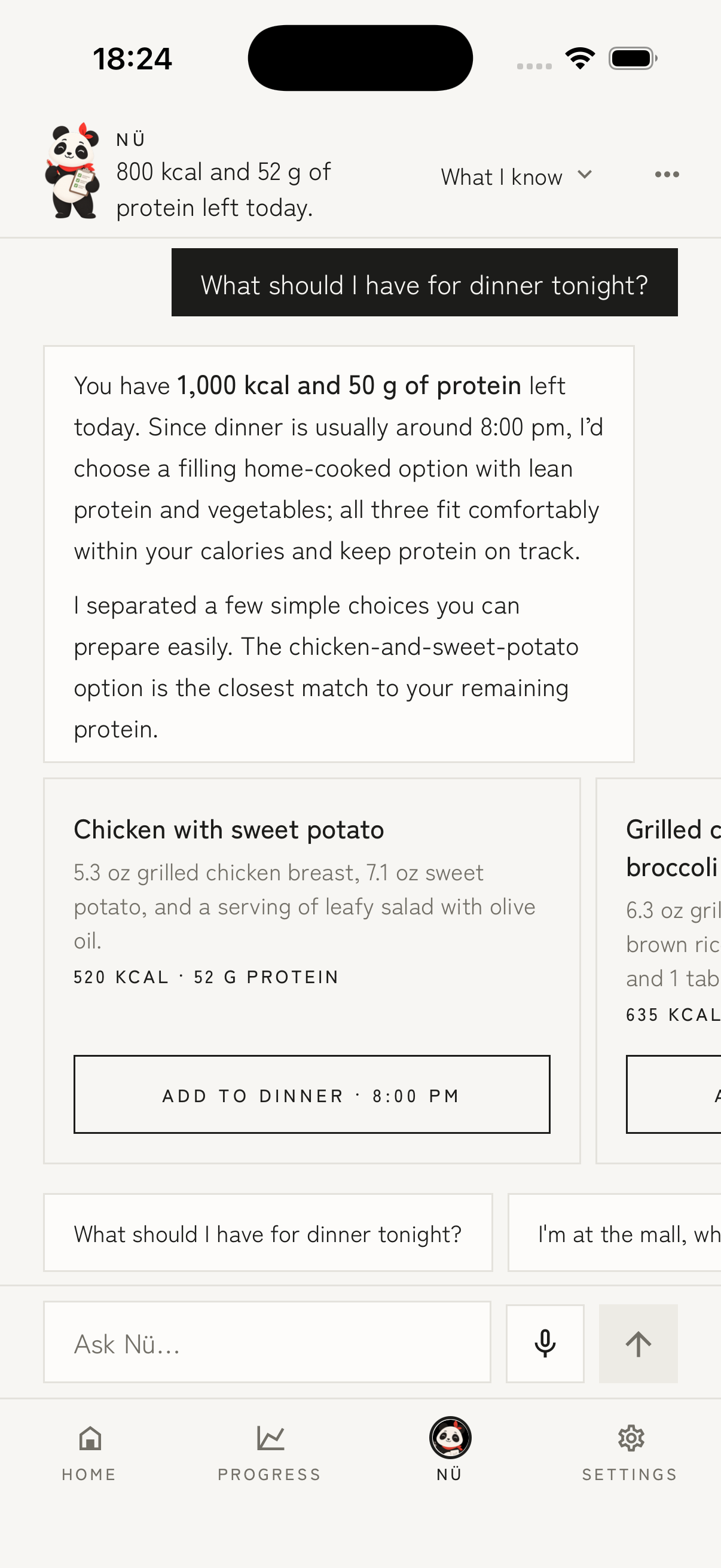
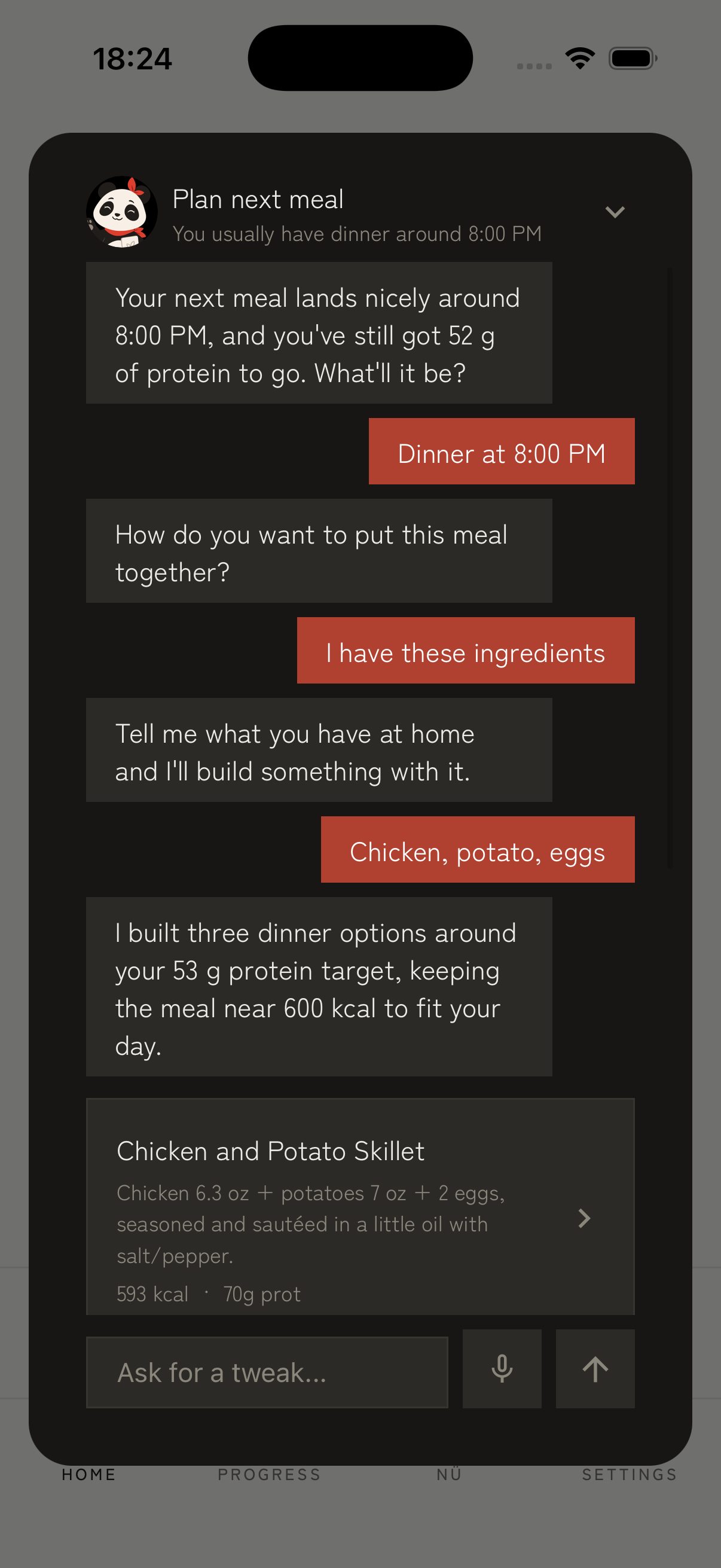
Planning, not just tracking. Each morning Nü writes a plan for your day: real meals that fit your targets, your dietary preferences and your allergies. You keep it or swap parts of it. The plan and the log are linked, so eating a planned meal fills in its slot.
A coach that looks at your data. Nü checks your log for real patterns:
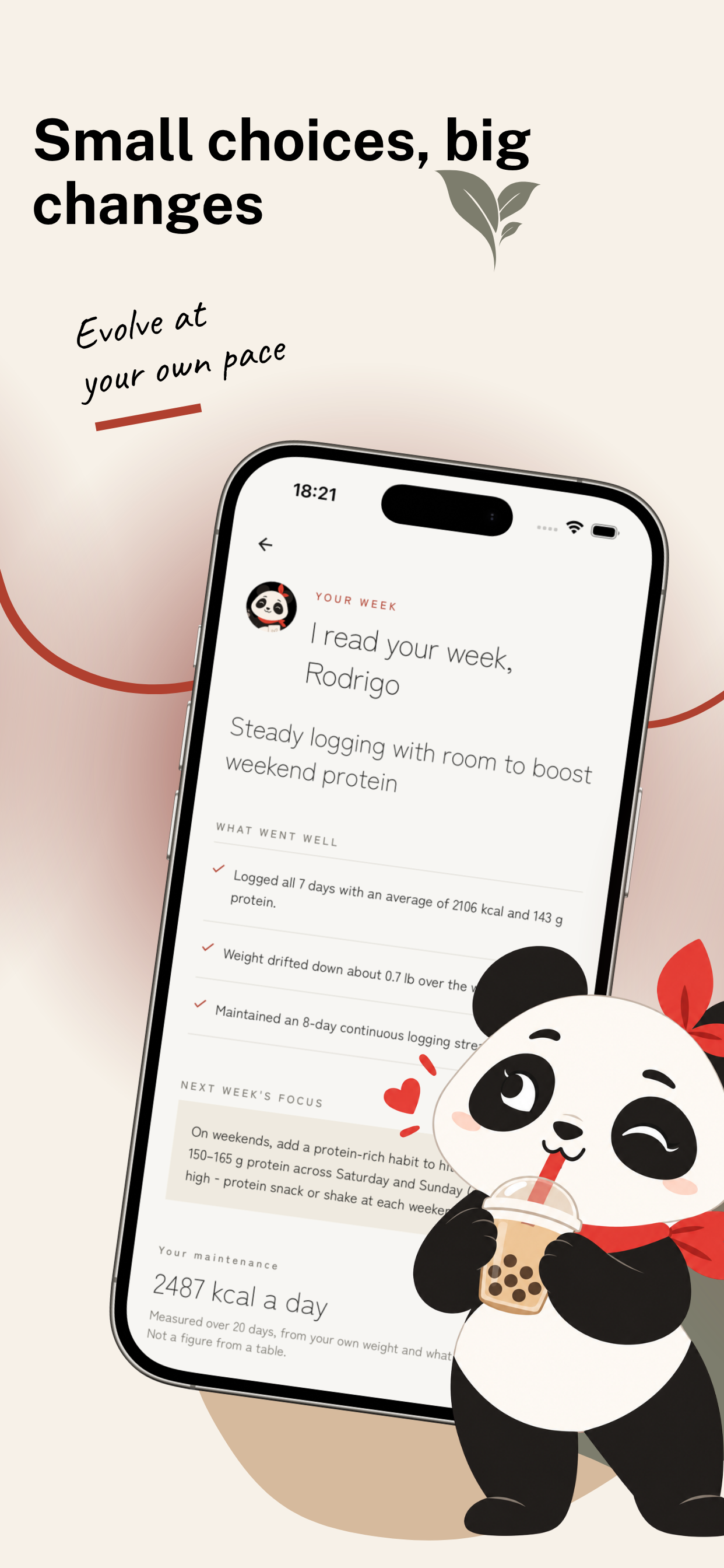
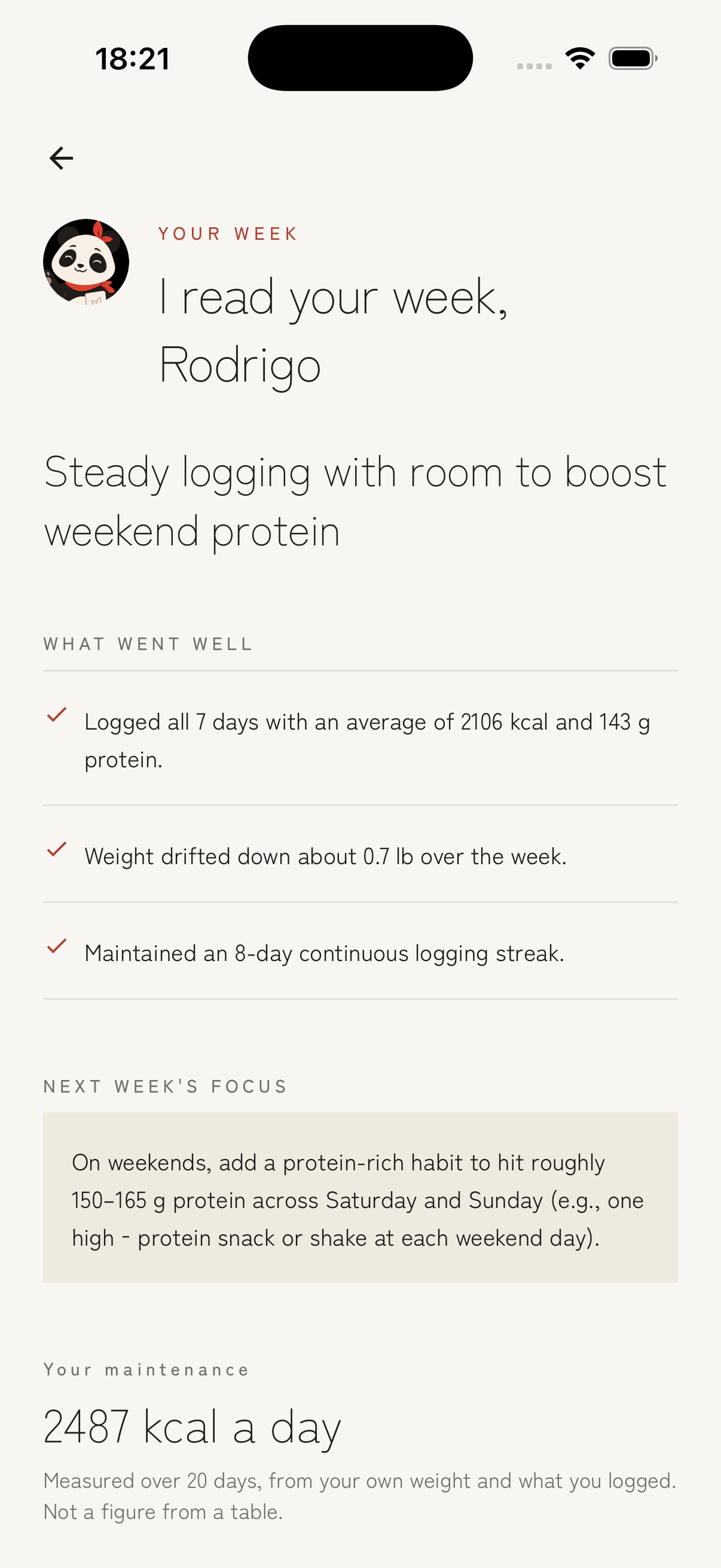
- protein that drops on weekends
- a meal that has slowly grown in calories
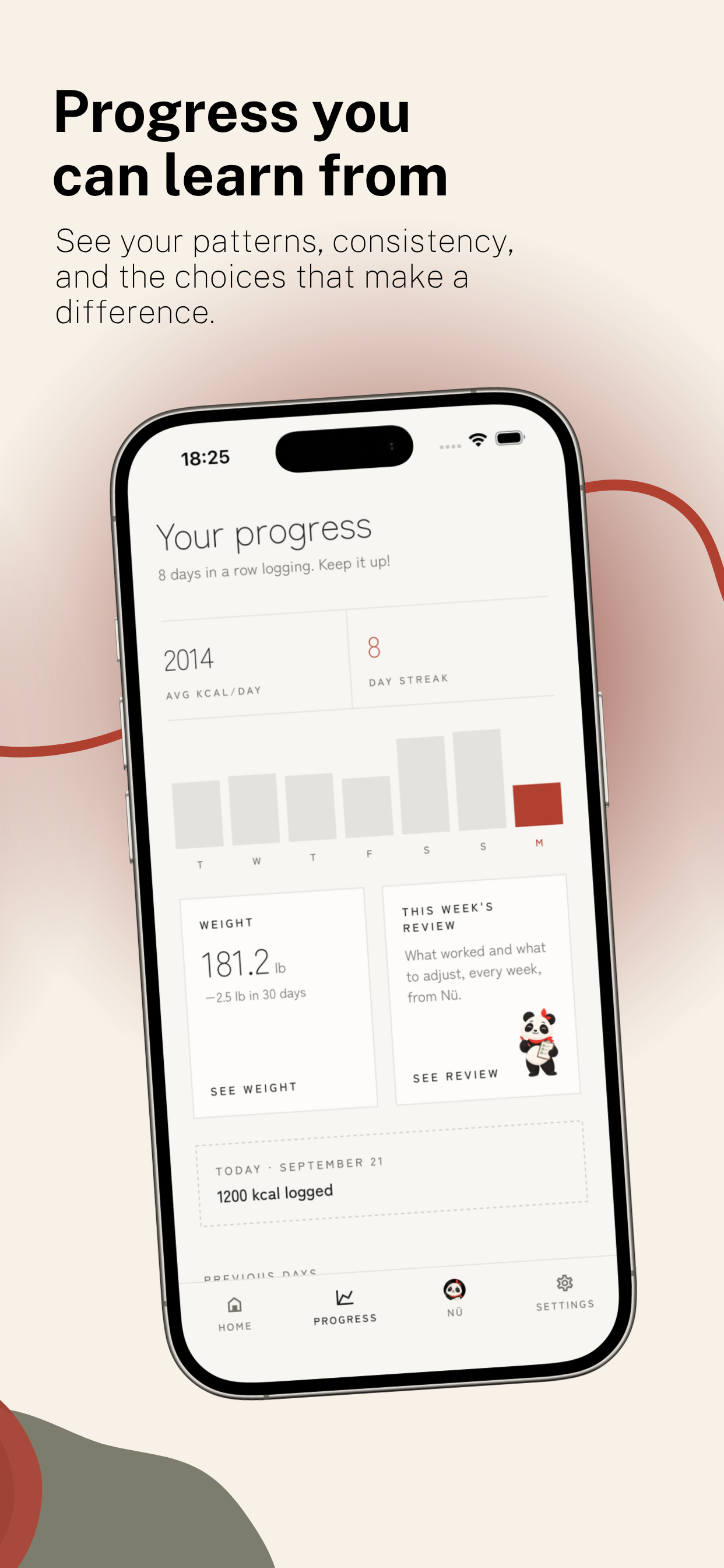
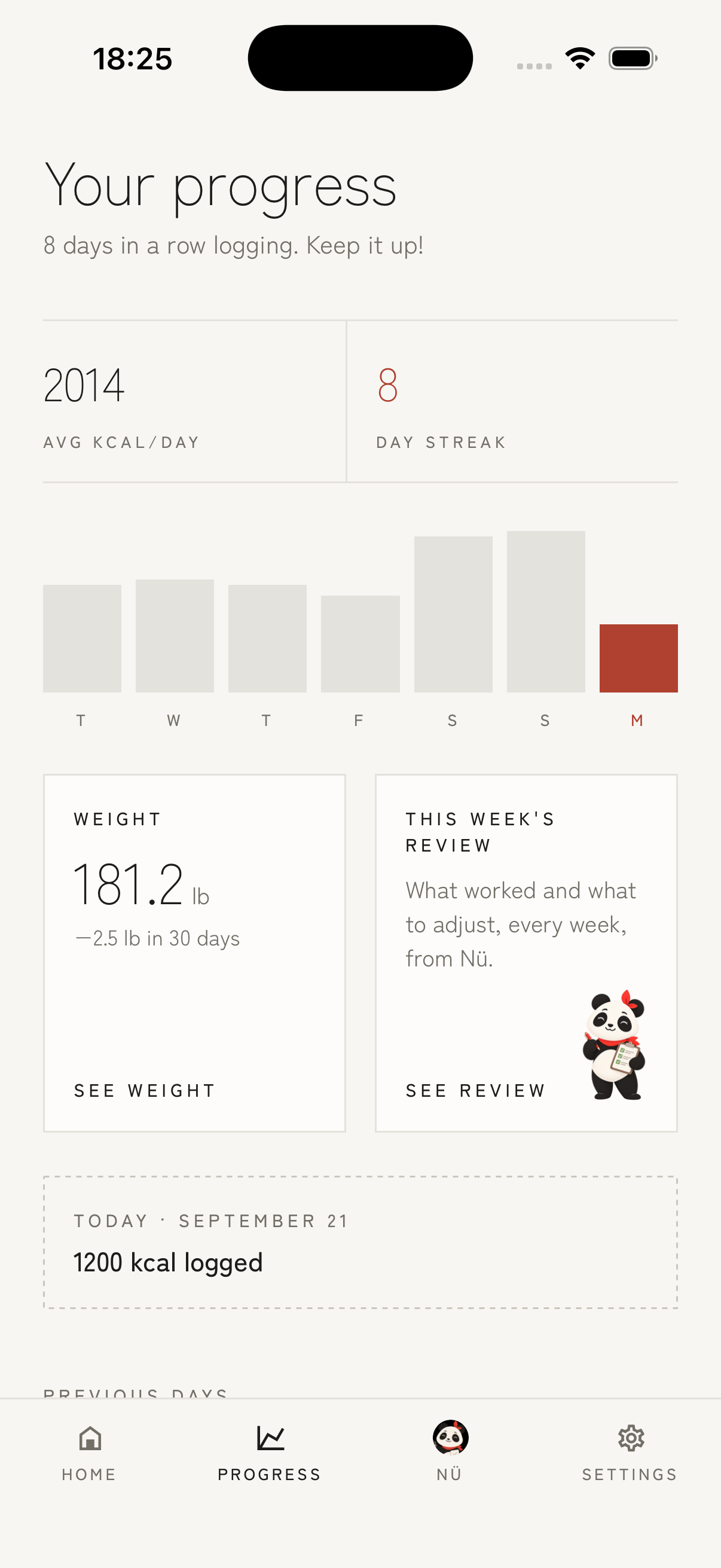
- how many days you actually hit your protein target
- a meal you tend to forget to log
Once you've logged enough days and weigh-ins, Nü compares your intake with your weight trend. That gives an estimate of your real maintenance calories instead of a formula's guess.
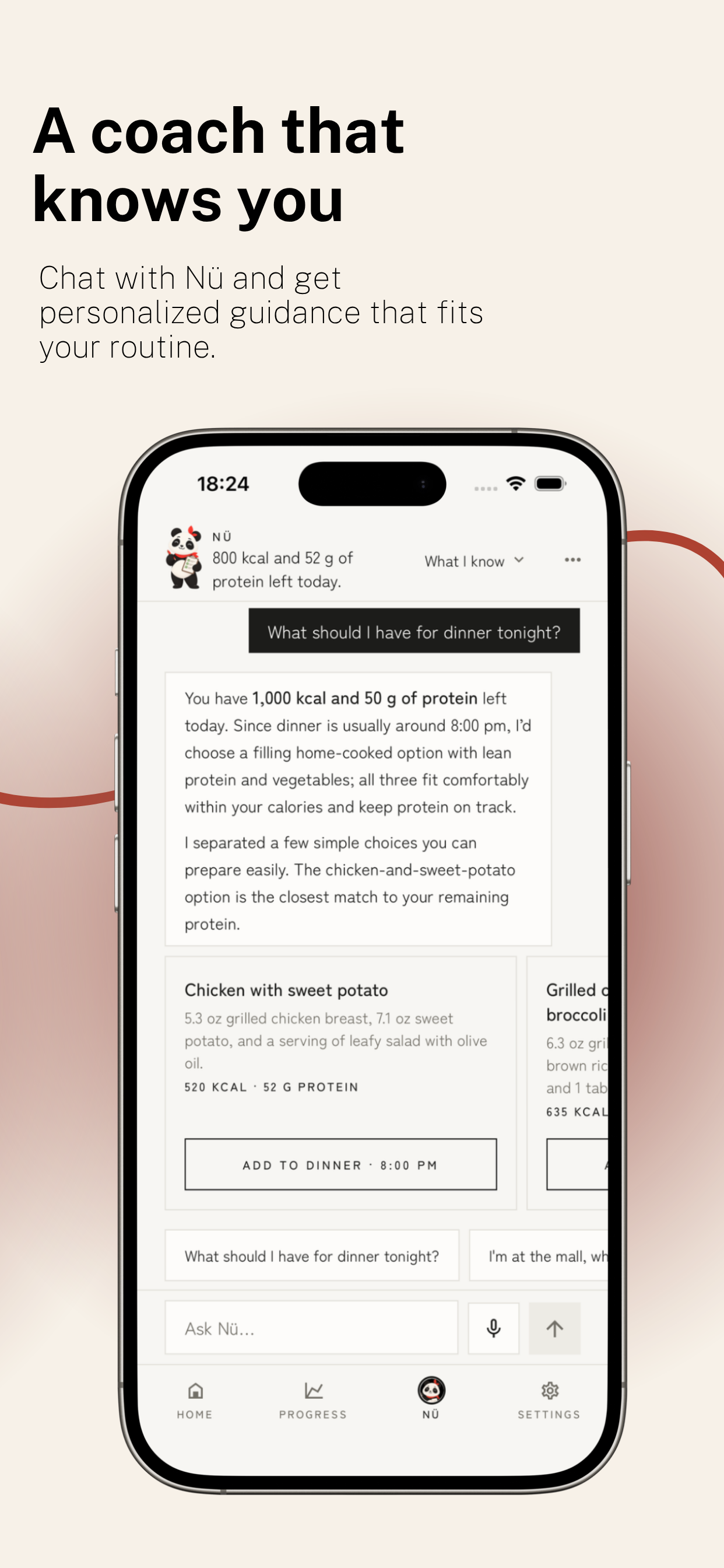
A coach you can talk to. You can chat with Nü about your day: "what should I eat for dinner?", "I'm going out tonight". Its suggestions come back as buttons that plan, swap or log the meal in one tap. There is also a weekly review of how your week went and what to adjust.
Messages that are worth opening. Every notification Nü sends contains a real number from your own record and opens the exact screen where you can act on it. Some examples:
- "Your protein drops on the weekend: 132 g on weekdays, 94 g on Saturday and Sunday. Want me to plan today?"
- "Your usual lunch? Chicken plate, 640 kcal. One tap and it's logged."
The app is fully available in Portuguese and English, in metric or imperial units.
How we built it
Nüwa is a React Native (Expo) app for iOS and Android. The backend is NestJS with Postgres (Prisma), deployed on AWS.
- Understanding meals: text, voice and photos all become structured meals. Food memory and meal history are passed to the model as context, so a dish you've logged before is recognized instead of estimated from scratch.
- The model never chooses a number about the user. Coach findings, the week's calorie budget, streaks, maintenance estimates and every figure in a notification are computed from the record in plain code, with unit tests. The model writes the words, and the data provides the facts. A finding reaches the phone as a type plus its figures and is worded on the device in your language, so it can't invent a pattern that isn't in the data.
- Suggestions are checked before they become actions. When the chat proposes a swap, it has to name a meal that is really on today's plan and not yet eaten, and it can't log something in the future. Anything invalid falls back to the safe option.
- Engagement runs on two channels. Local reminders run offline on the device. Server pushes (through OneSignal) carry what only the server knows: the morning plan, your usual meal, coach findings. They respect your waking hours, send at most one a day, don't send the same message twice, and skip you if you're already in the app.
- Privacy is built into the types. Analytics events can only contain categories, counts and flags. Dish names, text you typed and images are never sent.
Challenges we ran into
Food is ambiguous. People rarely give exact portions, and photos hide the oil, the sauce and what's under the rice. Follow-up questions helped more than any prompt tweak.
Memory without confusion. "Chicken with rice" at lunch and "chicken with rice" at dinner can be two different plates. We had to decide when two meals are the same dish, and to stop suggesting dishes the user keeps correcting.
Keeping the AI honest. An early version let the model describe the user's patterns, and it sometimes described patterns that didn't exist. We moved every number and every finding into code, and left the model only the job of writing.
Being useful without being annoying. One message a day, only during waking hours, never late, and only when it contains something real. Each of those rules is there because the version without it felt like spam.
Language that really follows the user. An English user whose goal was saved in Portuguese used to get Portuguese meal titles back. Now the language comes from the request, never from the user's text.
Building a useful memory system without confusing similar meals was another major challenge.
Accomplishments that we're proud of
Nüwa isn't a prototype: it's a real app, live on Google Play, with real users.
We're most proud that it no longer feels like a calorie scanner. Food memory, one-tap usual meals, the morning plan and Nü's findings from your own data make it feel like someone is paying attention, and the whole system is designed so that it never makes up a number about you.
What we learned
Just adding AI isn't enough anymore. Everyone has the photo-to-calories feature.
The value comes from reducing friction (less searching, typing and repeating) and giving something back (a plan, a pattern, a better next meal). We also learned that trust is the whole product: one invented fact from the coach and people stop believing all the others.
What's next for Nüwa
- Sharper portion recognition and better follow-up questions for photos.
- Deeper food memory: recognizing variations of the same dish, and meals eaten out.
- More coach findings (hydration, meal timing, training days) and a weekly review that can adjust your plan by itself.
- A more proactive Nü that plans around your week, not just your day.
The goal hasn't changed, but it's closer now: an AI nutrition coach that knows you better every week and helps before you ask.
Built With
- amazon-web-services
- llm
- nestjs
- openai
- postgresql
- react-native
- typescript

Log in or sign up for Devpost to join the conversation.