Inspiration
I tried every food scanner and calorie counter out there. They all did the same thing: they gave me a number. 340 calories. 12 grams of sugar. A score out of 100.
And then they left me standing in the supermarket aisle, holding a yogurt, still not knowing the only thing I actually wanted to know: should I eat this or not?
Numbers aren't decisions. So I built the app that makes the decision.
What it does
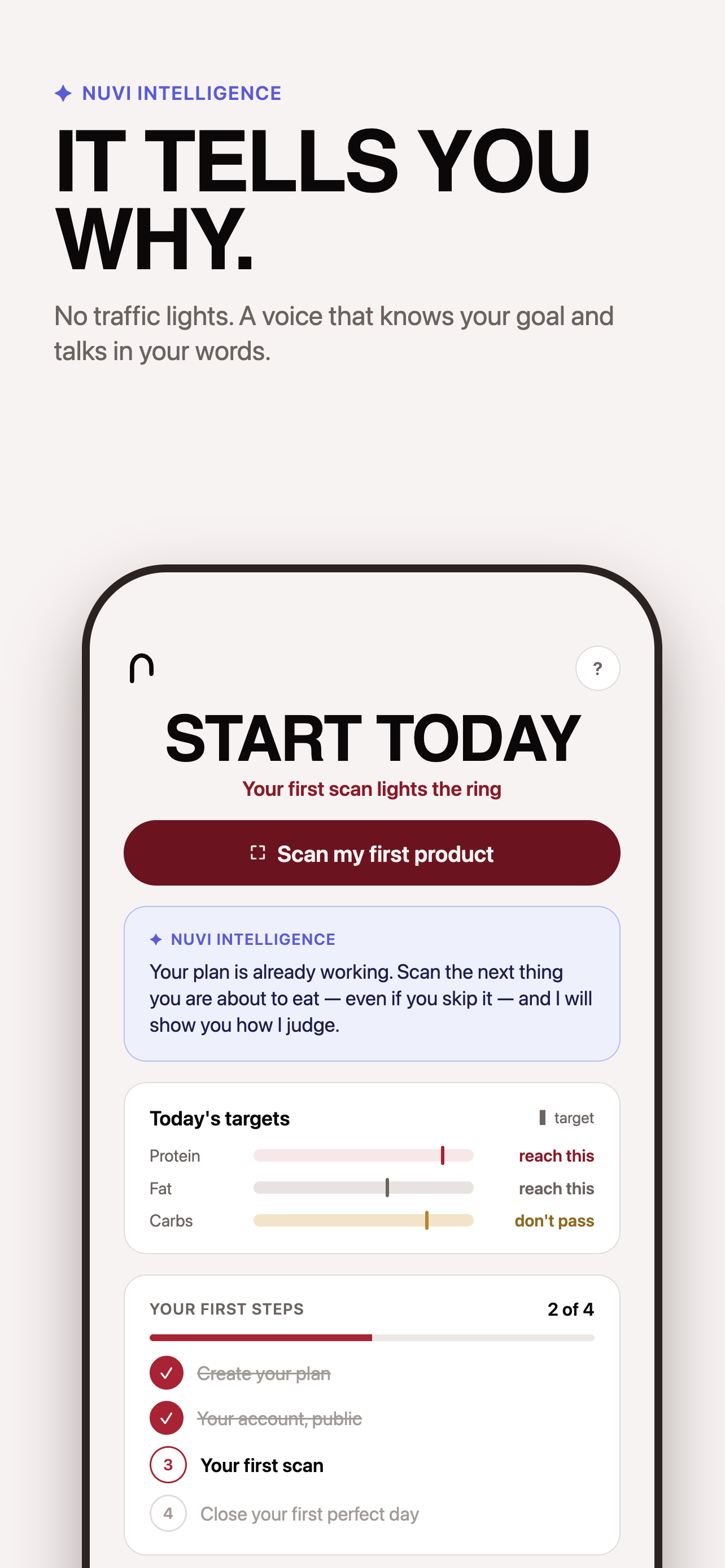
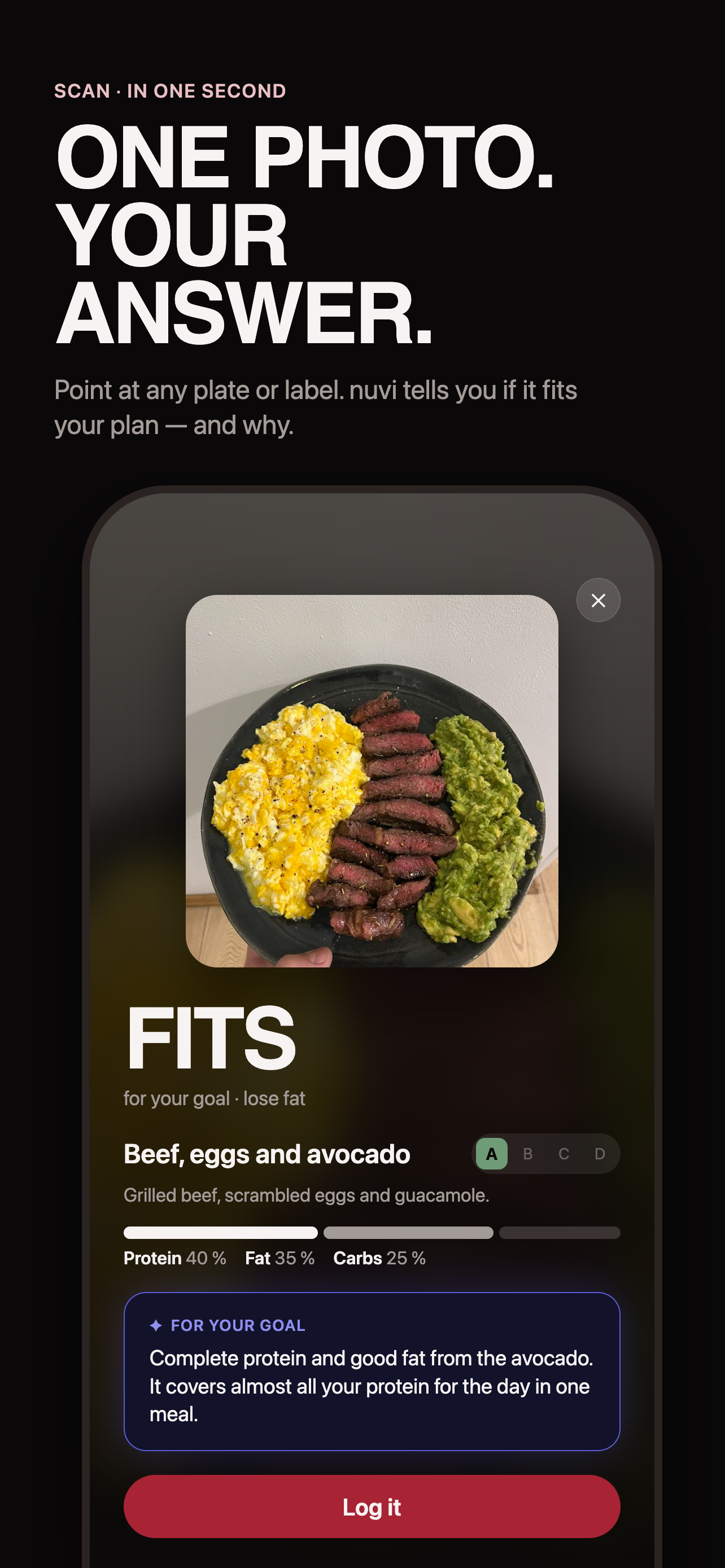
Nuvi is an iPhone app you point at any food, product, or label. It knows your goal — lose fat, build muscle, eat cleaner — and it answers the way a friend who happens to be a nutritionist would: yes, no, or sometimes, with one honest sentence explaining why.
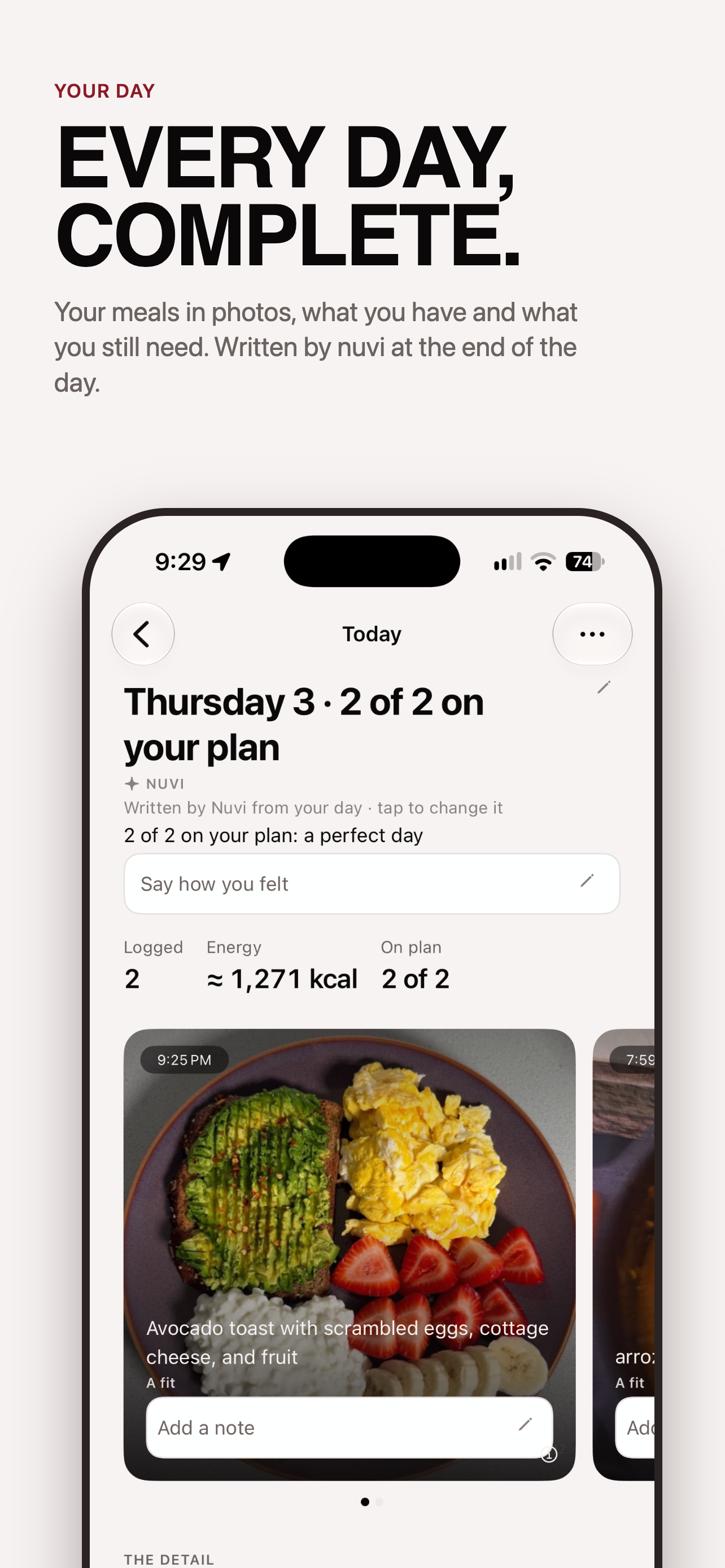
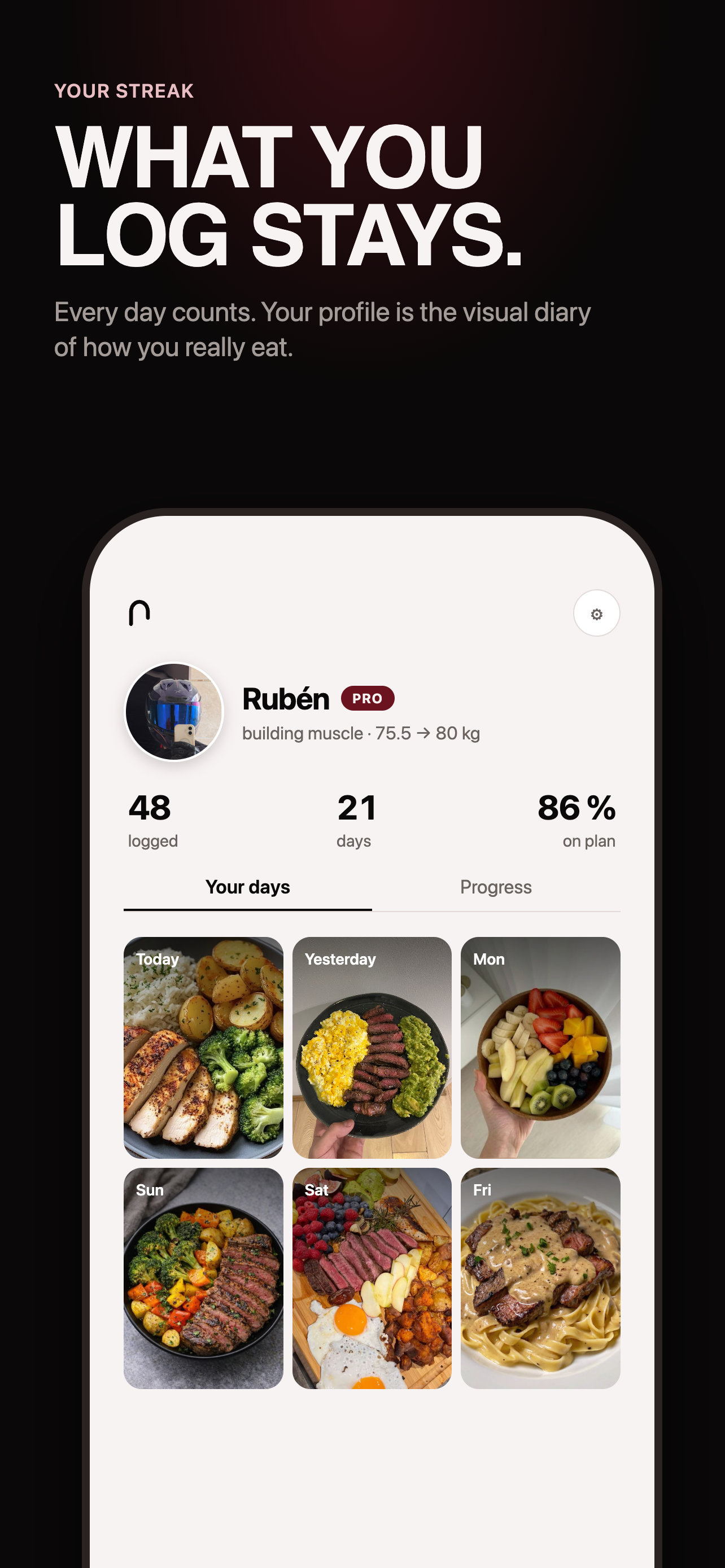
No logging. No macros to hit. No streaks to keep alive. Just an answer, in under two seconds, for the food in front of you.
Under the hood there are two things I care deeply about:
- A product database built by the people who use it. Scan something we don't know yet and you can add it. An AI model reviews every contribution on the spot, so the database grows fast without filling up with noise.
- AI first, not AI sprinkled on top. Every verdict is reasoned by a vision-language model that reads the label, understands the product, and weighs it against your profile. There's no lookup table with green and red dots pretending to be intelligence.
How we built it
Nuvi is a solo project. The app is native Swift, built for iPhone only, because I wanted it to feel like something Apple could have made, not a web page in a wrapper. The backend is Go, with a Scylla database that grows every time someone scans something new.
The honest answer to "how" is: a lot of evenings, a lot of weekends, and a lot of years of building apps for other people before finally building one for myself.
Challenges we ran into
Making the AI genuinely personal is where it gets hard. To give a good verdict, the model needs to know a lot about you — your goal, your body, your health, what you ate today. Sending all of that on every scan is expensive, and it's also exactly the data you should be most careful with.
Finding the line between "the model knows enough to be right" and "the model knows only what it needs" took longer than any screen in the app, and it's still the part I'm most careful about.
Accomplishments that we're proud of
- Anyone can improve Nuvi in thirty seconds. Add a product, get instant AI feedback, see it go live. The database is a living thing now, not a file I maintain alone.
- The whole app is AI-first. Not a feature, the foundation. Every decision the app makes goes through the same reasoning.
- It's fast, and it feels good. Scan, verdict, done. The kind of "done" you can do one-handed in a checkout line.
What we learned
Everything takes longer than you think, and planning is not the boring part before the real work — it is the real work. Most of the bugs I've shipped were decisions I made too quickly.
Also: people don't want more data about their food. They want less. That one changed the whole product.
What's next for Nuvi
Launching. Right now. The app is in review, the website is live, and the first users are about to find out whether their "healthy" snacks actually are.
After that: bringing the social side inside the app. Sharing a verdict with a friend, arguing about a product, seeing what the people you trust say yes and no to. Because a decision about food is rarely made alone.

Log in or sign up for Devpost to join the conversation.