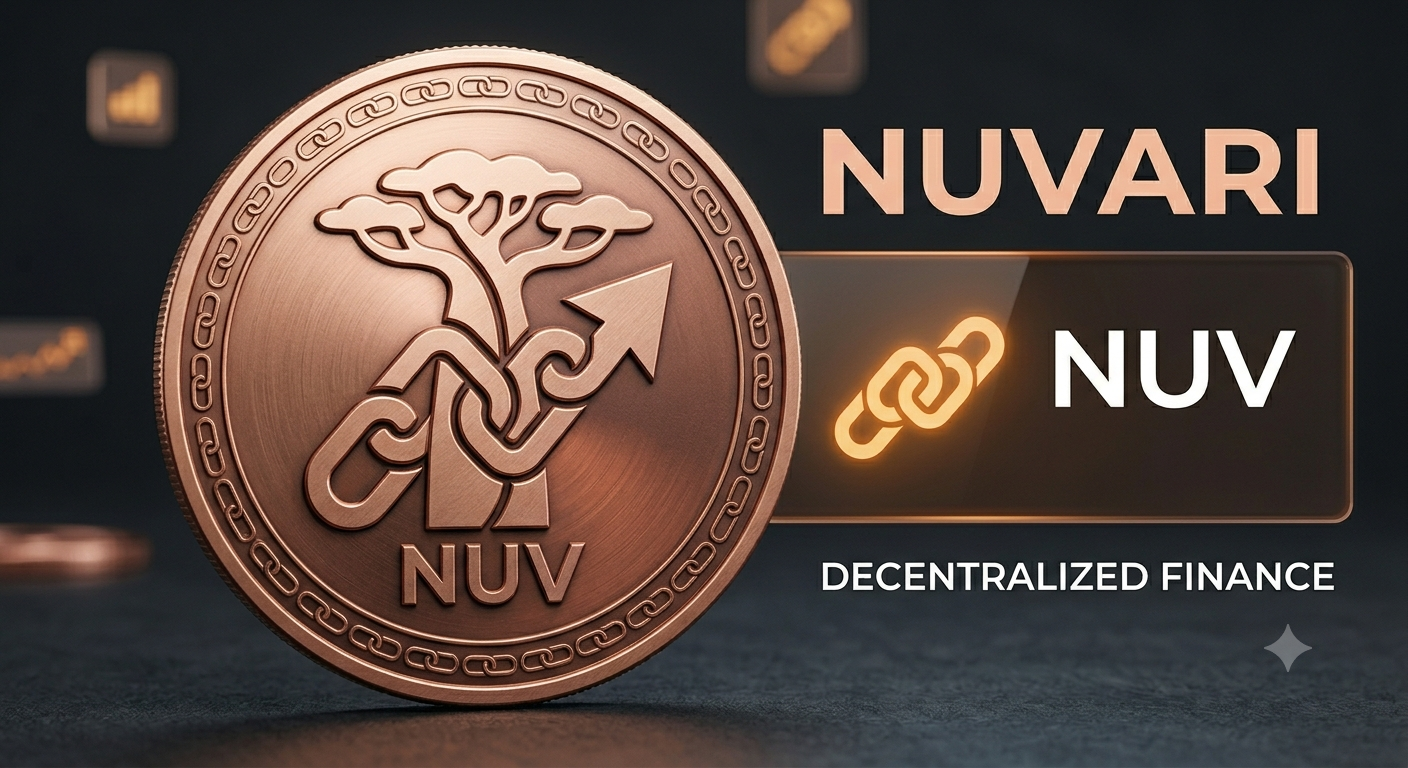
Inspiration
The blueprint for KAIBAR NUVARI was forged at the intersection of grassroots African enterprise and community stewardship. First, it was inspired by our founder watching their mother passionately run a micro-retail shop, fighting a daily battle against high transactional leakages and local currency inflation that eroded her hard-earned margins. Second, this systemic friction became vividly apparent when our founder joined the Community Forest Association (CFA) active at Turaco Camp within Kenya's Oloolua Forest. Within these green economic networks, an immense amount of operational, environmental, and socio-economic data was constantly being generated by community members. However, because traditional platforms offer no rails to tokenize or verify localized collective data, it became "dead data"—entirely trapped, unable to have value generated upon it to directly alleviate local economic pain. We were inspired to build a Web3 bridge that helps non-technical everyday people seamlessly convert raw community data, conservation records, and daily commerce into inflation-resistant wealth.
What it does
KAIBAR NUVARI is a non-custodial, mobile-first financial protocol and ecosystem that empowers everyday users to seamlessly send, receive, hedge, and grow wealth using crypto-assets as intuitively as they would with mobile money. Operating strategically within the progressive legal canopy of Kenya's Virtual Asset Service Providers (VASP) Act of 2025, it bridges the massive gap between traditional legacy banking and pure crypto protocols. It gives users institutional-grade, bank-like technology with zero hassle, allowing non-technical individuals to effortlessly hold inflation-resistant tokens, participate in secure peer-to-peer escrow commerce, and unlock investment yields without ever needing to understand the complex blockchain infrastructure running underneath.
How we built it
We engineered a multi-chain architecture that optimizes for high speed, low carbon footprint, and absolute user simplicity:
- The Multi-Chain Backbone: Settled on Hedera Hashgraph as our primary ledger for its carbon-negative footprint, sub-five-second transaction finality, and predictable sub-cent fees, alongside Arbitrum One for deep EVM liquidity connection.
- Abstracting Complexity: Integrated account abstraction via Privy to entirely remove the requirement of managing seed phrases or manual gas tokens, allowing users to onboard using familiar Web2 methods.
- Multi-Channel Interfaces: Built an intuitive Android application coupled with a highly responsive text-based USSD interface to guarantee that rural users and small shop owners can interact with deep DeFi liquidity without internet connectivity or high-end smartphones.
- Deflationary Asset Vaults: Created smart contract asset baskets like the Y Token ETF and YGold ETF (anchoring yield-bearing tokenized physical gold) to act as an immediate shield against local currency devaluation.
Challenges we ran into
- The USSD Code Gap: Architectural hurdles arose when attempting to route secure, gasless smart contract executions and cryptographic state changes entirely through low-bandwidth, text-based USSD menus. We had to innovate custom state-relayers to talk with our backend account abstraction modules safely.
- Algorithmic Asset Rebalancing: Fine-tuning the economic code and automated circuit-breaker mechanisms for NUVARI STABLE—our stable unit of account over-collateralized at 150% by USDC—to remain perfectly isolated from hyper-volatile localized currency shocks required exhaustive simulation.
- Data Value Extraction: Designing a decentralized mechanism capable of translating raw qualitative data from the Oloolua Forest CFA into cryptographically verifiable, tokenized trust baselines that a smart contract could evaluate for micro-credit line allocation.
Accomplishments that we're proud of
- Successfully designing a protocol that delivers advanced, bank-like financial tools to users who know absolutely nothing about Web3, achieving total abstraction of technical barriers.
- Engineering a functional path to unlock the hidden value of community data, turning the environmental stewardship at Turaco Camp into an active economic resource.
- Carving out a fully compliant, highly scalable market niche between legacy banking and decentralized technology by proactively aligning our architecture with Kenya’s VASP Act 2025 mandates.
What we learned
We learned that true financial inclusion requires meeting people exactly where they are. Technology must adapt to human realities, not the other way around. Local informal structures (like CFAs, Chamas, and SACCOs) possess immense networks of communal trust but simply lack the cryptographic infrastructure to prevent internal fraud or hedge against external macroeconomic decay. By wrapping Web3 code around native heritage systems, we discovered that we can empower everyday people without forcing them to become blockchain experts.
What's next for KAIBAR NUVARI
Our immediate roadmap focuses on scaling our deployment directly within regional community networks:
- Pilot Expansion: Launching our localized beta directly within the Oloolua Forest CFA network at Turaco Camp to perfect the tokenization of environmental data logs into yield-bearing credit lines.
- Merchant Ecosystem Integration: Onboarding a network of small retail shops—matching our founder’s mother's business model—to field-test our peer-to-peer escrow payment tools in high-frequency daily trade.
- Institutional VASP Licensing: Completing our full registration requirements under the 2025 VASP Act to solidify our bank-like trust position and expand API integrations directly into local fintech rails.
Built With
- abitrium
- api
- cloudinary
- daraja
- django
- gemini
- hainlink
- hedera
- mongodb
- native
- paystack
- python
- react
- typescript


Log in or sign up for Devpost to join the conversation.