-
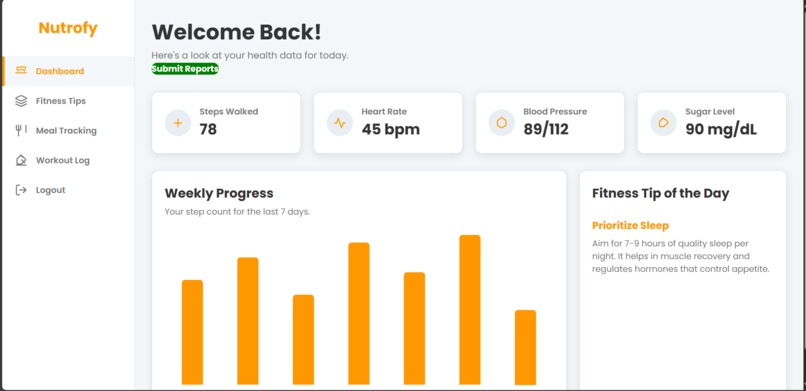
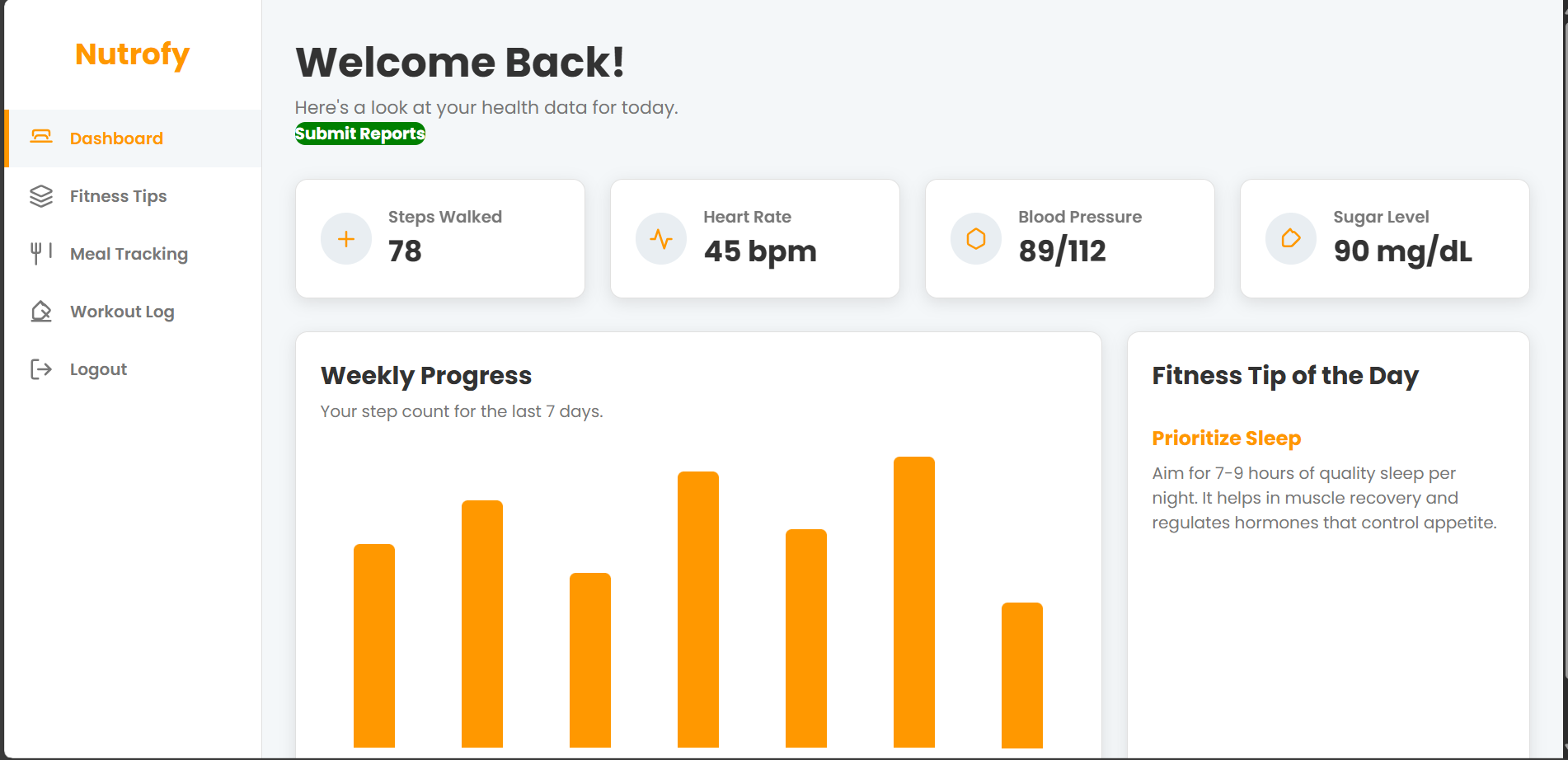
dashboard page
-
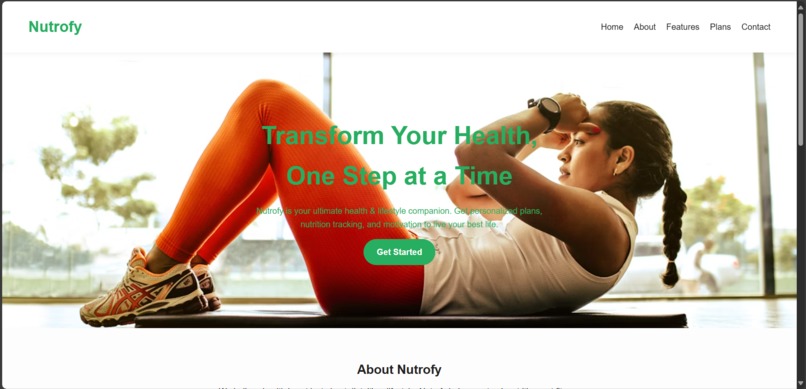
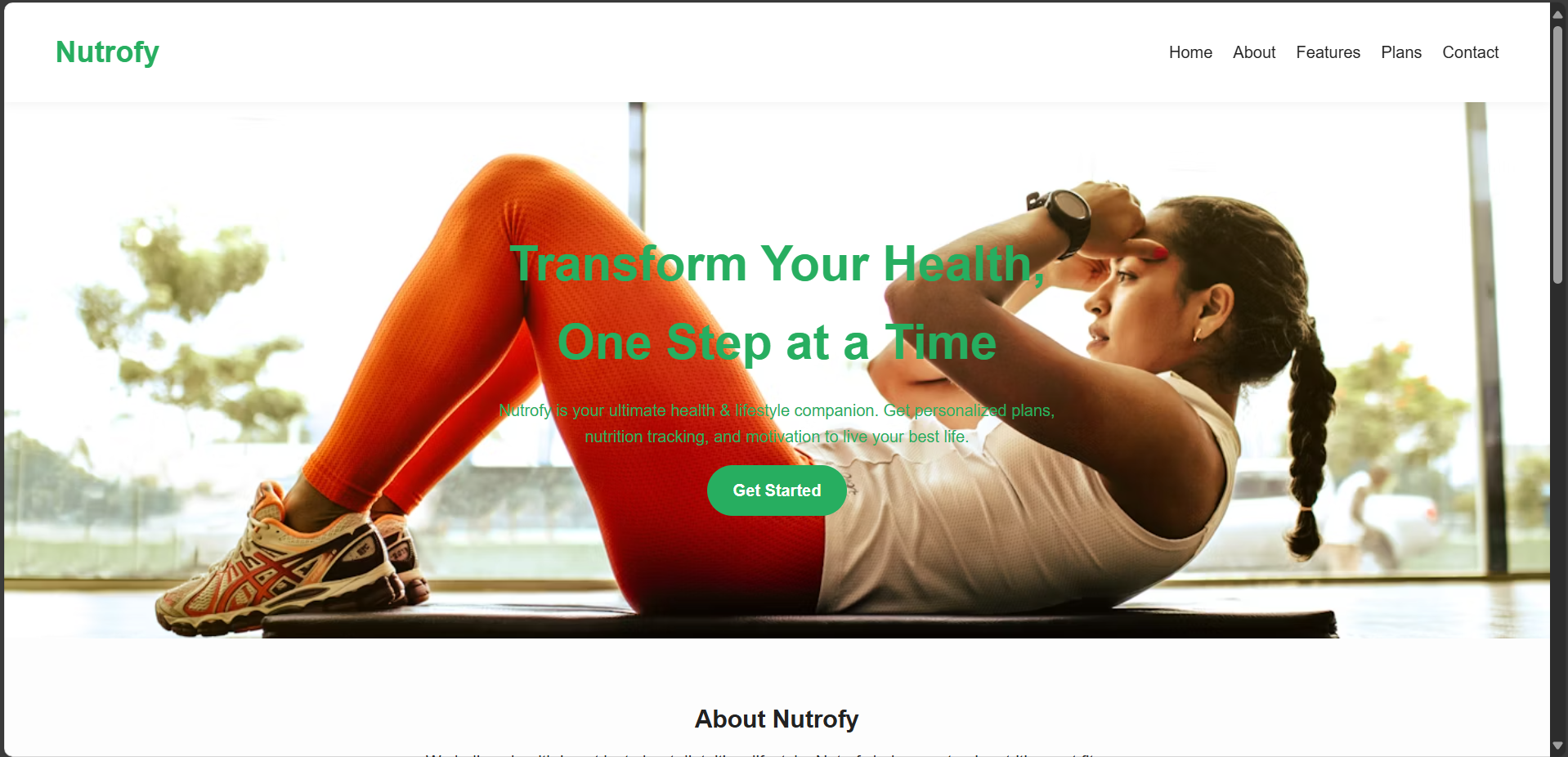
home page
-
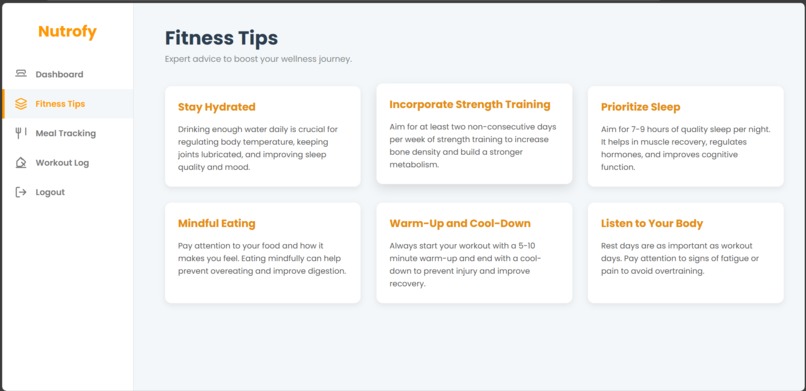
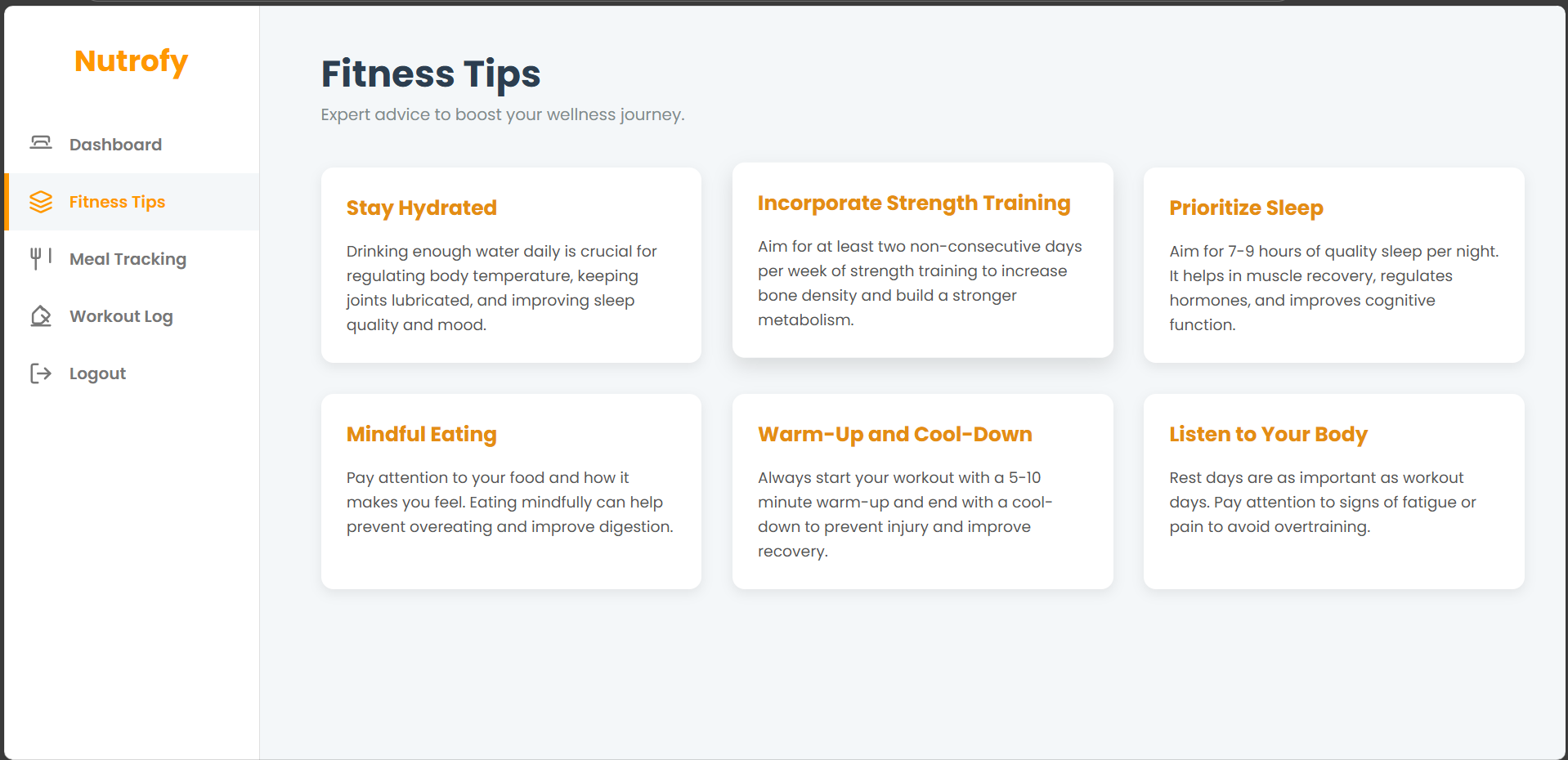
fitness tips page
-
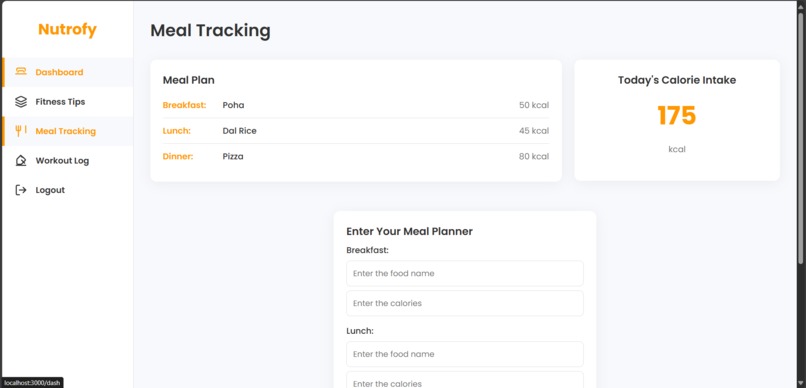
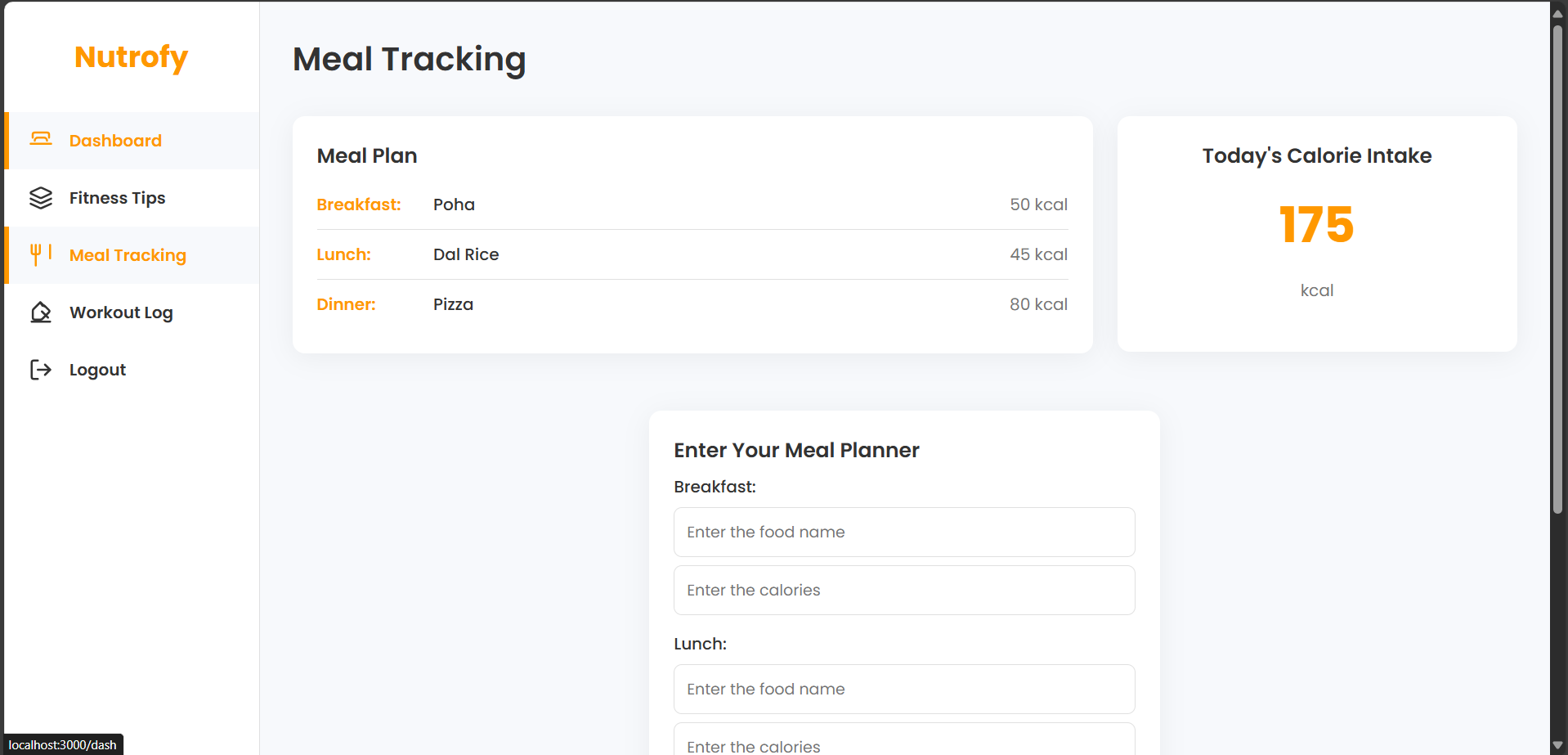
meal tracking system
-
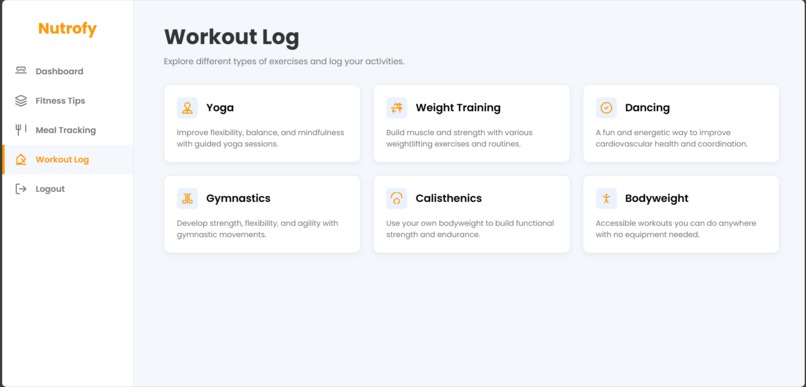
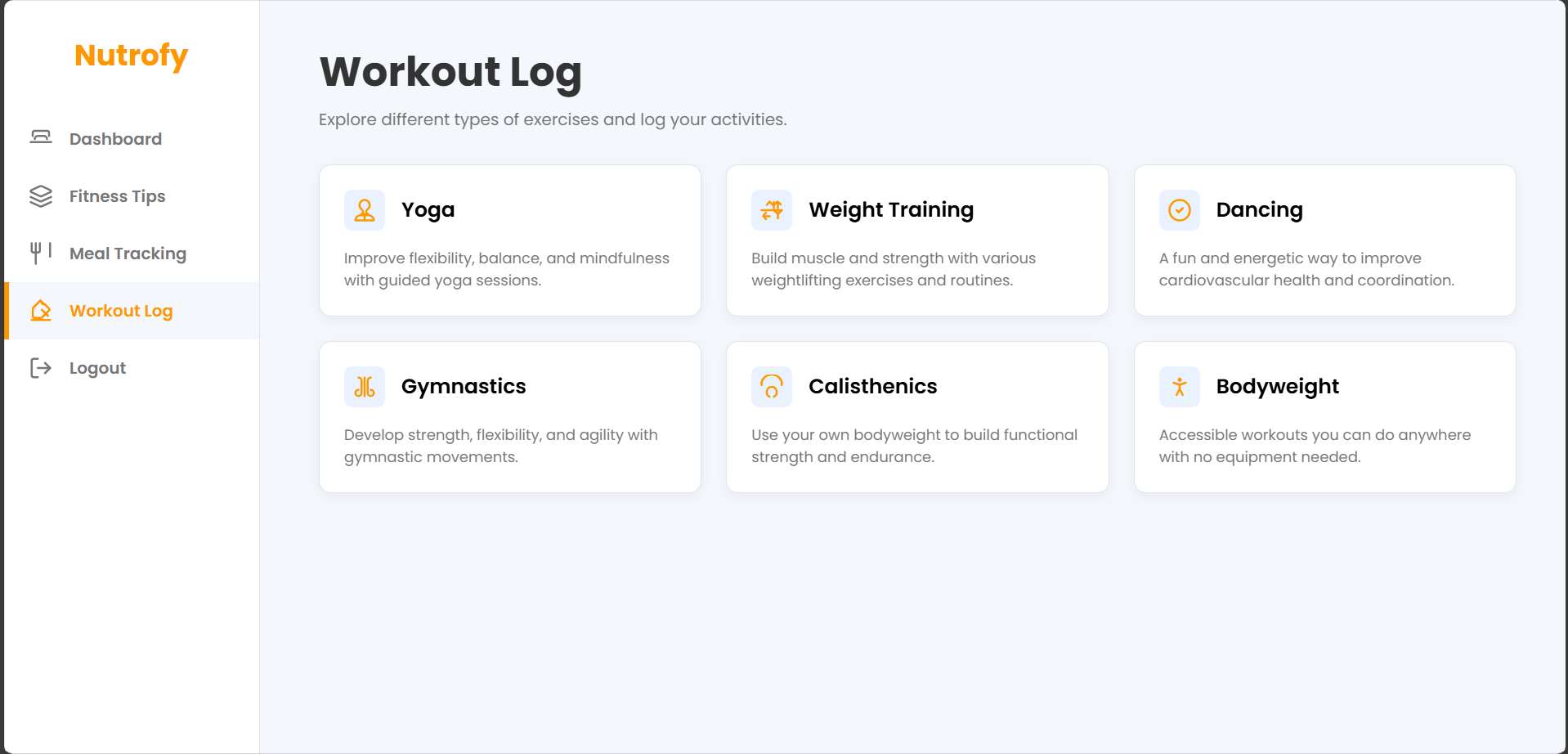
workout tips
Inspiration
Nutrofy was born from a simple question: Why is tracking nutrition still so complicated? As students juggling academics and wellness, we realized that most platforms either overwhelm users with data or oversimplify health goals. We wanted to build something that was intuitive, personalized, and genuinely helpful—especially for young adults striving to eat better without obsessing over numbers.
What it does
Nutrofy is a personalized web platform that helps users track their daily nutrition and calorie intake in a simple, intuitive way. It allows you to log meals—breakfast, lunch, and dinner—and instantly calculates total calories, giving you a clear snapshot of your dietary habits. Designed for students, professionals, and health-conscious individuals, Nutrofy transforms basic food logging into a motivating wellness journey.
How we built it
Frontend: HTML, CSS, and vanilla JavaScript for clean UI and responsive design.
Backend: Express.js handled routing and server logic, with modular route files for scalability.
Data Handling: JSON files were used for storing meal logs and calorie data, with defensive checks to prevent file path errors.
Version Control: Git and GitHub managed collaboration and commits. Git LFS was integrated to handle large media files like tutorial videos.
Hosting: Local development with plans to deploy on platforms like Render or Vercel.
Challenges we ran into
Handling large video files for tutorials was tricky due to GitHub’s 100MB limit—we solved this using Git LFS. We also faced issues with file path errors and syncing across devices, especially with OneDrive interference. Debugging those taught us the value of robust error handling and clean repo structure.
Accomplishments that we're proud of
Built a fully functional nutrition tracker from scratch, using modular JavaScript and Express.js to handle dynamic routing and calorie computation.
Designed an intuitive dashboard that calculates total daily intake in real time, making nutrition tracking simple and engaging for users.
Integrated Git LFS to overcome GitHub’s file size limits, enabling smooth uploads of large tutorial videos and media assets.
What we learned
We deepened our understanding of calorie computation, user-centric design, and the importance of defensive programming in health-related apps. We also explored how small UX tweaks—like visual meal breakdowns—can dramatically improve user engagement.
What's next for Nutrofy
Nutrofy is just getting started. Our next goal is to evolve it into a fully responsive, mobile-friendly platform using React for dynamic UI and MongoDB for scalable data storage. We plan to introduce user authentication, allowing individuals to save their meal logs and track progress over time. To enhance personalization, we’ll integrate AI-powered recommendations based on dietary goals, activity levels, and health conditions.


Log in or sign up for Devpost to join the conversation.