Inspiration
The idea for NutriTrack AI came from the frustration of traditional calorie tracking apps that require tedious manual entry and provide generic advice. I wanted to create a smarter solution that could understand food through multiple input methods - whether you describe it, take a photo, or simply speak about what you ate. The vision was to combine the power of AI with intuitive design to make healthy eating effortless and personalized.
What it does
NutriTrack AI is a comprehensive nutrition tracking platform that revolutionizes how users monitor their diet. The app allows food logging through text descriptions, photo uploads, or voice input, all powered by Google's Gemini AI for accurate nutritional analysis. Users get real-time dashboard updates showing their daily calorie, protein, and nutrient intake with beautiful visualizations. The integrated AI chatbot provides personalized diet recommendations based on individual BMI, food history, and preferences, while the planned Google Health sync will track calories burned for a complete health picture.
How we built it
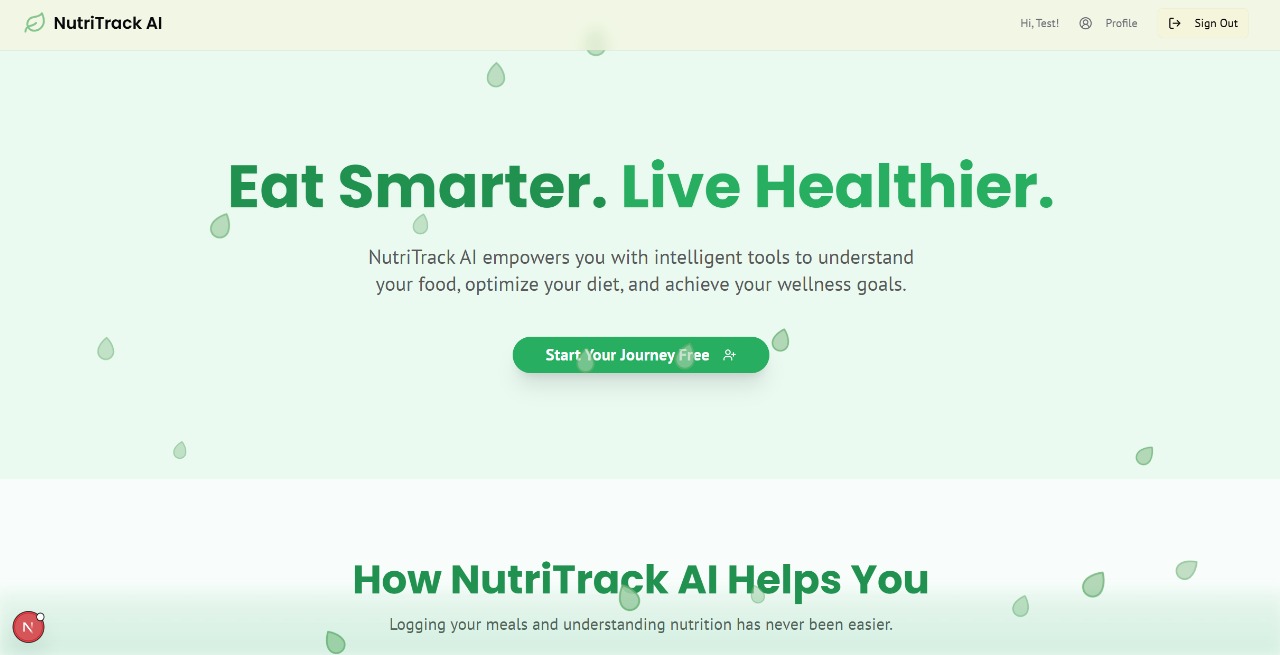
The application is built with a modern tech stack centered around Next.js with TypeScript for the frontend, utilizing the App Router and Server Components for optimal performance. We implemented a Swiss-inspired design using Tailwind CSS and ShadCN UI components, featuring a clean color scheme of healthy greens and cream backgrounds. The AI integration uses Google's Genkit framework to interact with the Gemini API through two main flows: analyzeFoodNutrition for processing food inputs and getDietRecommendations for personalized coaching. The architecture is designed for scalability with planned FastAPI backend and Supabase database integration.
Challenges we ran into
One of the biggest challenges was accurately parsing diverse food inputs through AI - teaching the system to understand everything from "a handful of almonds" to complex home-cooked meals from photos. Designing an intuitive UI that could handle multiple input methods while maintaining the clean Swiss-inspired aesthetic required careful consideration of user experience flows. Integrating Genkit with Next.js and ensuring reliable AI responses while managing API costs and response times also presented technical hurdles that required creative solutions.
Accomplishments that we're proud of
We successfully created a seamless multi-modal food logging experience that actually works - users can literally just speak their meals and get accurate nutritional breakdowns. The AI chatbot provides genuinely helpful, personalized recommendations rather than generic advice. The clean, minimalist design achieved our goal of making nutrition tracking feel approachable rather than overwhelming. Most importantly, we built a foundation that's ready to scale with proper backend integration and user authentication systems.
What we learned
This project taught us the intricacies of working with large language models for practical applications, especially the importance of prompt engineering for consistent, structured responses. We gained valuable experience in modern React patterns with Next.js App Router and learned how to design AI-first user experiences. The project also highlighted the importance of building with scalability in mind - our modular architecture and clean separation of concerns will make future enhancements much easier.
What's next for NutriTrack
The roadmap includes integrating FastAPI for robust backend services and Supabase for user authentication and data persistence. We plan to implement Google Health sync for comprehensive fitness tracking, expand the AI capabilities with meal planning and grocery list generation, and add social features for community support. Advanced analytics and reporting features will provide users with deeper insights into their nutritional patterns and progress over time.
Built With
- firebase
- genkit
- google-gemini-api
- lucide-react
- next.js
- node.js*
- shadcn-ui
- tailwind-css
- typescript


Log in or sign up for Devpost to join the conversation.